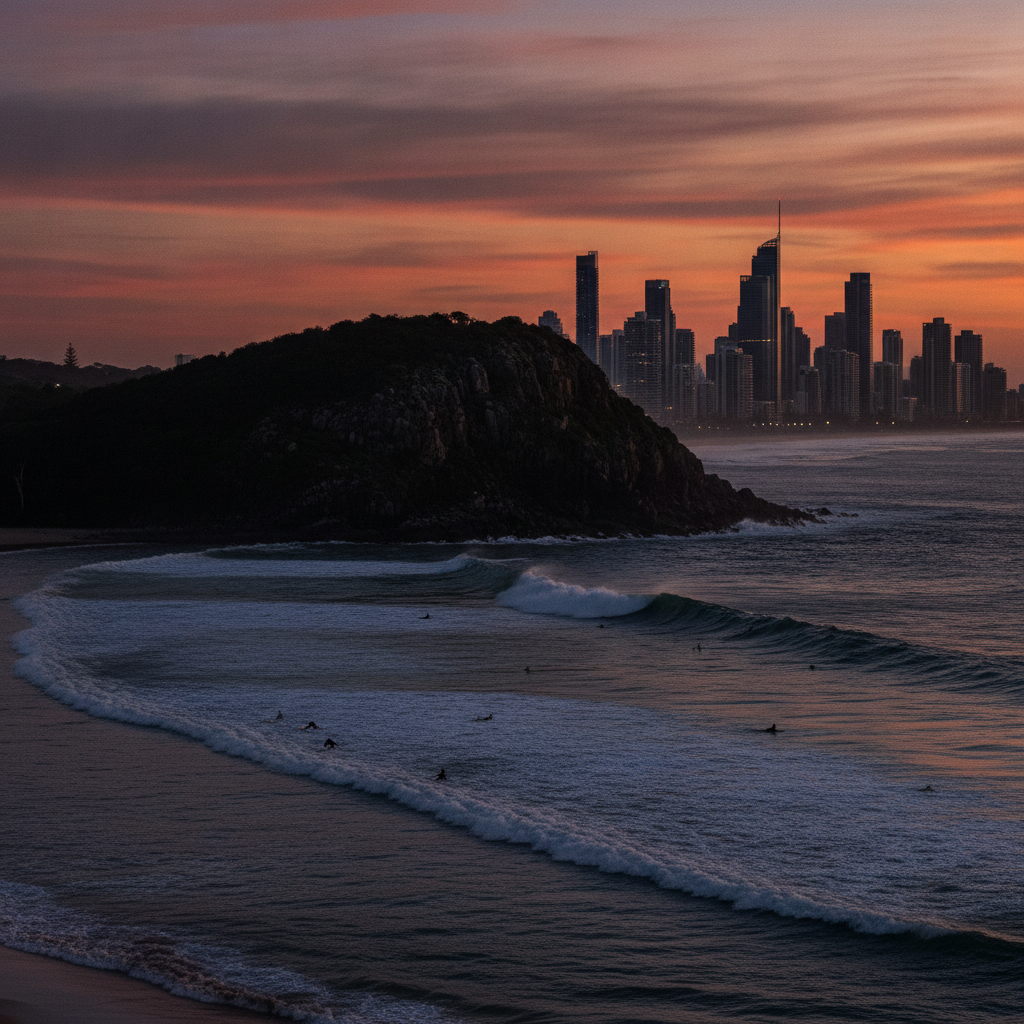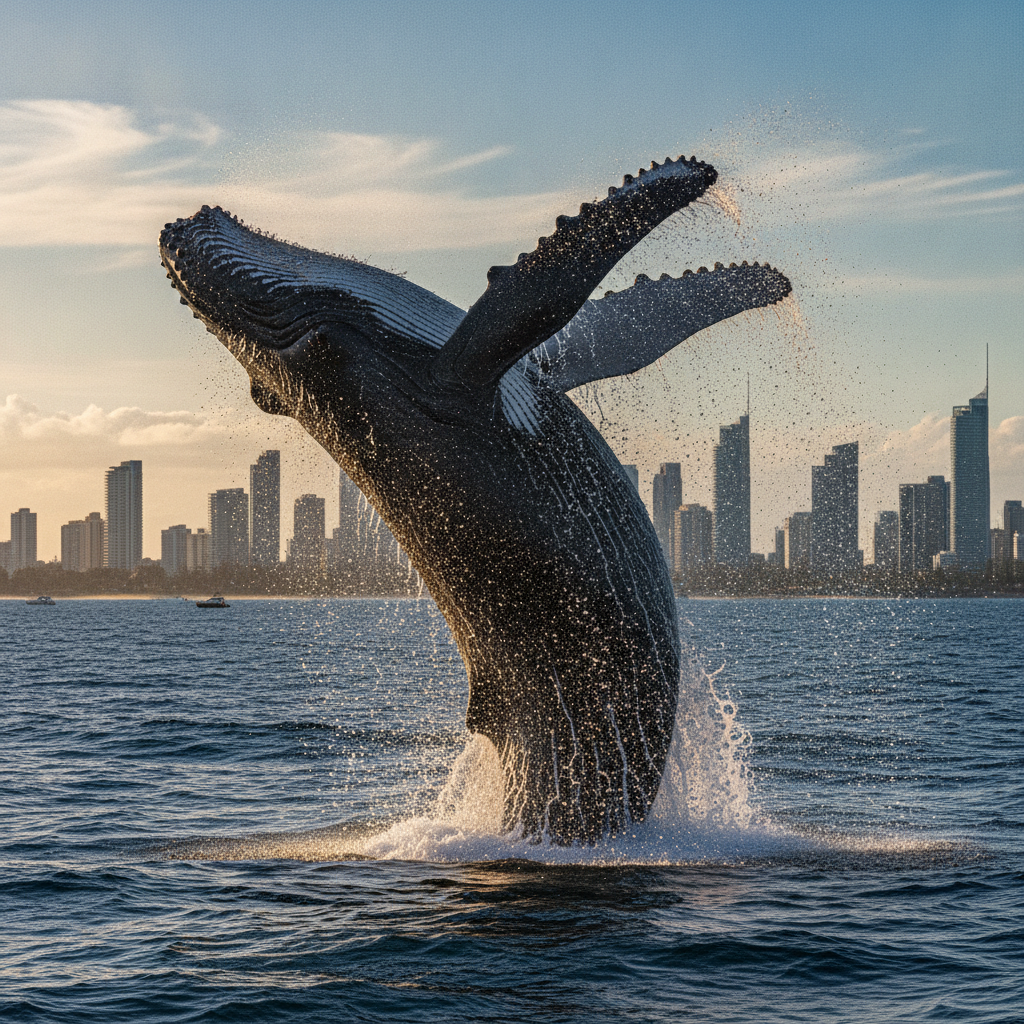
Gold Coast: Humpback Whale Watching Migration, Currumbin Wildlife Sanctuary Rainbow Lorikeet Feeding, Main Beach Palazzo Versace and Broadwater, Yugambeh Country Indigenous Heritage, Gold Coast as Southeast Queensland Circuit Hub, and Complete Beach Resort City Verdict
Gold Coast final routes: humpback whale watching (May-November, 40,000 whales recovered from near-extinction), Currumbin Wildlife Sanctuary (rainbow lorikeet mass feeding, wildlife hospital), Main Beach and South Stradbroke Island Broadwater, Yugambeh people and Jellurgal Cultural Centre, Gold Coast as hub for Byron Bay-Brisbane-Noosa circuit, and the complete Gold Coast four-route beach resort city verdict.
- 1
Whale Watching on the Gold Coast - Humpback Migration Highway
Whale watching on the Gold Coast: the humpback whale (Megaptera novaeangliae) migration passes through the Gold Coast waters from May to November each year, making the Gold Coast one of the most accessible whale watching destinations in Australia. The humpback migration: the whales travel north from their Antarctic feeding grounds in May-July (the northward migration, passing close to the Gold Coast as they head to their tropical breeding grounds in the Coral Sea) and return south from August to November (the southward migration, with the mothers and calves from the tropical breeding season). The Gold Coast whale watching fleet: the whale watching tours depart from the Main Beach marina (adjacent to Sea World) and from the Broadwater marina, typically 2-3 hours duration. The whale behaviour: breaching (the full-body leap from the water), spy-hopping (the vertical rise of the head above the water surface), tail slapping, and pectoral fin waving are all commonly observed behaviours; the calves on the southward migration are particularly active and playful. The whale count: the eastern Australian humpback population has recovered from near-extinction (approximately 200 individuals in 1963, the low point of the whaling era) to approximately 40,000-50,000 animals today — one of the great wildlife conservation success stories. The Gold Coast whale season: the peak of sightings is typically August-September.
- 2
Currumbin Wildlife Sanctuary - Rainbow Lorikeet Feeding and Native Wildlife
Currumbin Wildlife Sanctuary (in Currumbin, approximately 18 km south of Surfers Paradise): the primary native wildlife attraction of the Gold Coast, established in 1947 by Alex Griffiths (who began feeding the wild rainbow lorikeets that raided his flower nursery in 1947, and gradually established a wildlife sanctuary on the property). The rainbow lorikeet feeding at Currumbin: the twice-daily mass feeding of hundreds of wild rainbow lorikeets (Trichoglossus moluccanus), which return to Currumbin by tradition each morning and afternoon to feed on the nectar solution provided by the sanctuary. The feeding involves standing in the outdoor space while the lorikeets land on arms, shoulders, and heads to drink from small dishes; the experience is chaotic, colourful, and loud. The Currumbin Wildlife Sanctuary koala holding: Currumbin (like Lone Pine in Brisbane) is a Queensland wildlife sanctuary where koala holding is permitted. The sanctuary other species: tree-kangaroo, freshwater crocodile, wombat, echidna, Tasmanian devil, saltwater crocodile, wedge-tailed eagle, and the extensive bird aviary. The WILDLIFE Hospital at Currumbin: the primary wildlife rescue and rehabilitation hospital for the Gold Coast and surrounding region, treating over 14,000 injured or orphaned native animals per year, with the free public viewing gallery showing the veterinary treatments in progress.
- 3
Main Beach and the Gold Coast Broadwater
Main Beach (the suburb immediately north of Surfers Paradise, between the ocean beach and the Broadwater): the most upmarket residential area of the central Gold Coast, with the Palazzo Versace hotel (the five-star hotel built in collaboration with the Versace fashion house, with the Versace-branded interiors throughout), the Marina Mirage (the upmarket retail and marina complex), and the ferry terminal for Stradbroke Island. The Gold Coast Broadwater (the large sheltered lagoon between the mainland and South Stradbroke Island): the primary water sports and boating area of the Gold Coast. South Stradbroke Island (the narrow sand island separating the Broadwater from the Pacific Ocean, accessible by water taxi from the Broadwater): the wild beach on the ocean side, the mangrove boardwalk on the Broadwater side, and the camping area (the only development on the island). The Gold Coast Seaway (the entrance to the Broadwater from the Pacific Ocean, between the tip of South Stradbroke and the Spit headland): the shipping and leisure boat channel, with the wave break on either side creating the primary short-board surf break for the Surfers Paradise area (the Seaway bar). The Spit (the narrow sand peninsula at the north end of the Gold Coast beach strip): the area of the Federation Walk (the coastal rainforest walk along the Spit between the beach and the Broadwater, connecting Main Beach to Sea World).
- 4
Gold Coast Four Routes Complete - Beach Resort City Verdict
Gold Coast four-route complete summary. Route 1: Surfers Paradise (57 km beach, high-rise, Cavill Avenue), Snapper Rocks Superbank (world-class surfing, WSL Pro tour), theme parks (Dreamworld, Movie World, Sea World), Broadbeach and Burleigh Heads dining, Gold Coast Hinterland rainforest, practical guide (G:link tram, airport, 2018 Commonwealth Games). Route 2 (this route): Humpback whale watching (May-November, 40,000-strong recovered population), Currumbin Wildlife Sanctuary (rainbow lorikeet feeding, koala holding, wildlife hospital), Main Beach Palazzo Versace and Marina Mirage, Gold Coast Broadwater water sports, South Stradbroke Island. Gold Coast final verdict: the most polarizing major city in Australia — Australians tend to either love or dismiss the Gold Coast, and the dismissers underestimate it. The dismissers see the Surfers Paradise towers and the theme parks and conclude there is nothing of substance. The converters discover the Superbank (one of the great surfing waves on earth), the Burleigh Heads community beach culture, the hinterland rainforest (within 45 minutes of the towers), the whale watching (among the most accessible in Australia), and the relaxed subtropical lifestyle. For the international visitor: the Gold Coast offers a pure beach experience that is uniquely Australian in its combination of surf, warmth, wildlife, and unpretentious outdoor culture. Allow 3-4 days. Come in September or October for optimal weather, surf, and whale watching simultaneously.
- 5
Gold Coast Indigenous Heritage - Yugambeh Country
Yugambeh Country: the Gold Coast and its immediate region is the traditional country of the Yugambeh-speaking people, the group of clans who have lived in the area for at least 22,000 years (the most recent archaeological evidence from the region). The Yugambeh language group includes the Kombumerri (the people of the lower Nerang River and the coastal areas), the Mununjali (the people of the Beaudesert hinterland), and several other clan groups. The Yugambeh Museum Language and Heritage Research Centre (in Beaudesert, approximately 80 km west of the Gold Coast): the primary institution for the preservation and revitalization of the Yugambeh language (which had fewer than 20 fluent speakers by the late twentieth century) and the documentation of the cultural heritage of the Yugambeh people. The David Unaipon story connection: David Unaipon (whose portrait appears on the Australian AUD 50 note) was a Ngarrindjeri man from the Murray River in South Australia, not connected to the Gold Coast, but his image on the currency is a reminder of the broader story of Aboriginal intellectual contribution to Australian culture. The Jellurgal (Burleigh Head) cultural site: the Jellurgal Aboriginal Cultural Centre is located at Burleigh Heads National Park, on the traditional country of the Kombumerri people, providing cultural tours and education. The Kombumerri seasonal movements: the coastal Yukgambeh clans moved between the beaches (fishing and seafood collection in summer) and the hinterland forests (hunting and plant food collection in winter).
- 6
Gold Coast as Southeast Queensland Hub - Byron Bay to Brisbane Circuit
The Gold Coast as the hub of the southeast Queensland and northern New South Wales circuit: the most visited tourism corridor in Australia (the stretch from Byron Bay in NSW north through the Gold Coast and Brisbane to the Sunshine Coast and Noosa). The Gold Coast to Byron Bay connection: 100 km south from the Gold Coast CBD (1.5 hours by car); the Pacific Highway connects the two via Coolangatta and Tweed Heads (the NSW border). The Byron Bay day trip from the Gold Coast: arrive via Cabarita Beach and Bangalow; return via Brunswick Heads or inland via Bangalow. The Gold Coast to Brisbane connection: 75 km north (45-60 minutes by train on the Translink Gold Coast line; 1 hour by road). The Gold Coast to Tamborine Mountain: 45 km west (45 minutes by car): wine and cheese tasting, Gallery Walk cafes and boutiques, rainforest walks. The Gold Coast to Lamington National Park: 55 km west (1 hour): O'Reilly's Rainforest Retreat, tree-top walk, lyrebird spotting. The Gold Coast to South Stradbroke Island: 20 minutes by water taxi from Runaway Bay. The Gold Coast accommodation budget summary: budget backpacker dorms from AUD 30-50 per night; standard beach apartments from AUD 100-200 per night; five-star beachfront hotels from AUD 400-800 per night; the Palazzo Versace from AUD 600-1,200 per night. The peak pricing period: Christmas-January (school holidays); winter (July) is a second peak. The best value period: May or September.
Walk this route with audio
Stories play automatically as you reach each stop — no tapping needed.
More in goldcoast
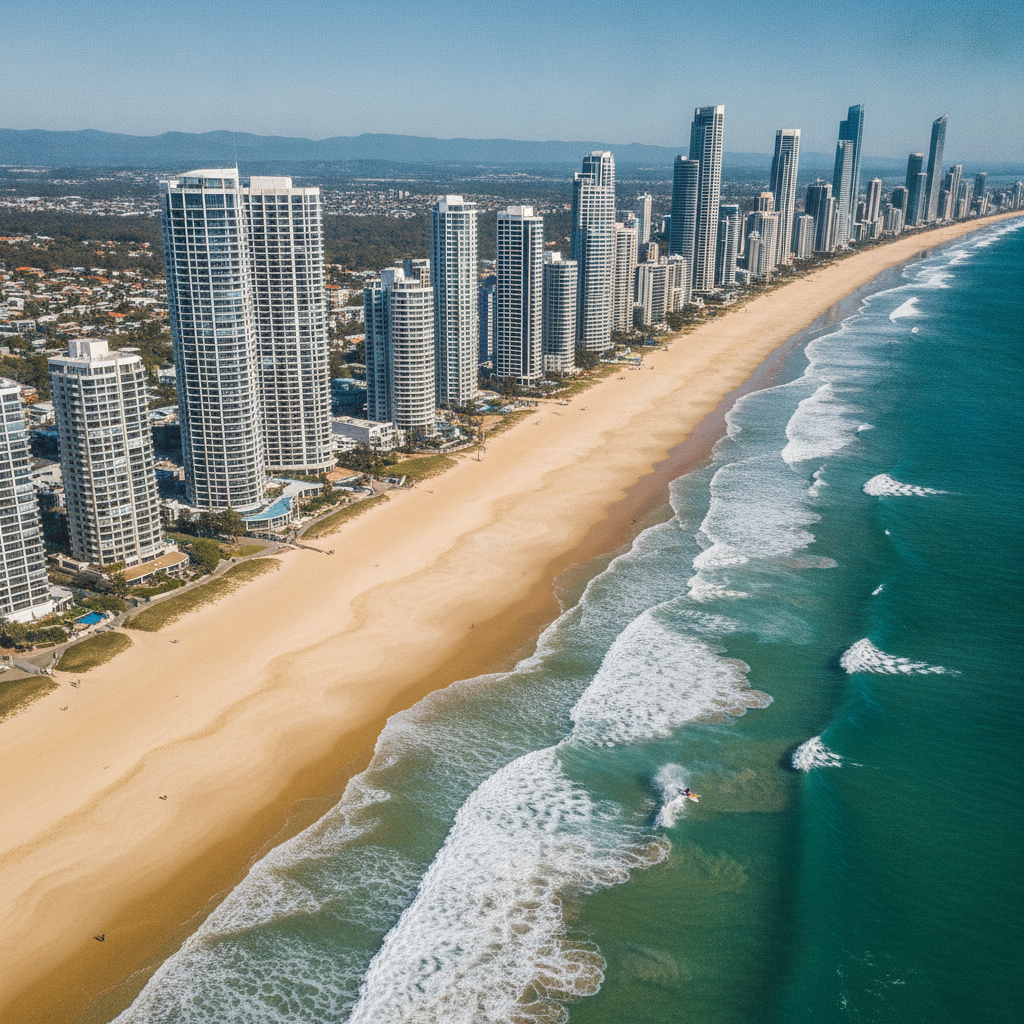
Gold Coast: Surfers Paradise and 57km Beach, Snapper Rocks Superbank World-Class Surf, Theme Parks (Dreamworld, Movie World, Sea World), Broadbeach and Burleigh Heads Dining, Gold Coast Hinterland Rainforest, and Complete Practical Guide
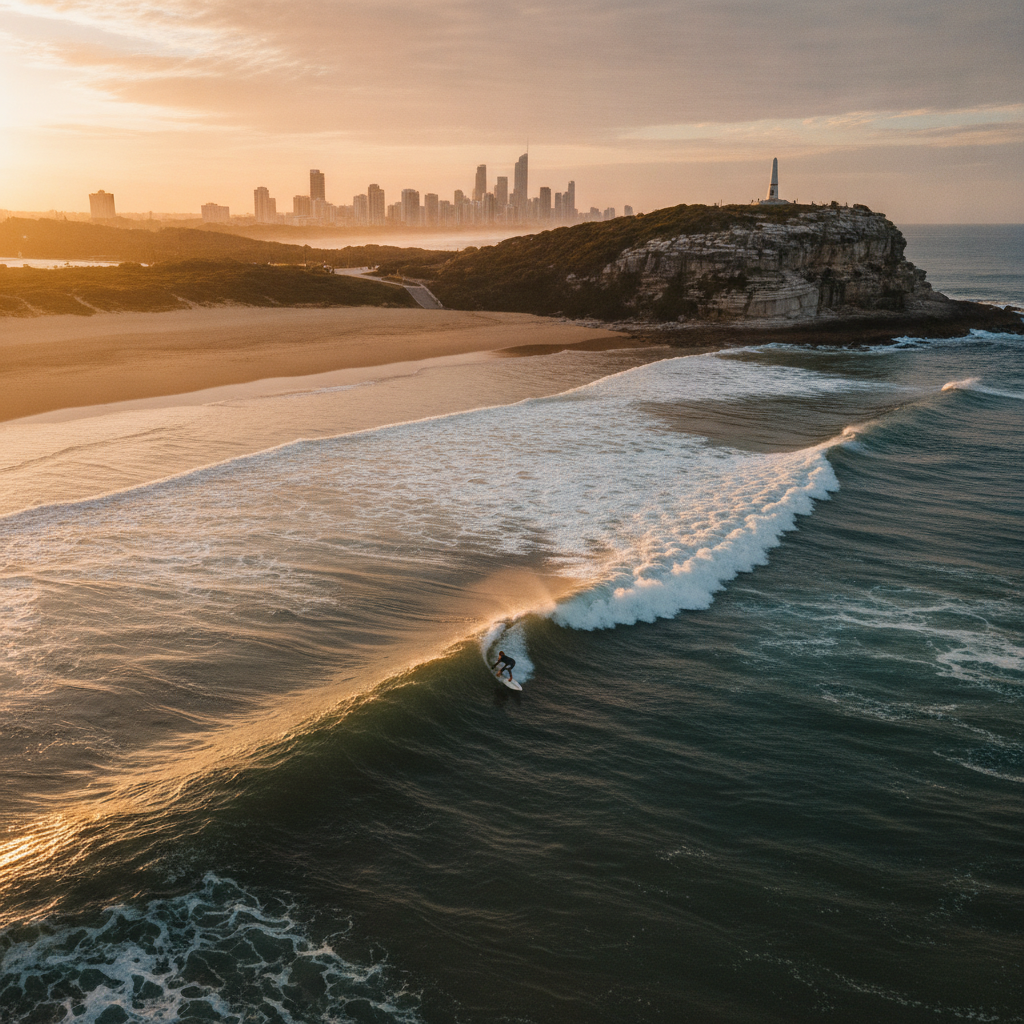
Gold Coast: Coolangatta and Southern End, Robina Town Centre and NRL Rugby League, Pacific Fair Luxury Retail, Gold Coast Environmental Challenges (Beach Erosion, Sea Level Rise, Koala Corridor), and Honest Comparison to Sydney, Whitsundays, Noosa, and Bali