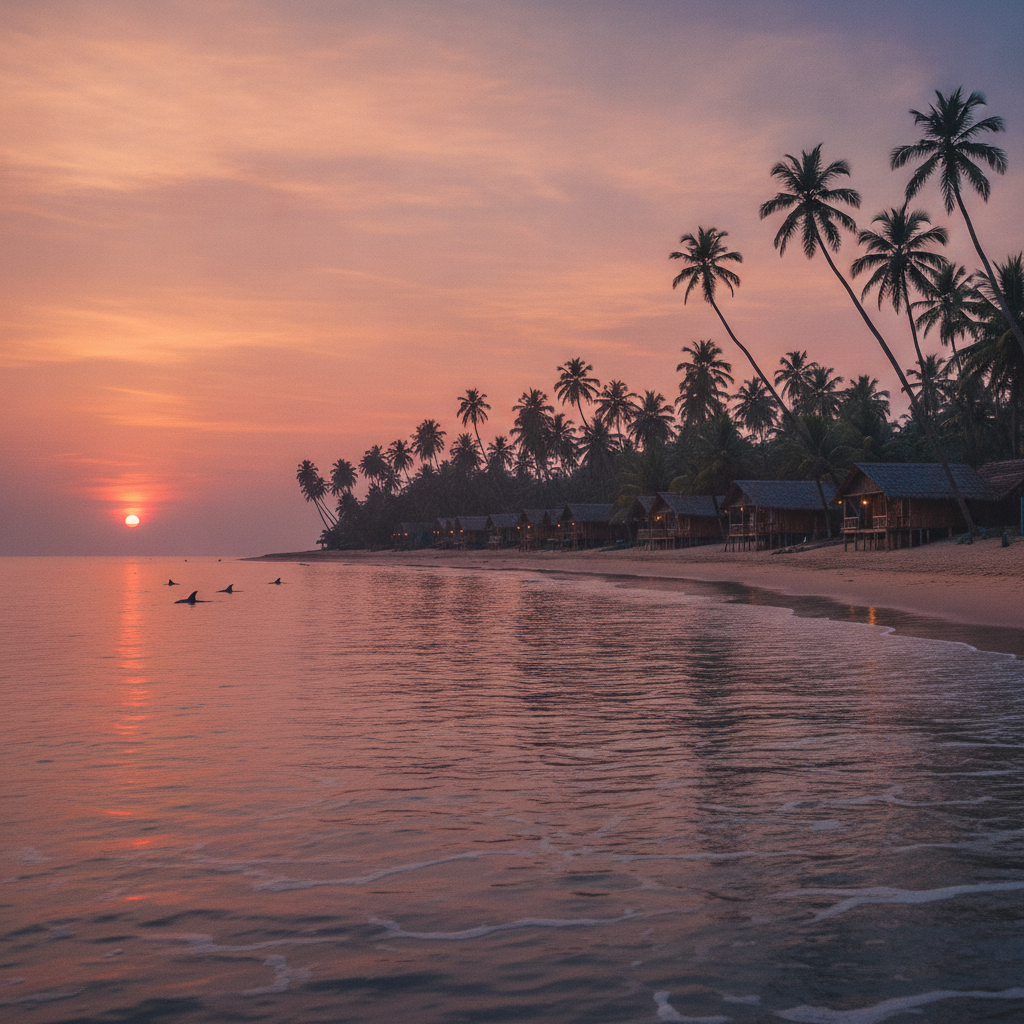
Goa's Hidden Layers: Hindu Temples Rebuilt After the Inquisition, the Taxi War That Expelled Uber & Divar Island's Untouched Villages
Find the Goa that 95% of visitors miss—the hybrid Ponda temples built in baroque-influenced Portuguese style after the Inquisition by Hindus who carried their sacred images to safety, how Goa trance evolved from Anjuna full-moon beaches to Sunburn Festival's 50,000 mainstream EDM crowd (the original trance community retreating north), Mum's Kitchen in Panjim for the Goan Catholic food that shacks don't serve, the taxi union that legally expelled Ola and Uber from Goa, Divar Island's Portuguese mansions and rice paddies accessible by ferry from Old Goa, and Damodar Mauzo's 50-year literary career writing about Goan Catholic life in a language with four simultaneous scripts.
- 1
Goa's Temples – The Hindu Heritage Beneath the Portuguese Overlay
Goa's Hindu temples were systematically destroyed during the Portuguese Inquisition period (1560–1812); most Hindu communities moved their sacred images (moortis) to adjacent Hindu kingdoms (Ponda, Sanguem, Canacona) in the Goan hinterland that remained outside Portuguese control. After the Portuguese retreated from these interior areas in the 17th century, elaborate new temples were built in a hybrid Goa-Portuguese architectural style—Hindu temple structures with baroque-influenced lamp towers (deepstambha) and European-style ballrooms. The Shri Mangueshi Temple (Ponda, 1560 and later) and the Shri Mahalasa Temple are the finest examples. The Shantadurga Temple at Kavalem is the most visited; the goddess Shantadurga (a form of Parvati) is the most popular deity among Goan Hindus.
- 2
Goa's Nightlife Evolution – From Full-Moon Raves to Mainstream EDM
Goa's nightlife has evolved in three distinct phases. Phase 1 (1970s–1990s): spontaneous full-moon parties on Anjuna beach, unplanned, free, attended by Western travellers and the Goa expatriate community—the Goa trance sound. Phase 2 (1990s–2010): indoor clubs and organised events as beach parties faced police crackdowns; the scene moved to private properties and licensed venues; Goa trance became psytrance and split into sub-genres (forest trance, progressive, hi-tech). Phase 3 (2010–present): integration into mainstream Indian tourism—Sunburn Festival (2007, now Asia's largest EDM event), mainstream Bollywood DJs playing Calangute beach venues, and the professionalization of the scene. The original Goa trance community has largely retreated to more obscure venues in the north; the mainstream party circuit at Baga and Anjuna caters to domestic Indian tourists who now make up 80%+ of Goa's visitors.
- 3
Goa's Food Beyond the Shacks – Restaurants & Fine Dining
Goa's restaurant scene has evolved significantly beyond the beach shack. The Panjim restaurant scene (Mum's Kitchen—traditional Goan home cooking; Ritz Classic—old-school Goan Christian; Viva Panjim—riverside with excellent Goan sausage) is the most interesting for authentic food. North Goa has high-end restaurants: Sublime at Morjim (international cuisine, regularly listed among India's best), A Reverie at Calangute. The Portuguese-Goan fusion at 31 de Janeiro (Caranzalem) is a specific dining experience. Goa's food festivals (Goa Food & Cultural Festival, February) bring together vendors from across the state. For seafood, the morning fish markets at Mapusa (North Goa) and Margao (South Goa) are the best introduction to what Goan cuisine is built on: tiger prawns, surmai (kingfish), pomfret, squid, and crabs.
- 4
Goa's Taxi Wars & Getting Around Honestly
Goa's transportation situation is uniquely complicated among Indian tourist destinations. App-based ride services (Ola, Uber) were effectively driven out of Goa by organised resistance from the taxi association—whose members charge fixed (high) prices (₹300–500/€3.30–5.50 for a 10-minute journey) and resist metered fares. The replacement app (GoaMiles) is operated by the taxi union and does not have competitive pricing. The most cost-effective transport is a hired scooter (₹300–500/€3.30–5.50 per day); local buses (extremely cheap, ₹10–30/€0.11–0.33 per journey) serve many beach towns but on infrequent schedules. North Goa beaches are walkable from each other; South Goa requires a vehicle. Many travellers hire a local driver by the day (₹2,000–3,000/€22–33) for touring multiple sites. Drunk driving on rented scooters is the cause of the majority of tourist fatalities in Goa.
- 5
Goa's Inland Villages – The Authentic Goa Beyond the Coast
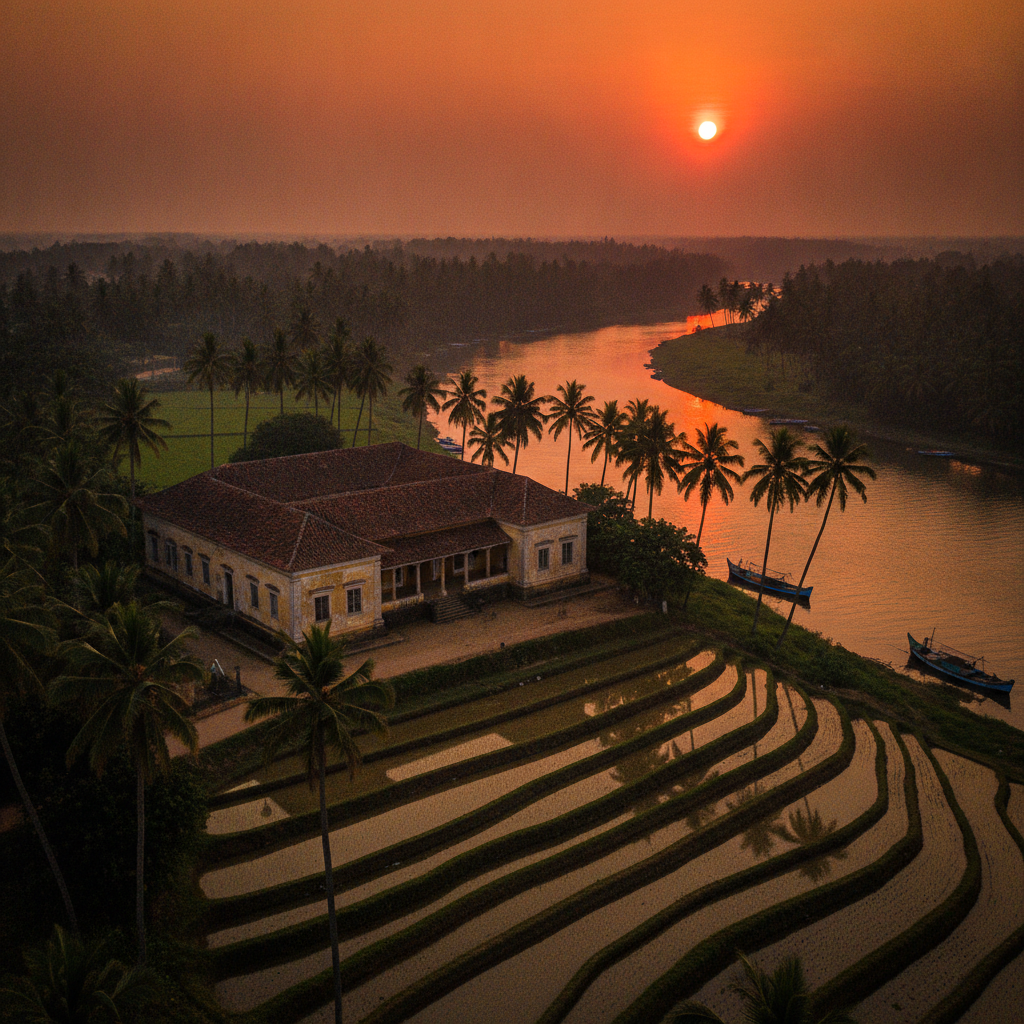
Goa's interior villages—largely unknown to the beach-focused majority of tourists—preserve a way of life that has more continuity with Goa's pre-tourism history. The village of Loutolim (Salcete taluka, South Goa) contains 18th-century Portuguese colonial mansions in various states of restoration and ruin; the Miranda House (19th century, home of artist Mario Miranda) is open to visitors. The village of Divar Island (north of Old Goa, accessible by ferry) has a particularly beautiful landscape of Portuguese-era houses, coconut palms, and rice paddies; the island has no large hotels and relatively few visitors. The interior spice country of Ponda taluka (15–20 km from Panjim) has the densest concentration of Hindu temples rebuilt after the Portuguese retreat in the 17th century.
- 6
Goa's Literary & Intellectual Heritage
Goa has produced a disproportionate number of significant Indian writers and intellectuals relative to its small size. Damodar Mauzo (b. 1944)—winner of the 2022 Sahitya Akademi Award (India's highest literary honour) and the first Konkani writer to win it—has written about Goan Catholic life for 50 years. Vivek Menezes is a contemporary writer and cultural critic based in Goa. The journalist and activist Claude Alvares (Goa Foundation) has written extensively on ecology and development. The novelist Sujata Massey (born in Germany to a Goan Catholic father) writes crime fiction set in India with Goan characters. The Goa Arts & Literary Festival (GALF, November) brings Indian and international writers to Panjim annually. The Goa-Portugal literary connection is maintained through exchanges and the Camões Institute (Portuguese cultural institution) in Panjim.
Walk this route with audio
Stories play automatically as you reach each stop — no tapping needed.
More in Goa
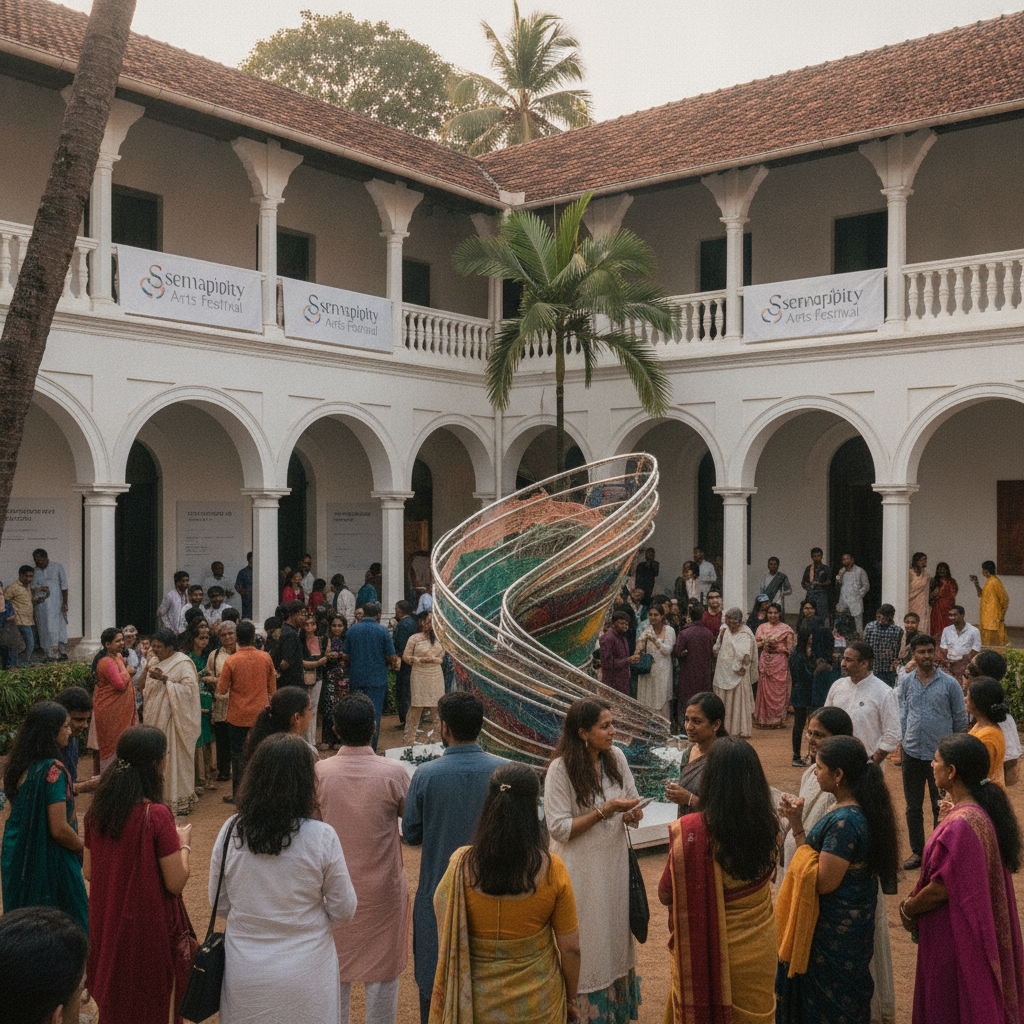
Goa's Complexities: The 252-Year Inquisition, Konkani's Four Scripts & the CRZ Laws Defending the Coastline
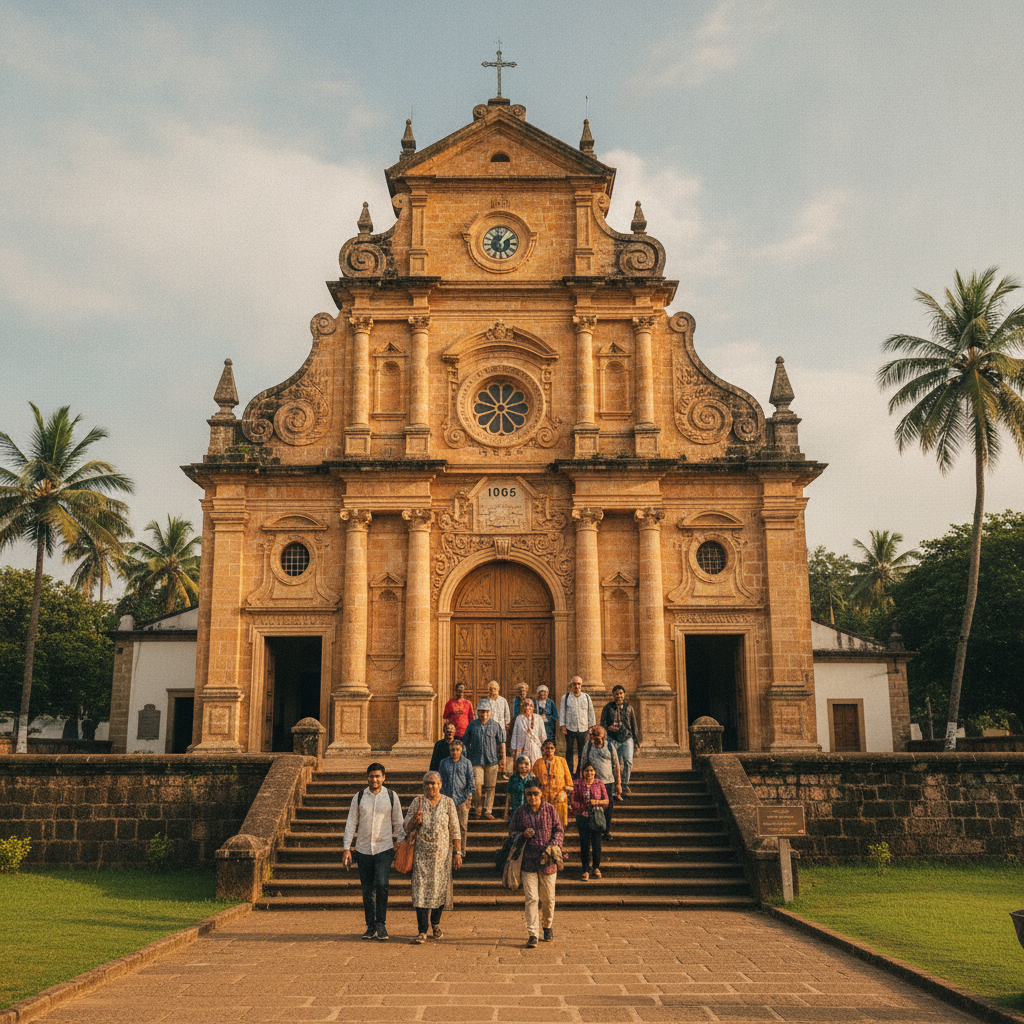
Goa's History: 451 Years of Portuguese Rule, St Francis Xavier's Incorrupt Body & India's Only Surviving Carnival
Goa Complete: Monsoon Magic, Cashew Feni Distilleries, Sunburn Festival & Konkani Catholic Christmas Midnight Mass
Goa Unfiltered: The 1510 Spice-Trade Conquest, Brazil's Cashew Tree Transforming Goa's Economy & Choosing Your Beach