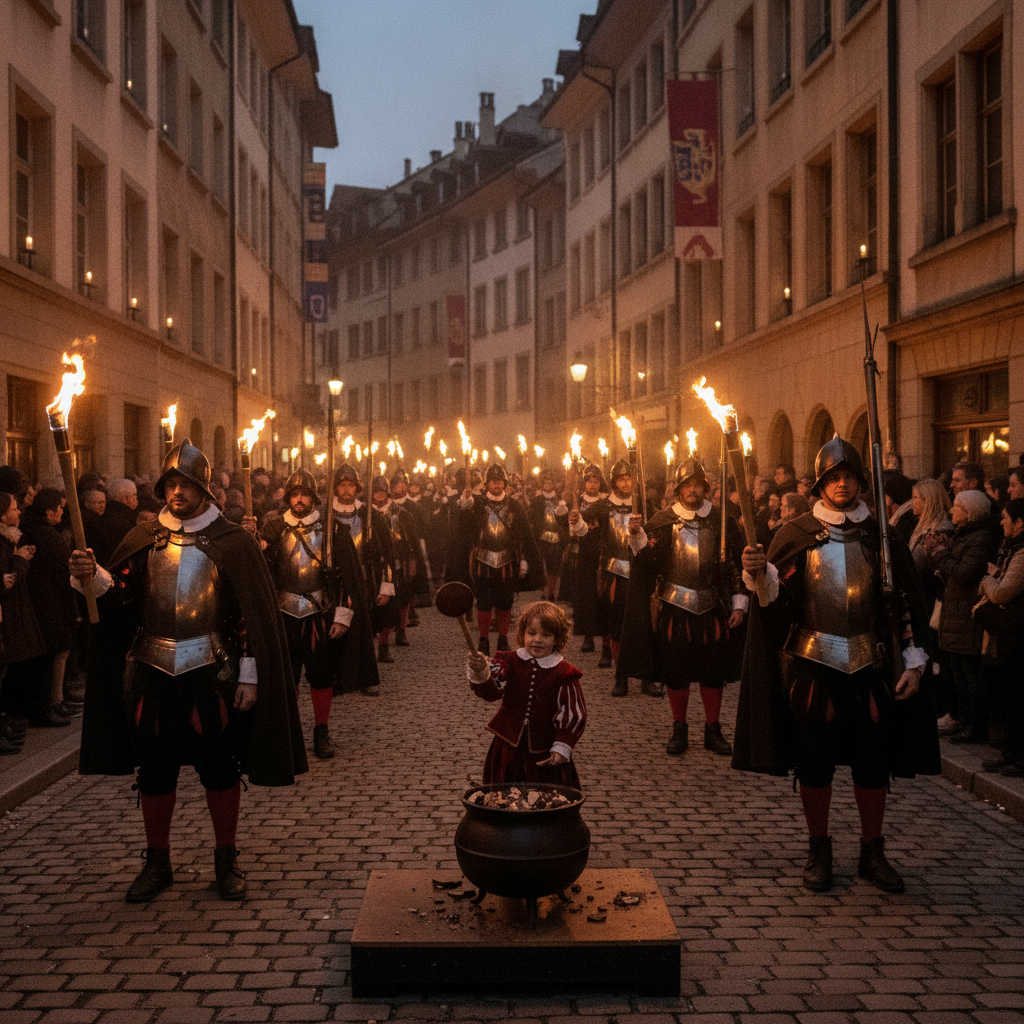
Geneva — the Jet d'Eau, the Old Town & Lake Geneva
Geneva (Genève in French, the second-largest city in Switzerland, population 203,000, the most international city in the world — the seat of 40 international organizations including the UN European headquarters, the WHO, the UNHCR, the WTO, and the Red Cross — the city of Calvin, of Rousseau, of the Geneva Conventions, and of the most concentrated luxury watch industry in the world)
- 1
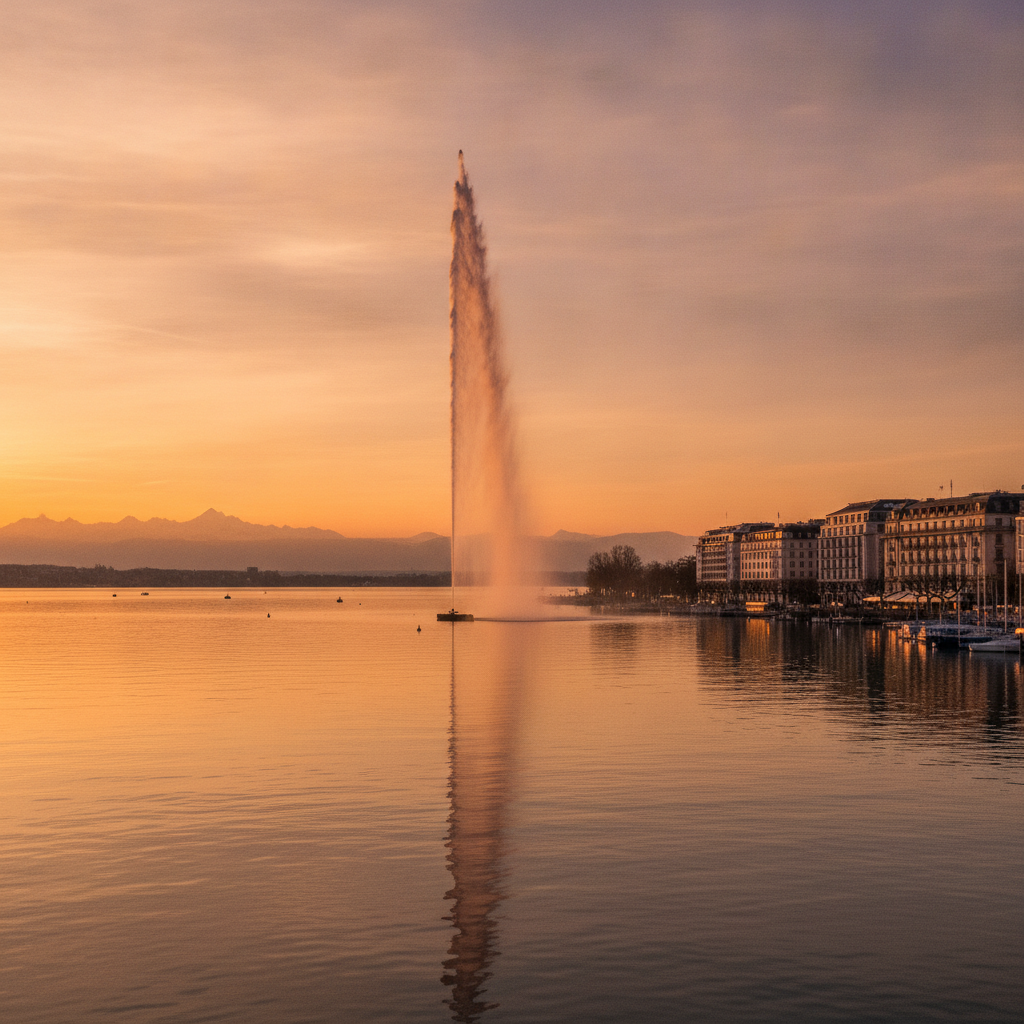
The Jet d'Eau — Geneva's 140-Metre Water Fountain
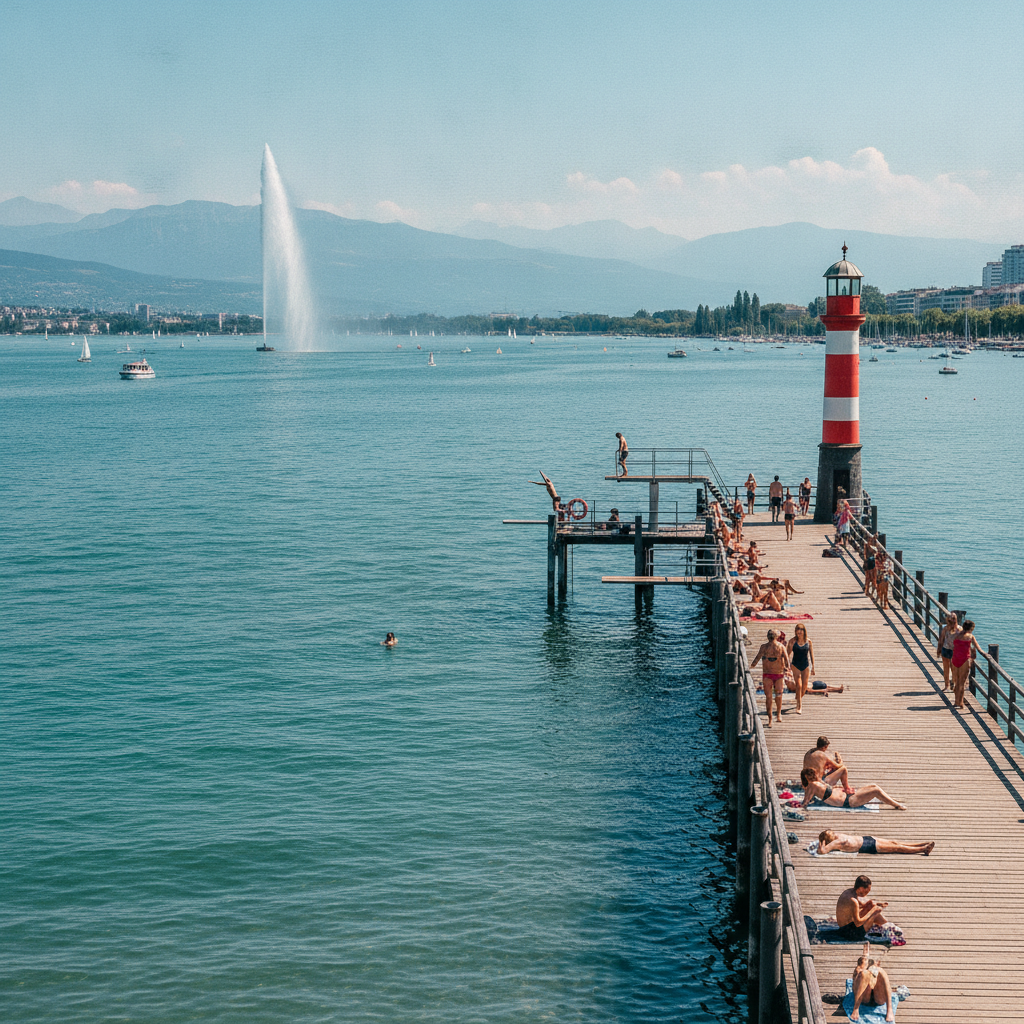
Jet d'Eau (the 140-metre water jet shooting from the Rade — the harbour of Lake Geneva — the most recognized symbol of Geneva and one of the most powerful water jets in the world, the jet visible from 40km on a clear day): the history (the Jet d'Eau was originally a pressure-relief valve for a hydraulic power network serving the Geneva workshops, installed 1891 at the Coulouvrenière hydraulic station on the Rhône, moved to the lake harbour 1891 and converted to a tourist attraction — the jet pumping 500 litres per second at 200 km/h with 7 tons of water in the air at any given moment, the spray creating a permanent rainbow around the jet base on sunny mornings — the jet turned off in strong winds and during storms, the wind conditions making the spray direction unpredictable for the jetty walkout at the base), the jetty access (the wooden jetty extending 150m into the lake from the south shore to the base of the jet, accessible on foot from the Quai Gustave-Ador, free, the water temperature at the base of the jet varies by season — the spray can soak visitors completely in crosswinds, the recommended clothing: the waterproof jacket at any time of year), the night illumination (the Jet d'Eau illuminated at night by 3 searchlights — the jet visible from the Old Town and the Paquis beach at night as the primary Geneva landmark, the most dramatic view of the jet at night from the Pont du Mont-Blanc bridge), the seasonal operation (the Jet d'Eau operates from March to mid-October, the exact dates and the daily operating hours announced at geneve.com — the jet turned off during high winds and the winter months) and the lake circuit (the 3km lake promenade from the Pont du Mont-Blanc south along the Quai Gustave-Ador to the Jet d'Eau and back along the Quai Général-Guisan the most popular Geneva waterfront walk, the most relaxing free activity in Geneva in good weather).
- 2
The Geneva Old Town — Calvin's City
Vieille Ville (the Geneva Old Town on the hill above the south bank of the Rhône, the most historically concentrated part of Geneva, the neighbourhood of the Reformation under John Calvin 1541-1564): St-Pierre Cathedral (the Cathédrale Saint-Pierre at the top of the Old Town hill, the 12th-century Romanesque-Gothic cathedral where Calvin preached from 1536 to his death 1564, the Calvin's Chair still displayed in the nave, the cathedral with the most Calvinist architectural simplicity of any major Swiss cathedral — the Calvinist Reformation stripped the interior of all statues, all images, and all decorative elements in 1535, the whitewashed nave the most austere major European cathedral interior, free, Monday-Saturday 9:30am-6:30pm, Sunday noon-6:30pm; the North Tower with the panoramic view of Geneva and the lake open for the CHF 5 tower climb), the Maison Tavel (Rue du Puits-Saint-Pierre 6, the oldest house in Geneva built 1334, now the Geneva History Museum, the most important medieval building in the city, free, Tuesday-Sunday 11am-6pm — the 3D model of Geneva in 1850 on the top floor the most complete single-object overview of the pre-industrial city), the Reformation Wall (the Mur des Réformateurs at the Parc des Bastions, the 100m granite wall bearing the 5m relief portraits of the four Reformers associated with Geneva: Guillaume Farel, John Calvin, Theodore Beza, and John Knox — the most symbolically important single monument in Protestant Europe, free, always accessible) and the Old Town streets (the Grand-Rue — the main Old Town street with the 18th-century mansions — the house at Grand-Rue 40 the birthplace of Jean-Jacques Rousseau 1712, the most important single birth house in Geneva, the Rousseau Museum in the building CHF 5 adults, Tuesday-Sunday 11am-6pm).
- 3
The UN and the International Geneva
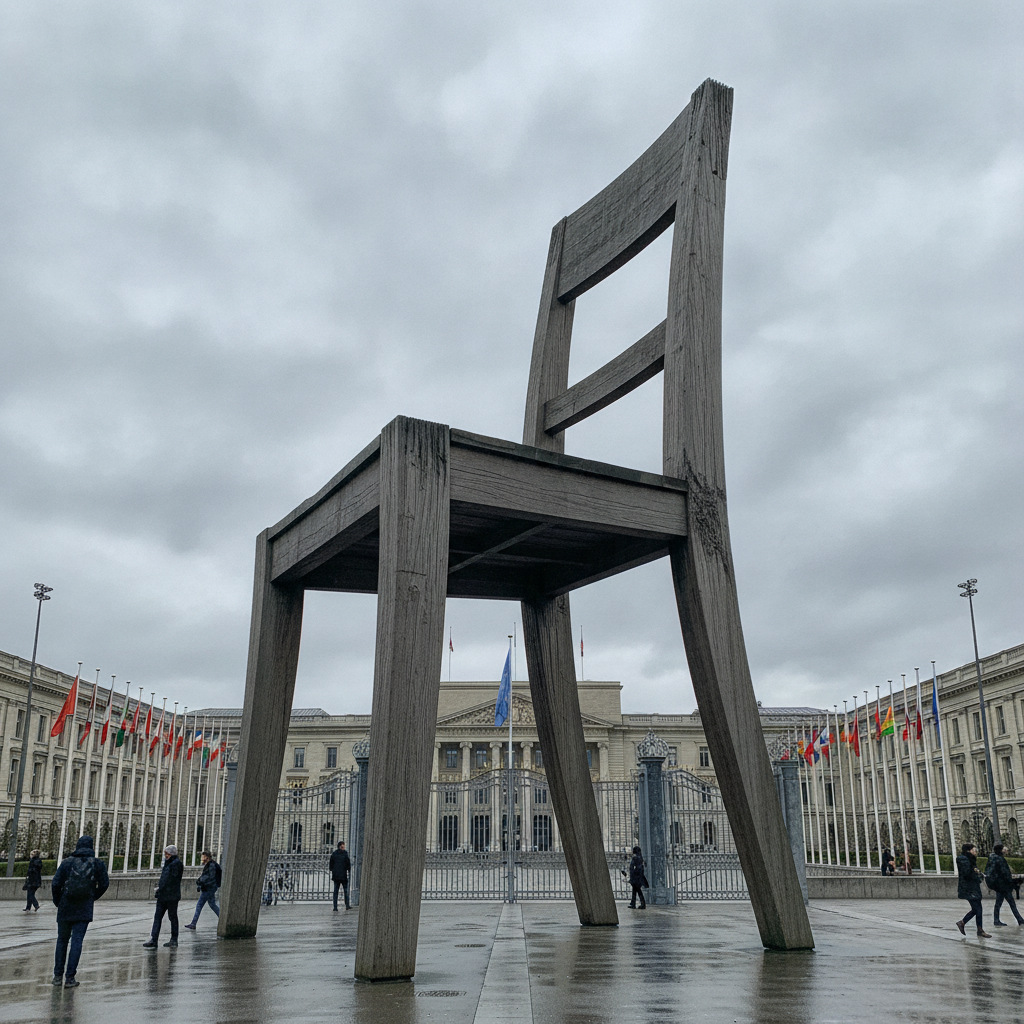
International Geneva (the most concentrated international organization district in the world — the 40 international organizations headquartered in the 5km radius of the Palais des Nations employ 34,000 international civil servants and receive 2,700 diplomatic delegations annually): the Palais des Nations (the European headquarters of the United Nations at Avenue de la Paix 8-14, the main building of the League of Nations 1929-1938 — the largest European building complex after Versailles when built — now housing the UN Human Rights Council, the Conference on Disarmament, and the primary UN meeting hall outside New York, guided tours available Monday-Friday from 10am, the advance booking essential at ungeneva.org, CHF 15 adults, the Salle des Assemblées — the main assembly hall with the Catalan artist José Maria Sert ceiling murals depicting 'Human Achievement' — and the garden with the 34 nations' trees and the Broken Chair sculpture outside the main entrance — the 12m wooden chair with the broken leg commissioned by the anti-landmine campaign 1997 the most photographed sculpture in Geneva), the International Red Cross Museum (the Musée International de la Croix-Rouge et du Croissant-Rouge at Avenue de la Paix 17 adjacent to the Palais des Nations, CHF 15 adults, Monday and Wednesday-Sunday 10am-6pm, the most emotionally powerful human rights museum in the world — the wall of the 500+ million name cards of prisoners of war held by the ICRC in the First World War, the solitary confinement cell, and the timeline of humanitarian crises from the Battle of Solferino 1859 — where Henri Dunant witnessed the slaughter and founded the Red Cross — to the present conflicts) and the WHO (the World Health Organization headquarters at Avenue Appia 20 adjacent to the Palais des Nations, the organization that coordinates the global pandemic response and the vaccine rollout — the WHO campus not publicly accessible but the WHO Exhibition Centre at the main building entrance showing the history of the global health organization, free, Monday-Friday 9am-4pm).
- 4
The Geneva Watch Industry — Patek Philippe and the Luxury Watches
Geneva watchmaking (the most concentrated luxury watchmaking industry in a single city, the Geneva watch brands representing the highest tier of Swiss horology): the Geneva Seal (the Poinçon de Genève — the Geneva Seal, the quality mark granted only to watches made in the Canton of Geneva meeting the strict technical specifications — the hallmark of the finest Swiss watchmaking, the brands eligible including Patek Philippe, Vacheron Constantin, and Rolex Montres — the seal the most quality-exclusive hallmark in the Swiss watch industry), the Patek Philippe Museum (the Musée Patek Philippe at Rue des Vieux-Grenadiers 7, the finest single-brand watch museum in the world, the 4-floor museum displaying 2,000 timepieces from the 16th century to the present including the original Patek Philippe pocket watch of 1839, CHF 10 adults, Tuesday-Friday 2-6pm, Saturday 10am-6pm, the collection the most complete documentation of the development of mechanical precision timekeeping available in a single museum), the Rue du Rhône shopping (the primary luxury retail street of Geneva — the Rue du Rhône the most concentrated luxury watch and jewelry street in Switzerland, 400m of the Cartier, the Rolex, the Vacheron Constantin, the Chopard, the Piaget, and the IWC boutiques — the most expensive street in Switzerland by retail per metre, the Swiss VAT refund of 7.7% on purchases over CHF 300 available for non-EU residents) and the Watchmaking Museum at Le Locle (the Musée d'Horlogerie at the Château des Monts in Le Locle — the watchmaking capital in the Jura 90 minutes from Geneva — the most complete watchmaking machinery collection in Switzerland, accessible as a day trip from Geneva via Neuchâtel).
- 5
Lake Geneva — the Swiss Riviera and the Wine Terraces
Lac Léman (Lake Geneva, the largest lake in Western Europe at 582 square km, shared between Switzerland and France, the Swiss north shore the most scenic lake shore with the Lavaux wine terraces and the Alps as the backdrop): the CGN lake steamers (the Compagnie Générale de Navigation sur le lac Léman, the lake steamship company operating since 1823, the Belle Époque paddle steamers Savoie 1914, Simplon 1915, Rhône 1927, and Italie 1929 — the most elegant inland lake paddle steamers in Europe, the complete lake circuit from Geneva to Chillon in 3 hours at CHF 25 adults one-way, the Swiss Travel Pass covering the CGN lake steamers), the Lavaux wine terraces (the UNESCO World Heritage terraced vineyards on the north shore of Lake Geneva between Lausanne and Vevey — the most visually dramatic wine landscape in Switzerland, the terraces built by Cistercian monks from the 11th century on the steep south-facing slopes above the lake, the primary varietals Chasselas — the Swiss national white wine grape, a grape that produces a distinctively mineral and lightly sparkling wine at high altitude — the villages of Lutry, Cully, and Epesses the most accessible within the Lavaux AOC, the Lavaux cruise by CGN steamer from Lausanne to Vevey at CHF 15 adults the most scenic single lake journey), Montreux and the Chillon Castle (the Château de Chillon on the lake shore 90 minutes from Geneva by train at CHF 24 return — the most visited historic monument in Switzerland at 400,000 visitors per year, the 12th-century castle on the rock in the lake, the dungeon where François de Bonivard was chained 1530-1536 inspiring Byron's 'Prisoner of Chillon' poem, CHF 14 adults, free with Swiss Travel Pass, daily 9am-7pm in summer) and the Montreux Jazz Festival (the annual jazz festival in early July in Montreux, the most famous jazz festival in Europe and the largest music festival in Switzerland at 250,000 visitors, the lakeside stages and the Casino of Montreux, tickets at montreuxjazzfestival.com, the free outdoor stage at the Stravinski Auditorium the most accessible festival experience at no cost).
- 6
Geneva Practical — Currency, CERN and Swiss Efficiency
Geneva practical: getting there (the Geneva Airport — Genève-Aéroport, 4km from the city centre, the most internationally connected airport in Switzerland after Zurich, the direct train to the Gare de Cornavin in 6 minutes at CHF 3.50 with the free CFF ticket in the baggage claim hall — the only Swiss airport providing a free public transport ticket to the city centre), the Swiss Franc in Geneva (the most expensive city in Europe for the visitor — the restaurant lunch CHF 25-45, the dinner CHF 50-100, the hotel CHF 200-500 per night, the public transport 60-minute ticket CHF 3.50, the Geneva Unireso zone 10 ticket the correct purchase for the hotel-to-city-centre journey), the CERN (the European Organization for Nuclear Research at Route de Meyrin 385, the site of the Large Hadron Collider — the 27km circumference particle accelerator 100m underground at the Swiss-French border, the most important physics research facility in the world and the birthplace of the World Wide Web — Tim Berners-Lee invented the web at CERN in 1989 to facilitate the sharing of physics data, the CERN visitor centre 'Universe of Particles' open Monday-Saturday 8am-6pm, free, the guided tunnel tours bookable 4 months in advance at outreach.web.cern.ch, the surface site visit free for the visitor who missed the tunnel booking), the Reformation history (the Calvin connection: Geneva the most Calvinist-influenced city in the world — the plain Protestant architectural tradition, the absence of carnival and the Mardi Gras celebrations, the Swiss Protestant work ethic, the watchmaking tradition itself linked to Calvin's prohibition of jewelry-making which redirected the Geneva craftsmen toward the mechanical art of the watch) and the French-Swiss cultural duality (Geneva officially French-speaking since the 16th century, the most French-influenced Swiss city — the French cultural references: the cuisine, the literary tradition, the political philosophy — the Genevan Jean-Jacques Rousseau the most influential French-language political philosopher of the 18th century — coexisting with the Swiss German efficiency and the Swiss German banking precision in the most productive cultural synthesis in the Alpine world).
Walk this route with audio
Stories play automatically as you reach each stop — no tapping needed.
More in geneva
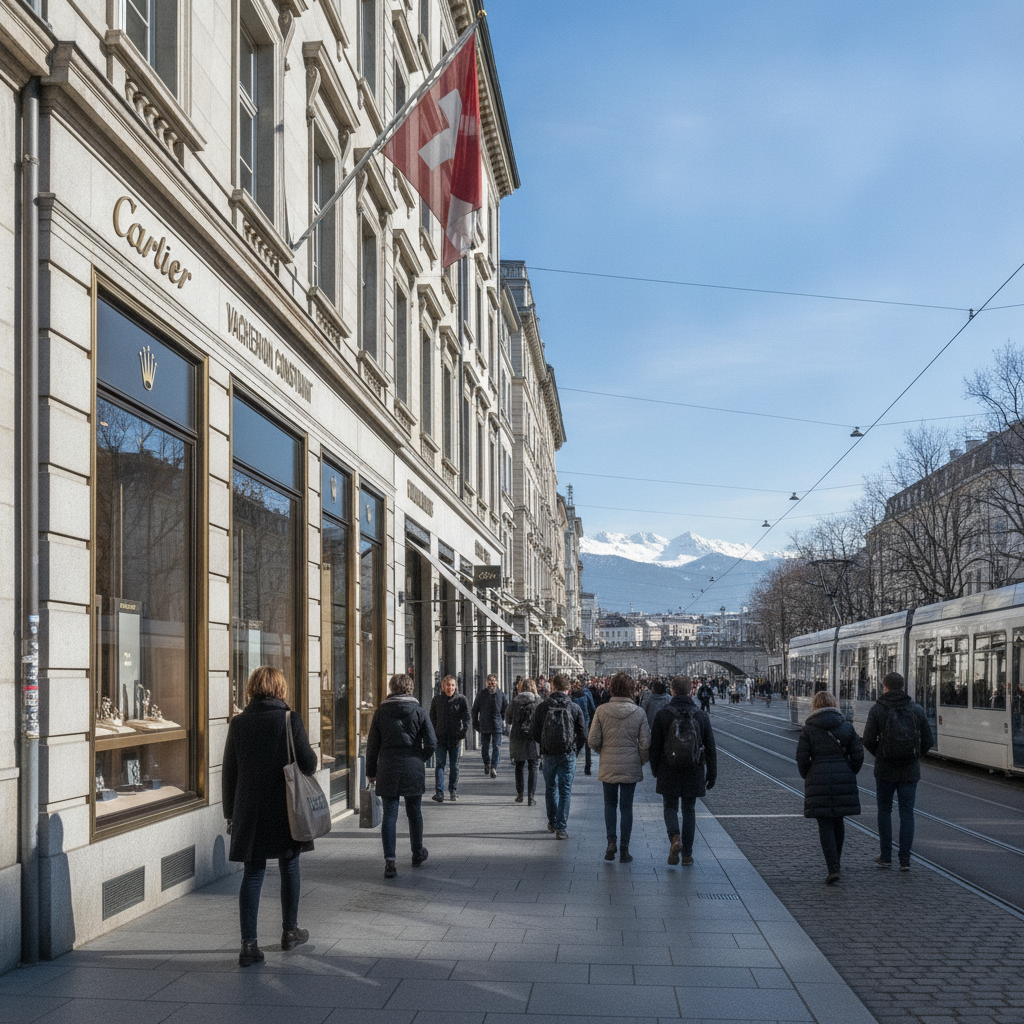
Geneva Watches, the Rue du Rhône & Jean-Jacques Rousseau's City
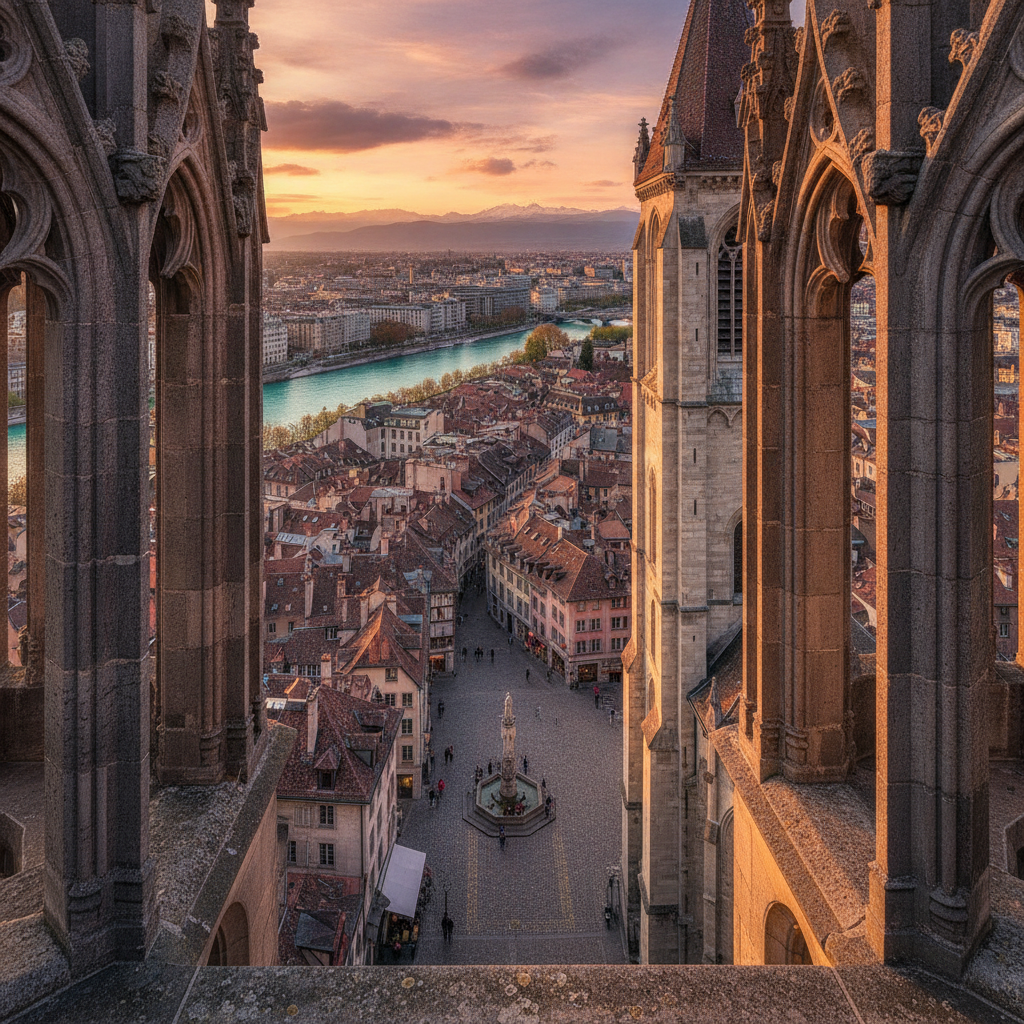
Geneva Old Town Walk — the Cathedral, the Bourg-de-Four & the Reformation Heritage
Geneva Outdoors — the Bains des Pâquis, the Rhône Parks & the City's Green Spaces
Geneva Culture — CERN, the MAH, the Ariana Museum & French-Swiss Cuisine