Gdańsk Amber, Food & the St. Dominic's Fair — the Baltic Amber Capital
Gdańsk is the world capital of Baltic amber — the fossilized resin of the ancient Scandinavian forests, 40-50 million years old, washed by the sea onto the Baltic beaches and traded through Gdańsk for 3,000 years — and the city's food tradition (the Baltic herring, the Gdańsk Goldwasser liqueur, the local dark beer) reflects its position at the confluence of the Baltic Sea, the Vistula River, and the north European grain trade.
- 1
Baltic Amber — the Gold of the North
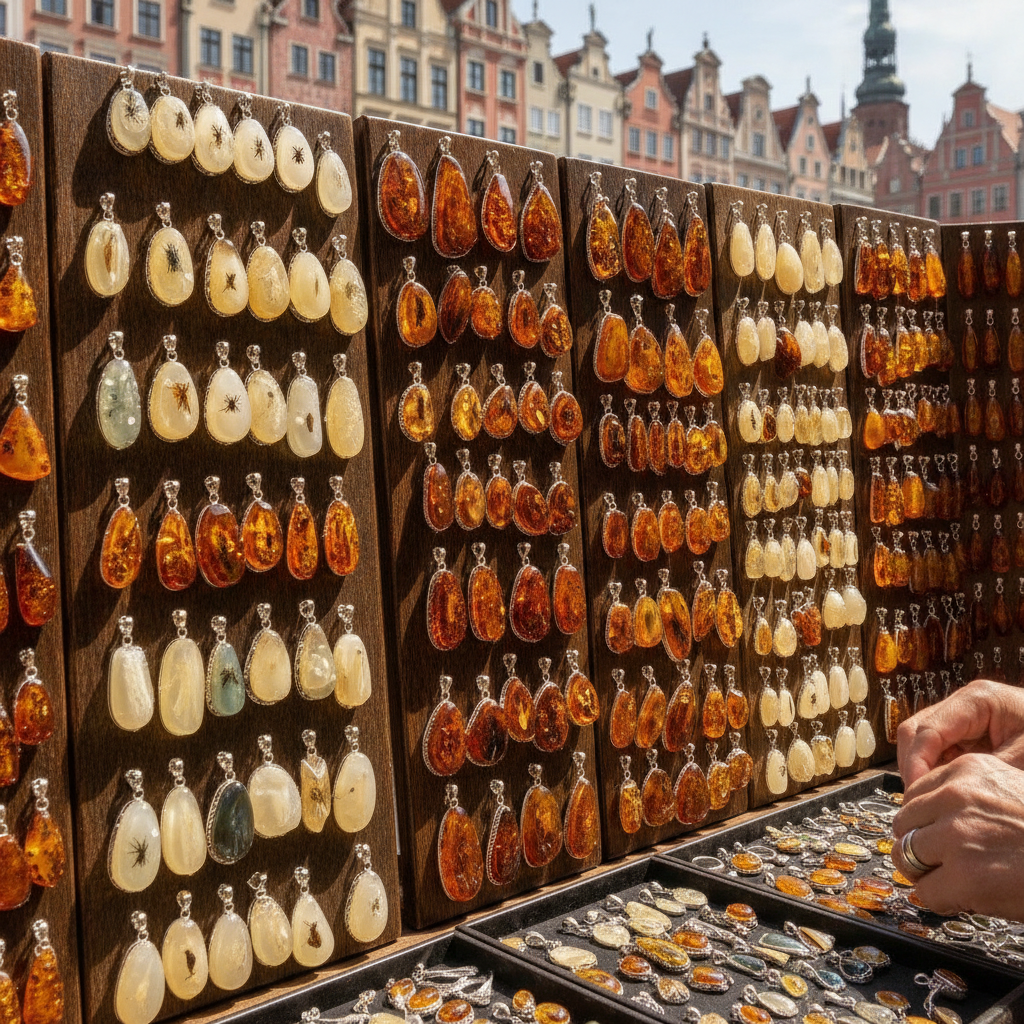
Baltic amber (the fossilized resin of the Pinus succinifera tree — an extinct pine species that covered Scandinavia and the Baltic region 40-50 million years ago — washed by the sea from the Sambian Peninsula in the Kaliningrad Oblast of Russia and deposited on the Polish, Lithuanian, and Latvian Baltic beaches, the material ranging from pale lemon to dark cognac in colour with rare blue and green varieties caused by iron and other mineral inclusions, the amber containing prehistoric inclusions — insects, spiders, plant fragments trapped in the resin at the time of fossilization, the inclusions making each piece a window into the Eocene forest, the amber sometimes containing the eggs of prehistoric insects or the remains of the first flowering plants — the primary export of the Baltic region from the Bronze Age to the present, the Amber Road connecting the Baltic beaches to Rome the most important ancient trade route north of the Alps): the Gdańsk amber market (the amber shops concentrated on Mariacka Street — the most atmospheric street in the Old Town, the Gothic-Renaissance facades of the burgher houses flanking the raised terraces where the amber sellers display their wares — and in the Long Lane, the amber at every price point from €3 polished pebbles to €3,000 designer jewellery).
- 2
Mariacka Street — the Amber Street
Mariacka Street (the most atmospheric street in Gdańsk, 200m long connecting the St. Mary's Basilica to the Motława River, the Gothic-Renaissance townhouses with their raised stone terraces (przedproże) where the amber vendors have displayed their wares since the 15th century, the terraces specifically designed for outdoor commerce — the merchant sitting on the terrace with goods displayed on the railing, the customer approaching from the street level, the architecture serving the commerce directly) and the amber market (the 40+ amber shops and stalls on Mariacka Street, the full range of Baltic amber quality and price — the tourist-grade polished pebbles and simple pendants at €3-20, the mid-range designer jewellery at €50-300, the specialist inclusion amber — pieces with prehistoric insects or plant material clearly visible — at €100-2,000 per piece depending on the quality and rarity of the inclusion). The correct amber purchase: the GIA Amber certificate (the Gdańsk Institute of Amber's authenticity certificate, issued with Baltic amber pieces sold by reputable dealers, the certification confirming genuine Baltic amber rather than the synthetic amber-coloured resin sold by less scrupulous sellers, the certificate costing €5-10 and added to any significant purchase at the specialist shops on Mariacka Street).
- 3
Goldwasser — the Gold-Flake Schnapps of Gdańsk
Goldwasser (Der Lachs Original Danziger Goldwasser, the Gdańsk liqueur produced since 1598, the herbal schnapps of 40 percent alcohol containing tiny flakes of real 22-carat gold suspended in the liquid — the gold dissolving slowly in the mouth and contributing no flavour but the visual drama of the shimmering liquid in the bottle, the liqueur produced by the Machandel distillery in Gdańsk using the original 16th-century recipe of Ambrosias Vermöllen, the flavours of anise, juniper, and 11 other herbs, the gold flakes visible when the bottle is shaken — the most distinctive spirit of the Baltic region) is available at the gift shops of the Long Lane and at the Old Town restaurants at €8-15 per glass. The legend (the Neptune Fountain story: the Neptune's trident struck the fountain and gold began flowing from the Motława — the symbolic explanation for why the Goldwasser was invented in Gdańsk, the connection between the amber gold of the Baltic and the literal gold of the liqueur), the correct context (the Goldwasser served in a thin-stemmed glass with the gold flakes visible, the correct accompaniment to the amber herring — the Gdańsk marinated herring — as the specific local aperitif pairing).
- 4
Baltic Herring and Gdańsk Food Tradition
The Baltic herring (the Atlantic herring caught in the Baltic Sea by the Gdańsk fishing fleet, the fish significantly smaller and less fatty than the North Sea herring, the Baltic variety requiring different curing techniques — shorter brining periods, spicier marinades — the Gdańsk pickled herring tradition among the most developed in Poland with 15+ distinct preparation styles): the herring in cream sauce (the most traditional Gdańsk preparation, the cured herring fillets in sour cream with apple, onion, and pickled cucumber, the Baltic starter at every Gdańsk restaurant), the amber herring (the marinated herring in oil with carrot, onion, bay leaf, and allspice — the 'amber' referring to the golden colour of the oil marinade rather than the gem, the most widely consumed preparation in the city), and the fried fresh herring (the fresh herring landed at the Gdańsk fishing harbour, fried with onion and potato, available at the fish restaurants of the Motława waterfront from May to September). The fish market (the traditional fish market at Targ Rybny, the Motława quayside east of the Crane, the outdoor fish sellers on market days Tuesday and Friday, the smoked Baltic eel and the smoked cod alongside the fresh herring the defining products of the Gdańsk fish tradition).
- 5
The St. Dominic's Fair — Europe's Oldest Market
The St. Dominic's Fair (Jarmark Świętego Dominika, the Gdańsk summer fair held annually in late July-August for 750 years — the oldest and largest outdoor market in Europe, dating from the papal privilege granted by Pope Alexander IV in 1260 to the Dominican friars in Gdańsk, the fair covering the Long Lane, the Long Market, the adjacent streets, and the Motława waterfront with 1,000+ stalls, 500,000 visitors over the 3 weeks of the fair): the amber and craft stalls (the fair's primary commercial content, the Baltic amber in the greatest concentration of any event in Europe, the folk crafts of Poland, the Baltic states, and Scandinavia), the antique market (the section on Targ Węglowy and the adjacent streets, the pre-war Danzig objects — the German-language books, the amber pieces from the pre-1945 German amber industry — alongside the standard antiques fair selection, the best source of genuinely old Baltic amber pieces in an authenticated market context), and the food market (the Polish regional food stalls: the oscypek from the Tatras, the perogi from Kraków, the smoked fish from the Baltic coast, and the Gdańsk Goldwasser tastings). The fair in 2024-2025 dates: always the last Sunday of July to the third Sunday of August.
- 6
The Motława Waterfront and the Granary Island
The Długie Pobrzeże (the Long Quay, the Motława waterfront promenade from the Crane to the Green Gate, the most animated public space in Gdańsk from May to September — the tourist boats departing from the quay to Westerplatte and the Hel Peninsula, the outdoor restaurants and bars along the water's edge, the view across the Motława to the granary island): the Granary Island (Wyspa Spichrzów, the island across the Motława from the Long Quay, the brick granaries of the Gdańsk grain trade — the grain arriving by barge from the Vistula hinterland and stored in the granaries before loading onto the Baltic-bound ships, the trade that made Gdańsk the wealthiest city in Northern Europe in the 16th-17th centuries, the granaries destroyed in 1945 and rebuilt after 2000 as a mixed residential and commercial complex, the facades reconstructed to match the 17th-century brick originals) and the boat tours (the tourist boats operating from the Long Quay, the Westerplatte round trip at €10-15, the Golden Gate to the Crane photo cruise at €8, the day trip to the Hel Peninsula at €20-25 in summer, the most scenic approach to Westerplatte being by boat rather than by bus).
Walk this route with audio
Stories play automatically as you reach each stop — no tapping needed.
More in gdansk
Gdańsk Solidarity Heritage — the European Solidarity Centre, the Shipyard & the End of Communism
Gdańsk Practical Guide — Reconstruction, Flemish Architecture & the National Museum
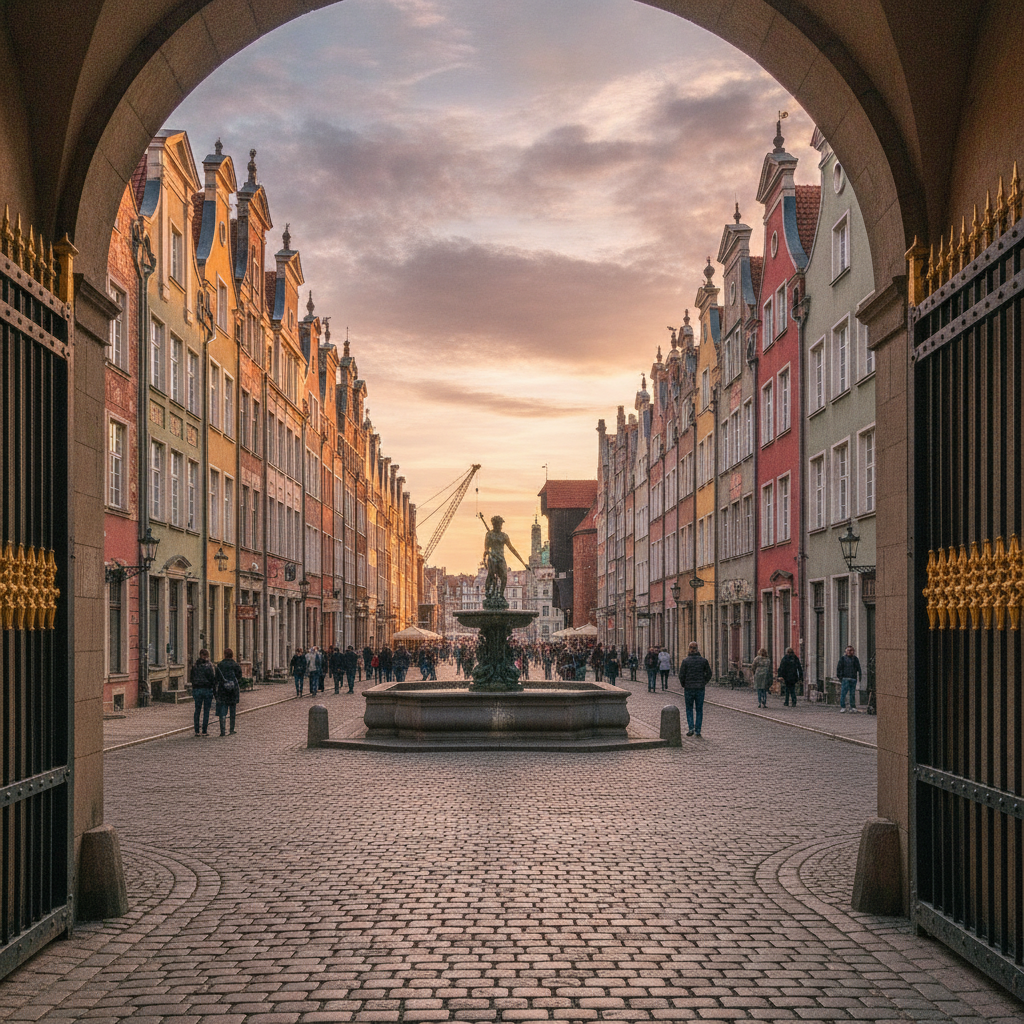
Gdańsk Long Lane & the Old Town — Neptune's Fountain, the Crane & Hanseatic Heritage
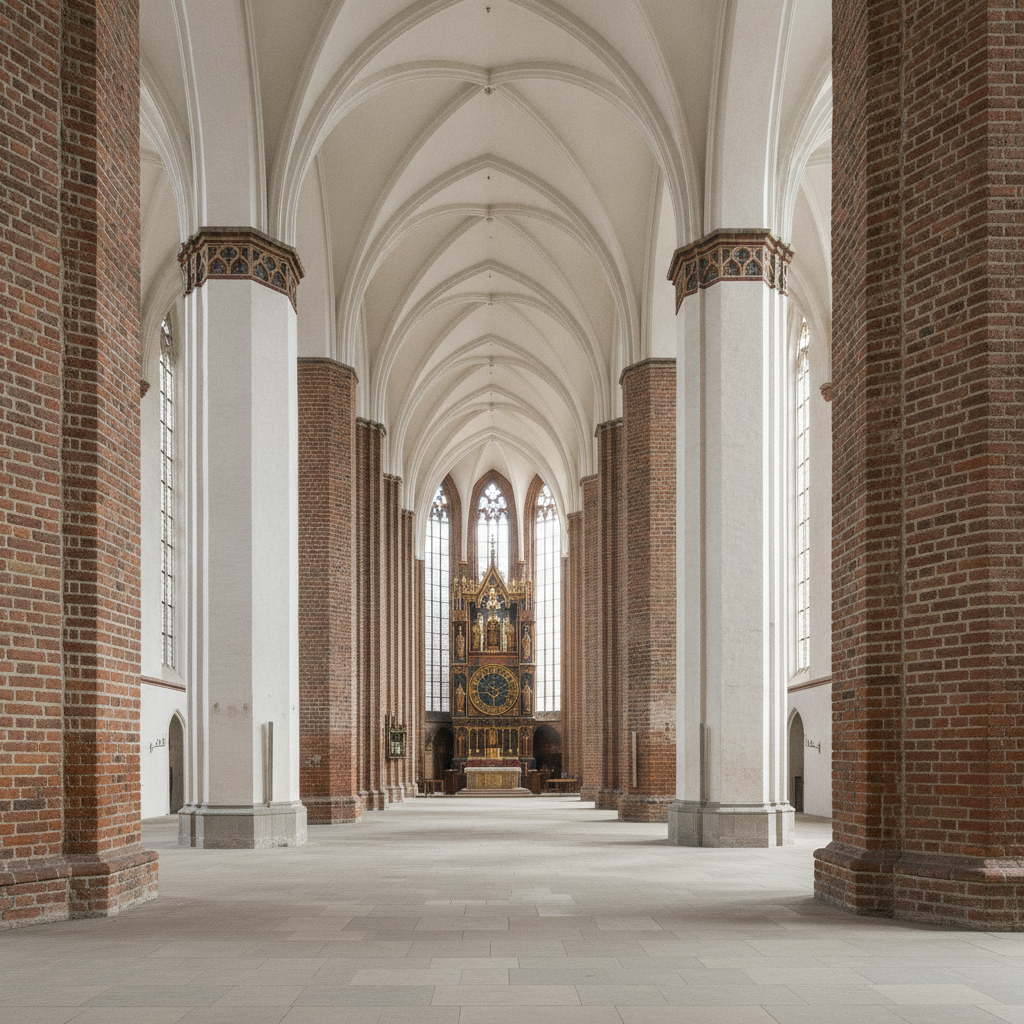
Gdańsk Churches & Art — St. Mary's Basilica, the Teutonic Legacy & the Memling Altarpiece