Moroccan Zellij Geometric Patterns Based on Star Polygon Mathematics Anticipate the Mathematical Concept of Aperiodic Penrose Tiling Described in 1974 By Hundreds of Years; Leo Africanus Captured by Sicilian Corsairs in 1518 Was Presented to Pope Leo X Who Had Him Baptized and Commissioned the First Comprehensive European Description of Africa; The Barbary Macaque of the Middle Atlas Cedar Forests Is the Only Wild Primate in Africa North of the Sahara
Moroccan zellij geometric patterns anticipating aperiodic Penrose tiling by hundreds of years; Leo Africanus captured by Sicilian corsairs and commissioned by Pope Leo X to write the first European description of Africa; the Barbary macaque as the only wild primate in Africa north of the Sahara; the Mevlevi Sema whirling dervish ceremony; the al-Qarawiyyin Library restored 2012-2016 by architect Aziza Chaouni; and the structural challenges of preserving the world's largest living medieval city with inadequate medieval drainage and no vehicular emergency access.
- 1
The Moroccan Zellige Tilework - Mathematics, Color, and the 1,000-Year Craft Tradition
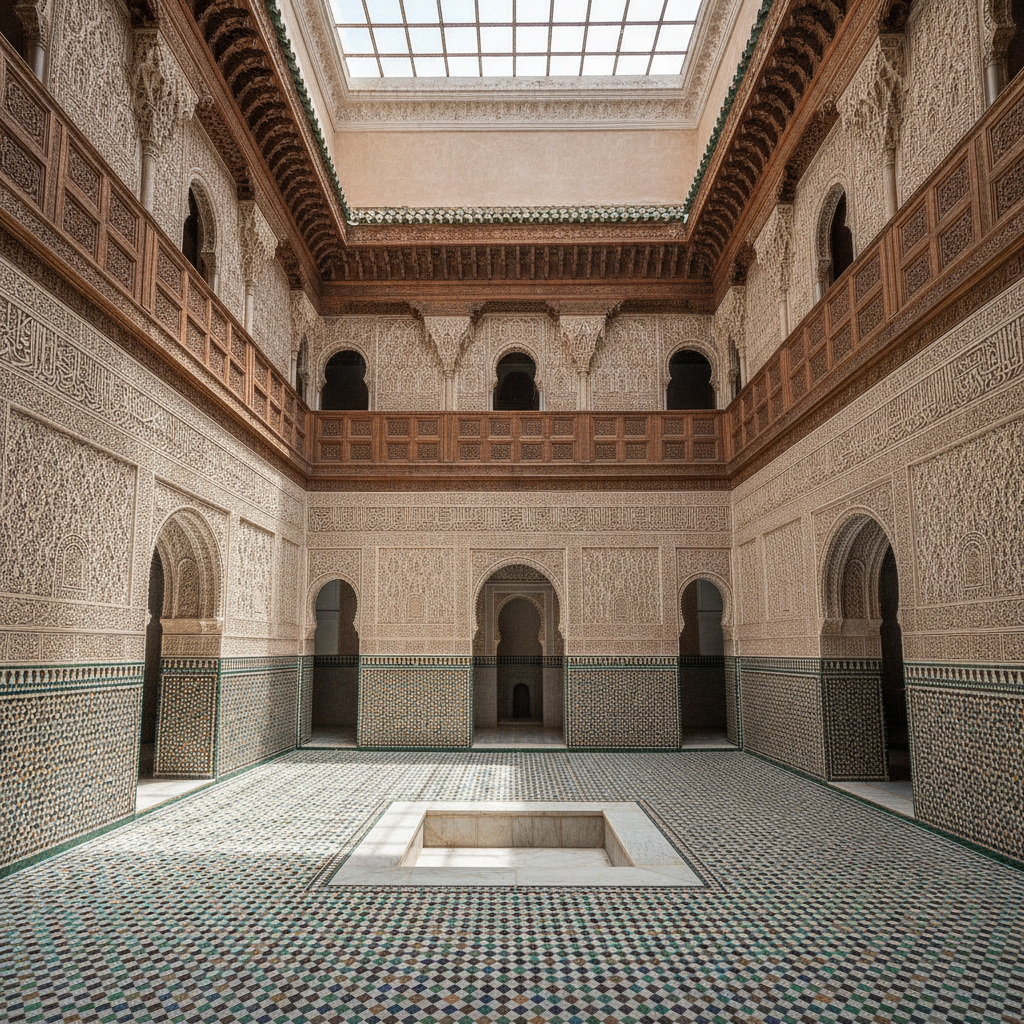
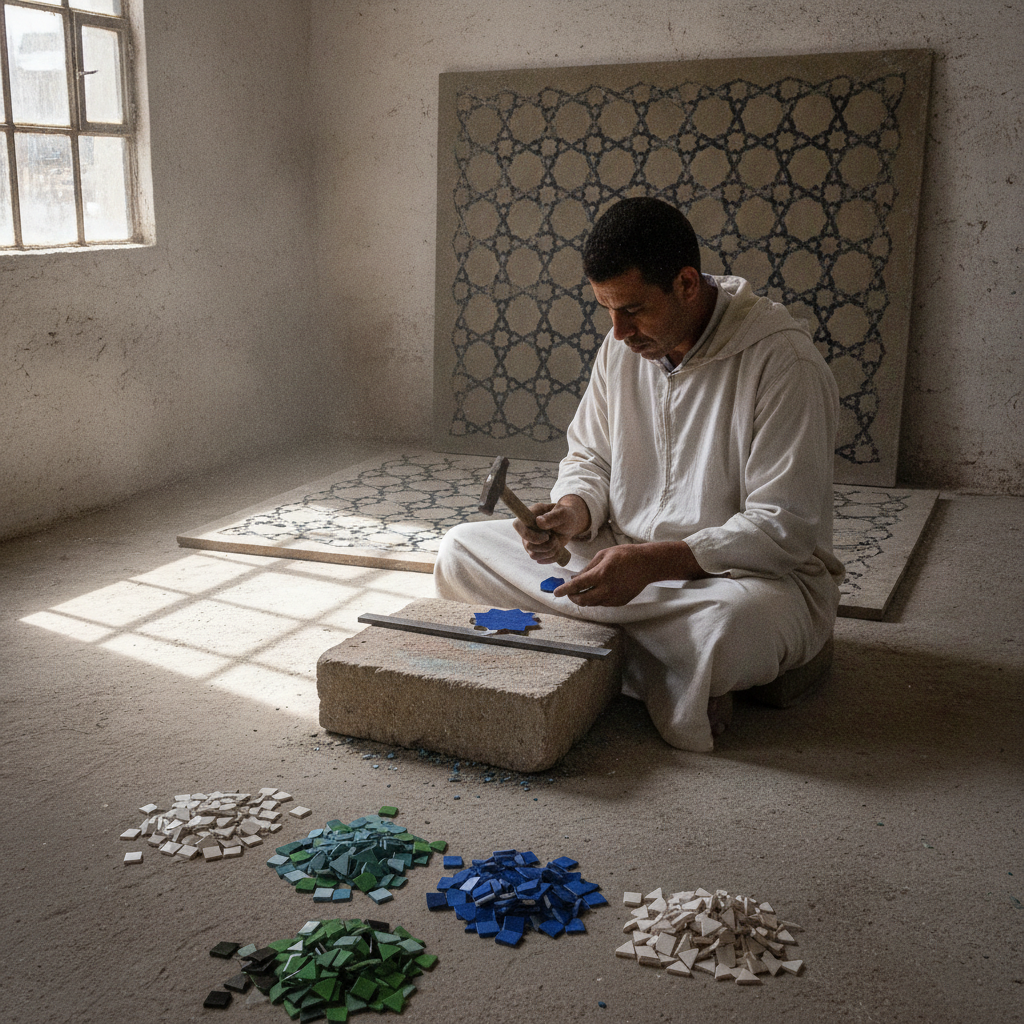
The Moroccan zellij (zellige) geometric tile mosaic - the mathematical and artistic principles underlying the most distinctive Moroccan decorative art and the craft tradition centered in Fes: the zellij guide. The mathematical basis (Moroccan zellij is based on the mathematical study of regular divisions of the Euclidean plane using combinations of regular polygons - a field that was developed by Islamic mathematicians in the 10th-12th centuries: the primary pattern generating unit is the star polygon: common star configurations: the 8-pointed star (the khatm), the 10-pointed star, the 12-pointed star, the 16-pointed star, and the 24-pointed star: the star and polygon geometry generates a complete regular division of the plane with no gaps or overlaps: the geometric patterns of Moroccan zellij anticipate the mathematical concept of aperiodic tiling (Penrose tiling was described in 1974 - Moroccan craftsmen were creating equivalent patterns in the 12th-13th centuries): the colors (the traditional Moroccan zellij color palette: Fes blue (cobalt blue - from cobalt oxide): white (from tin oxide): black (from manganese oxide): yellow (from iron and lead oxide - antimony yellow): green (from copper oxide): terracotta red (from iron oxide): the production (the zellijyyi workshop: the tiles are first formed and fired: then painted with oxide-based colorants on the flat face: then fired again at approximately 1,050 C: then the zellijyyi cuts each tile into the required geometric shape by hand using a small pointed hammer (tbal) and chisel (minshar): the geometric precision required is extraordinary - a deviation of 1-2mm in cutting will prevent the pattern from assembling correctly: the Fes production center (Fes is the primary production center for Moroccan zellij: the zellijyyi workshops are concentrated in the Ain Nokbi quarter and the surrounding industrial zone outside Fes el-Bali).
- 2
Riad Culture in Fes - The Traditional Moroccan Courtyard House as Luxury Hotel
The riad - the traditional Moroccan courtyard house - and its transformation into the primary upscale accommodation type of the Fes medina: the riad guide. The riad architecture (the riad (from the Arabic rawda - garden): the traditional Moroccan urban courtyard house: the defining spatial feature is the central courtyard (wust al-dar) with a fountain or pool and citrus trees: the rooms are arranged around the courtyard on multiple floors: the exterior of the riad presents blank walls to the street - the facade is closed and gives no hint of the interior: the beauty is entirely inward-facing: the ground floor typically has a large reception room (majlis) for guests: the upper floors have the private family rooms: the rooftop terrace: the historic riad (the finest historic riads of Fes el-Bali date from the 17th-19th centuries and belonged to the wealthy Fassi merchant class (the Fassi bourgeoisie): the materials of the historic riad: the zellij tilework of the courtyard and the lower reception room walls: the carved plasterwork panels (jis) of the upper reception room walls: the painted cedarwood ceilings: the carved stucco window grilles: the transformation (the riad-as-hotel model was pioneered in Marrakech in the 1990s and spread to Fes in the 2000s: foreign buyers (primarily French, British, and Belgian) purchased derelict historic riads in the Fes medina at low prices and restored them as luxury guesthouses: the riad restoration boom has injected significant capital into the Fes medina economy but has also driven up property prices and displaced some traditional residents: the experience (staying in a Fes riad: the silence of the medina at night (no vehicle noise): the sound of the muezzin from multiple minarets: the rooftop breakfast with views across the medina rooftops: the courtyard fountain sound).
- 3
The Middle Atlas - Cedar Forests, Berber Villages, and Day Trips from Fes
The Middle Atlas mountains - the cedar forest landscape and Berber Amazigh culture accessible on day trips south of Fes: the Middle Atlas guide. The geography (the Middle Atlas (le Moyen Atlas) - the mountain range of northern-central Morocco: elevation 1,500-3,340m (the summit of Jbel Bou Naceur 3,340m is the highest peak of the Middle Atlas): the Middle Atlas receives significantly more rainfall than the surrounding regions: the primary vegetation: the cedar forest (cedrus atlantica - the Atlas cedar - the primary tree of the Middle Atlas at 1,600-2,200m elevation): the cedar forests of the Middle Atlas are among the largest continuous cedar forests in North Africa: Ifrane (Ifrane - a French colonial hill station (altitude 1,665m) 66 km south of Fes built in the 1930s to resemble a Swiss Alpine village: chalets, a central garden, and a small lake: nicknamed the Switzerland of Morocco: the Ifrane National Park (protected area covering approximately 125,000 hectares of Middle Atlas cedar forest and lake ecosystem): the Barbary macaque (the Barbary macaque (Macaca sylvanus) - a macaque monkey that is the only wild primate in Africa north of the Sahara: the Barbary macaque lives in the cedar forests of the Middle Atlas and the Rif mountains: the monkeys are habituated to humans in the Ifrane area and can be observed at close range along the Azrou cedar forest road: Azrou (Azrou - a Berber Amazigh town 30 km south of Ifrane - a center of Middle Atlas Berber culture: the Monday souk of Azrou is one of the largest Berber markets in the Middle Atlas: carpets, ceramics, and livestock: the lakes (the volcanic lakes of the Middle Atlas: Dayat Aoua, Dayat Ifrah, and Dayat Hachlaf: freshwater lakes in the cedar forest: wildlife including marsh harriers and European rollers): Khenifra (Khenifra - a gateway to the deep Middle Atlas and the source of the Oum Er-Rbia river).
- 4
Leo Africanus - The Fassi-Born Scholar Who Described Africa to Renaissance Europe
Leo Africanus (al-Hasan ibn Muhammad al-Wazzan al-Fasi c.1488-c.1554) - the Moroccan diplomat and geographer who was born in Granada, raised in Fes, and produced the first comprehensive geographical description of Africa for European readers: the biographical guide. The life (Leo Africanus was born in Granada (in the Nasrid Emirate of Granada) approximately 1488: his family were among the Muslims of Granada who migrated to Morocco after the Christian reconquest of Granada in 1492: the family settled in Fes where the young al-Hasan was educated at the al-Qarawiyyin university: the travels (Leo Africanus traveled extensively throughout the Maghreb and West Africa as a diplomatic agent of the Moroccan court: he visited the Songhai Empire (West Africa), the Ottoman Empire, the Mamluk sultanate (Egypt), and the Italian states: the capture (Leo Africanus was captured by Sicilian corsairs in the Mediterranean in 1518: he was presented as a diplomatic gift to Pope Leo X in Rome: Pope Leo X freed him, had him baptized as a Christian with the name Giovanni Leone, and commissioned him to write a geographical description of Africa in Italian: the Description of Africa (the Descrittione dell'Africa (Description of Africa) (1526): the primary European reference work on Africa for the next century and a half: the first comprehensive geographical, ethnographic, and historical description of Sub-Saharan Africa, the Sahara, the Maghreb, and the eastern Mediterranean written from first-hand knowledge: the influence (Leo Africanus's Description of Africa was translated into Latin, French, and English in the 16th-17th centuries and formed the primary European geographical knowledge of Africa until the 19th century: his description of Timbuktu and the Mali/Songhai empires was the primary source for European knowledge of West African Islamic civilization).
- 5
The Sufi Music of Fes - Mevlevi Sama, Hadra, and the Paths to God
The Sufi musical traditions of Fes - the primary forms of Sufi devotional music practiced in the spiritual capital of Morocco and their significance in Islamic spiritual practice: the Sufi music guide. The Sufi concept of sama (sama (listening) - the Sufi practice of listening to music and poetry as a form of spiritual devotion and a path to the experience of divine presence (fana - annihilation of the self in God): the theological controversy (the permissibility of sama in Islamic law is disputed: conservative Islamic scholars (the Maliki and Hanbali schools) have generally prohibited musical instruments in religious contexts: the Sufi scholars have argued that sama used with pure intention for spiritual purposes is permitted or even recommended: the Fes theological tradition has generally been tolerant of Sufi musical practices: the Mevlevi sema (the Mevlevi Sema ceremony - the whirling dervish ceremony: the Mevlevi Sufi order was founded by the followers of Jalal al-Din Rumi (1207-1273) in Konya, Turkey: the sema ceremony involves extended rotation in white robes (the sema is not danced casually - each rotation is a spiritual act of alignment with the divine axis): the hadra (the hadra - the Moroccan Sufi group dhikr ceremony: the hadra is performed by the Qadiriyya, Tijaniyya, Aissawa, and other Moroccan Sufi orders: the ceremony involves rhythmic collective recitation of the divine names (Allah, Hu) combined with physical movement (swaying, stamping): the Aissawa (the Aissawa Sufi order based in Meknes: known for the most extreme physical hadra ceremonies including fire handling and self-cutting in states of trance): the Gnawa overlap (the Gnawa lila ceremony overlaps with the Sufi hadra tradition in its use of trance states, rhythmic music, and the invocation of spirit presences (mluk)).
- 6
Fes and the Decline of the Medieval City - UNESCO Conservation and the Living Heritage Problem
Fes and the challenges of preserving the world's largest living medieval city - the UNESCO conservation program, the structural challenges, and the ethical debate about living heritage: the conservation guide. The challenge (Fes el-Bali is unique in the world as a medieval Islamic city that remains a densely inhabited living urban environment: the approximately 150,000 residents of Fes el-Bali are not museum exhibits - they are ordinary Moroccans living in an urban environment that has inadequate infrastructure: the structural problems (the structural problems of Fes el-Bali: the drainage system is a medieval network of open drains that is chronically inadequate for the current population: the buildings (thousands of historic buildings in Fes el-Bali are in advanced states of structural decay: the timbered upper floors of traditional Fes houses are vulnerable to fire and collapse: the building collapse incidents (several historic buildings in Fes el-Bali have collapsed in the 21st century killing residents): the accessibility (the absence of motorized vehicles from Fes el-Bali means that emergency services (fire, ambulance) cannot access the deep interior of the medina by vehicle: the UNESCO program (UNESCO has been involved in the conservation of Fes el-Bali since its 1981 World Heritage designation: the Aga Khan Trust for Culture (AKTC) has been active in Fes medina conservation since the 1990s: the Al-Qarawiyyin Library restoration (the al-Qarawiyyin library was renovated and restored 2012-2016 by the Canadian-Moroccan architect Aziza Chaouni: the first major renovation of the library in its 1,165-year history: the riad market (the riad-as-hotel market has brought capital for individual building restoration but has also accelerated the displacement of traditional Fassi families from the medina by wealthy foreign buyers).
Walk this route with audio
Stories play automatically as you reach each stop — no tapping needed.
More in Fes
Morocco's King Bears the Title Amir al-Muminin (Commander of the Faithful) Giving the Moroccan Monarchy a Unique Theocratic Religious Legitimacy Distinct From All Other Arab Monarchies; The Andalusian Music Tradition al-Ala Was Brought to Fes by Refugees From the 1492 Expulsion of Muslims and Jews From Spain and Is Still Performed in Three Regional Schools; Fes Is Arguably the Most Important Single City in the Spiritual Life of West African Islam Through the Tijaniyya Sufi Order With 100-150 Million Adherents
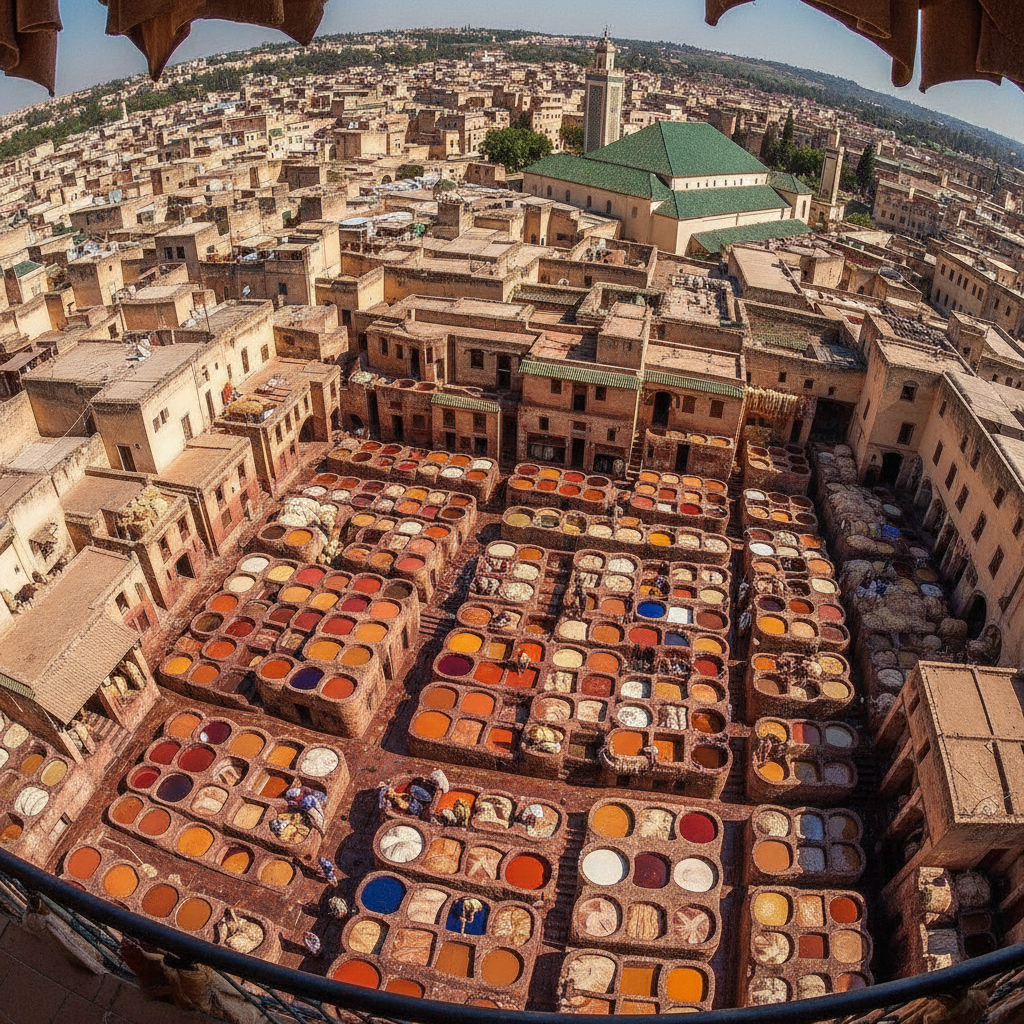
The Fes el-Bali Medina Is the Largest Car-Free Urban Area in the World With 9,000 Streets and 150,000 Inhabitants; The University of al-Qarawiyyin Founded in 859 CE by Fatima al-Fihri Is the Oldest Continuously Operating University in the World; The Chouara Tannery Uses Pigeon Dung as an Ammonia Source to Soften Hides in a Process Unchanged Since the Medieval Period
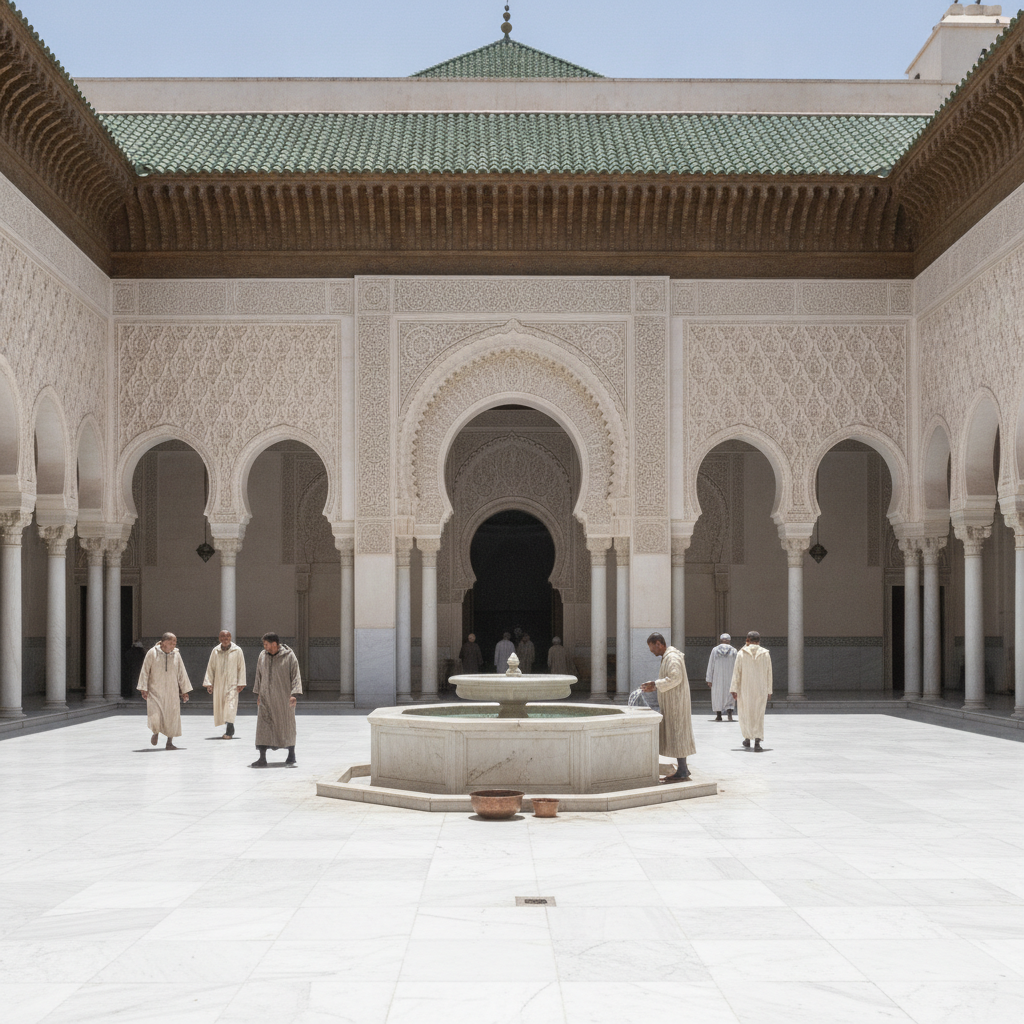
The Fes Festival of World Sacred Music Founded in 1994 Presents Sufi, Gnawa, Gregorian, Jewish, Hindu, and Buddhist Sacred Music in Venues Within the 1,200-Year-Old Medina; The Almohad Dynasty (1147-1244) Was the Most Hostile to Jews in Moroccan History Forcing Conversion or Emigration and Driving Fassi Jews to Flee to Christian Spain; The Fes Medina Has No Single Tourist Focal Square Like Marrakech's Djemaa el-Fna Making It More Authentically Urban and Less Tourist-Organized
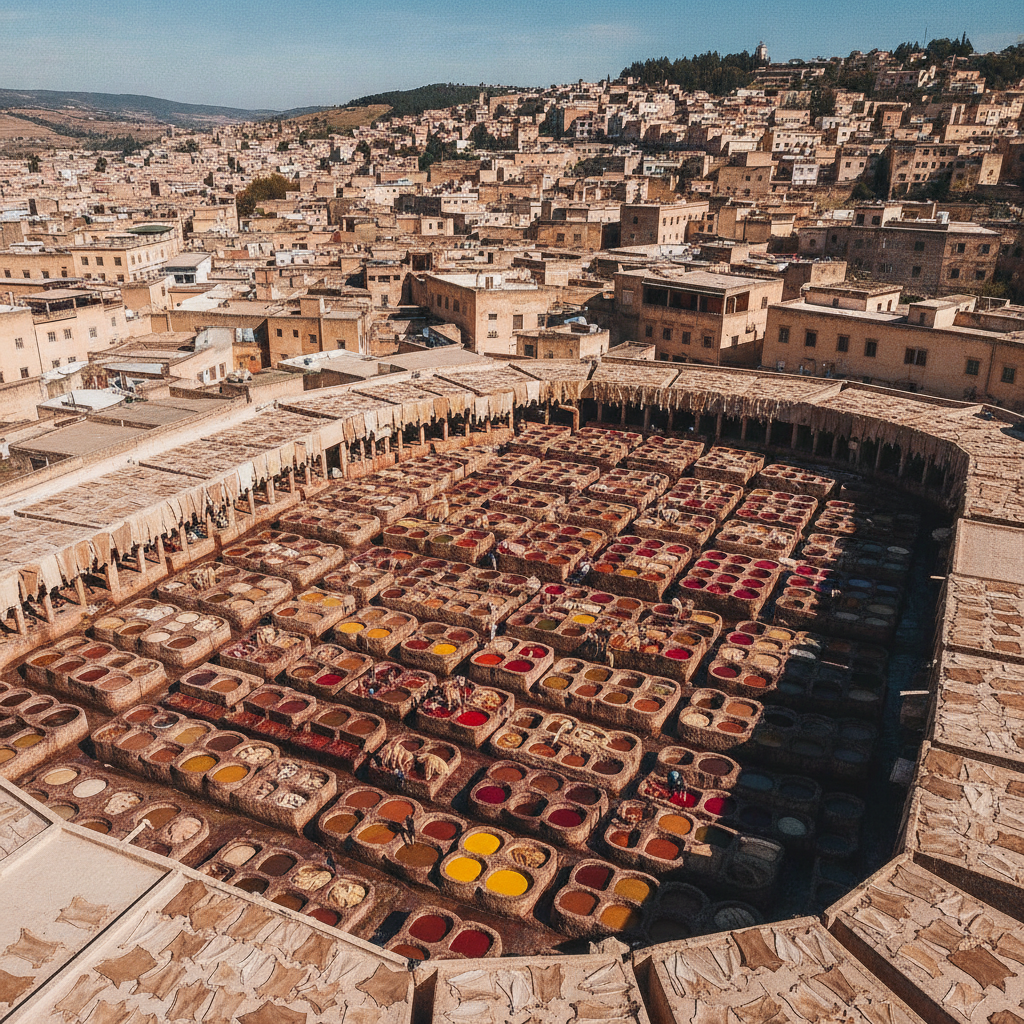
Fes Essential: Fes el-Bali the World Oldest Living Medina, the Bou Inania Madrasa, al-Qarawiyyin University, the Chouara Tanneries, the Blue Gate, and the Medieval City Character
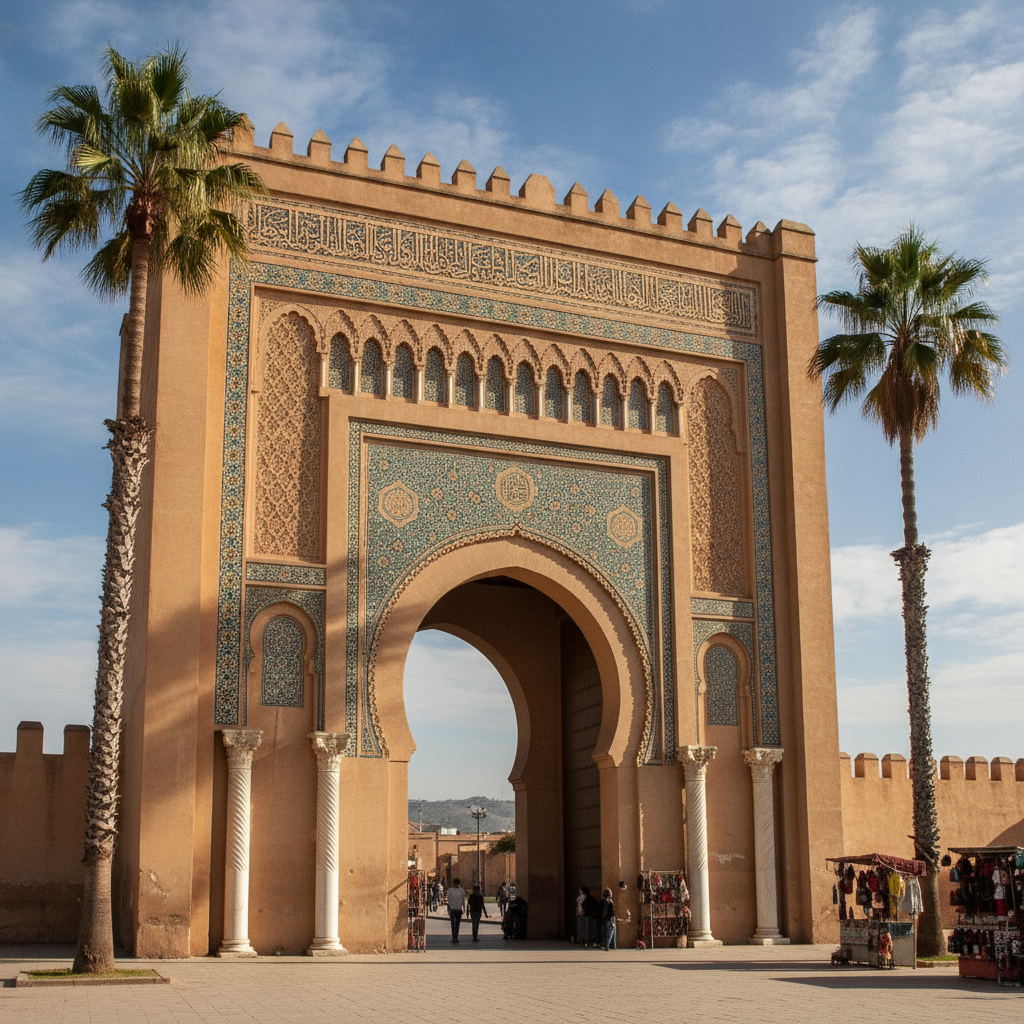
Fes History: The Idrisid Foundation, the Marinid Golden Age, the Wattasid and Saadian Decline, the Alaouite Revival, the French Protectorate, and the Contemporary Fes Identity