The Fes Festival of World Sacred Music Founded in 1994 Presents Sufi, Gnawa, Gregorian, Jewish, Hindu, and Buddhist Sacred Music in Venues Within the 1,200-Year-Old Medina; The Almohad Dynasty (1147-1244) Was the Most Hostile to Jews in Moroccan History Forcing Conversion or Emigration and Driving Fassi Jews to Flee to Christian Spain; The Fes Medina Has No Single Tourist Focal Square Like Marrakech's Djemaa el-Fna Making It More Authentically Urban and Less Tourist-Organized
The Fes Festival of World Sacred Music (founded 1994) drawing 30,000-40,000 visitors for Sufi, Gnawa, and world sacred music; the Almohad dynasty forcing Jewish conversion or emigration; the Fes Mellah as the oldest Jewish quarter in Morocco (1438); Fes vs Marrakech comparison with Fes being more authentically urban and less tourist-organized; harira soup for 5-10 MAD and mechoui lamb at 100-150 MAD/kg as budget options; and the Fes complete reference covering all six dynasties from 789 CE to the present Alaouite dynasty.
- 1
Fes Medina Architecture - Muqarnas, Geometric Tilework, and Islamic Geometric Patterns
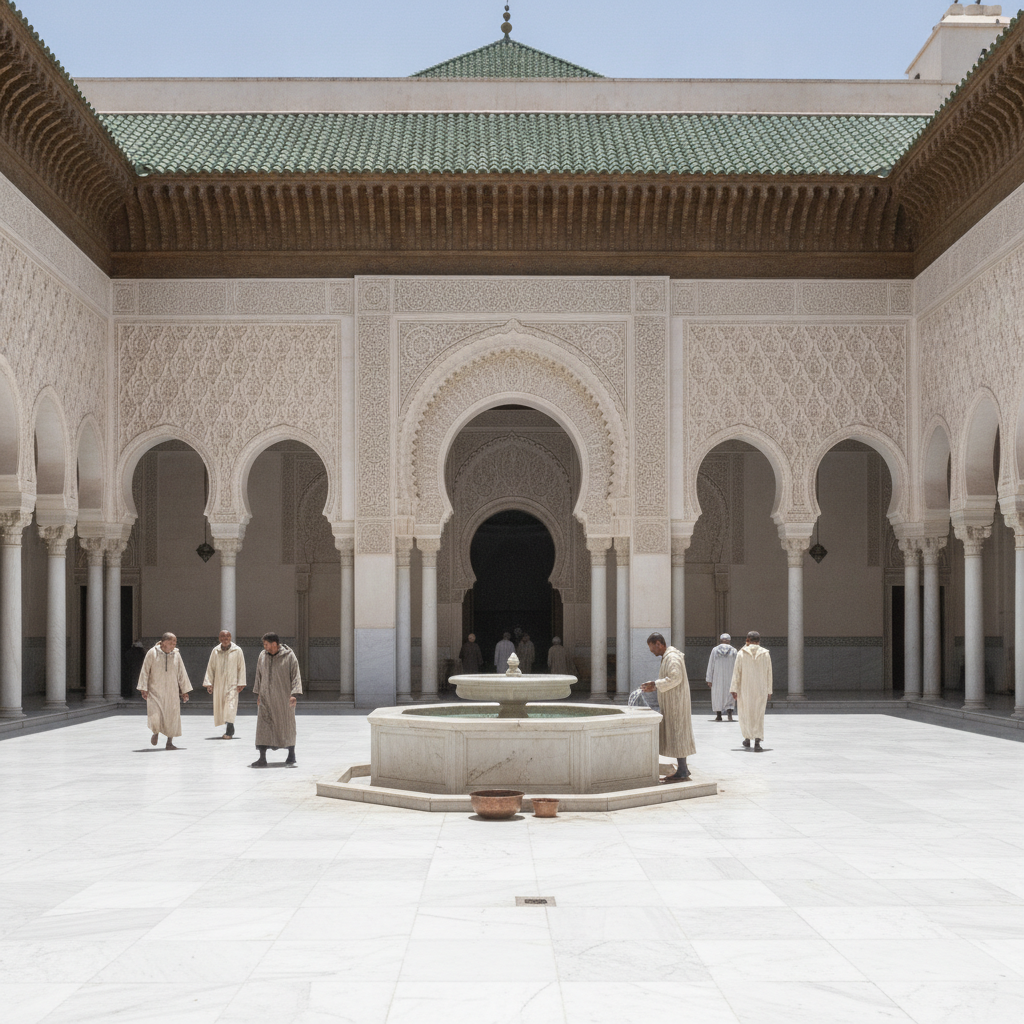
The architectural vocabulary of the Fes medina - the visual language of Moroccan-Andalusian Islamic architecture and the mathematical principles underlying its geometric decorative system: the architecture guide. The three zones (the standard interior elevation of the finest Fes buildings (madrasas, mosques, private palaces) is organized in three horizontal zones: the lower zone: zellij geometric tile mosaic covering the lower walls and floors: the middle zone: carved plasterwork (jis) with arabesque and calligraphic panels: the upper zone: carved cedarwood (araiz) lattice screens, carved muqarnas brackets, and the overhanging wooden eave: the zellij (the Moroccan zellij geometric tile mosaic - a unique Moroccan art form: each zellij piece is hand-cut from a fired and glazed ceramic tile with a small hammer and chisel (tbal wa minshar): the zellijyyi cuts each tile to a precise geometric shape - the star forms, the polygon fills, and the edge pieces - by hand: the cut pieces (tesserae) are assembled face-down on the ground into the complete geometric pattern (the pattern is drawn in lime on the ground): the assembled mosaic is then set face-up in a cement base: the geometric patterns of Moroccan zellij are based on complex regular divisions of the plane using stars of 6, 8, 10, 12, and 16 points: the muqarnas (muqarnas (stalactite or honeycomb vaulting): three-dimensional geometric forms created from successive tiers of small carved niches: used to fill the transition zone between a square room and a circular dome (the squinch): also used for carved decorative friezes below cornices and eaves: the arabesque (the arabesque - the infinitely extensible geometric and vegetal scroll pattern that fills the carved plasterwork panels: the arabesque is based on the mathematical principle of two overlapping spirals generating an infinite vegetal scroll pattern: the calligraphy (Koranic verses and poetry in Kufic and Thuluth scripts integrated into the decorative program of Fes buildings).
- 2
The Fassi Jewish Community and the Mellah Heritage of Medieval Fes
The Jewish heritage of Fes - the history of the Fassi Jewish community (Yahud Fas) from the Idrisid period through the 20th century emigration: the Jewish heritage guide. The origins (the Jewish community of Fes traces its origins to before the Islamic conquest of Morocco (642-708 CE): the early Muslim Arabic geographers mention a significant Jewish population in the region of Fes before the Idrisid founding: the Idrisid period (the Idrisid sultans were generally tolerant toward the Jewish community: the Jewish community of Fes was an important commercial and artisanal class: the 12th century (the Almohad dynasty (1147-1244) was the most hostile to the Jewish community in Moroccan history: the Almohads (unlike earlier Berber dynasties) enforced strict Islamic law regarding non-Muslims: Jewish and Christian communities in Almohad territory were forced to convert to Islam, emigrate, or face persecution: many Fassi Jews fled to Christian Spain during the Almohad period: the Mellah (the Fes Mellah (Jewish quarter) was established in 1438 by the Marinid Sultan Abd al-Haqq II: the Fes Mellah is the oldest Mellah in Morocco: the name possibly derives from the salt trade (mellah = salt in Arabic): the spatial organization (the Mellah was walled and gated - both to protect the Jewish community and to control and segregate it: the Mellah had its own synagogues, ritual baths (mikvaot), butchers (for kosher meat), and schools: the Ibn Danan Synagogue (the primary surviving synagogue of the Fes Mellah - built in the 17th century: a Sephardic synagogue with a women's gallery and a Moroccan-style interior: partially restored with UNESCO support: the 20th century emigration (the Fes Jewish population declined from approximately 17,000 in 1940 to approximately 60-70 today: nearly all emigrated to Israel, France, and Canada between 1948 and 1970).
- 3
Fes Festival of World Sacred Music - The Annual Celebration in the Ancient City
The Fes Festival of World Sacred Music (Festival de Fes des Musiques Sacrees du Monde) - one of the most prestigious music festivals in Africa and the Islamic world held annually in the ancient spiritual capital of Morocco: the festival guide. The festival (the Fes Festival of World Sacred Music was founded in 1994 by the Moroccan intellectual and cultural impresario Faouzi Skali: the festival is held annually in June in Fes: the concept (the festival presents sacred music traditions from across the world - Sufi music from Morocco, Turkey, Iran, and Central Asia: Gnawa music from Morocco: Gregorian chant: Jewish liturgical music: Hindu devotional music (bhajan, kirtan): Buddhist sacred music: indigenous sacred music traditions from Africa, Latin America, and Asia: the setting (the concerts are held in unique venues within and adjacent to the Fes medina: the Bab al-Makina (the esplanade of the royal palace of Fes el-Jedid - the primary outdoor stage): the Moulay Idriss Shrine forecourt: the Jnan Sbil Gardens: the Dar Adiyel cultural center: the Qur'anic School (Dar al-Muqri): the Whirling Dervishes (the festival regularly features the Mevlevi Sema ceremony - the whirling dervish ceremony of the Mevlevi Sufi order founded by Rumi's followers in Konya, Turkey: the ceremony involves extended rotation in white robes as a form of moving meditation: the significance (the festival uses the ancient spiritual resonance of Fes to promote interfaith dialogue and the universal spiritual dimensions of world musical traditions: it draws approximately 30,000-40,000 visitors per year: the Fes Forum (the parallel intellectual conference held alongside the festival bringing together thinkers, spiritual leaders, and artists to discuss themes of human civilization and dialogue).
- 4
Fes Budget Guide - Riads, Street Food, and the Medina on a Budget
The Fes budget guide - how to experience Morocco's most complex and historically significant city without overpaying: the budget travel guide. The transport to Fes (train from Casablanca: approximately 120 MAD 2nd class (USD 12) for the 4-hour journey: from Rabat: approximately 90 MAD (3.5 hours): from Marrakech: approximately 200 MAD (8 hours via Casablanca): the Fes-Saiss Airport is served by Ryanair and other low-cost carriers from European cities (Paris, Brussels, London): the accommodation (the medina riad accommodation ranges from budget backpacker hostels (approximately 100-150 MAD per dorm bed) to mid-range riads (approximately 400-700 MAD per double room) to luxury riads (approximately 2,000-5,000 MAD per night): the food (the cheapest food in Fes: the medina street food: the harira soup (a thick lentil and tomato soup - the traditional Moroccan breakfast and Ramadan iftar soup: approximately 5-10 MAD per bowl): the msemen (square flatbread fried in oil with honey or argan oil: approximately 5 MAD per piece): the briouats (fried triangular pastries filled with ground meat or almond paste: approximately 5-10 MAD each): the mechoui (slow-roasted lamb sold by weight from rotisserie stalls near the Rcif quarter of Fes el-Bali: approximately 100-150 MAD per kg): the guides (official guides from the ONMT: approximately 300-400 MAD for a half-day tour: unofficial guides (faux guides) should be politely but firmly declined - they will take you to commission-paying shops: the Chouara Tannery (free to view from the leather shop terraces - but the shop owners will ask you to buy something: it is acceptable to view without buying): the free sights (the Bab Bou Jeloud exterior: the medina alleys and souks: the exterior of all monuments - the Qarawiyyin, the madrasas: the Mellah streets).
- 5
Fes vs Marrakech - The Medina Experience Compared
Fes el-Bali and the Marrakech medina - a comparative guide to Morocco's two most significant medieval cities and the fundamentally different experiences they offer the visitor: the comparison guide. The medina scale (Fes el-Bali: approximately 9,000 streets and alleys in 13.5 km2: approximately 150,000 inhabitants: the largest car-free urban area in the world: the most complex urban labyrinth in Morocco - navigation is extremely difficult without a guide: the Marrakech medina: approximately 120,000 inhabitants: approximately 25 km2 total medina area: significantly more organized around tourism than Fes: the Djemaa el-Fna (the Djemaa el-Fna square in Marrakech - 50,000-100,000 visitors per evening: the primary tourist destination of Morocco: nothing comparable exists in Fes: the Fes medina has no single focal tourist square comparable to the Djemaa: the tourist intensity (Fes el-Bali is less tourist-organized than the Marrakech medina: a walk through the Fes medina encounters significantly more authentic everyday Moroccan urban life: the Marrakech medina has been more thoroughly reorganized around tourist commerce: the architecture (Fes: the finest surviving Marinid architecture in Morocco (Bou Inania Madrasa, Attarine Madrasa): Marrakech: the Saadian Tombs (16th century), the Bahia Palace (19th century), the Koutoubia Mosque (12th century Almohad): the souks (the souks of Fes are more specialized and less touristy than those of Marrakech: the Fes souks are more likely to be working production areas (the coppersmiths, the weavers, the leather workers) rather than retail tourist boutiques: the recommendation (Fes for serious historical and cultural depth, authentic urban Moroccan life, and medieval Islamic architecture: Marrakech for the Djemaa el-Fna experience, the riad luxury market, and the Atlas Mountains proximity).
- 6
Fes Complete Reference - Medina, University, Tanneries, and Spiritual Capital
Fes complete reference - the comprehensive guide to the history, culture, and significance of the spiritual capital of Morocco and one of the world's great medieval cities: the complete guide. The city (Fes (French: Fes or Fez): the third largest city of Morocco (after Casablanca and Rabat): population approximately 1.2 million (city): the spiritual and intellectual capital of Morocco: the founding (789 CE by Idris I, expanded 809 CE by Idris II): the dynasties (Idrisid founders (789-974): Maghrawa interlude: Almoravid conquest (1069): Almohad conquest (1145): Marinid capital (1244-1465 - the golden age of Fes): Wattasid and Saadian: Alaouite (the current dynasty): the medina (Fes el-Bali - UNESCO World Heritage 1981: the largest car-free urban area in the world: 9,000 streets: 150,000 inhabitants: the University of al-Qarawiyyin (859 CE - the oldest continuously operating university in the world - founded by Fatima al-Fihri: the Chouara Tannery (pigeon dung, natural dyes, medieval process): the Bou Inania Madrasa (1350-1357 - the finest Marinid architecture): the architecture (three-zone decorative system: zellij tilework (lower), carved plasterwork jis (middle), carved cedarwood araiz (upper): the Bab Bou Jeloud (the Blue Gate - the primary entrance to the medina): the cuisine (bastilla pie (sweet warqa pastry with pigeon, eggs, and almonds): mrouzia (lamb with honey and almonds): the festivals (the Festival of World Sacred Music (June): the moussem of Moulay Idriss: the crafts (the seven crafts of Fes: leather, pottery, zellij, cedarwood, silk, embroidery, metalwork): the day trips (Volubilis Roman mosaics, Meknes Bab Mansour): the Tijaniyya Sufi order with 100-150 million West African adherents headquartered in Fes: one of the most extraordinary surviving medieval cities on earth).
Walk this route with audio
Stories play automatically as you reach each stop — no tapping needed.
More in Fes
Morocco's King Bears the Title Amir al-Muminin (Commander of the Faithful) Giving the Moroccan Monarchy a Unique Theocratic Religious Legitimacy Distinct From All Other Arab Monarchies; The Andalusian Music Tradition al-Ala Was Brought to Fes by Refugees From the 1492 Expulsion of Muslims and Jews From Spain and Is Still Performed in Three Regional Schools; Fes Is Arguably the Most Important Single City in the Spiritual Life of West African Islam Through the Tijaniyya Sufi Order With 100-150 Million Adherents
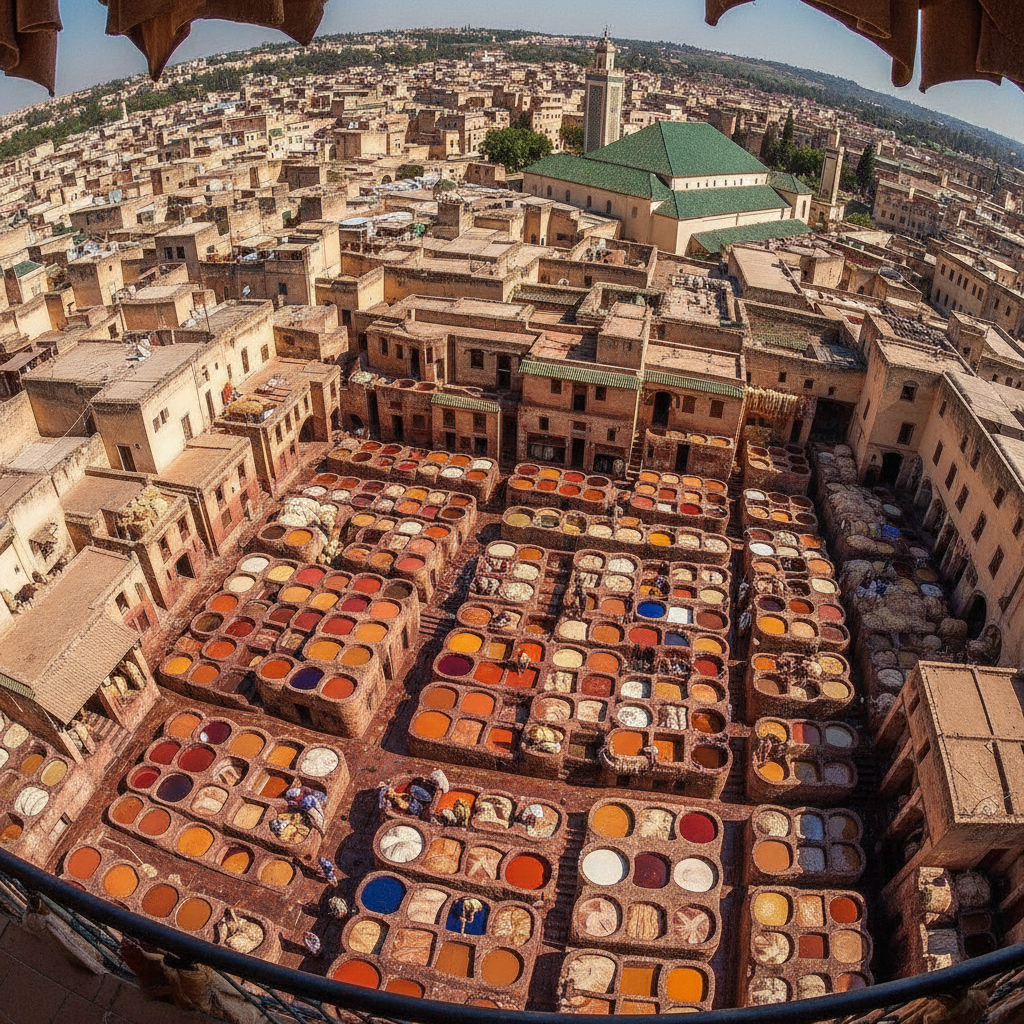
The Fes el-Bali Medina Is the Largest Car-Free Urban Area in the World With 9,000 Streets and 150,000 Inhabitants; The University of al-Qarawiyyin Founded in 859 CE by Fatima al-Fihri Is the Oldest Continuously Operating University in the World; The Chouara Tannery Uses Pigeon Dung as an Ammonia Source to Soften Hides in a Process Unchanged Since the Medieval Period
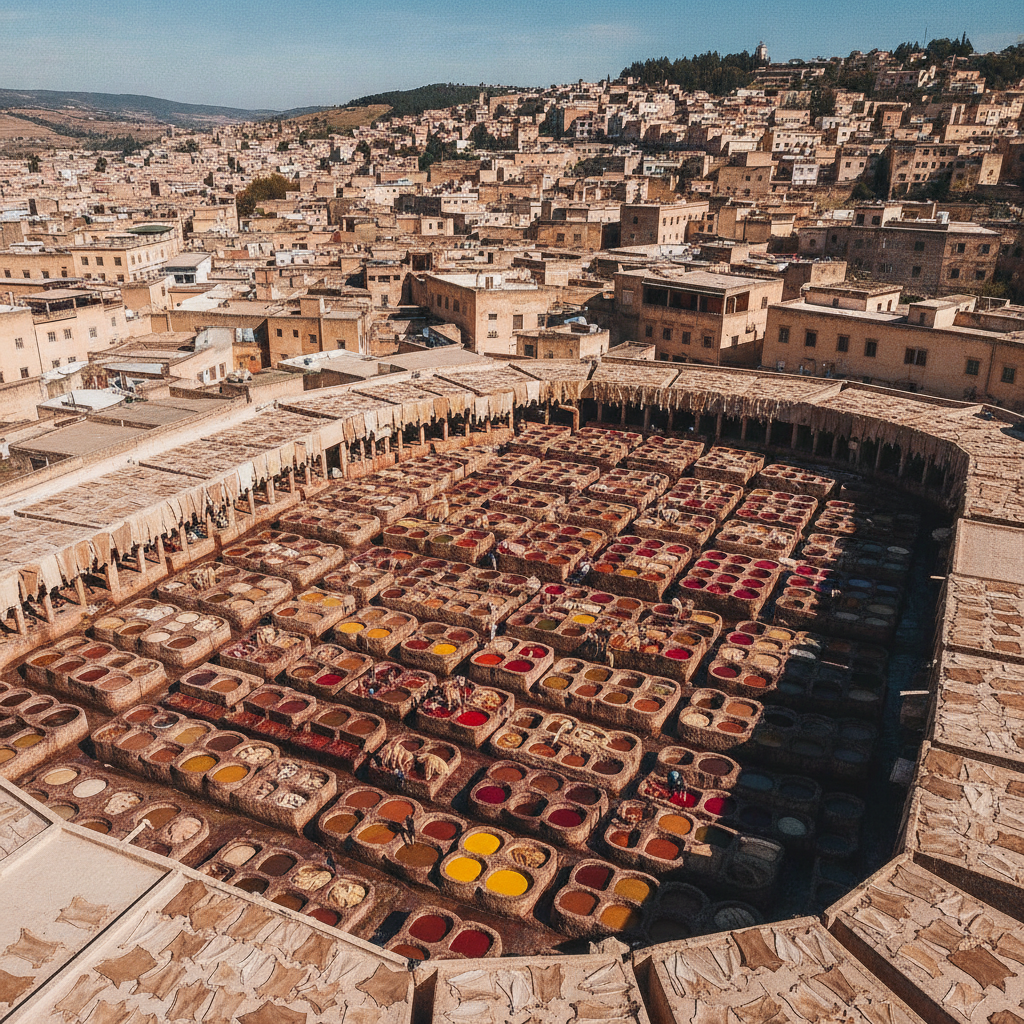
Fes Essential: Fes el-Bali the World Oldest Living Medina, the Bou Inania Madrasa, al-Qarawiyyin University, the Chouara Tanneries, the Blue Gate, and the Medieval City Character
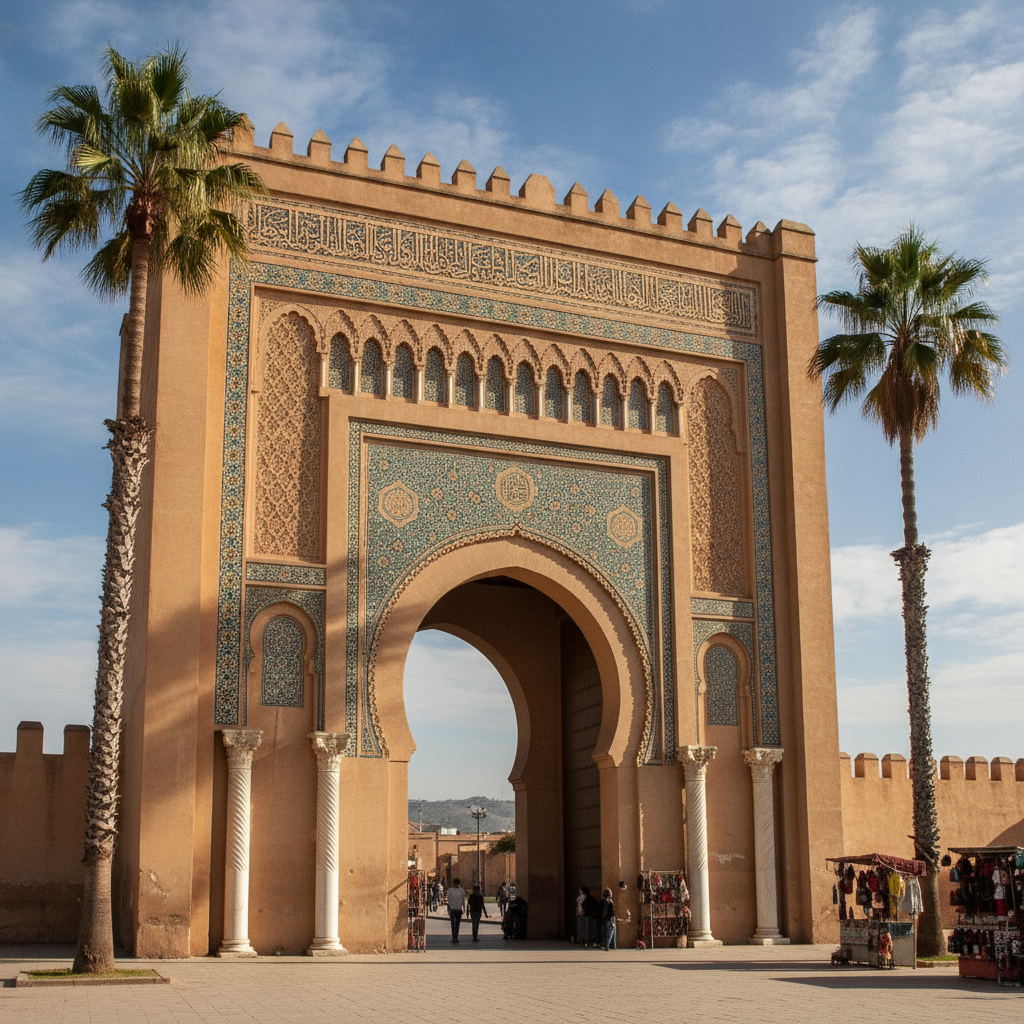
Fes History: The Idrisid Foundation, the Marinid Golden Age, the Wattasid and Saadian Decline, the Alaouite Revival, the French Protectorate, and the Contemporary Fes Identity
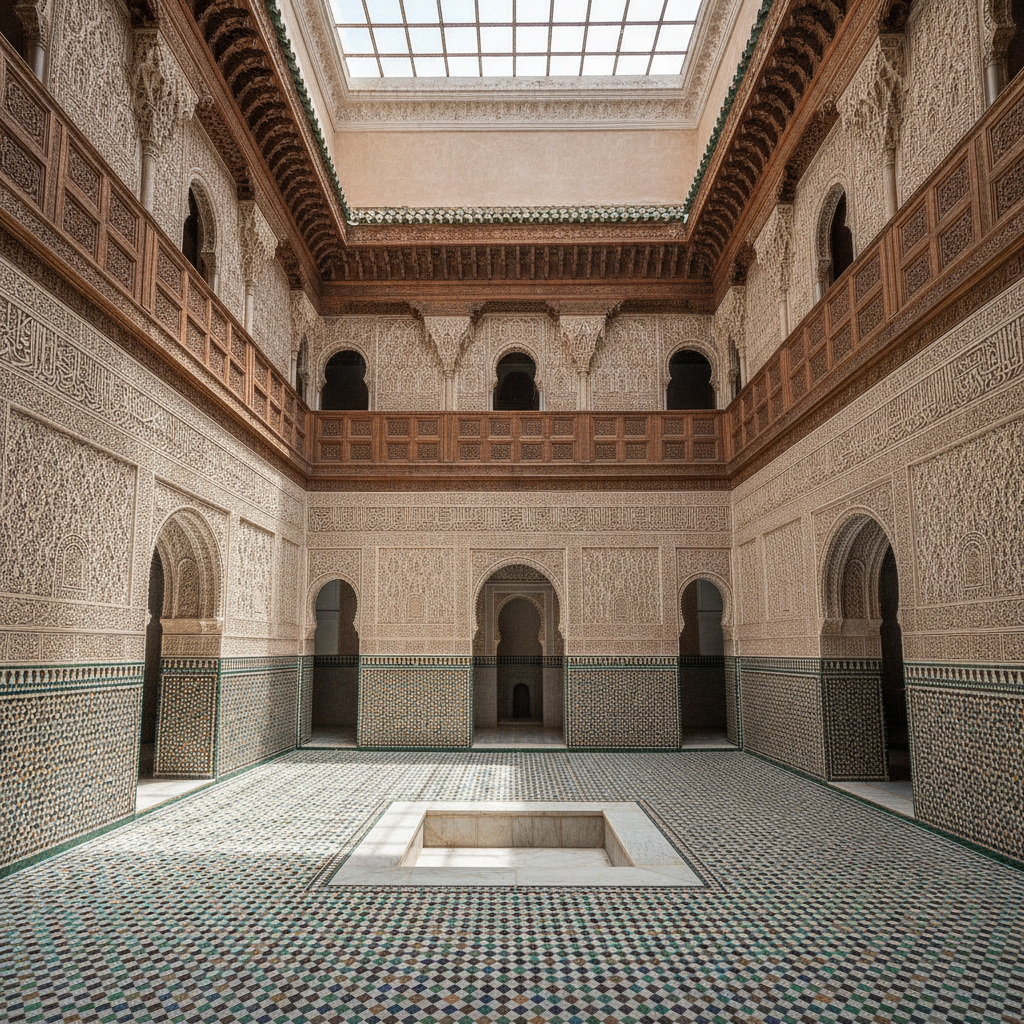
Fes Craft Heritage: The Al-Attarine Madrasa, the Nejjarine Fountain and Museum, the Funduq Carpenter Tradition, the Fes Pottery Blue Ceramic, and the Living Craft Guilds