The Fes el-Bali Medina Is the Largest Car-Free Urban Area in the World With 9,000 Streets and 150,000 Inhabitants; The University of al-Qarawiyyin Founded in 859 CE by Fatima al-Fihri Is the Oldest Continuously Operating University in the World; The Chouara Tannery Uses Pigeon Dung as an Ammonia Source to Soften Hides in a Process Unchanged Since the Medieval Period
The Fes el-Bali medina as the largest car-free urban area in the world with 9,000 streets; al-Qarawiyyin university founded 859 CE by Fatima al-Fihri as the world's oldest continuously operating university; the Chouara Tannery using pigeon dung, henna, indigo, and saffron in a medieval process; the Bou Inania Madrasa (1350-1357) with its three-zone interior of zellij, carved plaster, and cedarwood; the Fes Mellah as the oldest Jewish quarter in Morocco (14th century); and the Fes practical guide including bastilla pie and the Volubilis Roman mosaics day trip.
- 1
The Fes el-Bali Medina - UNESCO World Heritage and the Largest Car-Free Urban Area
Fes el-Bali (Old Fes) - the UNESCO World Heritage medina of Fes and one of the best-preserved medieval Islamic cities in the world: the medina guide. The size (Fes el-Bali is the largest car-free urban area in the world: approximately 9,000 streets and alleyways: over 150,000 inhabitants: approximately 13.5 km2 of densely packed medieval urban fabric: the designation (UNESCO World Heritage Site since 1981 - the first city in Morocco to receive the designation: the founding (Fes was founded by the Idrisid dynasty: Idris I (the founder of Morocco's first Islamic dynasty and a great-grandson of the Prophet Muhammad through Ali and Fatima) founded Fes on the right bank of the Wadi Fes in 789 CE: his son Idris II established the main settlement on the left bank in 809 CE: the Andalusian quarter (the Andalusian quarter (Adwat al-Andalus) - established when approximately 8,000 families expelled from Cordoba in 818 CE (the Cordoba martyrs uprising) migrated to Fes and established a quarter on the east bank: the Qarawiyyin quarter (the Qarawiyyin quarter on the west bank - established by approximately 2,000 families from Qayrawan (Tunisia) who arrived approximately 824 CE: the streets (the narrowest streets of Fes el-Bali are approximately 50cm wide - too narrow for a laden donkey: the primary transport within the medina is by foot and by donkey: the street hierarchy (the main thoroughfare (from Bab Bou Jeloud to the Qarawiyyin mosque area) is the primary commercial spine: the derb (the dead-end alleyways leading to residential clusters): the orientation (navigation in Fes el-Bali is notoriously difficult: the medina has minimal signage and few straight streets: guides (certified guides from the Office National Marocain du Tourisme) are strongly recommended: the best orientation landmark is the sound of the Qarawiyyin mosque and the smell of the tanneries).
- 2
The University of al-Qarawiyyin - The Oldest Continuously Operating University in the World
The University of al-Qarawiyyin (Jami'at al-Qarawiyyin) in Fes - the oldest continuously operating university in the world: the history guide. The founding (the al-Qarawiyyin mosque was founded in 859 CE by Fatima al-Fihri (a Tunisian-born woman of the Qarawiyyin immigrant community): Fatima al-Fihri - born in Qayrawan (Tunisia): her father Muhammad al-Fihri was a wealthy merchant who migrated to Fes: both Fatima and her sister Maryam used their inheritance from their father to fund the construction of a mosque and an adjacent educational institution: Maryam funded the al-Andalus mosque: the institution (the al-Qarawiyyin was initially a mosque with an attached madrasa (religious school): over the 9th-12th centuries the curriculum expanded and the institution became effectively a university: the primary subjects: Islamic jurisprudence (fiqh), theology (kalam), Arabic grammar and literature, history, rhetoric, logic, astronomy, mathematics: the UNESCO recognition (UNESCO and Guinness World Records recognize al-Qarawiyyin as the oldest continuously operating university in the world: established 859 CE: approximately 1,165 years of continuous operation: the notable alumni (Ibn Khaldun (1332-1406) - the Tunisian-Moroccan historian and sociologist: his Muqaddimah (1377) is one of the most important works in the history of historiography and social science: he studied at al-Qarawiyyin: Ibn Battuta (1304-c.1368/1369) - the Moroccan explorer who traveled approximately 117,000 km across the medieval world: studied in Fes: Leo Africanus (al-Hasan al-Wazzan c.1488-c.1554) - the Moroccan diplomat-geographer who wrote the first comprehensive description of Africa for European audiences: the library (the al-Qarawiyyin library - one of the oldest libraries in the world: founded in 859 CE alongside the mosque: holds approximately 4,000 manuscripts including some dating to the 9th century).
- 3
The Chouara Tannery - Fes Leather and the Medieval Dyeing Tradition
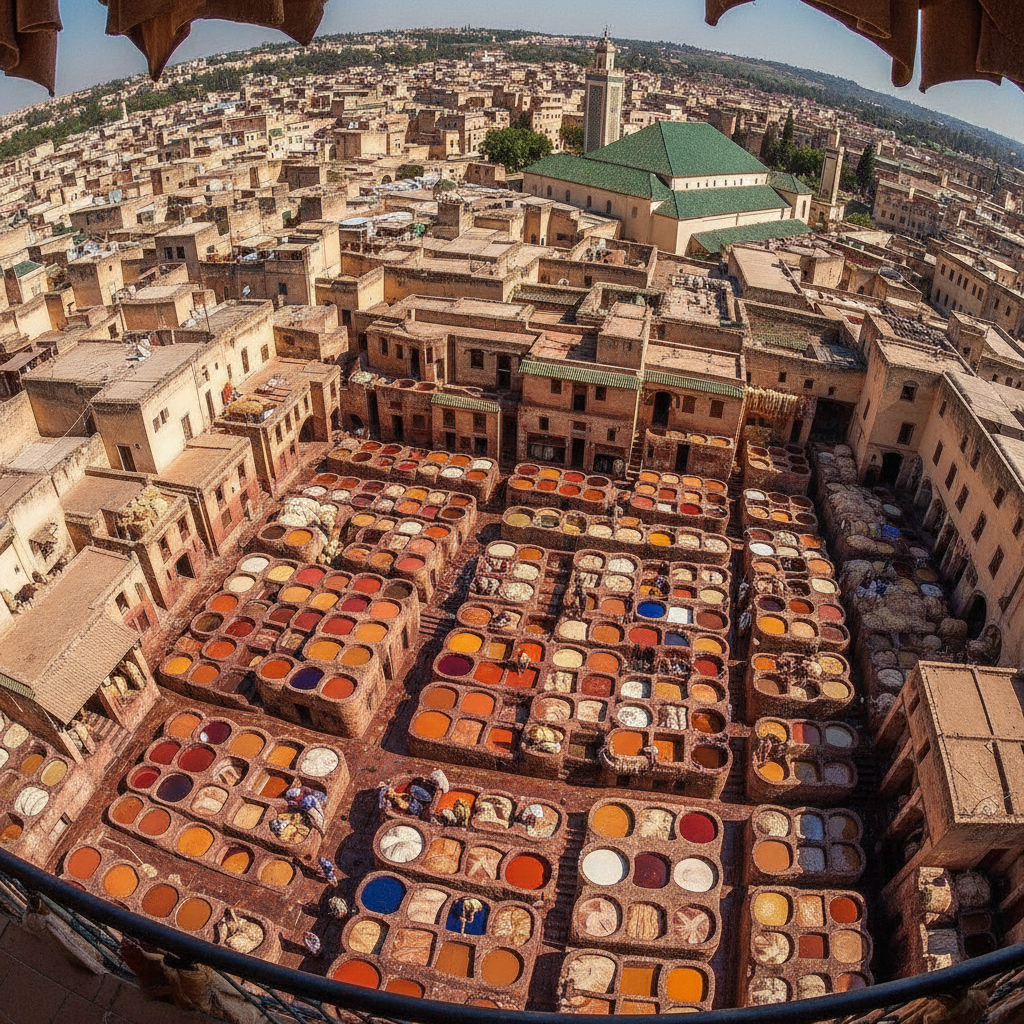
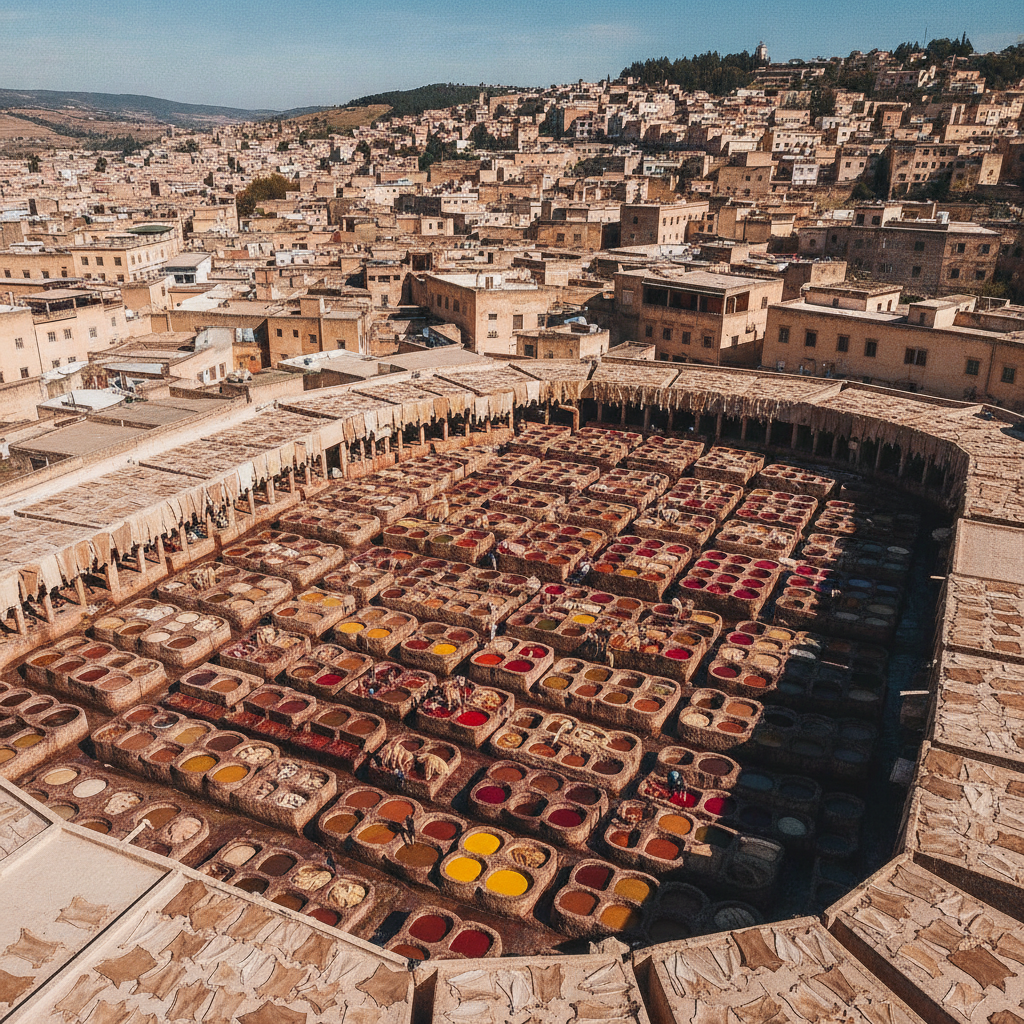
The Chouara Tannery (Chouara Dabbaghin) in Fes el-Bali - one of the most photographed sights in Morocco and an extraordinary surviving example of medieval leather production: the tannery guide. The location (the Chouara Tannery is located in the northeastern section of Fes el-Bali near the Sidi Moussa quarter: the tannery occupies approximately 2,000 m2 of interconnected stone vessels (hods): the tannery is best viewed from the terrace of the surrounding leather goods shops that overlook the tannery floor: the process (the traditional Fes leather tanning process: the hides (primarily cow, sheep, goat, and camel hides) are first soaked in vats of water and quicklime (calcium hydroxide) for 2-3 days to remove hair and flesh: the hides are then transferred to the tanning vats: the primary tanning substances: pigeon dung (collected from pigeon towers and used as an ammonia source to soften the hides), bran, sawdust, fish oil, and powdered bark of the mimosa tree (tannin): the dyeing (the dye vats are filled with natural colorants: red/orange from poppy and henna: yellow from pomegranate rind and saffron: brown from cedar bark: blue from indigo: black from gallnut and iron sulfate: the work (the tannery workers stand in the vats knee-deep for hours: the ammonia from the pigeon dung produces a strong odor - shops provide sprigs of fresh mint to visitors: the production (Fes is Morocco's primary center for traditional leather production: the Fes leather (maroquinerie) has given the French word for leather goods (maroquinerie): the smell (the tannery smell is overpowering at close range - the combination of organic decomposition, ammonia, and dye chemicals: viewing from the terrace with the mint sprig provided by the shop is the standard approach).
- 4
The Madrasa Bou Inania and Marinid Architecture - Fes as the Center of Moroccan High Culture
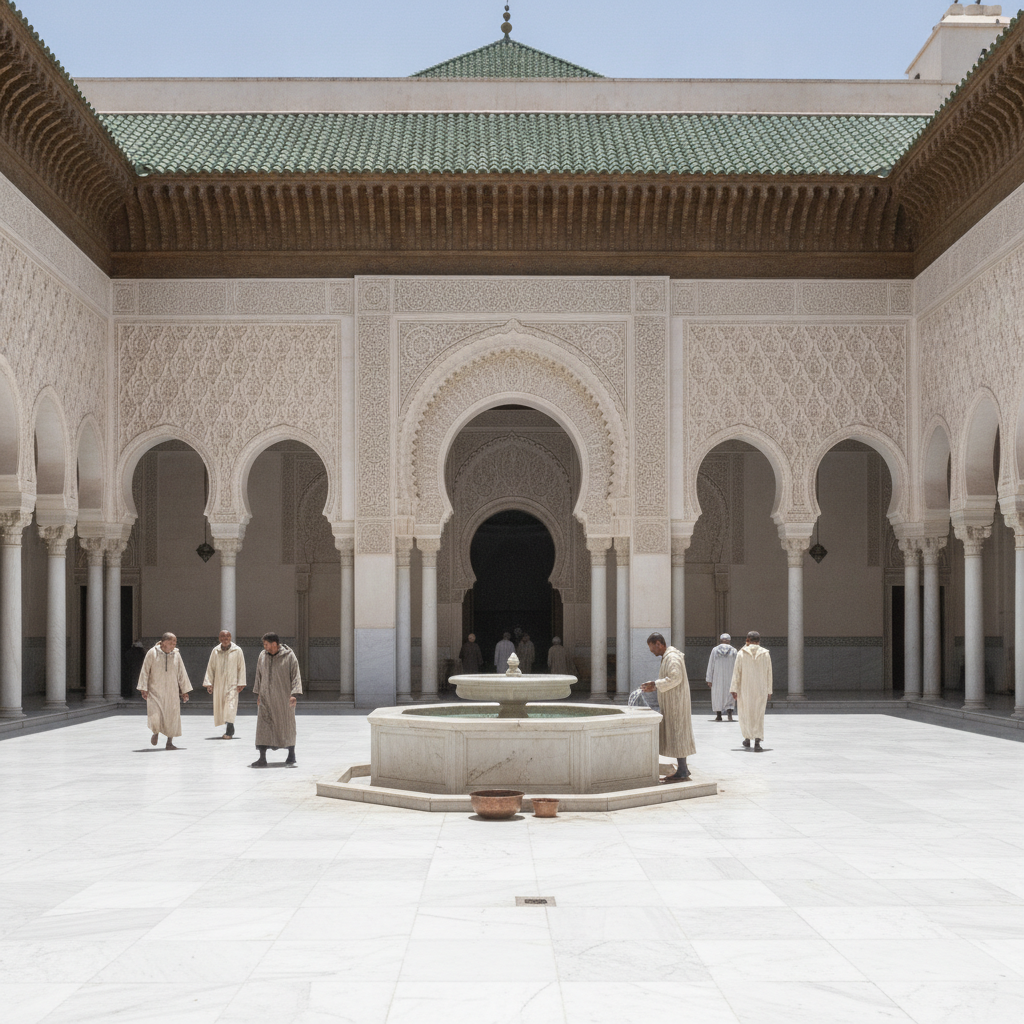
The Bou Inania Madrasa and the Marinid architectural heritage of Fes - the defining buildings of medieval Moroccan Islamic architecture: the architectural guide. The Marinids (the Marinid dynasty (Banu Marin) - Berber dynasty of Zenata origin: ruled Morocco from 1244 to 1465: the Marinids made Fes their capital and the center of their cultural patronage: the Marinids built or extensively rebuilt the primary monuments of Fes el-Bali: the Bou Inania Madrasa (the Bou Inania Madrasa (built 1350-1357 by Sultan Abu Inan Faris): the primary surviving example of Marinid architecture: the madrasa served as both a theological college (students from the al-Qarawiyyin mosque) and the principal Friday mosque of the royal quarter: the decorative program (the three-zone interior elevation of the courtyard: the lower zone: geometric zellij tilework in complex star patterns covering the lower walls and floor: the middle zone: carved plasterwork (jis) with arabesque and calligraphic panels: the upper zone: carved cedarwood (araiz) - the lattice screens, carved muqarnas capitals, and the overhanging wooden eaves: the minaret (the Bou Inania minaret is the only Fes madrasa minaret from which the muezzin actually called to prayer during the Marinid period): the water clock (the enigmatic Marinid water clock facing the Bou Inania madrasa across the street - a 13th century hydraulic clock whose mechanism is now lost: the Attarine Madrasa (the Attarine Madrasa (built 1323-1325 by Sultan Abu Said Uthman): adjacent to the al-Qarawiyyin mosque: the name refers to its location in the spice market (the attarine): equally refined Marinid zellij, plasterwork, and cedarwood decoration: the Nejjarine Fountain and Museum (the Nejjarine Square (Square of the Carpenters) - an 18th century Alaouite caravanserai and fountain: now the Museum of Wooden Arts and Crafts: the carved cedarwood fountain canopy is one of the finest in Morocco).
- 5
Fes el-Jedid - The Mellah, the Royal Palace, and the New City
Fes el-Jedid (New Fes) - the Marinid royal city built adjacent to Fes el-Bali in 1276 and its major institutions: the district guide. The founding (Fes el-Jedid - New Fes - was founded by the Marinid Sultan Abu Yusuf Yaqub in 1276 adjacent to the existing Fes el-Bali: the purpose was to create a royal capital separate from the crowded and politically complex medina: Fes el-Jedid contains the royal palace (Dar el-Makhzen), the Mellah (Jewish quarter), and the grand mosque: the Royal Palace (the Dar el-Makhzen of Fes - the Alaouite royal palace of Fes: the palace is not open to the public: the primary attraction is the seven enormous brass doors of the main palace gate - seven sets of ornate brass doors with intricate geometric and arabesque repoussee work: the doors are set within a frame of carved plaster and zellij tilework: the Mellah (the Fes Mellah (Jewish quarter) - established in the 14th century by the Marinid sultans: the oldest Mellah in Morocco: the Mellah was established to bring the Jewish community under closer royal protection and control (and to extract taxes more efficiently): the Fes Mellah was densely populated until the mid-20th century emigration: the Ibn Danan Synagogue (the primary surviving synagogue of the Fes Mellah - a 17th century Sephardic synagogue: partially restored: the Mellah cemetery: the Grand Mosque of Fes el-Jedid (the primary mosque of the Marinid royal city): the Bou Jeloud Gardens (the public gardens between Fes el-Bali and Fes el-Jedid - a pleasant transition zone): the Ville Nouvelle (the French colonial new city built outside the historic city from the 1912 Protectorate - wide boulevards, Art Deco and modernist buildings, the French administrative quarter - now the commercial center of modern Fes).
- 6
Fes Practical Guide - Navigating the Medina, Cuisine, and Day Trips
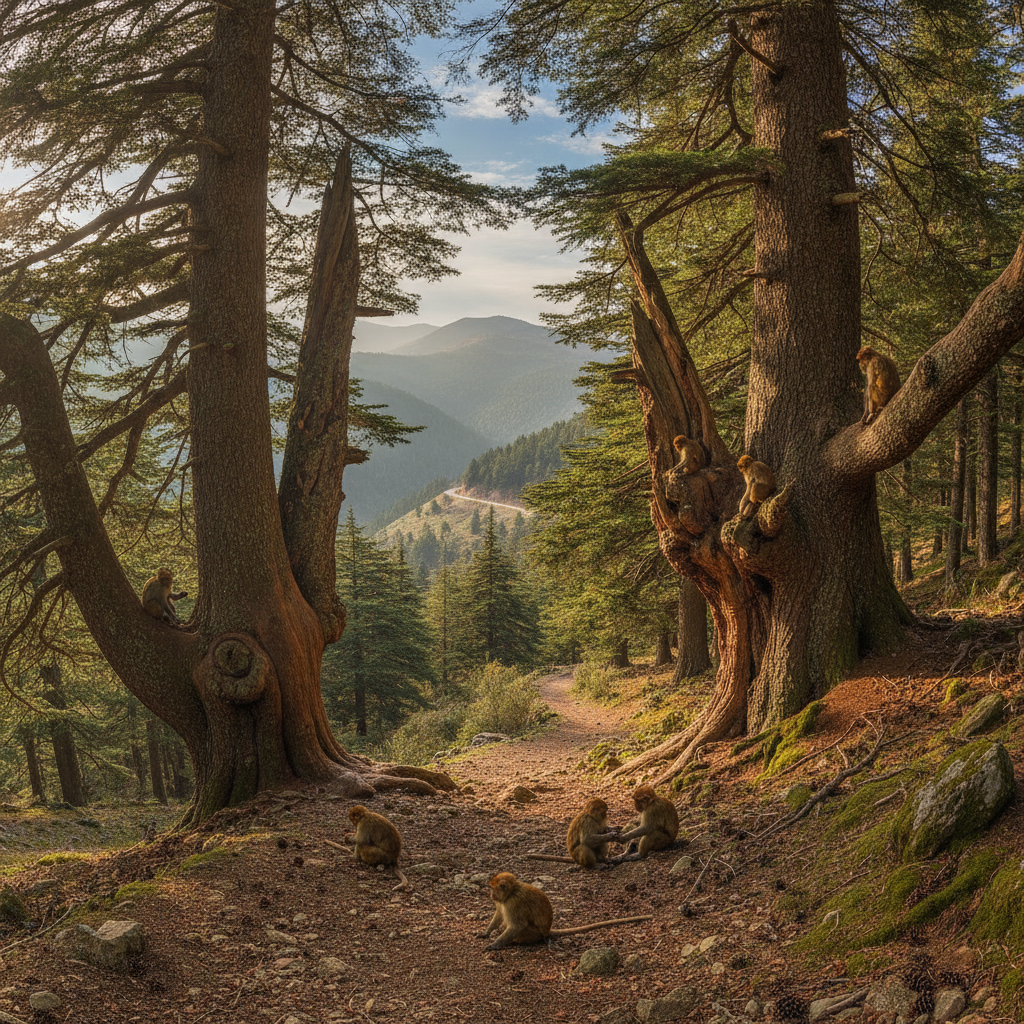
The Fes practical guide - essential visitor information for navigating Morocco's most complex and historically significant city: the practical guide. The arrival (Fes-Saiss Airport (FEZ) - 15 km south of Fes: taxis to the medina approximately 150-200 MAD: the train (Fes train station (Gare de Fes) - the direct train connection to Casablanca (4 hours), Rabat (3.5 hours), Tangier (4 hours), and Marrakech (8 hours - via Casablanca): the accommodation (the primary accommodation is in riads within or adjacent to the medina: the riad (a traditional Moroccan courtyard house - the ground floor is the courtyard with a central fountain, citrus trees, and the main reception rooms: the upper floors have the guest rooms and the rooftop terrace: the primary riad clusters in the Boulemane, Ziat, and Rcif quarters of Fes el-Bali): the guides (the medina of Fes is the most complex urban labyrinth in Morocco: certified official guides from the ONMT are strongly recommended for a first visit: agree on the price and the scope of the tour before departure: the food (the Fassi cuisine - the most refined regional cuisine of Morocco: the primary dishes: bastilla (pastilla - the signature Fassi dish: a flaky warqa pastry pie filled with shredded pigeon meat, scrambled eggs, almonds, cinnamon, and sugar (the combination of sweet and savory is distinctive): couscous (the Fes couscous with seven vegetables): the harira soup: the mechoui (slow-roasted whole lamb): the mrouzia (lamb with honey and almonds): the day trips (the primary Fes day trips: Meknes (60 km west - the Ismail imperial city with the Bab Mansour gate: the Heri es-Souani granaries: UNESCO listed): Volubilis (80 km west - the best-preserved Roman city in Morocco: UNESCO World Heritage: the Decumanus Maximus colonnade: the mosaic floor of Dionysus: the mosaics of the Labors of Hercules: the triumphal arch of Caracalla): the Middle Atlas (the cedar forests of Ifrane and Azrou - 60-90 km south).
Walk this route with audio
Stories play automatically as you reach each stop — no tapping needed.
More in Fes
Morocco's King Bears the Title Amir al-Muminin (Commander of the Faithful) Giving the Moroccan Monarchy a Unique Theocratic Religious Legitimacy Distinct From All Other Arab Monarchies; The Andalusian Music Tradition al-Ala Was Brought to Fes by Refugees From the 1492 Expulsion of Muslims and Jews From Spain and Is Still Performed in Three Regional Schools; Fes Is Arguably the Most Important Single City in the Spiritual Life of West African Islam Through the Tijaniyya Sufi Order With 100-150 Million Adherents
The Fes Festival of World Sacred Music Founded in 1994 Presents Sufi, Gnawa, Gregorian, Jewish, Hindu, and Buddhist Sacred Music in Venues Within the 1,200-Year-Old Medina; The Almohad Dynasty (1147-1244) Was the Most Hostile to Jews in Moroccan History Forcing Conversion or Emigration and Driving Fassi Jews to Flee to Christian Spain; The Fes Medina Has No Single Tourist Focal Square Like Marrakech's Djemaa el-Fna Making It More Authentically Urban and Less Tourist-Organized
Fes Essential: Fes el-Bali the World Oldest Living Medina, the Bou Inania Madrasa, al-Qarawiyyin University, the Chouara Tanneries, the Blue Gate, and the Medieval City Character
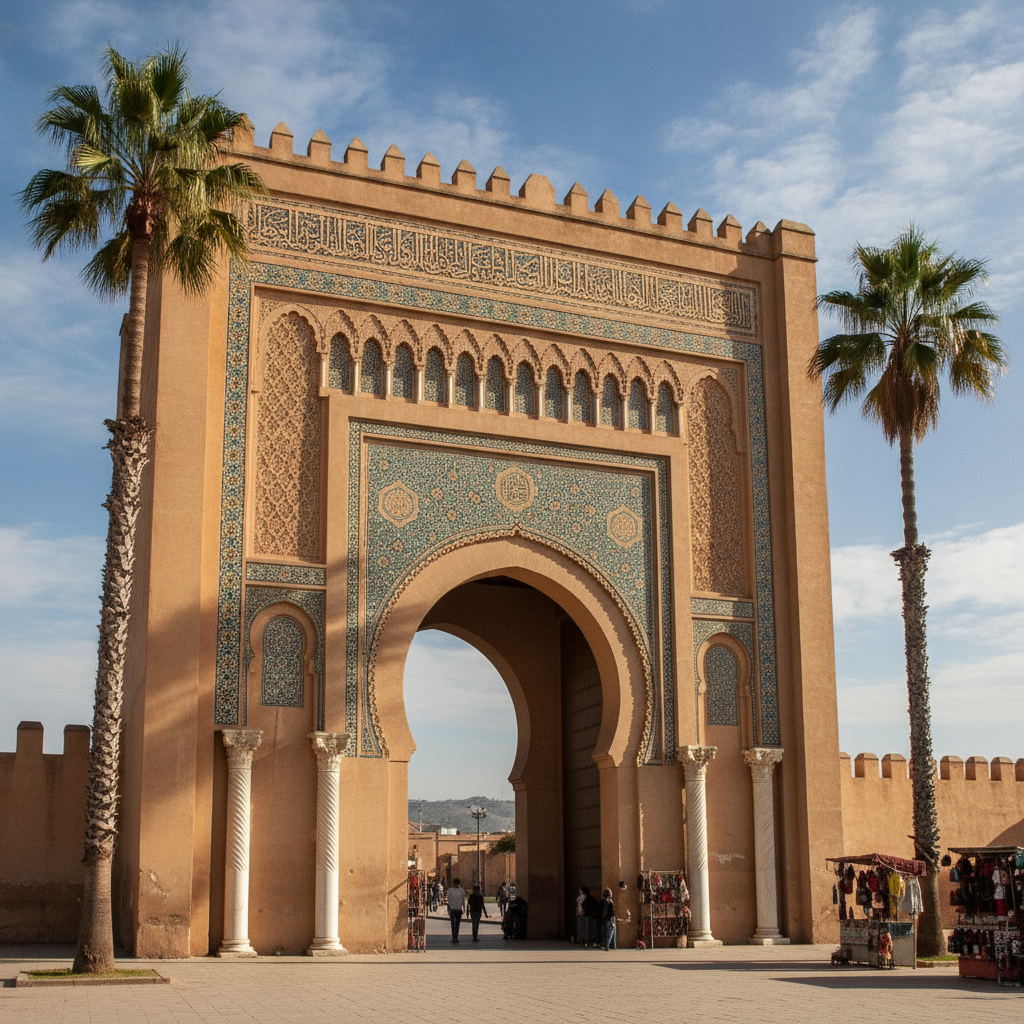
Fes History: The Idrisid Foundation, the Marinid Golden Age, the Wattasid and Saadian Decline, the Alaouite Revival, the French Protectorate, and the Contemporary Fes Identity
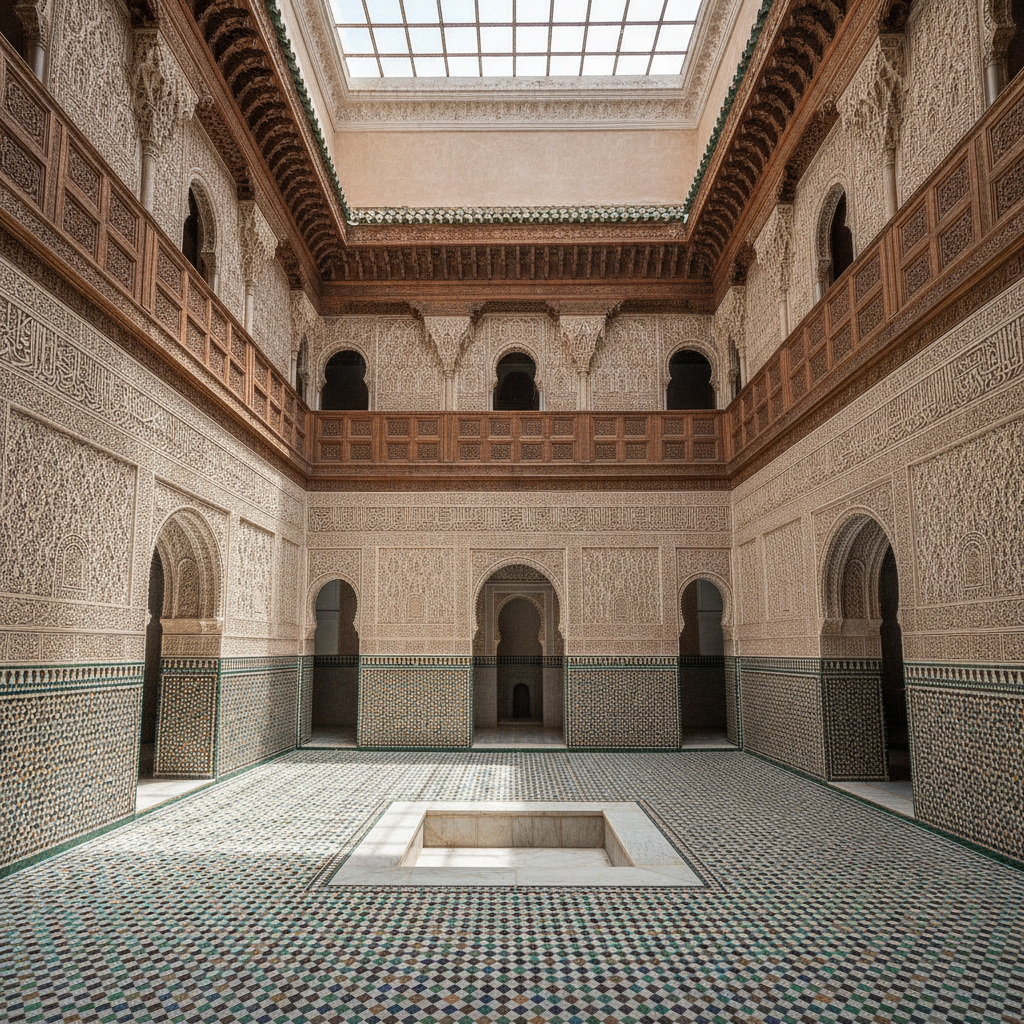
Fes Craft Heritage: The Al-Attarine Madrasa, the Nejjarine Fountain and Museum, the Funduq Carpenter Tradition, the Fes Pottery Blue Ceramic, and the Living Craft Guilds