Orson Welles Filmed Othello in a Fish Smokehouse in Essaouira When the Costumes Failed to Arrive and Won the Palme d'Or at Cannes 1952; The Iles Purpuraires Offshore From Essaouira Required 12,000 Murex Snails Per 1.4 Grams of Tyrian Purple Making It More Valuable Than Gold; Sultan Mohammed III Deliberately Settled Jewish Merchant Families in Essaouira in 1764-1765 as the Tujjar al-Sultan With Exclusive Rights to Conduct Foreign Trade
Orson Welles winning Cannes Palme d'Or for Othello filmed partly in a fish smokehouse; Iles Purpuraires requiring 12,000 snails per 1.4g of Tyrian purple; Sultan Mohammed III settling Jewish Tujjar al-Sultan merchants with exclusive foreign trade rights; goat-climbing argan trees south of Essaouira; the Sidi Kaouki remote beach 25 km south; and Essaouira complete reference including the UNESCO ramparts, Gnawa Festival, thuya craft, and Supratours bus from Marrakech.
- 1
Orson Welles and Othello - Essaouira on Film
Orson Welles filmed his Palme-d Or-winning Othello (1952) partly on the Essaouira sea ramparts (the Skala) in 1949-1952. The production faced constant financial difficulties and paused repeatedly while Welles raised funds by acting elsewhere. The famous opening funeral procession was filmed on the Skala ramparts, chosen because Welles could not afford the Venetian locations originally planned. The Turkish bath strangling scene was filmed in a fish smokehouse when costumes failed to arrive; Welles improvised by setting the scene in a steam room where actors wore only towels. The film won the Palme d'Or at the 1952 Cannes Film Festival. A bronze statue of Welles and Othello stands in the Place Orson Welles in central Essaouira today.
- 2
The Iles Purpuraires and Tyrian Purple - The Ancient Phoenician Trading Post of Mogador
The Iles Purpuraires (Purple Islands) 1.5 km offshore from Essaouira were the primary Tyrian purple dye production center of the ancient western Mediterranean. Tyrian purple was produced from the mucus glands of Murex brandaris (Bolinus brandaris) marine snails: approximately 12,000 snails per 1.4 grams of dye, making it more valuable than gold by weight. Shell deposits of Murex brandaris on the islands date from the Phoenician and Roman periods. Phoenician pottery inscriptions from approximately the 7th century BCE document the settlement of Mogador (the ancient name of Essaouira). The Eleonora's falcon (Falco eleonorae) breeds on the islands in summer, timing its chick-rearing to coincide with the autumn migration of small birds through the Strait of Gibraltar, using the migrants as prey.
- 3
The Tujjar al-Sultan - The Jewish Merchant Community That Built Essaouira's Trade
Sultan Mohammed III who founded the modern Essaouira in 1764-1765 deliberately settled Jewish merchant families from Marrakech, Fes, and Agadir in the new city as the Tujjar al-Sultan (merchants of the Sultan) with exclusive rights to conduct foreign trade on behalf of the Moroccan crown. The Jewish community spoke Ladino, French, and English, enabling trade relations with European companies. Britain was the primary trading partner (sugar, tea, textiles in exchange for Moroccan leather, argan oil, copper, cereals). The Essaouira Jewish community at its mid-19th century peak numbered approximately 5,000-8,000 out of a total city population of 15,000-20,000. The Mellah (Jewish quarter) is now largely converted to artisan workshops. The Simon Attias synagogue is the primary surviving physical memorial of this heritage. By 1967 fewer than 50 Jews remained in Essaouira.
- 4
Essaouira Beach and the Atlantic - Windsurfing, Kitesurfing, and Camel Rides
The Essaouira beach extends approximately 10 km south of the medina: a long, wide, hard-packed white sand beach with consistent 1-2m Atlantic swell and trade winds of 25-40 km/h. The wind makes Essaouira 10-15 degrees cooler than Marrakech in July-August. The windsurfing area is directly in front of the medina (flat-water zone for beginners; wave zone at the northern beach for advanced). The kitesurfing area is south of the windsurfing zone. Camel and horse rides are available on the hard-packed sand at sunset, creating the classic camel silhouette against the orange sky. Sidi Kaouki beach (25 km south) has a whitewashed saint shrine on a headland and is more remote and exposed, popular with experienced surfers.
- 5
Essaouira Argan Country - The Goat-Climbing Trees of the Anti-Atlas Fringe
The Essaouira region marks the northern edge of the primary Moroccan argan (Argania spinosa) forest distribution. The argan forest extends southward from Essaouira through the Souss Valley to the Anti-Atlas foothills. The famous goat-climbing trees: the Souss argan trees are browsed by goats who climb into the branches to eat the fruit - the trees appear loaded with goats standing 2-5m above ground. Photographs of goats in argan trees are among the most widely circulated on travel photography platforms. Women's argan cooperatives near Essaouira use the traditional stone mill (assay) process to crack nuts and press oil. Visiting a cooperative is included in many Essaouira tour programs. The Essaouira medina sells both certified toasted culinary argan oil and untoasted cosmetic argan oil; look for ONCA certification.
- 6
Essaouira Complete Reference - The Wind City, the Gnawa, and the Atlantic Heritage
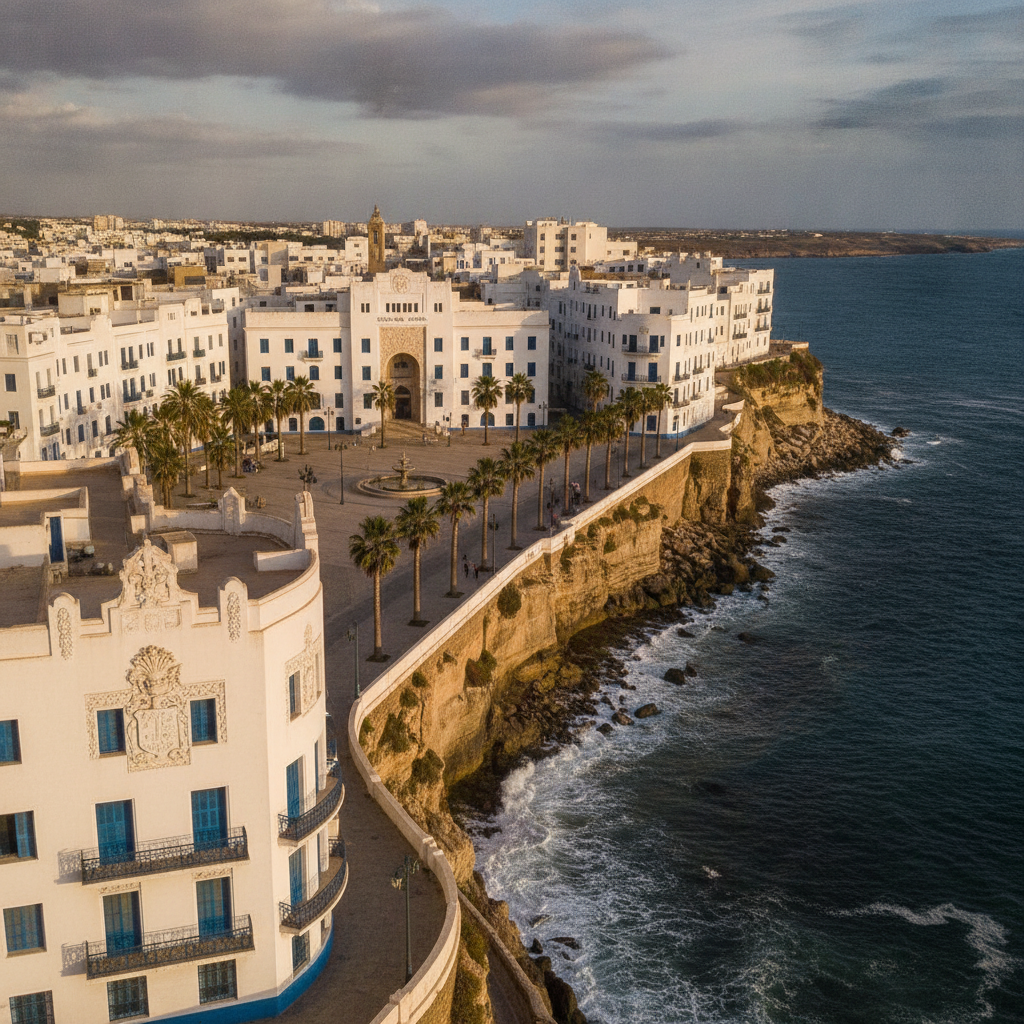
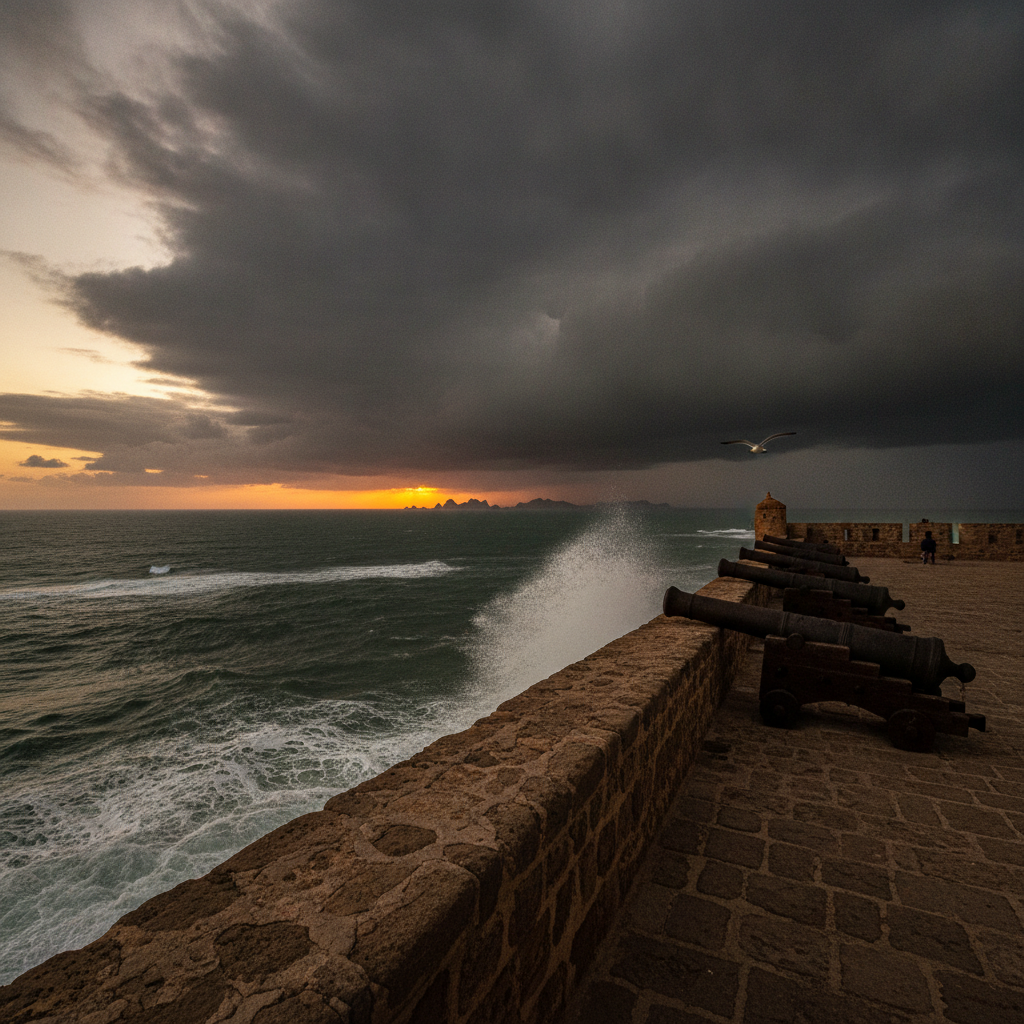
Essaouira (formerly Mogador): population approximately 80,000; UNESCO World Heritage medina (2001); on the Atlantic coast 170 km northwest of Marrakech. Founded as a Phoenician trading post (7th century BCE); definitive city designed in 1764-1765 by French engineer Theodore Cornut for Sultan Mohammed III. The ramparts (the Skala de la Kasbah: sea wall with bronze 17th-18th century cannons facing the Atlantic); the Gnawa and World Music Festival (June - 450,000-500,000 visitors over 4 days); Orson Welles filmed Othello on the ramparts 1949-1952 (Palme d'Or Cannes 1952); thuya root burl marquetry craft with mother-of-pearl and camel bone inlay; 25-40 km/h wind for 300 days per year making it a top-5 world windsurfing destination; harbor grill stalls with grilled sardines at 50-100 MAD per person; the Tujjar al-Sultan Jewish merchant community that dominated 18th-19th century trade; the argan forest with goat-climbing trees south of the city. Practical: no airport or train; Supratours bus from Marrakech 2.5-3 hours at 90-120 MAD; best season year-round but June for Gnawa Festival and summer for wind sports.
Walk this route with audio
Stories play automatically as you reach each stop — no tapping needed.
More in Essaouira
The Guanche Indigenous Population of the Canary Islands Were Amazigh (Berber) Speakers Linguistically Related to the Tamazight Populations of the Moroccan Atlantic Coast Who Were Progressively Conquered by Spanish Settlers in the 15th Century; The Battle of Alcacer Quibir in 1578 Where the Moroccan Saadians Killed Portuguese King Sebastian I Triggered the Portuguese Succession Crisis Leading to the 60-Year Iberian Union of Portugal and Spain Under Philip II; The Essaouira Pastilla au Fruits de Mer (Shrimp, Crab, and White Fish in Warqa Pastry With Saffron Cream) Was Invented in Essaouira as a Seafood Adaptation of the Classic Fassi Bastilla
Essaouira Practical: Transport from Marrakech and Agadir, the Best Riad Accommodation, the Optimal Visit Timing, the Wind Season Implications, and the Departure Summary
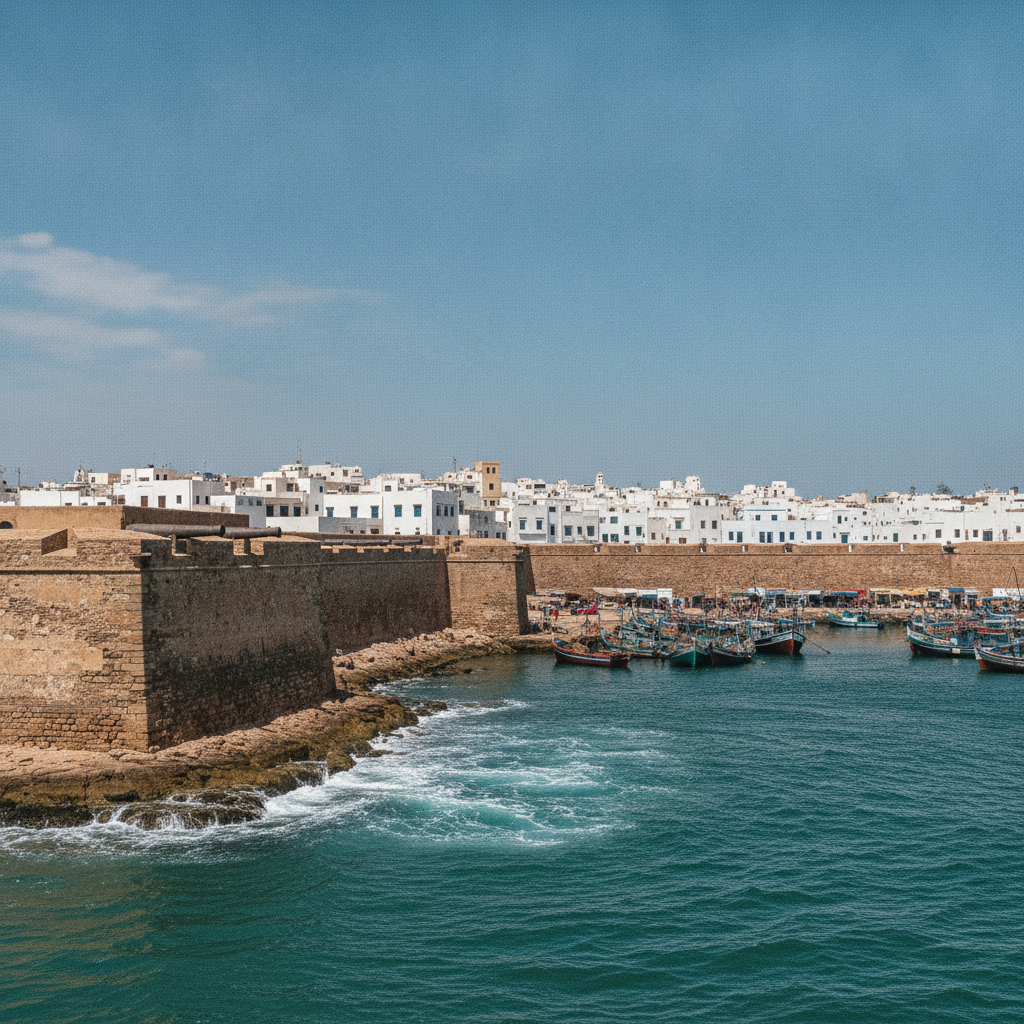
Essaouira Essential: The Atlantic Ramparts, the UNESCO Medina, Gnawa Music, the Mogador Portuguese Heritage, the Orson Welles and Jimi Hendrix Connections, and the Wind City Character
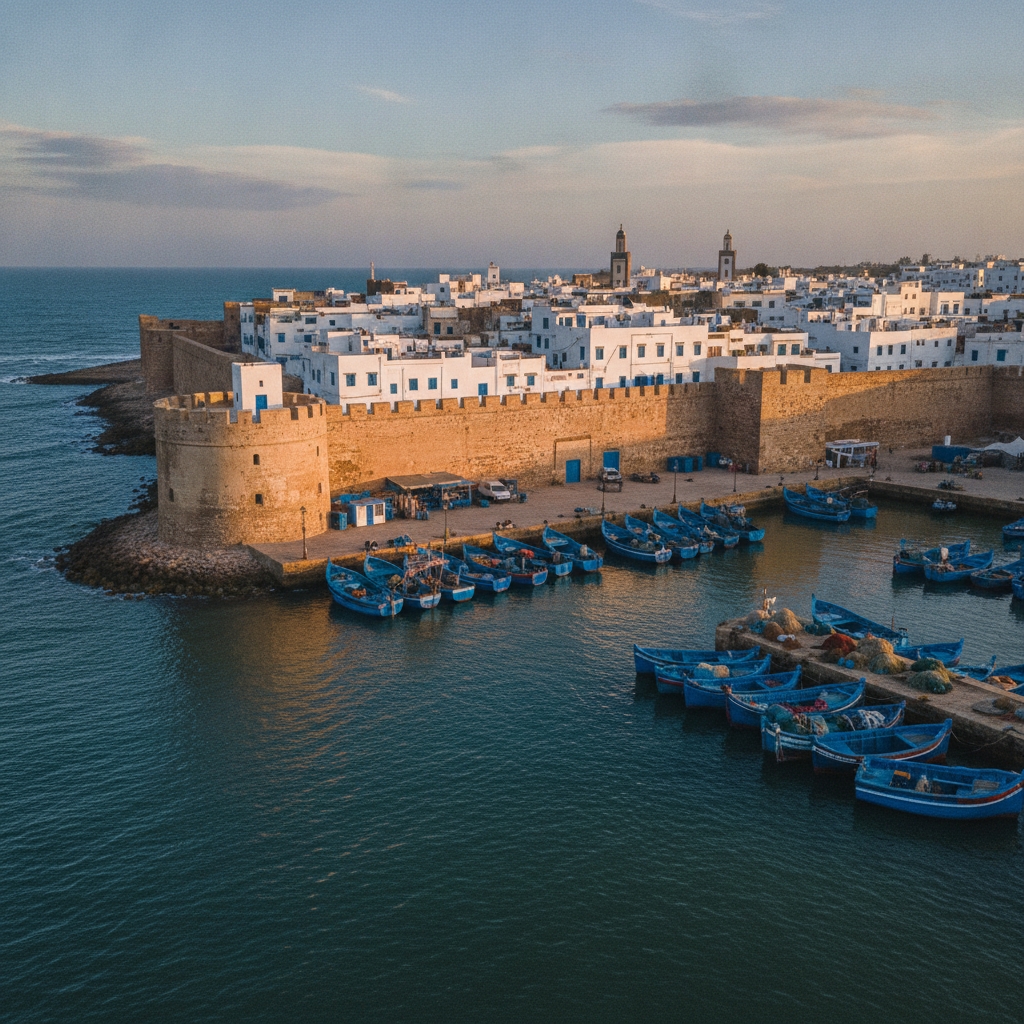
Essaouira History: The Mogador Portuguese Trading Post, the Phoenician Foundation, the Jewish Merchant Community, the Gnawa Slave Trade Origins, the 18th Century Sultan Rebuilding, and the UNESCO Recognition
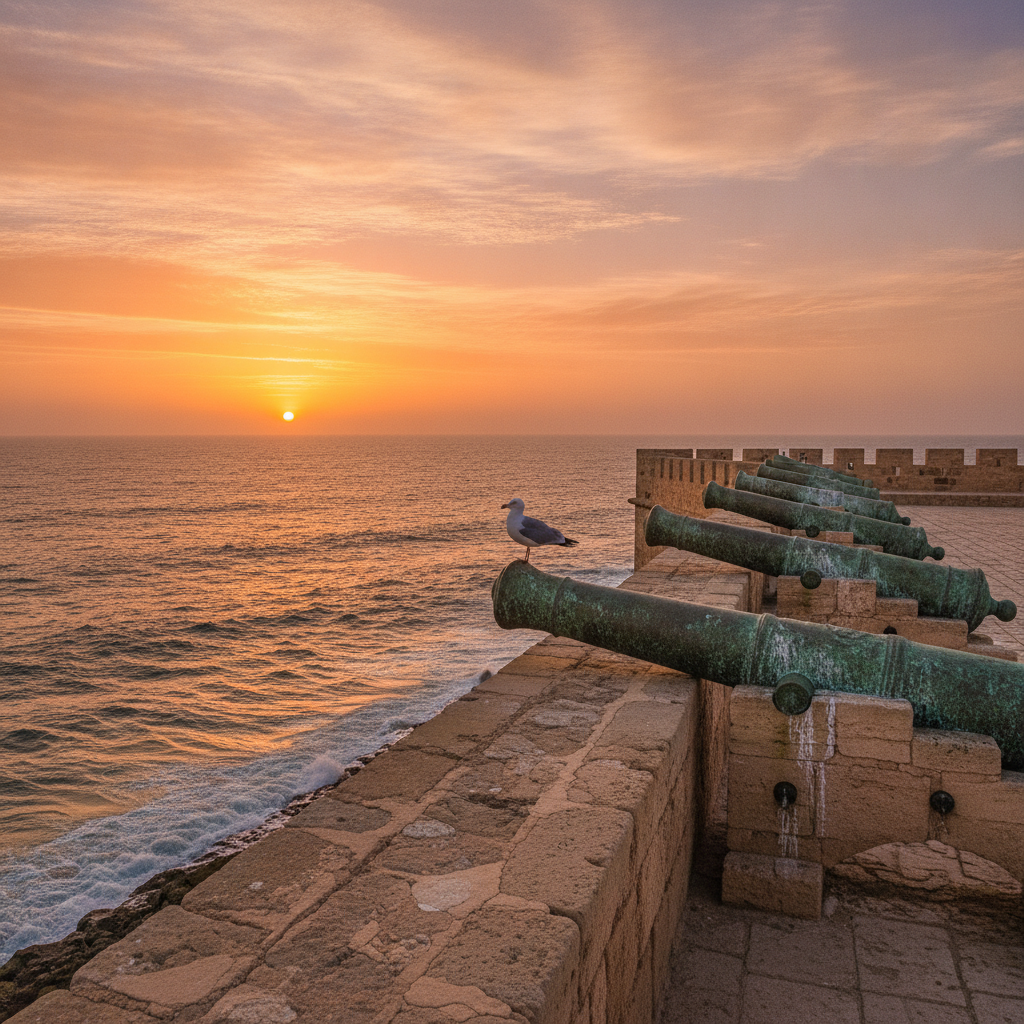
Essaouira's UNESCO-Listed Ramparts Were Designed by French Engineer Theodore Cornut in 1764-1765 Under Sultan Mohammed III and Line the Atlantic With 17th-18th Century Bronze Cannons Seized From European Ships; The Gnawa and World Music Festival of Essaouira Attracts 450,000-500,000 Visitors Over 4 Days in June and Is the World's Largest Gnawa Festival; The Thuya Arborvitae Root Burl Exploitation for the Essaouira Marquetry Craft Is Not Sustainable as Burl Harvesting Kills the Root System Preventing Tree Regeneration