Randy Weston the American Jazz Pianist Was Among the First to Collaborate With Gnawa Musicians in Essaouira in the 1960s and Connected the African Roots of Jazz Blues to the Gnawa Pentatonic Tradition; The Galerie Damgaard Founded by Danish Gallerist Frederiksen Damgaard in 1988 Discovered the Essaouira Naive Painting School That Is Now Internationally Collected; The Essaouira Tujjar al-Sultan Jewish Merchant Community at Its 19th Century Peak Numbered 5,000-8,000 of a Total City Population of 15,000-20,000
Randy Weston connecting Gnawa to jazz-blues African roots in Essaouira from the 1960s; Danish gallerist Damgaard founding Galerie Damgaard in 1988 and discovering the Essaouira naive painting school; the Jewish Tujjar al-Sultan constituting up to a third of the 19th century city population; the Essaouira 3-day itinerary covering ramparts, harbor grill sardines, windsurfing, Sidi Kaouki beach, and argan cooperative; and Essaouira as a more successfully balanced heritage tourism model than over-touristed Chefchaouen or Marrakech.
- 1
The Essaouira Medina Architecture - Whitewash, Blue, and Portuguese Heritage
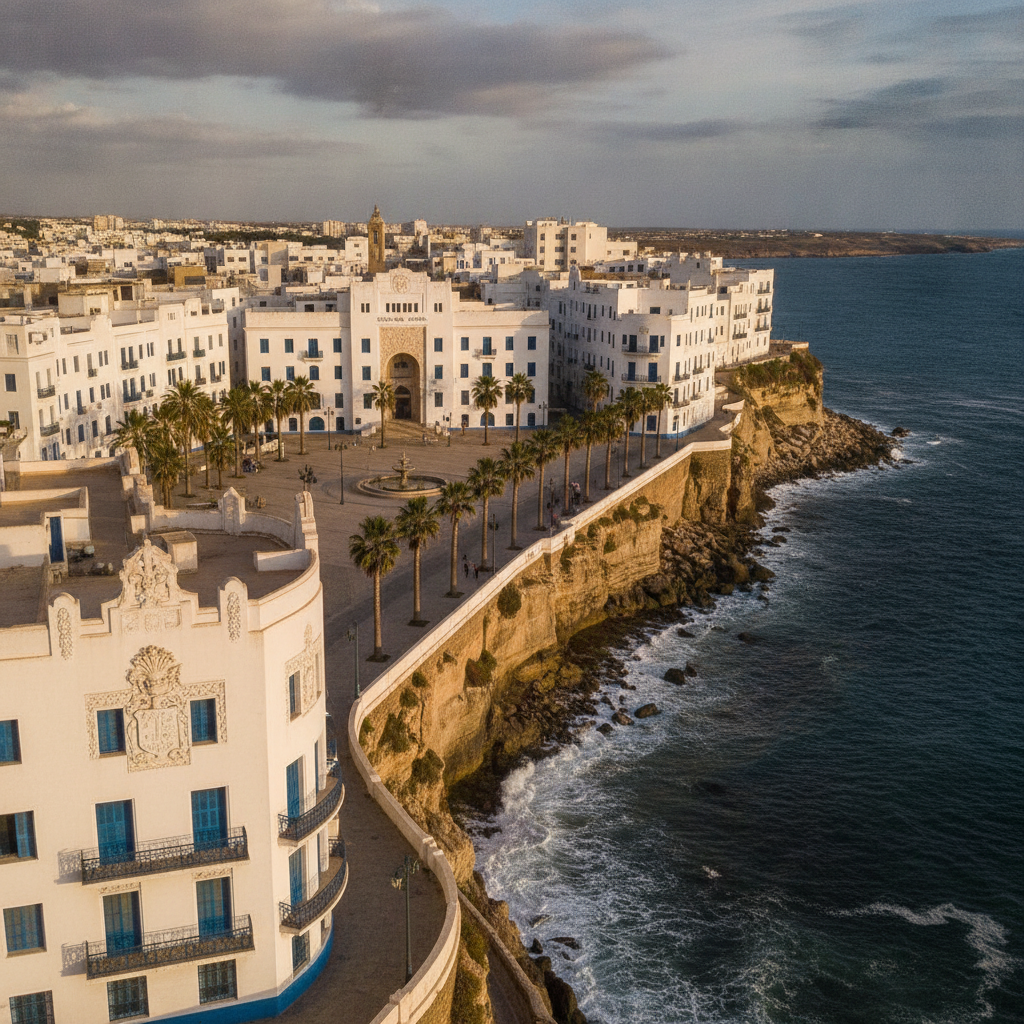
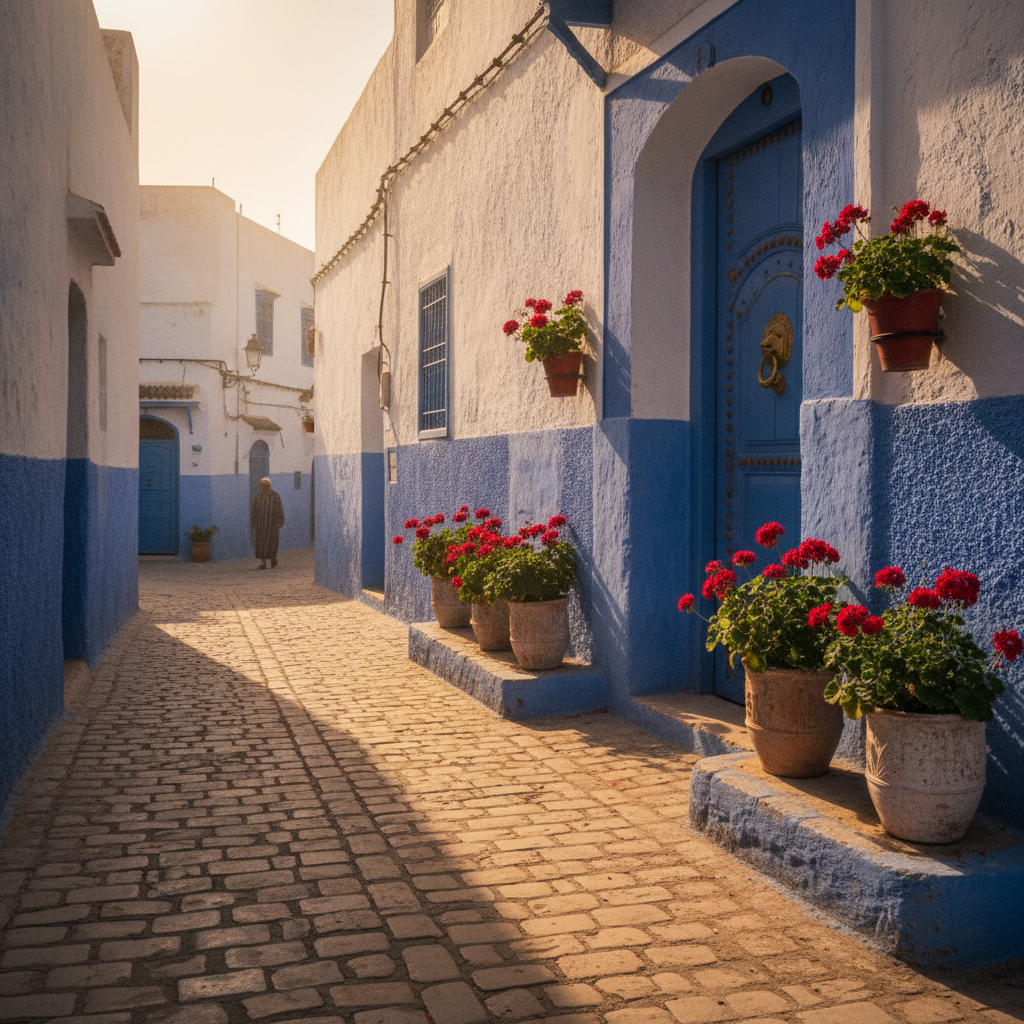
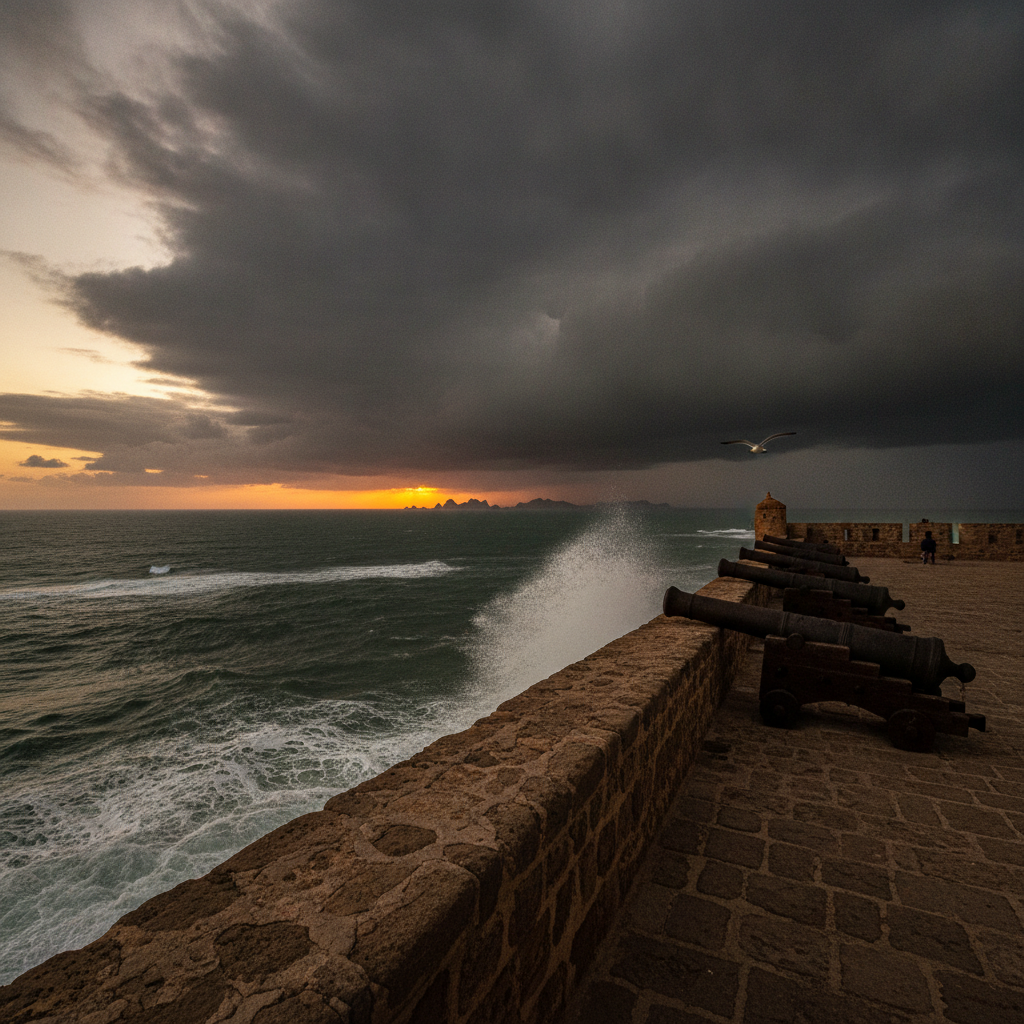
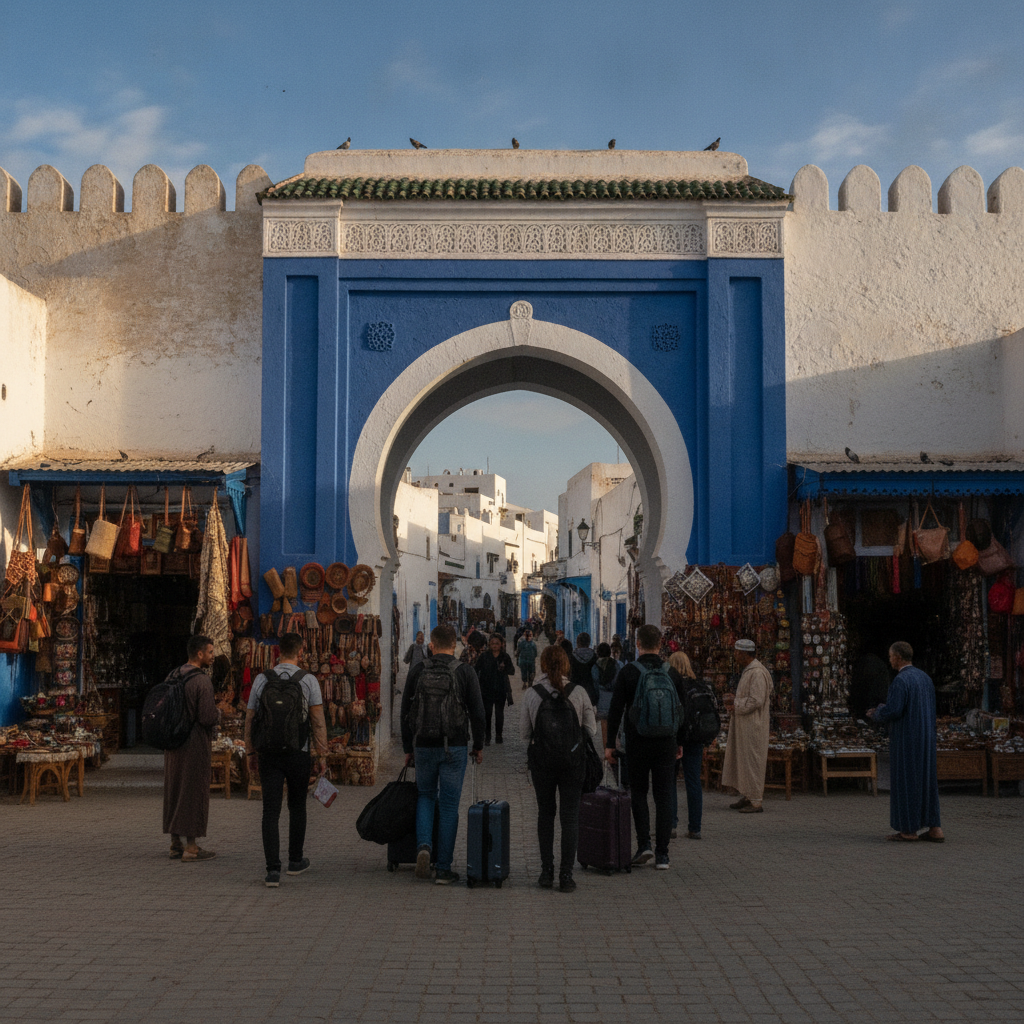
The Essaouira medina architecture combines the Portuguese fort tradition with the Moroccan Islamic medina plan and the French military engineering of Theodore Cornut. The layout: the medina is divided into rectangular blocks by a grid of streets (unique in Morocco where most medinas have organic irregular layouts) - a result of Cornut's rational French Enlightenment urban planning. The rampart system (the primary fortifications are the Skala de la Kasbah (the sea wall with bronze cannons) and the Skala du Port (the harbor wall overlooking the fishing port). The Bab Sbaa (the primary gate of the medina): the North Bastion: the Portuguese-era walls. The whitewash and blue palette: the Essaouira color scheme is white walls with blue window frames and door frames - a blue-and-white combination that predates the Chefchaouen all-blue by centuries and has a specifically Mediterranean coastal character. The medina houses: the typical Essaouira medina house has a simple whitewashed exterior with shuttered blue windows. The interior: a courtyard with a central fountain, carved cedarwood features, and zellij tilework similar to Moroccan houses elsewhere. The souk streets (the primary souk streets: Rue Mohammed Zerktouni (the main commercial street) and the adjacent covered souk areas).
- 2
The Gnawa Music of Essaouira - The Lila Healing Ceremony and World Music Fusion
The Gnawa music tradition of Essaouira in depth: the instruments, the ceremony, and the global fusion connections. The Gnawa (the Gnawa are descendants of sub-Saharan African enslaved people brought to Morocco via the trans-Saharan slave trade over centuries. The primary Gnawa populations are in Marrakech, Essaouira, and the urban medinas of Morocco. The guembri (the primary Gnawa instrument: a 3-string bass lute with a camel-skin soundboard and a hardwood neck: the strings are made from animal gut: the instrument produces a deep, buzzing bass tone that forms the rhythmic and melodic foundation of Gnawa music). The qraqeb (large iron castanets (krakeb): played in pairs producing a loud metallic clacking rhythm. The lila ceremony: the all-night Gnawa healing ritual: the lila (night) begins at sunset and ends at dawn: the ceremony invokes a sequence of mluk (Gnawa spirits corresponding to different colors, character types, and healing functions): each mluk is invoked by its specific musical phrase and associated color and offering. The world music fusion: the structural kinship between Gnawa pentatonic bass lines and American blues (both trace to West African musical traditions): the Gnawa Festival featuring Gnawa-jazz, Gnawa-blues, Gnawa-rock, and Gnawa-electronic collaborations since 1998. Randy Weston (the American jazz pianist Randy Weston (1926-2018) was among the first jazz musicians to collaborate with Gnawa musicians in Essaouira in the 1960s and wrote extensively about the African roots of jazz blues in relation to Gnawa).
- 3
Essaouira Photography Guide - Ramparts, Blue Streets, and the Harbor at Sunset
The Essaouira photography guide: the primary locations and optimal conditions for photographing Morocco's most photogenic Atlantic port city. The ramparts at sunset (the primary Essaouira photography experience: the Skala de la Kasbah at sunset: position on the rampart walkway looking west toward the setting sun: the bronze cannons in silhouette against the orange Atlantic sky: the Iles Purpuraires visible offshore: the sunset timing (approximately 7:30-8pm in summer, 5:30-6pm in winter). The blue-and-white streets of the medina (the blue window frames and door frames against white plaster create a distinctive blue-and-white palette: the best light is the golden hour when the warm low-angle sun creates contrast between the warm sunlit white walls and the cool blue trim: the medina is less crowded than Chefchaouen but equally photogenic). The harbor and fishing boats (the Skala du Port overlooks the fishing port: the blue-painted wooden fishing boats (pointus) in the harbor: the late afternoon light when the boats return: the blue boats against the blue sea in the golden hour). The Gnawa musicians (Gnawa musicians in the Plaza Moulay Hassan and the Essaouira medina streets: the guembri bass lute and qraqeb iron castanets make visually distinctive subjects). The thuya craft workshops (the artisans inlaying thuya root burl with mother-of-pearl in their workshop doorways: the wood shavings, the tools, and the half-completed marquetry).
- 4
Essaouira Culture Trail - Art Galleries, Music, and the Creative Community
Essaouira as a creative and artistic community: the gallery scene, the music scene, and the tradition of artist residencies that make the Wind City Morocco's primary arts town outside Marrakech. The gallery scene (Essaouira has an active contemporary art gallery scene by Moroccan city standards: the primary galleries in the medina sell both traditional Moroccan crafts (thuya wood, textiles) and contemporary Moroccan fine art: the Galerie Damgaard (the primary Essaouira gallery for naive and self-taught Moroccan painting: founded by Danish gallerist Frederiksen Damgaard in 1988: Damgaard discovered and promoted a school of self-taught Moroccan painters from Essaouira whose work combines Gnawa symbolism, Sufi spirituality, and a distinctively Moroccan color palette: the Essaouira naive painting school is now internationally collected). The artist residencies: the Dar Souiri cultural center hosts artist-in-residence programs and is the primary venue for the Gnawa Festival indoor events. The music scene (Essaouira has the most active year-round music scene in Morocco outside Casablanca: the nightly Gnawa performances in the Plaza Moulay Hassan: the Andalusian music concerts at the Dar Souiri: the Sufi music events). The crafts (the thuya workshop cluster in the medina: the weavers: the silver jewelry workers (the Essaouira silver jewelry tradition: filigree work and Berber tribal jewelry from the Souss and the Sahara sold in the medina): the art book (the Essaouira art scene is documented in several French-language publications on the naive painting school).
- 5
Essaouira 3-Day Itinerary - Gnawa Music, the Ramparts, and Sidi Kaouki
The Essaouira 3-day itinerary: a structured guide to experiencing the primary sights and culture of the Wind City in three days. Day 1 (the medina and the ramparts): morning: arrive by Supratours bus from Marrakech (2.5-3 hours): check into the medina riad: walk to the Skala de la Kasbah (the sea ramparts with bronze cannons): the view over the Atlantic and the Iles Purpuraires: afternoon: the medina souk (Rue Mohammed Zerktouni): the thuya craft workshops (purchase a thuya wood inlaid box or chessboard): the Mellah (the former Jewish quarter): the Simon Attias synagogue: evening: dinner at the Plaza Moulay Hassan with a view of the sea: Gnawa music performance in the square: Day 2 (the harbor, the beach, and wind sports): morning: the Skala du Port and the fishing harbor: the harbor grill stalls (grilled fresh sardines for breakfast): the blue fishing boats: afternoon: the beach south of the medina (3 km walk from Bab Sbaa or 10 MAD petite taxi): windsurfing lesson or kitesurfing lesson (numerous schools on the beach): camel ride at sunset on the hard-packed sand: Day 3 (day trip to Sidi Kaouki and the argan forest): morning: shared taxi south to Sidi Kaouki (25 km: approximately 30 MAD per person): the remote Atlantic beach with the whitewashed shrine: swimming and relaxing: afternoon: stop at an argan oil cooperative on the N1 road (look for the ONCA certification sign): the women cracking nuts and pressing oil on the stone mill: the goat-climbing argan trees visible from the road: return to Essaouira by late afternoon: evening: sunset from the Skala de la Kasbah.
- 6
Essaouira Legacy - The Wind City and Its Place in Moroccan History
Essaouira legacy: the final assessment of the Wind City role in Moroccan and Atlantic history. The ancient foundation (the Phoenician trading post at Mogador from the 7th century BCE: the Tyrian purple production at the Iles Purpuraires: the Roman-Mauretanian period: the Portuguese fortress: 3,000 years of continuous maritime habitation). The 18th-19th century peak (the definitive city founded 1764-1765 by Sultan Mohammed III: the Tujjar al-Sultan Jewish merchant community: the city as the primary Atlantic trading port of Morocco: the period when Essaouira processed a significant fraction of Moroccan international trade including sugar, tea, gold, leather, argan oil, and copper). The cultural contributions (the Gnawa music tradition preserved and celebrated at the annual world music festival: the thuya craft tradition: the naive painting school discovered by Damgaard in 1988: the Orson Welles Othello connection: the Jimi Hendrix legend). The UNESCO inscription (2001) recognizing the outstanding late 18th century military architecture and the integration of European and Moroccan urban planning traditions. The contemporary significance (Essaouira is Morocco's primary Atlantic wind sports destination: the Gnawa and World Music Festival (450,000-500,000 visitors in June): the most creatively and artistically active small Moroccan medina city: the coolest summer city in Morocco: the most accessible argan oil country: a model of small-city heritage-led tourism development that balances authenticity and visitor experience more successfully than Chefchaouen or the over-touristed Marrakech medina).
Walk this route with audio
Stories play automatically as you reach each stop — no tapping needed.
More in Essaouira
The Guanche Indigenous Population of the Canary Islands Were Amazigh (Berber) Speakers Linguistically Related to the Tamazight Populations of the Moroccan Atlantic Coast Who Were Progressively Conquered by Spanish Settlers in the 15th Century; The Battle of Alcacer Quibir in 1578 Where the Moroccan Saadians Killed Portuguese King Sebastian I Triggered the Portuguese Succession Crisis Leading to the 60-Year Iberian Union of Portugal and Spain Under Philip II; The Essaouira Pastilla au Fruits de Mer (Shrimp, Crab, and White Fish in Warqa Pastry With Saffron Cream) Was Invented in Essaouira as a Seafood Adaptation of the Classic Fassi Bastilla
Essaouira Practical: Transport from Marrakech and Agadir, the Best Riad Accommodation, the Optimal Visit Timing, the Wind Season Implications, and the Departure Summary
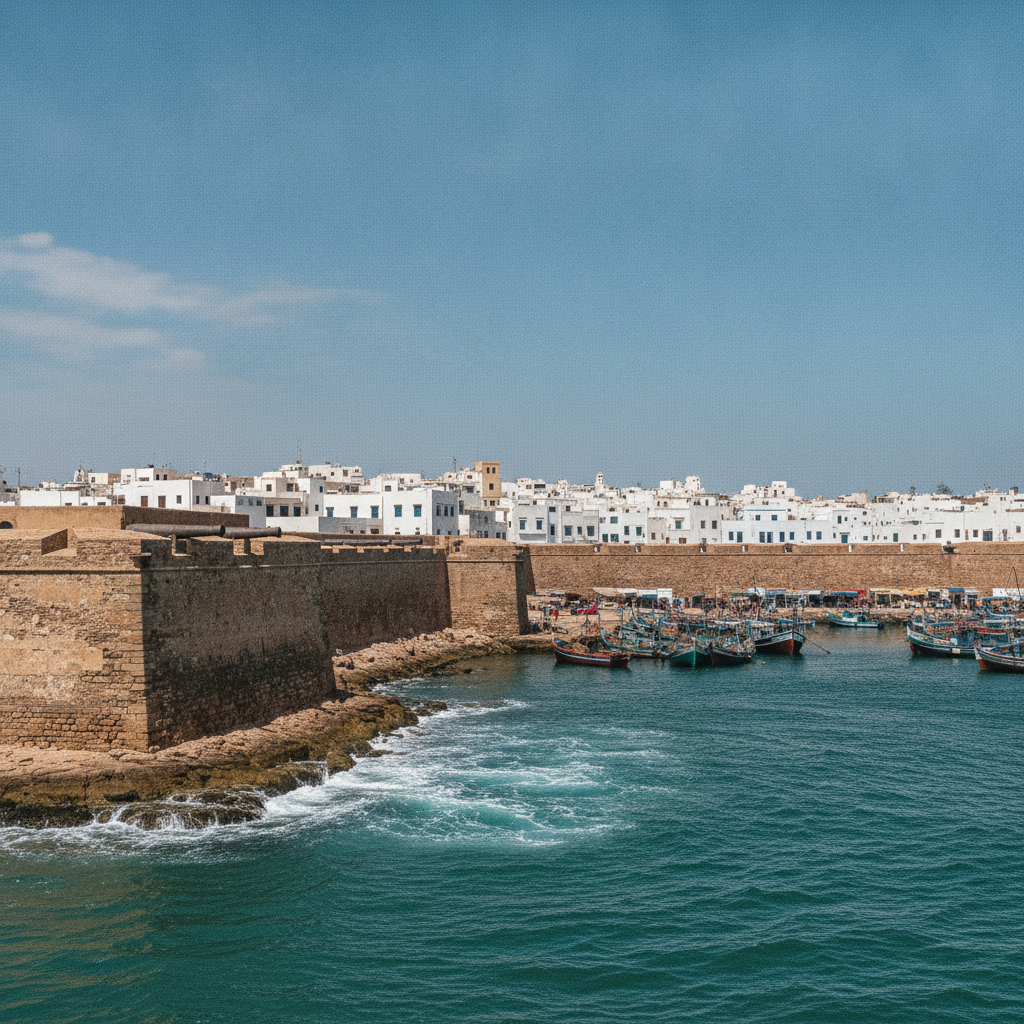
Essaouira Essential: The Atlantic Ramparts, the UNESCO Medina, Gnawa Music, the Mogador Portuguese Heritage, the Orson Welles and Jimi Hendrix Connections, and the Wind City Character
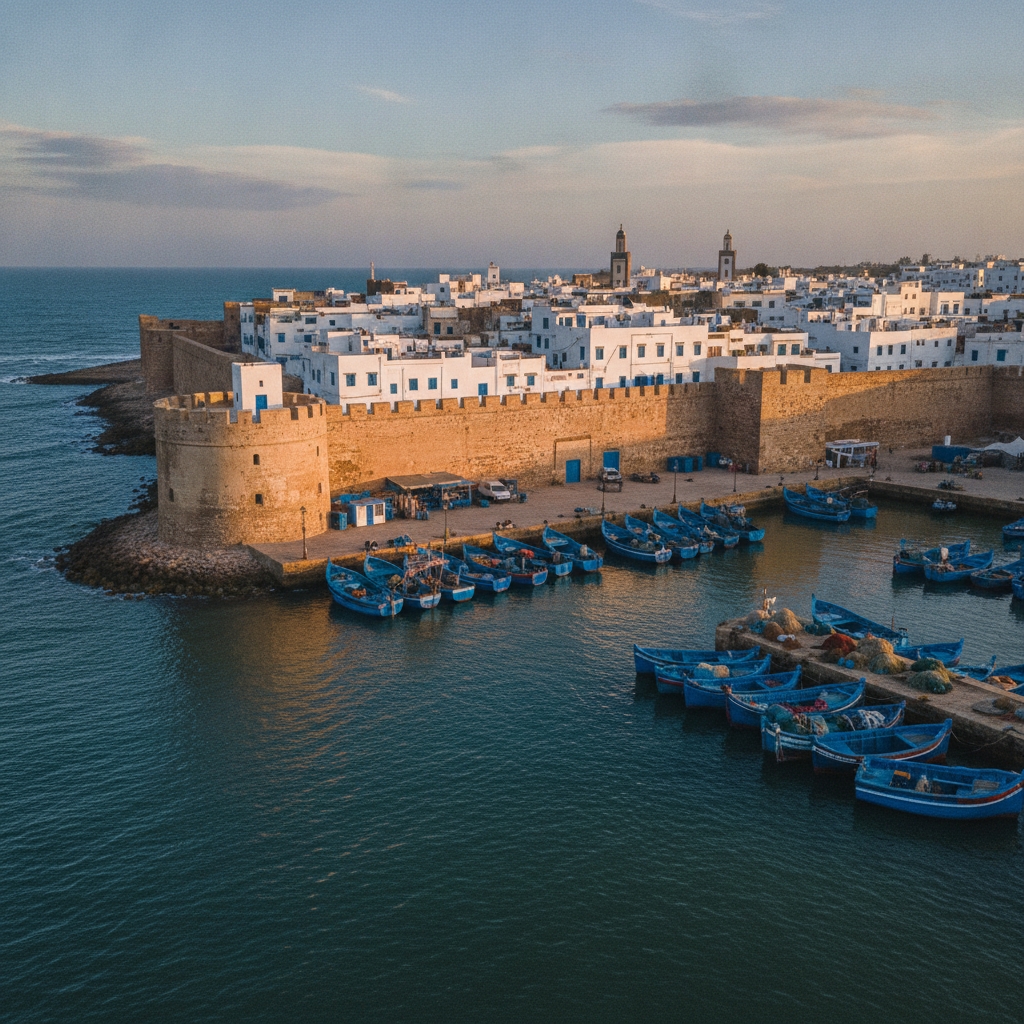
Essaouira History: The Mogador Portuguese Trading Post, the Phoenician Foundation, the Jewish Merchant Community, the Gnawa Slave Trade Origins, the 18th Century Sultan Rebuilding, and the UNESCO Recognition
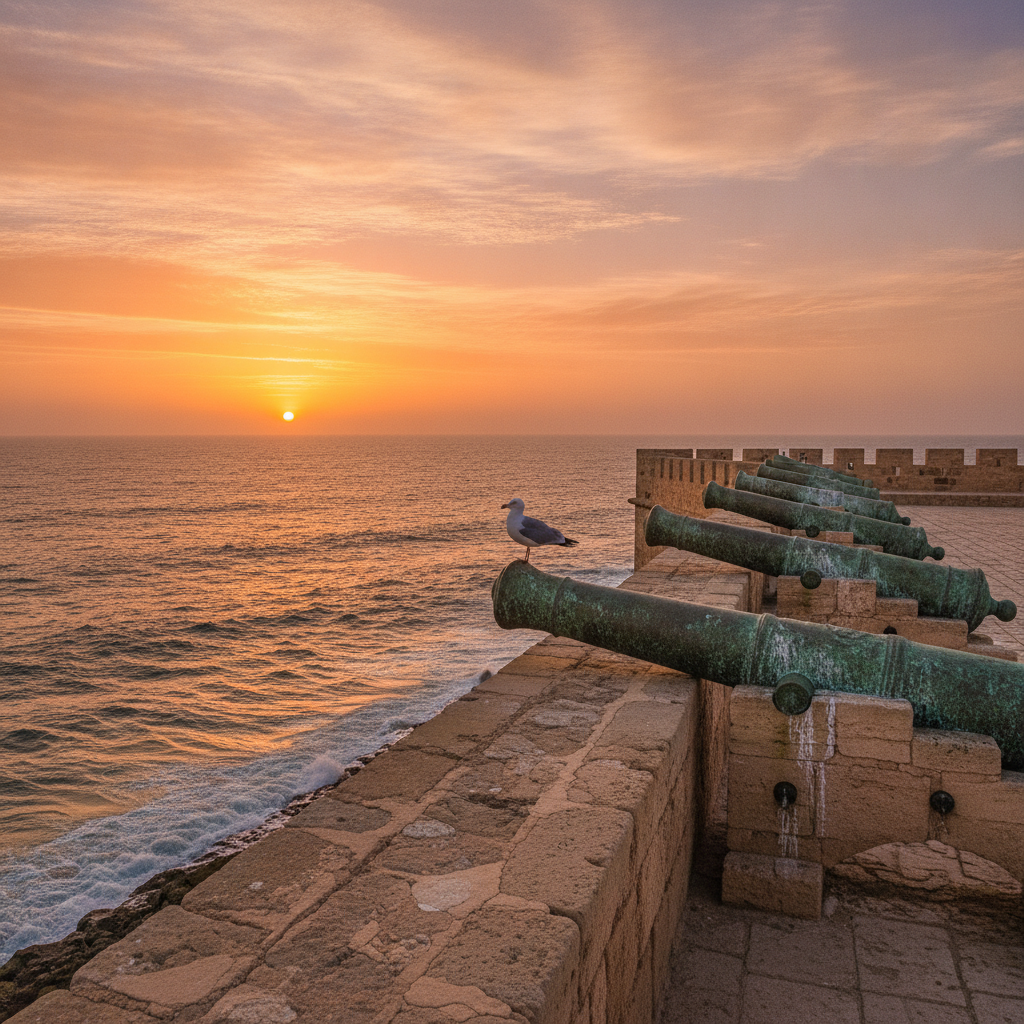
Essaouira's UNESCO-Listed Ramparts Were Designed by French Engineer Theodore Cornut in 1764-1765 Under Sultan Mohammed III and Line the Atlantic With 17th-18th Century Bronze Cannons Seized From European Ships; The Gnawa and World Music Festival of Essaouira Attracts 450,000-500,000 Visitors Over 4 Days in June and Is the World's Largest Gnawa Festival; The Thuya Arborvitae Root Burl Exploitation for the Essaouira Marquetry Craft Is Not Sustainable as Burl Harvesting Kills the Root System Preventing Tree Regeneration