Ephesus to Pergamon: The Asklepion Medical Center, Bergama Acropolis Sheer Theatre, Red Basilica, Zeus Altar Berlin Museum, Pergamon Library, and the Aegean Archaeological Circuit
The Ephesus to Pergamon route covers the Asklepion healing sanctuary at Pergamon that rivaled Epidaurus, the dramatic Pergamon Acropolis theatre cut into the steepest hillside in the ancient world, the Red Basilica converted to a mosque, the Zeus Altar that the Berlin Museum holds, the Pergamon Library second after Alexandria, and the northern Aegean archaeological circuit.
- 1
Pergamon Asklepion: The Ancient Medical Center
The Asklepion at Pergamon, the healing sanctuary of the god Asklepios that attracted the sick from across the Roman world and treated them with the combination of dream interpretation, hydrotherapy, herbal medicine, and suggestion that the ancient therapeutic tradition called incubation, is the most important ancient medical center in Turkey and the institution where Galen, the most influential physician in the history of Western medicine after Hippocrates, received his medical education before moving to Rome in 162 AD. The Asklepion sacred way, the incubation rooms, and the thermal pool are the most completely preserved elements of the ancient healing complex.
- 2
Pergamon Acropolis Theatre: The Steepest Ancient Theatre
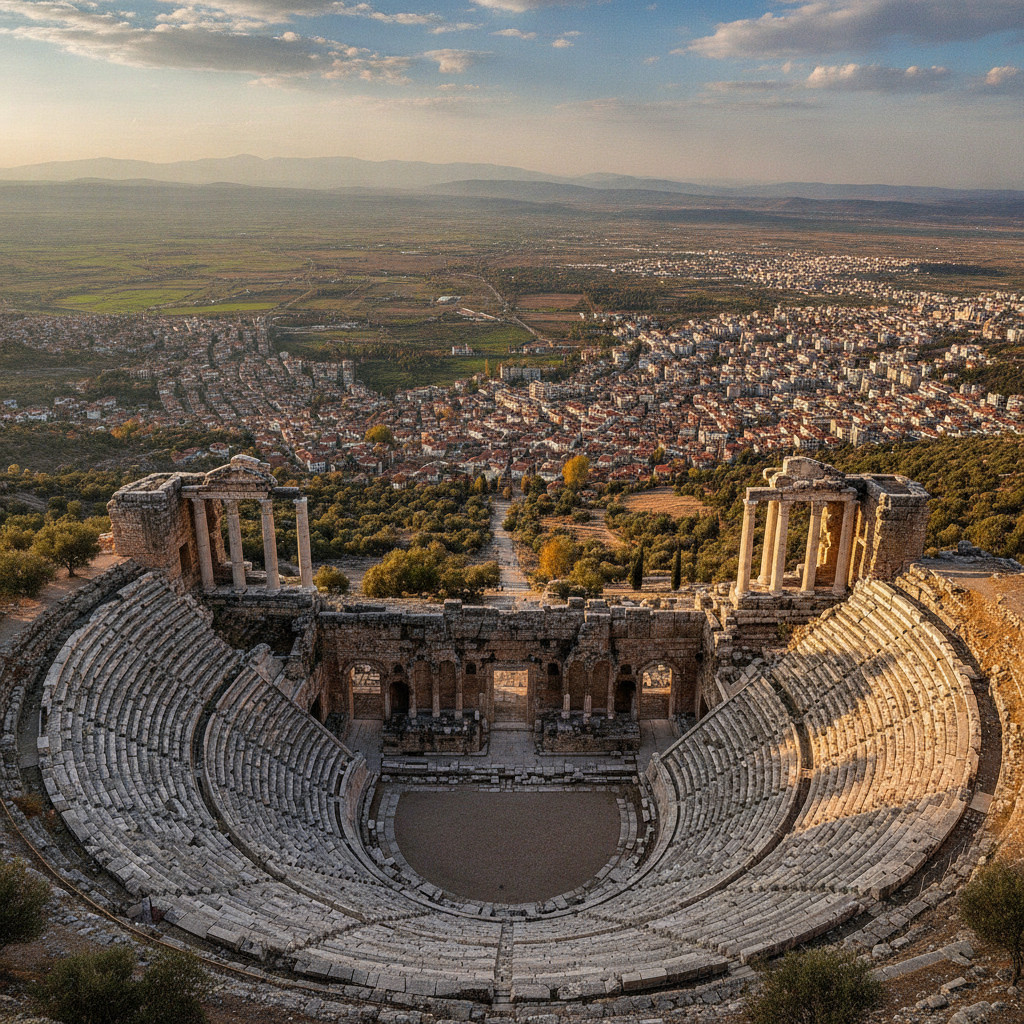
The Pergamon Acropolis theatre, cut into the western face of the acropolis hill at an angle of 80 degrees that is the steepest of any surviving ancient Greek theatre, seated 10,000 spectators and provided the most dramatic theatrical experience in the ancient Aegean world with the stage set against the panoramic backdrop of the Caicus River valley below. The theatre is accessible from the main Pergamon acropolis via the terraced path and provides the most vertiginous single ancient theatre experience in Turkey.
- 3
Pergamon Acropolis: The Hellenistic Capital
The Pergamon Acropolis, the hilltop city of the Attalid dynasty that ruled the most important Hellenistic kingdom in Asia Minor from 282 to 133 BC, preserves the Temple of Trajan, the Temple of Athena, the upper agora, and the library building where the Pergamon Library held 200,000 volumes - the second largest library in the ancient world after Alexandria - and where the conflict with the Ptolemies of Egypt over the library led, according to the ancient sources, to the invention of parchment when the Ptolemies embargoed the Egyptian papyrus supply.
- 4
Red Basilica: The Temple of the Egyptian Gods
The Red Basilica in Bergama, the massive 2nd century AD temple complex built by the Emperor Hadrian for the Egyptian gods Serapis, Isis, and Harpokrates using the Egyptian red brick construction technique, converted to a Christian basilica in the 4th century and partially converted to a mosque in the Ottoman period with the two flanking round towers now serving as minarets, is the Revelation to John church identified as Pergamon the site of the throne of Satan and the most architecturally imposing surviving monument in the modern Bergama city.
- 5
Zeus Altar: The Berlin Pergamon Museum
The Great Altar of Zeus at Pergamon, built between 165 and 156 BC to commemorate the Attalid victory over the Galatians and decorated with the most dynamic sculptural frieze in the Hellenistic world depicting the Battle of the Gods and the Giants, was excavated by the German engineer Carl Humann between 1878 and 1886 and transported to Berlin where the Pergamon Museum was built around the altar in 1930. The original altar position on the Pergamon Acropolis is now marked only by the foundation terrace, and the original frieze is in Berlin while a replica is displayed in the Bergama museum.
- 6
Aegean Archaeological Circuit: Ephesus to Pergamon
The northern Aegean archaeological circuit from Ephesus through Sardis to Pergamon, covering the 200-kilometer route that connects the three most important ancient cities of the Roman province of Asia, provides the most comprehensive single archaeological circuit in western Turkey. The Sardis synagogue and the gymnasium complex, the Manisa Archaeological Museum, and the Pergamon circuit can be covered in a 2-day extension of the Ephesus visit that provides the most complete picture of the Roman Asia Minor urban network.
Walk this route with audio
Stories play automatically as you reach each stop — no tapping needed.
More in Ephesus
Ephesus to Pamukkale: The Travertine Cotton Castle, Hierapolis Roman Spa City, the Necropolis, Sacred Pool of Cleopatra, Calcium Terraces Natural Wonder, and the Ephesus-Pamukkale Day Circuit
Ephesus and Early Christianity: Paul the Apostle Missions, the House of the Virgin Mary at Meryemana, Cave of the Seven Sleepers, John Gospel in Ephesus, Christian Pilgrimage Circuit, and the Acts of the Apostles
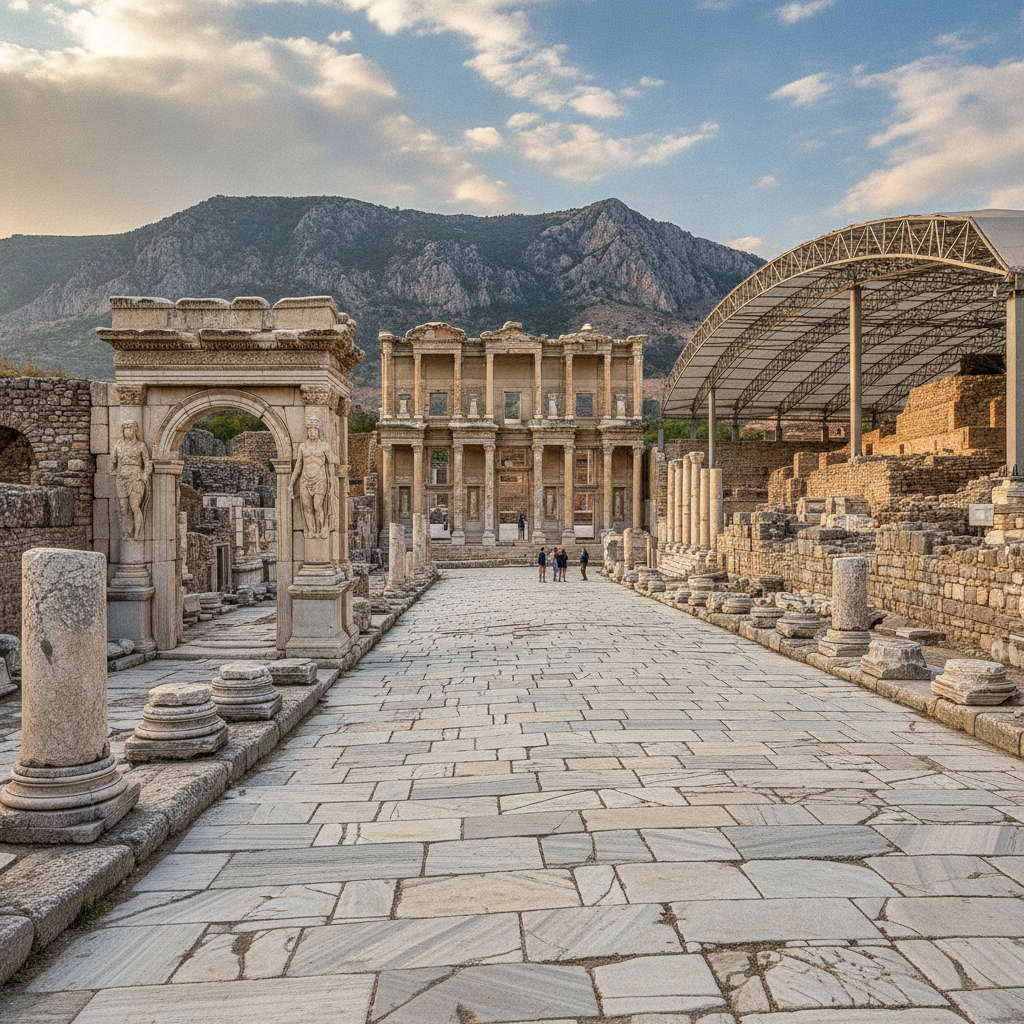
Ephesus Museum and Streets: Selcuk Archaeological Museum Collections, Isa Bey Mosque Seljuk Architecture, the Curetes Street Marble Paving, Ancient Public Fountains, the Brothel and the Social Life, and the Marble Road
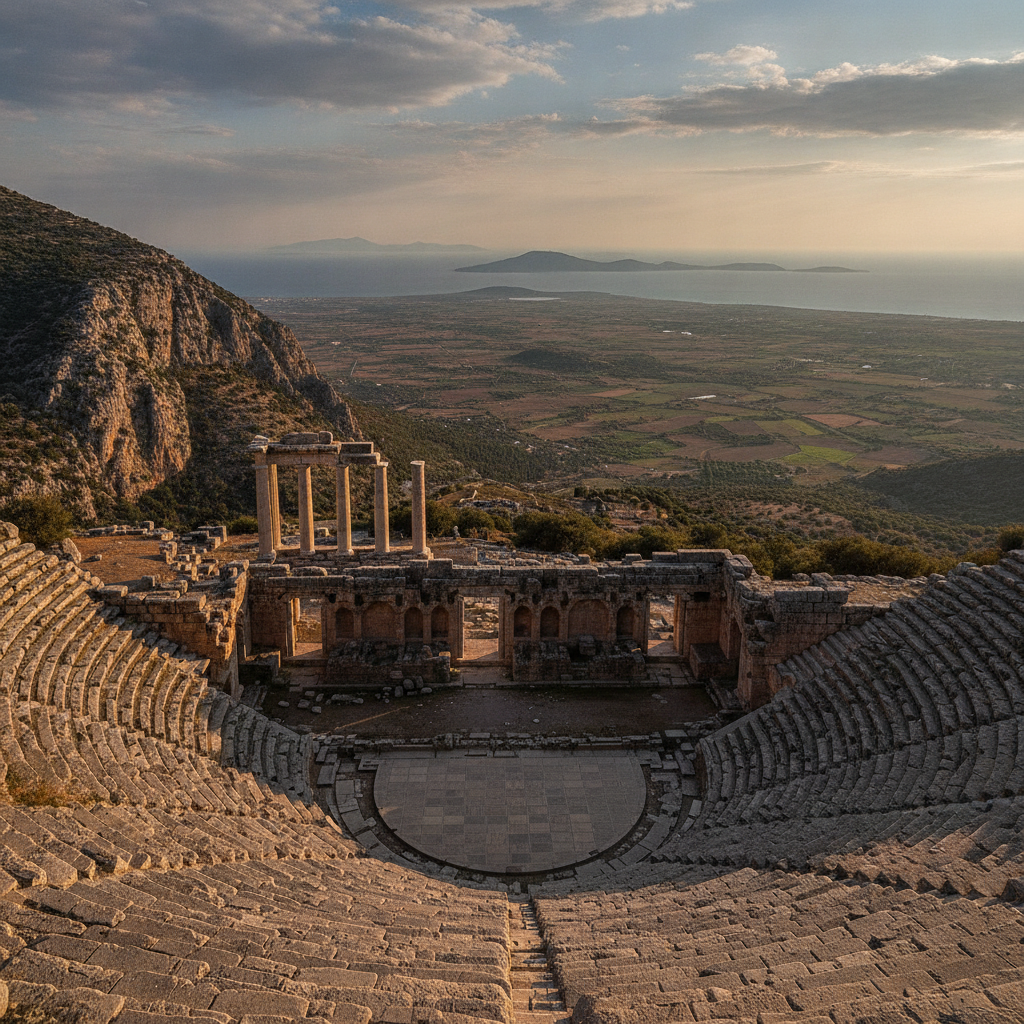
Ephesus Coast and Day Trips: Kusadasi Cruise Port Bazaar, Dilek Peninsula National Park, Amazon Beach, Priene Ancient City, Miletus Theatre, Didyma Apollo Temple Oracle, and the Maeander Valley Circuit
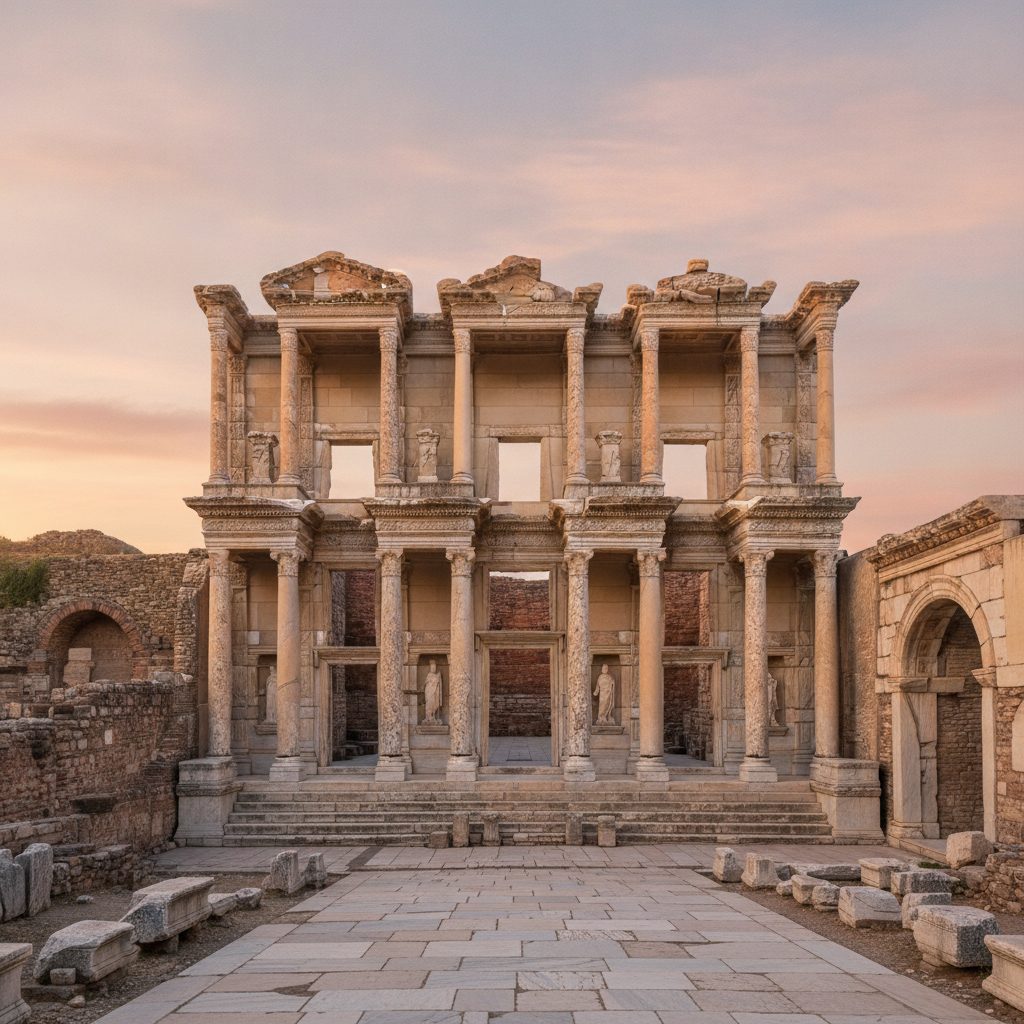
Ephesus Essential: Library of Celsus, the Great Theatre, Artemision Wonder of the World, Terrace Houses of the Wealthy, Roman Agora, and Saint John Basilica on Ayasuluk Hill