Ephesus to Pamukkale: The Travertine Cotton Castle, Hierapolis Roman Spa City, the Necropolis, Sacred Pool of Cleopatra, Calcium Terraces Natural Wonder, and the Ephesus-Pamukkale Day Circuit
The Ephesus to Pamukkale day circuit covers the Pamukkale white travertine calcium terraces, the Hierapolis Roman spa city built above the thermal springs, the Hierapolis Necropolis with 1,200 tombs, the Sacred Pool of Cleopatra with the submerged Roman columns, the calcium terrace walk, and the combined Ephesus-Pamukkale 2-day itinerary.
- 1
Pamukkale Travertine Terraces: The Cotton Castle
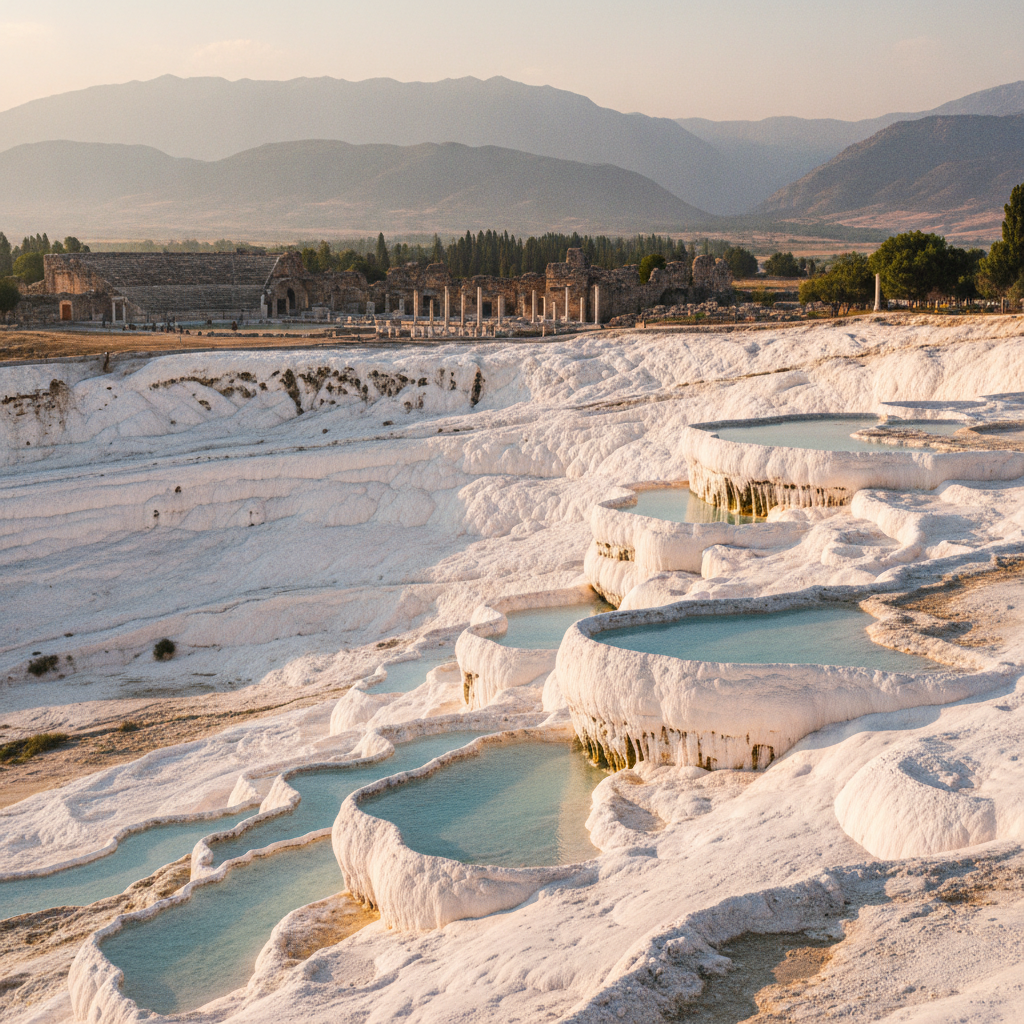
Pamukkale, the calcium carbonate travertine terraces formed by the thermal spring water that flows from the plateau edge and deposits the calcium in the cascading pools as it cools, is the most dramatically unusual natural formation in Turkey and one of the most recognizable natural landmarks in the world, with the white terraces, the turquoise thermal pool water, and the Hierapolis plateau above creating the composition that UNESCO recognized with the dual inscription of the natural and cultural heritage in 1988. The barefoot walk on the warm calcium terraces, with the thermal water at 35 degrees Celsius flowing over the feet, is the most physically distinctive single tourist experience in Turkey.
- 2
Hierapolis: The Roman Spa City Above the Springs
Hierapolis, the Roman spa city founded by the Pergamon dynasty in the 2nd century BC and built above the calcium terraces, was the most important therapeutic center in the Roman world with the thermal baths, the colonnaded streets, the theatre, and the temples that the wealthy Romans and the diseased pilgrims seeking the healing properties of the thermal water maintained for 600 years. The Hierapolis archaeological museum in the restored Roman baths displays the sculpture and the architectural fragments from the Hierapolis excavations.
- 3
Hierapolis Necropolis: The Largest Roman Cemetery
The Hierapolis Necropolis, the 2-kilometer-long cemetery extending north of the ancient city with 1,200 tombs ranging from the simple tumulus burials of the ordinary citizens to the elaborate stone sarcophagi and the monumental tumulus tombs of the wealthy Hierapolis families, is the largest and best-preserved ancient necropolis in Turkey and the most complete surviving example of the Roman burial practice from the Hellenistic through the Byzantine period. The variety of the burial types and the preservation of the inscriptions make the Hierapolis Necropolis the most instructive single ancient cemetery accessible to the visitor in western Turkey.
- 4
Sacred Pool of Cleopatra: Swimming with Roman Columns
The Sacred Pool at Hierapolis, the thermal pool fed by the same spring water that creates the Pamukkale travertine terraces and where the submerged Roman columns and column capitals of the ancient pool complex lie at a depth of 3 meters on the pool floor, is the most unusual swimming experience in Turkey - the water at 36 degrees Celsius, the visibility clear, and the ancient marble objects visible and touchable underwater. The pool was named for Cleopatra on the tradition that Antony gave her the city as a gift, though no historical evidence supports the association.
- 5
Calcium Terrace Walk: The Barefoot Experience
The walk on the Pamukkale calcium terraces, required to be barefoot to protect the delicate calcium formations from shoe damage, covers the 2-kilometer circuit from the upper plateau entrance down the terrace face to the lower entrance with the opportunity to bathe in the filled thermal pools at the designated areas. The afternoon visit, when the light is on the west-facing terrace face and the pools turn from white to gold in the declining light, is the most photographically productive timing for the Pamukkale visit, and the sunset on the travertine is the most dramatic natural light event in inland Turkey.
- 6
Ephesus-Pamukkale Two-Day Circuit: The Classic Turkey Tour
The Ephesus morning visit combined with the afternoon drive to Pamukkale and the next morning at the travertine terraces and Hierapolis before the return to Izmir or the onward journey to Antalya constitutes the most commonly used 2-day western Turkey circuit for the visitor flying between Istanbul and the Aegean-Mediterranean coast. The Selcuk hotels provide the most convenient base for the Ephesus day, and the Pamukkale village hotels directly below the terraces provide the most convenient and atmospheric base for the travertine visit.
Walk this route with audio
Stories play automatically as you reach each stop — no tapping needed.
More in Ephesus
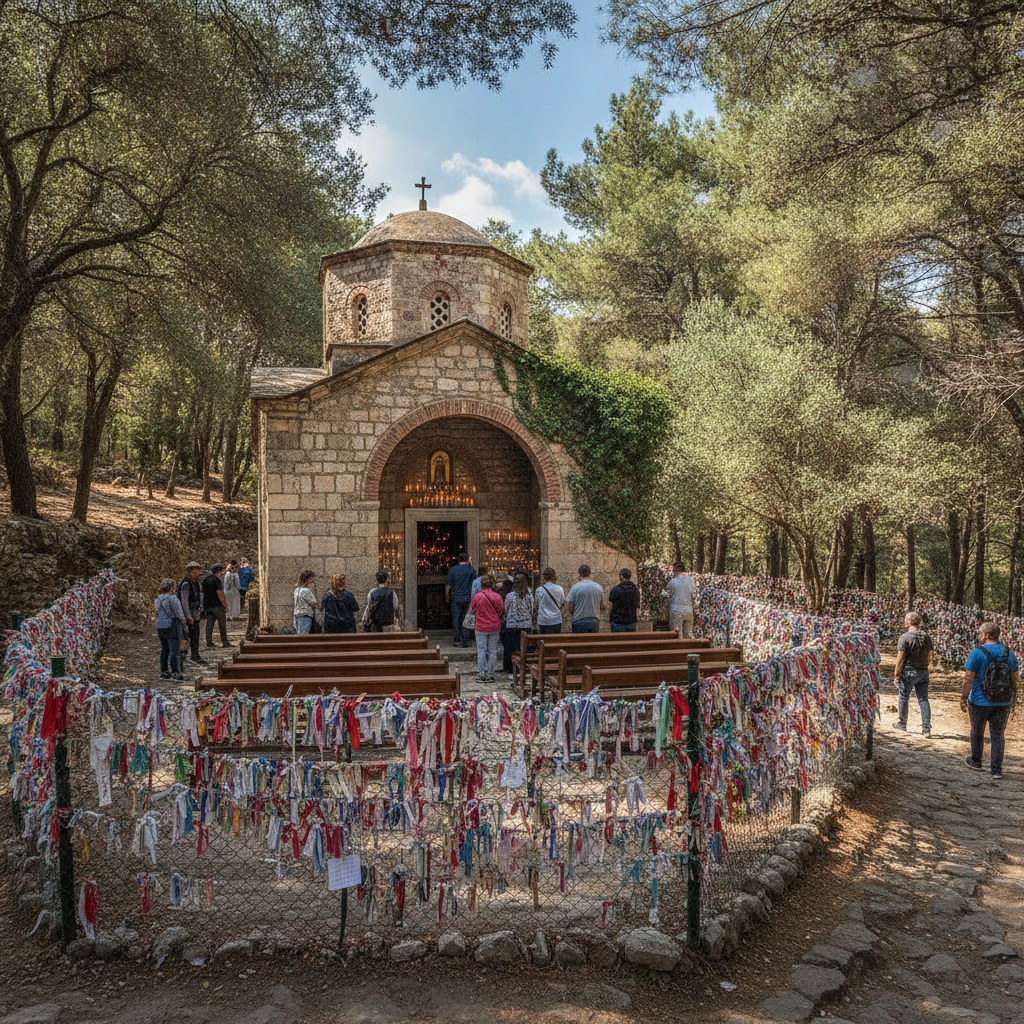
Ephesus and Early Christianity: Paul the Apostle Missions, the House of the Virgin Mary at Meryemana, Cave of the Seven Sleepers, John Gospel in Ephesus, Christian Pilgrimage Circuit, and the Acts of the Apostles
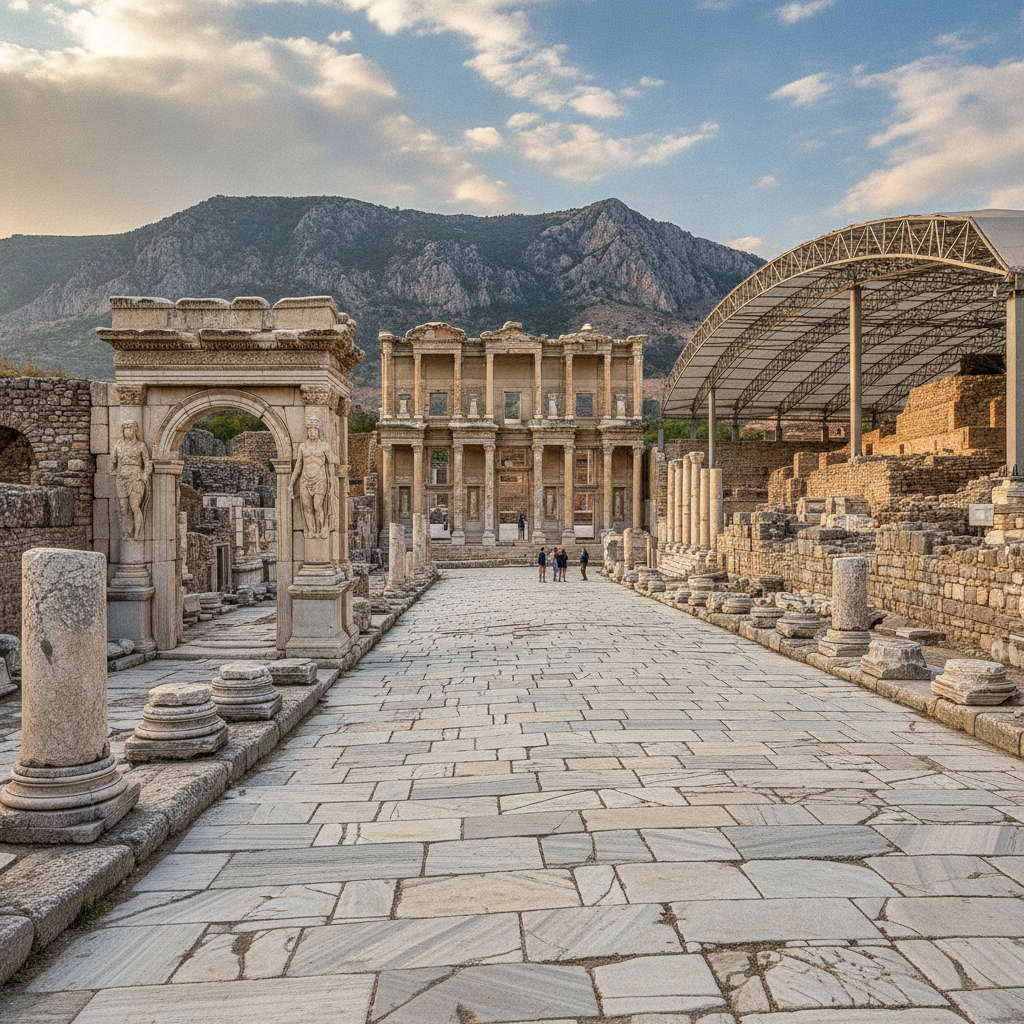
Ephesus Museum and Streets: Selcuk Archaeological Museum Collections, Isa Bey Mosque Seljuk Architecture, the Curetes Street Marble Paving, Ancient Public Fountains, the Brothel and the Social Life, and the Marble Road
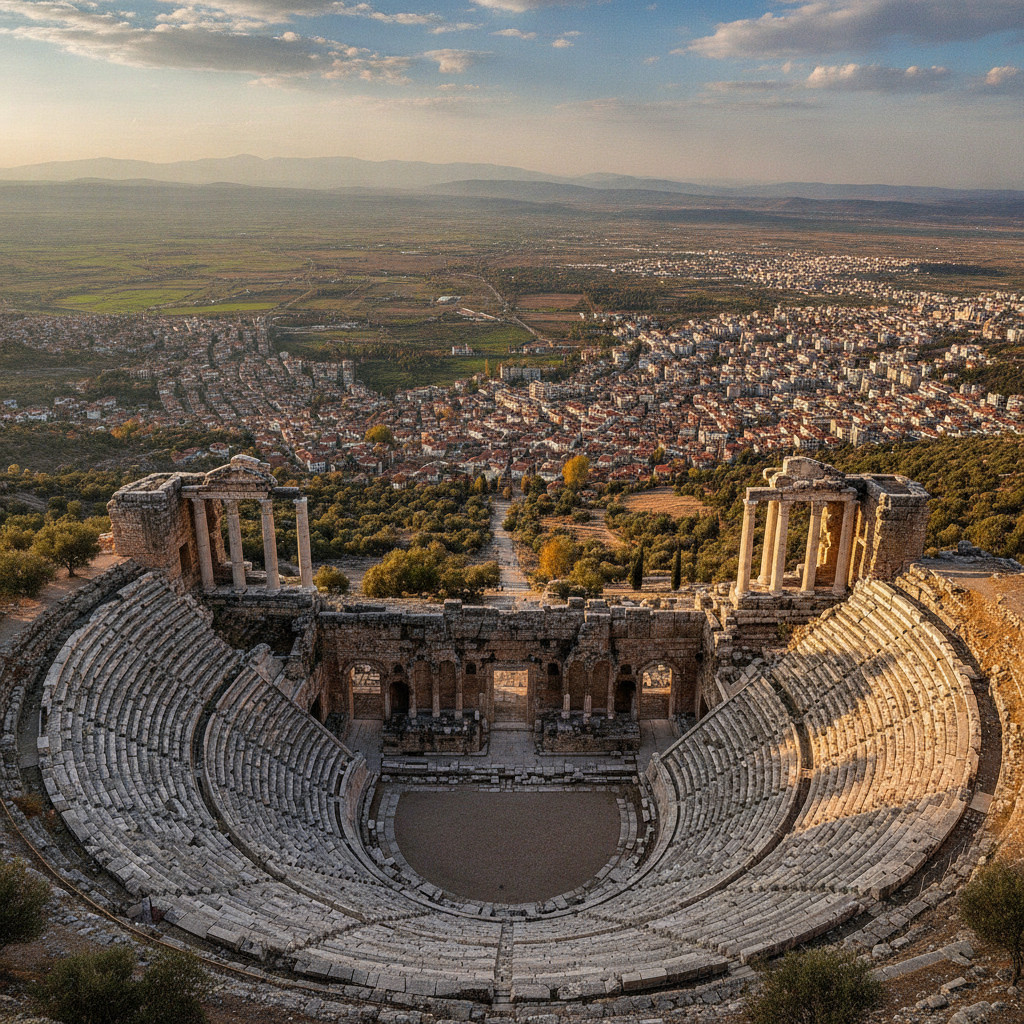
Ephesus to Pergamon: The Asklepion Medical Center, Bergama Acropolis Sheer Theatre, Red Basilica, Zeus Altar Berlin Museum, Pergamon Library, and the Aegean Archaeological Circuit
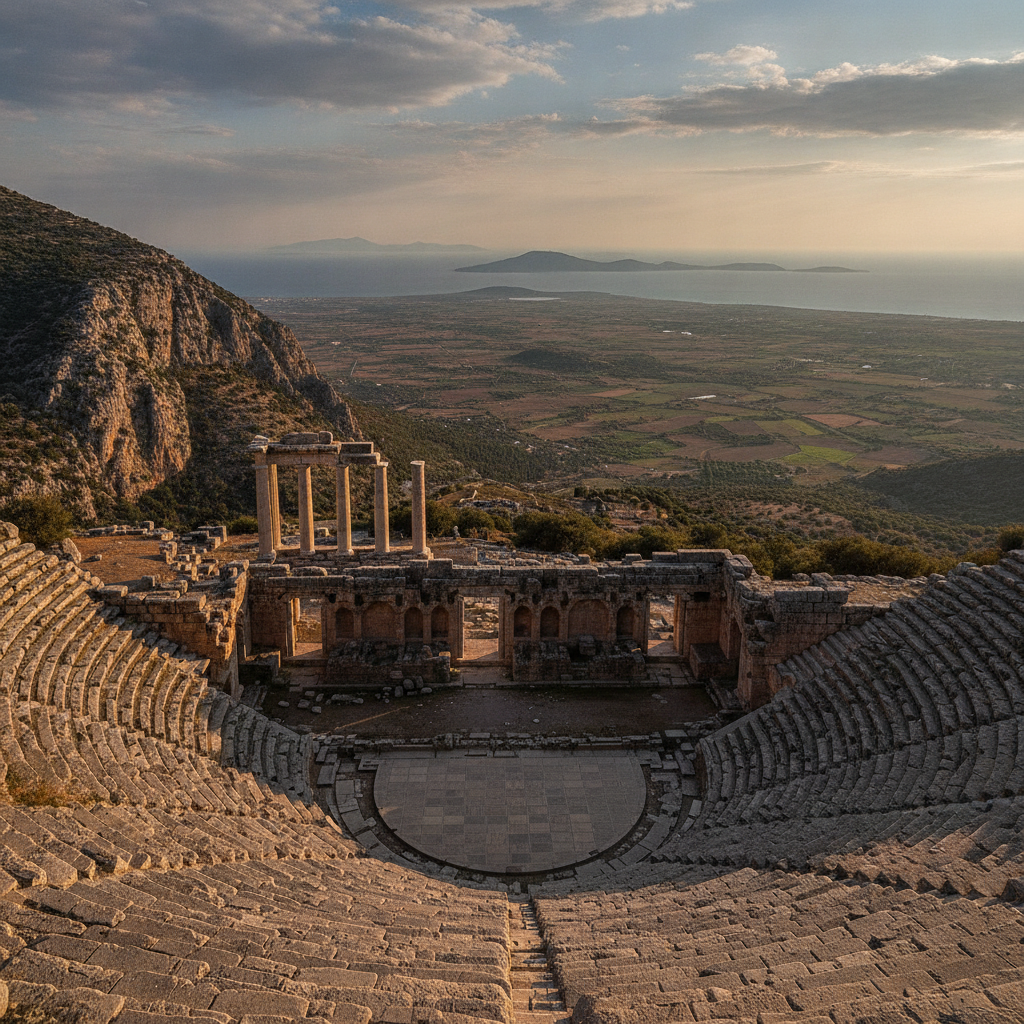
Ephesus Coast and Day Trips: Kusadasi Cruise Port Bazaar, Dilek Peninsula National Park, Amazon Beach, Priene Ancient City, Miletus Theatre, Didyma Apollo Temple Oracle, and the Maeander Valley Circuit
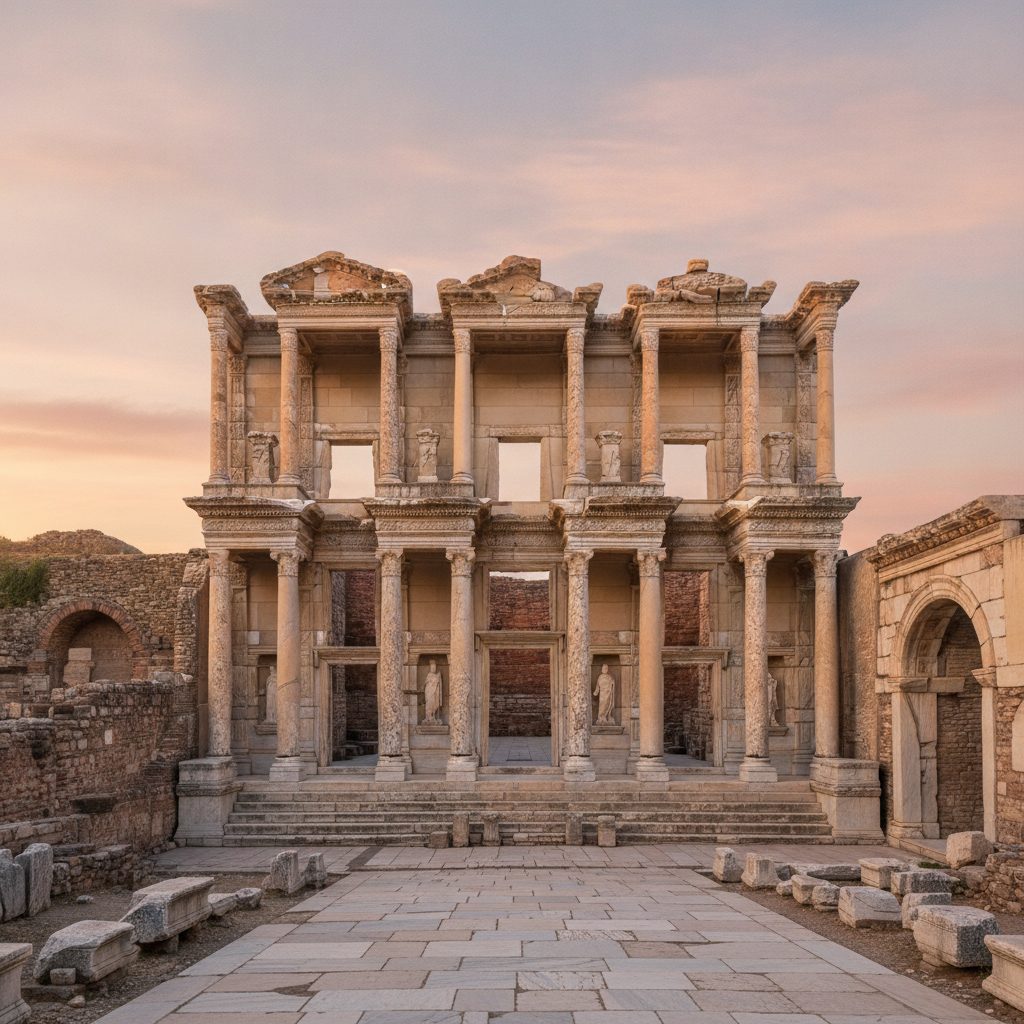
Ephesus Essential: Library of Celsus, the Great Theatre, Artemision Wonder of the World, Terrace Houses of the Wealthy, Roman Agora, and Saint John Basilica on Ayasuluk Hill