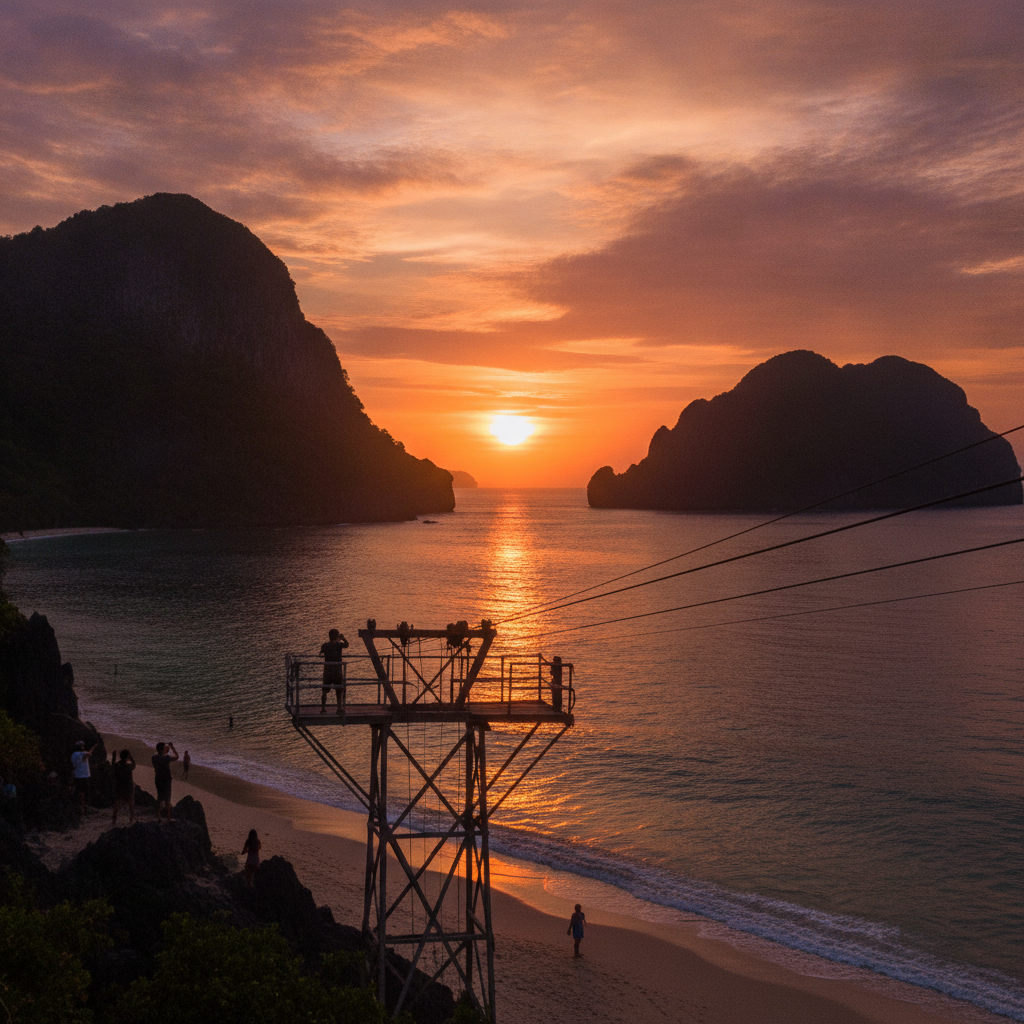
El Nido's Operating Reality: 80 Simultaneous Tour Boats in the Big Lagoon, the Bajau People's Genetically Larger Spleens & Halong Bay's 3 Million Annual Visitors vs. El Nido's 200,000
Peak season Big Lagoon with 1,000 tourists simultaneously in the 'hidden' lagoon—the off-season shoulder months reduce this to 10–20 boats and give the experience the photographs promise; the 2016 Hague tribunal ruling that China's nine-dash line has no UNCLOS legal basis, which China rejected and which sits 150 km from El Nido's bangca routes; Miniloc Island Resort's solar power and coral restoration programme operating since the early 1990s as the ecological model 400 town guesthouses haven't replicated; the 2018 Cell study finding Bajau spleens 50% larger than non-diving populations through genetic adaptation for freediving; the Palawan scops owl and Philippine eagle-owl at dawn above El Nido town requiring a guide who knows the feeding routes; and El Nido's 200,000 versus Halong Bay's 3 million as the development trajectory nobody wants but the pre-COVID growth rate was delivering.
- 1
The Island-Hopping Boat Culture – Bangca, Crew & the Social Dynamic
The bangca (the Philippine outrigger boat—a narrow wooden hull with two bamboo outriggers providing stability, powered by an outboard motor)—is the vehicle of El Nido's tourism economy: virtually every island-hopping experience depends on a bangca and its crew. The boat typology: the shared tour boats (the ENETA-organised tours A/B/C/D) typically carry 15–25 tourists on a boat approximately 12 metres long, with a roof canopy, rope ladders for reef entry, and a small cooking galley at the stern where the crew prepares the tour lunch; the private charter boats are the same type but with 1–8 passengers. The crew: the typical bangca crew consists of 2–3 people—the captain (managing the engine and navigation), the first mate (handling mooring, anchor, and assistance in the water), and the cook (who prepares the tour lunch—typically fresh grilled fish, rice, vegetable salad, and fresh fruit—at the stern while the tourists are snorkelling); the crew are predominantly young Tagbanua and Cuyonon (another indigenous Palawan group) men, with some Palawan migrants from other provinces. The overcrowding peak: in peak season (December, January, July–August) the Big Lagoon receives simultaneous visits from 50–80 bangca carrying a total of 1,000+ tourists—a density that has been compared to rush-hour traffic in the most remote destination in the Philippines. The off-peak advantage: visiting El Nido in the 'shoulder' season (May, June, November) reduces the tour boat density by 60–70%, with most Tour A sites receiving 10–20 boats rather than 80.
- 2
The Philippines' South China Sea Claims & the Palawan Context
Palawan province—the westernmost major island of the Philippines, lying 150–200 km from the Spratly Islands in the South China Sea—is at the centre of the most significant geopolitical dispute affecting Philippine territory: the contested claims over the South China Sea islands, reefs, and waters. The Philippine claim: the Philippines claims parts of the Spratly Islands as 'Kalayaan' (the Kalayaan Island Group—a municipality of the Palawan province, administered from Puerto Princesa) and the surrounding waters as part of its Exclusive Economic Zone (EEZ) under the United Nations Convention on the Law of the Sea (UNCLOS). The China claim: China claims 'historic rights' over most of the South China Sea (including the area within its 'nine-dash line'—a demarcation that encompasses approximately 90% of the South China Sea), conflicting with Philippine, Vietnamese, Malaysian, Bruneian, and Indonesian EEZ claims. The 2016 Arbitration Ruling: the Philippines brought a case against China at the Permanent Court of Arbitration in The Hague in 2013 (under President Aquino); the tribunal ruled in July 2016 that China's nine-dash line had no legal basis under UNCLOS—China rejected the ruling and has not complied. The Malampaya Sound (the natural gas field beneath the southern Palawan Sea): a direct economic link between Palawan's territory and the national energy security of the Philippines; the gas field's proximity to disputed waters creates a security dimension beyond the abstract territorial dispute.
- 3
El Nido's Accommodation Spectrum – Eco-Lodge to Private Island
El Nido's accommodation landscape spans an extraordinary range: from the PHP 500/night (€26) fan-room guesthouses in El Nido town (shared bathrooms, no air conditioning, 10-minute walk from the beach) to the El Nido Resorts' private island properties at €800–1,200+/night (Miniloc Island or Lagen Island, where the only other humans are resort staff and other guests). The town accommodation: the densest concentration of budget and mid-range options—400+ guesthouses, boutique hotels, and hostels—within walking distance of the boat pier; the price range for a private room in a guesthouse with air conditioning runs PHP 1,500–4,000/night (€78–210); most offer free tour booking services. The beachfront boutiques north of town: a strip of boutique resorts between the El Nido town pier and Nacpan Beach (along the coast road)—including Frangipani El Nido, Matinloc Resort, and several eco-lodges—offering private pool villas with beachfront access at PHP 6,000–15,000/night (€315–790). The El Nido Resorts properties: Miniloc Island Resort (the original—on a private island in the Bacuit Bay, where the Big and Small Lagoons are the resort's house reef) and Lagen Island Resort (the larger, more luxurious sibling)—operate entirely on solar power with on-site coral restoration and turtle monitoring programmes. The glamping option: several basic eco-tent operations on Nacpan Beach and the smaller islands north of El Nido offer a camping experience that most tour itineraries don't include.
- 4
Freediving El Nido – The Apnea Community & Static Depth Records
El Nido's combination of exceptional water clarity, warm temperature (28–30°C year-round), and the dramatic limestone walls that extend to significant depth has made it one of the emerging destinations for competitive and recreational freediving in the Philippines—a country that has produced several world-class freedivers. The Philippine freediving tradition: the Bajau people (the sea-nomadic community found across the southern Philippines, eastern Indonesia, and Malaysia) are recognised in scientific literature as the most physiologically adapted human divers in the world—a 2018 study (Ilardo et al., Cell) found that the Bajau of Indonesia have spleens 50% larger than non-diving populations, a genetic adaptation that allows them to store more oxygenated red blood cells for freediving; traditional Bajau divers regularly reach 30–60 metres depth on a single breath without training. The El Nido freediving operations: two established freediving schools operate in El Nido (Apnea Philippines has a presence; several independent instructors offer AIDA courses); the dive sites around the Bacuit Bay limestone walls (particularly the north face of Cadlao Island and the Miniloc Island walls) offer clean drops to 30–40+ metres suitable for depth training. The visibility: El Nido's dry-season (December–May) water clarity—horizontal visibility of 15–25 metres, vertical visibility sometimes exceeding 30 metres—creates the dramatic blue-water backdrop that makes El Nido freediving photographs some of the most shared in Philippine water sports social media.
- 5
The Palawan Archipelago Birding Circuit – El Nido to Tubbataha
The Palawan birding circuit—connecting El Nido's endemic forest species with the seabird colonies of the Tubbataha Reef and the mangrove systems of southern Palawan—is the most diverse birding itinerary accessible from a single Philippine island. The El Nido endemic birds (as noted): the Palawan peacock-pheasant, Philippine cockatoo, Palawan hornbill, and Blue-naped parrot are the priority species for El Nido's forest edges and limestone island forest patches. The Olango Island (accessible from Cebu—2 hours by banca from Mactan): the most significant migratory shorebird site in the Philippines—a tidal flat that attracts 50,000+ migratory birds during the October–November and March–April peak migration periods, including Far Eastern curlew (the world's largest curlew, critically endangered—one of its key Philippine staging sites) and Chinese egret. The Tubbataha Reef seabird colonies: the liveaboard access-only reef 150 km southeast of Puerto Princesa (March–June season only) hosts breeding colonies of masked boobies, red-footed boobies, brown noddies, and the world's largest breeding colony of the white tern (Gygis alba)—a translucent white seabird that nests on bare branches with no nest material. The Palawan nightbirds: two Palawan endemic owls—the Palawan scops owl (Otus fuliginosus) and the Philippine eagle-owl (Bubo philippensis—found on Palawan and Mindanao)—are most reliably encountered at dawn and dusk in the forest above El Nido town.
- 6
Leaving El Nido – The Palawan Circuit & The Onward Journey
El Nido functions best as either the start or end of the Palawan circuit—the series of destinations that together constitute the most complete exploration of the most biodiverse island province in the Philippines. The full Palawan circuit (10–14 days): El Nido (4–5 days—island hopping, Nacpan beach, forest walks) → van transfer to Puerto Princesa (5.5 hours south along the National Road, passing through the Ulugan Bay mangroves, the Irawan Eco-Park, and the southern approach to the Puerto Princesa Subterranean River area) → Puerto Princesa Subterranean River (UNESCO—full day, 1.5 hours north of Puerto Princesa) → Coron (2-day ferry from Puerto Princesa via the Linapacan islands, or 3-4 hour speedboat from El Nido—the wreck diving circuit). The alternative approach: arriving at Coron from Manila by air (1.5 hours direct to Busuanga Airport) and island-hopping south to El Nido (ending with a direct AirSWIFT flight from El Nido to Manila). The onward connections from El Nido: AirSWIFT's El Nido to Manila direct flight (1.5 hours); the once-weekly AirSWIFT El Nido to Cebu flight; or the speedboat to Coron (3–4 hours). The comparison with Halong Bay: El Nido's geological twin (the karst limestone tower bay) in Vietnam is Halong Bay—visited by 3 million tourists annually versus El Nido's 200,000—a comparison that illuminates both El Nido's relative undiscovery and the development trajectory it faces if tourism continues to grow at the pre-COVID rate.
Walk this route with audio
Stories play automatically as you reach each stop — no tapping needed.
More in El Nido
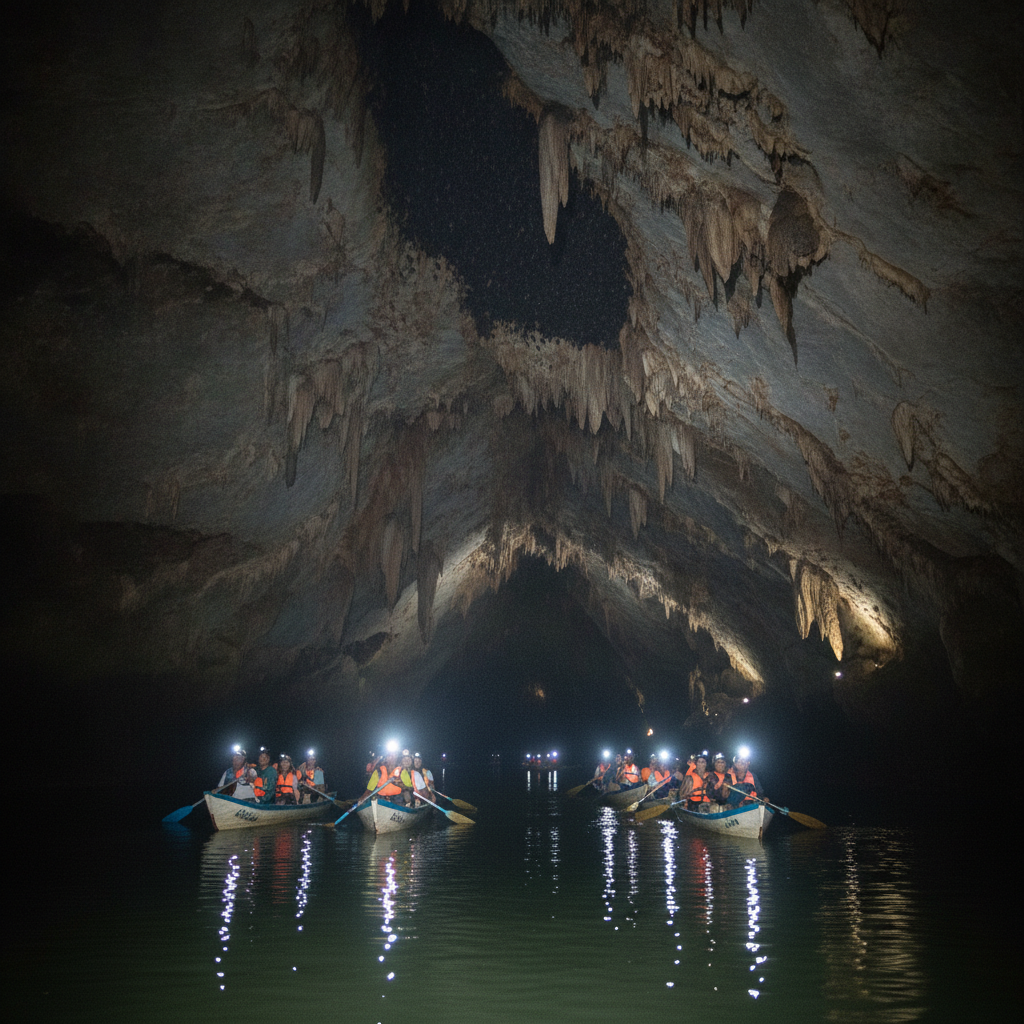
Palawan's Wider World: Puerto Princesa's 8.2km Underground River, the Tagbanua's 50,000-Year Presence & the 14.7km San Vicente Beach That Refused Boracay's Fate
El Nido After Dark: Dinoflagellate Bioluminescence on the Paddle Stroke, 89,000 Hectares of Palawan Mangroves & San Vicente's 14.7km Beach That Chose Not to Become El Nido

El Nido at Its Quietest: The 05:30 Dawn Kayak to Big Lagoon Before 80 Tour Boats Arrive, Culion Island's 17,000-Patient Leper Colony & the Lio Estate's 1MW Solar Airport
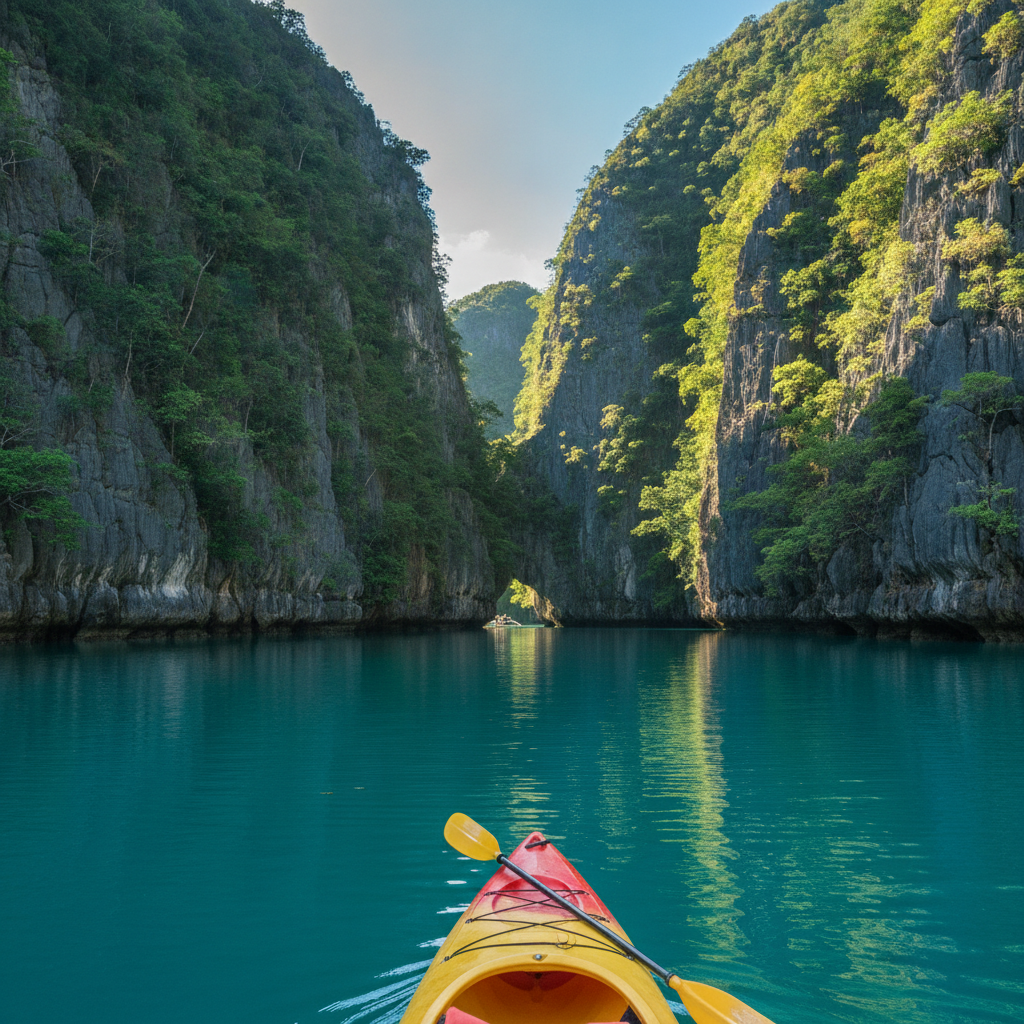
El Nido: The Bacuit Archipelago's Hidden Lagoons Accessible Only Through Rock Cracks, Barracuda Lake's 38°C Salt Water Below 28°C Freshwater & the Last Palawan Pangolin