Edinburgh Castle, the Royal Mile & Holyrood — The Old Town
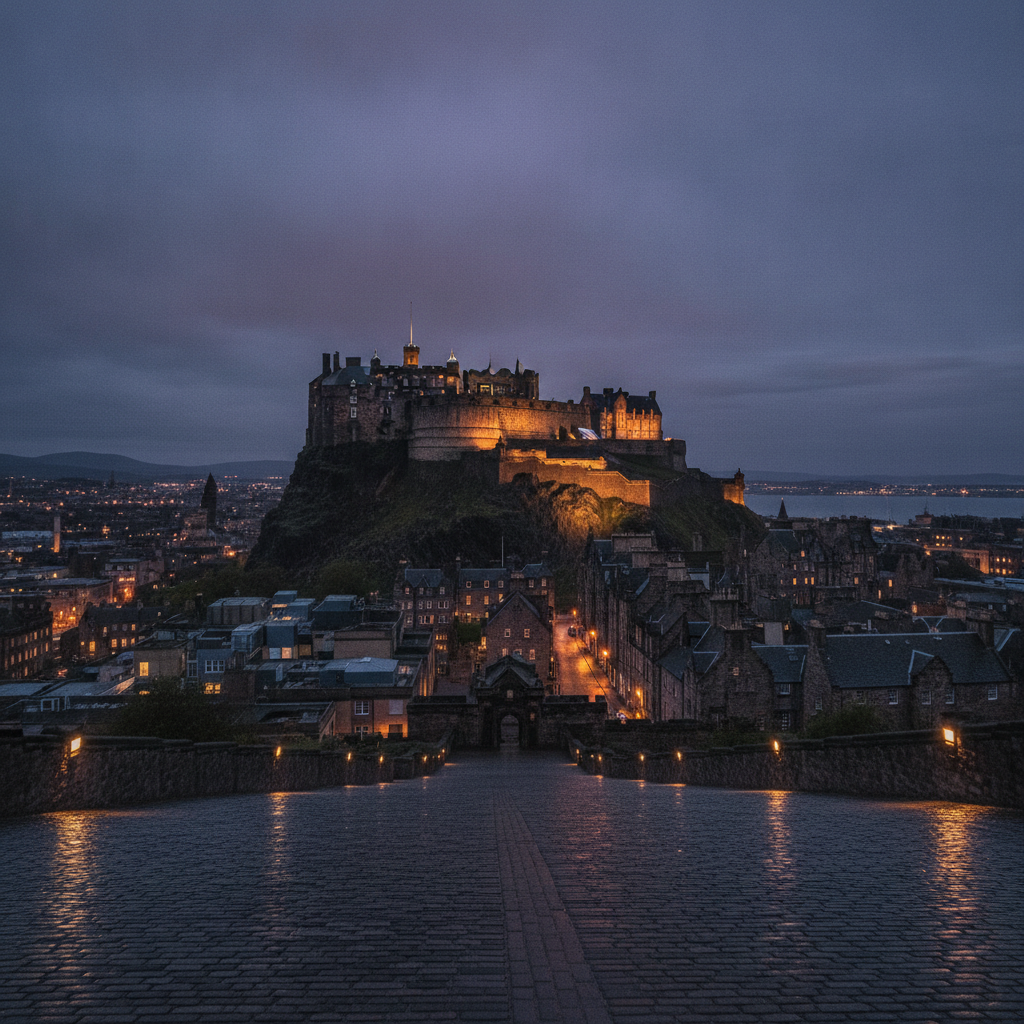
Edinburgh (the capital of Scotland, population 530,000, built on seven hills above the Firth of Forth — one of the most dramatic and beautiful capital cities in Europe, consistently ranked as the most visited city in the UK after London): the historic heart of Edinburgh is the Old Town, the medieval city running along the spine of the volcanic ridge from Edinburgh Castle down the Royal Mile to the Palace of Holyroodhouse, with UNESCO World Heritage status shared with the adjacent New Town.
1. Edinburgh Castle — Scotland's Most Visited Attraction
- 1
Edinburgh Castle — Scotland's Most Visited Attraction
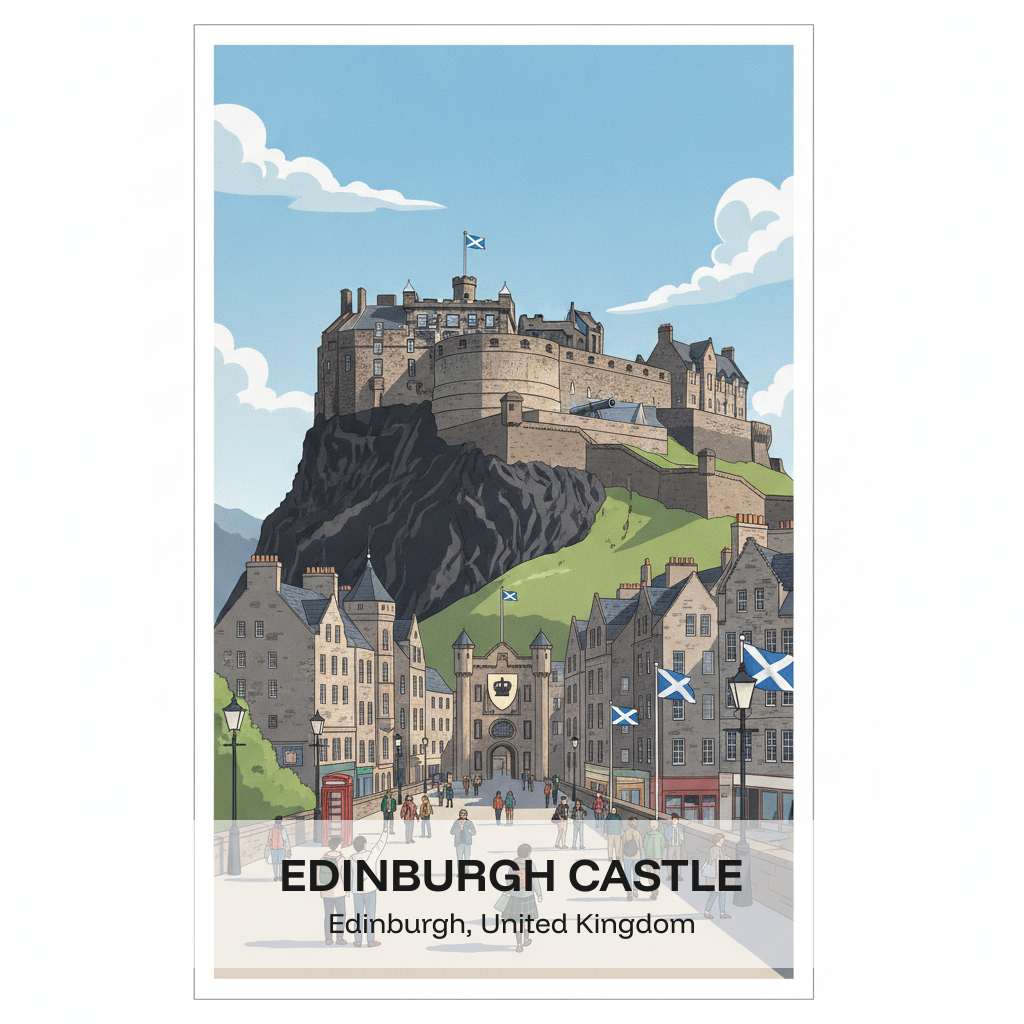
Edinburgh Castle (Castle Rock, at the head of the Royal Mile — the fortress on the ancient volcanic plug that has been fortified since at least the Iron Age, the most visited paid tourist attraction in Scotland with approximately 2 million visitors per year): the castle complex contains multiple historic buildings and museums dating from the 12th century to the 20th century; the most important are: the Crown Room (housing the Honours of Scotland — the Scottish Crown Jewels, the oldest surviving royal regalia in the United Kingdom, comprising the Crown (1540), the Sceptre (1494), and the Sword of State (1507), plus the Stone of Destiny (the sandstone block on which Scottish kings were crowned from antiquity to 1296, when it was removed to Westminster Abbey by Edward I and returned to Scotland in 1996 ahead of Scottish devolution); the Great Hall (the 15th-century banqueting hall built by James IV, the finest surviving medieval great hall in Scotland); the Scottish National War Memorial (the memorial to the Scottish dead of the First World War, built within a former barracks in 1927, designed by Robert Lorimer — the most important example of Scottish inter-war architecture); and the One O'Clock Gun (fired from the castle battlements daily at 1pm since 1861, a time signal for ships in the Firth of Forth).
- 2
The Royal Mile — Edinburgh's Medieval Main Street
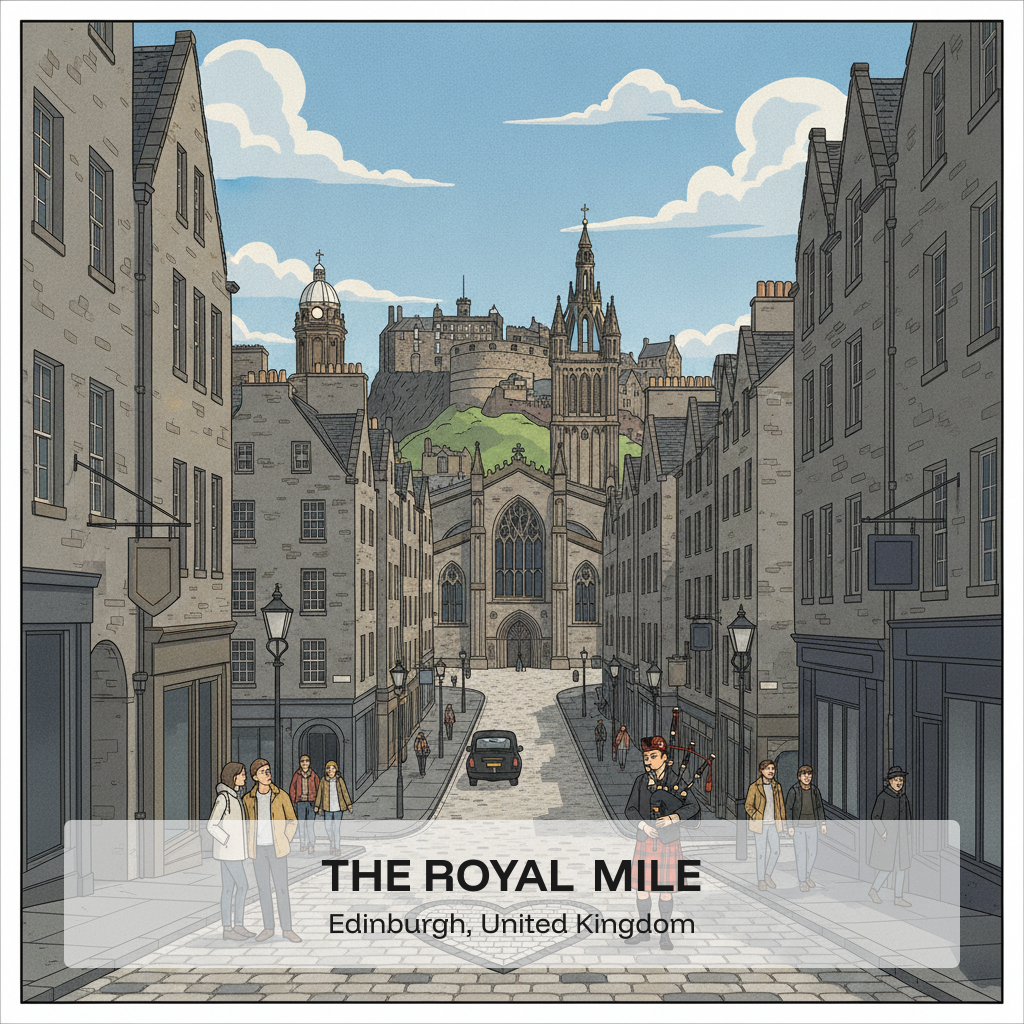
The Royal Mile (the collective name for the sequence of streets (Castlehill, Lawnmarket, High Street, Canongate, Abbey Strand) running approximately 1 mile (1.6 km) downhill from the Castle Esplanade to the gates of Holyroodhouse Palace — the main street of Edinburgh's medieval Old Town, running along the spine of the volcanic ridge (the crag-and-tail formation created by the Castle Rock's resistance to glacial erosion)): the Royal Mile's street pattern (the main street with dozens of 'closes' (narrow alleys) and 'wynds' (slightly wider alleys) running off it on both sides, descending steeply from the ridge to the valleys on either side) is a medieval urban pattern of extraordinary density and atmospheric quality; the key stops include: St. Giles' Cathedral (the High Kirk of Edinburgh, the mother church of Presbyterianism, where John Knox (1514-1572, the Scottish reformer) preached the Scottish Reformation from 1559), the Camera Obscura and World of Illusions (at the top of the Royal Mile, one of the oldest purpose-built visitor attractions in the world, with a Victorian camera obscura (a large rotating mirror projecting a live image of Edinburgh onto a table) in operation since 1853), and the John Knox House (the 15th-century merchant's house traditionally associated with Knox).
- 3
Palace of Holyroodhouse — The Queen's Scottish Residence
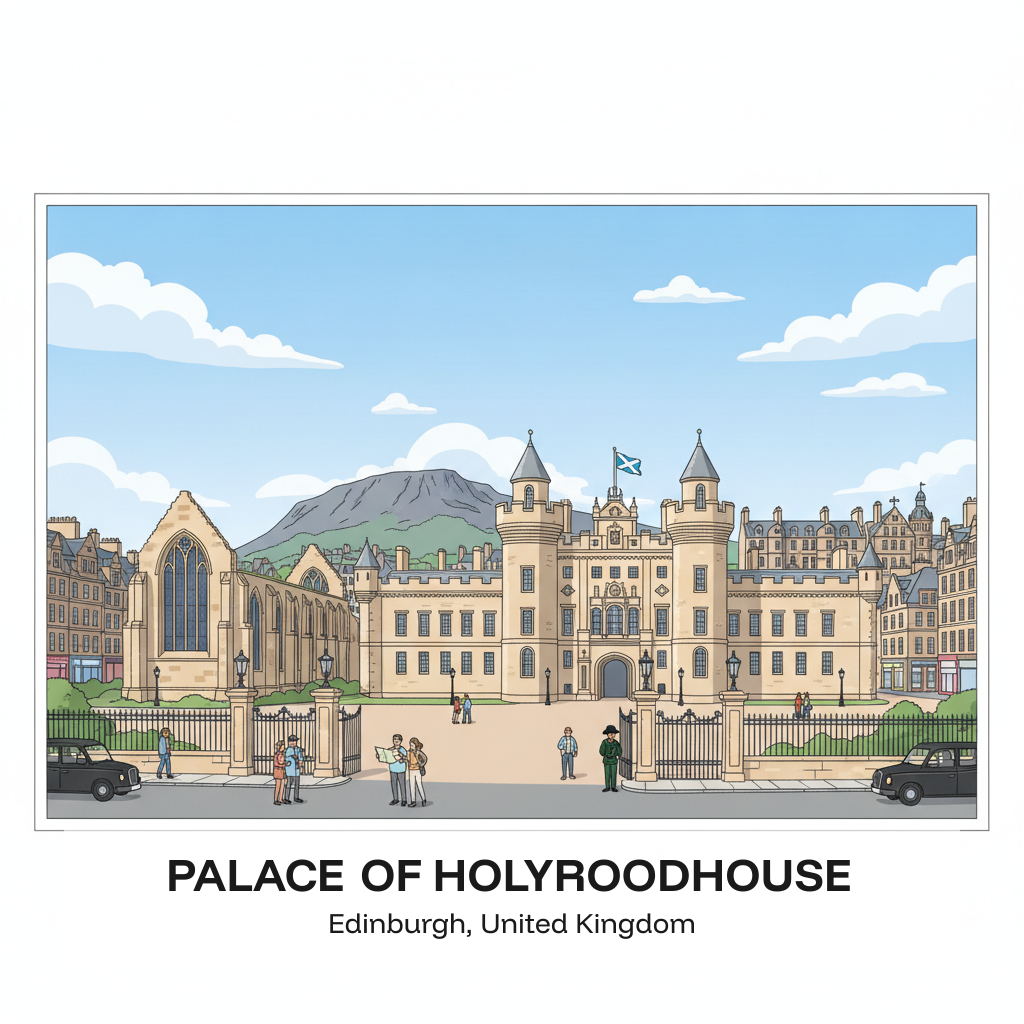
Palace of Holyroodhouse (at the foot of the Royal Mile, at the edge of Holyrood Park — the official residence of the British monarch in Scotland, the venue for the Scottish royal week (Holyrood Week, held annually in late June/early July, when the monarch holds audiences, investitures, and a garden party at the palace)): the palace was founded as an Augustinian abbey in 1128 by King David I of Scotland (the ruins of the Abbey Church (12th-16th century), including the roofless nave that is one of the finest medieval ruins in Scotland, adjoin the palace); the palace's most important historic associations are with Mary, Queen of Scots (who lived here 1561-1567 — the murder of her secretary David Rizzio by her husband Lord Darnley and his allies in the supper room adjacent to Mary's bedchamber on March 9, 1566 (the room preserved and viewable) is the most notorious event in Edinburgh's history and the defining scene in the tragedy of Mary's short reign); the adjacent Holyrood Park (the 263-hectare royal park surrounding Arthur's Seat — the 251-metre volcanic peak within the park, the finest walk in Edinburgh, with panoramic views of the city, the Firth of Forth, and the Pentland Hills) is free and open year-round.
- 4
Arthur's Seat & Holyrood Park — Edinburgh's Volcanic Landscape
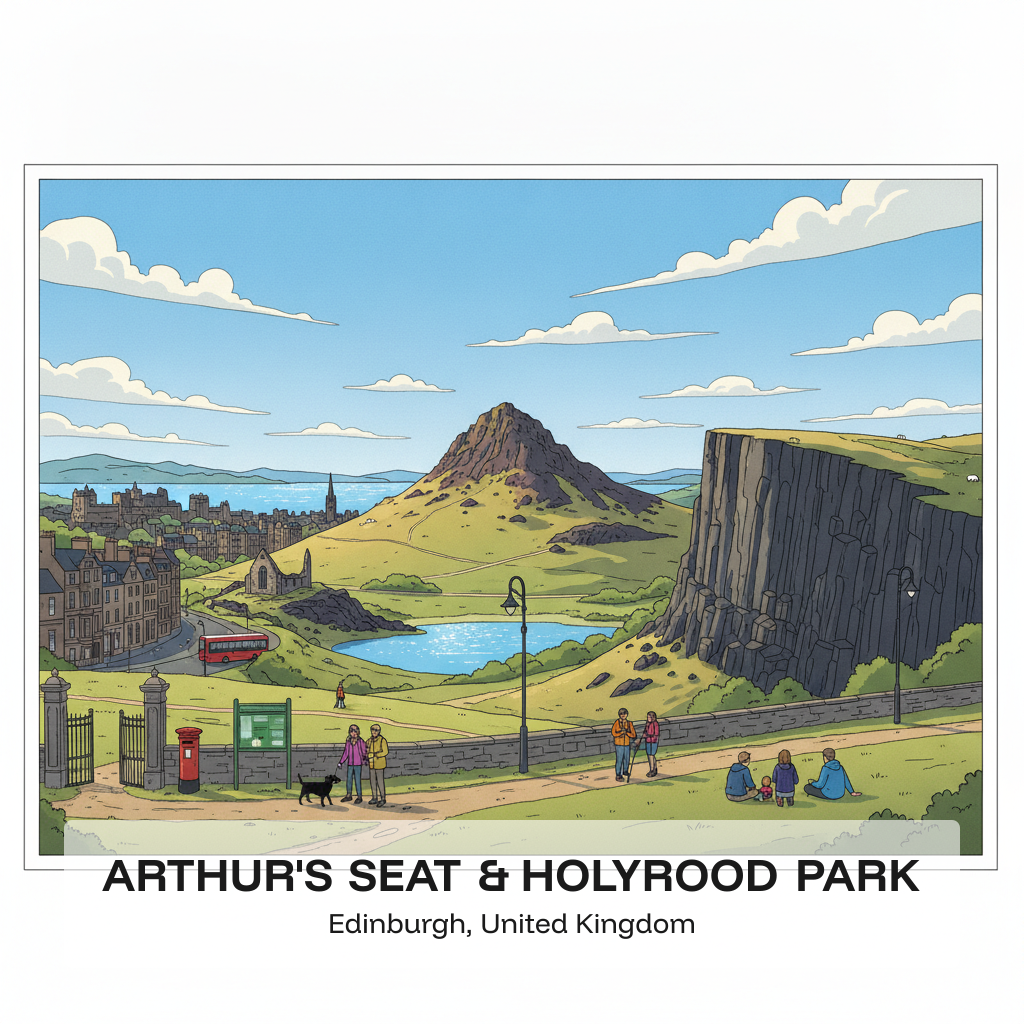
Arthur's Seat (the 251-metre summit of the ancient volcano in Holyrood Park, the most prominent hill within Edinburgh city boundaries and the finest viewpoint in the city — accessible by a 1.5-2 hour walk from the Holyrood Palace gates): Arthur's Seat (the name is of uncertain origin — possibly a corruption of the Gaelic Àrd-na-Saigheid ('Height of Arrows') or a reference to the legendary King Arthur) is the remnant of a volcano active approximately 340 million years ago; the walk to the summit (via the Radical Road path, past St. Anthony's Chapel ruins and Dunsapie Loch) provides the most complete panoramic view of Edinburgh (the Old Town ridge with the Castle silhouette, the New Town's Georgian grid, the Firth of Forth and the Fife coastline, the Pentland Hills to the south, and (on clear days) Ben Lomond and other Highland peaks to the northwest); Holyrood Park also contains Salisbury Crags (the dramatic dolerite cliffs below Arthur's Seat — the site of James Hutton's foundational observations in geology in the 1780s that led to his Theory of the Earth (1788), one of the founding documents of modern geology).
- 5
Greyfriars Kirkyard & the Underground Vaults
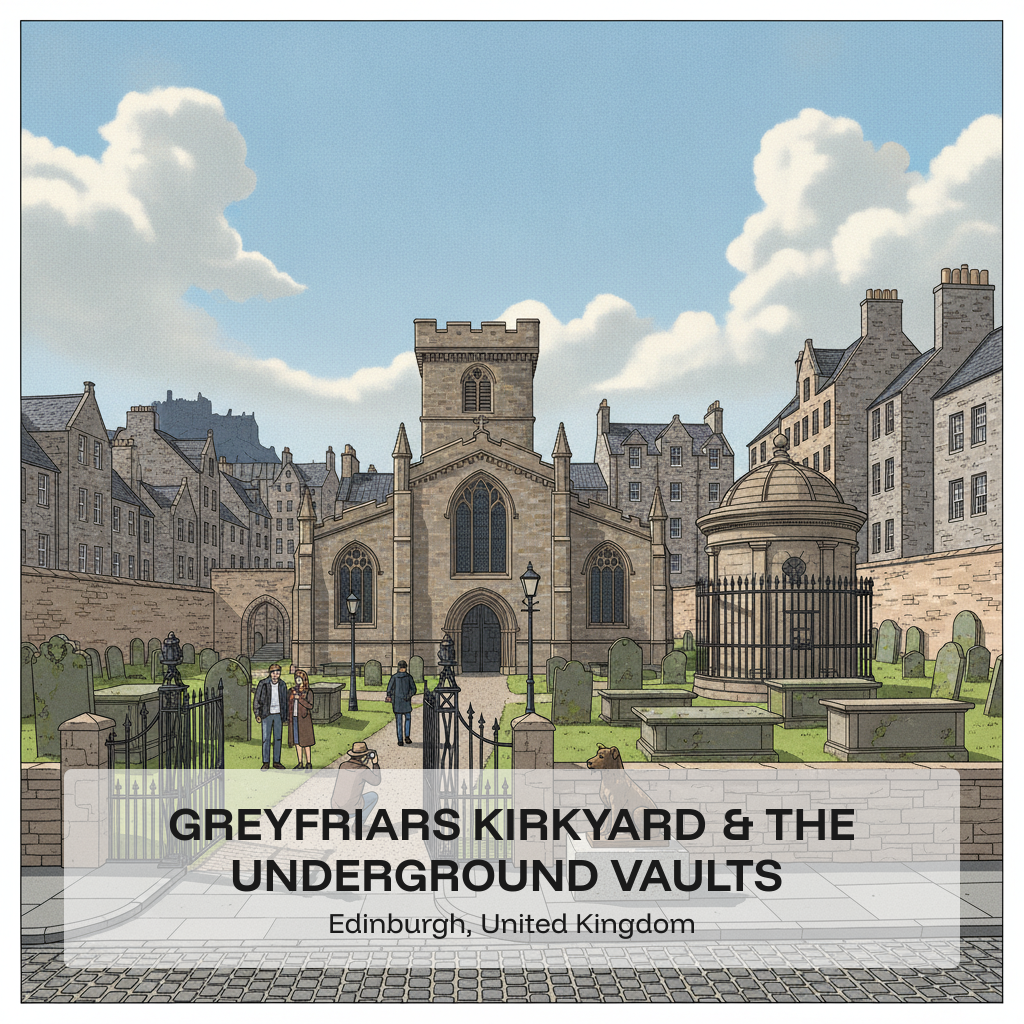
Greyfriars Kirkyard (the historic churchyard of Greyfriars Kirk (the church built 1620 on the site of the former Franciscan friary), one of the most historically significant and atmospherically charged churchyards in Scotland): Greyfriars Kirkyard contains: the grave of Greyfriars Bobby (the Skye Terrier who supposedly guarded the grave of his owner John Gray for 14 years after Gray's death in 1858, becoming the most famous dog in Edinburgh history — the statue of Bobby at the kirkyard gate (1872) is the most photographed monument in Edinburgh after the Castle); the Martyrs' Memorial (commemorating the Covenanters (the Scottish Presbyterians who signed the National Covenant of 1638 and were persecuted by the Crown for their adherence to Presbyterian church governance) who were imprisoned in the kirkyard and executed nearby 1679-1688); and the Mackenzie Mausoleum (the tomb of 'Bloody Mackenzie' George Mackenzie (1636-1691), the Lord Advocate who prosecuted the Covenanters — the most notorious haunted location in Edinburgh, the subject of multiple paranormal investigations); the Edinburgh Underground Vaults (the network of chambers and alleys beneath the South Bridge (built 1785-1788), used as workshops and storage in the early 19th century) are accessible by guided tour.
- 6
Victoria Street & Grassmarket — Old Town's Best Shops
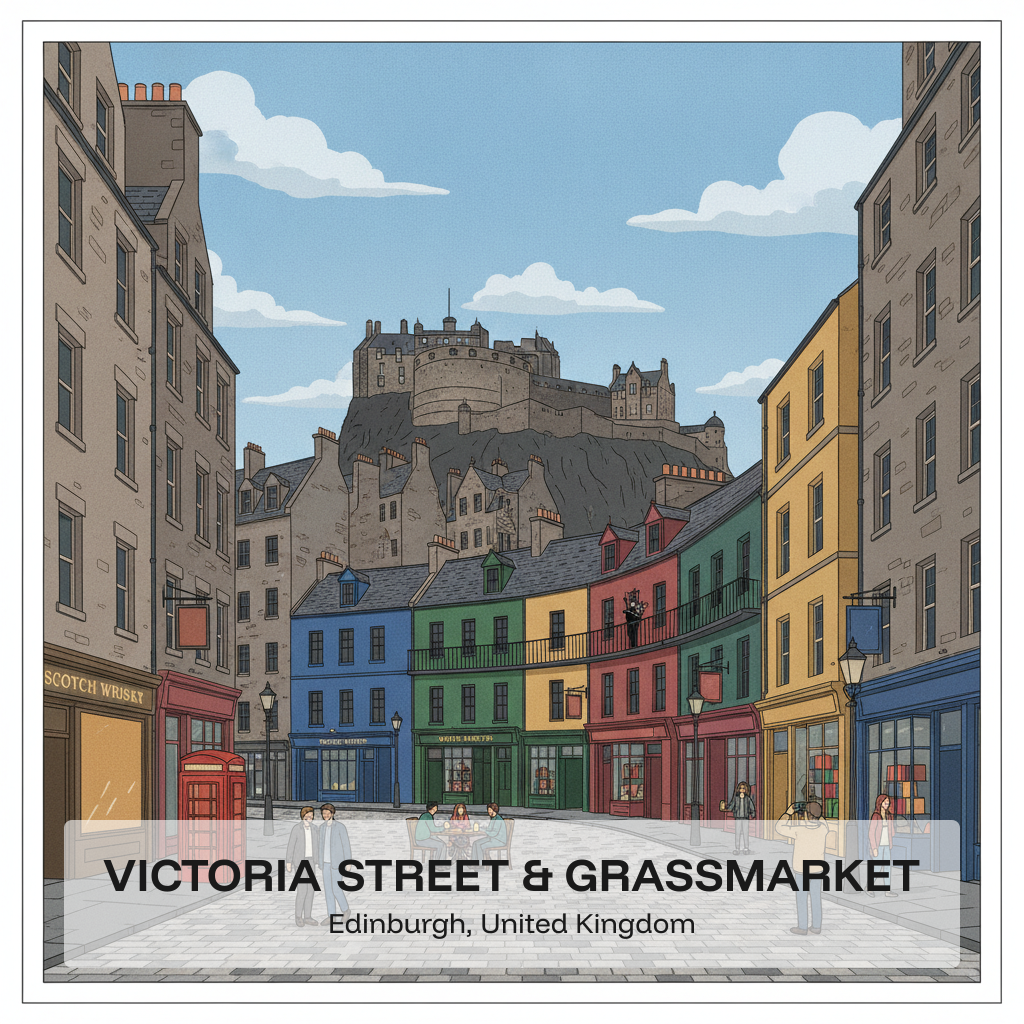
Victoria Street (the curved, two-level street in Edinburgh's Old Town connecting the Grassmarket to the George IV Bridge — with its brightly coloured painted shopfronts and the mix of independent bookshops, whisky specialists, cheese shops, and restaurants — the most photogenic street in Edinburgh and the most cited inspiration for Diagon Alley in the Harry Potter novels (J.K. Rowling famously wrote much of the early Harry Potter books in Edinburgh, at the Elephant House café on George IV Bridge and in Nicolson's Café (now closed), and the Edinburgh streetscape is visible throughout the early books)) and the Grassmarket (the large open square at the foot of the Castle rock, originally the city's hay and livestock market and place of public execution (the gallows stood at the east end of the square), now the primary restaurant and bar district of Edinburgh's Old Town outside the Royal Mile, famous for the White Hart Inn (one of the oldest surviving pubs in Edinburgh, associated with Robert Burns and William Wordsworth)).
Walk this route with audio
Stories play automatically as you reach each stop — no tapping needed.
More in edinburgh
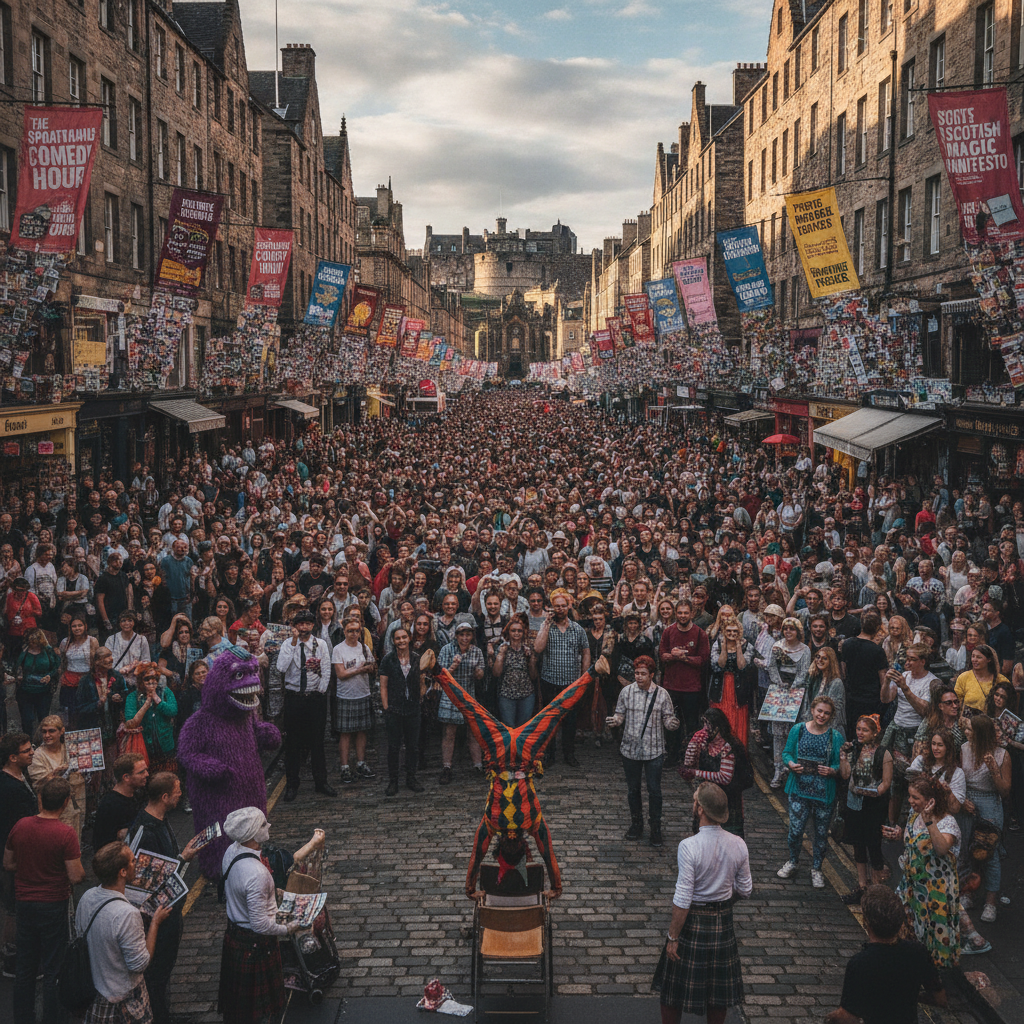
Edinburgh Festival, Fringe & Hogmanay — The World's Greatest Arts Festival City
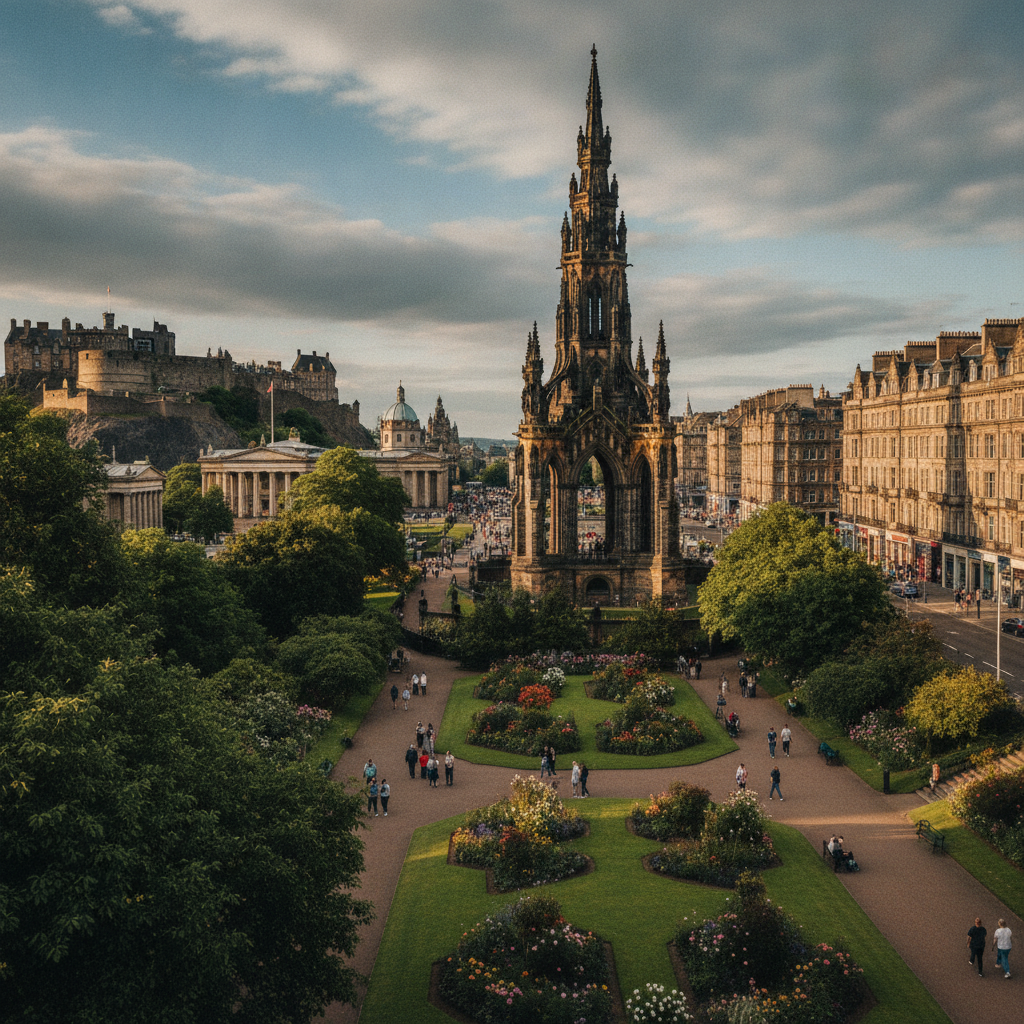
The New Town — Georgian Edinburgh & the Scottish Enlightenment
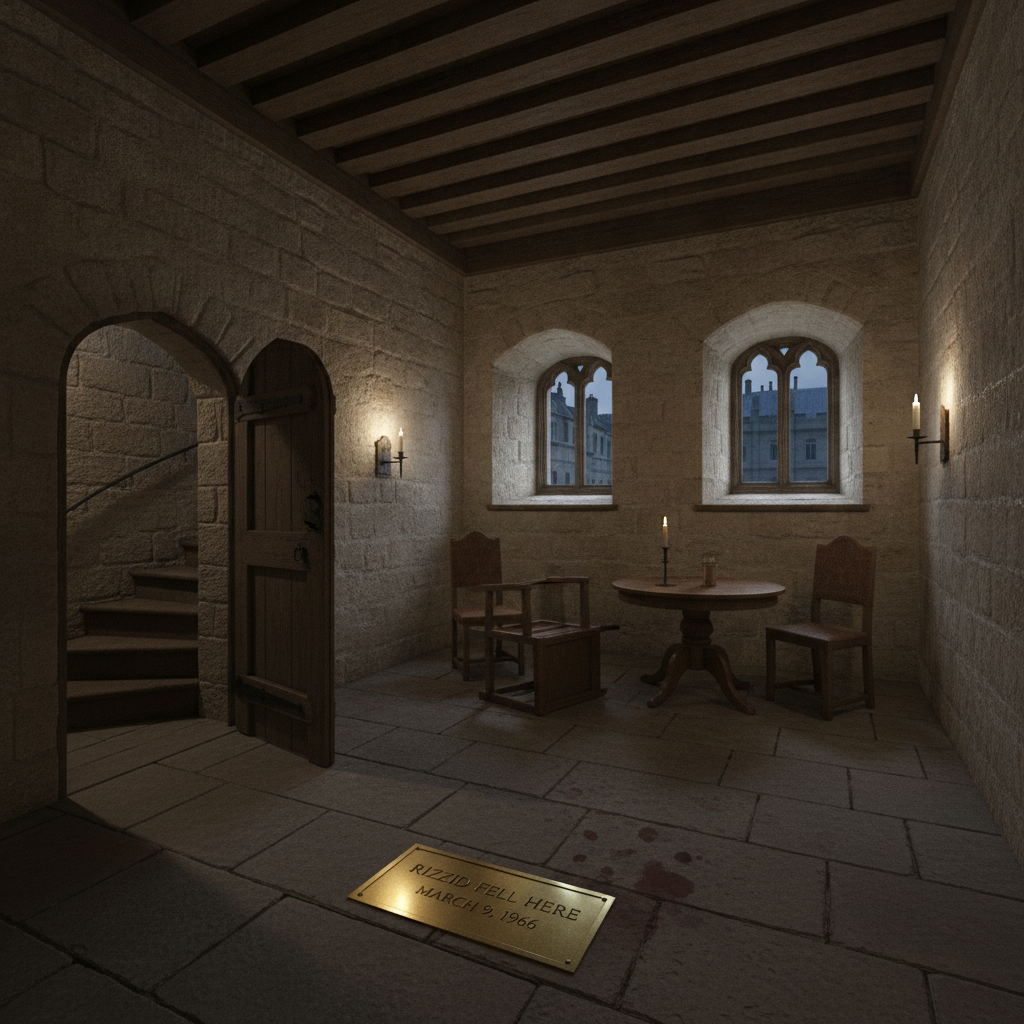
Mary Queen of Scots & Scottish History
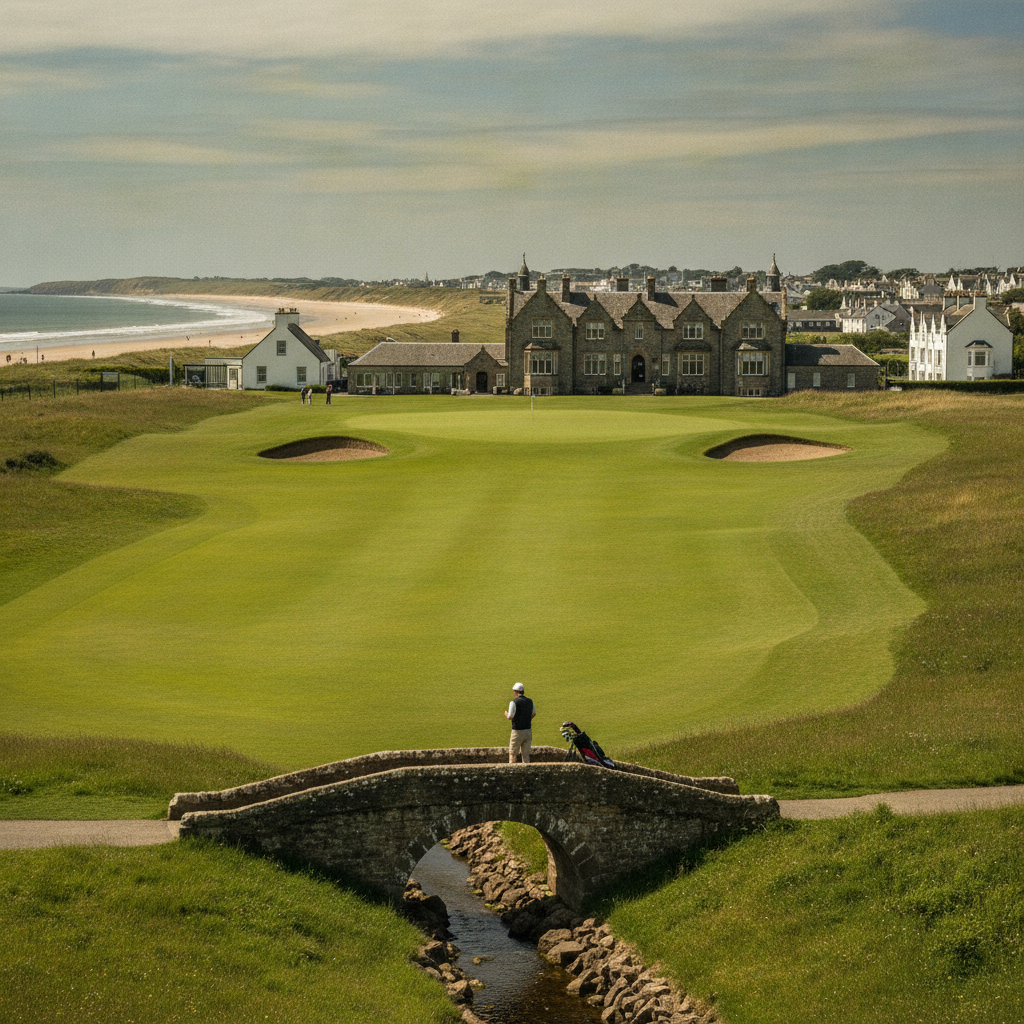
St Andrews, Golf & the Fife Coastal Path
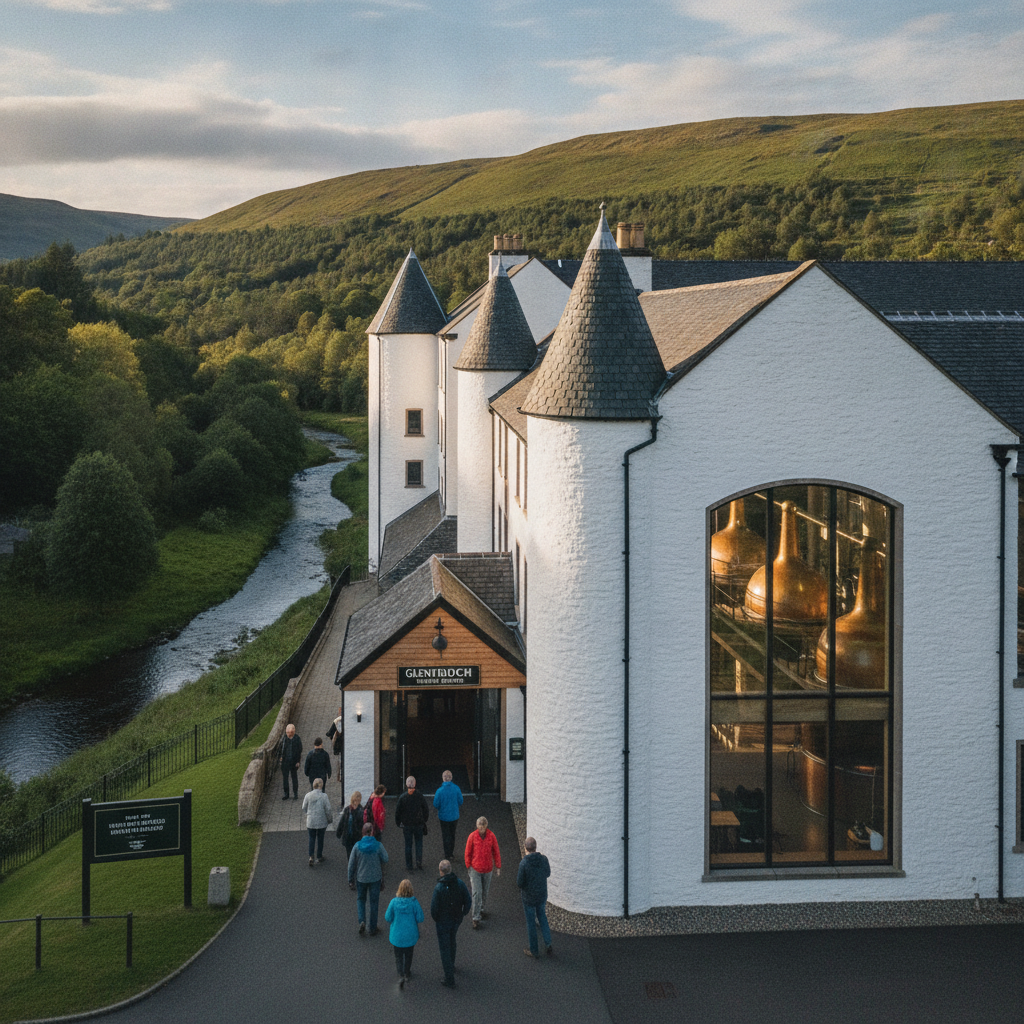
Scotch Whisky Distillery Tours & the Whisky Trail