Durban Heritage: San Rock Art, the Zulu Kingdom, isiZulu Culture, Hluhluwe-iMfolozi White Rhino Conservation, and KZN Midlands
Durban heritage: San rock art and the Drakensberg spiritual paintings, the Zulu Kingdom from Shaka to Cetshwayo, isiZulu language and cultural identity, Hluhluwe-iMfolozi white rhino conservation story, and the KwaZulu-Natal Midlands Meander arts and cheese route.
- 1
The San People and Rock Art of KwaZulu-Natal
The San (Bushmen): the earliest known inhabitants of southern Africa, hunter-gatherers whose ancestors lived in the region for at least 20,000-30,000 years before the arrival of Bantu-speaking farmers and later European settlers. The Drakensberg San rock art: the most significant body of San rock art in the world (approximately 600 sites and 35,000 individual paintings in the uKhahlamba-Drakensberg Park UNESCO World Heritage Site). The San paintings are not decorative art but spiritual maps: they depict the shaman journey into the spirit world through the metaphor of the eland hunt, the most spiritually powerful animal in San cosmology. The Natal Museum (Pietermaritzburg): the most comprehensive collection of San rock art documentation in KwaZulu-Natal. The Origins Centre at Wits University in Johannesburg: the most comprehensive museum of San rock art in southern Africa.
- 2
The Zulu Kingdom History - From Shaka to the Present
The Zulu Kingdom historical sequence. The founding: Senzangakhona kaJama (the father of Shaka): a small chief of the Zulu clan (a minor subdivision of the Nguni people). Shaka kaSenzangakhona (approximately 1787-1828): transformed the Zulu clan through military reorganization, the abolition of the traditional long throwing spear in favour of the iklwa (short stabbing assegai) combined with the isihlangu (large ox-hide shield), and the encircling cattle-horn military formation. The mfecane (the scattering): the forced displacement of other southern African peoples caused by the rapid Zulu military expansion. Dingane kaSenzangakhona (ruled 1828-1840): murdered Shaka and ordered the killing of Piet Retief and the Voortrekker party (1838). The Battle of Blood River (16 December 1838): the Voortrekker force defeated a Zulu army using firearms vs. spears. Cetshwayo kaMpande (ruled 1872-1884): the last powerful Zulu king, who led the Zulus at Isandlwana.
- 3
The Zulu Language and Cultural Identity of KwaZulu-Natal
isiZulu: the most widely spoken home language in South Africa (approximately 12 million first-language speakers, approximately 23% of the South African population): the primary language of the KwaZulu-Natal province. The Zulu click consonants (isiZulu uses three click consonants: the dental click C, the lateral click X, and the palatal click Q) are the most prominent phonological feature of the language for non-speakers. The Zulu cultural identity: the izithakazelo (the Zulu clan praises): each Zulu clan is identified by a unique set of praise names recited on meeting, a form of oral identity documentation. The inkosi (the Zulu chief): the hierarchical chieftainship system remains a significant form of governance and cultural authority in rural KwaZulu-Natal. The Zulu national cultural pride expressed through the reed dance (the Umkhosi WoMhlanga, held annually at the eNyokeni Royal Palace in Nongoma).
- 4
Hluhluwe-iMfolozi Park - The Park That Saved the White Rhinoceros
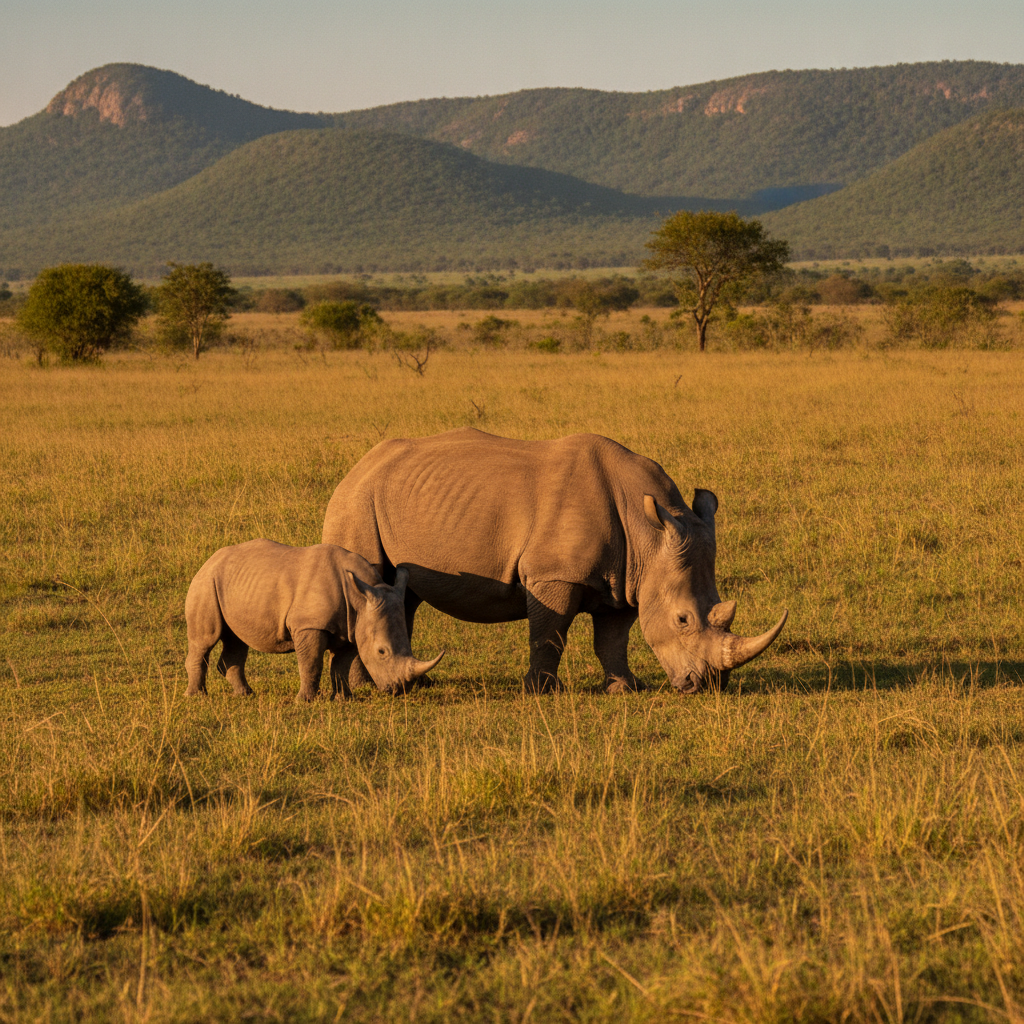
Hluhluwe-iMfolozi Park (approximately 280 km north of Durban, near the iSimangaliso Wetland Park): the oldest proclaimed nature reserve in Africa (proclaimed 1895). The park is where the white rhinoceros (Ceratotherium simum) was saved from extinction: the white rhino population was reduced to approximately 50-100 animals by the early 20th century; the conservation efforts in Hluhluwe-iMfolozi by KwaZulu-Natal Wildlife (now Ezemvelo KZN Wildlife) brought the white rhino back from the brink to a current global population of approximately 15,000-20,000 individuals. The park also has black rhino, elephant, lion, leopard, buffalo (all five of the Big Five). The Hluhluwe section (the northern area, more densely forested) vs the iMfolozi section (the southern area, more open savanna). The name: the Hluhluwe (pronounced shloo-shloo-wee) is named for the hluhluwe thorny rope plant.
- 5
The KwaZulu-Natal Midlands - Notties, Trout, and the Midlands Meander Arts Route
The KwaZulu-Natal midlands: the rolling highland plateau between the Drakensberg escarpment and the coastal lowlands, at approximately 1,000-1,500 meters elevation. The primary midlands towns: Pietermaritzburg (the capital), Mooi River, Balgowan, Nottingham Road, Lidgetton, Dargle. The Midlands Meander: the 100-km arts and craft route (established 1985) through the KZN midlands with approximately 200 studios, galleries, cheese farms, and craft operations. The finest artisan cheeses in South Africa are produced in the Dargle Valley and Mooi River area. The Amber amber ale from the Nottingham Road Brewing Company (one of the oldest craft breweries in South Africa). The trout fishing: the Umgeni River and its tributaries in the midlands support a population of rainbow and brown trout introduced by British settlers in the late 19th century; the Kamberg area near the Drakensberg is the primary trout fishing destination.
- 6
Durban Six-Route KwaZulu-Natal Final Legacy Reference
Durban six-route complete. Route 1: Durban port city, Indian heritage (Gandhi, Victoria Street Market, Bunny Chow), Golden Mile, uShaka Marine World, iSimangaliso UNESCO. Route 2: Drakensberg Royal Natal, Valley of Thousand Hills, sugar cane indenture history, Moses Mabhida Stadium, gqom. Route 3: Pietermaritzburg, Gandhi train station, Isandlwana and Rorkes Drift, Midlands Meander, Howick Falls, sardine run. Route 4: Indian food (Bunny Chow, curry, samoosas), Victoria Street Market, Umhlanga, Wilson Wharf, Florida Road nightlife, Durban July. Route 5 (this route): San rock art and cosmology, Zulu Kingdom history (Shaka to Cetshwayo), isiZulu language and cultural identity, Hluhluwe-iMfolozi white rhino conservation, KZN midlands and the Midlands Meander. Route 6 needed: Durban vs Cape Town debate, KZN whale watching (Hermanus and the southern right whales), the coffee culture, the Berea neighborhood, the Durban expat and digital nomad scene, and the complete final travel reference. KwaZulu-Natal province is arguably the most diverse province in South Africa: Zulu warrior history, Indian cultural heritage, British colonial architecture, San rock art, the greatest temperate marine environment in Africa, and the most dramatic mountain landscape accessible from any South African city.
Walk this route with audio
Stories play automatically as you reach each stop — no tapping needed.
More in durban
Durban History: Pietermaritzburg, the Anglo-Zulu War Battlefields, Midlands Meander, and the Sardine Run
Durban Final Legacy: Wild Coast, Whale Watching, Durban vs Cape Town, the Berea, and the Complete KwaZulu-Natal Reference
Durban Food and Nightlife: Bunny Chow, Victoria Street Market, Umhlanga, Wilson Wharf, and the Gqom Club Scene
Durban: The African Port City, Indian Heritage, Bunny Chow, Zulu Culture, and iSimangaliso