Temple Bar, Trinity College & the Book of Kells — Dublin's Historic Core
Dublin (Baile Átha Cliath — 'Town of the Hurdled Ford' in Irish — the capital and largest city of Ireland, population 1.4 million in the greater Dublin area, situated at the mouth of the River Liffey on the east coast of Ireland): the historic core of Dublin clusters around the south bank of the Liffey — Temple Bar (the cultural and entertainment quarter), Trinity College (Ireland's oldest and most prestigious university, home to the Book of Kells), and Grafton Street (the primary pedestrian shopping street) form the essentials of Dublin's identity.
- 1
Temple Bar — Dublin's Cultural Quarter
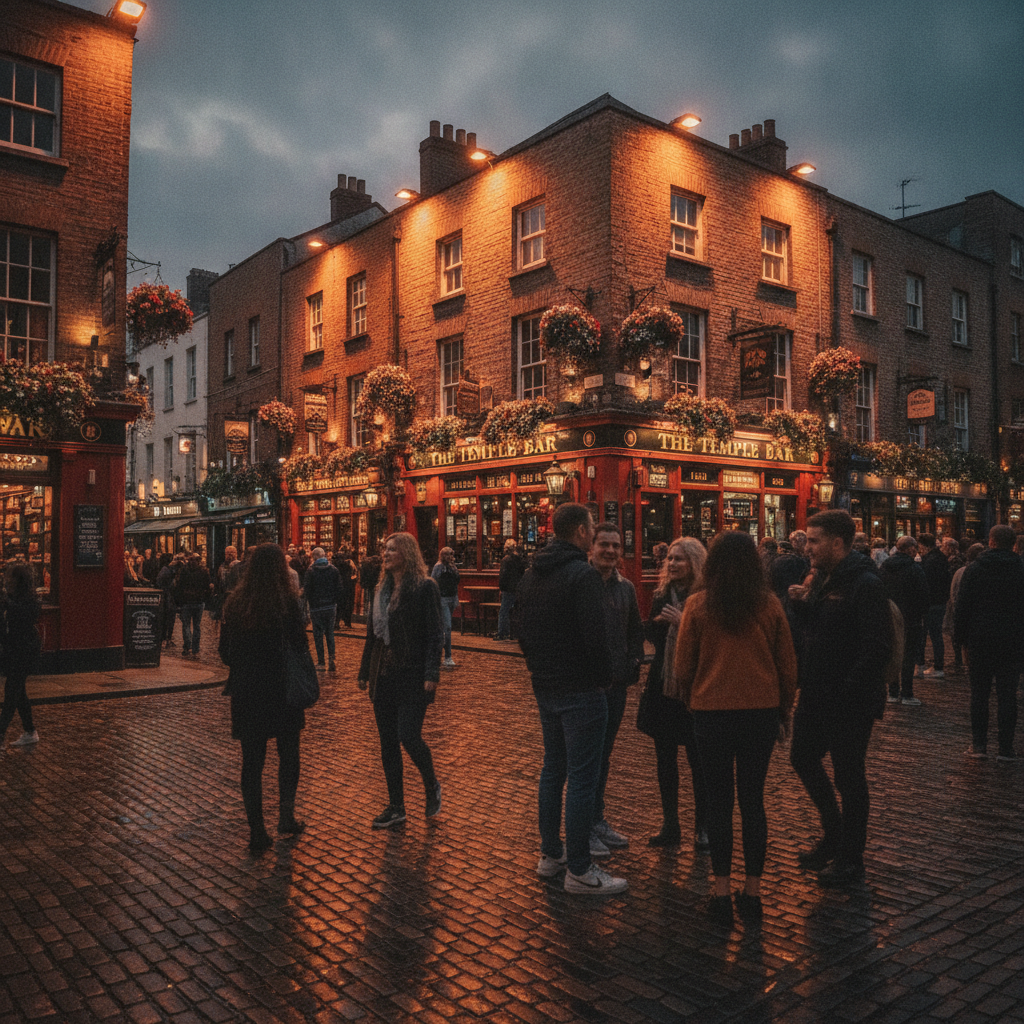
Temple Bar (the neighbourhood on the south bank of the River Liffey, between Dame Street and the river, characterized by its narrow cobbled streets (Crown Alley, Crow Street, Temple Bar itself) and high concentration of pubs, restaurants, galleries, and cultural venues — the primary entertainment district of Dublin and the most internationally recognized neighbourhood in Ireland): Temple Bar was developed as a commercial district from the early 17th century (the name comes from Sir William Temple, who owned property here in the 1640s), and was scheduled for demolition in the 1980s to build a bus terminal before a civic campaign to preserve it and develop it as a cultural quarter led to its transformation; the most important cultural institutions in Temple Bar include the Irish Film Institute (IFI — the national film archive and cinema), the Gallery of Photography (the national photographic archive), Project Arts Centre (the most important experimental theatre and visual arts venue in Ireland), and the National Photographic Archive; the Temple Bar district's pubs (the most famous being The Temple Bar pub itself, the Oliver St. John Gogarty (named after James Joyce's friend and inspiration for Buck Mulligan in Ulysses), and Mulligan's (on Poolbeg Street, one of the oldest pubs in Dublin, founded 1782)) are the primary destination for traditional Irish music (trad sessions) in central Dublin.
- 2
Trinity College & the Book of Kells
Trinity College Dublin (College Green, Dublin 2 — the University of Dublin, founded 1592 by Queen Elizabeth I as the first college of the University of Dublin, on the confiscated lands of the Augustinian All Hallows Priory — the oldest and most prestigious university in Ireland, consistently ranked in the top 100 universities in the world): Trinity College's campus (the largest single university campus in central Dublin, occupying approximately 47 acres (190,000 m²) in the very heart of the city) is one of the finest examples of 18th-century institutional architecture in the British Isles, with the Palladian West Front (facing College Green — the ceremonial entrance built 1752-1759), the Campanile (the free-standing bell tower at the centre of Front Square (Parliament Square), built 1852), and the Long Room of the Old Library (built 1712-1732, housing 200,000 of the oldest books in the library in a 65-metre long barrel-vaulted chamber — the most magnificent historic library interior in Ireland and one of the most beautiful in the world) and the Book of Kells (the illuminated manuscript gospel book written by Celtic monks c.800 CE, the most famous medieval manuscript in the world, considered the zenith of Insular art).
- 3
Grafton Street & St. Stephen's Green
Grafton Street (the principal pedestrian shopping street of Dublin, running 380 metres south from College Green through the shopping area to St. Stephen's Green — the most expensive retail street in Ireland and one of the most expensive in Europe): Grafton Street is famous for its street performers (the buskers, who have included Glen Hansard (of The Frames and Once fame) and Damien Rice in their pre-fame years), the Bewley's Café (No. 78-79 — the most historic and beloved café in Dublin, founded 1840 by the Quaker Bewley family, with its Harry Clarke stained glass windows and the Great Room (the main dining room with its original Harry Clarke windows from 1927 — the finest Art Nouveau-influenced stained glass in Dublin)), and the statue of Molly Malone (the mythical Dublin fishmonger whose street ballad ('Cockles and Mussels,' also known as 'In Dublin's Fair City') has been the unofficial anthem of Dublin since the 19th century); St. Stephen's Green (the 9-hectare public park adjacent to Grafton Street, laid out in 1664, the most beloved park in central Dublin) was the site of fighting during the Easter Rising (1916) and contains a memorial to Wolfe Tone (the founder of Irish republicanism).
- 4
Dublin Castle — 800 Years of British Rule & Irish Independence
Dublin Castle (Dame Street — the former seat of British rule in Ireland for 700 years (1204-1922), now a government complex and tourist attraction): Dublin Castle was the administrative centre of the British administration of Ireland from the Anglo-Norman period to Irish independence in 1922; the State Apartments (the ceremonial rooms of the Lord Lieutenant's residence, in the Upper Yard of the castle — the finest surviving examples of 18th-century Irish Baroque interior decoration, with Waterford crystal chandeliers, Donegal carpet, and plasterwork by Italian craftsmen) were the site of the handover of power from British to Irish authorities on January 16, 1922 (when Michael Collins received the keys to the castle from the last British Viceroy, with the famous words attributed to Collins: 'We're seven minutes late, Sergeant. The English have been 700 years getting out of here; you can have the seven minutes'); the Chester Beatty Library (in the clock tower of Dublin Castle — the private art collection of the American-Irish mining magnate Sir Alfred Chester Beatty (1875-1968), considered one of the finest private art collections in the world, with an extraordinary collection of Islamic manuscripts, East Asian art, and European medieval illuminated manuscripts) is widely regarded as the finest small museum in Ireland.
- 5
Christ Church Cathedral & St. Patrick's Cathedral
Christ Church Cathedral (Christchurch Place — the Church of Ireland (Anglican) cathedral, the oldest building in Dublin, founded c.1030 by the Viking King Sitric Silkbeard and Bishop Dúnán, rebuilt 1172-1220 by Strongbow (Richard de Clare, 2nd Earl of Pembroke, the Norman lord who led the Anglo-Norman invasion of Ireland in 1170) in the Romanesque and early Gothic styles): Christ Church is the mother church of the Church of Ireland Diocese of Dublin and Glendalough, and contains the reputed tomb of Strongbow (the monument is actually 16th century, replacing the original destroyed in a 1562 roof collapse) — the most important Norman monument in Ireland; Strongbow's daughter (Aoife of Leinster — the Irish princess whose marriage to Strongbow in 1170 cemented the Anglo-Norman claim to Leinster) is depicted in a famous history painting (Daniel Maclise's 'The Marriage of Strongbow and Aoife' (1854), in the National Gallery of Ireland); St. Patrick's Cathedral (Patrick's Close — the national cathedral of the Church of Ireland, founded 1191, rebuilt 1220-1254 in the English Gothic style — the largest church in Ireland, associated with Jonathan Swift, who served as Dean of St. Patrick's 1713-1745 and is buried in the south nave).
- 6
Irish Pub Culture & Traditional Music
The Irish pub (the most important and distinctive Irish cultural institution, central to Irish social life, political debate, music, and storytelling since at least the 17th century): the Dublin pub scene is the most concentrated and diverse in the world, with approximately 750 pubs in the city, ranging from the Victorian grandeur of Mulligan's (1782), Kehoe's (South Anne Street — the finest example of an intact Victorian Dublin pub interior, with its original Victorian snugs (the small enclosed booths for private drinking and conversation — a distinctively Irish/British pub feature)), the Long Hall (South Great Georges Street — the most ornate Victorian pub interior in Dublin, with its long mahogany bar and decorated ceiling), and Grogan's Castle Lounge (the bohemian pub associated with Dublin's literary and artistic community since the 1970s) to the famous live trad sessions (traditional Irish music sessions — weekly or nightly performances of jigs, reels, and slow airs on fiddle, tin whistle, uilleann pipes, bodhran, and flute) at O'Donoghue's (Merrion Row — the pub where The Dubliners were formed in 1962), Cobblestone (Smithfield), and The Cobblestone (the most authentic trad session pub in Dublin).
Walk this route with audio
Stories play automatically as you reach each stop — no tapping needed.
More in dublin
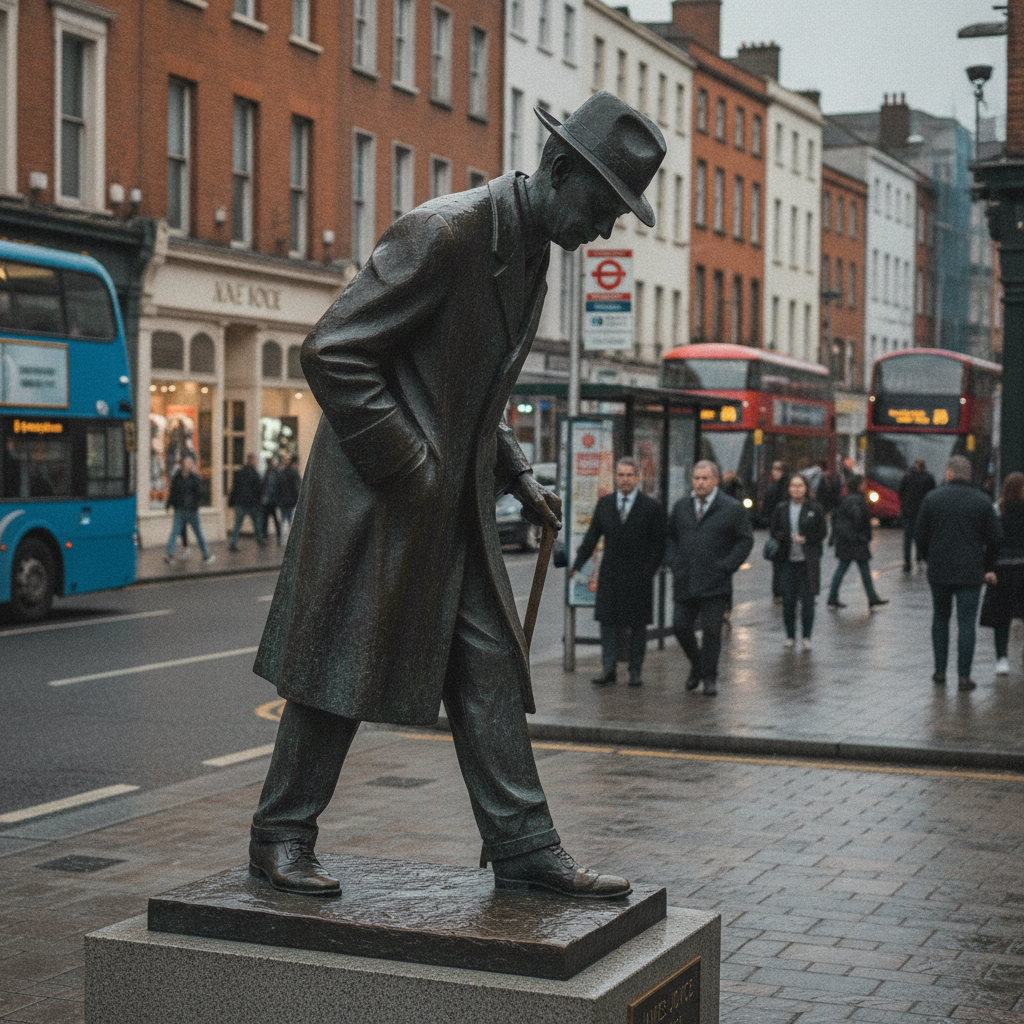
Literary Dublin — Joyce, Beckett, Wilde, Yeats & the Irish Literary Tradition
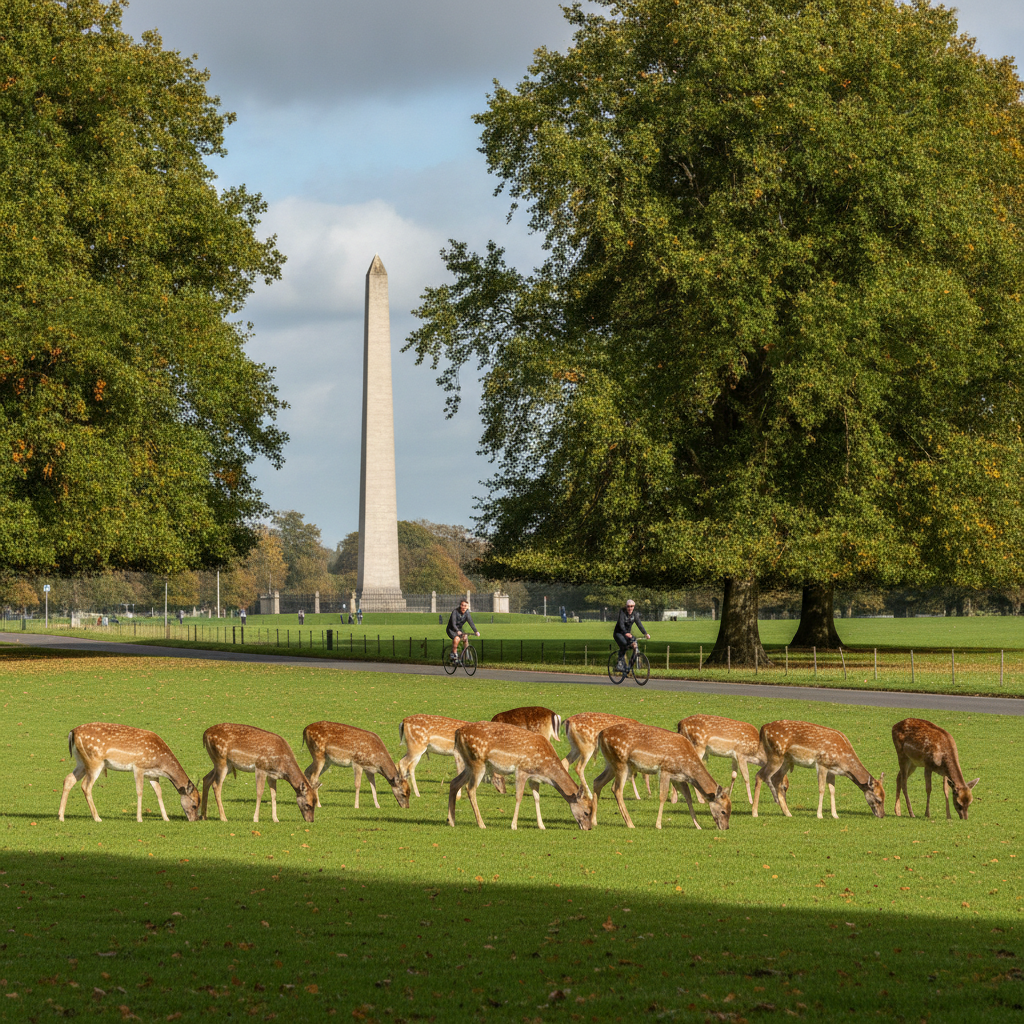
Phoenix Park & Howth Head — Dublin's Natural Escapes
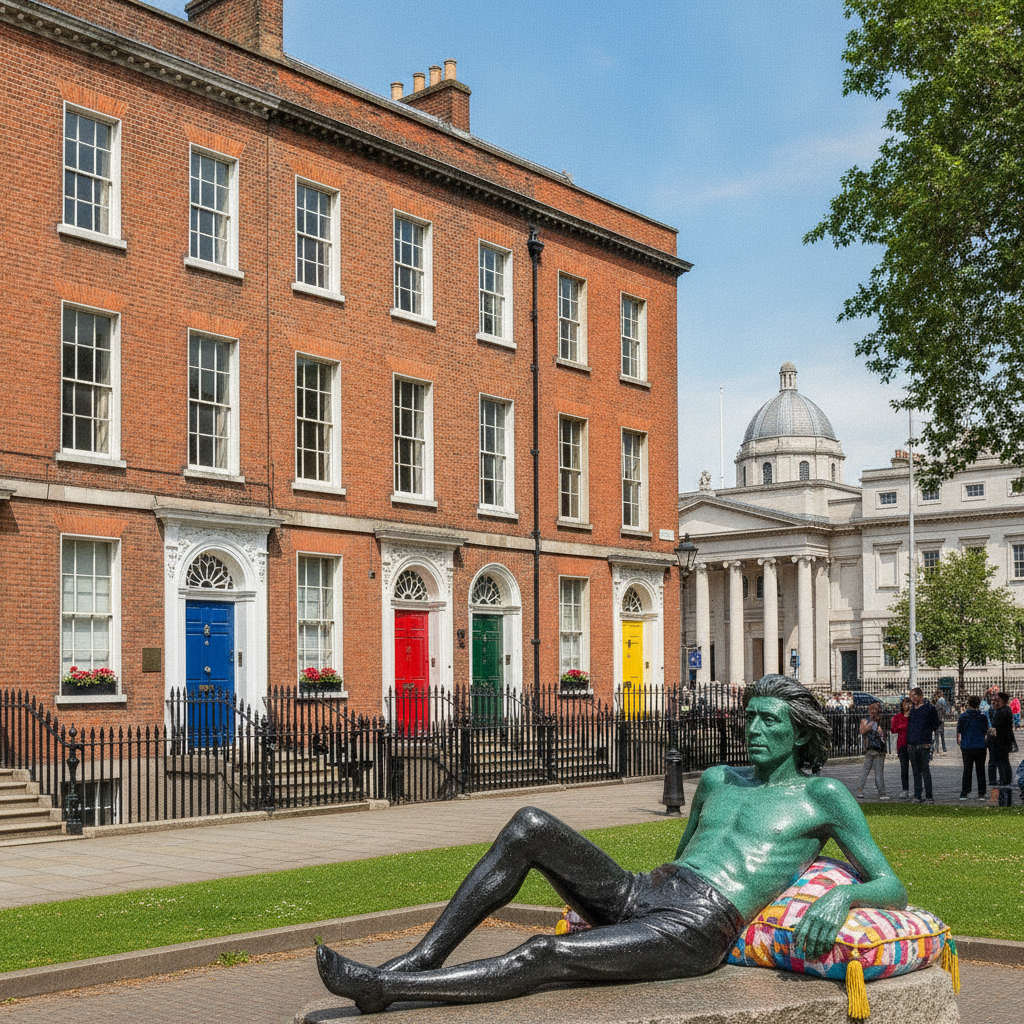
Georgian Dublin — Merrion Square & the Georgian Architecture
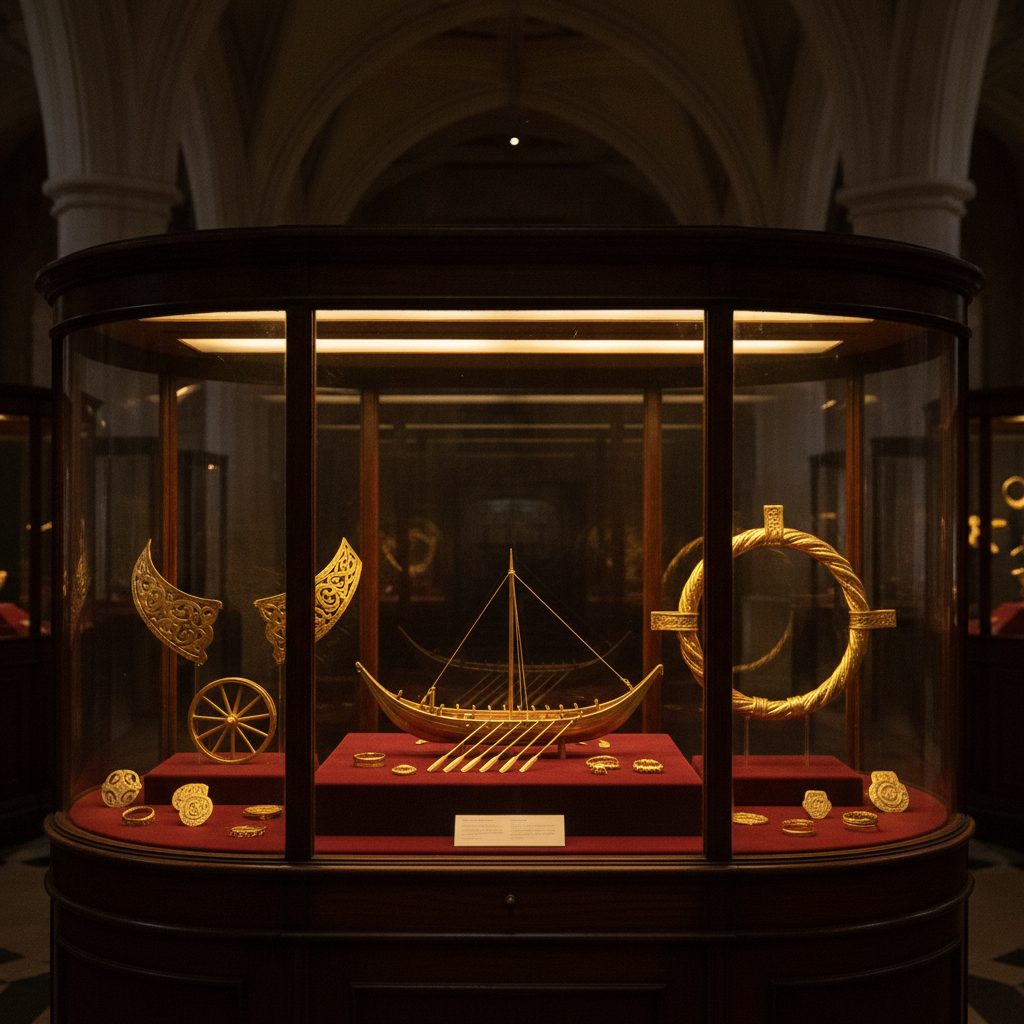
National Museum of Ireland — Bog Bodies, Celtic Gold & Irish Archaeology
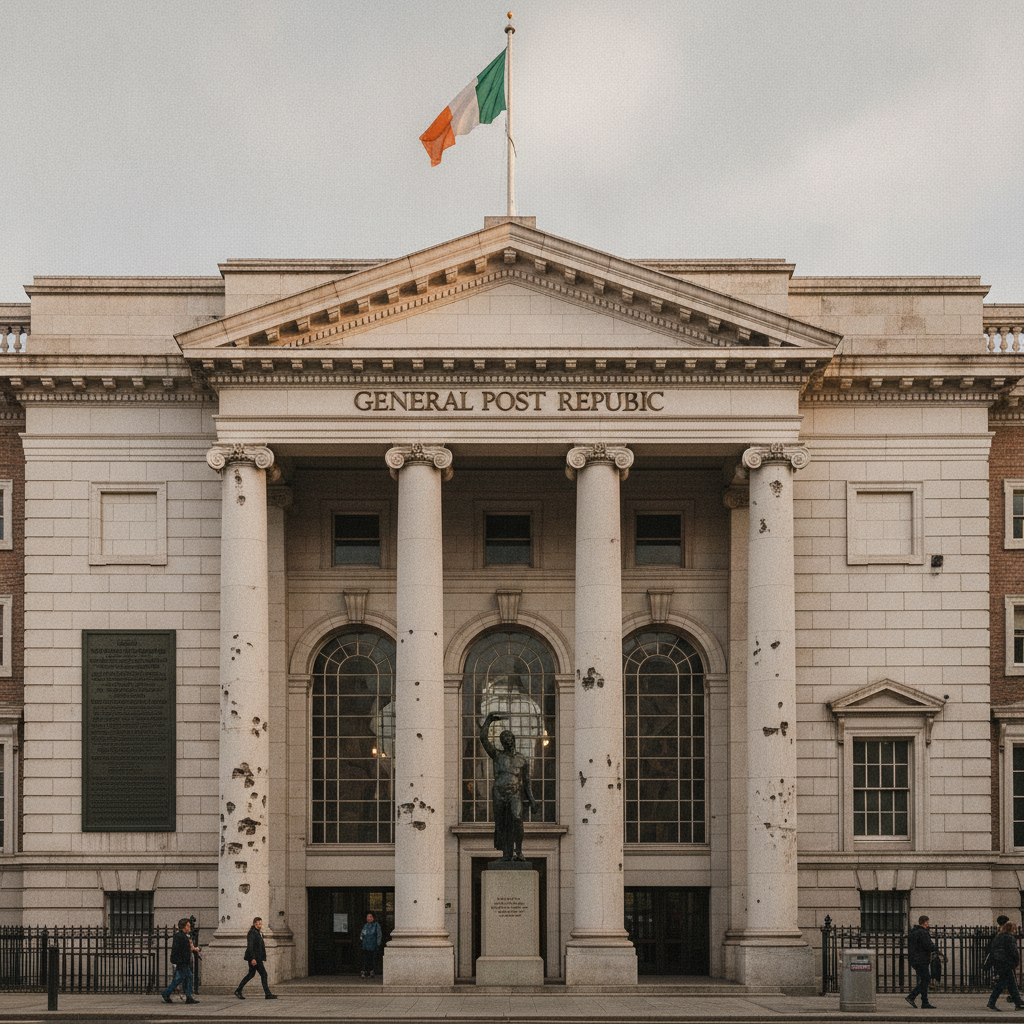
Easter Rising 1916, the GPO & Irish Independence