National Museum of Ireland — Bog Bodies, Celtic Gold & Irish Archaeology
The National Museum of Ireland (Archaeology) (Kildare Street — the national archaeology museum, in the Victorian Neoclassical building (1890) designed by Thomas Newenham Deane — the most important collection of Irish archaeological material in the world): the museum's greatest treasures are the bog bodies (the Iron Age human remains preserved in Irish peat bogs — Clonycavan Man, Old Croghan Man, and Cashel Man, the three most important preserved Iron Age human remains in the world, preserved for 2,000 years in the anaerobic, acidic conditions of the Irish boglands), the Celtic gold (the Treasury gallery — the largest collection of prehistoric gold in Western Europe, including the Broighter Gold hoard (100 BCE), the Gleninsheen Collar (800 BCE, the finest Late Bronze Age gold gorget in the world), and the Ardagh Chalice).
- 1
Bog Bodies — Iron Age Sacrifice Victims Preserved for 2,000 Years
The bog bodies of the National Museum of Ireland (the Iron Age human remains preserved in the anaerobic, acidic conditions of the Irish peat bogs (turf bogs) — the most remarkable collection of ancient human remains in the world): Clonycavan Man (preserved from approximately the chest upwards, dating 392-201 BCE, found 2003 in County Meath — notable for the vegetable oil and pine resin hair gel (the oldest surviving hair product in Europe) used to hold his Mohawk-style topknot in place, and for the evidence of ritual killing (the skull shows multiple blows from an axe and the body was disembowelled after death)), Old Croghan Man (preserved as the torso and arms only, dating 362-175 BCE, found 2003 in County Offaly — an exceptionally tall man (estimated 6'6" (198 cm) based on the arm length) with manicured nails, indicating high social status, killed by stabbing, strangulation, and drowning in a combination typical of Celtic ritual triple death), and Cashel Man (dating 2000 BCE — the oldest known bog body found with its skin intact in the world).
- 2
The Broighter Gold & Celtic Iron Age Treasures
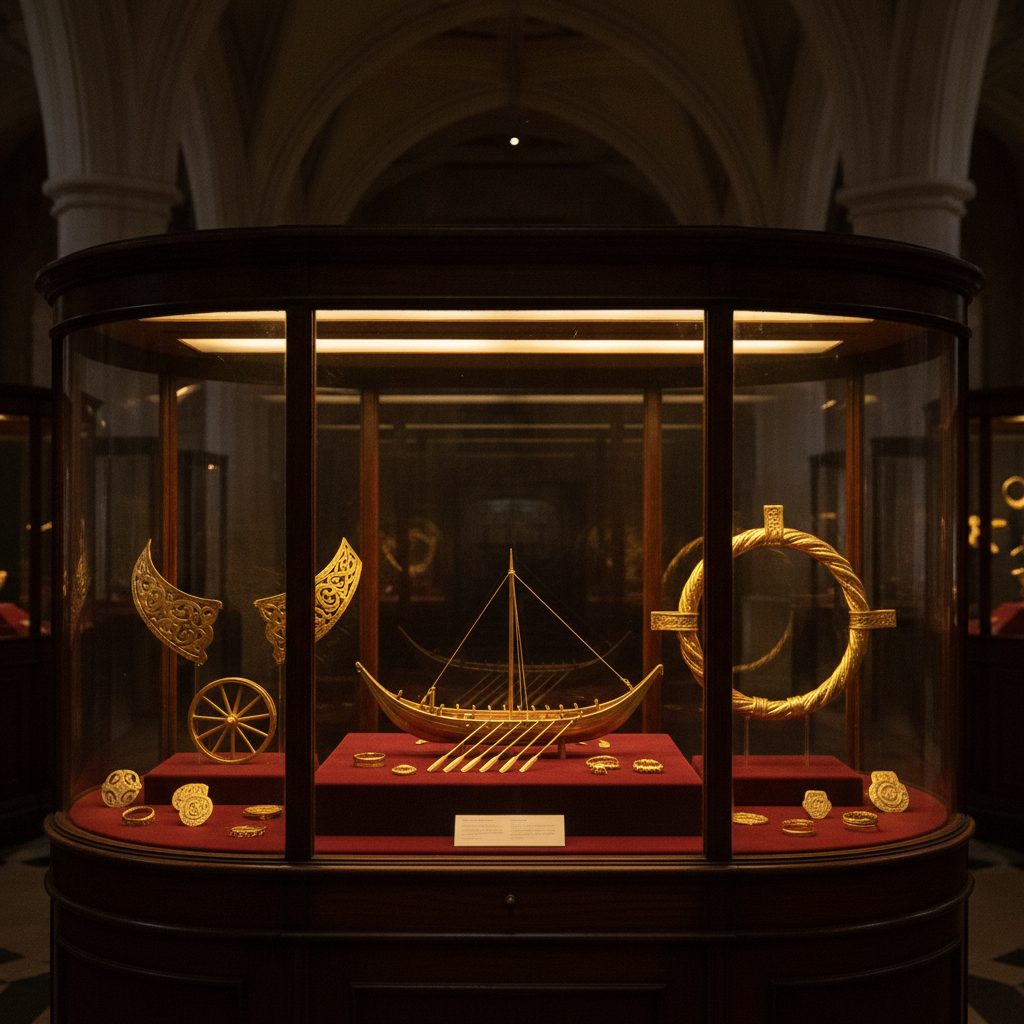
The Broighter Gold (the most important Iron Age gold hoard found in Ireland, discovered 1896 at Broighter, County Derry, dating approximately 100 BCE — a collection of seven objects including the Broighter Boat (a gold model of a nine-oared currach (traditional Irish boat) complete with oars, oar-pins, a steering oar, grappling irons, and a mast — the earliest known model of a boat with a mast in the world), the Broighter Torc (the twisted gold neck ring, the finest example of La Tène style goldsmithing in Ireland), and a gold bowl and chain necklaces); the Gleninsheen Gorget (found 1932 in a rock crevice in the Burren, County Clare, dating c.800 BCE — the finest gold gorget (decorated neck collar) from the Late Bronze Age in the world, with its terminals decorated with interlocking concentric circles of hammered gold): the Bronze Age and Iron Age goldworking tradition of Ireland is uniquely fine in Europe, reflecting the exceptionally high purity of Irish gold deposits.
- 3
Ardagh Chalice & Early Christian Irish Metalwork
The Ardagh Chalice (the silver and gold chalice found 1868 in a rath (earthwork) at Ardagh, County Limerick, dating c.700-750 CE — the greatest example of early Christian Irish metalwork and one of the finest pieces of metalwork produced anywhere in Europe in the early medieval period): the chalice (made of silver with gold filigree, gilt bronze, and glass inlays) has been described as the finest piece of early Christian art in the world; the National Museum's collection of early Christian Irish metalwork (which also includes the Tara Brooch (c.700 CE, the most elaborate Irish penannular brooch, with filigree and amber decoration on both front and back), the Cross of Cong (c.1123, the processional cross containing a fragment of the True Cross, the finest example of Romanesque Irish metalwork), and the Shrine of Saint Patrick's Bell (c.1100, the shrine made to contain the iron handbell said to have been used by St. Patrick himself)) is the most outstanding collection of early medieval metalwork in the world.
- 4
National Gallery of Ireland — Vermeer, Caravaggio & Irish Art
National Gallery of Ireland (Merrion Square West — the national art museum of Ireland, opened 1864, housing the national collection of Irish art and a significant international collection in the Victorian Neoclassical building adjacent to Merrion Square): the National Gallery's highlights include: Johannes Vermeer's 'Woman Writing a Letter' (c.1670-1671 — one of only 35-36 authenticated works by Vermeer in existence, acquired by the National Gallery in 1892 for £1,250 and now among the most valuable paintings in Ireland), Caravaggio's 'The Taking of Christ' (1602 — the painting that was misidentified as a copy for over 200 years and was rediscovered in 1990 hanging in the dining room of the Jesuit House of Studies in Leeson Street, Dublin — one of the most extraordinary art historical discoveries of the 20th century), and the Jack B. Yeats collection (the most important collection of works by the greatest Irish painter of the 20th century, brother of W.B. Yeats).
- 5
Collins Barracks — Decorative Arts & Military History
National Museum of Ireland — Decorative Arts and History (Collins Barracks, Benburb Street — the national museum of Irish decorative arts, furniture, fashion, silver, ceramics, and military history, in the Collins Barracks (the former Royal Barracks, built 1704, the oldest continuously occupied military barracks in the world until its decommissioning in 1997)): the Collins Barracks collection includes the Eileen Gray Chair (the 'Non-Conformist Chair' (1926-1930) by the Cork-born furniture designer and architect Eileen Gray (1878-1976) — Ireland's most important contribution to 20th-century design and one of the most expensive chairs in the world when sold at auction in 2009 for €21.9 million), the history of Irish textiles (Donegal tweed, Waterford crystal, Belleek porcelain, Youghal needlepoint lace), and the military history of Ireland from the 1798 Rebellion through the Easter Rising to the Irish Civil War.
- 6
Kilmainham Gaol — Where Irish Independence was Born
Kilmainham Gaol (Inchicore Road, Kilmainham — the former prison (in operation 1796-1924) that is the most important site in modern Irish history: the leaders of the Easter Rising (1916) were imprisoned here and executed in the prison yard in the weeks after the Rising, transforming public opinion and making Irish independence inevitable): the prison (restored and reopened as a museum in 1966, the 50th anniversary of the Easter Rising) tells the story of Irish political history through the biographies of the men and women imprisoned here, from the United Irishmen of 1798 through the Young Irelanders of 1848 to the Fenians of the 1860s and the revolutionary generation of 1916-1923; the East Wing (the panopticon prison wing built 1861 in the Victorian Gothic style) is one of the most dramatically atmospheric historic prison spaces in Europe; the execution yard (where Patrick Pearse, James Connolly (tied to a chair because he was too badly wounded to stand), and 14 other Rising leaders were shot by firing squad in May 1916) is one of the most emotionally powerful heritage sites in Ireland.
Walk this route with audio
Stories play automatically as you reach each stop — no tapping needed.
More in dublin
Literary Dublin — Joyce, Beckett, Wilde, Yeats & the Irish Literary Tradition
Phoenix Park & Howth Head — Dublin's Natural Escapes
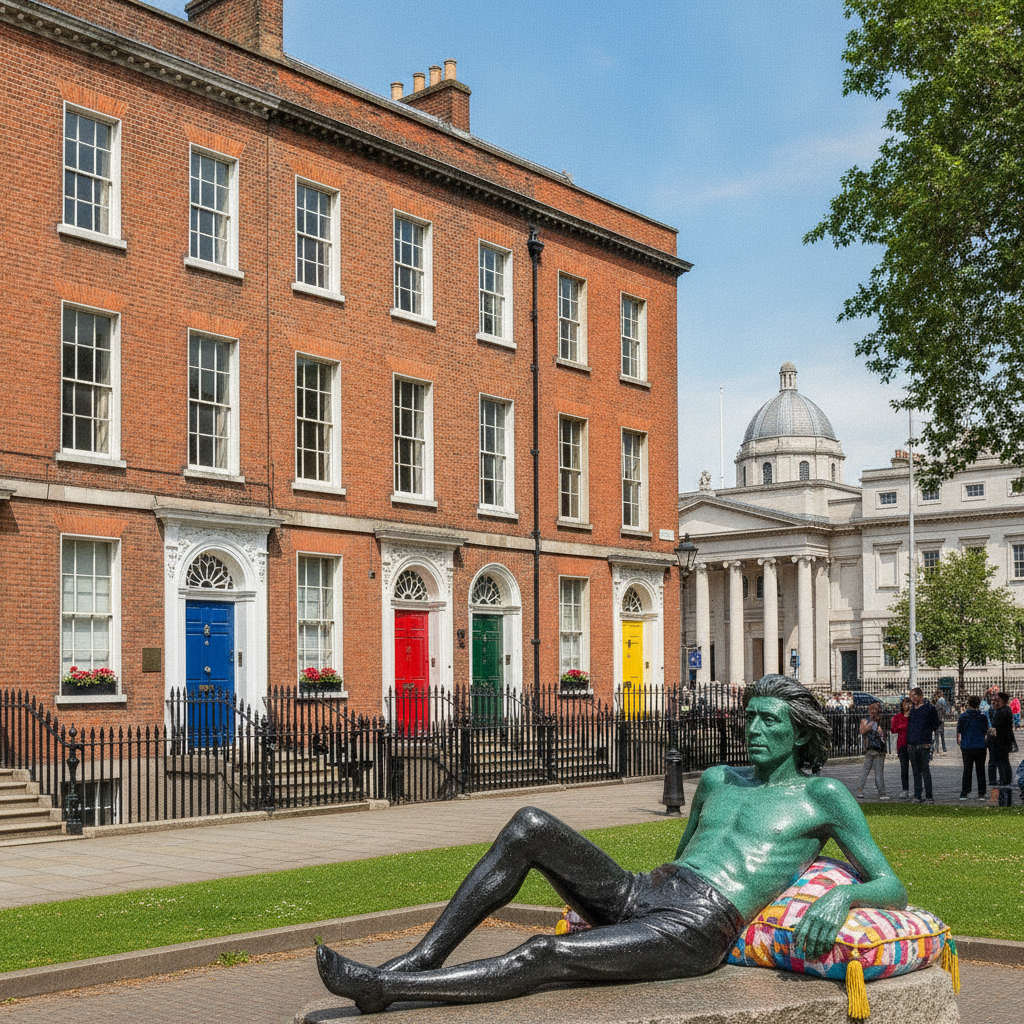
Georgian Dublin — Merrion Square & the Georgian Architecture
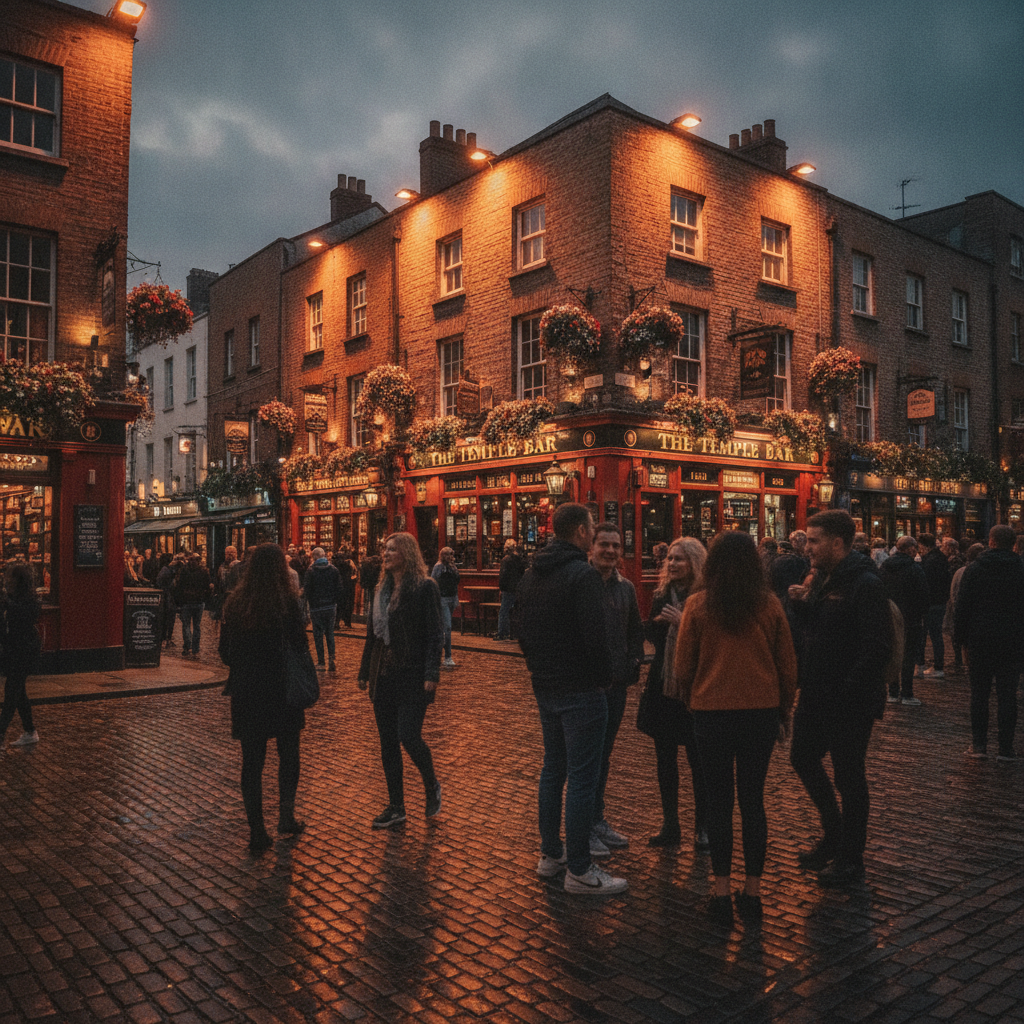
Temple Bar, Trinity College & the Book of Kells — Dublin's Historic Core
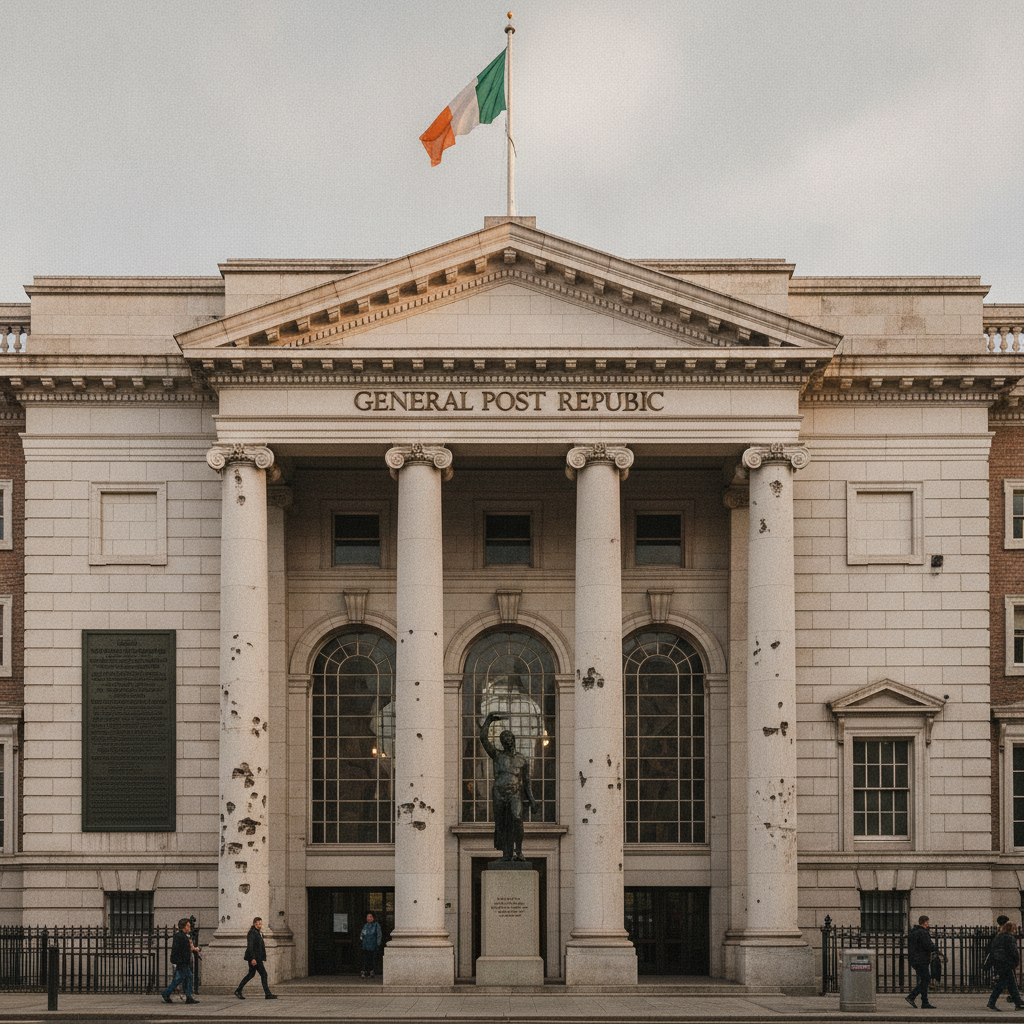
Easter Rising 1916, the GPO & Irish Independence