Guinness Storehouse, Irish Whiskey & Dublin's Food Scene
Dublin's food and drink culture is inseparable from two iconic Irish products: Guinness (the Irish dry stout, first brewed by Arthur Guinness at St. James's Gate in 1759, now produced at the largest stout brewery in the world on the same site and consumed in 150 countries) and Irish whiskey (the world's fastest-growing premium spirits category, with distilleries including Jameson (Bow St., Dublin), Teeling (Newmarket, Dublin), and over 30 craft distilleries opened since 2010).
- 1
Guinness Storehouse — The World's Most Visited Paid Attraction in Ireland
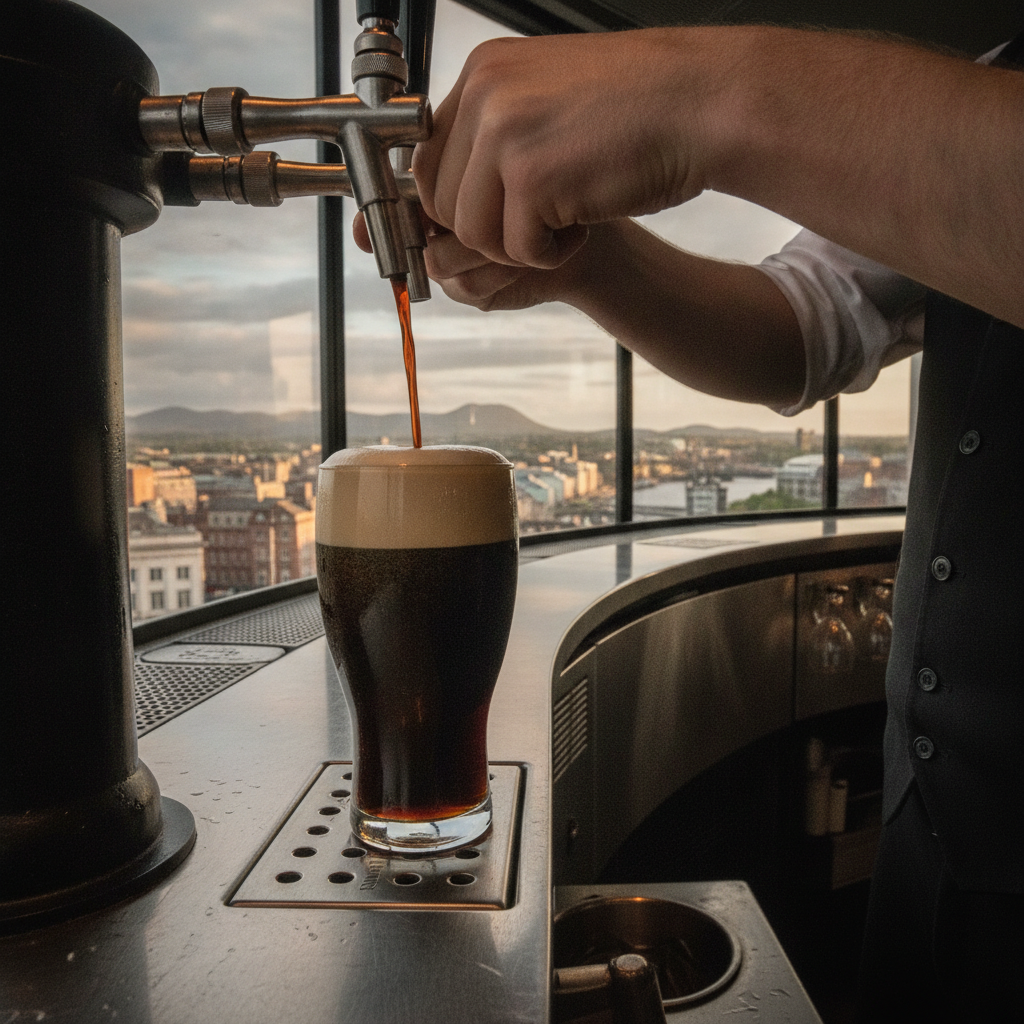
Guinness Storehouse (St. James's Gate, Dublin 8 — the 7-storey visitor experience in the former fermentation building (Storehouse No. 1, built 1904) of the St. James's Gate Brewery — the most visited paid tourist attraction in Ireland, with approximately 1.7 million visitors per year): the St. James's Gate Brewery (established 1759 by Arthur Guinness (1724-1803), who signed a 9,000-year lease on the site at £45 per annum — the lease is displayed in the ground floor of the Storehouse) is the largest brewery in Europe by floor area (approximately 64 acres) and produces approximately 10 million glasses of Guinness per day for 150 countries; Guinness (Arthur Guinness's innovation was the porter/stout style — a dark, roasted-barley beer with a nitrogen-charged pour that creates the characteristic cascade and creamy head) became the most iconic Irish product internationally; the Storehouse exhibition tells the story of Guinness from the founding (1759) through the brewing process to the advertising (the Guinness advertising campaigns — 'My Goodness My Guinness,' the toucan, and the 'Good Things Come to Those Who Wait' campaign — are among the most celebrated in advertising history); the Gravity Bar (the circular glass-walled bar at the top of the building) includes a complimentary pint of Guinness with the admission price.
- 2
Irish Whiskey — The Fastest-Growing Spirits Category in the World
Irish whiskey (the whiskey produced in Ireland, triple-distilled (unlike Scotch, which is double-distilled) for a characteristically smooth taste, aged a minimum of 3 years in oak casks on Irish soil): the Irish whiskey industry was the world's largest in the 19th century (with dozens of distilleries in Dublin alone, producing whiskey exported worldwide), was nearly destroyed by Prohibition (the US market ban 1920-1933), Irish independence (the trade war with Britain that closed the UK market), and the rise of Scotch whisky in the post-war period, until a revival beginning in the 1990s led to the current boom; the Jameson Distillery (Bow St., Smithfield — the visitor centre of the most sold Irish whiskey brand globally (approximately 9.7 million cases per year), in the old Jameson Midleton distillery building in the Smithfield district)); the Teeling Whiskey Distillery (Newmarket, The Liberties — the first new distillery to open in Dublin in 125 years when it was established in 2015, the most acclaimed craft distillery in Ireland, the first distillery to produce Dublin whiskey in the city itself since 1975) are the primary whiskey visitor experiences in Dublin.
- 3
The Liberties — Dublin's Oldest Neighbourhood & Food Market
The Liberties (the oldest continuously inhabited neighbourhood in Dublin, on the south bank of the Liffey west of Christ Church Cathedral — the area where Dublin's medieval craftsmen, wool merchants, and later weavers (the Huguenot Protestant refugees who settled here after fleeing France after the revocation of the Edict of Nantes in 1685 and established Dublin's famous silk and poplin weaving industry) lived and worked): the Liberties is the most historically layered neighbourhood in Dublin, with a complex social history as the poorest and most overcrowded district of the city through the 18th and 19th centuries (Brendan Behan (1923-1964), the most famous Irish writer of his generation, was born in the Liberties); the Liberties is currently undergoing rapid gentrification as a consequence of the Teeling distillery and associated food and craft businesses that have moved to the area; the Iveagh Markets (Francis Street — the Edwardian covered market building (1906), currently being restored) and the Thomas Street street market (the most traditional outdoor market in Dublin) are the commercial heart of the Liberties.
- 4
Modern Irish Cuisine — From Stew to New Nordic Ireland
Modern Irish food culture (the transformation of Irish food from its traditional image (the Irish stew, the full Irish breakfast, the soda bread, and the colcannon) to a sophisticated, terroir-driven, New Nordic-influenced food scene): the key developments in Dublin's food culture since 2010 include: the chef JP McMahon's Aniar restaurant (Galway — with a Michelin star, the most influential Irish restaurant in the New Irish cuisine movement) and the broader 'new Irish' chef movement; the Dún Laoghaire food scene; and the Dublin restaurant landscape led by: Chapter One (Parnell Square, formerly the most respected restaurant in Dublin, 1 Michelin star, relocated and reborn as Pembroke), Thornton's (former 2-star), and the current generation of restaurants including The Fumbally (Fumbally Lane, The Liberties — the most important café/restaurant in the Irish food culture movement since 2012), Bastible (South Circular Road), and the emergence of Dublin's natural wine bar scene (Hen's Teeth, Wines on the Green).
- 5
Dublin Craft Beer Scene — The Irish Craft Beer Revolution
Dublin craft beer (the Irish craft beer revolution that began approximately 2011-2015, transforming Ireland from a near-complete Guinness/Heineken/Diageo duopoly to a vibrant craft brewing scene): the key Dublin craft breweries include: The Porterhouse Brewing Company (Parliament Street, Temple Bar — the first craft brewery to open in Dublin (1996), the most established independent Irish brewery, producing the plain porter, oyster stout, and various seasonal ales); Whiplash Beer (the most critically acclaimed new Irish craft brewery, producing predominantly hazy IPAs and modern American-influenced styles from their Smithfield taproom); Rascals Brewing (Inchicore — one of the most popular Dublin craft breweries); and the Galway Bay Brewery's network of craft beer pubs in Dublin (Against the Grain, The Gasworks, 57 The Headline, the Four Provinces, the Barge, and others — the most important chain of craft beer pubs in Ireland); Dublin also has an increasing number of craft beer bars (Against the Grain in Wexford Street, the Porterhouse in Parliament Street) that carry the full range of Irish and international craft beer.
- 6
Full Irish Breakfast & Soda Bread — Traditional Irish Food
The full Irish breakfast (the traditional Irish cooked breakfast, the most internationally recognized Irish food after Guinness): the full Irish (also known as an 'Ulster Fry' in Northern Ireland) consists of bacon (back bacon, slightly different from English or American bacon — the back of the pig rather than the belly), sausages (pork sausages, the Irish sausage being a coarser grind than British sausages with a higher meat content), black pudding (blood pudding — the Irish version, particularly the Clonakilty Black Pudding from County Cork, is considered the finest in the world), white pudding (the same as black pudding but without the blood), fried eggs, grilled tomatoes, mushrooms, and soda bread (the distinctive Irish quick bread made with buttermilk and bread soda (bicarbonate of soda) — Ireland's most important contribution to bread baking, unique in the world because the raising agent is chemical rather than yeast); the full Irish is served at virtually every hotel, hostel, and B&B in Dublin and is the most universally available hot breakfast in the city.
Walk this route with audio
Stories play automatically as you reach each stop — no tapping needed.
More in dublin
Literary Dublin — Joyce, Beckett, Wilde, Yeats & the Irish Literary Tradition
Phoenix Park & Howth Head — Dublin's Natural Escapes
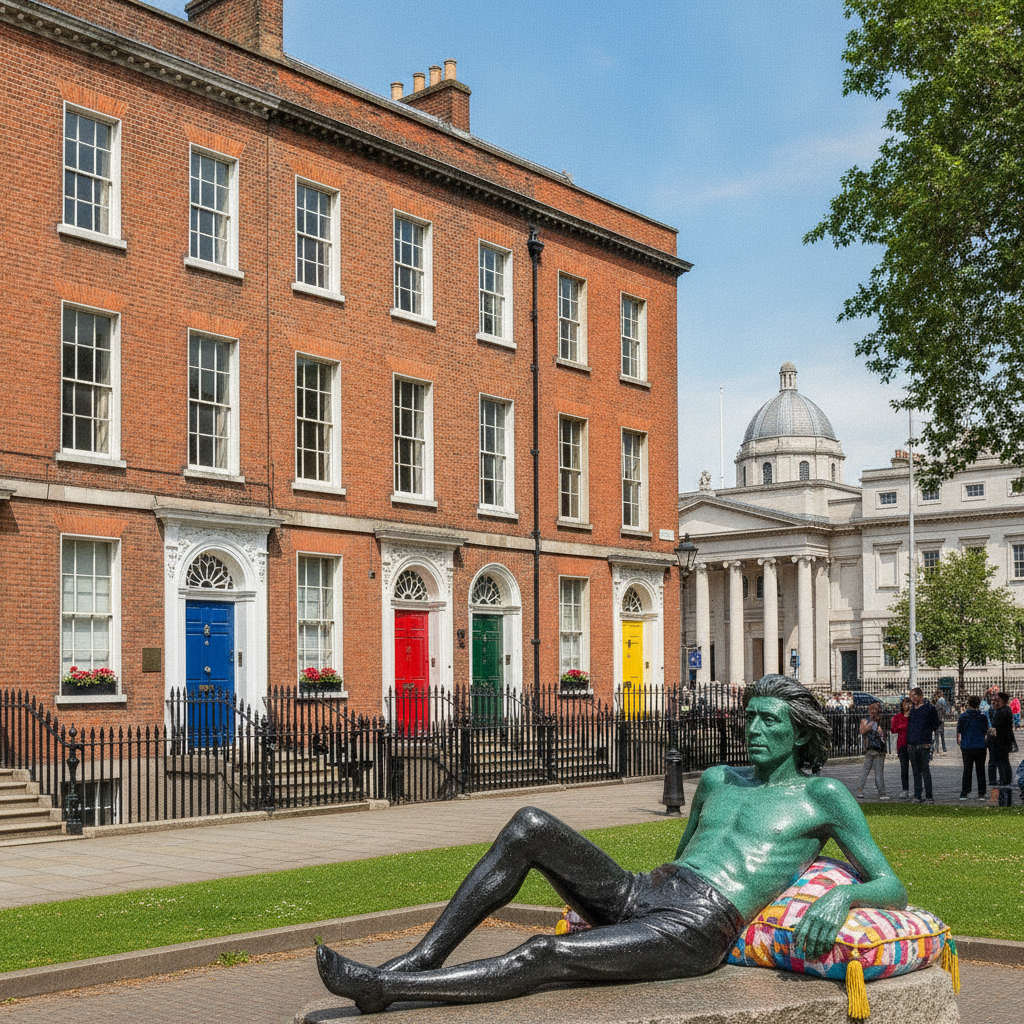
Georgian Dublin — Merrion Square & the Georgian Architecture
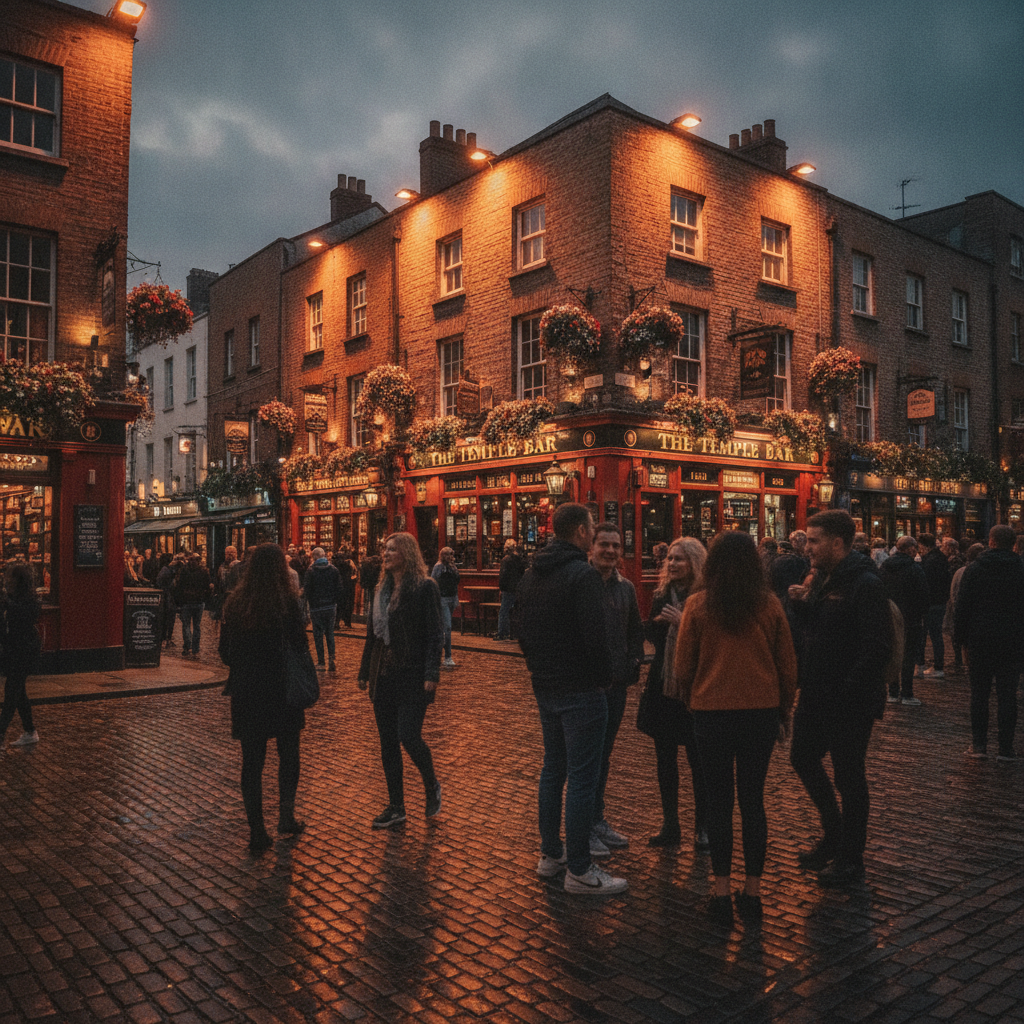
Temple Bar, Trinity College & the Book of Kells — Dublin's Historic Core
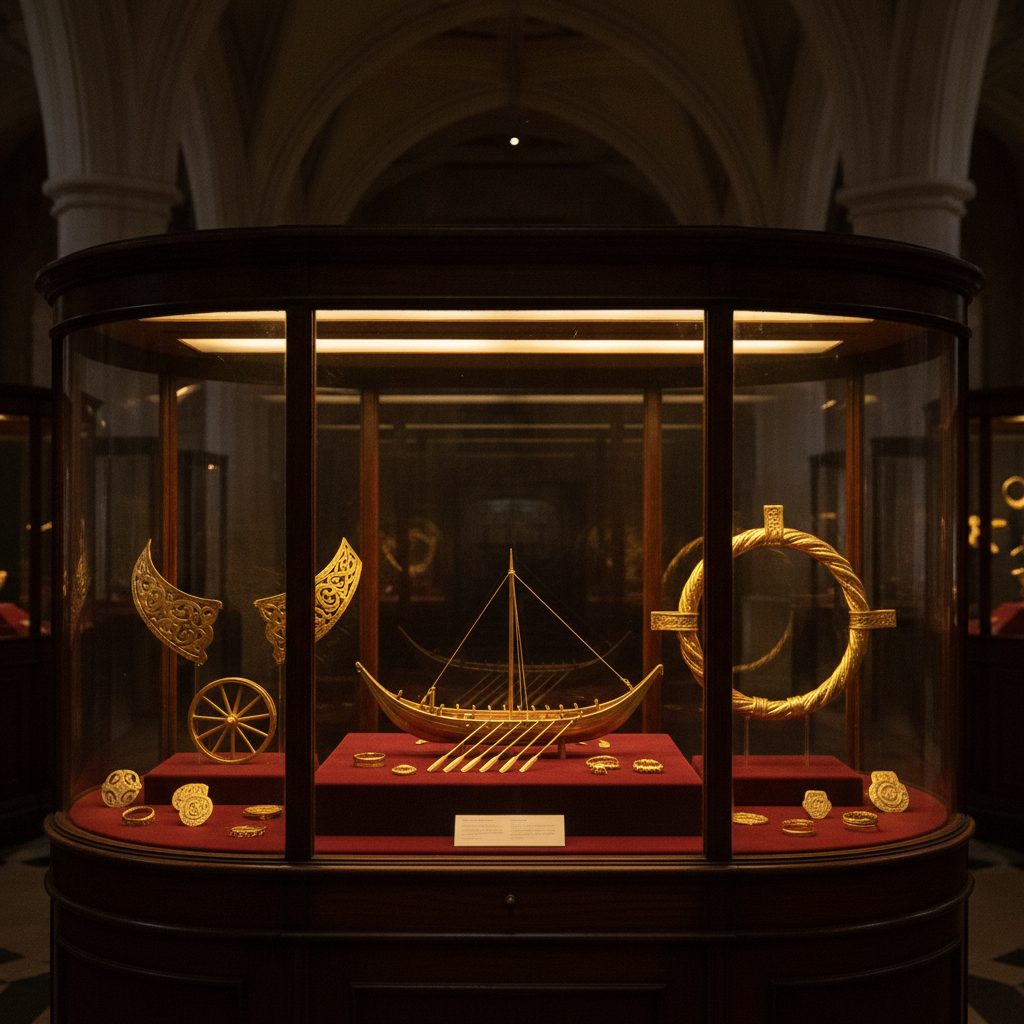
National Museum of Ireland — Bog Bodies, Celtic Gold & Irish Archaeology