Al Quoz & Alserkal Avenue: Dubai's Art District in an Industrial Neighborhood
Al Quoz, Dubai's main industrial district — a grid of warehouses, workshops, car repair shops, and light industrial units south of Sheikh Zayed Road between the Safa Park area and the Nad Al Sheba district — contains, improbably, Dubai's most significant art district: Alserkal Avenue, a 1-kilometer boulevard of converted warehouse galleries, artist studios, cinema, theater, and creative businesses that has become the center of the contemporary art scene in the Middle East since its development from 2008. The Alserkal Avenue model — converting industrial buildings to cultural use without demolishing or architecturally transforming them — is a departure from Dubai's dominant approach of building new and spectacular, and its success (100+ galleries and creative businesses, 40 million dirhams in annual art sales, 500,000 annual visitors) has influenced subsequent creative district development in the Gulf.
- 1
Alserkal Avenue — The Gallery Cluster
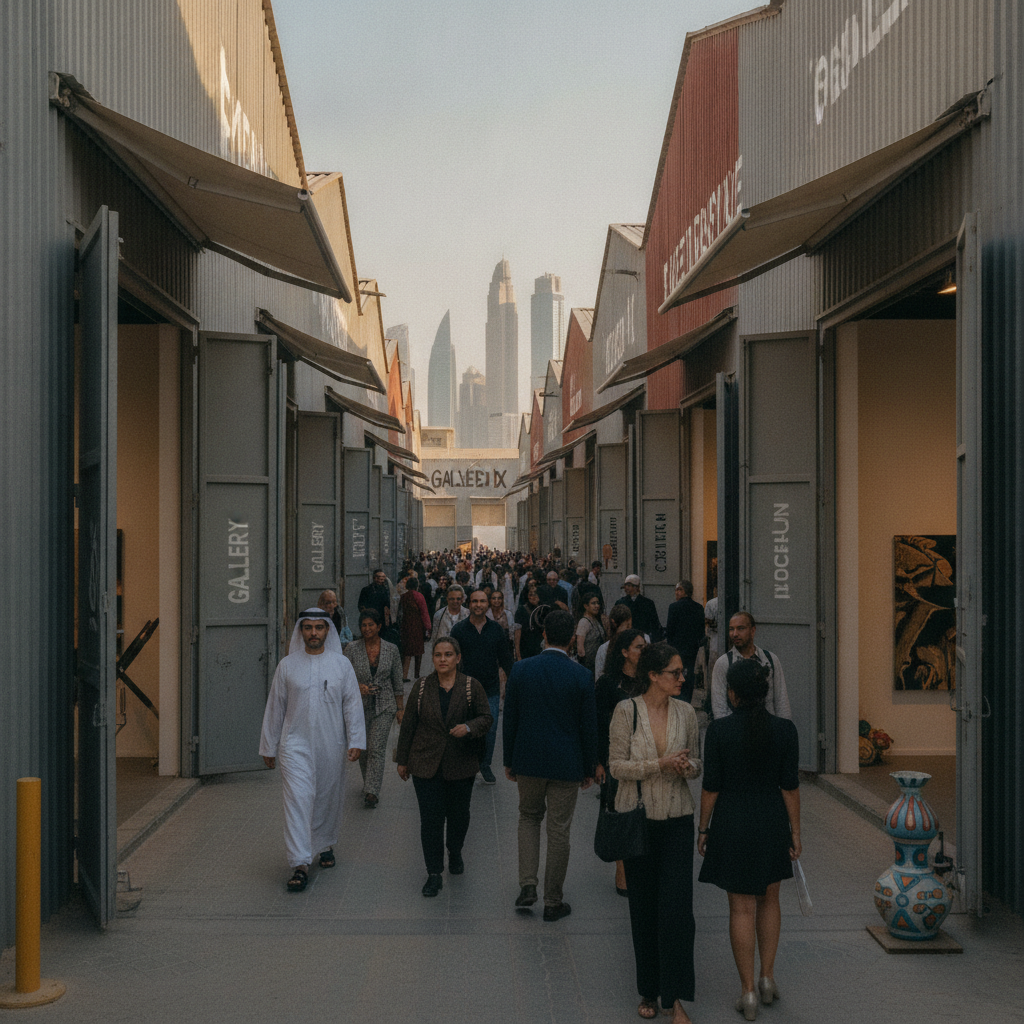
Alserkal Avenue (named for the Alserkal family, who developed the industrial complex from the 1970s and converted it to cultural use from 2008), is the primary gallery district in Dubai and the most concentrated gallery cluster in the Middle East: approximately 50 galleries in a 1-kilometer corridor of converted warehouses, including the Dubai outposts of international galleries (Galerie Perrotin, Carbon 12, Leila Heller, Green Art Gallery, Ayyam Gallery), independent contemporary art spaces (Lawrie Shabibi, The Third Line, Isabelle van den Eynde), and studios and project spaces for regional and international artists. The galleries are typically open Tuesday to Saturday (10am–7pm); the most lively time to visit is during Art Dubai (March, the region's most important contemporary art fair, held at the Madinat Jumeirah) when the Avenue opens special exhibitions and runs events parallel to the fair. The architecture is resolutely industrial: corrugated metal warehouses, concrete floors, high ceilings — the galleries have adapted these spaces with minimal architectural intervention.
- 2
Concrete — The Cultural Platform
Concrete (2017), a large-scale cultural venue at the western end of Alserkal Avenue in a warehouse building designed by OMA (Office for Metropolitan Architecture, the firm of Rem Koolhaas), is the most architecturally ambitious structure on the Avenue: a 9,000-square-meter event space with an 11-meter ceiling, used for major art installations, performances, music events, and Art Dubai programming. OMA's design preserved the industrial character of the warehouse while adding a 300-seat underground auditorium (Cinema Akil, the only independent cinema in Dubai, focusing on art house and international programming). Cinema Akil is the only place in Dubai where you can reliably see subtitled Iranian, Arab, or European films without the cuts made by national censors — its programming is aggressively global.
- 3
Warehouse 51 & Artist Studios
The artist studio complex in the northern section of Alserkal Avenue — a cluster of shared studios occupied by painters, sculptors, photographers, and multimedia artists, many of them recent graduates of the Dubai Institute of Design and Innovation (DIDI) or the American University of Sharjah — represents the production side of the Dubai art market that the galleries display: younger artists, regional talent (particularly UAE-based Arab and South Asian artists), and experimental practices that don't yet have gallery representation. The studios are not typically open to the public except during Open Studio events (held twice yearly), but the surrounding Alserkal Avenue events and openings bring visitors into contact with the artists' community in a way that is unusual for a city where most cultural consumption happens behind the velvet rope of hotel restaurants and private clubs.
- 4
The Yard & Community Spaces
The Yard, an outdoor community space at the center of Alserkal Avenue between the gallery clusters, hosts outdoor events, food markets, and public programming that draws visitors from beyond the art world: farmers markets, food truck festivals, outdoor screenings, and a weekly Friday morning yoga session that is one of the most socially mixed gatherings in Dubai (Emiratis, Arab expats, South Asian professionals, Western expats, art world visitors all in the same space). The Yard represents Alserkal Avenue's deliberate strategy of community programming: the development's operators understand that a gallery district accessible only to art buyers will not survive in Dubai's real estate economy, and have consistently used The Yard programming to bring in a broader public.
- 5
Al Quoz Industrial Area — The Ungentrified Dubai
The streets immediately surrounding Alserkal Avenue — the Al Quoz industrial area proper, with its car repair workshops (Porsche specialists, custom paint shops, vintage car restorers), carpentry workshops, signage companies, and the occasional Indian-Pakistani restaurant serving the labor community — represent the Dubai that the tourism industry systematically ignores: a functioning industrial city of approximately 200,000 workers (primarily from South Asia) who perform the manufacturing, repair, and construction that makes the glamorous Dubai of hotels and malls possible. The labor accommodations and canteens of Al Quoz (densely populated with Bangladeshi, Pakistani, and Indian workers who sleep 8-10 to a room and eat in establishments that charge 3-5 dirhams for a full meal) exist at a direct economic remove from the galleries of Alserkal Avenue, 500 meters away.
- 6
Dubai Street Museum & Urban Art
The Dubai Street Museum, a series of large-scale murals painted on warehouse walls throughout the Al Quoz industrial district (the largest is a 10-story piece on the wall of the Times Square Center mall on Sheikh Zayed Road), was established in 2015 as a collaboration between the Dubai Corporation for Tourism and Commerce Marketing and international street artists including Ernest Zacharevic (Malaysia), Roa (Belgium), and Overunder (USA). The murals — most in the streets around Alserkal Avenue and the Al Quoz warehouses — have turned the industrial district into an informal outdoor gallery that is free to visit and can be explored by bicycle (several bike rental operators in the area). The project was the first large-scale street art initiative in the Gulf and has influenced subsequent programs in Riyadh, Doha, and Abu Dhabi.
Walk this route with audio
Stories play automatically as you reach each stop — no tapping needed.
More in dubai
Deira: Heritage Markets, Naif Square & the Multicultural Old Quarter
Palm Jumeirah: The World's Largest Artificial Island
Al Fahidi, Dubai Creek & the Gold Souk: Dubai Before Oil
Expo City Dubai: The World's Fair Becomes a Permanent City
Business Bay, Dubai Canal & Design District: The Creative and Commercial New Center