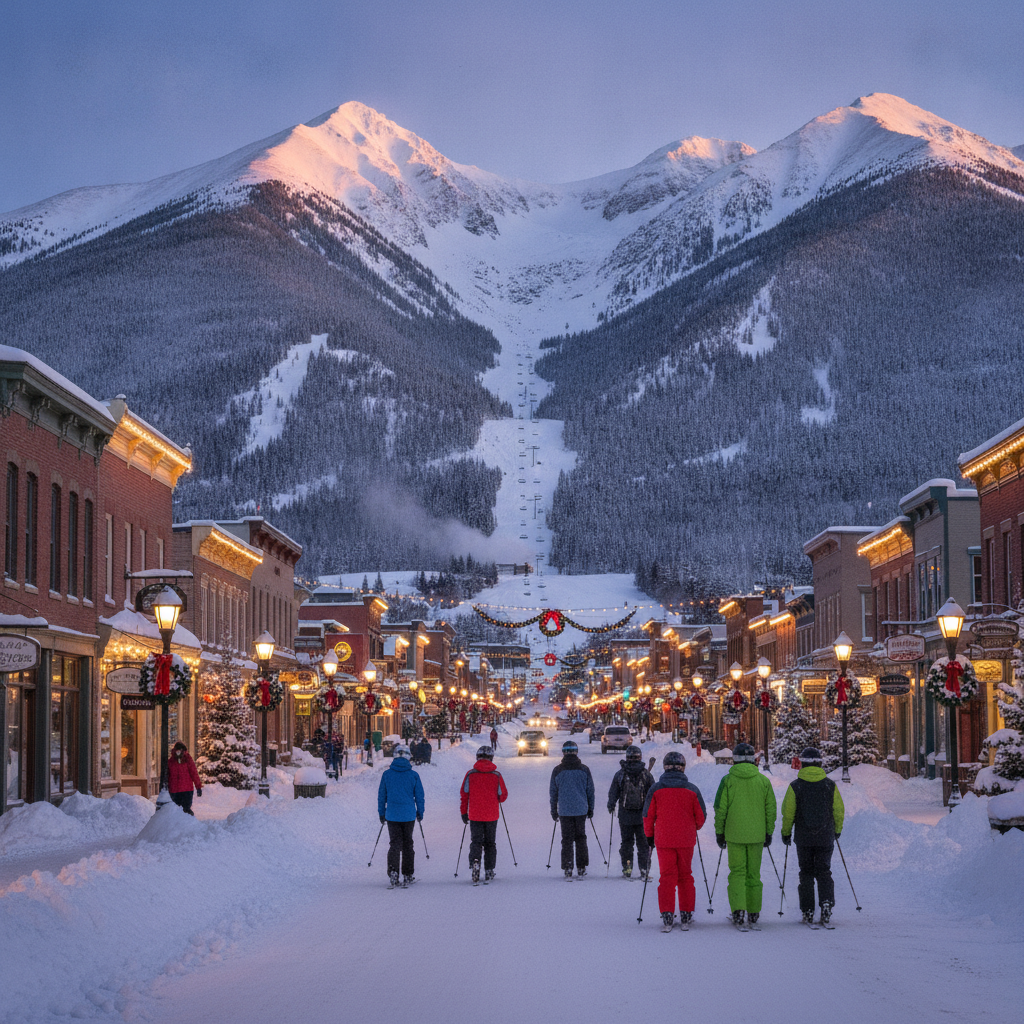
Denver: Estes Park Gateway (Stanley Hotel, elk rut, Rocky Mountain National Park), Coors Field Baseball (altitude effect, Purple Row 5280 feet, Todd Helton), Union Station 2014 Renovation (Crawford Hotel, A Line to airport), Dinosaur Ridge and Morrison Formation (Bone Wars 1877, Stegosaurus, Allosaurus), Georgetown Silver Mining Town (Victorian Historic District, Georgetown Loop Railroad), and Denver Food Scene (Rioja, Buckhorn Exchange 1893, bison meat, Denver Milk Market)
Denver beyond the basics: Estes Park gateway (Stanley Hotel Shining inspiration, elk rut October in town, Lake Estes, RMNP Trail Ridge Road), Coors Field (retro baseball ballpark, altitude home run effect, humidor, Purple Row mile-high mark), Union Station transit hub (transit-oriented development, A Line airport, RTD light rail network), Dinosaur Ridge (Morrison Formation 1877 Bone Wars, Jurassic dinosaur trackways), Georgetown silver mining Historic District (Hotel de Paris, Georgetown Loop Railroad, Clear Creek kayaking), and Denver culinary scene (Rioja, Buckhorn Exchange liquor license #1, bison ranching, Denver Milk Market RiNo food hall).
- 1
Estes Park and Rocky Mountain National Park Gateway
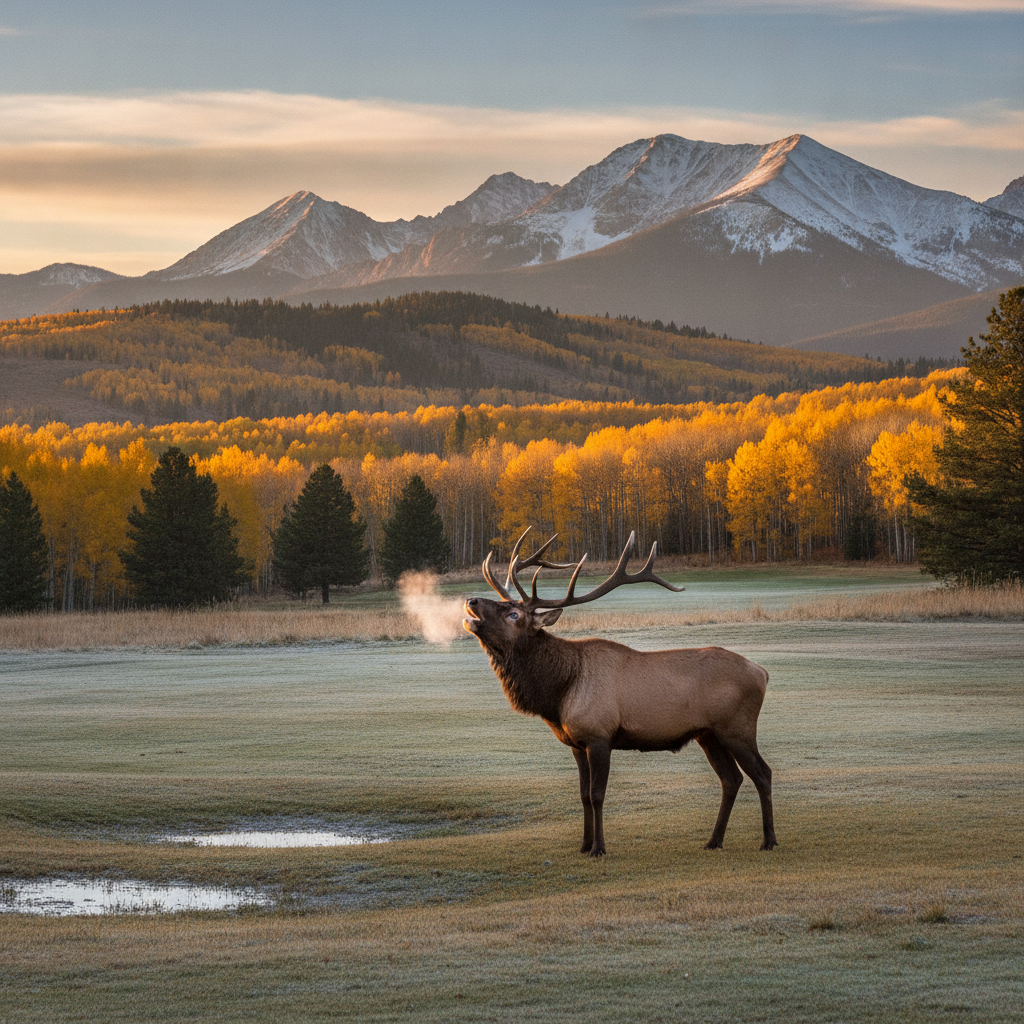
Estes Park (the gateway town to Rocky Mountain National Park, 104 km northwest of Denver, 1.5 hours via US-36 through Boulder or US-34 through Loveland): the primary visitor base for Rocky Mountain National Park, with a permanent population of approximately 6,500 and summer visitor populations that can reach 30,000 people per day. Estes Park character: the small downtown area on Elkhorn Avenue with galleries, fudge shops, souvenir stores, and outdoor gear shops; the Stanley Hotel (the grand 1909 hotel on the hill above town, built by Freelan Oscar Stanley of the Stanley Steamer automobile company): the hotel that inspired Stephen King to write The Shining (King stayed here in 1974 and wrote the novel the following year). The Stanley Hotel ghost reputation: the hotel is considered one of the most haunted buildings in the United States, based on the stories of guests and staff. The elk herd of Estes Park (the 1,000-3,500 elk that inhabit the meadows and forests of the RMNP and the Estes Park valley): during the fall rut (September-October), bull elk can be observed bugling and competing on the golf course, the school athletic fields, and the parking lots of Estes Park. The Lake Estes (the reservoir formed by the Olympus Dam on the Big Thompson River): the primary recreation area adjacent to Estes Park town, with paddleboats, fishing, and a scenic trail around the lake shore. RMNP Trail Ridge Road: the 77 km highway connecting Estes Park to Grand Lake on the west side of the Continental Divide.
- 2
Coors Field and Colorado Rockies Baseball
Coors Field (at 2001 Blake Street, LoDo, Denver): the home stadium of the Colorado Rockies Major League Baseball team, opened in 1995. Coors Field character: the 50,144-seat retro-classic ballpark (designed in the neo-Victorian brick style consistent with the surrounding LoDo district) is considered one of the most beautiful baseball stadiums in the major leagues. The Rockies played their first four seasons at Mile High Stadium while Coors Field was under construction. The mile-high altitude effect on baseball at Coors Field: the high altitude (1,609 m) of Denver reduces air density by approximately 15% compared to sea level, making fly balls carry farther (the typical MLB home run travels approximately 5-10% farther at Coors Field than at sea level) and reducing the movement of breaking pitches. Coors Field as a hitters park: Coors Field has historically produced the highest-scoring games in Major League Baseball due to the altitude effect; the Colorado Rockies have responded by storing their baseballs in a humidity-controlled room (the Coors Field humidor) to reduce the liveliness of the balls. The Purple Row (the row of purple seats at the 20th row of the upper deck at Coors Field): marks the exact elevation of 5,280 feet (one mile) above sea level within the stadium. Colorado Rockies history: the team has appeared in the World Series once (2007, losing to the Boston Red Sox in four games); notable players include Todd Helton (the franchise icon, 2,519 career hits) and Larry Walker (the 1997 National League MVP).
- 3
Denver Union Station and the RTD Light Rail Network
Denver Union Station (at 17th and Wynkoop Streets, LoDo): the centerpiece of the Denver transit system and one of the most successful transit-oriented developments in the United States. Denver Union Station history: the original station (built 1881, rebuilt in its current Beaux-Arts form in 1914) served as the primary railroad passenger terminal for Denver for most of the 20th century. The 2014 renovation transformed the station into a mixed-use transportation hub with the Great Hall (the restored main waiting room, now a public gathering space with the Terminal Bar and Cooper Lounge), a boutique hotel (the Crawford Hotel, in the upper floors of the historic building), a food hall with local restaurants, and the transit hub for multiple transportation modes. The RTD light rail and commuter rail network: the Regional Transportation District (RTD) operates the second-largest transit network in the Mountain West, including: the University of Colorado A Line (to Denver International Airport, 37 min), the W Line (to Lakewood and Jefferson County), the C and E Lines (to Littleton and Lone Tree in the southeast suburbs), the N Line (to Thornton in the north suburbs), and multiple downtown light rail lines. The 16th Street Mall Free Shuttle (the free shuttle bus service on the 16th Street Mall, connecting Union Station to Civic Center Station): one of the most heavily used free transit services in the United States.
- 4
Dinosaur Ridge and the Morrison Formation
Dinosaur Ridge (at the Hogback west of Morrison, 25 km west of Denver): the site of one of the most significant dinosaur fossil discoveries in the history of paleontology. In 1877, Arthur Lakes found massive dinosaur bones in the sandstone hogback west of Morrison; his letter to the paleontologist Othniel Charles Marsh set off the Bone Wars (the competitive and often fraudulent fossil-hunting competition between Marsh and Edward Drinker Cope, which produced the majority of the named North American dinosaur species known in the 19th century). The Morrison Formation: the Upper Jurassic sedimentary rock formation (deposited approximately 150-155 million years ago) that outcrops across the Colorado Front Range and the Colorado Plateau, containing the richest dinosaur fossil beds in the world. The Morrison Formation dinosaurs discovered in Colorado include Brachiosaurus, Diplodocus, Stegosaurus, Apatosaurus (formerly Brontosaurus), Camarasaurus, and Allosaurus. The Friends of Dinosaur Ridge Visitor Center (at the base of the hogback on W. Alameda Parkway): the museum and guided walk of the fossil trackways and bone sites. The 500+ dinosaur footprints at Dinosaur Ridge (on the east face of the hogback, in the Cretaceous Dakota Formation): three-toed theropod tracks and large sauropod tracks preserved in the rock face. The Denver Museum of Nature and Science (in City Park): the most comprehensive natural history museum in the Rocky Mountain region, with the most extensive Colorado dinosaur collection and the Sue the T. rex cast.
- 5
Georgetown Colorado Silver History and Mount Evans
Georgetown (the historic silver mining town, 82 km west of Denver via I-70): the best preserved Victorian silver mining town in Colorado, with the largest National Historic District in the state (the Georgetown-Silver Plume National Historic Landmark District, covering most of the town). Georgetown history: silver was discovered in the Georgetown area in 1864; by the 1870s-1880s Georgetown was one of the most prosperous mining towns in Colorado, with a population of 5,000 and the most sophisticated hotels, opera houses, and commercial buildings in the Rocky Mountain region. The Hotel de Paris (completed 1875): the most luxurious hotel in the Georgetown, built by Louis Dupuy (a French immigrant); now a museum operated by the Colorado History Museum. The Georgetown Loop Railroad (the narrow-gauge railroad connecting Georgetown and Silver Plume, 4 km to the west, via a spectacular series of loops and the 30 m high Devil Gate High Bridge): the original railroad (built 1884) was an engineering marvel for crossing the 100 m elevation difference between the two towns in 4 km; the restored tourist railroad (reopened 1984) now operates seasonal steam trains on the historic route. The Clear Creek Canyon (the canyon of Clear Creek below Georgetown, through which I-70 descends toward Denver): the premier whitewater kayaking and rafting canyon in the Front Range, with Class III-IV rapids. The Mount Evans Scenic Byway (from Idaho Springs, 6 km east of Georgetown): the access road to the Mount Evans summit (4,348 m), the highest paved road in the United States.
- 6
Denver Food Scene and Restaurant Row on Larimer
The Denver food and restaurant scene: Denver has undergone a dramatic restaurant and culinary revolution since approximately 2010, transforming from a steak-and-potatoes town to one of the most vibrant culinary cities in the American West. The Denver restaurant scene is concentrated in several neighborhoods: LoDo (Larimer Square and Union Station), RiNo (the River North Art District, with the most experimental and casual dining), Cherry Creek (the most upscale and traditional), and the South Broadway and Highland corridors. The notable Denver restaurants: Rioja (by James Beard Award nominee Jennifer Jasinski, Mediterranean-inspired, at Larimer Square): consistently ranked among the best restaurants in Colorado. The Buckhorn Exchange (at 1000 Osceola Street): Denver oldest restaurant (opened 1893, with Colorado Liquor License No. 1), serving wild game (elk, bison, rattlesnake), with a collection of 575 mounted animal trophies and historical memorabilia. The Denver bison (American buffalo): Colorado has a large bison ranching industry (the American bison was reduced from an estimated 30-60 million individuals to fewer than 1,000 by 1900; the population has recovered to approximately 500,000, with most living on private ranches and farms). Bison meat (lower in fat than beef, with a higher concentration of omega-3 fatty acids) is a signature ingredient in the Denver food scene. The Denver Milk Market (at 1800 Wazee Street, RiNo): the 16-concept food hall anchored by Dairy Block, serving a cross-section of the Denver food scene under one roof.
Walk this route with audio
Stories play automatically as you reach each stop — no tapping needed.
More in denver
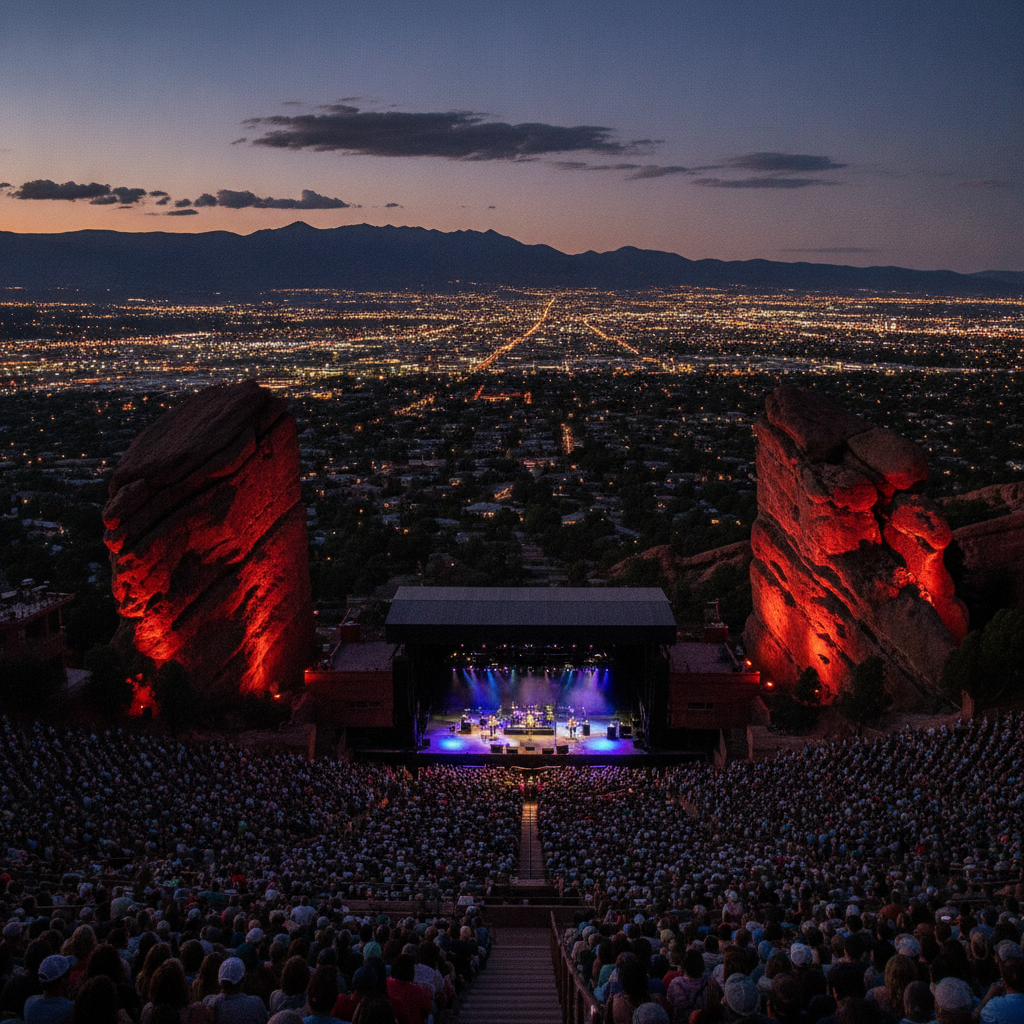
Denver: Red Rocks Amphitheatre (Greatest Outdoor Venue, U2 1983), Rocky Mountain National Park (Trail Ridge Road 3713m, elk rut, alpine tundra), Craft Beer Capital USA (Great American Beer Festival, 150+ breweries, Wynkoop 1988), Denver Art Museum (largest Native arts collection in world, Libeskind Hamilton Building, Clyfford Still Museum), and Practical Guide (DEN Airport rail link, LoDo, Colfax, Colorado ski resorts Breckenridge and Vail)
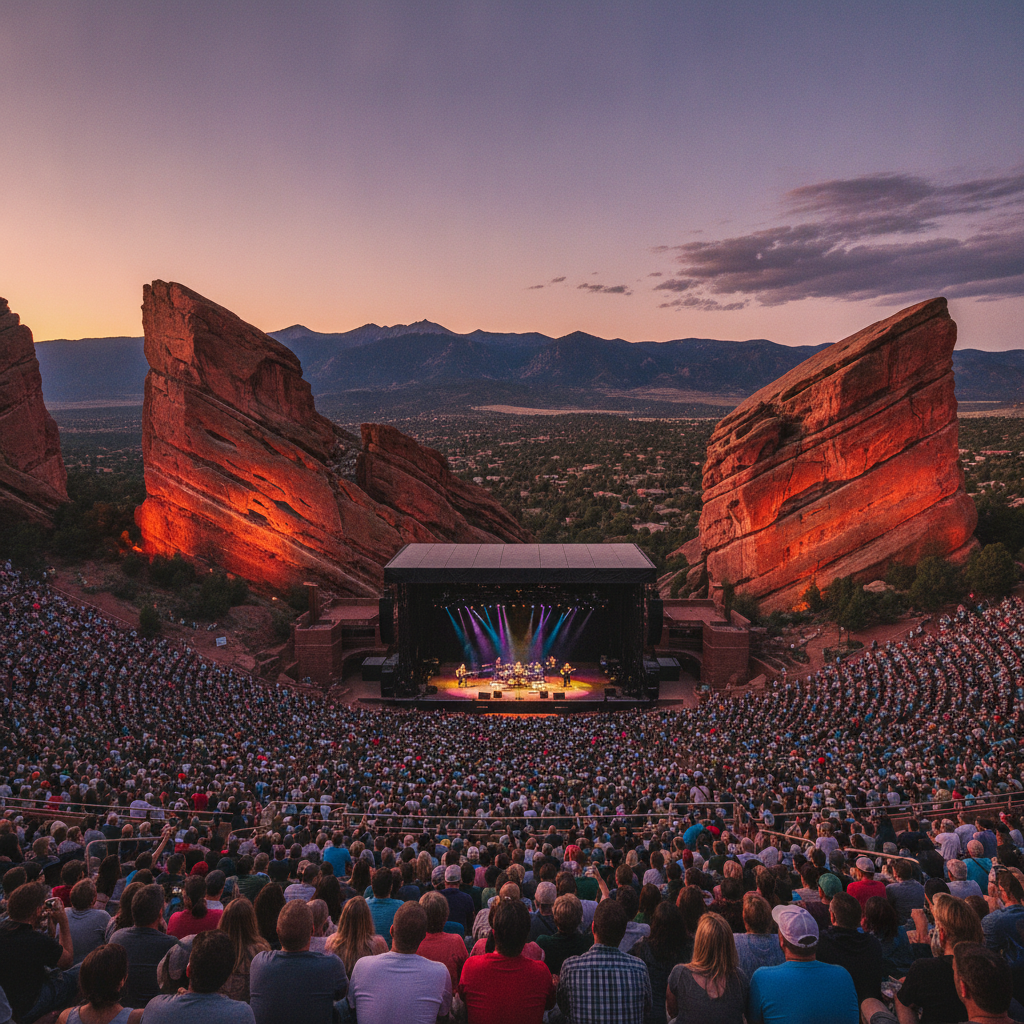
Denver: World Best Outdoor Venue, Mountain National Park Gateway and Craft Beer Capital
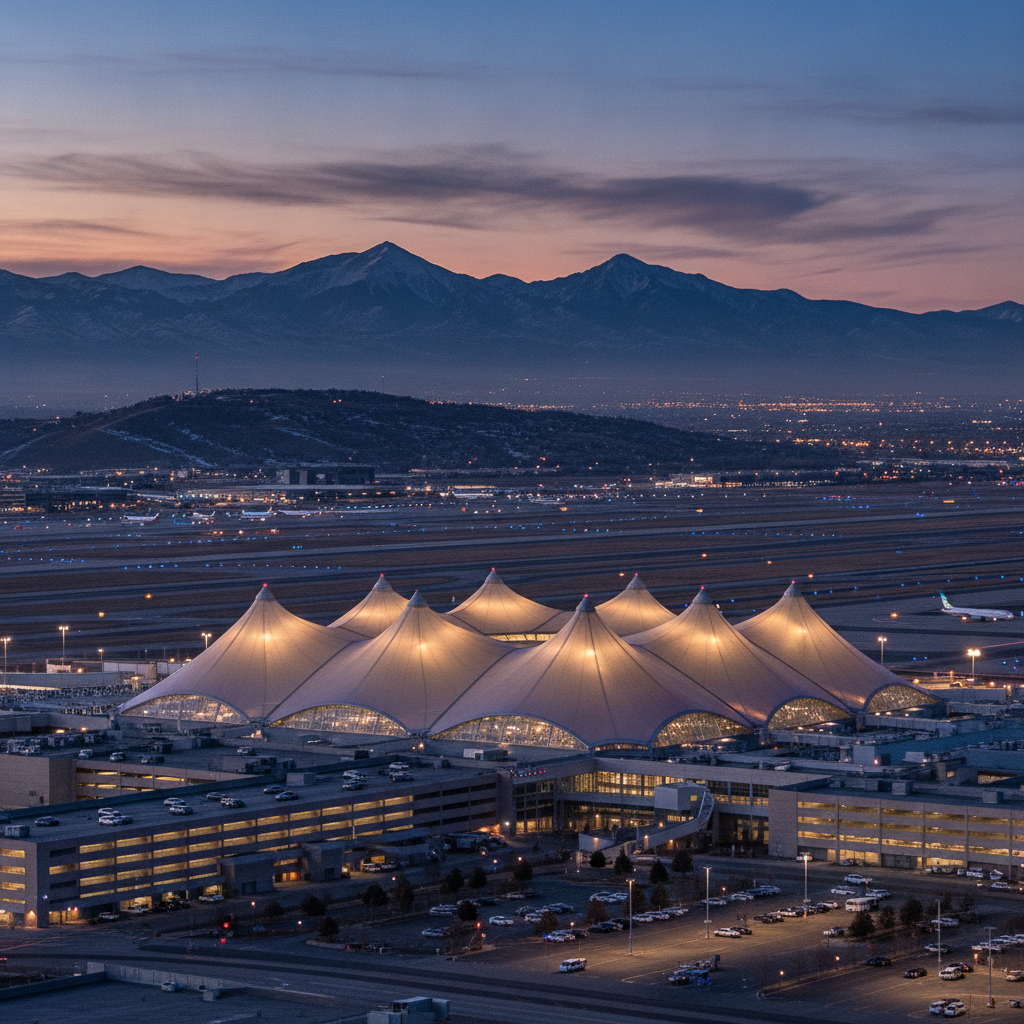
Denver: Coors Country, Red-Eyed Airport Mustang and the World First Cannabis Retail
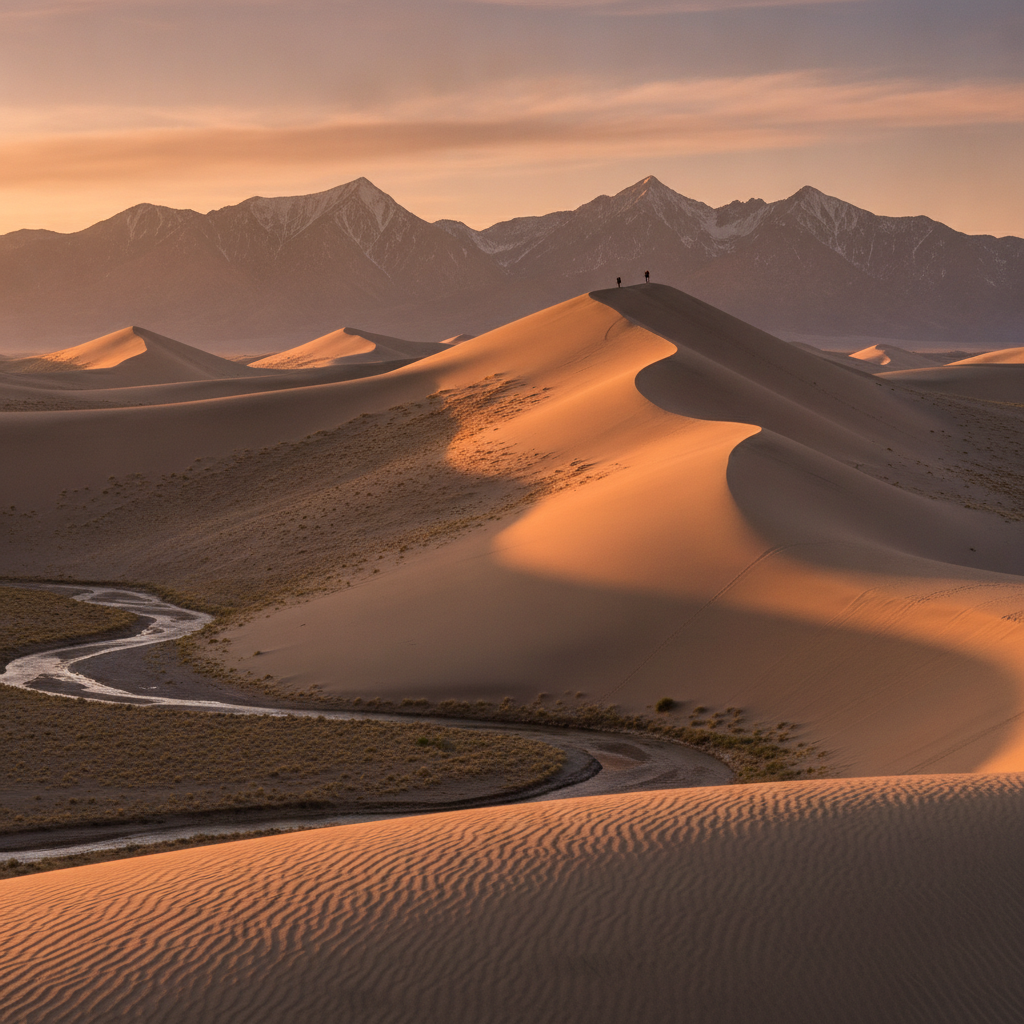
Denver: Colorado Cannabis Legalization (Amendment 64 2012, USD 1.7B tax revenue, dispensary culture), Denver Active Lifestyle (trail network, mountain biking, Jefferson County Open Space), Aspen and Telluride (luxury mountain towns, Aspen Institute, Telluride Film Festival), Great Sand Dunes National Park (tallest dunes in North America 230m), Colorado River Rafting (Moab, Black Canyon of the Gunnison, Glenwood Hot Springs), and Denver vs Other Western Cities Practical Guide
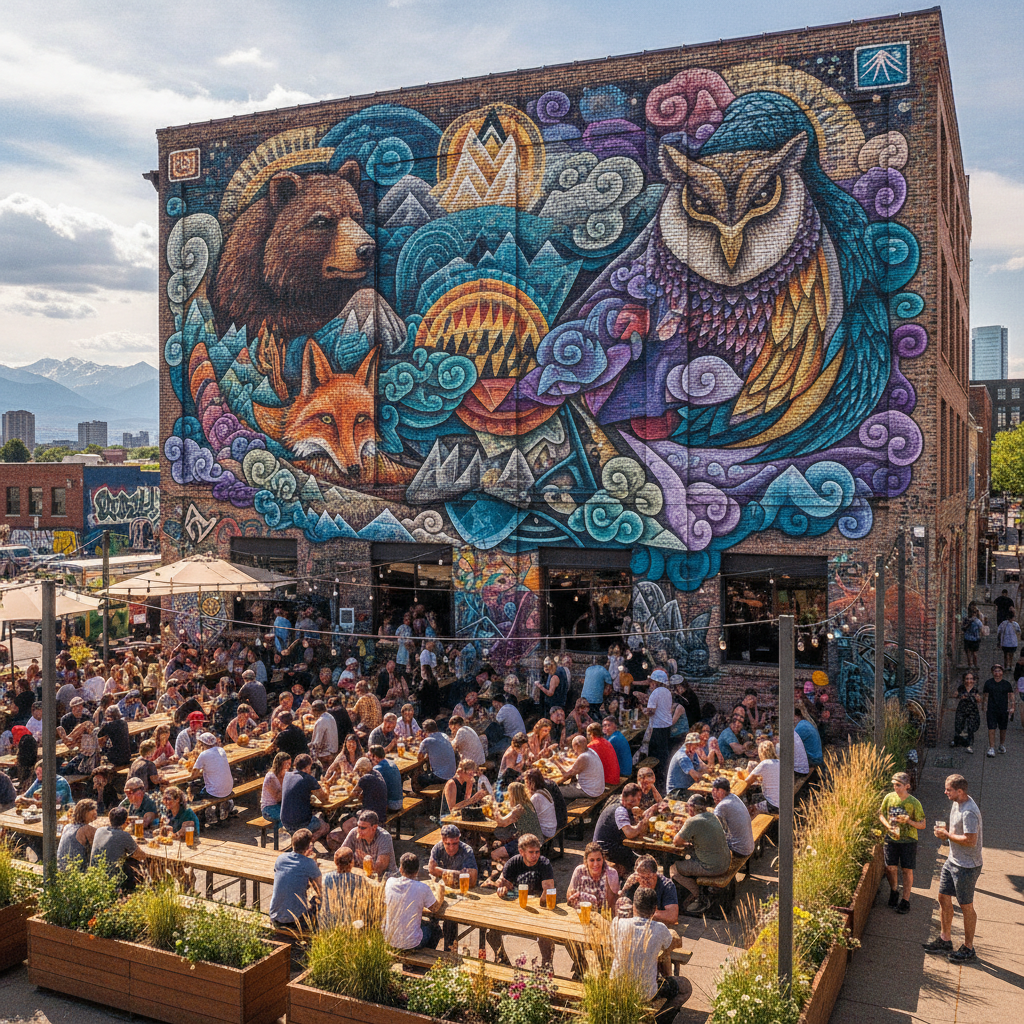
Denver: Mural District Breweries, Summit County Skiing and the Wickedest Street in America