Delphi Mythology: The Omphalos Earth Navel, Two Eagles of Zeus, Python Serpent Slain by Apollo, The Foundation Myth, Gaia the Original Oracle, and the Mythological Layers of the Sacred Landscape
The Delphi mythology route covers the omphalos stone as the navel of the world, the Zeus two eagles myth that located the center, the Python serpent that Apollo slew to claim the sanctuary, the Gaia earth goddess original oracle, the Dionysus winter sanctuary sharing the site, and the mythological layers beneath the Apollo sanctuary.
- 1
The Omphalos: The Navel of the World
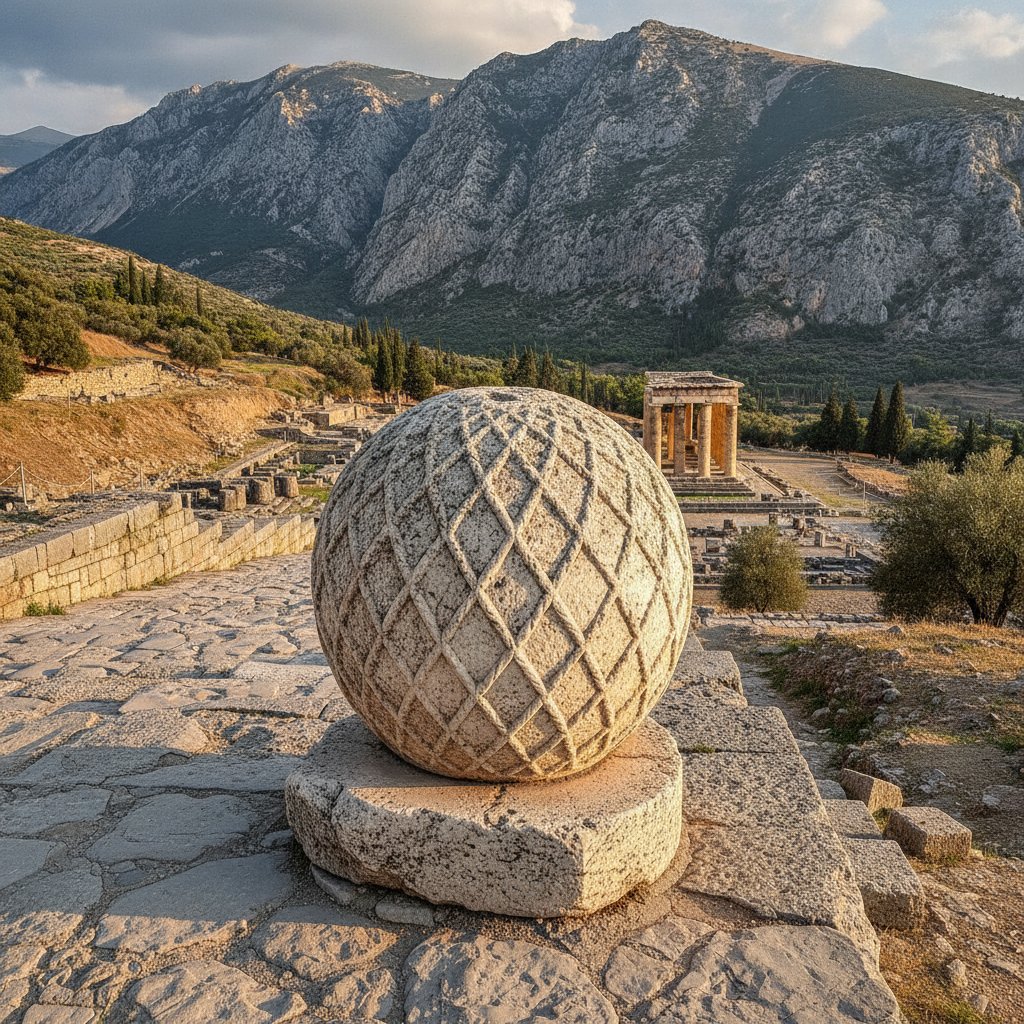
The omphalos stone, the carved conical stone decorated with a carved network pattern representing the bands of wool that wrapped the sacred stone, was the physical object at the center of the Delphi oracle sanctuary that marked the point the Greeks designated as the center of the known world. The myth of the two eagles that Zeus released simultaneously from the eastern and western ends of the world, who met over the spot where Delphi stands, provided the mythological foundation for the geographical centrality that the Delphi sanctuary claimed. The omphalos in the Delphi museum is the Roman period copy; the original was placed in the inner sanctuary of the temple.
- 2
The Two Eagles of Zeus: Locating the Center
The Zeus myth of the two eagles released simultaneously from the ends of the earth, meeting above Delphi, is the creation narrative of the sacred geography that made Delphi the most significant sanctuary in the Greek world. The myth encodes the ancient Greek understanding of the known world as a finite disc with identifiable edges from which Delphi could be equidistant, a cosmography that the Ionian philosophers were beginning to replace with the spherical earth model even as the oracle was at the height of its prestige in the 5th century BC.
- 3
The Python: Apollo Slays the Earth Serpent
The Python, the great serpent that the earth goddess Gaia placed to guard the prophetic spring at Delphi, was slain by Apollo in the foundational myth of the Delphi oracle, transferring the oracle from the chthonic earth deity Gaia to the solar sky deity Apollo in the mythological transition from the pre-Greek to the Greek religious order. The Pythian Games commemorated the death of the Python, the Pythia was named for it, and the rotting corpse of the Python provided the etymology of the place name Pytho that preceded the name Delphi.
- 4
Gaia: The Original Oracle at Delphi
The pre-Apollonian oracle at Delphi, attributed to the earth goddess Gaia and administered by the Titans Phoebe and Themis before Apollo claimed the sanctuary, represents the oldest layer of Greek religious practice at the site and the chthonic religion of the earth and the underworld that the Olympian religion partially displaced without entirely erasing. The Gaia oracle at Delphi, accessed through the prophetic vapors from the earth crack, was the original form of the divine speech that the Apollo oracle formalized and rationalized in the 8th and 7th century BC institutional organization.
- 5
Dionysus at Delphi: The Winter God
Dionysus, the god of wine and ecstatic ritual, shared the Delphi sanctuary with Apollo in the winter months when Apollo was traditionally absent on his journey to the land of the Hyperboreans. The Dionysian winter at Delphi, celebrated with the ecstatic rites of the Thyiades women on the Parnassus slopes, represents the most complete evidence for the coexistence of the Apollonian and the Dionysian principles in a single sacred landscape and the mythological context that Nietzsche drew upon for the philosophical opposition in The Birth of Tragedy.
- 6
The Foundation of the Oracle: The 7th Century Institutionalization
The formal institutionalization of the Delphi oracle in the 7th century BC, when the Amphictyonic League of Greek cities took control of the sanctuary, regularized the Pythia consultation procedure, established the schedule of oracle days, and created the administrative framework that made the Delphi oracle a stable pan-Hellenic institution rather than the local sanctuary that the mythological and archaeological evidence suggests it was in the 9th and 8th centuries BC. The Amphictyonic League control of Delphi and the Sacred Wars fought over the sanctuary in the 6th and 4th centuries BC are the political history behind the mythological narrative.
Walk this route with audio
Stories play automatically as you reach each stop — no tapping needed.
More in Delphi
Delphi Oracle History: The Pythia Famous Pronouncements, Croesus and Persia Warnings, Socrates Wisest of Men, Alexander the Invincible, Roman Period Looting, and Theodosius Closure in 390 AD
Delphi Modern History: The French School Excavation, Removal of the Kastri Village in 1890s, World Heritage Tourism Impact, Delphi Museum Expansion, and the Modern Village Above the Ancient Ruins
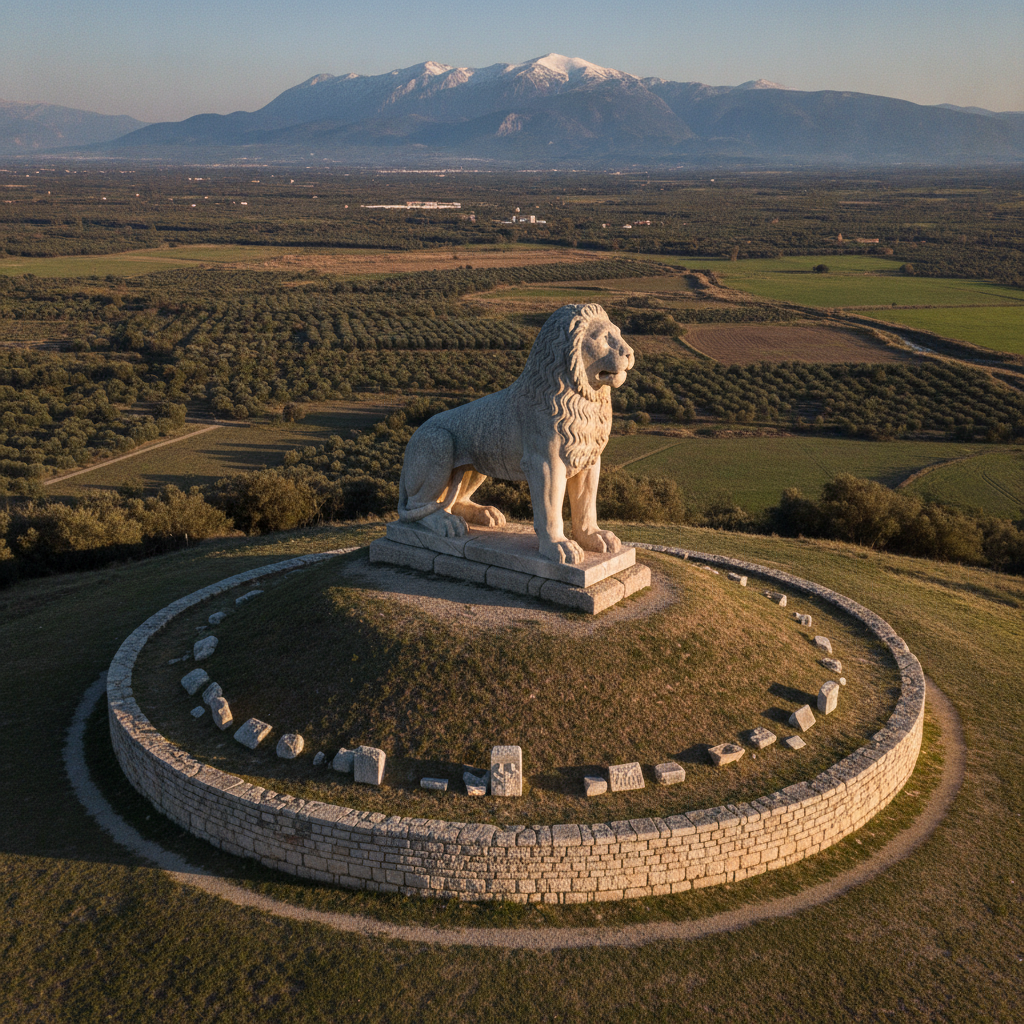
Delphi and Boeotia: Thebes Sacred Band, Chaeronea Battle Field, Orchomenos Mycenaean Treasury, Philip of Macedon Amphictyony Control, Epaminondas Theban Hegemony, and the Central Greece Historical Circuit
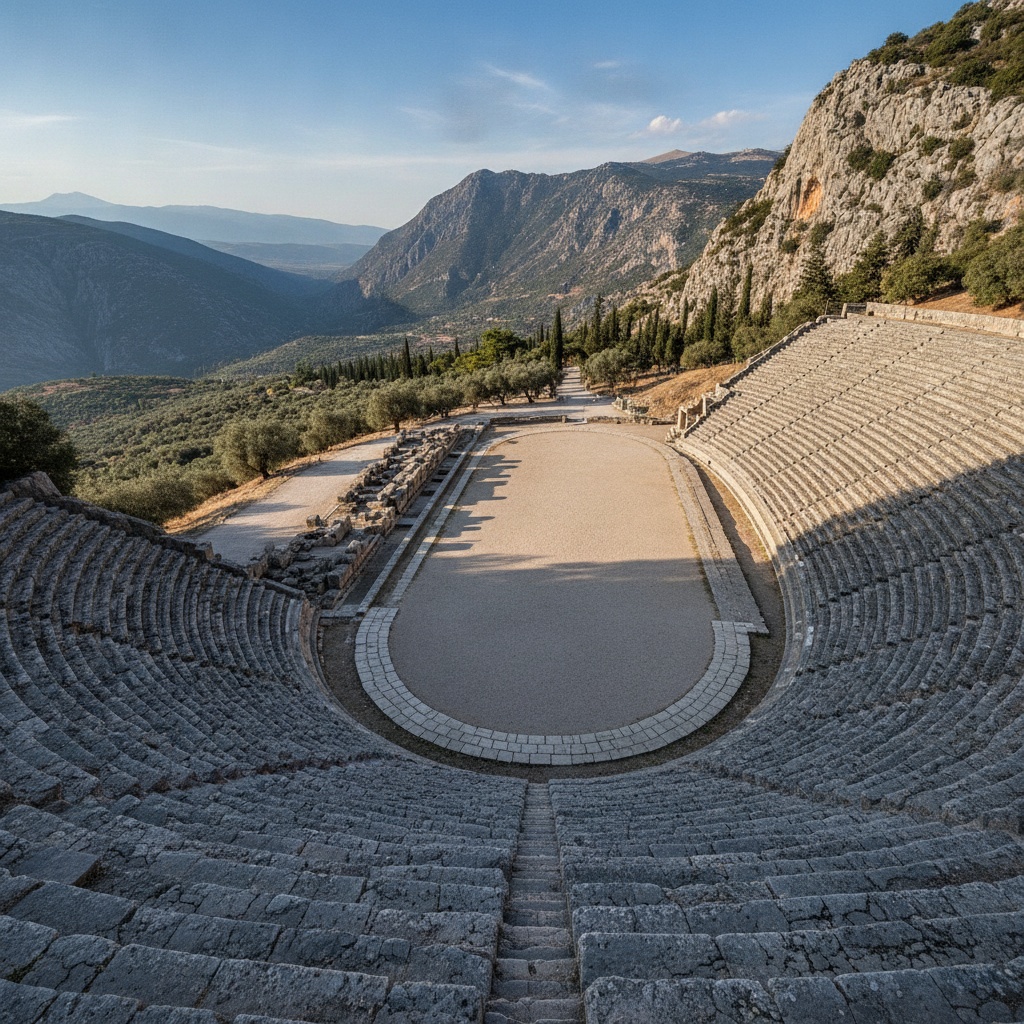
Delphi Sacred Way and Games: The Pythian Games Stadium, Treasury of the Athenians, Siphnian Treasury Frieze, Sacred Way Votive Offerings, the Ancient Athletic Tradition, and the Panhellenic Sanctuary Context
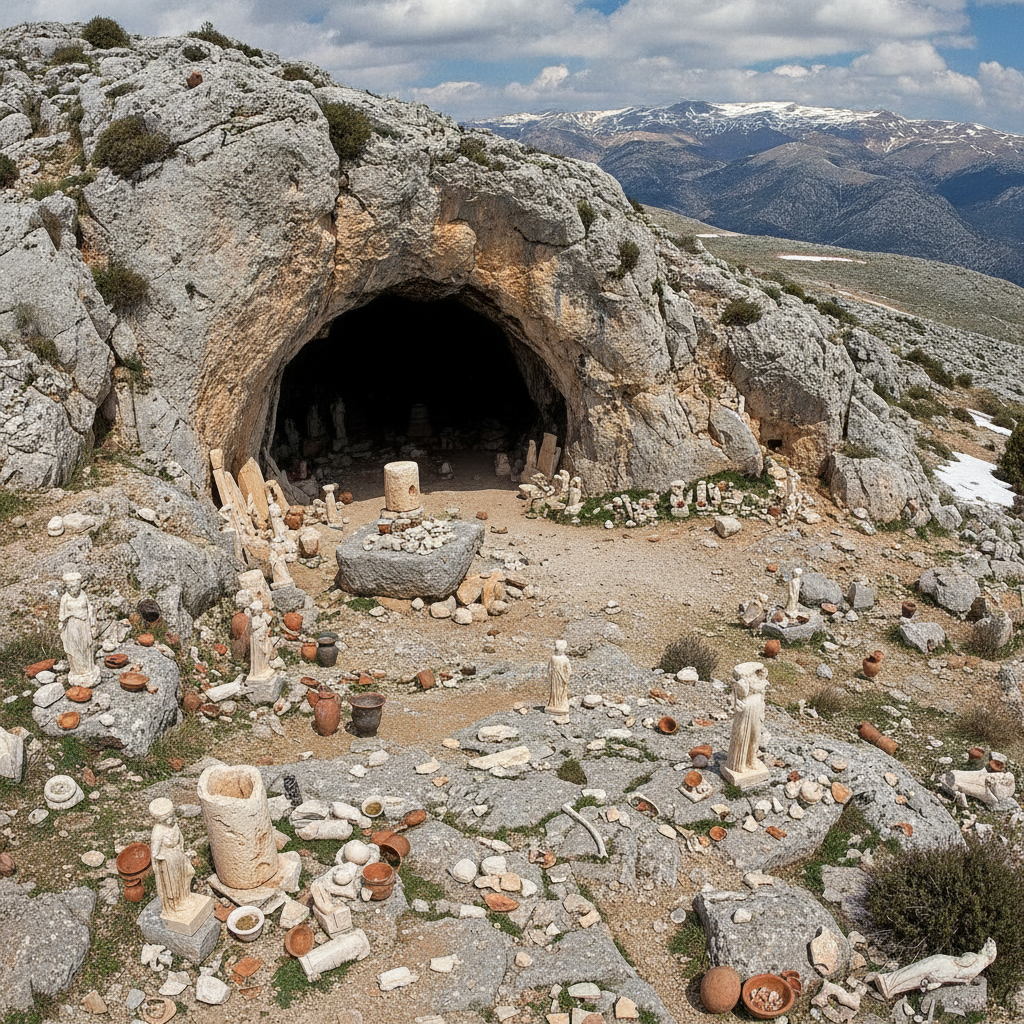
Delphi Outdoor and Food: Parnassus Hiking Trails, Corycian Cave of the Nymphs, Arachova Formaela Cheese and Trahana, Delphi Olive Oil PDO, Winter Skiing at Parnassus, and the Mountain Food Circuit