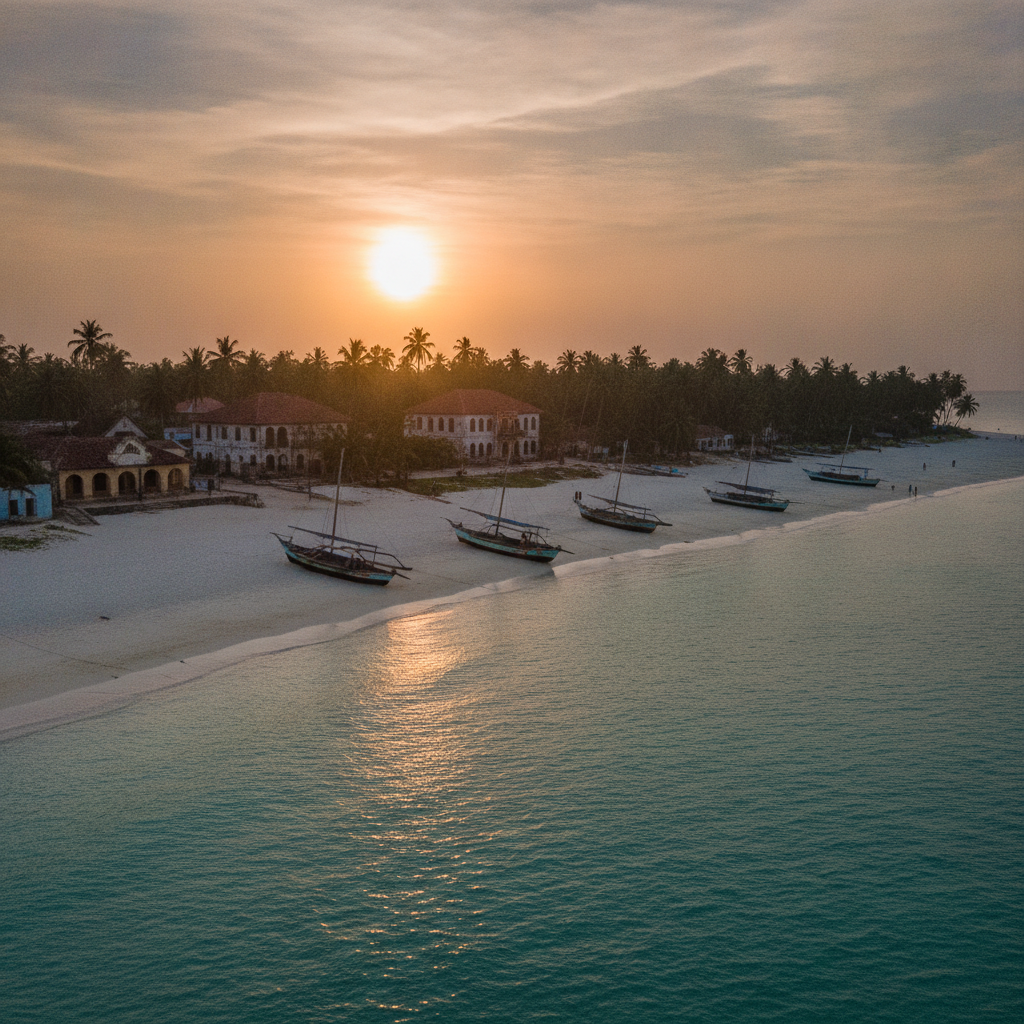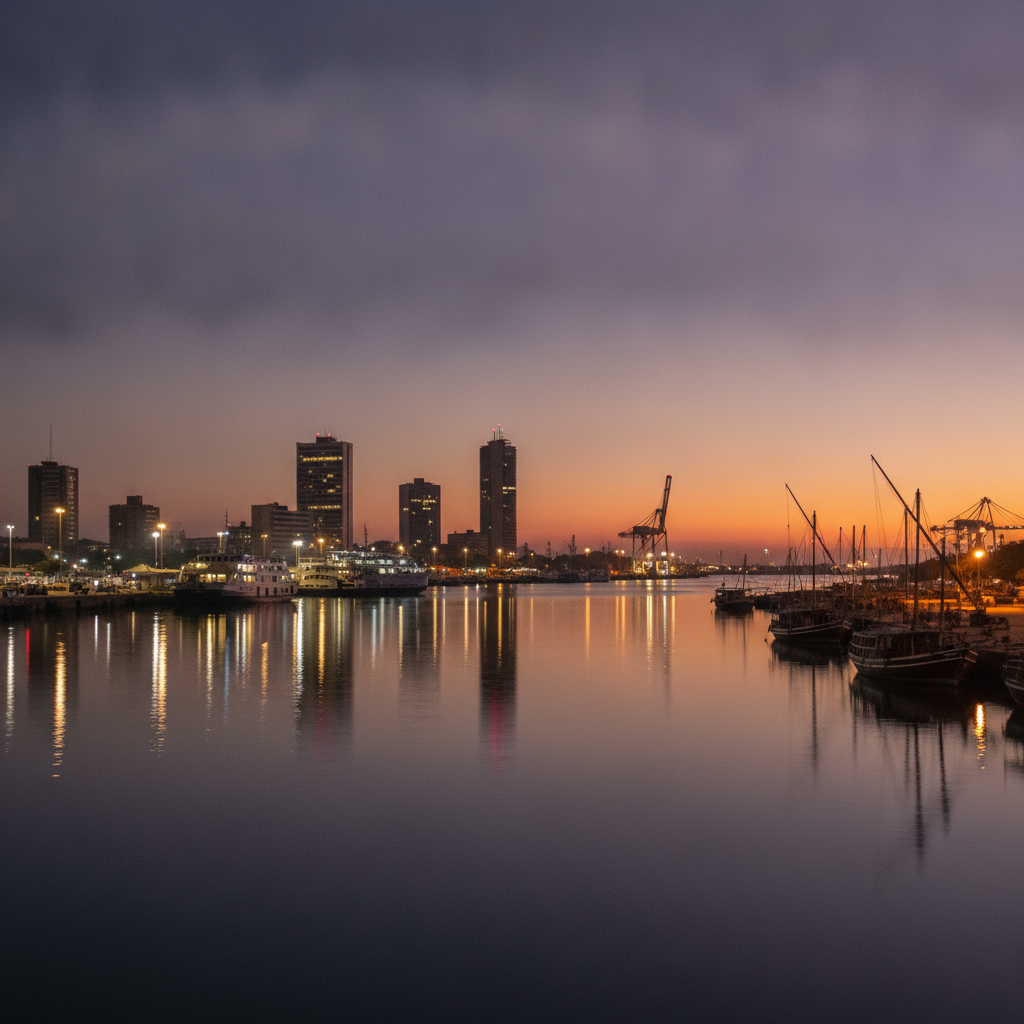
Dar es Salaam: House of Peace, Human Origins, Coco Beach, Nyerere, and the East Africa Gateway
Dar es Salaam as the primary gateway of East Africa: the House of Peace founded by the Sultan of Zanzibar; the National Museum and the Olduvai Gorge human origins story; Coco Beach and the city social life; Julius Nyerere and Tanzanian independence; Dar as transport hub for Zanzibar and the southern safari circuit; and the complete practical city reference.
- 1
Dar es Salaam - House of Peace on the Indian Ocean
Dar es Salaam (Arabic: Dar es Salaam means House of Peace): the largest city of Tanzania, the commercial capital of the country, and the primary port of East Africa, one of the fastest-growing cities in the world and the gateway to the Zanzibar archipelago, the Serengeti, and the southern Tanzania safari circuit. The city (Dar es Salaam: population approximately 7-8 million in the greater metropolitan area (2024): the fastest-growing city in Africa by some estimates: located on a natural harbor on the Indian Ocean coast of Tanzania at approximately 6 degrees 48 minutes south: the harbor (the Dar es Salaam harbor: one of the finest natural harbors on the East African coast: the primary port of Tanzania and one of the most important ports in East Africa (the port handles the imports and exports of Tanzania as well as the landlocked countries of eastern Africa (Uganda, Rwanda, Burundi, Malawi, Zambia, and the eastern DRC use Dar es Salaam as their primary ocean port))). The history (the founding (Dar es Salaam was founded in approximately 1862 by Majid bin Said, the Sultan of Zanzibar (the son of Sultan Seyyid Said who moved the Omani capital to Zanzibar in 1832): Majid intended Dar es Salaam to be a new capital city to rival Zanzibar: he began construction of palaces and a harbor: Majid died in 1870 before the city was fully established: his successor Sultan Barghash did not pursue the project and Dar es Salaam stagnated for over a decade). The German colonial period (the German East Africa Company began operations in Dar es Salaam in 1887: the Imperial German government took over directly in 1891 (German East Africa became a colony): Dar es Salaam became the capital of German East Africa: the Germans built the harbor infrastructure, the railway (the Central Line: the Dar es Salaam to Kigoma railway completed 1914: the primary German colonial infrastructure investment: the railway enabled access to the interior of the country), and the administrative buildings of the colonial capital (several German colonial-era buildings survive in the Kivukoni area of the city center)). The British period (the British captured German East Africa during World War One (the East Africa Campaign: a protracted guerrilla campaign by the German commander Paul von Lettow-Vorbeck who kept a small force fighting in the bush until November 1918): Dar es Salaam became the capital of British Tanganyika (1919-1961): independence (December 9, 1961: Tanganyika independence under Julius Nyerere).
- 2
The National Museum and the Olduvai Gorge Connection - Tanzania Human Origins
The Tanzania National Museum in Dar es Salaam: the repository of Tanzania extraordinary paleontological heritage and the gateway to understanding the Olduvai Gorge discoveries that placed Tanzania at the center of the human evolution story. The National Museum (the National Museum of Tanzania: located on Shaaban Robert Street in the city center: the primary natural history and cultural history museum of Tanzania: the museum houses significant paleontological collections from the Olduvai Gorge and Lake Turkana discoveries). Olduvai Gorge (the Olduvai Gorge: a 48 km long gorge in the eastern Serengeti Plain in northern Tanzania near the Ngorongoro Crater: the site of some of the most important hominin fossil discoveries in the world: the excavations (Louis Leakey (the British-Kenyan paleoanthropologist) and Mary Leakey (his wife and the primary excavator at Olduvai): the Leakeys began excavating at Olduvai in 1931 and continued for decades: the major discoveries (Zinj: Australopithecus boisei (discovered by Mary Leakey in 1959: a 1.75-million-year-old robust australopithecine with massive molars: the first major Olduvai discovery to attract global attention): Homo habilis (the tool-maker: Leakey team discovered the first specimens of Homo habilis (the earliest member of the genus Homo) at Olduvai in 1960: approximately 1.75-2.3 million years old): the Olduvai tool culture (the Oldowan industry: the oldest known stone tool culture: the simple flaked pebble tools of Homo habilis found at Olduvai: dated to approximately 2.5-1.5 million years ago): the Acheulean industry (the subsequent more sophisticated hand-axe culture (Homo erectus): the Acheulean tools appear at Olduvai at approximately 1.5 million years ago)). The Laetoli footprints (the Laetoli site: 45 km south of Olduvai Gorge: Mary Leakey discovered the Laetoli footprints in 1978: two (possibly three) individuals of Australopithecus afarensis walking upright across volcanic ash approximately 3.66 million years ago: the preserved footprints are the oldest direct evidence of bipedal (upright) walking in the hominin lineage: one of the most important archaeological discoveries of the 20th century).
- 3
Coco Beach and Dar es Salaam Social Life - The City by the Indian Ocean
Coco Beach and the Dar es Salaam social scene: the primary beach gathering point of the city, the Msasani Peninsula lifestyle, the street food culture, and what distinguishes Dar es Salaam as a distinctive African urban experience. Coco Beach (Coco Beach (Mjimwema): the most popular public beach in Dar es Salaam on the Msasani Peninsula (5 km north of the city center): a long sandy beach on the Indian Ocean (the Coco Beach is accessible by daladala (minibus) or taxi from the city center): the primary social gathering point of Dar es Salaam on weekend afternoons and evenings: the beach is packed on Sunday afternoons with Dar es Salaam families, young people, and football players (the beach has improvised football pitches): the beach food vendors (the grilled mishkaki (skewered meat), the chips mayai (a Tanzanian street food of deep-fried potato chips folded into a fried egg omelette: a uniquely Tanzanian invention), the sugar cane juice, the cold soft drinks): the beach fishing (the small-scale fishermen launch their boats from Coco Beach): the atmosphere (Coco Beach in the late afternoon is one of the most authentic and unfiltered urban African social experiences available to a visitor to East Africa: a few hundred meters of Indian Ocean beach serving as the primary public park of a city of 7 million people). The Msasani Peninsula (the Msasani Peninsula: the primary expatriate and upper-middle-class residential and entertainment district of Dar es Salaam: the Sea Cliff area (the bars and restaurants on the cliff above the Msasani beach: the primary nightlife area for the Dar es Salaam expatriate and Tanzanian middle-class community): the Slipway (the Msasani Slipway: the marina and shopping complex on the Msasani Bay: restaurants, cafes, craft shops, a Sunday market): the Kariakoo Market (the primary wholesale and retail market of Dar es Salaam: located in the Kariakoo neighborhood: the largest and busiest market in Tanzania (and one of the largest in East Africa): the market sells everything from fresh produce (the best fresh food market in Dar es Salaam) to fabrics, electronics, second-hand clothes, and household goods)).
- 4
Julius Nyerere and the Tanganyika Independence Movement - How Tanzania Was Born
The independence of Tanganyika and the remarkable career of Julius Nyerere: the most educated and morally serious of the founding generation of African leaders, whose Tanzania experiment in African Socialism failed economically but succeeded in building a genuinely peaceful and unified nation. The independence (Tanganyika independence (December 9, 1961): the British East African territory of Tanganyika (formerly German East Africa) became independent with Julius Nyerere as Prime Minister (and from 1962 as President): Tanganyika was among the first sub-Saharan African countries to gain independence and set a precedent for peaceful transition in East Africa). The TANU years (TANU (Tanganyika African National Union): the independence movement founded by Nyerere in 1954: TANU operated within the British colonial system and won elections in 1958-1960 convincingly: the British governor Richard Turnbull worked cooperatively with Nyerere on the transfer of power: Tanganyika's independence was entirely peaceful (no violence, no armed struggle, no emergency measures)). The Arusha Declaration (February 5, 1967: the founding document of Tanzanian socialism: the Ujamaa ideology (see the Nyerere entry in Zanzibar routes): the nationalization of all major means of production (banks, major industries, import-export companies): the education and health campaigns (Nyerere massively expanded primary education and basic healthcare in Tanzania: adult literacy rates rose from approximately 15% at independence to over 85% by 1985: Tanzania had the highest adult literacy rate in sub-Saharan Africa in the early 1980s despite being one of the poorest countries in the region): the economic failure (the villagization (Operation Vijiji): food production collapse: dependence on foreign aid: by the early 1980s Tanzania was economically crippled and Nyerere accepted IMF structural adjustment conditions in exchange for emergency loans): Nyerere resigned in 1985 (voluntarily: one of the very few African presidents to resign voluntarily while in good health and with his political position secure): the legacy (Nyerere created the most ethnically harmonious and politically stable large country in sub-Saharan Africa: no coup, no civil war, no ethnic massacre in over 60 years of independence: Tanzania remains one of the most genuinely peaceful countries in Africa).
- 5
Dar es Salaam as East Africa Gateway - Transport Hub, Ferry to Zanzibar, and Southern Circuit
Dar es Salaam as the primary transport and logistics hub of East Africa: the port, the ferry connections to Zanzibar, the railway to the interior, and Dar as the base for the southern Tanzania safari circuit. The port (the Dar es Salaam Port: the primary port of Tanzania and one of the most important ports in East Africa: the port handles approximately 14-15 million tons of cargo annually: it serves as the primary ocean gateway for the landlocked countries of eastern Africa (Uganda, Rwanda, Burundi, Malawi, Zambia, eastern DRC): the TAZARA Railway (the Tanzania-Zambia Railway (TAZARA): the 1,860 km railway connecting Dar es Salaam to Kapiri Mposhi in Zambia: built by China (1970-1975) as a Cold War geopolitical project (China offered to build the railway when Western donors refused, as it would reduce Zambia dependence on the apartheid-era Rhodesia and South Africa rail network): the railway was the largest single Chinese aid project in African history at the time: still operational but significantly below designed capacity)). The Zanzibar ferry (the Dar es Salaam to Zanzibar ferry service: the primary connection between the mainland and the Zanzibar islands: the high-speed catamaran services (Azam Marine, Kilimanjaro Fast Ferries, Sea Bus): multiple daily departures from the Dar es Salaam ferry terminal (Kivukoni): journey time approximately 90 minutes to 2 hours: the budget option for Zanzibar visitors arriving by air to Dar es Salaam Julius Nyerere International Airport). The southern Tanzania circuit (the Dar es Salaam base for southern Tanzania safaris: Selous Game Reserve (renamed Nyerere National Park in 2019: the largest national park in Tanzania (50,000 square km): one of the largest protected areas in Africa: UNESCO World Heritage Site: the Rufiji River (the primary river of the Selous): the Selous has the largest population of African wild dogs (Lycaon pictus) in East Africa and one of the largest hippo populations in Africa): Ruaha National Park (the second largest national park in Tanzania: approximately 20,226 square km: known for its large elephant population (approximately 12,000-15,000 elephants): excellent lion, leopard, cheetah, and wild dog sightings: significantly less visited than the northern circuit (Serengeti, Ngorongoro, Kilimanjaro)).
- 6
Dar es Salaam Complete Reference - Getting Around, Where to Stay, and the City Overview
The Dar es Salaam complete practical reference: accommodation, transport within the city (including the BRT bus system), the best restaurants, safety, and how to use Dar as a transit hub for Tanzania and Zanzibar. Accommodation (the upper end (the Hyatt Regency Dar es Salaam (the Kilimanjaro Hotel): the primary 5-star hotel in the city: on the waterfront at Kivukoni: an Arusha-era hotel (built 1965) that has been fully modernized: the best city views from the upper floors: the Mövenpick Hotel Dar es Salaam: Sea Cliff Hotel (Msasani Peninsula: 5-star boutique on the cliff above the beach)): mid-range (the Southern Sun Dar es Salaam: the Protea Hotel by Marriott Courtyard): budget (the Econolodge: the Holiday Inn Express: guesthouses in the Kariakoo area)). Transport (within Dar es Salaam (the daladala (the Toyota minibus: the primary mass transit vehicle of Dar es Salaam: cheap, crowded, chaotic but the primary way that most Dar residents travel): the BRT (Bus Rapid Transit): the Dar es Salaam BRT system (inaugurated in phases from 2016): a dedicated bus lane system on the primary arterial roads: faster and less chaotic than the daladala: the Uber and Bolt (app-based ride-hailing: available in Dar es Salaam: the recommended option for visitors): the Dar es Salaam traffic (notorious: the city road network has not kept pace with population growth: the rush hours (7-9am and 4:30-7pm) can bring the city to a virtual standstill: allow significant extra time for airport transfers and ferry connections)). Safety (Dar es Salaam safety for visitors (generally safe in the primary tourist and business areas (Msasani Peninsula, the waterfront, the Kariakoo market during daylight): the primary risks are petty crime (bag snatching, pickpocketing) and vehicle crime: avoid walking in the city center after dark: use Uber or Bolt: the Coco Beach is safe during the day but avoid late evenings): the 2023 Dar es Salaam floods (Dar es Salaam has been increasingly affected by flash flooding during heavy rains due to inadequate drainage infrastructure: if visiting during the rainy season (April-May or November) check local flood warnings). The city overview (Dar es Salaam is not a destination in itself for most visitors but a transit hub: the visitor who spends 1-2 nights in Dar between flights and the Zanzibar ferry should: walk the waterfront (Kivukoni): visit the National Museum (half a day): eat at the Sea Cliff area restaurants in the evening: take the morning ferry to Zanzibar: this is the optimal Dar es Salaam transit experience).
Walk this route with audio
Stories play automatically as you reach each stop — no tapping needed.
More in dar-es-salaam
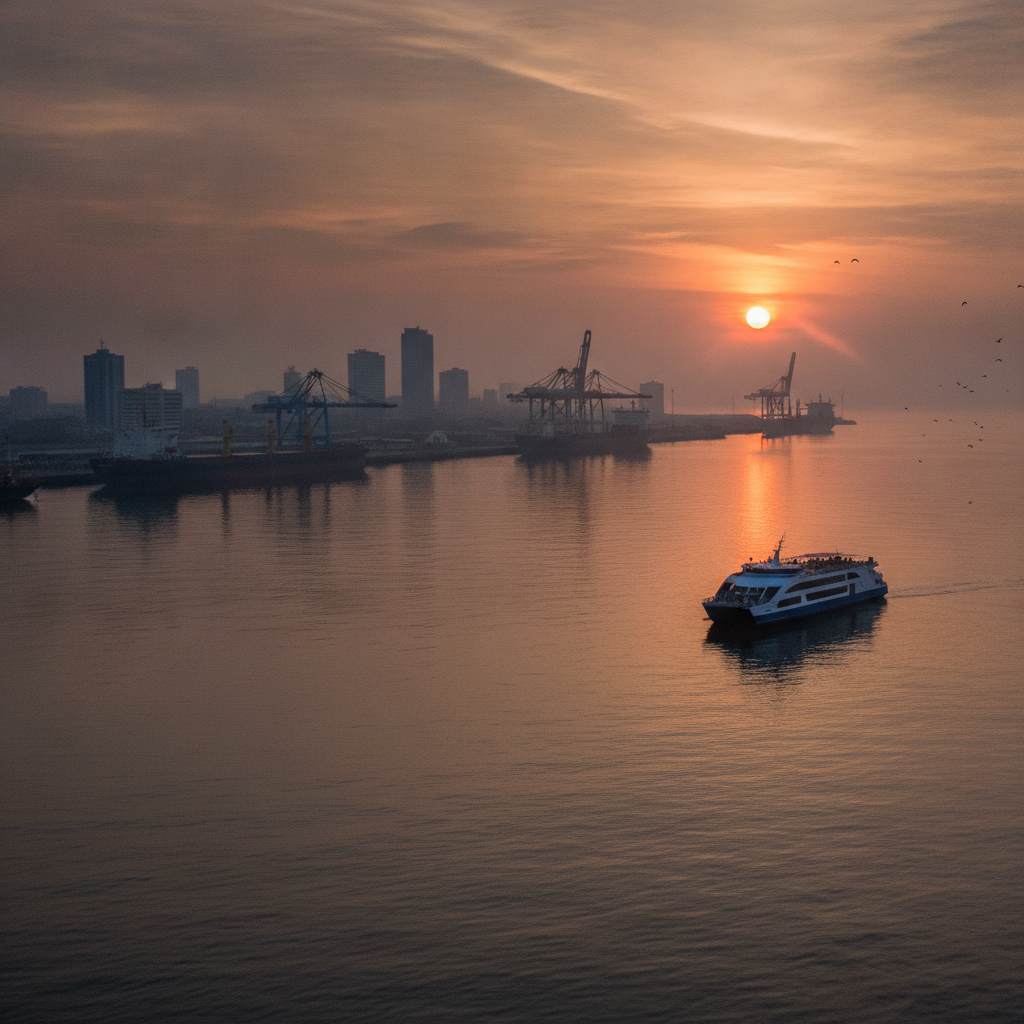
Dar es Salaam Extended: Rufiji Delta, Tanzania Economy, Harbor Life, Education Legacy, WWI Campaign, and Complete Reference
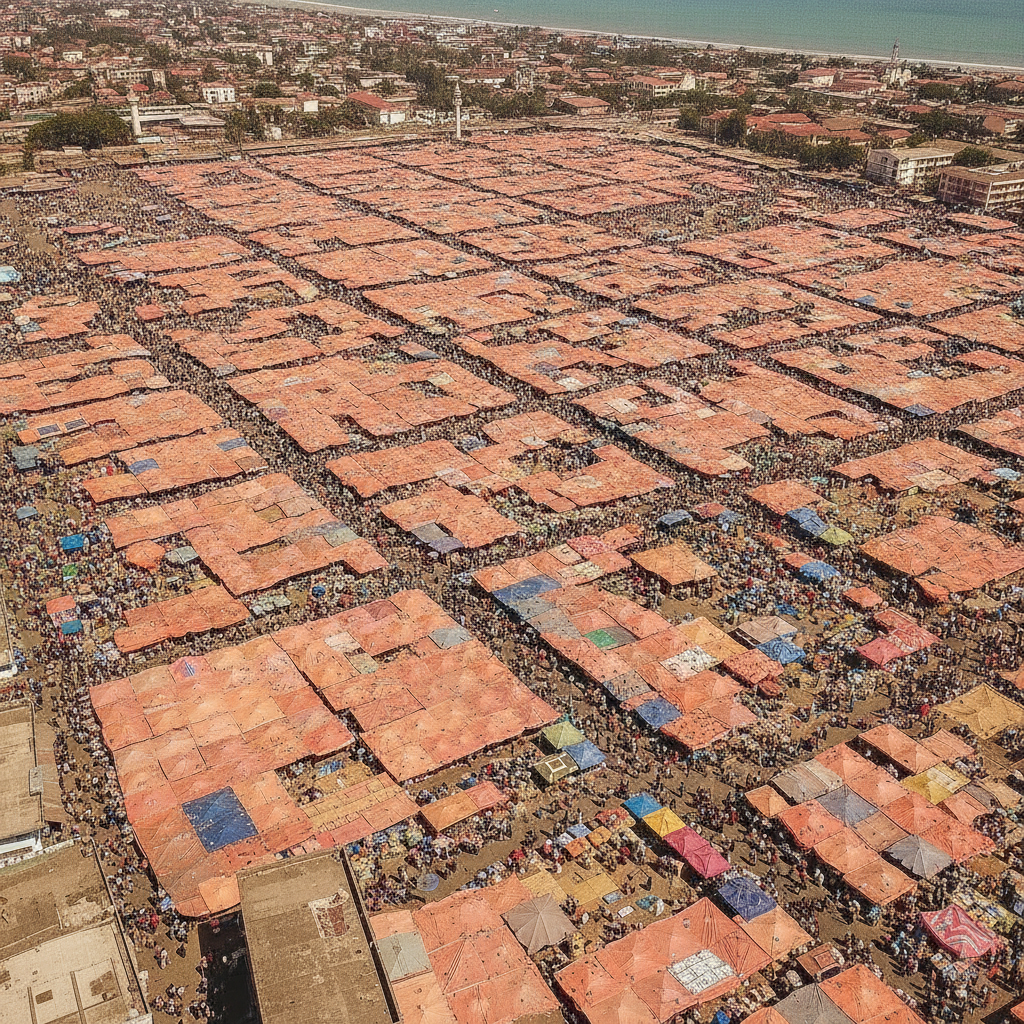
Dar es Salaam Complete: German East Africa, Street Food, Bagamoyo, Mafia Island, Makonde Art, and Full Reference
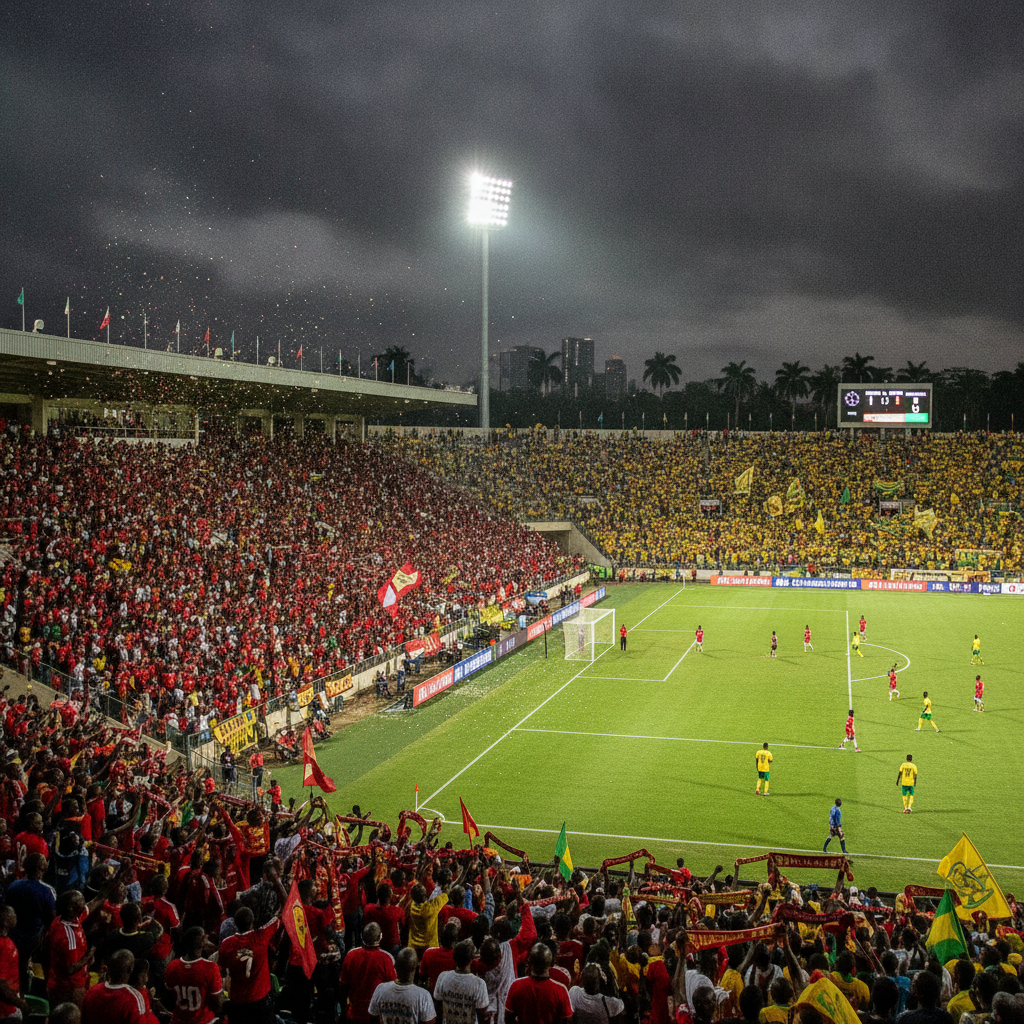
Bongo Flava, Simba vs Yanga, and the Soul of Dar es Salaam
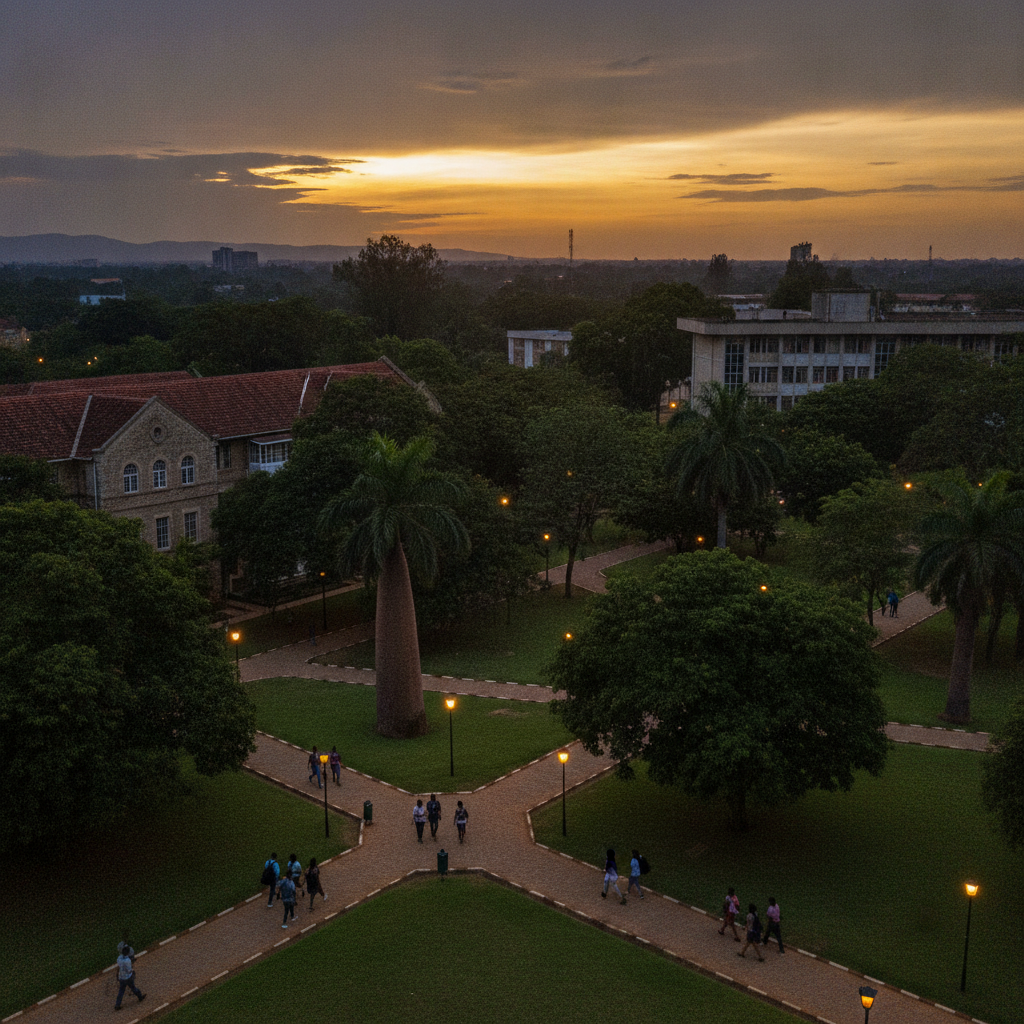
Dar es Salaam Complete: ANC Exile Capital, Airport Hub, Arts Scene, Urban Growth, Nightlife, and Six-Route Summary