Bongo Flava, Simba vs Yanga, and the Soul of Dar es Salaam
Dar es Salaam popular culture: the Bongo Flava music that dominates East Africa; the Simba SC versus Young Africans football rivalry; the National Stadium; and the city creative energy.
- 1
Bongo Flava - The Tanzanian Hip-Hop That Conquered East Africa
Bongo Flava (Kiswahili slang: bongo means brain/Dar es Salaam in slang, flava means flavor): the Tanzanian popular music genre that emerged in the 1990s and became the dominant popular music of East Africa. The name (bongo: the slang term for Dar es Salaam used by the city youth (derived from ubongo meaning brain: bongo implies street smarts and survival in the tough urban environment of Dar es Salaam): flava: borrowed from African American hip-hop slang): the origins (Bongo Flava emerged in the early 1990s among the youth of Dar es Salaam: the primary influences (American hip-hop and R and B: Tupac Shakur and the East Coast West Coast rap wars of the 1990s were enormously influential on the Dar es Salaam youth): the local adaptation (the Dar es Salaam artists adopted the hip-hop beat structures but sang in Swahili and incorporated local rhythms (taarab, Congolese rumba, benga)): the pioneers (Professor Jay (Joseph Haule: the first major Bongo Flava star: his album Machozi ya Jana (Yesterday Tears) (2000) established him as the most popular artist in Tanzania): Mr. II (Simon Mwamburi): Juma Nature (Juma Kasim: the Bongo Flava artist who mixed Swahili hip-hop with Islamic devotional themes)). The contemporary scene (Diamond Platnumz (Naseeb Abdul Juma Issack: born 1989 in Tandale, Dar es Salaam: the most internationally successful Bongo Flava artist: his music videos regularly accumulate tens of millions of YouTube views: Diamond is the most-streamed East African artist on international platforms: his record label WCB Wasafi Records is the most successful Tanzanian music label: Diamond has collaborated with major international artists (Davido, Tiwa Savage, Ne-Yo, Rick Ross)): Harmonize: Ali Kiba: Nandy (the primary female Bongo Flava artist): the genre has absorbed influences from Nigerian Afrobeats (Wizkid, Burna Boy) in the 2010s and has evolved into a more Afropop style while maintaining its Swahili language identity).
- 2
Simba SC vs Young Africans - The Greatest Football Rivalry in East Africa
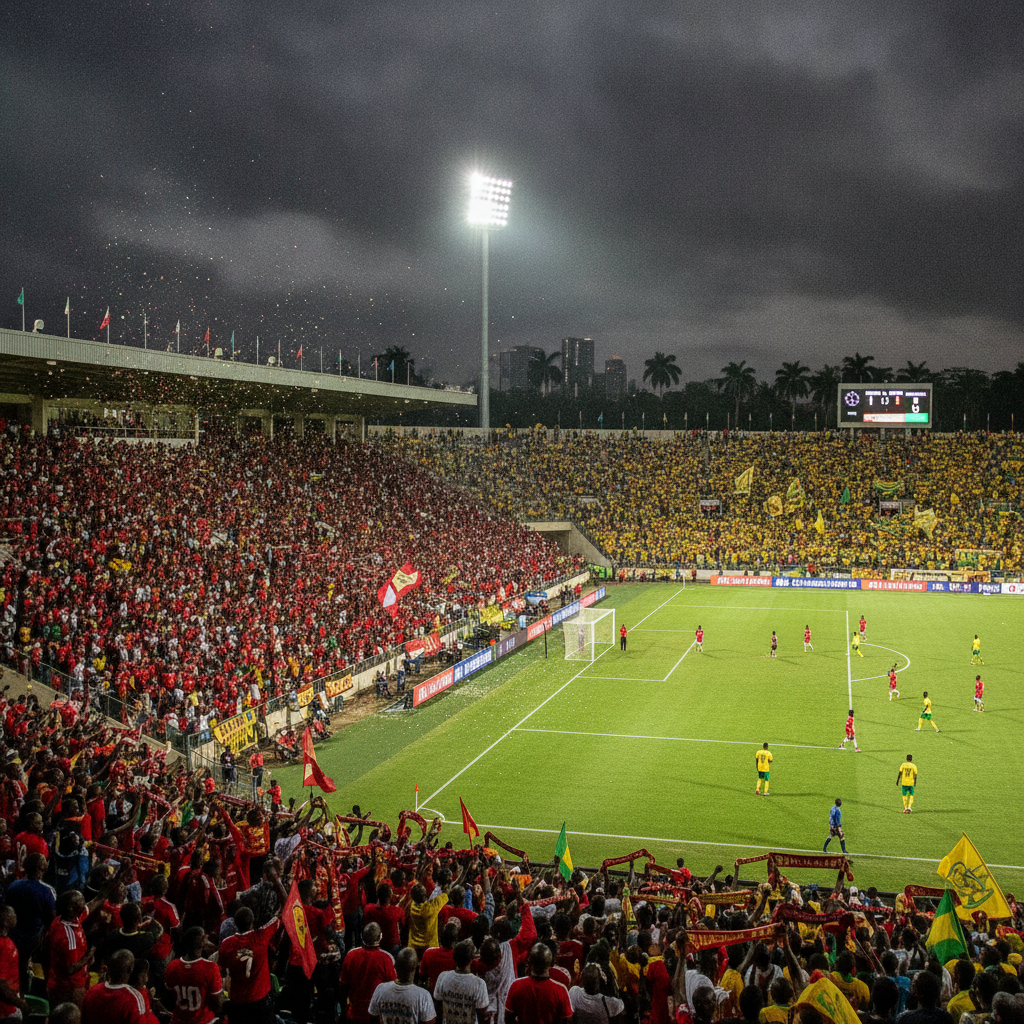
Simba SC versus Young Africans (Yanga SC): the oldest and most passionate football rivalry in East Africa, the primary sporting event of Dar es Salaam, and the game that divides the city into two tribes. The clubs (Simba Sports Club (the Lions): founded 1936: the most successful Tanzanian club: 25+ Tanzania Premier League titles: their colors are red and white: the primary supporter base is in the working-class neighborhoods of Dar es Salaam (Temeke, Ilala, Kinondoni): the club is named after the Swahili word for lion: Young Africans Sports Club (Yanga SC: Young Africans: the Green Machine): founded 1935 (slightly older than Simba): the second most successful Tanzanian club: 28+ Tanzania Premier League titles: their colors are yellow and green: also significant in the African continent (the only Tanzanian team to reach the final of the CAF Champions League (2007, where they lost to Etoile du Sahel of Tunisia)). The rivalry (the Dar es Salaam Derby (the Simba-Yanga match): the most attended football match in East Africa: the National Stadium (capacity approximately 60,000) is filled for the Derby: the atmosphere (the roar when the stadium fills with the contrasting red and yellow sections: the pre-match rituals (the songs, the drums, the flags): the security (the match requires heavy police and army deployment due to the passionate rivalry): the political dimension (the rivalry has had overtones of class and ethnic politics at different periods in Tanzanian history: Yanga has been associated with the Tanzanian mainland African community and with the independence movement (the name Young Africans reflects the pan-African nationalism of the founding period): Simba has been associated with the Dar es Salaam Indian and Arab business community historically)). The African competition (both clubs compete in the CAF Champions League (the primary African club football competition): Simba SC has been one of the most competitive East African teams in African competition in recent years reaching the CAF Champions League group stage multiple times from 2019 onward).
- 3
The National Stadium and Tanzania Sport
The Benjamin Mkapa National Stadium (the National Stadium of Tanzania): completed in 2007 (funded by China as a gift to Tanzania): capacity approximately 60,000: located in the Uhuru (Freedom) district of Dar es Salaam: the primary football and athletics venue of Tanzania: named after Benjamin William Mkapa (the third President of Tanzania (1995-2005): the president who led Tanzania through the transition to a market economy after the failed Ujamaa experiment). Tanzania sport (the National Stadium hosts Tanzania Taifa Stars (the Tanzania national football team): the team has not yet qualified for a FIFA World Cup or the Africa Cup of Nations final tournament (as of 2024): Tanzania cricket (Tanzania is an associate member of the International Cricket Council (ICC): cricket was introduced by the British colonial government and remains popular among the Tanzanian Asian community): Tanzania marathon running (Tanzania produces competitive marathon runners (though less dominant than Kenya and Ethiopia): Juma Ikangaa (the Tanzanian marathon runner who set the world marathon record in 1989 (2:08:01) and won the Tokyo, New York, and Melbourne marathons)). The sporting culture (sport in Dar es Salaam (football is the dominant sport by participation and spectatorship: the beach football tradition (Coco Beach and the other Dar es Salaam beaches host informal football matches every evening and on weekends): the traditional sport of bao (the East African strategy board game: the most complex version of the mancala family of board games: widely played in Dar es Salaam and throughout the Swahili coast).
- 4
The Tanzanian Indian Community - Merchants, Temples, and the Dar es Salaam Mosaic
The Tanzanian Indian community: the 3-generational story of the Indian merchants, artisans, and professionals who came to East Africa via Zanzibar and the Uganda Railway and built the commercial infrastructure of modern Tanzania. The community (the Tanzanian Asian community: approximately 80,000-100,000 people (approximately 0.2% of Tanzania population but a disproportionately large share of the formal economy): primarily Gujarati Hindu and Ismaili Muslim (the two primary sub-communities): the Khoja Ismailis (the Shia Ismaili Muslims of Gujarati origin who follow the Aga Khan: the most commercially successful sub-community of the Tanzanian Indian community: the Aga Khan Development Network (AKDN) has significant investments in Tanzania (hospitals, schools, media (the Nation Media Group which owns the major newspapers and TV channels in Tanzania and Kenya)): the Bohra Ismailis (another Shia Muslim Gujarati community): the Hindu community (primarily Brahmin and Patel (Patidar) Gujarati families). The commercial role (the Tanzanian Indian community owns a disproportionate share of Tanzania formal sector business (manufacturing, import-export, large retail): the mixed economic legacy (the Tanzanian Indian business community was partially nationalized under Nyerere Ujamaa policy (1967): many Indian businesses were nationalized: the community was significantly affected: the post-Nyerere liberalization (1985 onward) allowed recovery and growth): the Kariakoo market (the commercial heart of Dar es Salaam: historically the primary market area for the Indian wholesale trade). The religious life (the Hindu temples of Dar es Salaam (the Sanatan Hindu Dharma Sabah temple on Kisutu Street: the oldest Hindu temple in Dar es Salaam): the Ismaili Jamatkhana (the prayer and community meeting hall of the Ismaili community: the primary social institution of the Ismaili community: closed to non-Ismailis for prayer but the Aga Khan-funded cultural and development institutions are open)).
- 5
Dar es Salaam Architecture - German Colonial, Indian Merchant, and the Modern City
The architecture of Dar es Salaam: the German colonial buildings, the Indian merchant townhouses, the modernist independence-era buildings, and the rapid contemporary development that is reshaping the city. The German colonial buildings (the Dar es Salaam German colonial-era buildings surviving in the Kivukoni and Ocean Road areas: the Old Boma (the original German fort: 1891: now housing a cultural centre): the State House (originally the German governor residence: 1891-1897: now the official residence of the President of Tanzania): the Ocean Road Hospital (the original German colonial hospital: 1897): the Azania Front Lutheran Church (built 1898-1902 by German Lutheran missionaries: the oldest Lutheran church in Dar es Salaam: characterized by the distinctive tower and the German neo-Gothic style: one of the most recognizable landmarks in the Kivukoni area)). The Indian merchant buildings (the Dar es Salaam Indian merchant townhouses of the city center: the late 19th and early 20th century buildings of the Kisutu and Mnazi Mmoja areas: the multi-story stone and brick buildings with the characteristic Indian merchant ground-floor shop and upper-floor residence pattern: the carved wooden verandahs (the carved wooden balconies and verandahs of the Indian merchant houses are the primary architectural detail of the Dar es Salaam historic commercial district): many of these buildings are in poor condition due to lack of maintenance and uncertain ownership). The modernist era (the Dar es Salaam independence-era modernist buildings: the National Museum (1940: British colonial: extended post-independence): the Bank of Tanzania building: the Julius Nyerere Convention Centre (the primary conference venue: built 1978): the Sheraton Dar es Salaam Hotel (the first international hotel in the city)). The contemporary development (the rapid contemporary development of Dar es Salaam: the new commercial towers of the Msasani Peninsula and the CBD area: the Oyster Bay and the Sea Cliff developments: the ongoing expansion of the BRT bus rapid transit system: the planned expansion of the port).
- 6
Dar es Salaam vs Nairobi - Two East African Capitals Compared
Dar es Salaam versus Nairobi: the two primary cities of East Africa compared in terms of character, economy, culture, livability, and their different models of East African urbanism. The fundamental difference (Dar es Salaam and Nairobi are often considered the two primary cities of East Africa but they are profoundly different in character: Nairobi (the political capital and financial center of Kenya: the headquarters of East African regional organizations (UNEP, UN-Habitat): the Silicon Savannah tech hub: the more international and cosmopolitan city: altitude 1,650-1,800 meters (pleasantly temperate): the city with Nairobi National Park and direct safari access): Dar es Salaam (the commercial capital of Tanzania: the primary East African port: a coastal city at sea level (hot and humid): more African in character (less dominated by the expatriate and multinational corporate presence than Nairobi): the slower pace of life: the stronger local culture)). The economic comparison (GDP (Kenya GDP approximately USD 110 billion (2023): Tanzania GDP approximately USD 80 billion (2023)): per capita income (Kenya significantly higher than Tanzania): the commercial role (Nairobi is the primary financial and corporate headquarters city of East Africa (most multinational companies with East African operations are headquartered in Nairobi): Dar es Salaam is the primary port and the commercial capital of Tanzania): the port (the Dar es Salaam port is the most important in East Africa by cargo volume (serving six landlocked countries): Mombasa (Kenya) is the competing port but Dar has more direct inland connectivity to the landlocked eastern African countries via road and rail)). The livability comparison (Nairobi advantages: temperate climate (altitude), more cosmopolitan food and nightlife scene, more English-language environment, better developed international airline connections): Dar es Salaam advantages: more affordable, more relaxed pace, proximity to Zanzibar and the Indian Ocean, stronger Swahili cultural identity). The cultural difference (Dar es Salaam is more Swahili in identity and culture (the primary language in the streets and markets is Swahili): Nairobi is more multilingual and cosmopolitan: the music (Bongo Flava vs the Nairobi pop and genge scene): the food (Tanzanian ugali culture versus the Kenyan nyama choma culture)).
Walk this route with audio
Stories play automatically as you reach each stop — no tapping needed.
More in dar-es-salaam
Dar es Salaam Extended: Rufiji Delta, Tanzania Economy, Harbor Life, Education Legacy, WWI Campaign, and Complete Reference
Dar es Salaam Complete: German East Africa, Street Food, Bagamoyo, Mafia Island, Makonde Art, and Full Reference
Dar es Salaam Complete: ANC Exile Capital, Airport Hub, Arts Scene, Urban Growth, Nightlife, and Six-Route Summary
Dar es Salaam: House of Peace, Human Origins, Coco Beach, Nyerere, and the East Africa Gateway