Dar es Salaam Complete: ANC Exile Capital, Airport Hub, Arts Scene, Urban Growth, Nightlife, and Six-Route Summary
Dar es Salaam comprehensive finale: the ANC liberation headquarters and Tanzania liberation solidarity legacy; the Julius Nyerere International Airport as East Africa gateway; Dar in film and Swahili literature; the fastest-growing city in Africa and its infrastructure challenge; the nightlife and Bongo Flava concert scene; and the complete Tanzania planning reference.
- 1
The ANC in Exile - Dar es Salaam as the Liberation Capital of Africa
Dar es Salaam as the headquarters of African liberation: how Julius Nyerere made Tanzania the primary base for the southern African liberation movements and how Dar es Salaam became the de facto liberation capital of the continent. The liberation movements hosted (the ANC (African National Congress of South Africa): the primary anti-apartheid movement: the ANC External Mission was based in Dar es Salaam from 1961 to the early 1990s: the primary ANC operational base was in Lusaka (Zambia) from the mid-1970s but Dar es Salaam was the original exile base: Oliver Tambo (the ANC president in exile from 1967 to 1990: he lived and worked in Dar es Salaam and other southern African capitals for over two decades): FRELIMO (the Front for the Liberation of Mozambique: the Mozambican independence movement against Portuguese colonialism: FRELIMO was founded in Dar es Salaam in 1962: Eduardo Mondlane (the founding president of FRELIMO: an academic who gave up a position at the United Nations to lead the independence movement: Mondlane was assassinated by a mail bomb in Dar es Salaam in 1969): Samora Machel (the second FRELIMO leader: became the first President of independent Mozambique in 1975)): the Zimbabwe African National Union (ZANU): the Namibian independence movement (SWAPO): the PAC (Pan Africanist Congress of South Africa)). The Nyerere rationale (Nyerere provided bases, passports, training facilities, and diplomatic support to the southern African liberation movements as a matter of explicit political principle (the front line state commitment (Tanzania, Zambia, Mozambique, Angola, Zimbabwe, Botswana): the primary states that bordered apartheid South Africa and provided support to the liberation movements): Nyerere argued that African independence was meaningless while apartheid South Africa and Portuguese colonialism controlled southern Africa: the material cost to Tanzania (the provision of bases and support for the liberation movements brought Tanzania into conflict with Rhodesia and Portugal (cross-border raids, economic disruption)). The legacy (Dar es Salaam as the city where South African democracy was planned: the ANC strategy documents prepared in Dar es Salaam: the Freedom Charter (drafted in 1955 but implemented from the exile structure partly organized in Dar): Nelson Mandela met Oliver Tambo in Dar es Salaam during the ANC years in exile: the Tanzanian-South African relationship (strong post-apartheid): the memorial (the Oliver Tambo memorial in Dar es Salaam)).
- 2
Julius Nyerere International Airport - Gateway to East Africa
The Julius Nyerere International Airport (DAR) and Dar es Salaam as an aviation hub: the airline connections, the airport infrastructure, the transit experience, and how Dar es Salaam competes with Nairobi and Addis Ababa as an East African aviation gateway. The airport (Julius Nyerere International Airport (IATA: DAR): named after Tanzania first president Julius Nyerere in 2006 (formerly Dar es Salaam International Airport): location approximately 13 km southwest of the Dar es Salaam city center: the airport has three terminals (Terminal 1: the primary international terminal (opened 1979, significantly expanded in subsequent decades): Terminal 2: the second international terminal (opened 2019: built by a Chinese construction company and funded by a Chinese loan: capacity 6 million passengers per year (nearly doubling the airport capacity)): Terminal 3 (domestic): the runway (the primary runway is 3,000 meters (capable of handling all wide-body aircraft including the Boeing 747 and Airbus A380)). The airline connections (the primary airlines serving DAR: Kenya Airways (Nairobi hub connection to the global Kenya Airways network): Ethiopian Airlines (Addis Ababa hub connection: Ethiopian Airlines serves more African destinations than any other airline from Addis Ababa): KLM Royal Dutch Airlines (Amsterdam direct: the most important European connection): Qatar Airways (Doha hub): Turkish Airlines (Istanbul hub): Emirates (Dubai hub): Air Tanzania (the national carrier of Tanzania: was revived in 2016 with Chinese support after the collapse of the previous Air Tanzania in 2008): Precision Air (the primary domestic and regional carrier of Tanzania: serves Dar es Salaam, Zanzibar, Kilimanjaro, Mwanza, and other Tanzanian airports)). The transit experience (the DAR vs Nairobi transit (Jomo Kenyatta International Airport in Nairobi is generally considered more efficiently run than DAR: however the Dar airport terminal 2 (2019) has significantly improved the international passenger experience): the Zanzibar option (many travelers to Zanzibar fly directly to Zanzibar Airport (ZNZ) from their home country rather than transiting through Dar: this is the more comfortable option (Zanzibar Airport is smaller but more manageable): ZNZ has direct connections from Nairobi, Addis Ababa, Dubai, Doha, and Istanbul)).
- 3
Dar es Salaam in Film and Literature - The City in African Arts
Dar es Salaam in African film and literature: the city as a setting for Tanzanian and East African creative work, the Swahili literary tradition centered in Dar es Salaam, and the city role in the African arts world. The Swahili literary tradition (Dar es Salaam as the center of the Swahili literary tradition: the University of Dar es Salaam (the BAKITA (Baraza la Kiswahili la Taifa: the National Swahili Council): the primary institution for the standardization and development of Swahili: the Swahili literature (the Swahili poetic tradition (the utenzi: the Swahili epic poem: the tendi: the praise poem): the modern Swahili novel (the Swahili-language novel emerged in the 1960s-1970s with the encouragement of the Tanzania government policy of promoting Swahili as the national language): major Swahili novelists (Euphrase Kezilahabi (the most celebrated Swahili-language novelist: his novels Rosa Mistika (1971) and Dunia Uwanja wa Fujo (The World is a Battlefield) (1975) broke with the traditional form of the Swahili novel): M.S. Mohamed): the poetry (the Dar es Salaam poetry scene: the Swahili spoken word performance tradition that is one of the primary expressions of Bongo Flava culture)). The film (Tanzanian cinema (Tanzania has a small but growing film industry: the primary challenge is the dominance of Nollywood (Nigerian) films in the East African market: the Tanzanian video film industry (the local film industry produces Swahili-language video films (sometimes called B-movies or video films) distributed on DVD and streaming services): the Zanzibar International Film Festival (ZIFF): the annual film festival held in Stone Town Zanzibar (not in Dar es Salaam) but it is the primary film festival for Tanzania and the Indian Ocean world: ZIFF has screened films from across Africa, the Indian Ocean islands, and beyond since 1997). The arts infrastructure (the Dar es Salaam arts infrastructure (the Nyumba ya Sanaa (House of Arts): the National Arts Council of Tanzania (BASATA): the state body responsible for the arts in Tanzania: the regulation of the music industry (BASATA licenses music and performs in Tanzania including Bongo Flava): the controversy (BASATA has periodically banned songs and videos deemed to be obscene or culturally inappropriate: the tension between freedom of artistic expression and the BASATA regulation has been a recurring issue in the Tanzanian music scene)).
- 4
Dar es Salaam Urban Growth - The Fastest Growing City in Africa
Dar es Salaam urban growth: the demographic explosion, the informal settlement expansion, the infrastructure strain, and the planning challenge of a city growing faster than almost any other in the world. The growth (the Dar es Salaam population growth (population at independence 1961: approximately 150,000: population 1980: approximately 1 million: population 2000: approximately 2.5 million: population 2010: approximately 4 million: population 2020: approximately 6.7 million: population projected 2025: approximately 8-9 million): the growth rate (approximately 5-6% per year: one of the highest urban growth rates in the world): the drivers (rural-urban migration (the primary driver of Dar es Salaam growth: Tanzania remains approximately 65-70% rural but the rural-urban migration is accelerating): natural population growth (Tanzania total fertility rate approximately 4.5 children per woman (2022): one of the highest in Africa): the economic pull (Dar es Salaam concentration of formal sector employment (approximately 70% of Tanzania formal sector jobs are in Dar es Salaam)). The informal settlements (the informal settlements of Dar es Salaam (approximately 70-80% of Dar es Salaam residents live in informal settlements (unplanned residential areas without formal land titles, without adequate sewage infrastructure, without reliable water supply): the primary informal settlement areas (Temeke district (the southern area of the city): Ilala (the central area): Kinondoni (the northern area): Ubungo (the western area)): the Dar es Salaam informal settlement (unlike Kibera in Nairobi (which is a single extremely dense concentrated settlement), the Dar informal settlements are more distributed across the city (lower density, more spread out))). The infrastructure challenge (the road network (the Dar es Salaam road network was designed for a city of 1 million and is being used by a city of 7-8 million: the result is extreme traffic congestion: the BRT (Bus Rapid Transit): the BRT system (the primary infrastructure response to the Dar es Salaam transport crisis: the BRT Phase 1 (the Kimara-Kivukoni corridor) opened in 2016: a dedicated bus lane system on the primary east-west arterial road: significantly faster than the daladala in the BRT corridor): the water supply (the Dar es Salaam water supply is chronically insufficient: many neighborhoods have piped water for only a few hours per day or rely on water tanker delivery).
- 5
Dar es Salaam Nightlife - The Club Scene and Tanzanian Entertainment
The Dar es Salaam nightlife and entertainment scene: the Sea Cliff clubs, the Kariakoo bars, the Bongo Flava concerts, and the distinctive social rhythms of one of East Africa most energetic night cities. The Sea Cliff area (the Sea Cliff Hotel complex and the surrounding Msasani Peninsula area: the primary nightlife area for the Dar es Salaam expatriate community and Tanzanian upper middle class: the Q Bar (the Sea Cliff Hotel outdoor bar overlooking the Indian Ocean: one of the finest sunset views in Dar es Salaam): the Marambara (the Sea Cliff pool bar): the Addis in Dar (the Ethiopian restaurant and club in Msasani with live Ethiopian music)). The Kariakoo nightlife (the working-class nightlife of the Kariakoo and Ilala districts: the pombe gardens (the Tanzanian open-air bar (the outdoor drinking space typically in a compound with a few tables, a charcoal grill, and a fridge for cold beer): the primary social institution for working-class Dar es Salaam men: the beer (the primary Tanzanian beers (Safari Lager: the oldest and most widely drunk Tanzanian beer: produced by Tanzanian Breweries (a SABMiller subsidiary)): Kilimanjaro Premium Lager: Serengeti Lager: Ndovu (Elephant) Strong Malt Lager)). The concert scene (the Bongo Flava concert scene in Dar es Salaam: the major Bongo Flava concerts are held at the Uhuru (Freedom) Stadium or the National Stadium: the Mashariki Music Festival (one of the primary annual music festivals in Dar es Salaam): Diamond Platnumz concerts (the most attended music events in East Africa when Diamond performs in Dar)). The regulatory environment (the Tanzanian nightlife regulatory environment: entertainment venues must close by 2am (the BASATA regulations specify entertainment curfews): the alcohol regulations (alcohol is available throughout Dar es Salaam except in the predominantly Muslim coastal neighborhoods): the dancing culture (dancing is the primary social activity at Dar es Salaam nightlife venues: the Bongo Flava and Congolese soukous music that dominates the clubs demands a different dancing style from the Western nightclub conventions).
- 6
Dar es Salaam Six-Route Summary and Tanzania Complete Reference
The complete Dar es Salaam and Tanzania reference: the six-route summary connecting all the city threads and the comprehensive Tanzania practical guide for trip planning. The city summary (Dar es Salaam across six routes: the House of Peace founded by the Omani Sultan: the German colonial capital with the Central Railway and the brutal Maji Maji suppression: the British Tanganyika and the slow preparation for independence: the Nyerere independence and the Ujamaa socialist experiment (the education revolution that worked, the agricultural collectivization that did not): the ANC exile headquarters and the liberation capital of Africa: the Bongo Flava capital of East Africa: the chips mayai and the mishkaki of the Coco Beach: the Kariakoo market and the ferry terminal: the fastest-growing city in Africa with all the infrastructure challenges that implies). The Tanzania reference (essential Tanzania: the country (the United Republic of Tanzania: population approximately 67 million (2024): the 30th largest country in the world by population: the 12th largest country in Africa by land area (945,087 square km)): the government (a presidential republic: the President of Tanzania is the head of state and government): the currency (Tanzanian Shilling (TZS): USD 1 approximately TZS 2,600 (2024)): the official languages (Swahili (the primary official language) and English (the secondary official language)): the religion (Tanzania is approximately 35% Christian, 35% Muslim, and 30% traditional religion with significant regional variation (the coast and islands are predominantly Muslim, the interior highlands are predominantly Christian, the rural interior has significant traditional religion practice)). The trip planning (the key Tanzania trip-planning decisions: mainland or islands (Zanzibar): northern or southern circuit: timing for the wildebeest Migration (July-October for the Mara River crossings): timing for Kilimanjaro (December-March and June-October for the best climbing weather): the combination (the optimal Tanzania experience combines a northern safari circuit with a Zanzibar beach extension: 10-14 days minimum).
Walk this route with audio
Stories play automatically as you reach each stop — no tapping needed.
More in dar-es-salaam
Dar es Salaam Extended: Rufiji Delta, Tanzania Economy, Harbor Life, Education Legacy, WWI Campaign, and Complete Reference
Dar es Salaam Complete: German East Africa, Street Food, Bagamoyo, Mafia Island, Makonde Art, and Full Reference
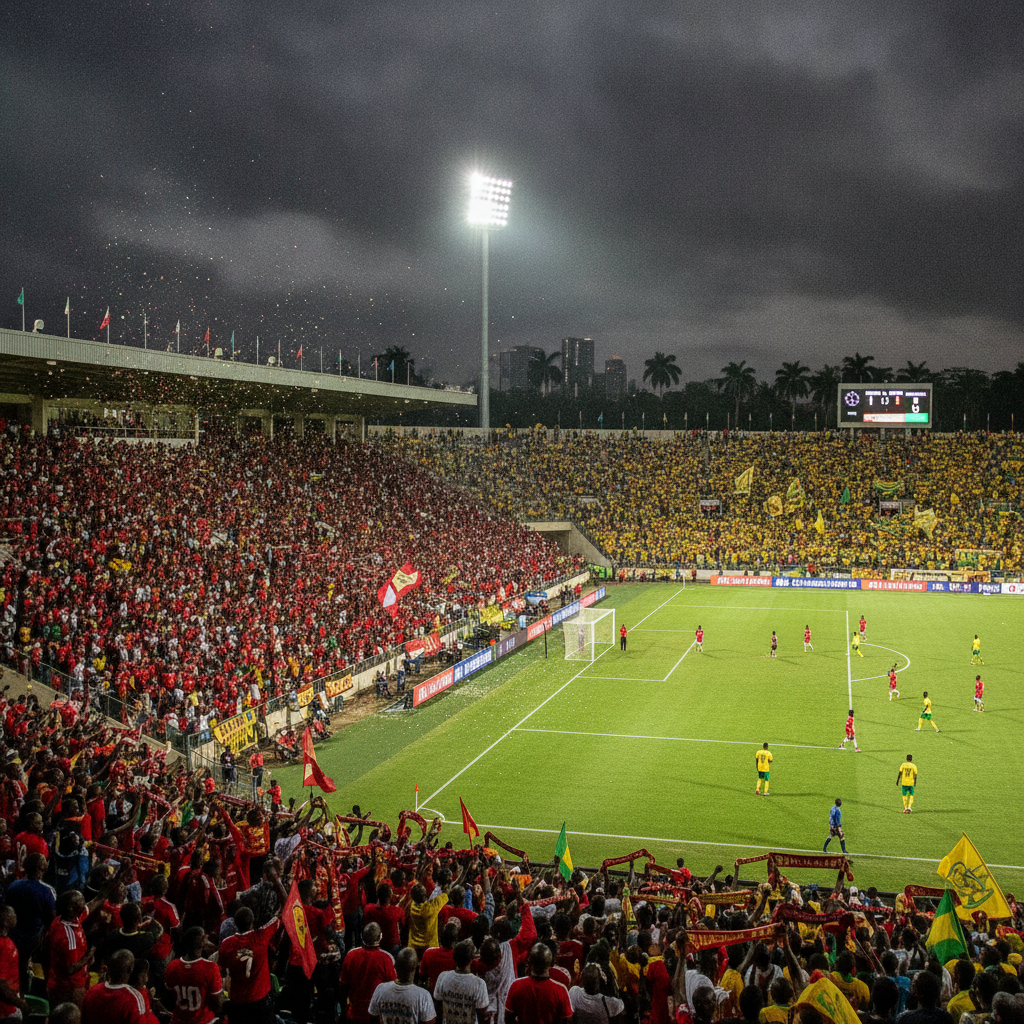
Bongo Flava, Simba vs Yanga, and the Soul of Dar es Salaam
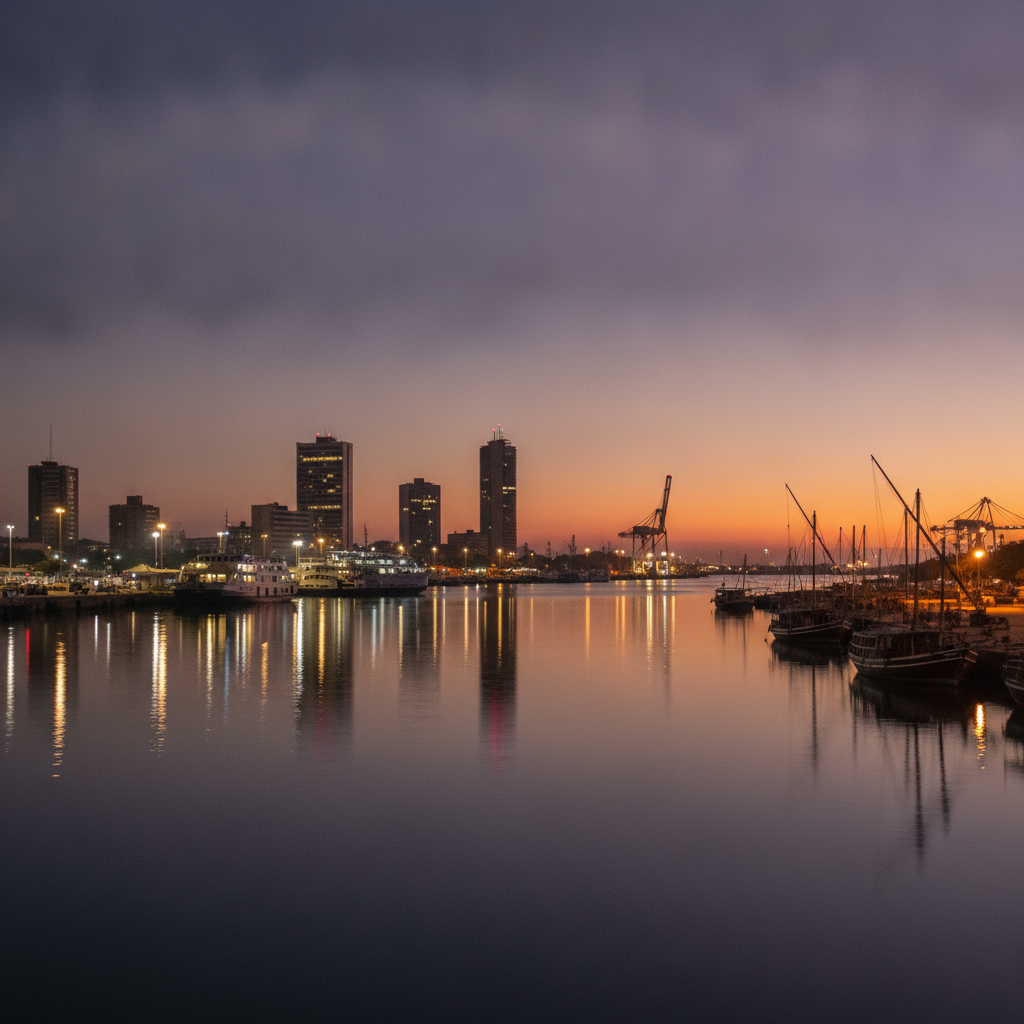
Dar es Salaam: House of Peace, Human Origins, Coco Beach, Nyerere, and the East Africa Gateway