Kaiser Wilhelm II Donated a Marble Sarcophagus to Saladin's Tomb in Damascus in 1898 Calling Saladin a Knight Without Fear or Blame; Damascene Damask Fabric is Named Directly for the City and Was the Most Valuable Export of Medieval Damascus; Ibn Battuta Called Damascus One of the Four Earthly Paradises Alongside Samarkand, Shiraz, and Baghdad
Kaiser Wilhelm II donating a marble sarcophagus to Saladin's tomb in 1898 and calling Saladin a knight without fear or blame; Damascene damask fabric named directly for the city as the most valuable export of medieval Damascus traded by Venetian and Genoese merchants; Ibn Battuta describing Damascus as the most beautiful city in the world and calling the Ghouta one of the four earthly paradises; the Bosra Roman Theatre preserved inside a 12th-century Arab citadel; the hakawati storyteller at the Al-Nufara coffee house outside the Umayyad Mosque; and the Trump administration's 2019 recognition of Israeli annexation of the Golan Heights.
- 1
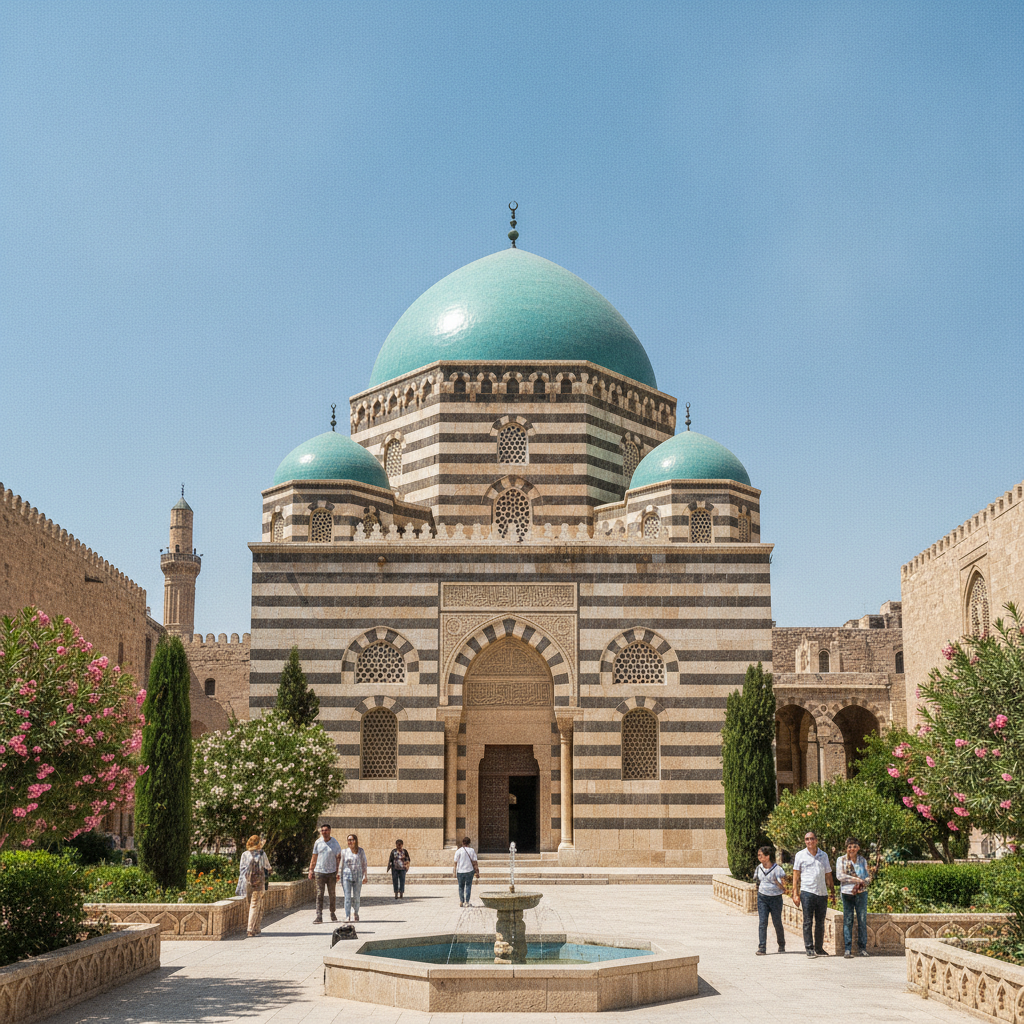
The Ayyubid Dynasty – Saladin's Successors in Damascus
The Ayyubid dynasty (1171-1260 CE) — the dynasty founded by Saladin that ruled Damascus, Egypt, Syria, and Yemen for nearly a century and whose architectural legacy survives in Damascus's most important medieval monuments: the dynasty guide. The founding (Saladin founded the Ayyubid dynasty (named for his father Ayyub (Job)) in 1171 when he abolished the Fatimid Caliphate of Egypt and restored Sunni rule: Saladin ruled from Cairo but made Damascus his secondary capital after taking it in 1174: the architecture (the Ayyubid architectural program in Damascus: the Citadel of Damascus (the current citadel structure dates primarily to the Ayyubid period — Saladin's brother al-Adil I rebuilt the citadel in 1202-1216 CE on the northwestern corner of the Old City: the madrasa (Islamic law school) tradition: Saladin and his successors built numerous madrasas in Damascus to advance Sunni education after the Fatimid Shia period in Egypt: the primary Ayyubid madrasas in Damascus: the al-Aziziyya Madrasa (containing Saladin's tomb): the al-Adiliyya Madrasa: the al-Nuriyya Madrasa: Saladin's tomb (the Mausoleum of Saladin (Maqam Salah al-Din) in the garden of the Umayyad Mosque: Saladin died in Damascus on March 4, 1193 at approximately age 56: the tomb (a small domed mausoleum in the garden adjacent to the north wall of the Umayyad Mosque: the tomb contains two sarcophagi — the original wooden 12th century sarcophagus and a marble sarcophagus donated by the German Kaiser Wilhelm II in 1898 on his visit to Damascus: the Kaiser's donation (the Kaiser Wilhelm II visit to Damascus in 1898 was a diplomatic gesture of German-Ottoman friendship: the Kaiser placed a bronze laurel wreath on Saladin's tomb and donated the marble sarcophagus: the inscription on the wreath read: A Knight without fear or blame who often had to teach his opponents the right way to practise chivalry).
- 2
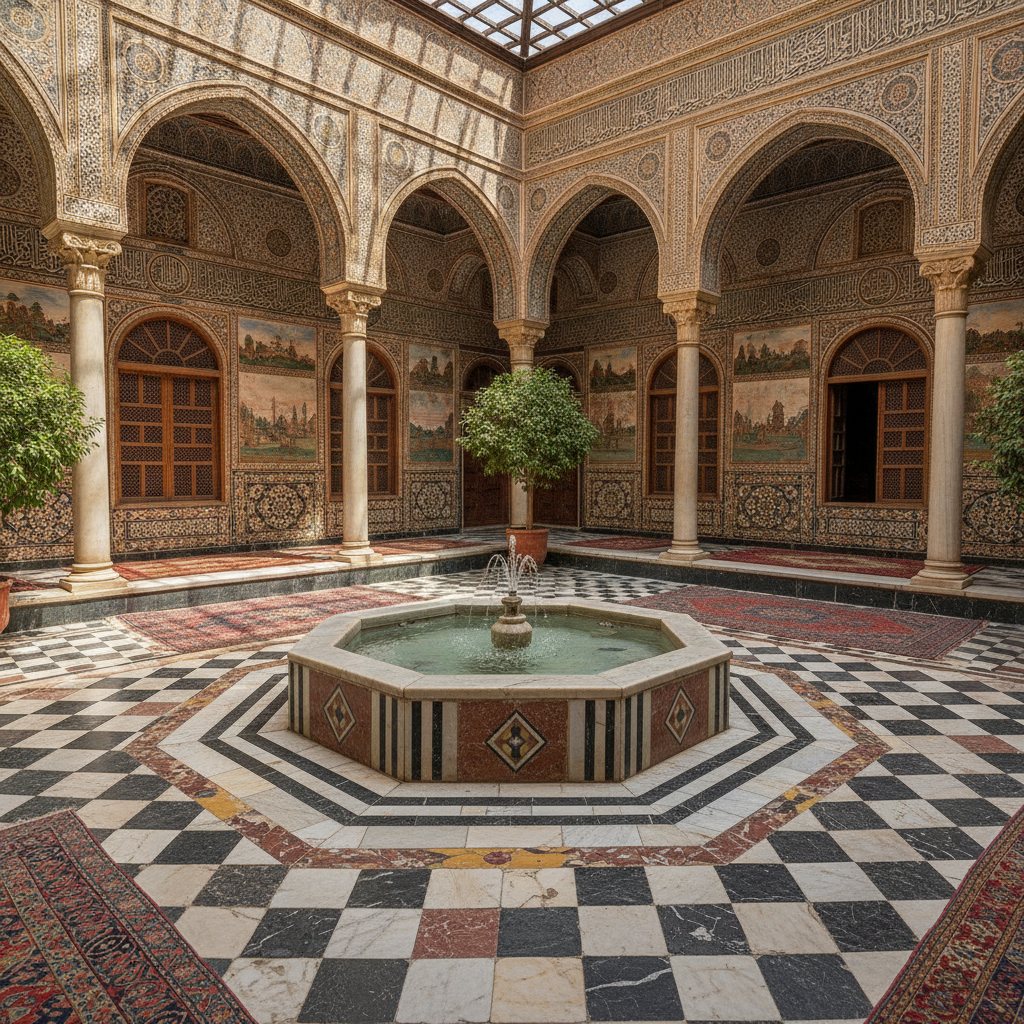
Damascene Textile Arts – Damask, Brocade, and 3,000 Years of Weaving
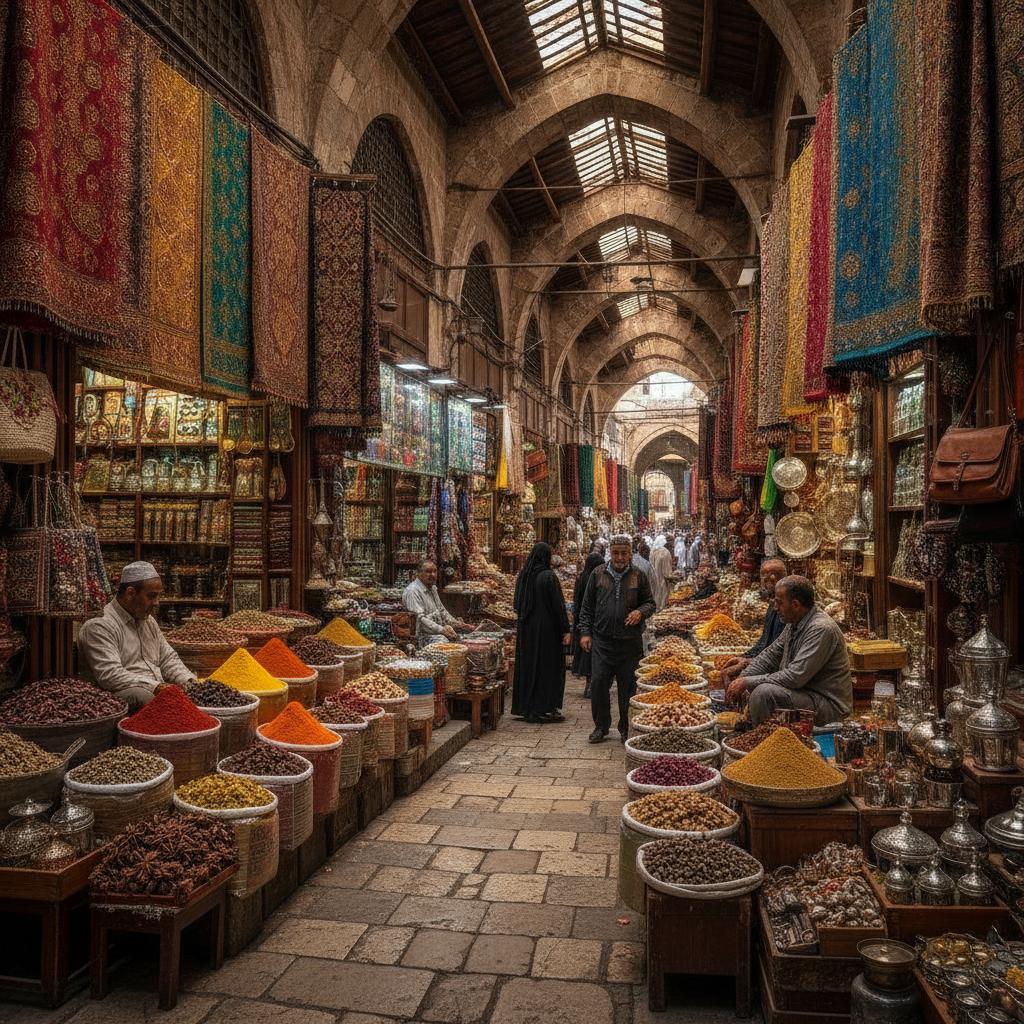
The Damascene textile tradition (the textile arts of Damascus — the origin of damask fabric and one of the oldest continuous luxury textile traditions in the world): the textile heritage guide. The damask (the damask fabric (from the city name Damascus — the fabric was named by European Crusaders and merchants for the city where they first encountered it): damask is a reversible figured fabric woven on a drawloom that creates patterns by contrasting the light-reflective qualities of the warp and weft: the patterns appear on both sides of the fabric in contrasting weaves: the Damascene damask tradition (the Damascus weaving tradition: the primary fabric: silk damask (hareer muayyad): brocade (dibaj — fabric with additional supplementary weft threads creating raised patterns): the primary motifs: geometric: floral (particularly pomegranate and arabesque patterns): the history (the Damascus drawloom was one of the most sophisticated weaving technologies of the pre-industrial world: the drawloom permitted the weaving of complex repeated patterns in silk: the primary export (the Damascene silk damask and brocade were among the most valuable export goods of the Levant in the medieval period: the Venetian and Genoese merchants who dominated Eastern Mediterranean trade in the 12th-15th centuries specifically traded in Damascene textiles: the current production (the traditional Damascene silk weaving industry has declined severely due to the Civil War: most of the traditional weaving workshops in the Old City souk were damaged or closed during the conflict: a small number of weavers continue the tradition in 2025 and the souk al-harir (silk souk) has partially reopened).
- 3
The Golan Heights – The Disputed Plateau Between Syria and Israel
The Golan Heights (Arabic: Murtafaat al-Jawlan — the Syrian plateau contested between Syria and Israel since 1967): the geopolitical guide. The geography (the Golan Heights — a basalt plateau rising from 400m to 1,800m (Mount Hermon — Jabal al-Sheikh — 2,814m) in the southwestern corner of Syria adjacent to the Jordan River and the Sea of Galilee: the plateau covers approximately 1,800 km2: the 1967 war (the Six-Day War (June 5-10, 1967): Israel captured the Golan Heights from Syria on June 9-10, 1967: approximately 130,000 Syrian inhabitants of the Golan fled or were expelled during the war: the Israeli annexation (Israel formally annexed the Israeli-controlled portion of the Golan Heights (approximately 1,200 km2) by extending Israeli law to the territory in December 1981 — a move not recognized by any other country until the Trump administration recognized it in March 2019: the 1973 war (the Yom Kippur War/October War (October 6-25, 1973): Syria launched a surprise attack to retake the Golan on October 6, 1973 (Yom Kippur): the initial Syrian attack nearly broke through the Israeli positions on the Golan: the battle of the Valley of Tears (October 7-9, 1973 — the Syrian armored forces were stopped by a small Israeli armored force in one of the largest tank battles in history: the UN-brokered ceasefire (May 1974): Israel retained the Golan: a UNDOF (UN Disengagement Observer Force) buffer zone was established: the Druze of the Golan (approximately 22,000 Druze live in the Israeli-controlled Golan Heights: unlike Israeli Druze in the Galilee most Golan Druze refused Israeli citizenship after the 1981 annexation: many consider themselves Syrian: the 2024 situation (the fall of the Assad regime in December 2024 led to Israeli military movements further into the Syrian side of the Golan buffer zone).
- 4
Ibn Battuta and the Damascus of the 14th Century
Ibn Battuta and medieval Damascus (the observations of the 14th century Moroccan traveler Ibn Battuta (1304-1368 CE) — the greatest traveler of the pre-modern world — on the city of Damascus that he visited multiple times during his 75,000 mile journey): the historical travel guide. The traveler (Ibn Battuta (full name: Abu Abdullah Muhammad ibn Abdullah al-Lawati al-Tanji ibn Battuta) was a Moroccan scholar from Tangier who traveled for 29 years (1325-1354 CE) across the Islamic world from Morocco to China and from Mali to the Maldives: the total distance of his journeys (approximately 117,000 km — nearly 3 times the distance covered by Marco Polo): the Damascus visits (Ibn Battuta visited Damascus multiple times: the first visit during his first hajj journey in 1326: he spent months in Damascus studying with the scholars of the Umayyad Mosque: the Damascus of 1326 (Ibn Battuta describes Damascus as the most beautiful city in the world: he praises the wealth of the city: the water system (Damascus in the 14th century had an elaborate water supply system fed by the Barada River that irrigated the Ghouta (the agricultural oasis surrounding Damascus): the Ghouta (the Ghouta (al-Ghouta) — the irrigated oasis of Damascus: the primary water source (the Barada River descending from the Anti-Lebanon Mountains): historically the Ghouta was described by Arab geographers as the most beautiful agricultural landscape in the Middle East: Ibn Battuta describes the Ghouta as one of the four earthly paradises (the others being Samarkand, Shiraz, and Baghdad): the Civil War damage to the Ghouta (the Ghouta was the location of the August 2013 chemical weapons attack that killed 281-1,729 people (estimates vary): the Eastern Ghouta was besieged by the Assad government from 2013 to 2018: the siege caused severe humanitarian suffering and the destruction of approximately 60% of the Ghouta's agricultural and residential fabric).
- 5
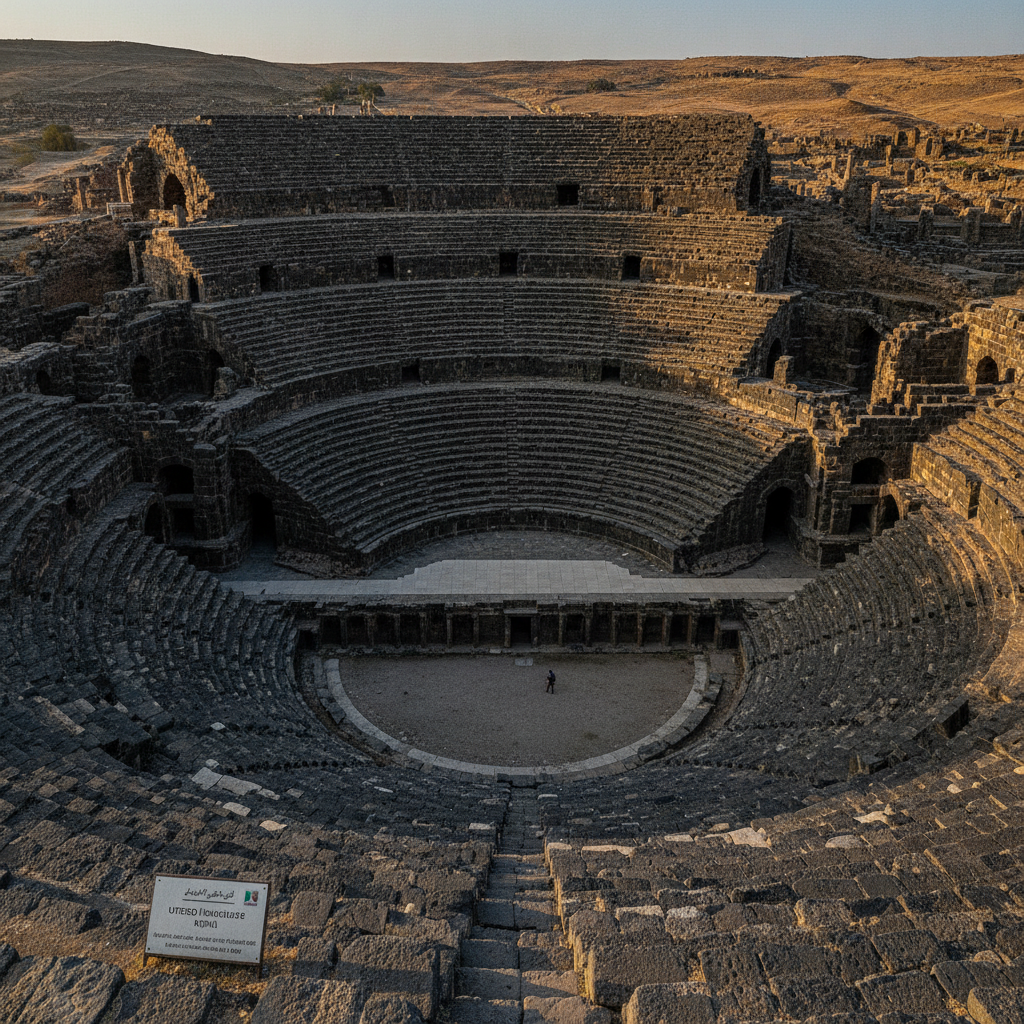
Bosra – The Best Preserved Roman Theatre in the World
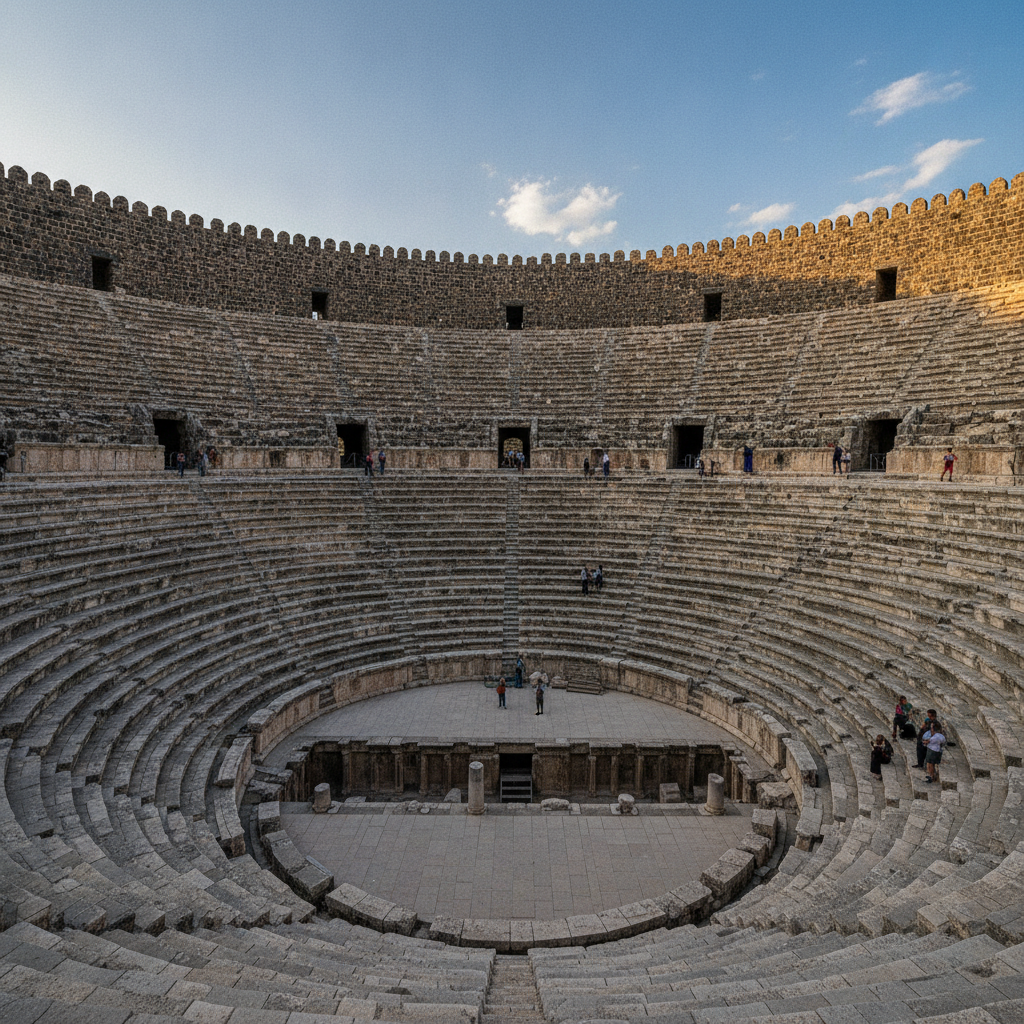
Bosra (Basra, Arabic: بصرى) — 140 km south of Damascus in the Hauran region: the site of the best preserved Roman theatre in the world and one of the most remarkable architectural achievements of the Roman Near East: the archaeological guide. The history (Bosra was the capital of the Roman province of Arabia Petraea from 106 CE when the Nabataean kingdom was incorporated into the Roman Empire: Bosra was the primary administrative center of the Hauran region and one of the wealthiest cities in Roman Syria: the theatre (the Roman Theatre of Bosra (built approximately 100-200 CE) — the best preserved Roman theatre in the world: capacity approximately 15,000 spectators: the theatre is unusual in that it is still complete from its stage wall (scaenae frons) to its uppermost rows of seating (the cavea): the reason for preservation (an Arab citadel was built around the theatre between the 7th and 13th centuries CE: the citadel walls incorporated the theatre structure: the result is that the entire Roman theatre is enclosed within the Arab citadel walls and has been protected from quarrying and reuse by subsequent generations: UNESCO inscription (Bosra UNESCO World Heritage Site 1980): the city (the ancient city of Bosra surrounding the theatre: the monumental Nabataean and Roman street (the decumanus maximus with standing columns): the Roman baths: the Cathedral of Saints Sergius, Bacchus and Leontius (514 CE — one of the earliest purpose-built cathedral structures in the world): the Mamluk al-Umari Mosque (built within the ancient cathedral): the logistics (Bosra from Damascus: 1.5-2 hours by private taxi: there is no regular public bus: the visit (the theatre and citadel 2-3 hours: the surrounding ancient city 1-2 hours: the Bosra old city has several restaurants in Ottoman-era buildings).
- 6
Damascus Crafts – Inlaid Wood, Brassware, and the Living Souk
The Damascene traditional crafts (the living craft traditions of the Damascus Old City souk — among the oldest continuously practiced urban craft industries in the world): the craft guide. The marquetry (the Damascene wood inlay tradition (tarsia — Arabic: khashab muhatta or mushabbak): the finest Damascene furniture is decorated with complex geometric patterns of tiny wood pieces (walnut, ebony, mother-of-pearl, bone) set into a larger wooden frame: the geometric pattern language (the traditional Damascene geometric patterns are based on mathematical star patterns constructed from 6-pointed, 8-pointed, and 12-pointed stars set in interlocking tessellations: the brassware (the Damascene brassware (nuhassiyat musabbakah) tradition: engraved brass trays and vessels with the characteristic geometric and Arabic calligraphic decoration: the Al-Nufara Coffee House (the oldest surviving coffee house in Damascus — operating in its current location outside the Umayyad Mosque since at least the 17th century: the Al-Nufara is famous for its hakawati (professional storyteller): the hakawati tradition (the hakawati — the professional public storyteller — sits in the Al-Nufara coffee house in the evenings and recites episodes from the Seerah Hilaliyya (the Epic of Bani Hilal) or other traditional Arab narratives to an audience sitting at the outdoor tables: the Damascene soap (the Syrian olive oil soap tradition: the Aleppo soap (Ghar soap) is the most famous variety — made with laurel berry oil (gharmiyya): the soap souks of Aleppo and Damascus are among the oldest commercial soap markets in the world: the buying guide (where to buy authentic Damascene crafts: the Souk al-Bzouriyye: the Straight Street area antique shops: the Khan Asad Pasha: prices (in 2025 post-Assad Damascus the craft market has not yet stabilized: many craftspeople have returned to the souk but pricing structures are in flux).
Walk this route with audio
Stories play automatically as you reach each stop — no tapping needed.