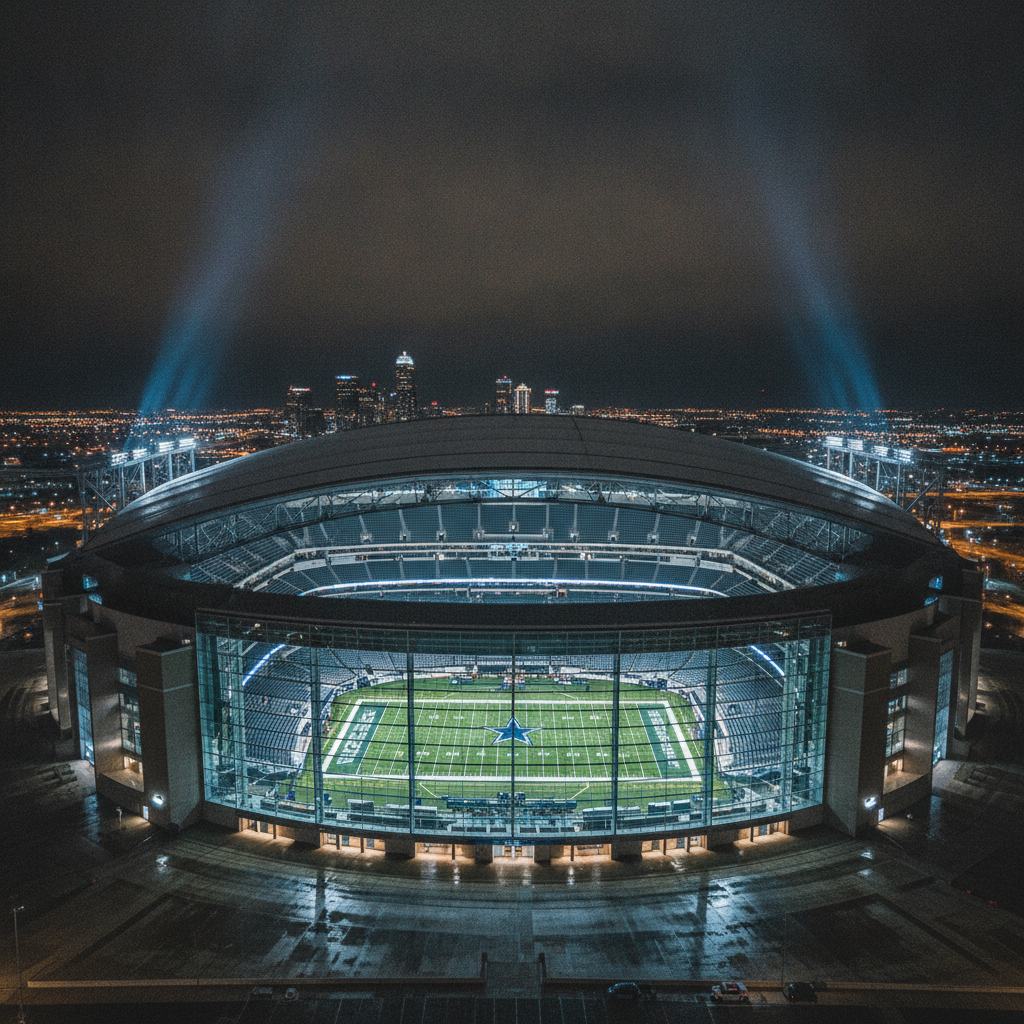
Dallas: Neiman Marcus Retail Legacy (1907 founder, Highland Park Village oldest US mall 1931, luxury capital of American South), Waxahachie Victorian Architecture (Ellis County Courthouse 1897, Gingerbread Trail, Superconducting Super Collider abandoned site, film locations), Dallas Civil Rights History (Juanita Craft first African American woman to vote 1944, NAACP integration, post-assassination image rebuilding), Dallas Sports Beyond Cowboys (Rangers 2023 World Series, Stars NHL, Red River Rivalry), Texas Instruments and Defense Economy (Jack Kilby Nobel Prize 1958 integrated circuit, Lockheed Martin F-35, Texas USD 2T GDP), and Dallas to Houston I-45 Corridor Guide
Dallas context and surroundings: Neiman Marcus (1907 founding, Christmas Book fantasy gifts, InCircle, Highland Park Village 1931 oldest US planned shopping center), Waxahachie Victorian courthouse and residential architecture (most ornate Texas courthouse, film locations for Places in the Heart and Tender Mercies, abandoned Superconducting Super Collider USD 2B tunnels), Dallas civil rights (Juanita Craft 1944 voting, peaceful integration strategy, assassination image recovery), Dallas sports portfolio (Rangers 2023 World Series first title, Stars Stanley Cup 1999, Red River Rivalry annual at Fair Park Cotton Bowl), Texas economic miracle (Texas Instruments Jack Kilby integrated circuit Nobel Prize 2000, Lockheed Martin F-35 most expensive weapons program in history, no state income tax corporate migration), and Dallas to Houston I-45 guide (Corsicana first Texas oil 1894, Galveston 1900 hurricane deadliest US natural disaster).
- 1
Neiman Marcus and Dallas Retail Legacy
Neiman Marcus (founded 1907 at 1618 Main Street, downtown Dallas by Herbert Marcus Sr., his sister Carrie Marcus Neiman, and her husband Al Neiman): the department store that defined upscale American retail and gave Dallas its reputation as a fashion and luxury shopping capital. The founding: Herbert Marcus and the Neimans chose between two business opportunities (a Coca-Cola franchise in Atlanta and starting a retail store in Dallas); they chose retail, a decision that would define Dallas culture for over a century. Neiman Marcus character: the store that introduced American women to European fashion (the first US retailer to send buyers to the Paris fashion shows), the Christmas catalog (the Neiman Marcus Christmas Book, begun 1915, famous for the His and Hers fantasy gifts: matching mummy cases, submarines, camels), and the InCircle loyalty program. The Highland Park Village (at Mockingbird Lane and Preston Road, Dallas, opened 1931): the oldest operating planned shopping center in the United States, predating the modern indoor mall by decades. The Galleria Dallas (at LBJ Freeway and Dallas Parkway, North Dallas): the indoor ice skating rink in the center of the mall (one of the few malls with an operational hockey-regulation ice rink). The luxury retail culture of Dallas: the DFW metro has the highest per capita luxury goods consumption of any metro area in the United States except New York, driven by the concentration of oil, technology, and finance wealth and the absence of a state income tax that leaves more disposable income.
- 2
Waxahachie and Ellis County Victorian Architecture
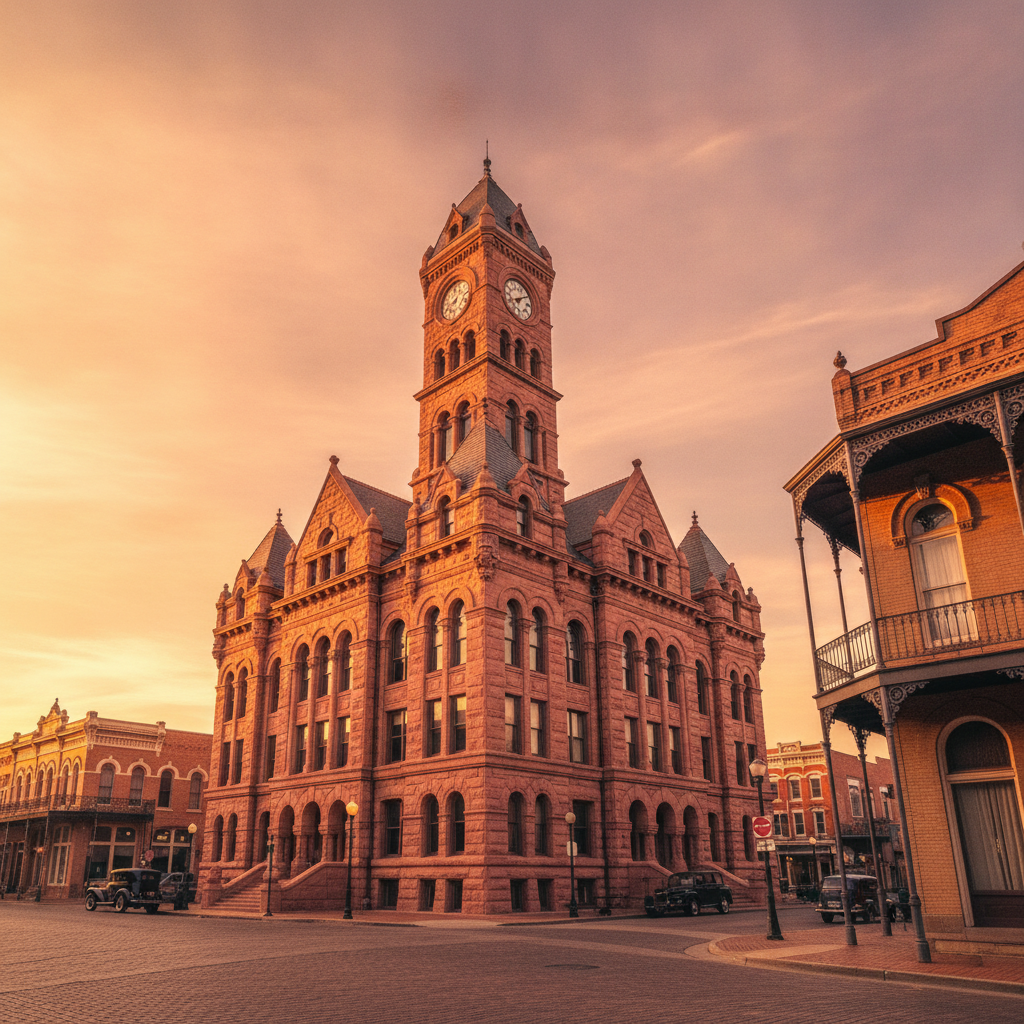
Waxahachie (the county seat of Ellis County, 50 km south of Dallas via I-35E): the most architecturally significant small city in Texas, with the largest collection of Victorian-era residential and commercial architecture in the state. The Ellis County Courthouse (at the town square of Waxahachie, completed 1897): the most ornate courthouse in Texas, built in the Romanesque Revival style in pink granite and red sandstone, with elaborate carved stone faces and figures on the exterior. The courthouse legend: one of the carved stone faces is said to be the portrait of the stonecutter who carved them, placed in a position of humiliation by the architect after the stonecutter was rejected by a local woman. The Gingerbread Trail (the self-guided tour of Victorian residential architecture in Waxahachie): the elaborate Queen Anne and Folk Victorian houses of the late 19th century Texas cotton prosperity era. Waxahachie film history: the town has been used as a film location for numerous period productions including Places in the Heart (1984, Academy Award for Best Actress Sally Field), Tender Mercies (1983, Academy Award for Best Original Screenplay), and The Trip to Bountiful (1985, Academy Award for Best Actress Geraldine Page). The Superconducting Super Collider site (at Waxahachie): the location of the partially constructed tunnel for the Superconducting Super Collider (the planned 87 km particle accelerator that would have been the largest in the world), abandoned by Congress in 1993 after USD 2 billion had been spent.
- 3
Dallas and Civil Rights History
Dallas civil rights history: Dallas was a segregated city until the Civil Rights Act of 1964, with the separate African American commercial district (the Central Business District and the Hall Street corridor north of downtown), the historically Black educational institutions (Bishop College and Wiley College in nearby Marshall), and the separate public facilities required by Texas state law. The integration of Dallas: Dallas was among the more peaceful cities in the South in integrating its public facilities (the Dallas Citizens Council, the business establishment, generally supported peaceful integration to avoid the economic disruption caused by violence in other Southern cities). The assassination of President Kennedy: the 1963 assassination in Dallas created a global association between Dallas and violence that the city has spent decades trying to overcome; the Sixth Floor Museum (see R1) is the primary institutional effort to contextualize the assassination within Dallas history. Juanita Craft (the Dallas civil rights leader, the first African American woman to vote in Dallas in the 1944 Democratic primary, after the Supreme Court ruling in Smith v. Allwright): the most significant civil rights figure in Dallas history, who led the Dallas NAACP chapter for decades and organized the integration of the Texas State Fair. The Martin Luther King Jr. Community Center (on MLK Boulevard, South Dallas): the center of the South Dallas African American community. The Emma Tenayuca Story: Emma Tenayuca (born 1916 in San Antonio), the Texas labor organizer who led the pecan shellers strike in San Antonio in 1938, is one of the most important Latina civil rights figures in Texas history.
- 4
Dallas Sports Culture Beyond the Cowboys
Dallas professional sports depth: the DFW metro has the most complete portfolio of major professional sports teams in the United States alongside New York and Los Angeles. The Texas Rangers (MLB, at Globe Life Field, Arlington, opened 2020): the most recently successful Dallas franchise, winning the 2023 World Series (the franchise first championship, defeating the Arizona Diamondbacks in 5 games; Corey Seager won the World Series MVP). The Dallas Stars (NHL, at the American Airlines Center): the Stanley Cup Champions in 1999 (the franchise moved from Minnesota to Dallas in 1993), with the most successful sustained NHL franchise in the Sun Belt; the Stars reached the Stanley Cup Finals again in 2024 (losing to the Florida Panthers). FC Dallas (MLS soccer, at Toyota Stadium in Frisco): the primary soccer franchise in the DFW metro, with the Toyota Stadium (one of the finest soccer-specific stadiums in MLS). The Dallas Wings (WNBA, at College Park Center in Arlington): the franchise that drafted Caitlin Clark in 2024... wait, actually Caitlin Clark was drafted by Indiana Fever. The Dallas Wings selected Natasha Howard. The Texas Longhorns (the University of Texas at Austin college football program): the most followed college football team in Texas, with the rivalry with the Oklahoma Sooners (the Red River Rivalry, played annually at the Cotton Bowl at Fair Park during the State Fair of Texas) being one of the most attended rivalry games in college football.
- 5
Dallas Innovation and the Texas Economic Miracle
The Texas economic miracle and the Dallas innovation ecosystem: Texas has the ninth largest economy in the world if it were a nation, with a GDP exceeding USD 2 trillion. The Texas economic model: no state income tax (the Texas Constitution prohibits personal income tax), relatively light business regulation, abundant land, and a large and growing labor force have attracted major corporations and individuals from higher-tax states (particularly California). The Dallas technology cluster: the DFW area has developed a significant technology sector centered on telecommunications (the AT&T headquarters in downtown Dallas), defense technology (Lockheed Martin at Fort Worth), and semiconductor design (Texas Instruments, headquartered at 12500 TI Boulevard, Dallas, the inventor of the integrated circuit in 1958 by Jack Kilby: Kilby won the Nobel Prize in Physics in 2000 for the invention). The Texas Instruments story: TI was founded in Dallas in 1951 as the electronics division of Geophysical Service Inc.; Jack Kilby invented the monolithic integrated circuit at TI in July 1958, an invention that enabled the entire modern electronics industry (without the integrated circuit, there would be no microprocessors, smartphones, computers, or the internet). The defense economy: the DFW area has the most concentrated defense contracting ecosystem outside of the Washington DC area, led by Lockheed Martin (F-35 Lightning II fighter jet manufactured at the Fort Worth factory, the most expensive weapons program in human history at approximately USD 1.7 trillion total lifecycle cost).
- 6
Dallas to Houston and the I-45 Corridor
Dallas to Houston and the Texas triangle corridor: Houston (385 km southeast of Dallas via I-45, 4 hours): the fourth largest city in the United States (population 2.3 million city, 7.3 million metro), the energy capital of the world (ExxonMobil, Chevron, ConocoPhillips, Shell, and virtually every major oil company have significant Houston operations), the home of the NASA Johnson Space Center, and the most diverse large city in the United States (the most ethnically diverse major US city, with no single racial or ethnic majority group). The I-45 corridor: the highway between Dallas and Houston passes through the Piney Woods region of East Texas, the historical cotton plantation area with the highest concentration of African American heritage sites in Texas. The city of Corsicana (on I-45, 100 km south of Dallas): the site of the first commercial oil discovery in Texas (1894), which preceded the Spindletop discovery by 7 years. The city of Huntsville (on I-45, 100 km north of Houston): the location of the Texas State Penitentiary (Huntsville Unit, the Walls Unit), where Texas executions by lethal injection are carried out; Huntsville is also the home of Sam Houston State University and the Sam Houston Memorial Museum. Galveston (at the Gulf Coast, 80 km south of Houston via I-45): the historic port city and beach resort on Galveston Island, devastated by the 1900 hurricane (the deadliest natural disaster in US history, killing approximately 8,000 people, one-third of the city population), and a UNESCO World Heritage Site candidate for the Victorian heritage.
Walk this route with audio
Stories play automatically as you reach each stop — no tapping needed.
More in dallas
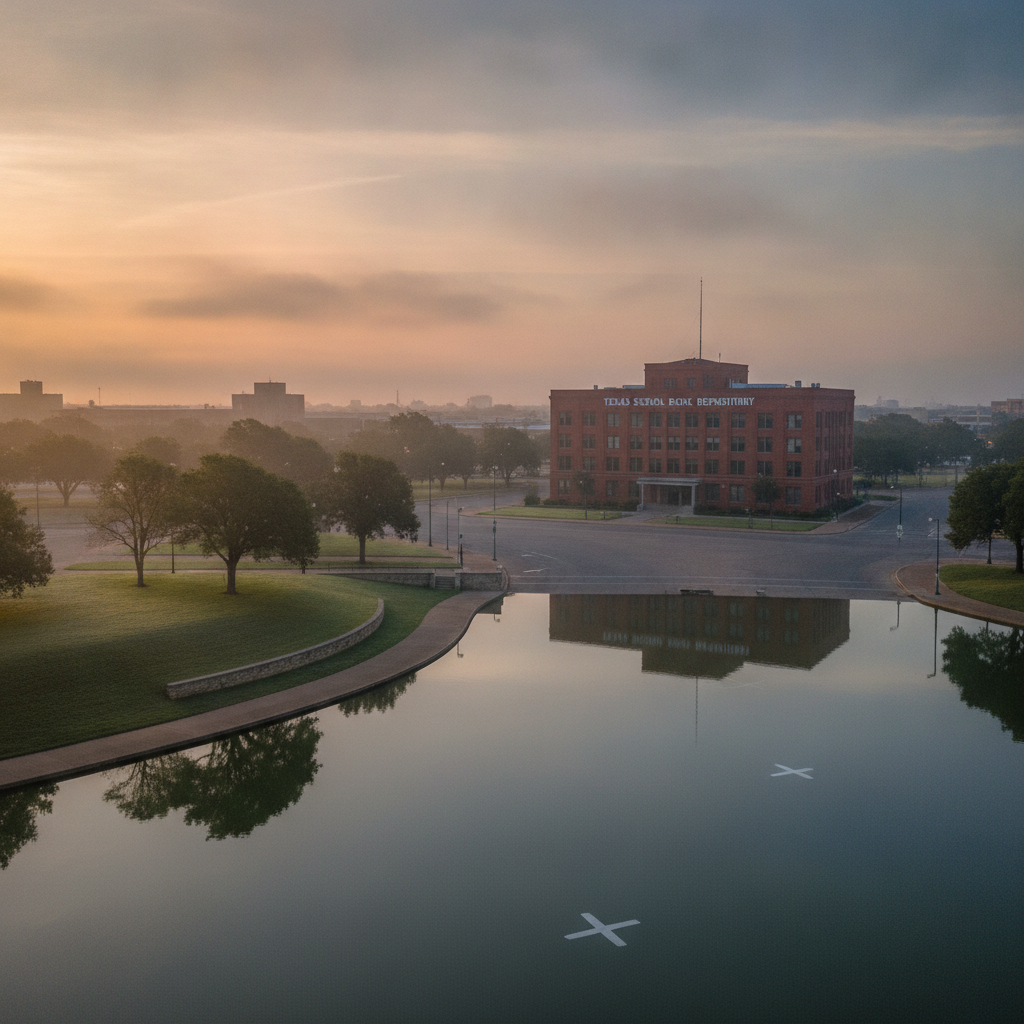
Dallas: Sixth Floor Museum at Dealey Plaza (JFK assassination 22 November 1963, Lee Harvey Oswald, Warren Commission, Grassy Knoll), Deep Ellum Arts and Texas Blues (Blind Lemon Jefferson, Pecan Lodge BBQ, street murals), Dallas Arts District (DMA 24000 works, Nasher Sculpture Center Renzo Piano, Meyerson Symphony I.M. Pei), Dallas Cowboys Americas Team (USD 9B franchise, AT&T Stadium retractable roof, Texas Friday Night Lights), and Dallas Food Scene (Texas BBQ brisket, Pecan Lodge, Tex-Mex, Dallas Farmers Market)
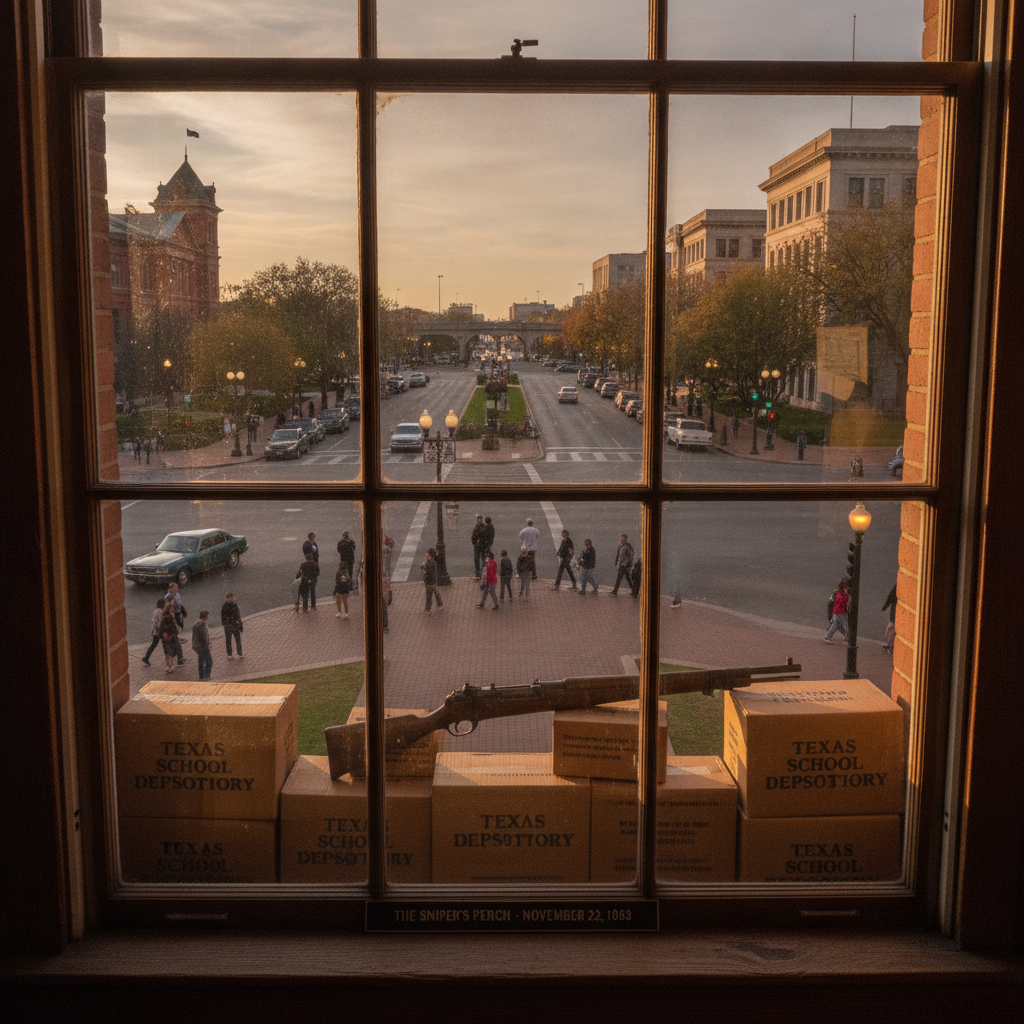
Dallas: Kennedy Assassination Museum, World-Class Arts District and Deep Ellum Blues
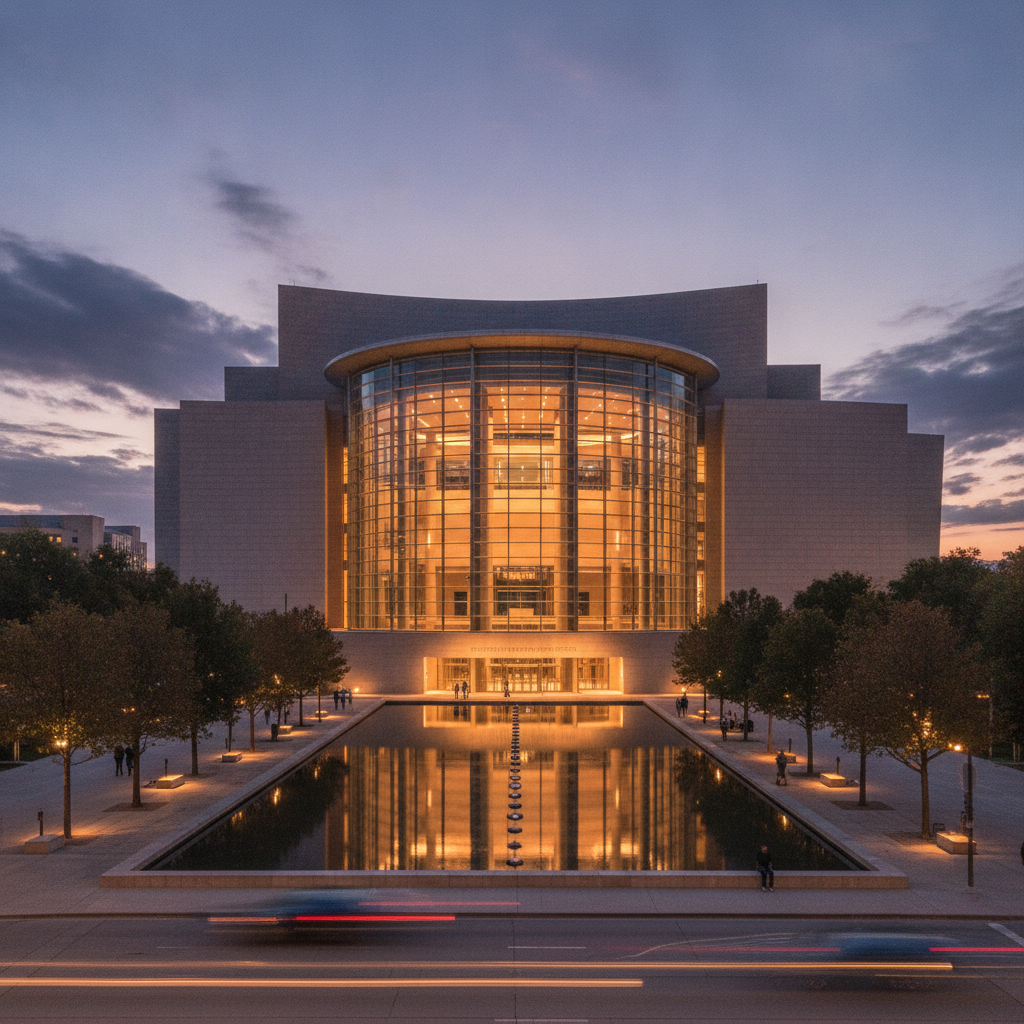
Dallas: White Rock Lake Trails, Spanish Art and a City That Grew Too Fast
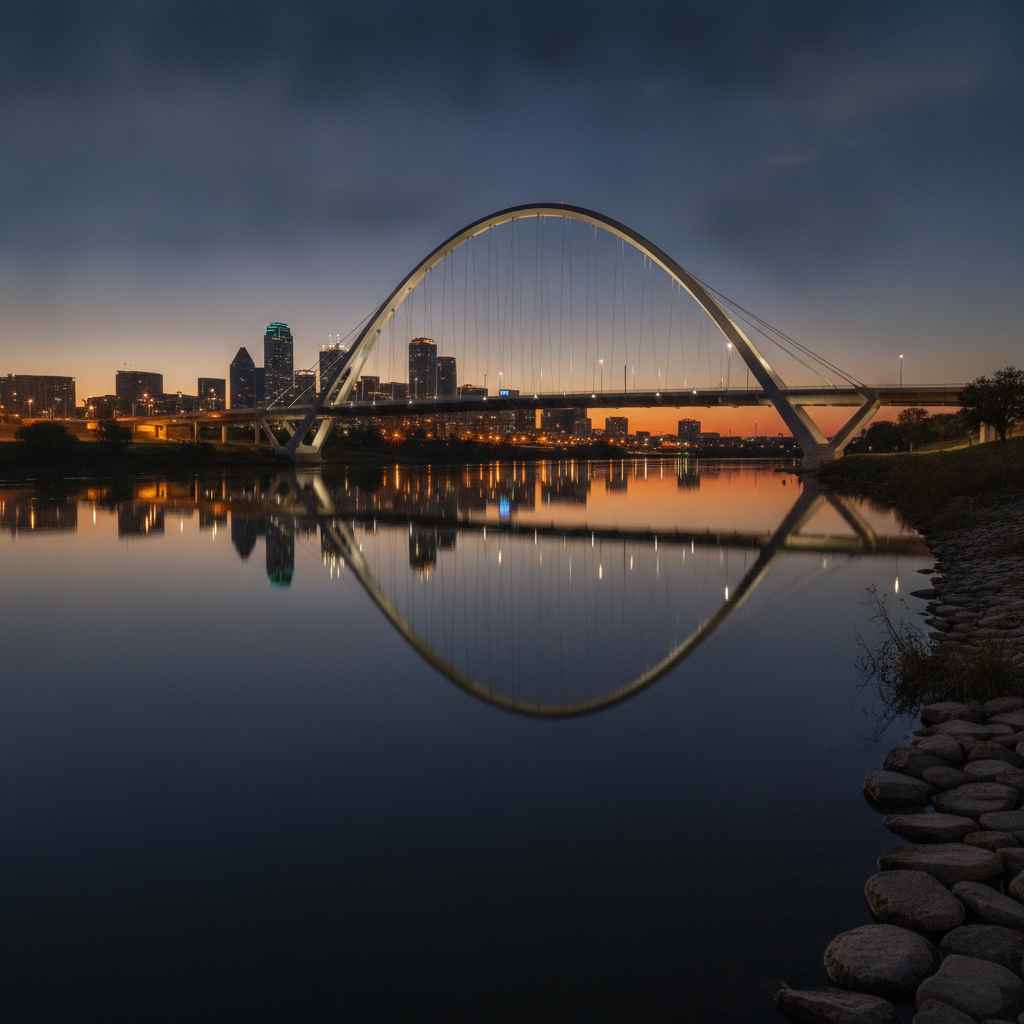
Dallas: Nowitzki Legacy, Asian Art Treasure and Trinity Forest Trails
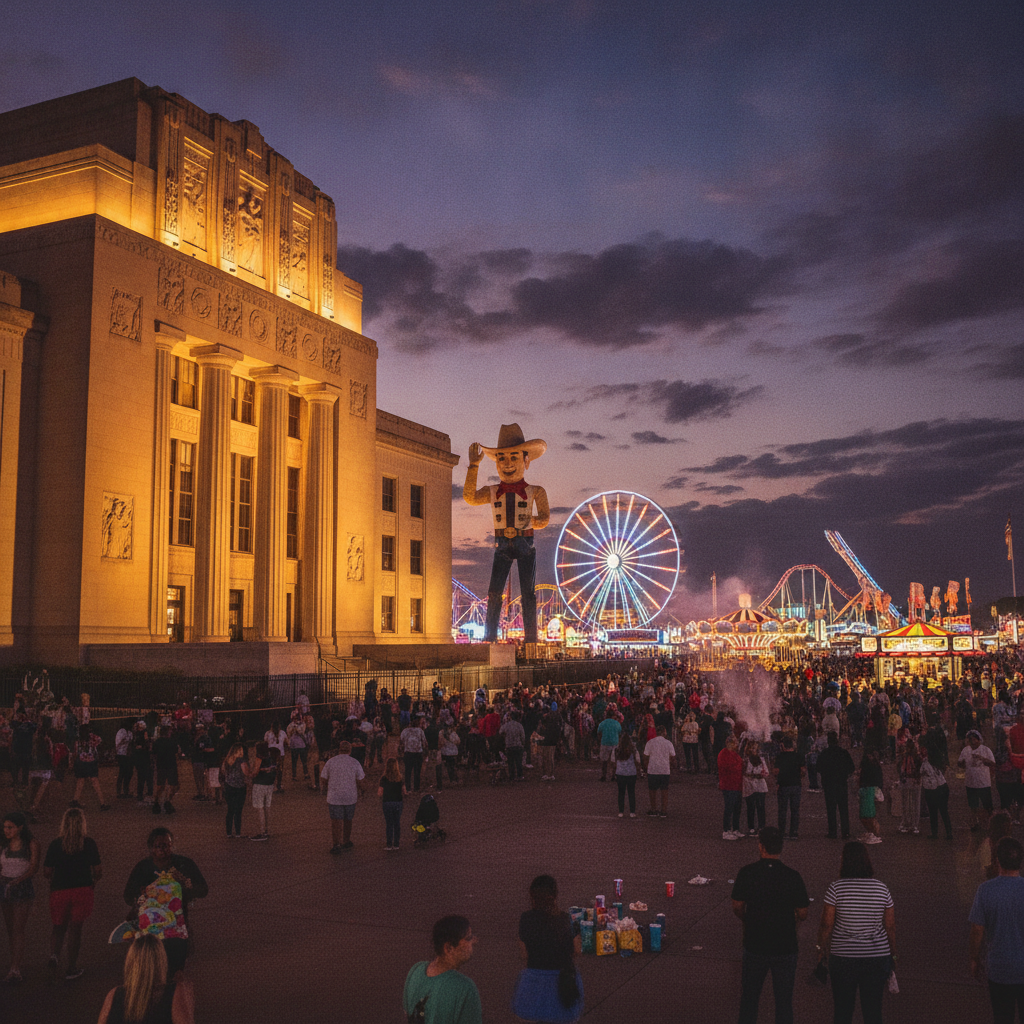
Dallas: Fair Park State Fair of Texas (largest US state fair, 1936 Art Deco Hall of State, Big Tex 15m cowboy, fried food culture), Dallas Mavericks NBA Championships (Dirk Nowitzki greatest European player, 2011 Finals upset Miami Heat, Luka Doncic 2024 title), Dallas Design District Art Galleries (Dallas Contemporary, Rachofsky Collection, Dallas Art Fair), Lake Texoma Striped Bass Fishing (Eisenhower Birthplace Denison), Dallas International Communities (Vietnamese, Korean, Indian, Hispanic Oak Cliff), and Texas Oil Legacy (Spindletop 1901, Highland Park oil wealth, ExxonMobil)