Chittagong Colonial Architecture and History Walk
Trace Chittagong's colonial layering — Portuguese trading posts of the 16th century, Mughal fortifications of the 17th, and the British colonial infrastructure of the 19th and early 20th centuries that turned this natural harbor into the commercial capital of eastern Bengal.
- 1
DC Hill British Colonial Buildings
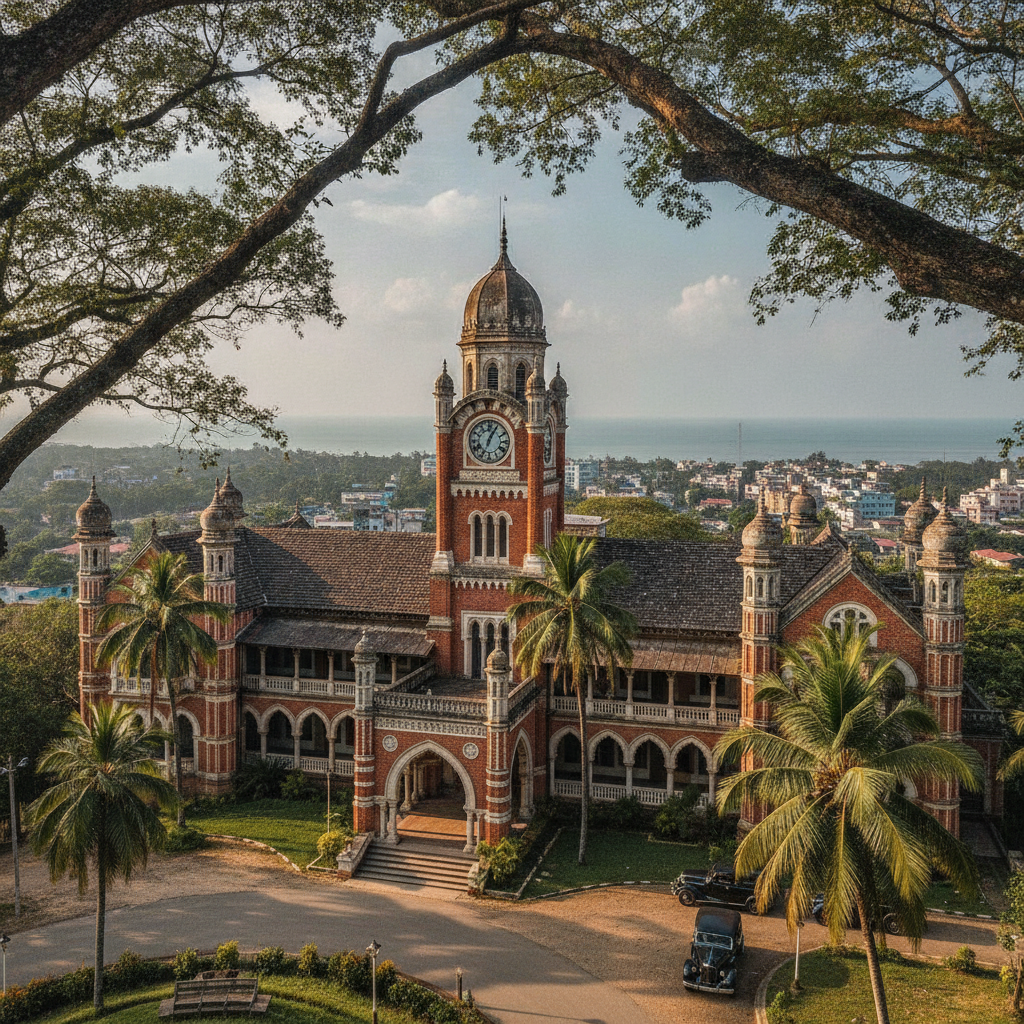
The hilltop cluster of British colonial administrative buildings — the District Commissioner's office, courthouse, and civil residences built in the Indo-Saracenic style that the British employed across Bengal to signal administrative authority.
- 2
Laldighi Maidan and Lake
The colonial-era parade ground and ornamental lake at the center of the old British quarter, surrounded by administrative buildings and churches — a piece of transplanted English urban planning in the middle of a subtropical port city.
- 3
Portuguese Historical Site
The location of the early Portuguese trading settlement at Chittagong — the first European presence in Bengal, established in the 1530s, whose traders introduced new crops (chili, tobacco, pineapple) that permanently transformed Bengali cuisine.
- 4
Chittagong Circuit House
The elegant British circuit house where colonial officials stayed on official tours — a fine example of colonial residential architecture with wide verandahs designed to catch the sea breeze, surrounded by the kind of managed gardens the British carried everywhere.
- 5
St. Mary's Cathedral
The Catholic cathedral built in the colonial period to serve Chittagong's Christian community — a reminder that Portuguese missionaries accompanied the early traders and established Christian communities that persist in the city to this day.
- 6
War Cemetery
The Commonwealth War Cemetery maintained by the Commonwealth War Graves Commission, where Allied soldiers who died in the Burma campaign 1942–45 are buried — a quiet, meticulously maintained garden cemetery in the middle of the teeming city.
Walk this route with audio
Stories play automatically as you reach each stop — no tapping needed.
More in chittagong
Chittagong Foy's Lake and Nature Escape
Chittagong Modern Port and Economic Powerhouse Tour
Chittagong Seafood, Fishing Harbor and Bay of Bengal Coast
Chittagong Buddhist Temple and Heritage Circuit
Chittagong Hill Tracts Indigenous Culture Experience