The Loop, Willis Tower & Chicago's Architectural Legacy
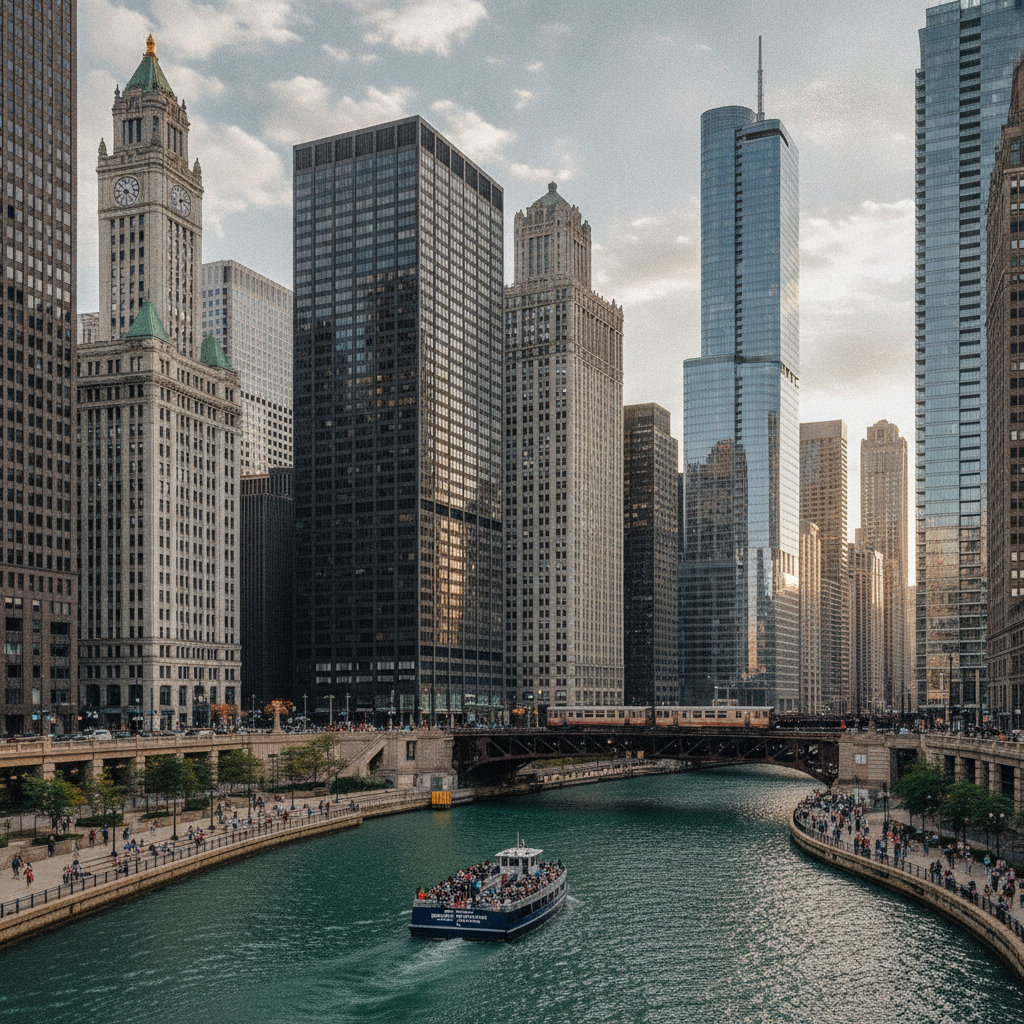
Chicago's Loop — the central business district enclosed within the elevated 'L' train tracks — is the birthplace of the modern skyscraper and the site of the most significant concentration of 20th-century American commercial architecture in the world, a continuous open-air museum of architectural innovation from the Chicago School of the 1880s-1900s through Mies van der Rohe's post-war Modernism to the structural innovations of Skidmore, Owings & Merrill.
- 1
Willis Tower — The Skydeck & the Ledge
The Willis Tower (233 South Wacker Drive, completed 1973, designed by Skidmore, Owings & Merrill, 443 metres to roof, 527 metres to top of antenna, 108 floors — the tallest building in the world from its completion in 1973 until the completion of the Petronas Towers in Kuala Lumpur in 1998): the Willis Tower (known as the Sears Tower until 2009) was the defining symbol of Chicago's ambition and the apogee of the structural tube system of tall building construction pioneered in Chicago by SOM engineers Fazlur Khan and Bruce Graham; the building consists of nine bundled square tubes of varying heights that create its distinctive stepped silhouette; the Skydeck on the 103rd floor (412 metres above the ground) includes 'The Ledge' — four all-glass boxes that project 1.2 metres beyond the building's facade, providing a vertigo-inducing view straight down the building's face to the street below; on clear days the view extends to Indiana, Illinois, Wisconsin and Michigan.
- 2
The Chicago School — Architecture from 1871 to 1900
The Chicago School of Architecture (the architectural movement that emerged in Chicago in the aftermath of the Great Chicago Fire of 1871 — the fire that destroyed approximately 9 square kilometres of the city centre on October 8-10, 1871, killing approximately 300 people, destroying 17,450 buildings and leaving 100,000 residents homeless): the rebuilding of Chicago after the 1871 fire created a unique historical opportunity — a major American city with available land, unlimited capital from insurance proceeds and investment, and a client base of ambitious businessmen who wanted modern office buildings for a modern commercial city; the architects who responded to this opportunity — William Le Baron Jenney (who in 1884-1885 designed the Home Insurance Building, widely considered the first modern skyscraper), Daniel Burnham and John Root (who designed the Rookery Building (1888) and the Monadnock Building (1891-1893)), Louis Sullivan and Dankmar Adler (the Auditorium Building (1889) and the Guaranty Building in Buffalo), and Louis Sullivan alone (the Carson Pirie Scott Store (1899)) — collectively defined the principles of modern commercial architecture.
- 3
Mies van der Rohe's Chicago — Federal Center & Crown Hall
Ludwig Mies van der Rohe in Chicago (the German-American architect who fled Nazi Germany in 1938 and became the director of the architecture school at Illinois Institute of Technology (IIT) in Chicago, remaining in the city until his death in 1969, and in that period designing some of the most influential buildings of the 20th century): the Federal Center (Dearborn Street between Adams and Jackson — the three-building complex of the Everett M. Dirksen Federal Building (1964), the John C. Kluczynski Federal Building (1974), and the US Post Office (1973) arranged around an open plaza with Alexander Calder's 'Flamingo' (1974, the bright red steel stabile) — is the largest and most complete urban complex by Mies in Chicago; the Illinois Institute of Technology campus on the South Side (35th and State Streets) contains Crown Hall (1956, the architecture school building, a single-story glass and steel pavilion that is one of the purest expressions of the International Style 'less is more' aesthetic in American architecture).
- 4
Chicago's Elevated 'L' Train — The Loop's Iron Crown
The Chicago 'L' (the elevated rapid transit system that gives the Loop its name — the 'Loop' refers to the rectangular circuit of elevated tracks on Wabash, Lake, Wells and Van Buren Streets that circles the central business district, built 1895-1897, with trains from the various radial lines entering the Loop circuit and circling it before returning outbound): the 'L' is the second-oldest elevated rapid transit system in the United States (after New York's elevated lines) and one of the defining sensory experiences of Chicago — the noise, the vibration, the shadow play of light through the ironwork structure, and the bird's-eye view of the Loop from the train windows all contribute to an experience of the city quite unlike anything available from street level or from underground transit; the elevated structure itself (the wrought-iron frame with its characteristic arched station canopies) is a significant piece of 19th-century American industrial design.
- 5
The Rookery Building & the Chicago School Landmarks
The Rookery Building (209 South LaSalle Street, designed by Burnham & Root, completed 1888 — the finest surviving commercial building of the Chicago School and one of the most important buildings in American architectural history): the Rookery is named for the flock of crows (rooks) that nested in the temporary city hall that occupied the site before the building; the exterior is a hybrid of Romanesque masonry construction (required by building codes that still mandated load-bearing masonry walls in 1888) and the new iron-frame construction that would soon make masonry walls structurally redundant; the interior light court — a spectacular two-story atrium with glazed ceiling and elaborate ironwork balconies — was remodeled by Frank Lloyd Wright in 1905-1907, who replaced Burnham & Root's original ironwork with a lighter, more geometric design and added gold leaf ornamentation; the building is in near-perfect original condition.
- 6
State Street & the Chicago Cultural Center
The Chicago Cultural Center (78 East Washington Street, the former Chicago Public Library built 1893-1897 by Shepley, Rutan and Coolidge in Beaux-Arts style — the two magnificent interior spaces, the Preston Bradley Hall (with its 38-foot Tiffany glass dome) and the Randolph Street hall (with its Tiffany glass dome and elaborate Greek and Roman decorative programme), represent the finest example of Tiffany glass architectural decoration in existence): the Cultural Center is today a free public art gallery and cultural venue and the best (and least visited) grand civic interior in downtown Chicago; the adjacent State Street (the historic commercial spine of Chicago, running north-south through the Loop) contains Carson Pirie Scott (now Sullivan Center, designed by Louis Sullivan in 1899-1906) — the finest commercial building in Chicago and the most important surviving work of America's first great commercial architect.
Walk this route with audio
Stories play automatically as you reach each stop — no tapping needed.
More in chicago
The Chicago River Architecture Boat Tour — Skyscrapers from the Water
Lincoln Park, the Zoo, North Avenue Beach & Old Town
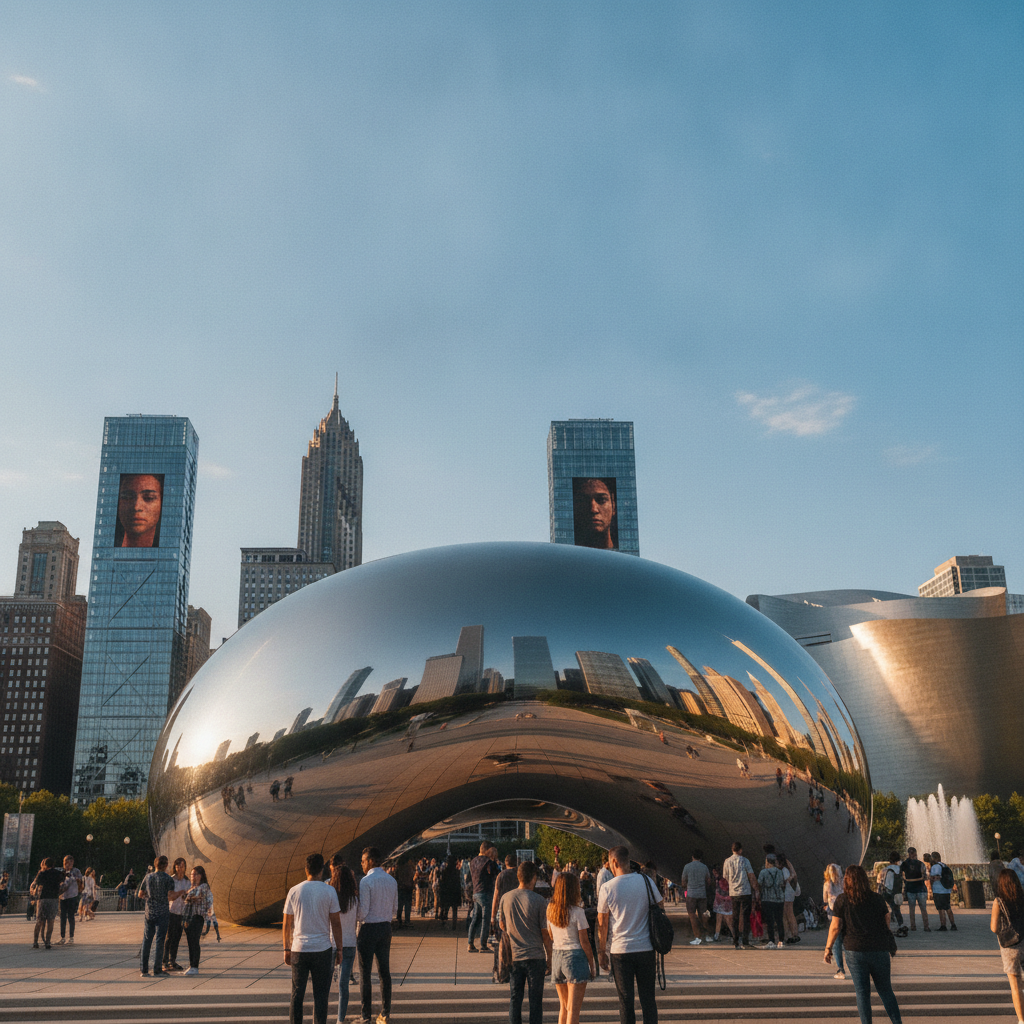
Millennium Park, Art Institute & the Magnificent Mile
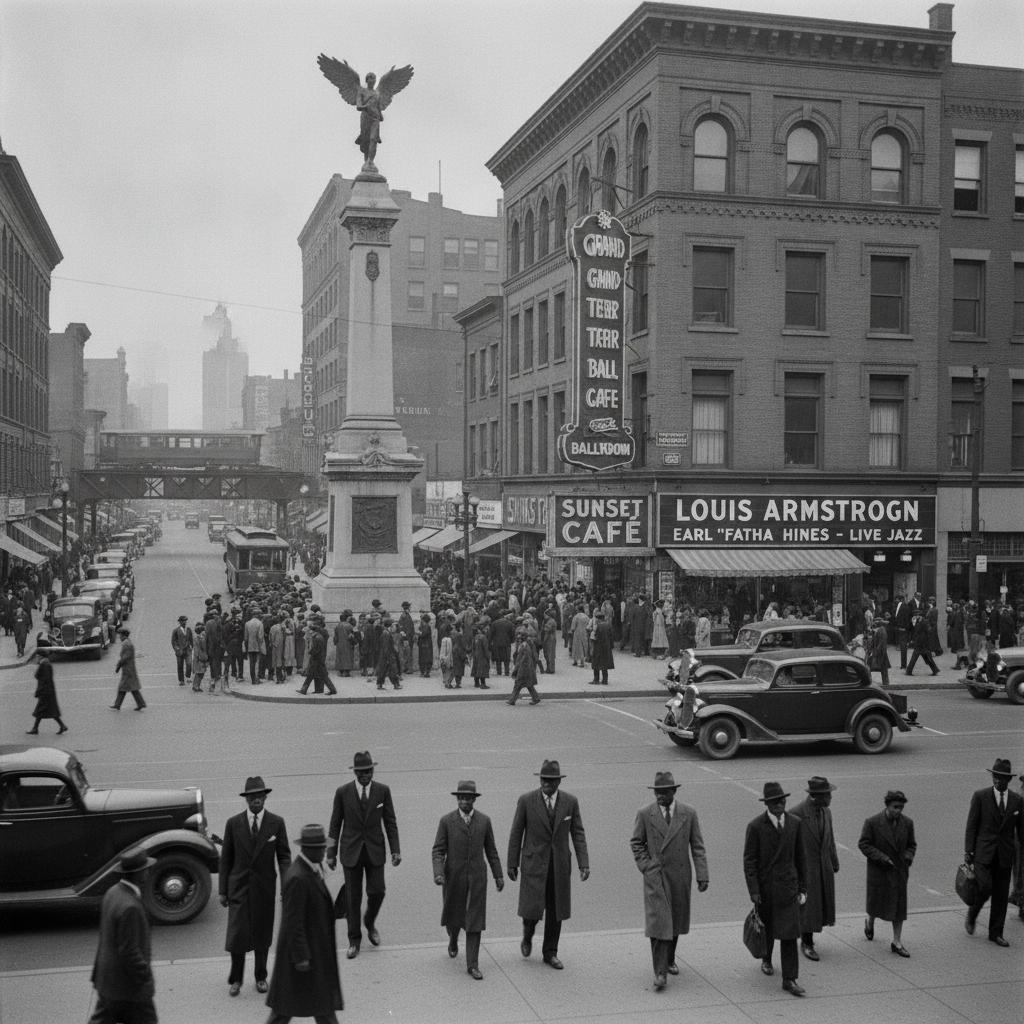
Bronzeville, Pullman & the African-American History of the South Side
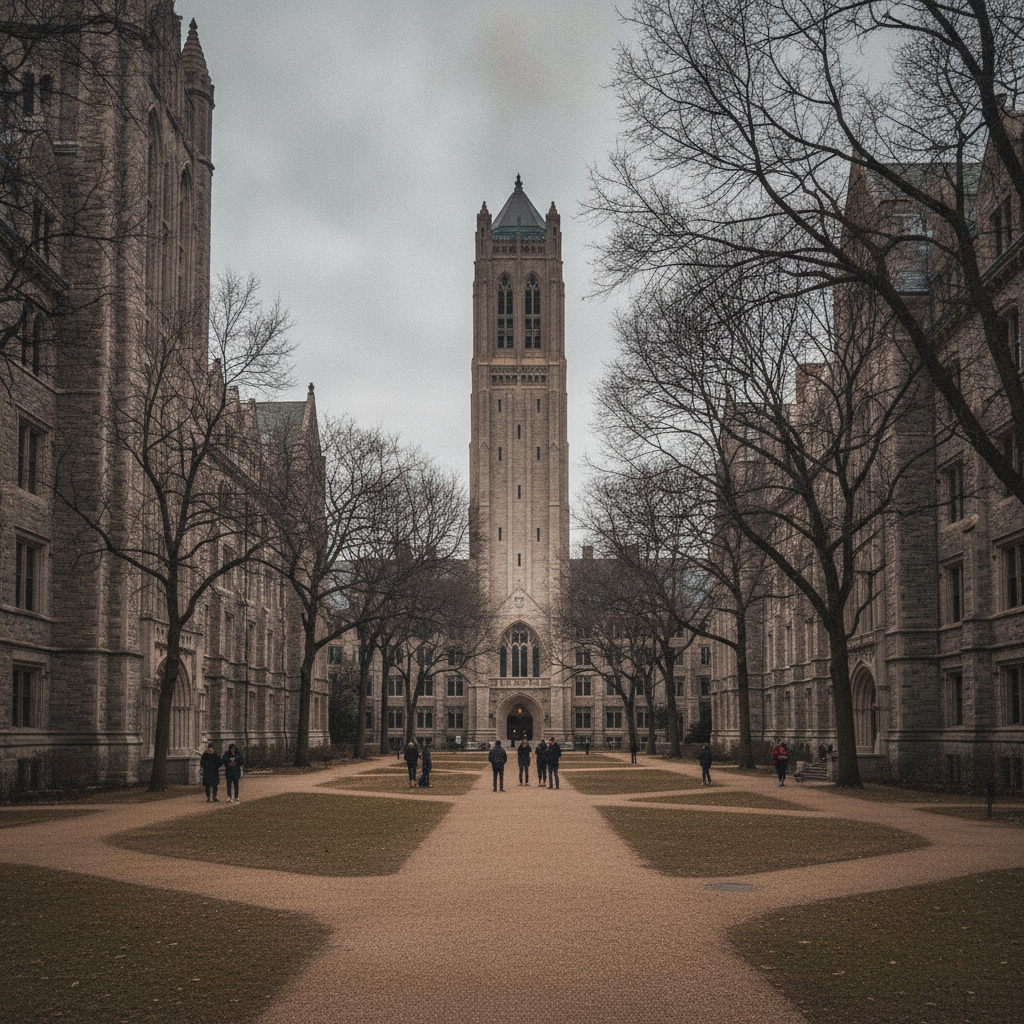
Hyde Park, the University of Chicago & Obama's South Side