Chennai's Region: Mahabalipuram's Rock Sculptures, Kanchipuram's 1,000 Temples & the Detroit of India's Auto Economy
Expand beyond Chennai—Mahabalipuram's 7th-century shore temple and the world's largest outdoor bas-relief carved from a granite cliff face, Kanchipuram's silk sarees and the 685 AD temple that predates every other structural stone temple in Tamil Nadu, Mylapore's filter coffee and San Thome Cathedral above the alleged tomb of St Thomas the Apostle, the Hyundai plant producing 750,000 cars annually for export from Chennai Port, the Dravidian gopuram system that created temple towns with 70-metre gateways at their centres, and what the 2004 tsunami taught Chennai about its 13-km coastline.
- 1
Mahabalipuram – Shore Temple & Rock-Cut Sculptures
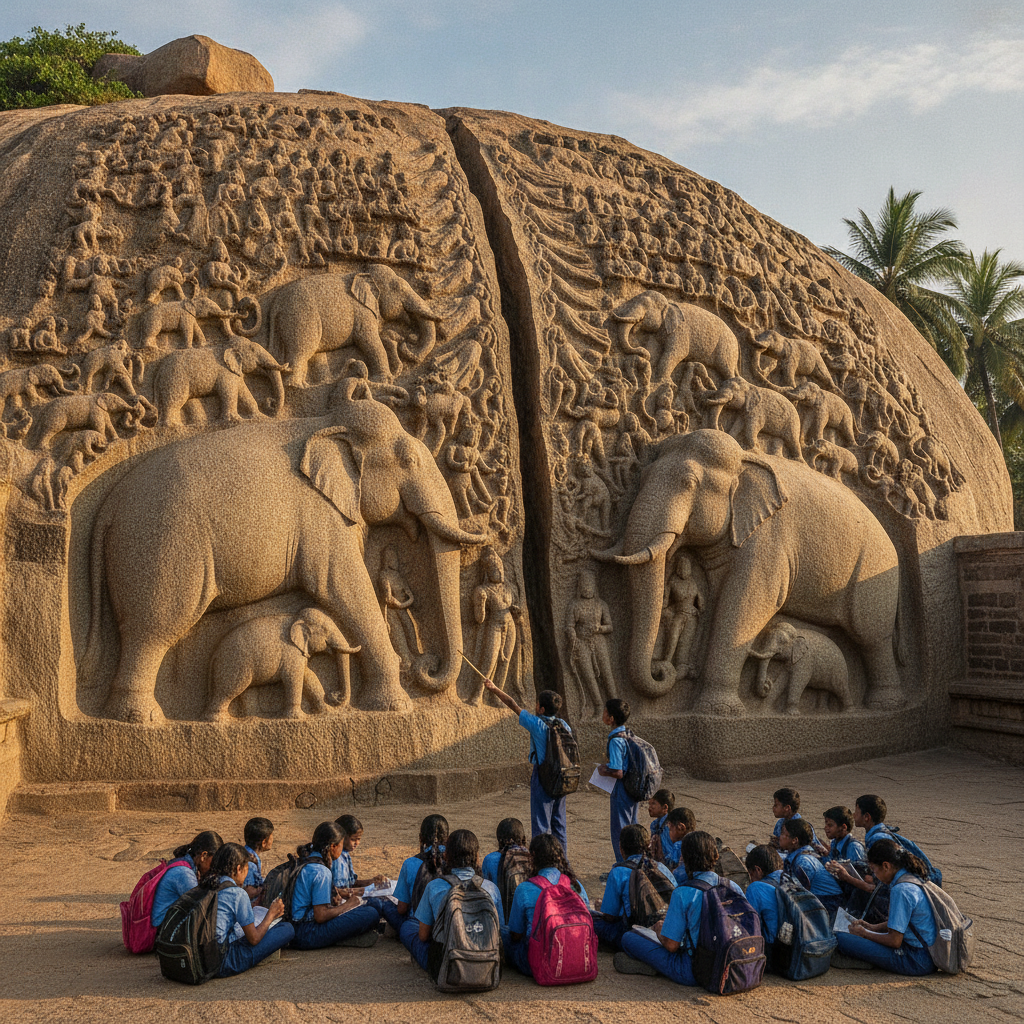
Mahabalipuram (Mamallapuram)—60 km south of Chennai (1.5 hours), UNESCO World Heritage Site (1984)—is a 7th–8th century Pallava dynasty port city containing extraordinary rock-cut temples and sculptures. The Shore Temple (8th century, two Shiva shrines facing the sea in a single sandstone structure)—the first structural stone temple in South India—stands directly on the beach. Arjuna's Penance (or Descent of the Ganges)—a bas-relief carved into a natural granite rock face, 27 metres wide and 9 metres high, the world's largest outdoor bas-relief carving—depicts scenes from the Mahabharata with extraordinary narrative complexity and naturalistic animals (elephants, lions, deer, monkeys). The Pancha Rathas (Five Chariots)—five monolithic rock-cut temple chariots carved from single boulders in five different architectural styles—demonstrate the full range of South Indian temple architecture in a single UNESCO site.
- 2
Kanchipuram – The City of 1,000 Temples & Silk Sarees
Kanchipuram—75 km southwest of Chennai (2 hours)—is one of the seven sacred cities of Hinduism, the former Pallava and Chola capital, known as the 'city of 1,000 temples' (approximately 108 still active). The Kailasanathar Temple (685–705 AD—the oldest surviving structural temple in Tamil Nadu, predating Mahabalipuram's Shore Temple)—in pure Pallava architectural style with a deep-red sandstone shikhara tower—is the finest example of early Pallava architecture. The Ekambaranatha Temple (dedicated to Shiva, 59-metre gopuram, one of the five Shiva temples representing the five elements—earth is Kanchipuram's element) and the Varadaraja Perumal Temple (Vishnu, 100-pillar hall, Festival of the Hidden Idol every 40 years—next in 2039) are the largest. Kanchipuram silk sarees—pure silk, woven with zari border, in deep colours—are the most prestigious sarees in South India, used for all significant life ceremonies.
- 3
Chennai's Neighbourhoods – Mylapore, T. Nagar & Anna Nagar
Chennai's neighbourhoods each have a distinct character. Mylapore—the oldest neighbourhood, centred on the Kapaleeshwarar Temple tank—is the most culturally Tamil: traditional music and dance institutions, morning temple crowds, narrow streets of old Tamil houses, the San Thome Cathedral (1896, built over the alleged tomb of St Thomas the Apostle), and excellent vegetarian restaurants and filter coffee shops (Murugan Idli Shop, Ratna Café). T. Nagar (Thyagaraja Nagar)—3 km west of Mylapore—is India's most congested retail district by sales per square kilometre: Ranganathan Street (officially the second-busiest commercial street in Asia) has silk sarees, gold jewellery, and textiles sold at extraordinary density. Anna Nagar—north Chennai's planned middle-class residential district—is where Chennai's IT and business professionals live; the Anna Nagar Tower (a water tower converted to a public viewpoint) gives the best panoramic city view.
- 4
Chennai's Auto & IT Economy – The Detroit of India
Chennai is the 'Detroit of India'—the automotive manufacturing hub of South Asia: Hyundai (Chennai is Hyundai's only Indian manufacturing facility, producing 750,000 cars per year), Ford (until 2021), BMW (assembly), and Ashok Leyland (heavy vehicles) have major facilities in the Chennai-Sriperumbudur corridor. India's largest automobile export port (Chennai Port) ships Indian-made vehicles to over 100 countries. The IT sector (Tidel Park, Rajiv Gandhi Salai—'the IT corridor'—in south Chennai) hosts India's largest IT campus cluster after Bengaluru: major software companies including Infosys, TCS, Wipro, and Cognizant have large Chennai operations. Chennai's per-capita income is the highest of any major Indian city and its HDI (Human Development Index) score is the highest of India's four major metros, reflecting Tamil Nadu's superior health and education indicators.
- 5
Tamil Nadu's Temple Architecture – Gopurams & Mandapams
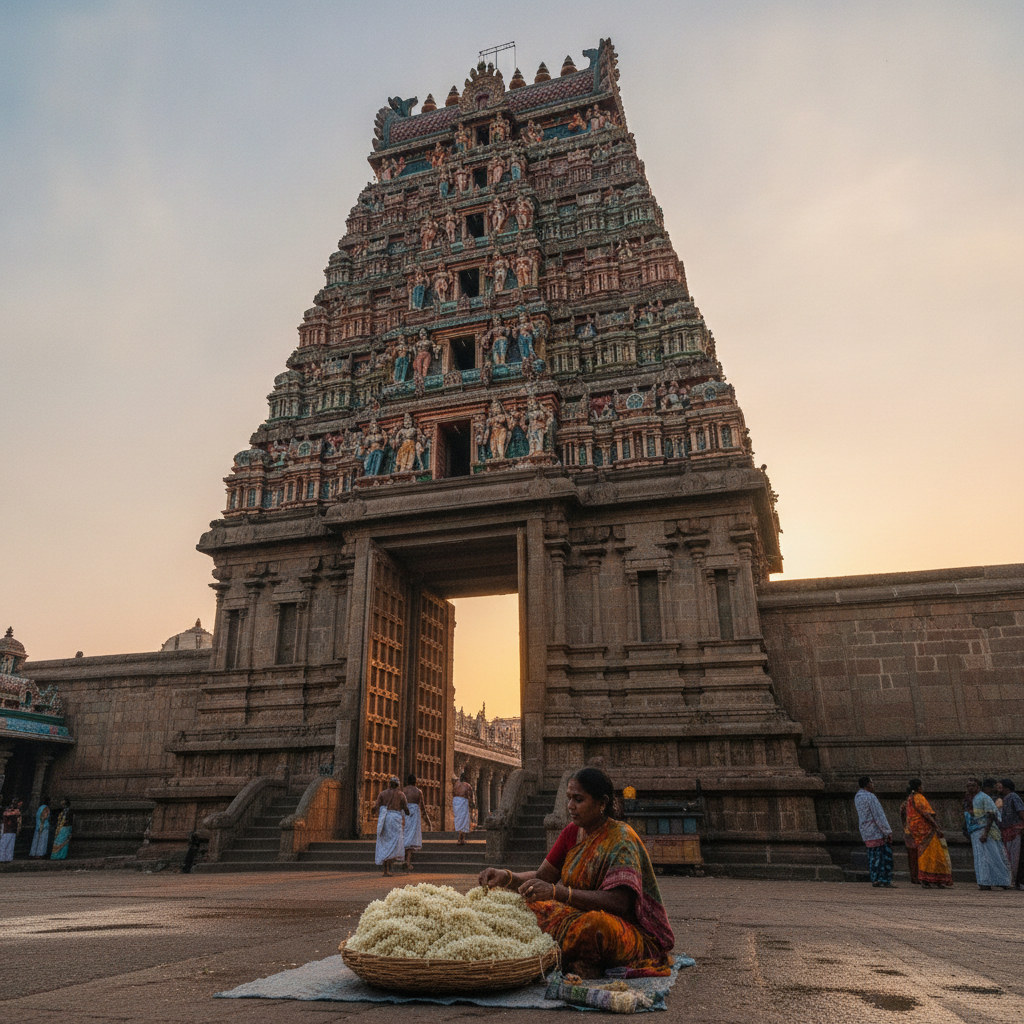
Tamil Nadu's Dravidian temple architecture is the most distinctive regional architectural tradition in India: enormous towered gateways (gopurams) in multiple tiers, covered in painted stucco sculpture of mythological figures, rising to 40–70 metres; pillared assembly halls (mandapams); the sacred tank (theertham) for ritual bathing; and the inner sanctum (garbhagriha, 'womb-house') containing the main deity. The temple town system—where the temple is literally the centre of urban life, with concentric streets (mada streets) radiating from the temple compound—has produced some of the world's most extraordinary sacred cities. Notable temples within day-trip range of Chennai: Chidambaram (Nataraja temple, 250 km south, famous for its Cosmic Dance of Shiva in the golden-roofed sanctum), Kumbakonam (the 'city of temples', 300 km south), and Tiruvannamalai (200 km, 175-metre Mount Arunachala circumambulation).
- 6
The 2004 Indian Ocean Tsunami – Chennai's Waterfront Transformation
The 2004 Indian Ocean tsunami (December 26, 2004—Boxing Day Tsunami)—triggered by a 9.1 magnitude undersea earthquake off the Sumatra coast—killed approximately 230,000 people across 14 countries. Tamil Nadu (and Chennai in particular) was severely affected: Marina Beach and the Chennai coastline saw waves up to 5 metres; approximately 7,983 people died in Tamil Nadu; fishing communities along the coast were devastated. The tsunami transformed Chennai's relationship with its coastline: the Tsunami Warning System was established for the Indian Ocean; construction setback rules from the high-tide line were significantly tightened; memorial sites and permanent markers exist along the Marina Beach promenade. The fishing communities (Kattabomman Village, Nochikuppam) along the beach, who lost boats, nets, and livelihoods, received mixed support in the post-tsunami reconstruction.
Walk this route with audio
Stories play automatically as you reach each stop — no tapping needed.
More in Chennai
Chennai's Arts Capital: 2,000 Carnatic Music Performances in 45 Days, Bharatanatyam's Sacred Dance Origins & Rajinikanth's Japan Fan Clubs
Chennai Essentials: Marina Beach at Dawn, Dravidian Temple Towers & the World's Largest Classical Arts Festival
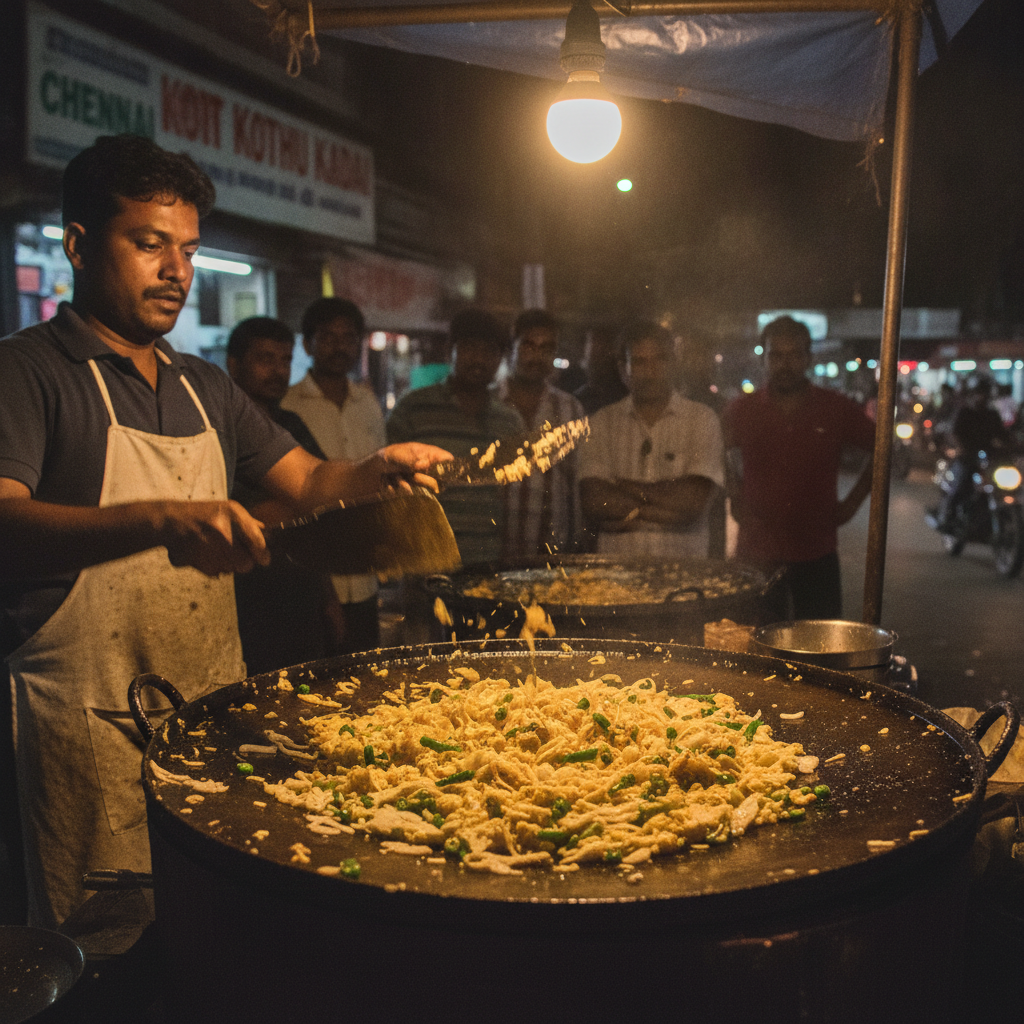
Chennai Living: Filter Coffee Pulled from a Height, St Thomas Arriving in 52 AD & 50,000 Koreans on the IT Corridor
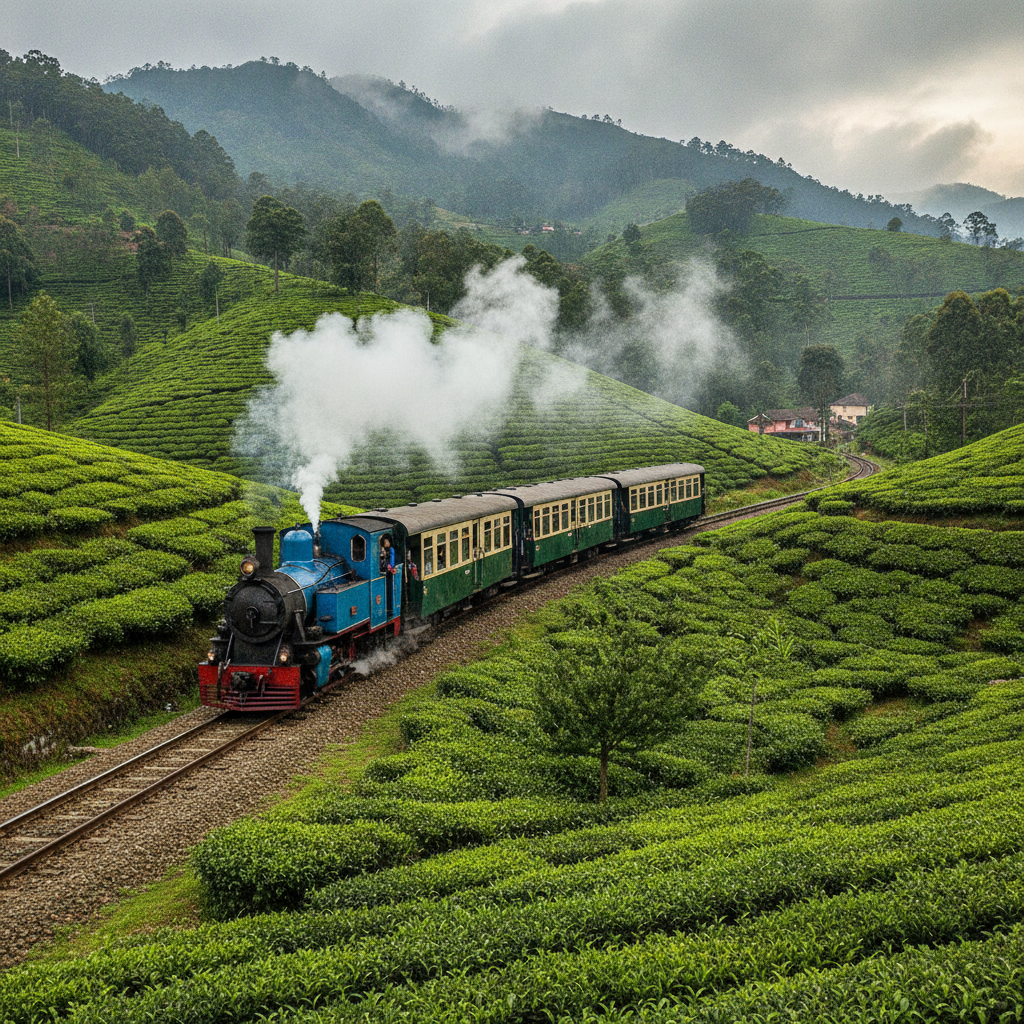
Chennai's Day Trips: Chettinad's Italian Marble Mansions, Pondicherry's French Quarter & Thanjavur's 66-Metre Chola Tower