The Earthquake That Exposed Tofu Construction, the Dinosaur Capital Producing More Significant Fossils Than Anywhere in China & the Dog That Barks at the Sun
The Wenchuan earthquake's 7,000 collapsed school classrooms vs. surviving government buildings; the Beichuan ruins preserved exactly as of May 2008; the Zigong Dinosaur Museum built over its own excavation with 30 in-situ dinosaur skeletons; Huanglong's 3,400 travertine pools as the world's largest concentration; Xue Tao's 768–832 CE poetry paper still manufactured today; and the 144-hour transit visa-free policy covering 53 nationalities for Chengdu visits.
- 1
Chengdu's Tibetan Quarter & Ethnic Diversity
Chengdu is the most ethnically diverse major city in western China—the largest urban center serving the Tibetan, Yi, Qiang, and other ethnic minority populations of the Sichuan highlands. The Tibetan Quarter (the Zangqiang Commercial Street (藏羌文化商业街) in the Chenghua district): the most concentrated Tibetan commercial and cultural area in any Chinese city outside Lhasa—the district where Tibetan medicine clinics, thangka painting galleries, butter sculpture workshops, and Tibetan Buddhist supply shops coexist with regular Chengdu street life. The thangka art market (the Chengdu thangka galleries—the most accessible market outside Tibet for the Tibetan Buddhist scroll painting tradition): the thangka painting (the Tibetan Buddhist painted or embroidered scroll depicting deities, mandalas, and narratives in mineral pigments on cotton canvas—the art form whose most skilled practitioners train for 10+ years): the Chengdu thangka market prices range from ¥500 for workshop prints to ¥100,000+ for master works. The Yi minority corridor (the areas of the Chengdu commercial center serving the Yi ethnic minority from the Liangshan region): the Yi traditional clothing (the black, red, and yellow wool garments with silver ornaments) visible in the Chengdu markets. The Qiang ethnic group (the Qiang people of the Aba Tibetan and Qiang Autonomous Prefecture north of Chengdu—the 2008 Sichuan earthquake's most severely affected ethnic community).
- 2
The 2008 Sichuan Earthquake – Memory & Rebuilding
The 2008 Sichuan earthquake (the 12 May 2008 Mw 7.9 earthquake (known as the Wenchuan earthquake (汶川地震)—the epicenter in Wenchuan County 80 km northwest of Chengdu): the most destructive natural disaster in China since the 1976 Tangshan earthquake. The casualties: approximately 69,000 dead, 374,000 injured, and 4.8 million homeless—the most severe disaster in Sichuan's recorded history. The school collapses (the tofu construction controversy—the disproportionate collapse of school buildings (approximately 7,000 school classrooms collapsed in the earthquake compared to much lower collapse rates of government buildings) due to substandard construction ('tofu construction' (豆腐渣工程))): the most politically sensitive aspect of the disaster. The Beichuan Memorial Site (北川老县城地震遗址—the earthquake ruins preserved at the old Beichuan County seat, 160 km north of Chengdu): the most complete earthquake disaster site preserved as a memorial in China—the entire destroyed town maintained exactly as it was left in May 2008, accessible for visitor contemplation. The Chengdu rebuilding (the speed of Chengdu's post-earthquake recovery—the city itself suffered minimal structural damage and served as the primary relief coordination center): the panda base staff evacuation and the successful protection of the panda population during the disaster.
- 3
Chengdu's Bookstores, Art Districts & Night Bars
The contemporary Chengdu creative scene beyond the food and heritage sites: the city's emerging art, design, and nightlife culture that has attracted young Chinese creatives from across the country. The Taikoo Li Chengdu (太古里): the open-air luxury retail and dining development in the Chunxi Road district, designed around a preserved Qing Dynasty temple complex—the most architecturally sophisticated commercial development in western China. The Fangsuo Commune (方所): the 4,000 m² independent bookstore-cultural-space in the Taikoo Li basement—named one of the world's 10 most beautiful bookstores by multiple international design publications. The Yulin neighborhood (the residential creative district in south-central Chengdu—the neighborhood of the Chengdu creative class, with independent design studios, vinyl record shops, independent cafes, and the most concentrated bar scene in Chengdu that is not tourist-oriented). The Jiuyanqiao bar street (the Chengdu bar corridor along the Fu River (锦江) near the ancient Nine Eyes Bridge (九眼桥)): the most traditionally Chengdu nightlife location, where the bars extend along the riverbank under the overhanging willow trees—the most atmospheric evening location in the city. The Chengdu live music (the local band circuit at the House of Blues (成都蓝调) and the live house venues in the Yulin district).
- 4
Chengdu's Parks, Gardens & Green Infrastructure
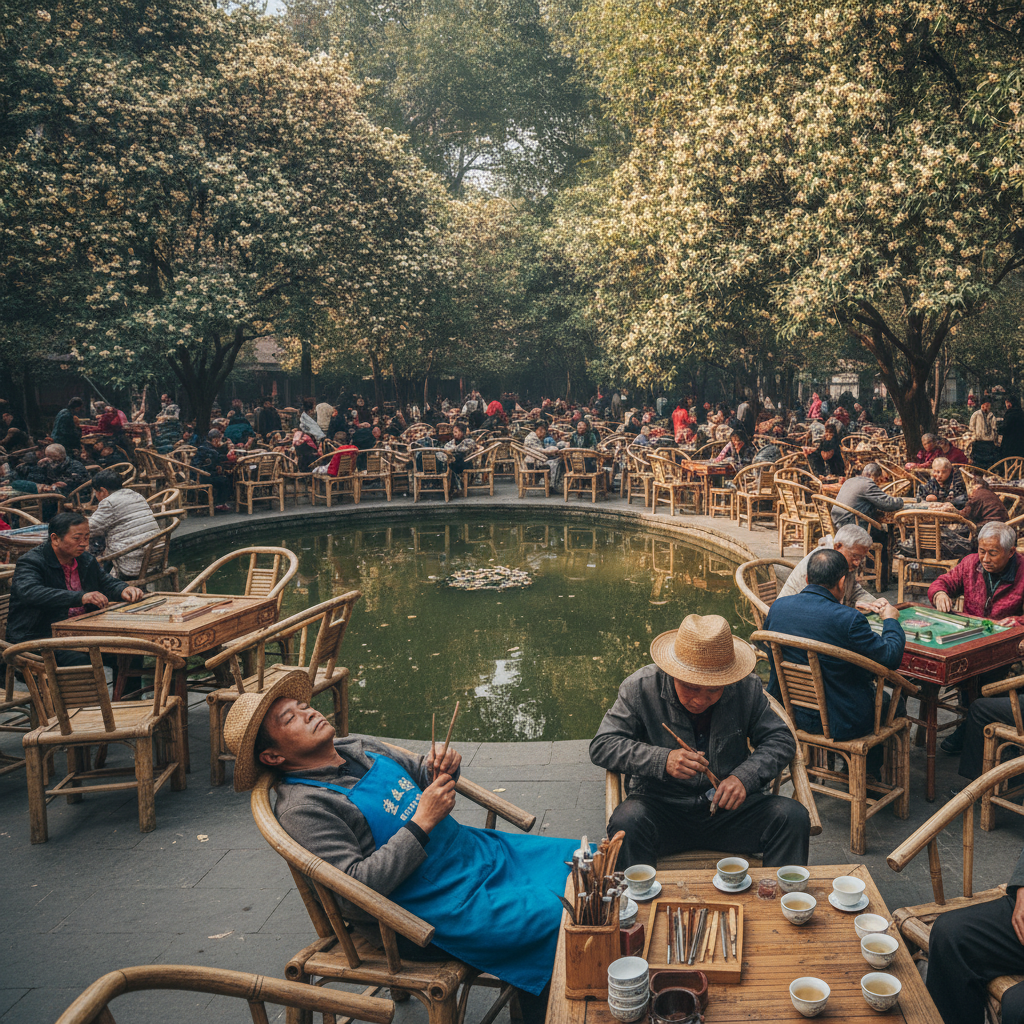
Chengdu has the highest urban park coverage of any comparable Chinese city—a direct expression of the city's slow-living philosophy. The People's Park (人民公园): the 140,000 m² central park housing the 2,000-seat teahouse, the largest mahjong playing area in any Chinese urban park, and the monument to the 1911 Railway Protection Movement (保路运动)—the rebellion that started in Chengdu and triggered the Xinhai Revolution overthrowing the Qing Dynasty. The Tianfu Greenway (天府绿道): the 16,000-km urban greenway network—the largest urban greenway system in China, connecting the ring roads of Chengdu with parks, wetlands, and bicycle paths. The Wangjiang Park (望江楼公园): the park on the Jinjiang River bank dedicated to the Tang Dynasty woman poet Xue Tao (薛涛, 768–832 CE), who invented the Xue Tao poetry paper (the small red paper format still manufactured today) and whose park is planted with the 150 bamboo species she celebrated in her poetry. The osmanthus season: October–November, when the parks and streets fill with the fragrance of osmanthus (桂花) trees in bloom—the most characteristic seasonal smell of Chengdu and the flavoring of the city's preferred osmanthus rice wine (桂花酒).
- 5
Day Trips from Chengdu – Zigong & Huanglong
The Chengdu day-trip landscape beyond Sanxingdui, Dujiangyan, Leshan, and Mount Emei: the less-visited destinations that reward a visitor with a rental car or extra days. Zigong (自贡—the 'Dinosaur Capital of China', 155 km south of Chengdu): the city that has produced more scientifically significant dinosaur fossils than anywhere else in China—the Zigong Dinosaur Museum (自贡恐龙博物馆) is built directly over the excavation site and displays 30 complete dinosaur skeletons in situ (in the excavated positions): the most physically impressive paleontological museum in Asia. Zigong is also the hometown of the Zigong lantern festival (the most elaborate Chinese lantern display in the world, held annually during Spring Festival). Huanglong (黄龙—the UNESCO World Heritage Site (listed 1992) in the Minshan Mountains of northern Sichuan, 320 km north of Chengdu): the travertine terraced pools (the colorful shallow pools formed by calcium carbonate deposition in the mountain stream—3,400 pools in total, the largest concentration of terraced travertine pools in the world): accessible by flight from Chengdu to Jiuzhai Huanglong Airport (45 minutes). The combined Jiuzhaigou (九寨沟) + Huanglong itinerary (the 2-day UNESCO natural heritage circuit in northern Sichuan—the most scenically dramatic nature excursion from Chengdu).
- 6
Chengdu Accommodation & Complete Visitor Intelligence
The Chengdu visitor intelligence framework: the practical knowledge that makes a Chengdu visit efficient. The weather: the Sichuan Basin weather produces fewer sunny days per year than almost any other major Chinese city—the local saying 'Sichuan dogs bark at the sun (蜀犬吠日)' captures the rarity of clear days. The optimum visit months: March–May (warm, rape flower fields on the Chengdu Plain in March–April) and September–November (comfortable temperatures, the osmanthus bloom in October). Avoid: July–August (extreme heat and humidity); Chinese public holidays (Spring Festival, Golden Week in October—the panda base visitor density makes viewing nearly impossible). The accommodation: the Temple House (博舍, in the Taikoo Li complex)—the boutique hotel within a preserved Qing Dynasty courtyard complex, winner of multiple international design awards; the Niccolo Chengdu (luxury full-service); the Wuhou Shrine area international hostels (budget). The visa situation: Chengdu is included in the 144-hour transit visa-free policy for 53 passport nationalities—the practical route for a short Chengdu visit without a China visa. The Chengdu transportation card (the Tianfu Tong card): available at metro stations, valid on all metro lines and buses, the essential payment tool for any Chengdu visitor using public transport.
Walk this route with audio
Stories play automatically as you reach each stop — no tapping needed.
More in Chengdu
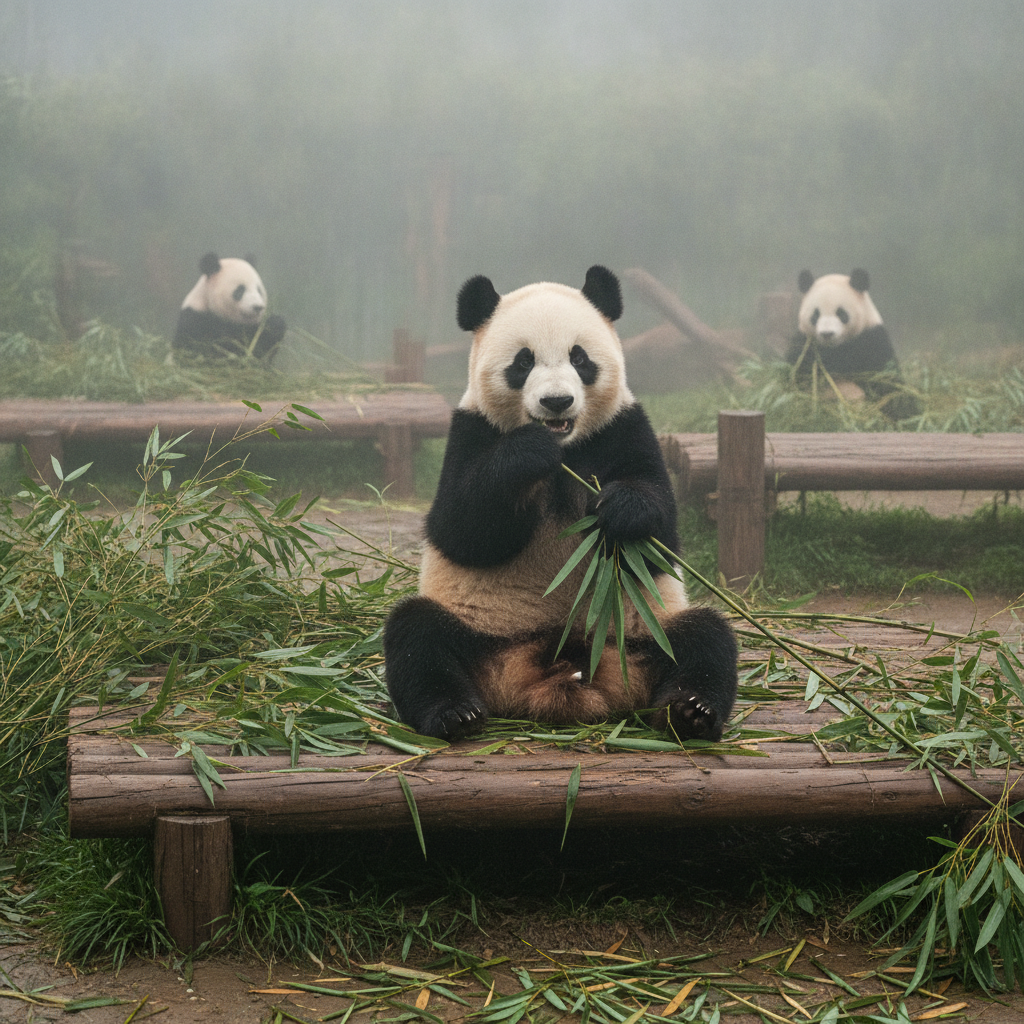
The Institution Responsible for 80% of All Captive Panda Births, the Firefox Browser Named After a Red Panda & the 1,200-Year Stone Buddha With a Built-In Rain Drainage System
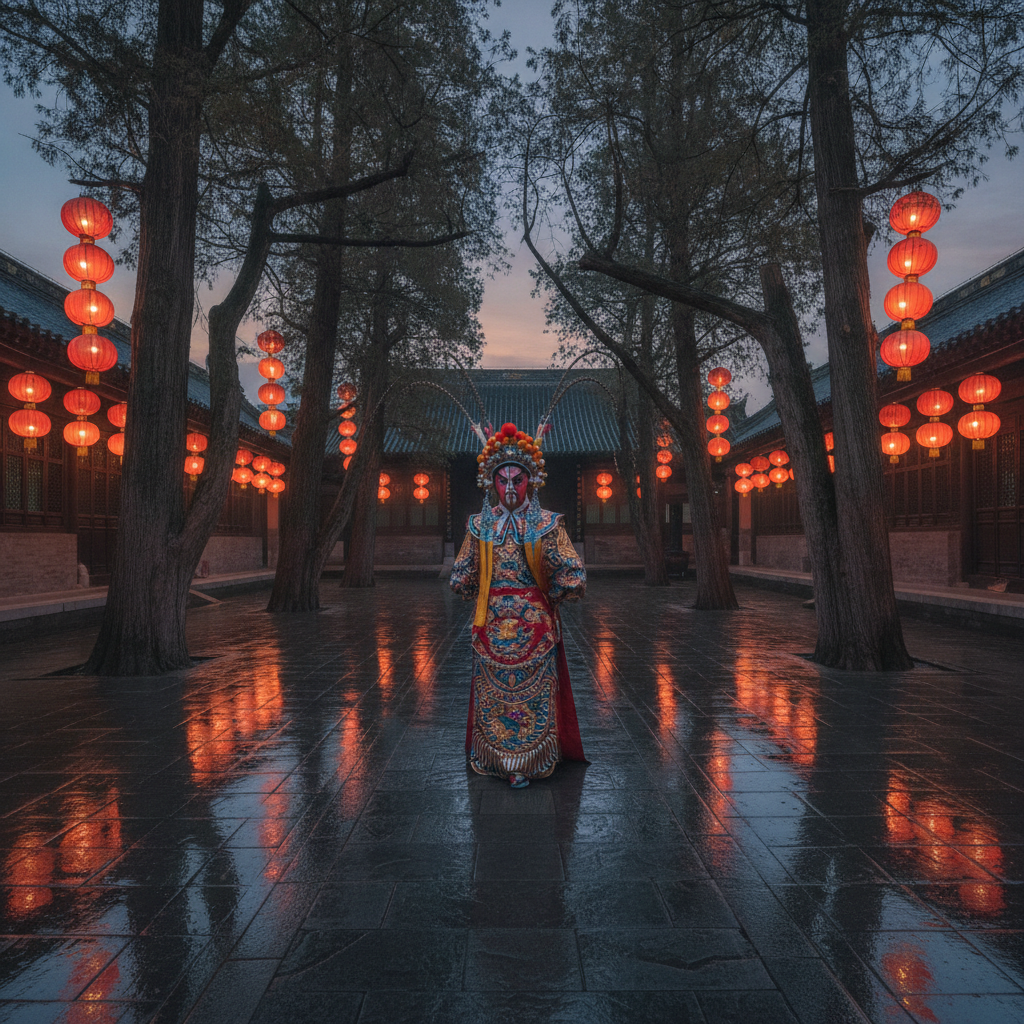
The Sichuan Opera, Du Fu's Thatched Cottage & the Plain That Fed the Han Dynasty
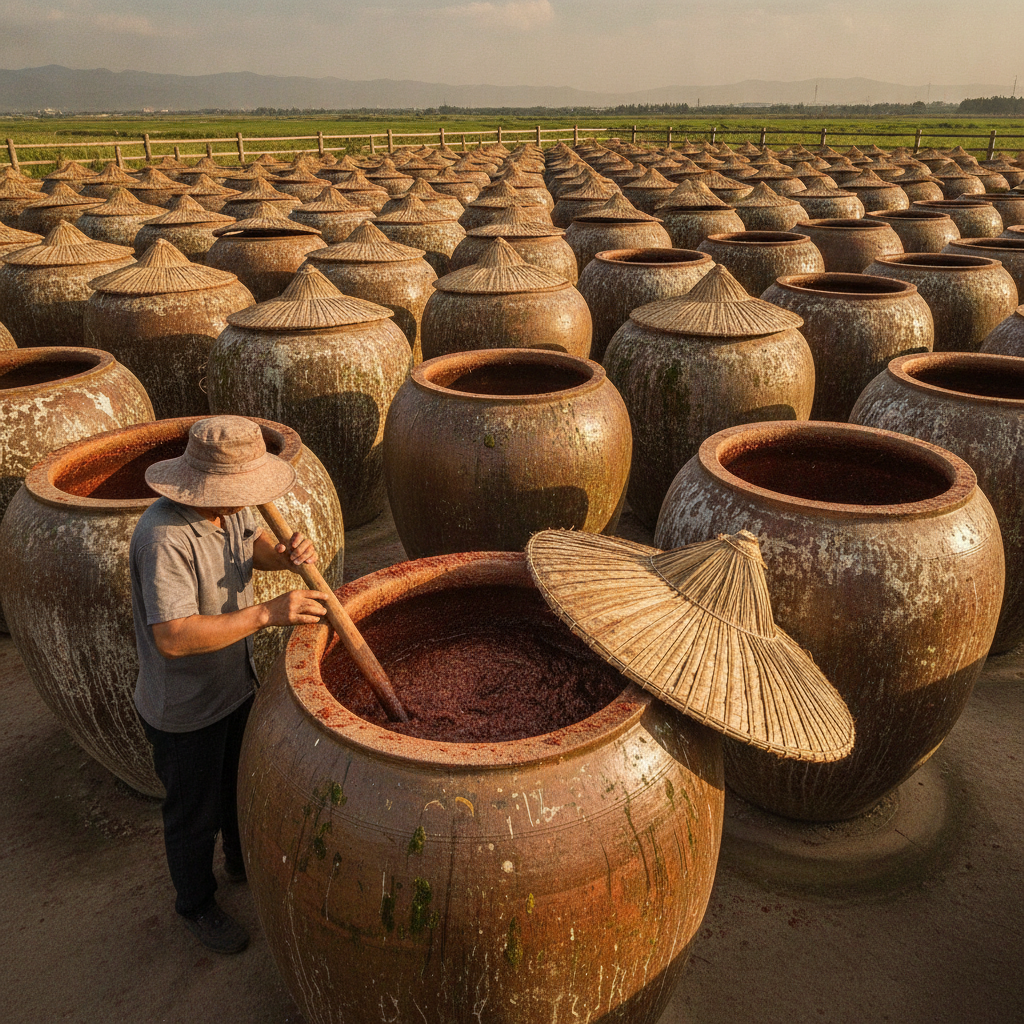
The 300-Year Paste With Its Own Museum, the Glacier Descending to 2,850m (the Lowest in Asia South of the Arctic Circle) & the Wonton Restaurant Open Since 1941
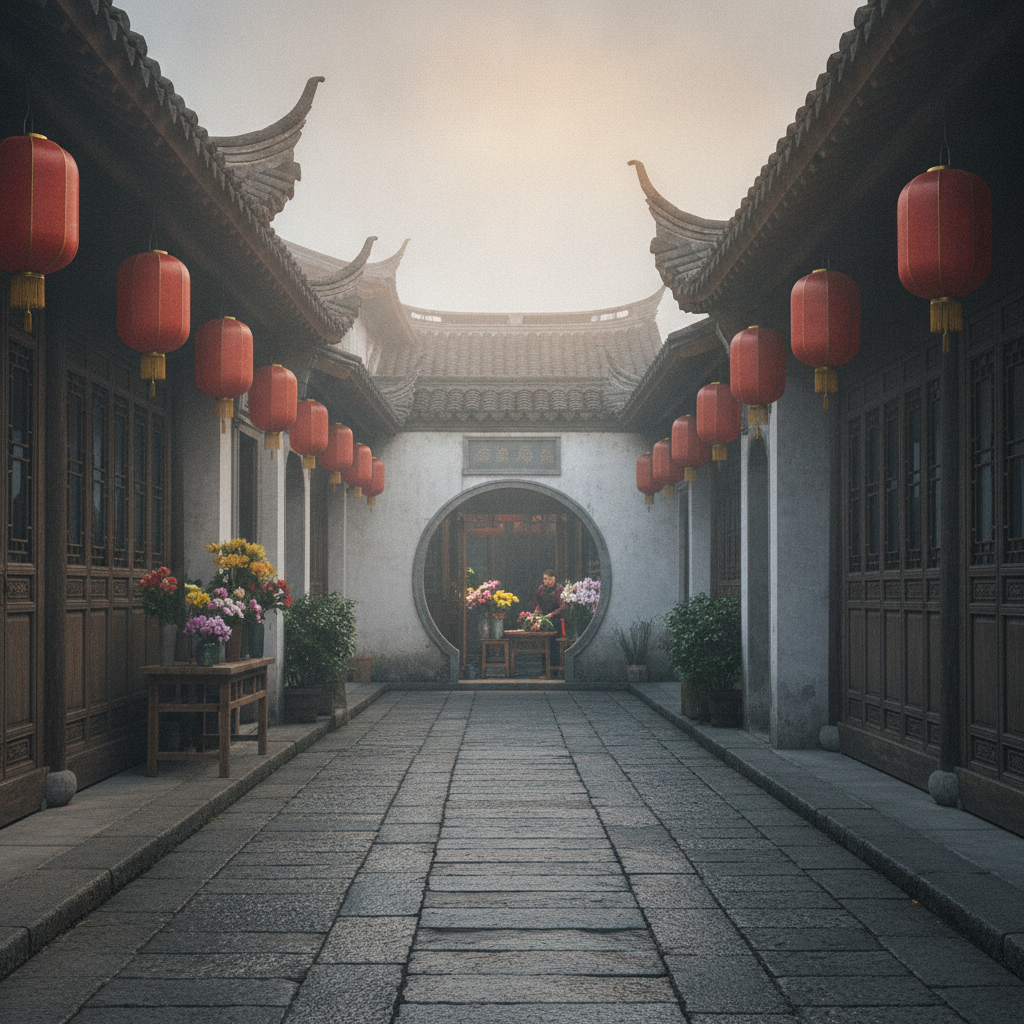
The UNESCO Gastronomy City Where the Spice Numbs Before It Burns, the 3,000 Aggressive Mountain Monkeys Armed With Walking Sticks & the State-Secret Face-Changing Opera That Switches Masks in 0.1 Seconds