The UNESCO Gastronomy City Where the Spice Numbs Before It Burns, the 3,000 Aggressive Mountain Monkeys Armed With Walking Sticks & the State-Secret Face-Changing Opera That Switches Masks in 0.1 Seconds
The Sichuan peppercorn's hydroxy-alpha-sanshool activating tactile not heat receptors; the Emei macaque walking-stick deterrent programme for 3,000 mountain monkeys; biànliǎn face-changing as a Chinese state secret performed in under 0.1 seconds; the People's Park's 2,000-seat outdoor teahouse and the ear-cleaning craftsman; the Foxconn Chengdu factory as the world's primary iPad production facility; and the Tibet Travel Permit's 5–10 day Chengdu-only processing requirement.
- 1
Sichuan Cuisine – Seven Flavors, One City
UNESCO designated Chengdu a Creative City of Gastronomy in 2010—the first Chinese city with this status. The 7 Sichuan flavor profiles (七种口味): mala (numbing-hot), yuxiang (fish-fragrant—no fish, uses doubanjiang/garlic/ginger/vinegar), guaiwei (strange flavor—sweet-sour-numbing-hot-savory-fragrant simultaneously), hongyou (red oil), suanla (sour-hot), jiaoma (peppercorn-sesame), and ganshao (dry-fried). Mapo tofu (麻婆豆腐): soft tofu in mala ground-pork and doubanjiang sauce, invented in the 1860s by Chen Liu (a woman with a pockmarked face) near Wanfu Bridge. Twice-cooked pork (回锅肉, huí guō ròu): the dish that defines Sichuan home cooking—pork belly simmered, sliced, and re-fried with doubanjiang and leeks. Fish-fragrant pork slices (鱼香肉丝): the most-ordered Sichuan dish in Chinese restaurants outside China. Kung pao chicken (宫保鸡丁): invented by Qing Dynasty Sichuan governor Ding Baozhen (丁宝桢) in the 19th century.
- 2
Kuanzhai Alley – The Qing Dynasty Manchu Quarter
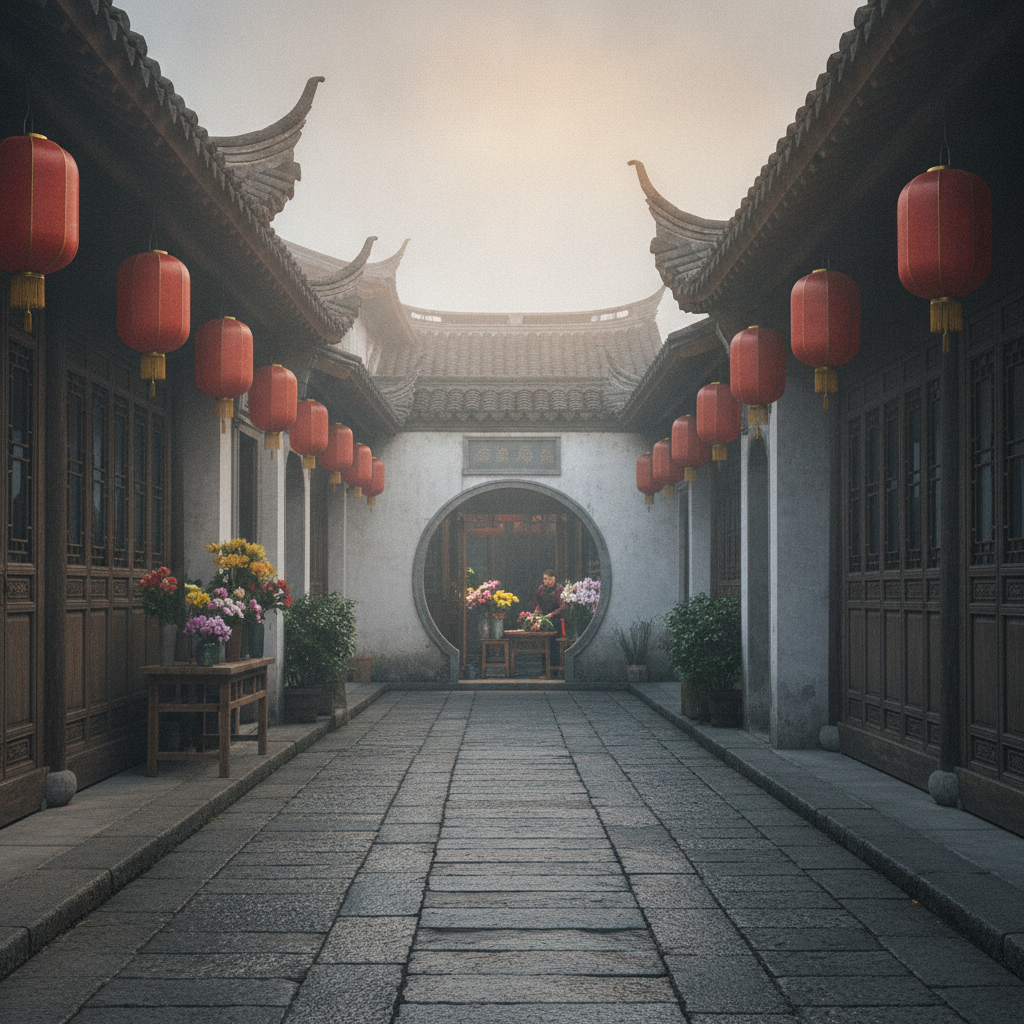
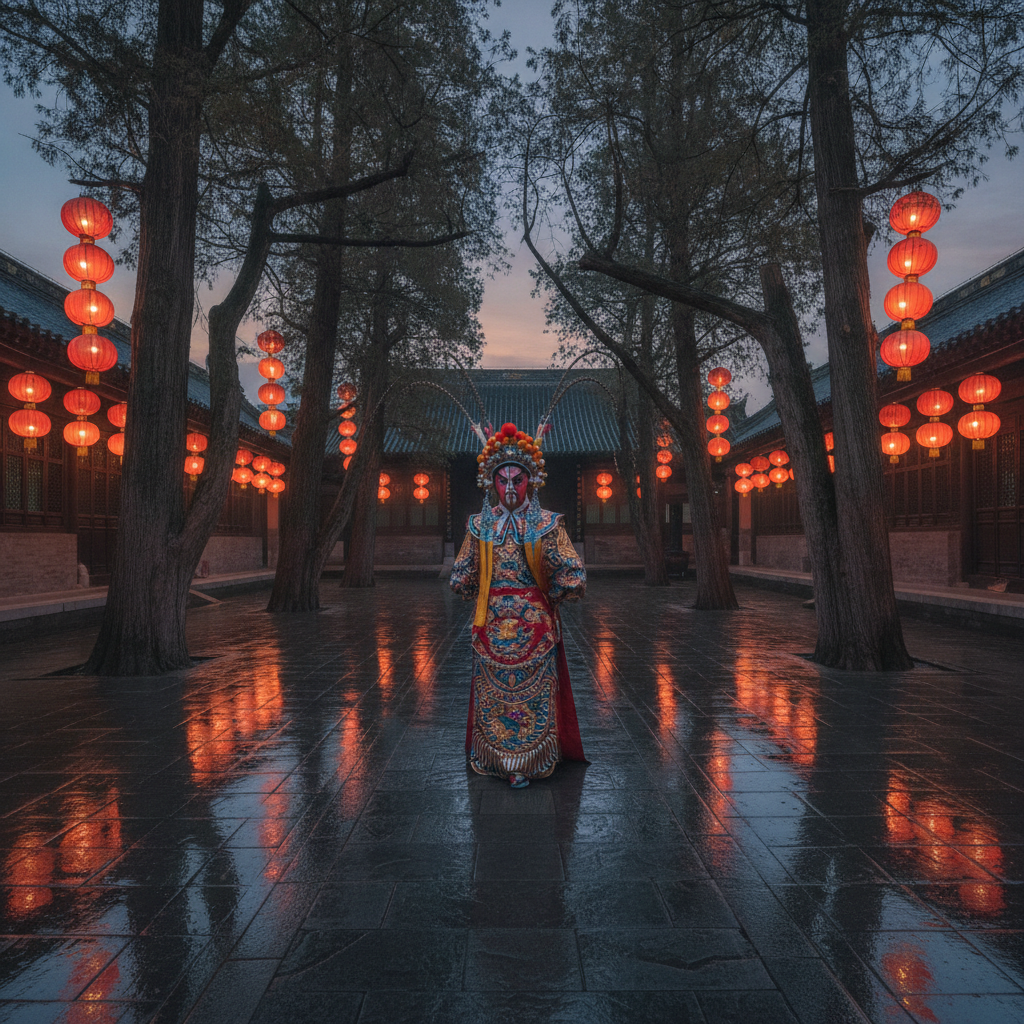
The Kuanzhai Alley (宽窄巷子—Wide, Narrow, and Well Alleys): the restored Qing Dynasty Manchu Eight Banner military settlement in the western part of Chengdu center. The Manchu garrison was stationed here after the Qing conquest of Sichuan in the 1640s; the courtyard houses (四合院) reflect the 18th-century Manchu residential tradition. Today: Wide Alley (Sichuan traditional culture—teahouses, shadow puppet shows, craft shops); Narrow Alley (the most concentrated restaurant lane in Chengdu); Well Alley (bars and branded stores). Peak-day visitor count: approximately 80,000 per day—the highest pedestrian density of any street in Chengdu. Optimal timing: weekday before 10:00 for the atmospheric quiet before restaurants open. The Sichuan Opera (变脸, biàn liǎn—face-changing): the Changyu Theatre adjacent to the Jinli Street area performs nightly face-changing shows where performers switch elaborate masks in under 0.1 seconds.
- 3
Mount Emei – The Sacred Buddhist Peak Above the Clouds
Mount Emei (峨眉山—3,099m): one of China's 4 sacred Buddhist mountains and UNESCO World Heritage Site (listed 1996 jointly with Leshan Giant Buddha). The Golden Summit (金顶, 3,077m): accessible by cable car from Leidongping Station (2,540m). The 48-metre golden Puxian Bodhisattva statue at the summit is visible for 40 km on clear days. The sea of clouds (云海): the cloud inversion filling the valley below while the summit remains clear—occurs approximately 200 days per year and is the most dramatic natural spectacle on the mountain. The Emei macaques: approximately 3,000 Tibetan macaques (Macaca thibetana) in multiple troops on the mountain trails. The macaques are habituated to humans and aggressively seek food—the mountain now issues walking sticks at the main entrance as standard macaque deterrents. Practical access: high-speed train Chengdu East to Emei Station (1h15m, ¥45); connecting bus to the mountain.
- 4
Chengdu Teahouse Culture – The Slow Life Capital
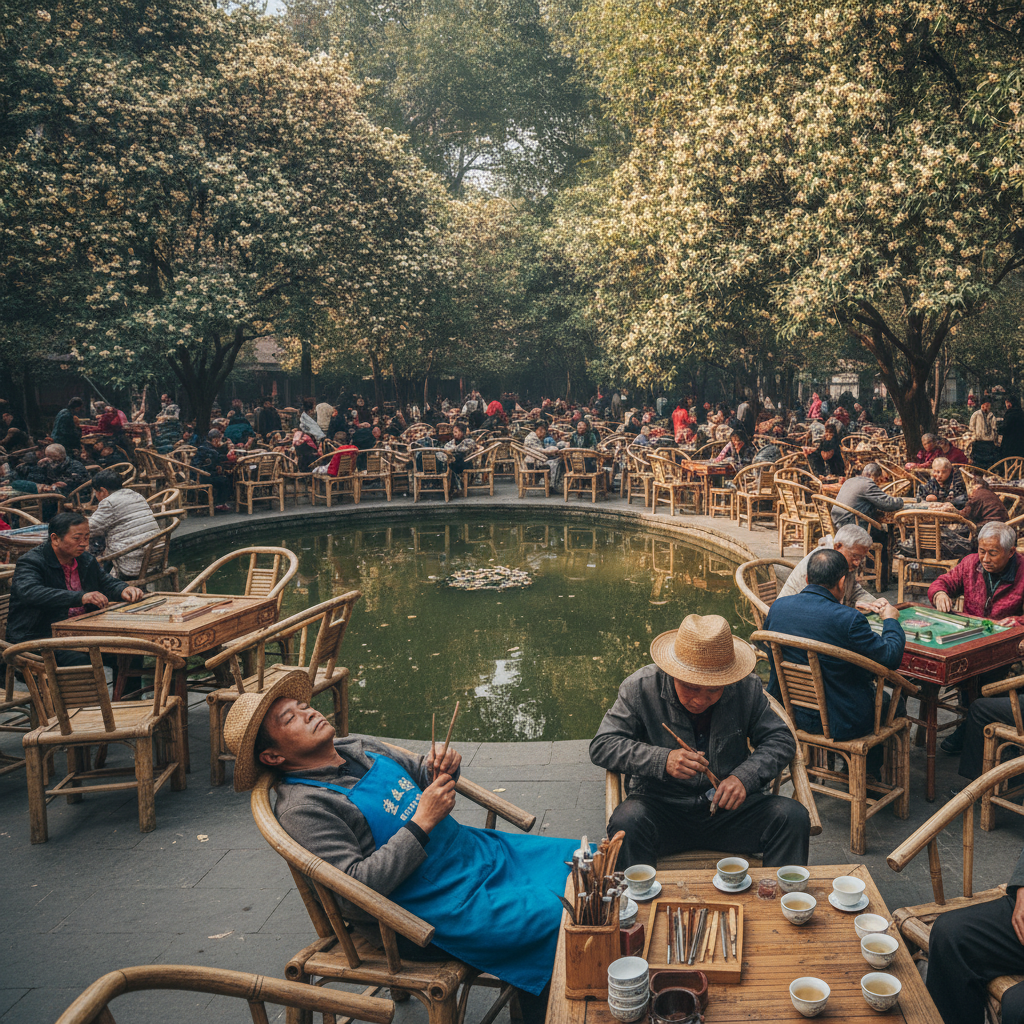
The Chengdu teahouse (茶馆, cháguǎn): the social living room of the city for 1,000+ years—the most saturated teahouse culture of any Chinese city. The People's Park Teahouse (人民公园茶馆): the 2,000-seat outdoor teahouse within the People's Park in central Chengdu, operating 07:00 to nightfall, the most authentic expression of the Chengdu slow-living philosophy. The traditional services: jasmine tea (碧潭飘雪—'floating snow on the green pond'), mahjong tables, Sichuan opera face-changing performances, fortune-telling, and the ear-cleaning service (掏耳). The ear-cleaner (掏耳匠): the craftsman performing ear-cleaning with specialized bamboo and metal instruments at the teahouse table—the most distinctively Chengdu sensory relaxation service, available for approximately ¥30–60 per session. The Chengdu lifestyle philosophy: the city's reputation for rejecting the work-pressure culture of Beijing and Shanghai in favor of the tea, mahjong, and hotpot lifestyle summarized as 'slow life city' (慢生活城市).
- 5
Chengdu Tech & Contemporary Culture
Chengdu is China's western technology capital. Foxconn's Chengdu factory produces the majority of the world's iPads. Regional headquarters of Intel, IBM, SAP, Dell, and approximately 2,000 gaming companies make it China's gaming capital outside Guangdong. Tencent and NetEase both operate major studios here. The Chengdu IFS (国际金融中心): the luxury mall on Chunxi Road famous for the giant panda climbing the exterior—a sculpture by Zhang Xiaogang that became one of Chengdu's most photographed urban landmarks. The A4 Art Museum (A4美术馆): the most programmatically ambitious contemporary art institution in western China, focused on Chinese avant-garde and international work. The Chunxi Road pedestrian area: approximately 500,000 daily pedestrians on peak weekends, the highest commercial density in western China. The Sichuan face-changing opera (变脸): the performance art where performers switch elaborate painted masks in under 0.1 seconds using techniques still classified as state secret.
- 6
Chengdu as the Tibet Gateway
Chengdu is the primary staging point for travel to the Tibetan Plateau—the most logistically critical city for Tibet-bound travelers. The Tibet Travel Permit (TTB) is required for all foreign nationals to enter the Tibet Autonomous Region and is only obtainable through a licensed Tibetan travel agency in Chengdu (not independently; minimum 5–10 working days). The concentration of Tibet tour operators near the Wuhou Shrine area makes Chengdu the practical place for permit arrangements. The Chengdu-to-Lhasa train (via Xining—approximately 48 hours) gains altitude so gradually that acute altitude sickness during the journey is uncommon. The Sichuan–Tibet Highway G318 (2,142 km from Chengdu to Lhasa via the 4,730m Erlangshan Pass through Kham (eastern Tibet)) is described by National Geographic as the world's most scenic overland route. Chengdu Tianfu Airport has direct international flights to 50+ destinations, making it the most internationally accessible gateway to western China.
Walk this route with audio
Stories play automatically as you reach each stop — no tapping needed.
More in Chengdu
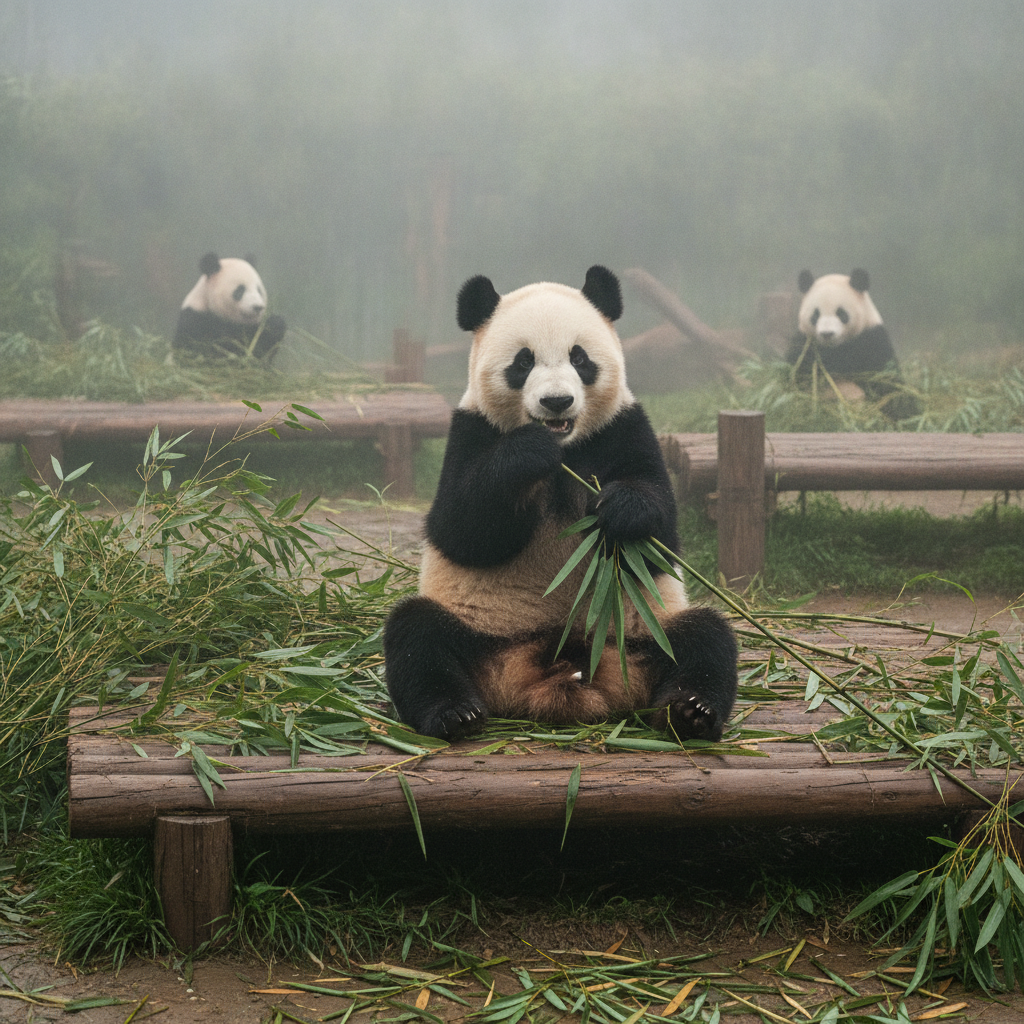
The Institution Responsible for 80% of All Captive Panda Births, the Firefox Browser Named After a Red Panda & the 1,200-Year Stone Buddha With a Built-In Rain Drainage System
The Sichuan Opera, Du Fu's Thatched Cottage & the Plain That Fed the Han Dynasty
The Earthquake That Exposed Tofu Construction, the Dinosaur Capital Producing More Significant Fossils Than Anywhere in China & the Dog That Barks at the Sun
The 300-Year Paste With Its Own Museum, the Glacier Descending to 2,850m (the Lowest in Asia South of the Arctic Circle) & the Wonton Restaurant Open Since 1941