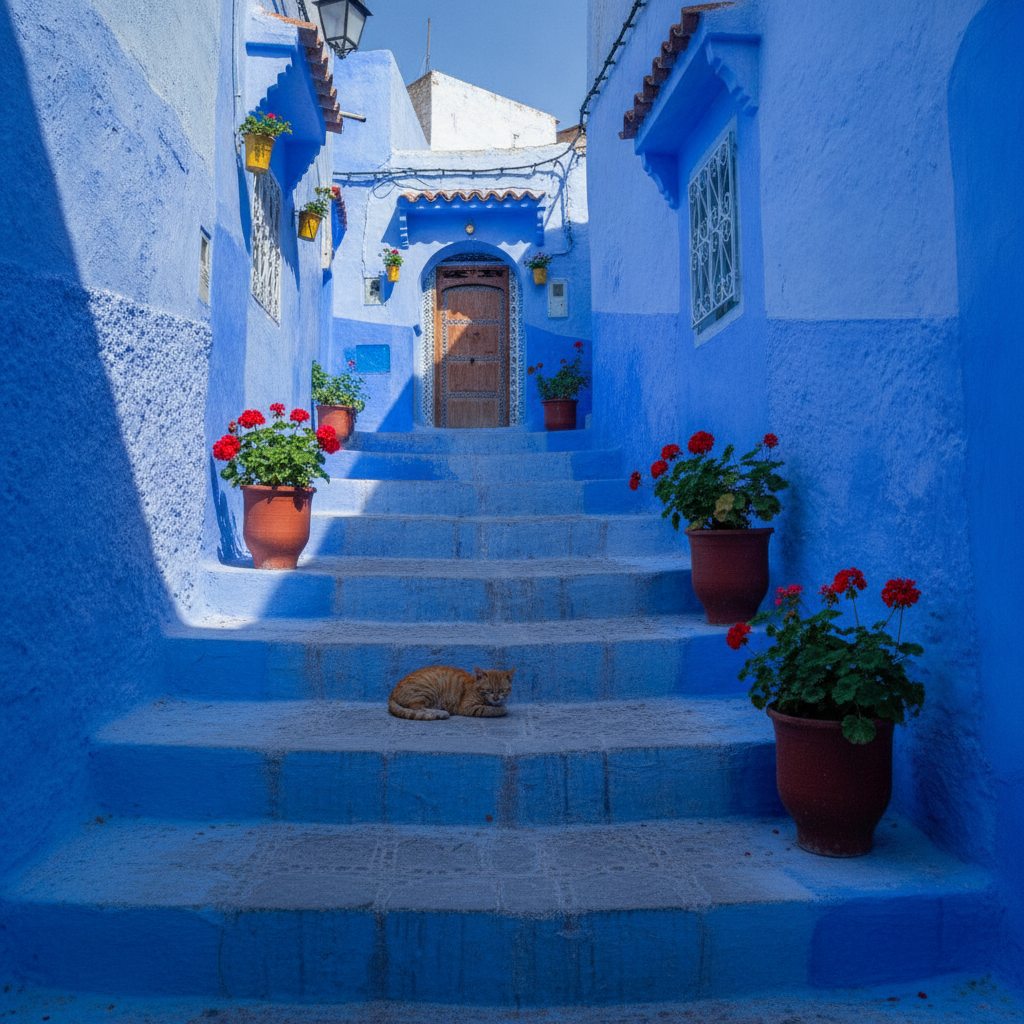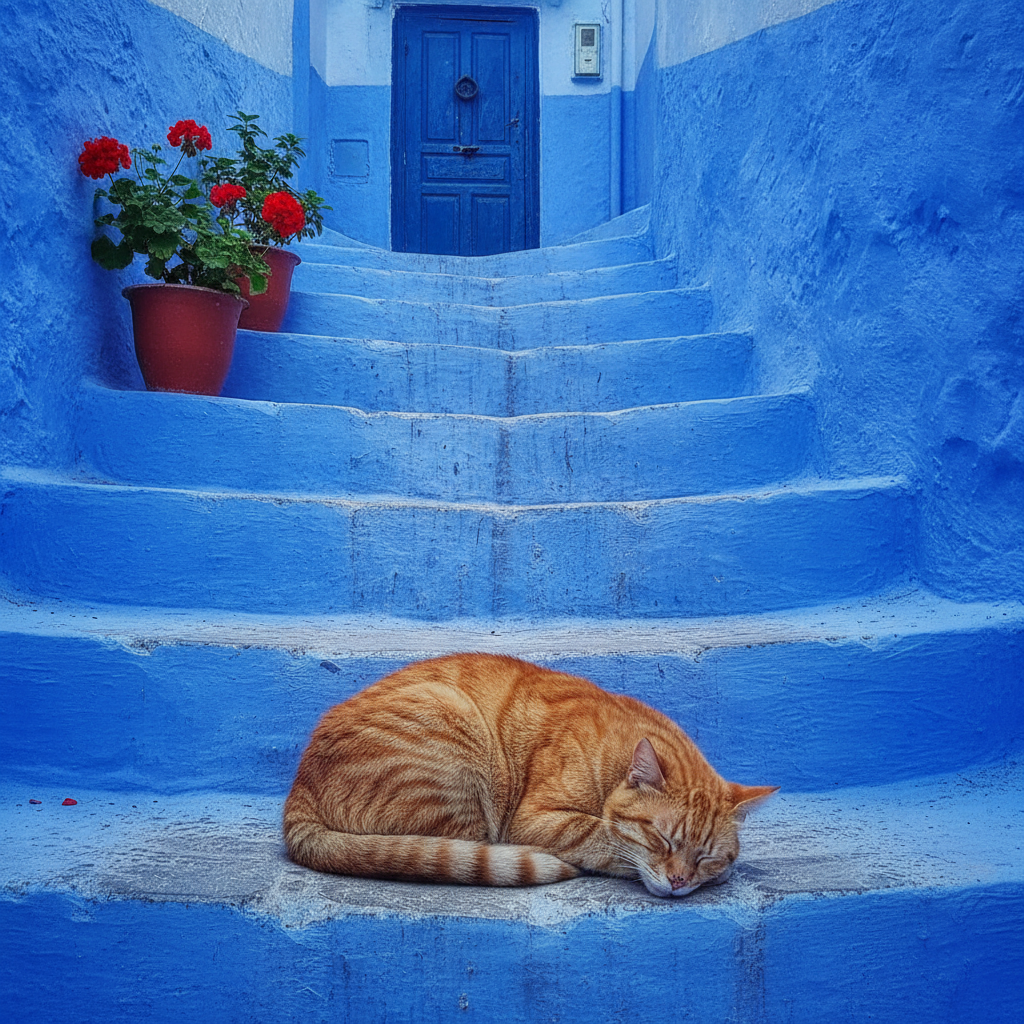
Chefchaouen Has an Estimated 500-1,500 Feral Cats in the Medina Who Appear in Approximately 20-30% of All Instagram Photographs of the City; Moroccan Islamic Tradition Regards Cats Positively Based on the Prophet Muhammad's Reported Pet Cat Named Muezza; The Chefchaouen Blue Paint Is a Lime-Based Whitewash Applied Annually Before Summer Using Synthetic Cobalt Blue and Ultramarine Pigments While Traditional Blue Used Indigo
Chefchaouen having 500-1,500 feral cats appearing in 20-30% of Instagram photographs; Islamic tradition regarding cats positively based on the Prophet's cat Muezza; the blue paint being lime whitewash with cobalt pigments applied annually; jben goat cheese and Rif thyme honey as the primary local food products; the best medina experience at 6:30-7am before tourist groups arrive; and Chefchaouen compared to Morocco's other cities as the most visually distinctive but least historically deep destination.
- 1
Chefchaouen Cats and the Medina Animal Culture
The cats of Chefchaouen - the large feral cat population that is an integral part of the character of the Blue City medina: the animal culture guide. The cat population (Chefchaouen has an exceptionally large population of feral cats: estimates range from 500-1,500 cats in and around the medina: the cats are a recognized and celebrated part of Chefchaouen's visual identity: the cat management (the cats are tolerated by the medina population: restaurant owners feed the cats scraps: the cats control rodent populations in the medina food storage areas: the Islamic tradition of respecting cats (Islamic tradition regards the cat positively: the Prophet Muhammad was reported to have a pet cat named Muezza: cutting the cat's fur for a prayer rug is cited in Islamic tradition: cats are permitted in mosques in the Islamic tradition: the photography (the cats of Chefchaouen are a major photography subject: orange and grey cats sleeping on blue stairs, cats in flower pots, cats in doorways: the cats appear in approximately 20-30% of all Chefchaouen Instagram photographs: the cat cafe culture (the development of cat-themed cafes and guesthouses in Chefchaouen that market themselves around their cat populations: the ethical tourism dimension (the question of whether the cat photo culture incentivizes keeping cats in unhealthy numbers in the medina: the cat health and welfare considerations: the municipal cat neutering programs that some Moroccan cities have adopted: the blue cat (the concept of a perfectly blue cat on a blue staircase is a popular photography challenge in Chefchaouen: in practice the cats are predominantly orange, grey, and white - colors that contrast dramatically with the blue walls and make for the most visually striking photographs).
- 2
Chefchaouen Food Guide - Rif Mountain Cuisine and Local Specialties
Chefchaouen food guide - the local cuisine of the Blue City and the distinctive Rif mountain foodways: the food guide. The Chefchaouen culinary identity (Chefchaouen has a distinct local culinary tradition that combines the Moroccan Andalusian-Fassi base with the highland Rif mountain agricultural products: the primary local products: the goat cheese (jben chaouni - the local fresh goat cheese: produced by the Rif mountain Berber herding communities: sold in the Chefchaouen market in large white discs wrapped in palm leaf: a mild, slightly salty, fresh cheese that can be eaten as is or fried in olive oil: the honey (the Rif mountain honey - thyme honey (assel n-zaatar) from the wild thyme that grows across the limestone Rif: sold in the medina market in ceramic jars: the olive oil (Rif mountain olive oil from the traditional olive groves of the Jebala Berber communities: the kefta (kefta (ground lamb meatballs) in a spiced tomato sauce is the most popular Chefchaouen restaurant dish: made with fresh locally raised lamb from the Rif mountain flocks: the chicken tagine with preserved lemon and olives: the briouat (fried pastry triangles with cheese (jben) or with kefta): the lentil and chickpea soups (the traditional Rif mountain winter soups): the msemen (the square pan-fried flatbread made from durum wheat semolina - served with honey and argan oil for breakfast in Chefchaouen guesthouses: the Friday couscous (couscous is the traditional Friday lunch of the Moroccan family - in Chefchaouen traditionally made with lamb and local mountain vegetables: the kefta tagine in a clay cooking pot (the Chefchaouen restaurant presentation: the tagine is served directly in the clay cooking pot on a small brazier (kanoun) keeping it hot at the table).
- 3
The Architecture of the Chefchaouen Medina - Whitewash, Blue Paint, and the Andalusian House
The architecture of the Chefchaouen medina - the built environment of the Blue City and its distinctive Andalusian-Moroccan architectural character: the architecture guide. The medina plan (the Chefchaouen medina covers approximately 0.4 km2: compact relative to Fes or Marrakech: the street network is relatively simple and navigable compared to Fes el-Bali: the two primary axes cross at the Plaza Uta el-Hammam: the residential quarter (the residential alleys (derbs) radiating from the primary streets into the residential quarters: the typical house (the typical Chefchaouen house: a 2-3 story limestone and rammed earth structure: the exterior presents a whitewashed or blue-painted facade to the alleyway: the windows are small with ornate wrought iron screens: the doorway (the doorway of the traditional Chefchaouen house is the primary architectural element: elaborate carved plaster frames, wooden painted panels, and the distinctive Chefchaouen blue-and-white painted threshold: the interior courtyard (a small interior courtyard or lightwells (also painted blue) provides ventilation and light to the interior rooms: the roof terrace (the flat roof terrace with low parapet: the primary outdoor living space of the Chefchaouen house: the blue paint (the paint used on Chefchaouen buildings is a lime-based whitewash with the addition of a blue pigment (historically indigo: currently synthetic cobalt blue and ultramarine pigments): the lime whitewash is applied annually before the summer season: the color variation (the variation in blue tones across the medina reflects different paint recipes, different ages of application, and different exposure to sunlight and weather: the fading (the blue paint fades unevenly in the Moroccan sun creating subtle color gradations from bright cerulean where recently painted to pale sky blue where weathered).
- 4
Chefchaouen at Sunrise - The Empty Blue City
Chefchaouen at sunrise - the most extraordinary time to experience the Blue City when the medina is empty of tourist crowds and the morning light transforms the blue walls: the early morning guide. The sunrise experience (the sunrise in Chefchaouen (approximately 6:30-7:30am in summer, 7:30-8:30am in winter): the medina is empty or nearly empty before 8am: the early morning light in the narrow alleyways: the eastern-facing alleyways catch the first light: the western-facing alleyways are in deep blue shadow: the golden morning light on the blue walls (the golden sunlight (approximately 3,000-4,000 Kelvin color temperature) on the cobalt blue walls (approximately 480nm wavelength) creates an extraordinary color juxtaposition: the warm golden light and the cool blue create a visual resonance that photography cannot fully capture: the sounds of the early morning medina (the muezzin call to the Fajr (dawn) prayer: the sound of the first food vendors setting up in the Plaza Uta el-Hammam: the birdsong (swallows and house sparrows nesting in the medina walls): the smell (the early morning medina: baking bread from the communal ovens (farran), the smell of the stone and the blue lime paint in the morning damp: the activity (the early morning medina activity: the women carrying bread dough to the farran communal oven to be baked: the men performing wudu (ritual ablution) at the Ras el-Maa fountain for the Fajr prayer: the first donkeys carrying supplies into the medina: the cats returning from their nocturnal territory: the practical (arriving at the Bab Ain gate at 6:30-7am gives approximately 1.5-2 hours of near-empty medina before the first tourist groups arrive around 8:30-9am: the rooftop cafe terrace experience - book a riad with a rooftop terrace and watch the medina wake up with your morning tea).
- 5
Chefchaouen in Film and Art - The Blue City on Screen and Canvas
Chefchaouen in film, art, and global visual culture - the representation of the Blue City in cinema, photography, and visual art: the cultural representation guide. The photography (Chefchaouen is one of the most photographed cities in the world: the primary photography subjects: the blue alleyways and staircases, the Plaza Uta el-Hammam, the Ras el-Maa waterfall, the cats, the craftspeople, the view from the Spanish Mosque: the primary professional photographers associated with Chefchaouen: the Moroccan photographers who have documented the medina over decades: the Instagram photographers who made the city globally famous from approximately 2014 onward: the film (Chefchaouen has been used as a location in several films: the blue medina provides a striking visual backdrop: the city is not associated with any single iconic film in the way that Casablanca is associated with the 1942 Bogart film: the television (the blue city has appeared in multiple travel documentaries and television travel programs: the visual identity of Chefchaouen in international media is primarily the blue alleyways with geraniums and cats: the painting (Moroccan painters from the Tetouan and Chefchaouen region have produced a body of work depicting the medina: the Tetouan School of Fine Arts alumni have a significant connection to the northern Morocco visual culture: the craft art (the local artisans of Chefchaouen have developed blue-themed craft products specifically for the tourist market: the blue leather goods, the blue ceramic tiles, the blue djellabas: the question of authenticity (the blue craft products of Chefchaouen are largely tourist market products rather than traditional local crafts: the actual traditional Chefchaouen crafts (the woolen djellabas in natural colors, the white and black hand-woven textiles, the goat cheese) predate the blue aesthetic).
- 6
Chefchaouen in Context - The Blue City and Morocco's 2,000 Cities
Chefchaouen in the context of Moroccan cities - how the Blue City compares to Morocco's other heritage destinations and its unique position in the tourism landscape: the context guide. The Morocco tourism hierarchy (the primary Moroccan tourist destinations: Marrakech (the primary international tourist destination: the Djemaa el-Fna, the souk, the riads, the Atlas Mountains proximity: approximately 3 million visitors per year): Fes (the medieval medina, al-Qarawiyyin, the tanneries: approximately 1.5 million visitors per year): Casablanca (primarily business travel: the Hassan II Mosque as the primary tourist sight: approximately 500,000 leisure visitors per year): Chefchaouen (approximately 300,000-400,000 visitors per year in 2019: growing rapidly: the unique position (Chefchaouen occupies a unique position in the Moroccan tourism landscape: it is the most visually distinctive destination in Morocco (the blue medina): it is the most completely a photography destination: it is the only Moroccan city where the primary draw is visual aesthetic rather than historical depth (Fes), cultural spectacle (Marrakech), or beach resort (Agadir): the visitor profile (the Chefchaouen visitor is typically: a photography enthusiast: a Morocco traveler combining Chefchaouen with Fes and/or Marrakech: a European budget traveler reached via Ryanair or easy Jet to Tangier or Tetouan: an Instagram content creator: the experience (what Chefchaouen offers: a beautiful, atmospheric, and manageable introduction to Moroccan medina culture: the blue alleyways: the mountain setting: the friendly small-town atmosphere (compared to the more overwhelming medinas of Fes and Marrakech): the hiking: the food and the goat cheese: what it does not offer: historical depth (the history is thin compared to Fes, Meknes, Marrakech, and Rabat): the comparison with Essaouira (Essaouira - the other small Moroccan medina city with a strong visual identity: the white and blue Atlantic port city: the wind: the gnawa music: the comparison is instructive).
Walk this route with audio
Stories play automatically as you reach each stop — no tapping needed.
More in Chefchaouen
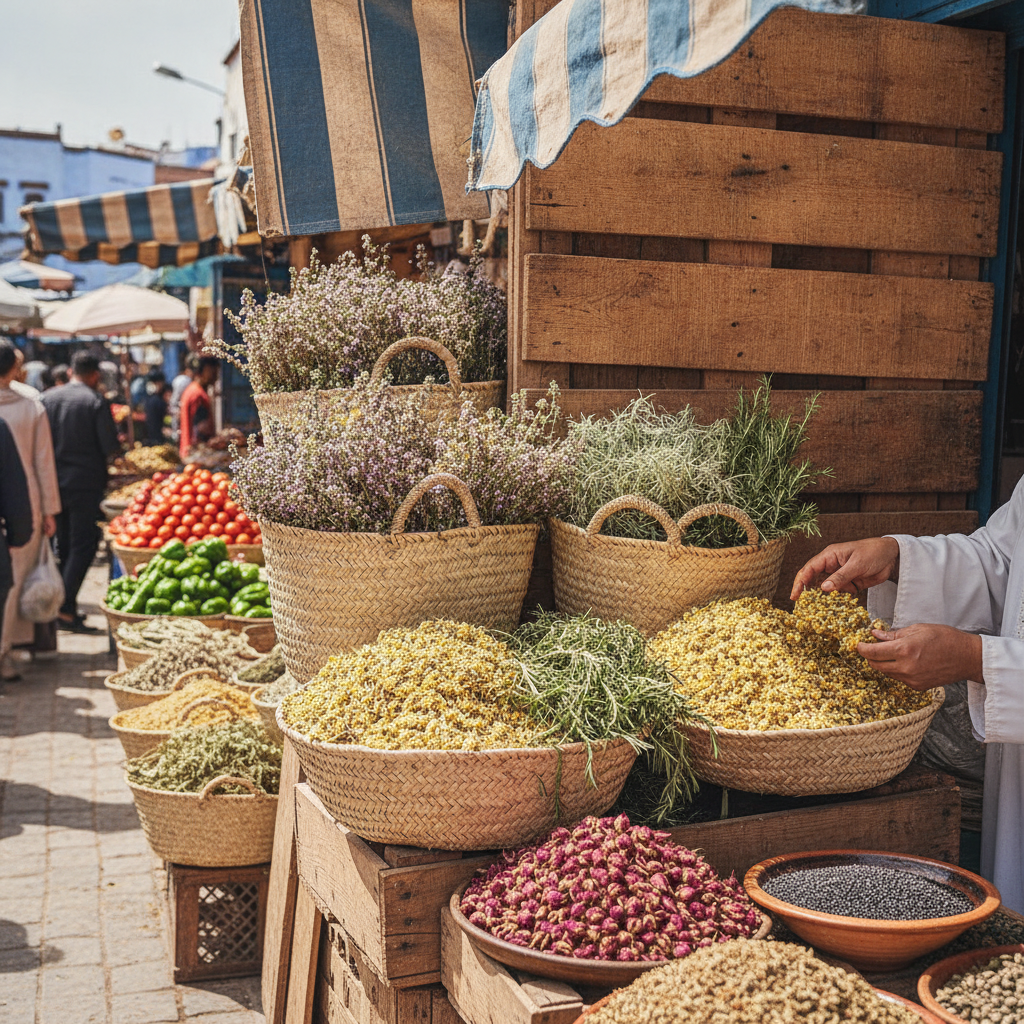
The Chefchaouen Jewish Community Spoke Haketia (15th Century Castilian Spanish) for 430 Years After the 1492 Expulsion and Spanish Military Officers Who Entered the City in 1920 Could Understand the Jewish Residents; The Rif Mountain Wild Thyme Honey Is the Primary Product of Chefchaouen's Traditional Agricultural Economy; Chefchaouen Receives 300,000-400,000 Visitors Per Year in a 0.4 km2 Medina
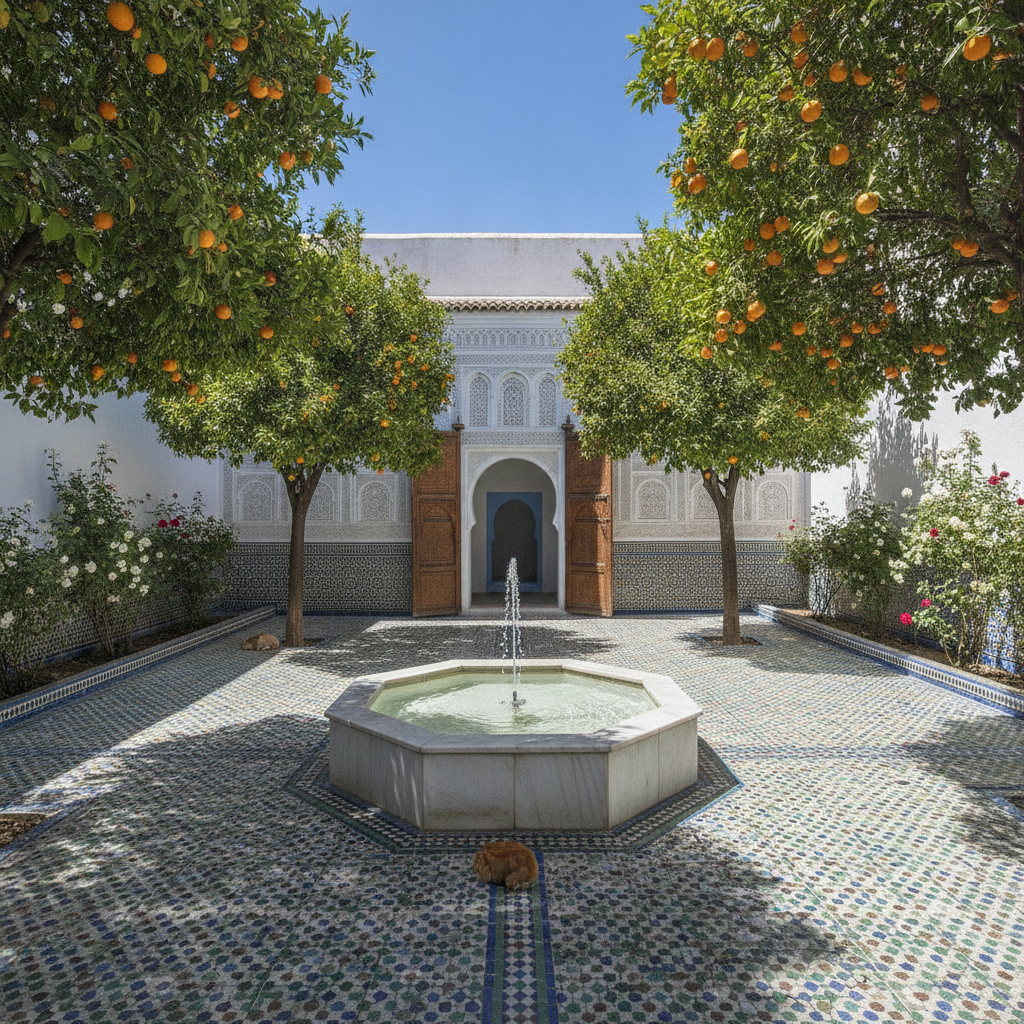
The Jebala Berbers of Chefchaouen's Western Rif Mountains Have Largely Lost Their Tamazight Language to Arabic Over the 17th-18th Centuries But Maintain a Distinct Cultural Identity in Dress, Music, and Agricultural Practices; Chefchaouen Spring (March-May) Offers the Best Combination of Wildflower Bloom, Mild Temperatures, Good Light, and Moderate Crowds; The Ouezzane Wazzaniyya Sufi Zawiya 44 km South of Chefchaouen Was Historically One of the Most Powerful Religious-Political Institutions in Morocco
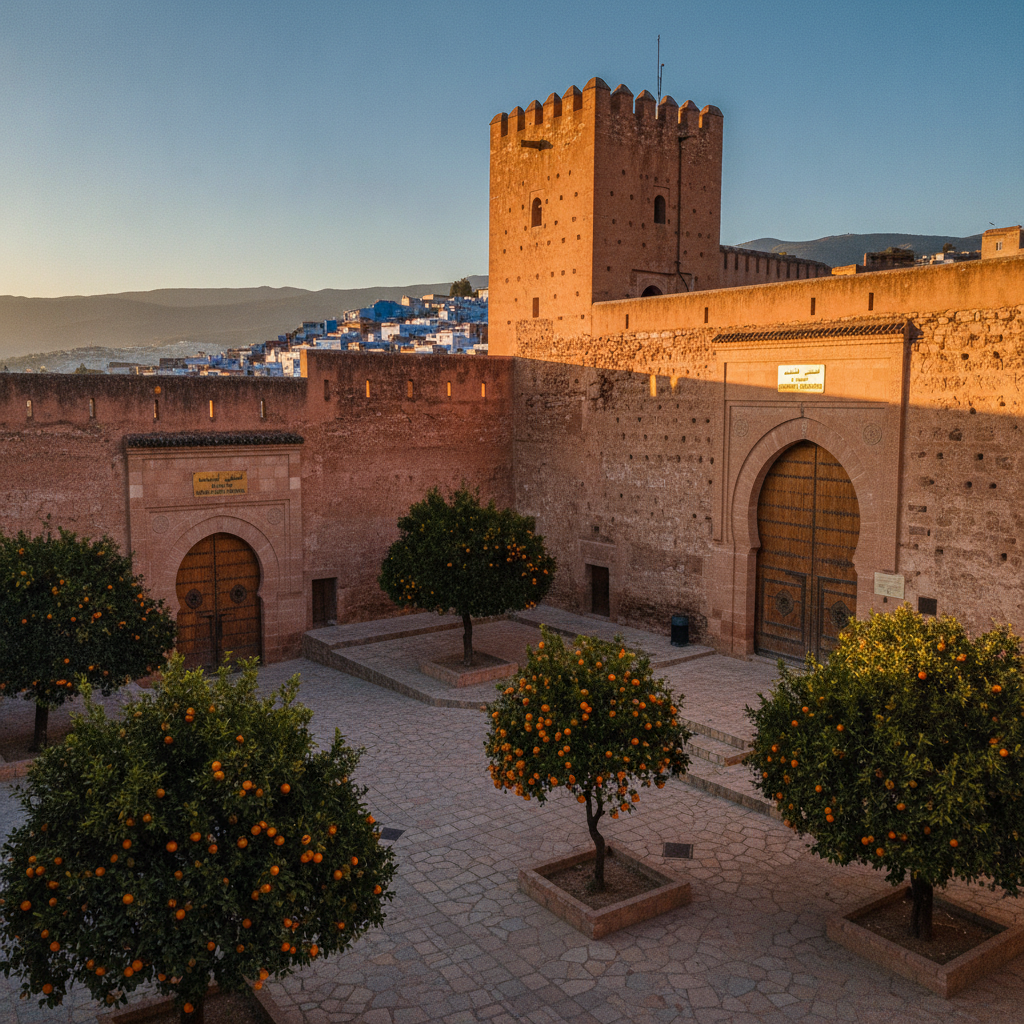
Chefchaouen History: The Spanish Protectorate Era, the Rif War and Abd el-Krim, the Closed City Period, the Independence and Reopening, and the Bilingual Spanish-Arabic Culture
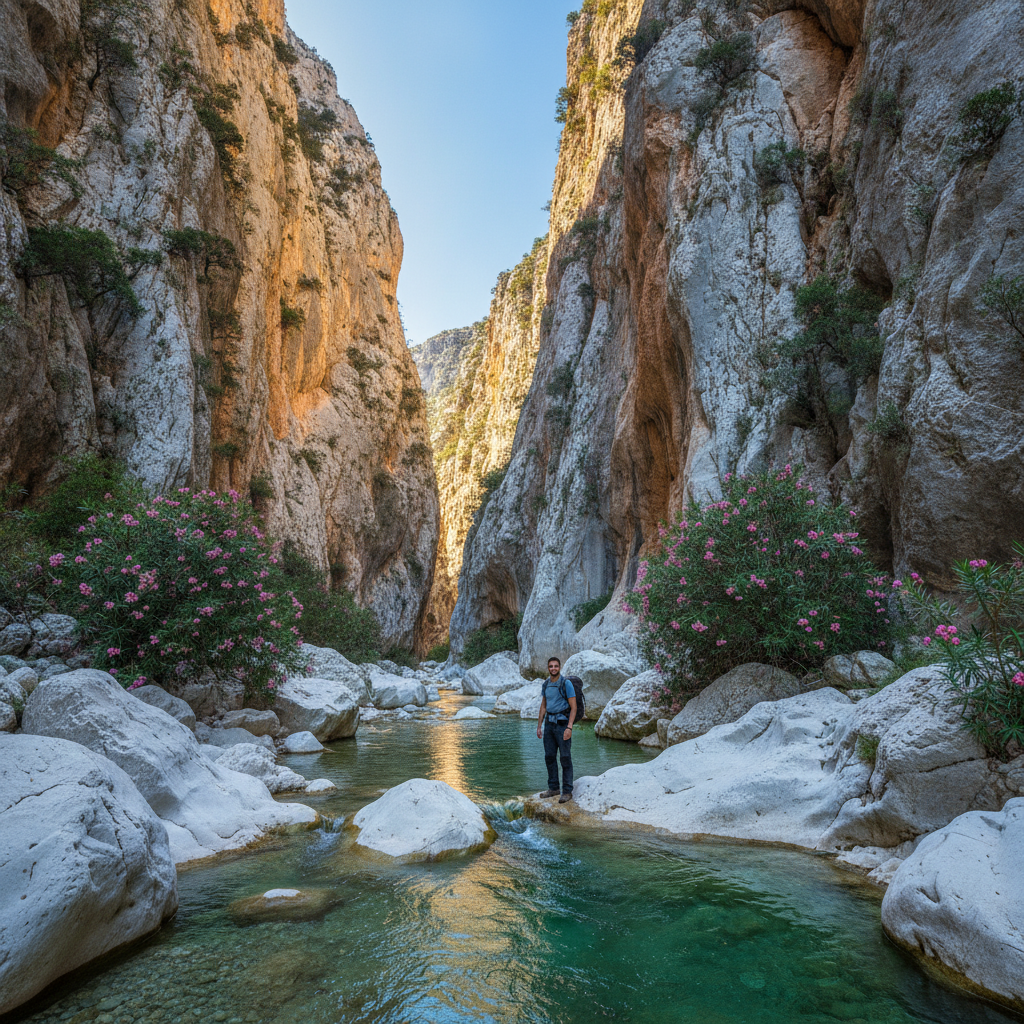
The Talassemtane National Park Protects the Only Significant Moroccan Population of the Abies Pinsapo Spanish Fir Tree Whose Primary Habitat Is the Sierra de las Nieves in Southern Spain; Chefchaouen Medina Was Described by Spanish Military Officers Entering in 1920 as the Most Perfectly Preserved Medieval Andalusian City Outside Andalusia Itself; The Beat Generation Writers Paul Bowles William S. Burroughs and Allen Ginsberg Were All Connected to Tangier During Its International Zone Period (1923-1956)
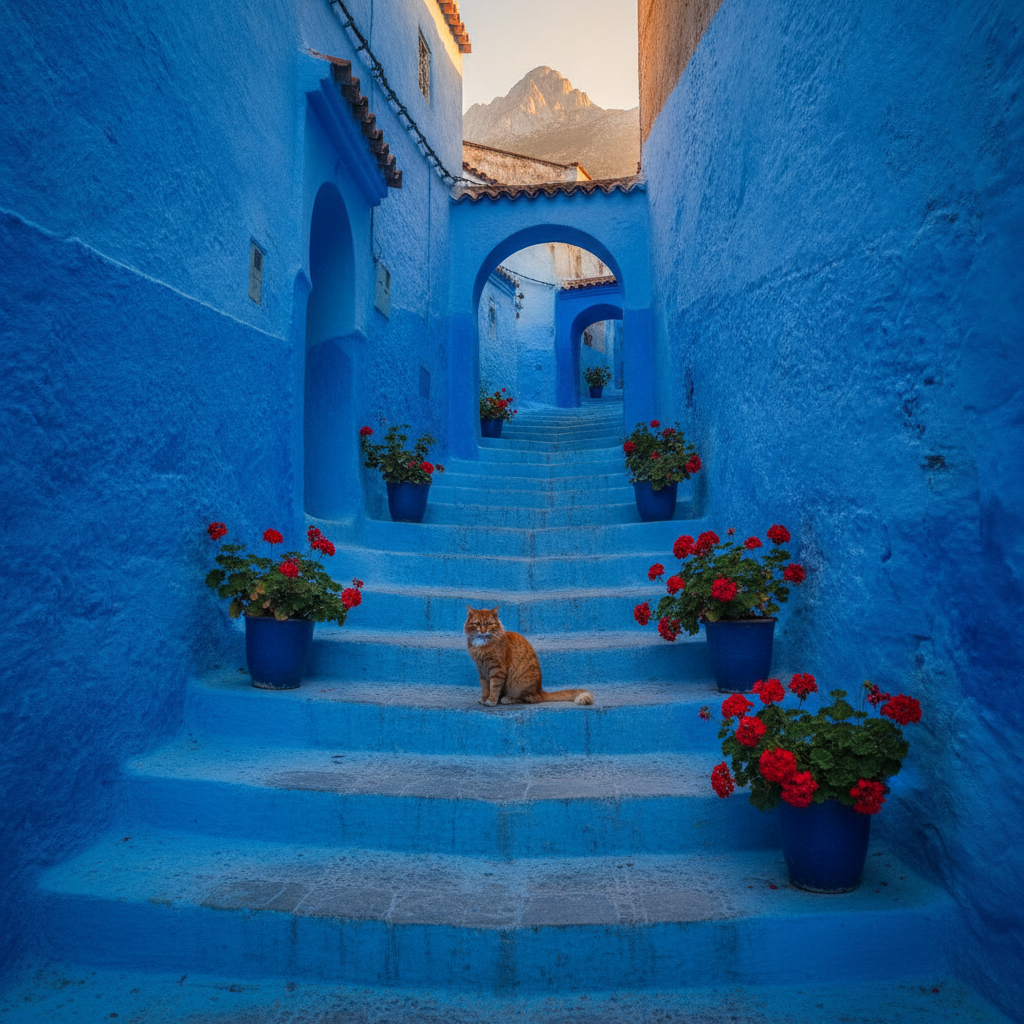
Chefchaouen's Blue Medina May Have Been Painted Blue By Jewish Refugees From the 1492 Spanish Expulsion Who Painted Doorways the Color of Heaven; The Rif Mountains Produce Approximately 40-60% of the Hashish Consumed in Europe With 90,000 Farming Families Dependent on Cannabis Cultivation; Morocco Legalized Cannabis Cultivation Under License in 2021 After Decades of the Largest Illegal Cannabis Production Zone in the World