Cebu at Its Most Local: Sinulog's 20,000 Dancers in PHP 15,000 Feathered Costumes, the 85-Year Dagohoy Rebellion & Sunfish Brewery's Visayan Craft IPA
The Sinulog Grand Parade's 68 contingents of 200–500 dancers each following a 5-km route for 10 hours with 50,000 grandstand seats and a PA system that makes conversation impossible; the Larsian BBQ's 45 stalls opening at 18:00 versus the IT Park's Sugbo Mercado curated food market for the BPO class; Lav Diaz's 11-hour Philippine film at Cinemalaya versus Brillante Mendoza's Palme d'Or that generated 'enormous critical controversy'; the North Cebu circuit from Camotes cave lakes to the Bantayan 'how Boracay used to be' beach to the Maya ferry for Malapascua's dawn thresher sharks; the 1565 blood compact of Legazpi and Sikatuna on Bohol versus the 85-year Dagohoy Rebellion that immediately followed colonisation; and Cebu Arabica from the Osmeña Peak volcanic soil highlands now in single-origin filter at JKD Coffee Roasters.
- 1
Sinulog Architecture – How Cebu Prepares for Its Biggest Week
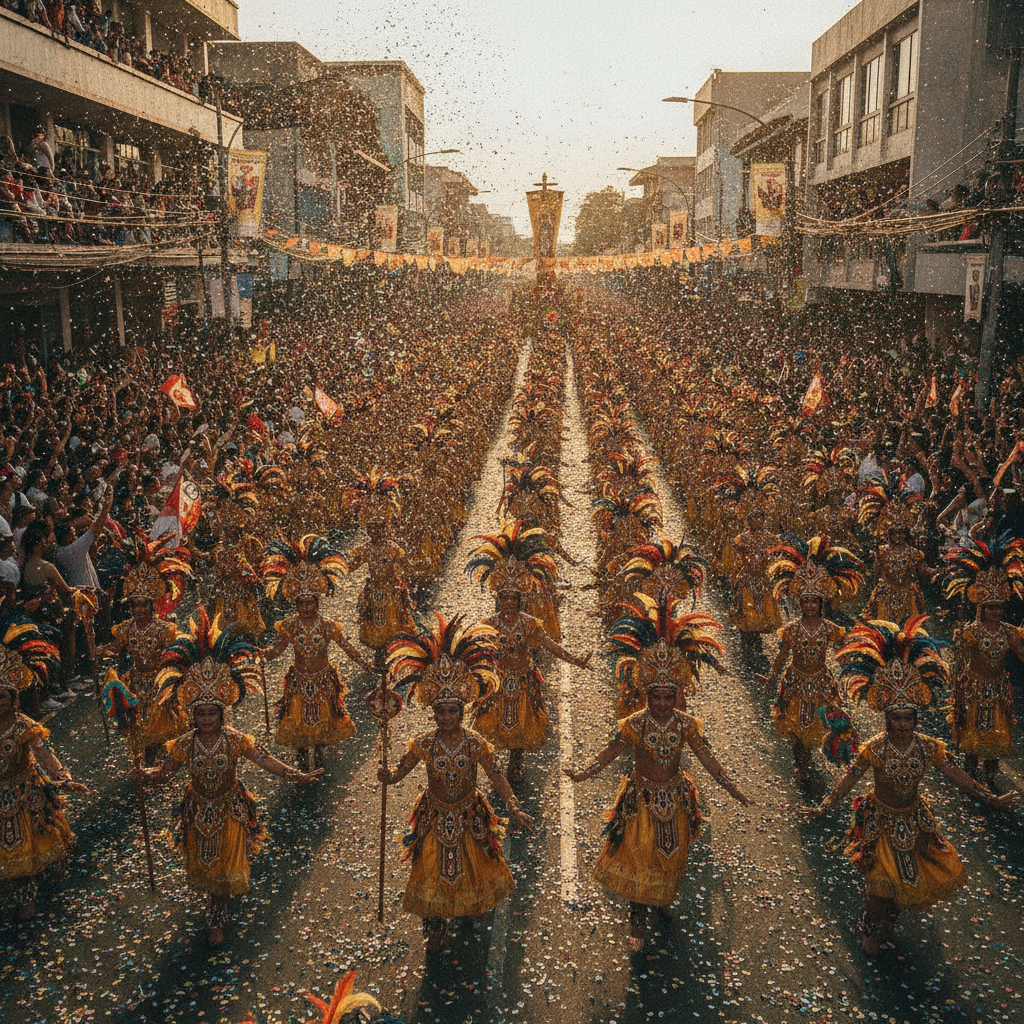
The logistical and architectural preparations for the Sinulog Festival—which transforms Cebu City for 9 days each January—constitute one of the most elaborate event production operations in Southeast Asia, comparable in scale to the preparations for Rio's Carnaval or the Mardi Gras in New Orleans. The route: the Sinulog Grand Parade follows a fixed route through Cebu City's main thoroughfares (beginning at the Fuente Osmeña Circle area, proceeding along Osmeña Boulevard to the Basilica del Santo Niño—a 5-km route that takes 8–10 hours for the full parade contingent to traverse); the temporary grandstand seating along the route (installed in the week before the parade) accommodates 50,000 spectators, with additional standing viewing at all intersections. The contingents: the 2023 festival included 68 competing contingents from barangays (city districts), municipalities, and schools; each contingent fields 200–500 dancers in matching costumes (elaborate feathered headdresses, beaded bodices, and flowing skirts—each costing PHP 5,000–15,000 per costume to produce); the total parade population is approximately 20,000 dancers. The sound system: a distributed PA system along the entire 5-km route (the Sinulog Grand Parade is narrated live, with drum corps providing percussion for each contingent); the volume is at levels that make conversation difficult for spectators in the grandstand. The accommodation pressure: the Sinulog Festival is the one time of year when hotel rooms in Metro Cebu are genuinely scarce—the booking window for 4-star accommodation is 6+ months before the festival date.
- 2
Cebu's Street Food Circuit – From Larsian to the IT Park Night Market
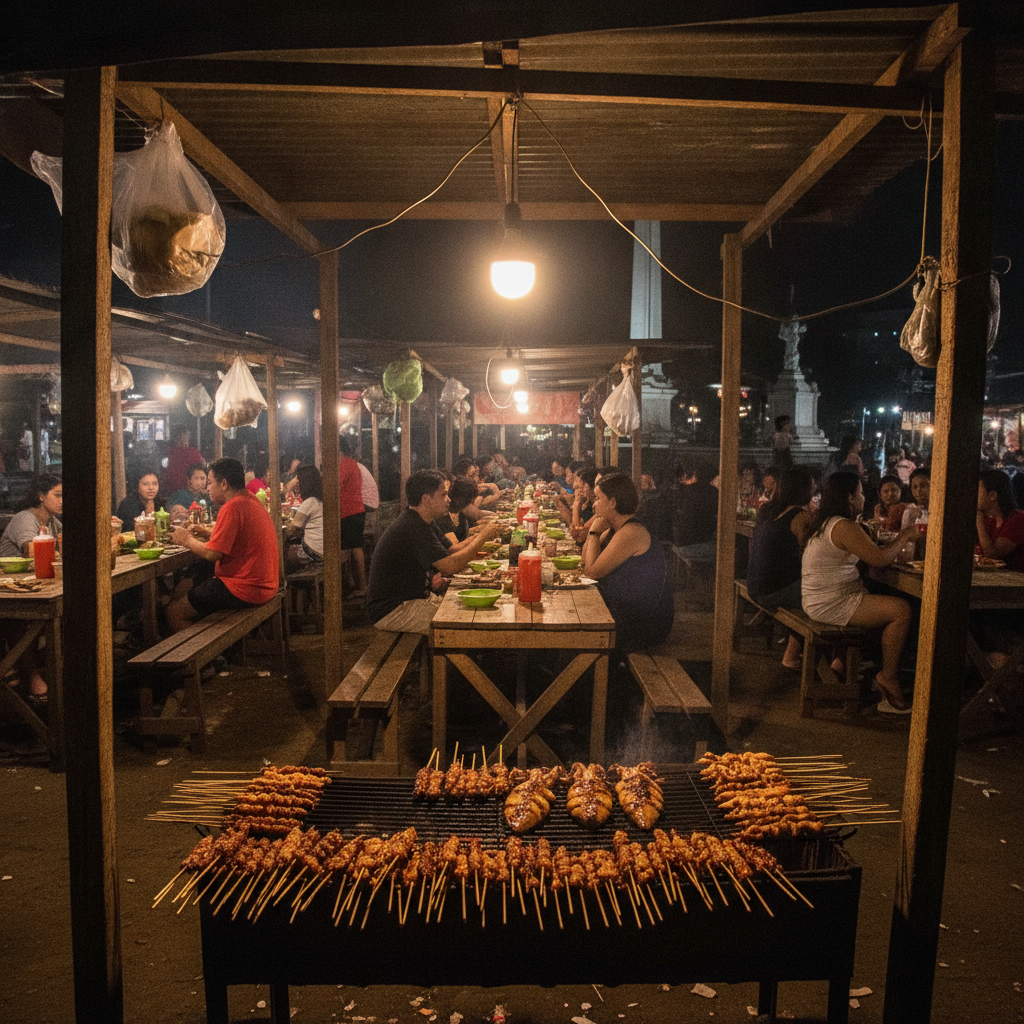
Cebu's street food landscape—the most diverse in the Visayas and argued by many food writers to rival Manila's in depth and distinctiveness—is concentrated in a series of street markets and food clusters that operate primarily in the evening hours, serving both the regular Cebuano population and the growing food tourism market. The Larsian BBQ complex (in the Fuente Osmeña area—accessible by jeepney or taxi): the most celebrated carinderia cluster in Cebu, where 45 open-air stalls offer grilled pork parts (isaw, liempo, pork chops, chicken intestines), seafood (squid, mussels, shrimp), and vegetables on bamboo skewers, with white rice and the Cebuano sawsawan (vinegar-chili dipping sauce); open 18:00–02:00. The Sugbo Mercado Night Market (IT Park area, Thursdays–Sundays 16:00–midnight): the most popular food market in Metro Cebu for the urban middle class—a curated collection of food stalls from Cebu's restaurant community, selling both traditional Cebuano food (lechón, ngohiong, puso) and contemporary fusion concepts. The Mandaue Night Market (on the Mandaue City main road): the working-class food market serving the industrial city adjacent to Cebu—less photogenic but more authentic than the curated IT Park market, with the full range of Cebuano street food at lower prices. The pasalubong strip: the cluster of dried mango shops, otap bakeries, and ampao (puffed rice balls) sellers at the Colon Street end of downtown—the best place to buy Cebu's most famous food exports directly from producers.
- 3
Philippine Cinema & the Cinemalaya Movement
Philippine cinema—one of the oldest in Asia (the first commercial film was shown in the Philippines in January 1897—barely a year after the Lumière Brothers' first Paris screening)—has produced a distinct national film tradition that is currently experiencing its most internationally visible period since the 1970s golden age. The Cinemalaya (the annual Philippine independent film festival, held in Manila in August, with screenings also in Cebu and other cities): the most significant event in contemporary Philippine film culture, providing the primary platform for Filipino independent directors whose work has been selected for international festivals (Cannes, Berlin, Venice, Busan). The Filipino directors with international profiles: Brillante Mendoza (Palme d'Or at Cannes 2009 for Kinatay—a decision that generated enormous controversy among critics); Lav Diaz (known for extremely long-form films—Norte, the End of History runs 4 hours 16 minutes; his longest film, Ebolusyon ng Isang Pamilyang Pilipino, is 11 hours; winner of the Golden Leopard at the Locarno Film Festival 2014); Mikhail Red (Eerie, Neomanila—younger generation of commercially active Filipino genre filmmakers). The Cebu film culture: the Cebu Young Critics Circle (a film criticism and curation community operating in Cebu) and the ongoing development of Cebuano-language cinema (Bisaya film—distinct from Tagalog-language national cinema, with its own production tradition).
- 4
North Cebu – Bantayan, Camiguin & the Malapascua Diving Circuit
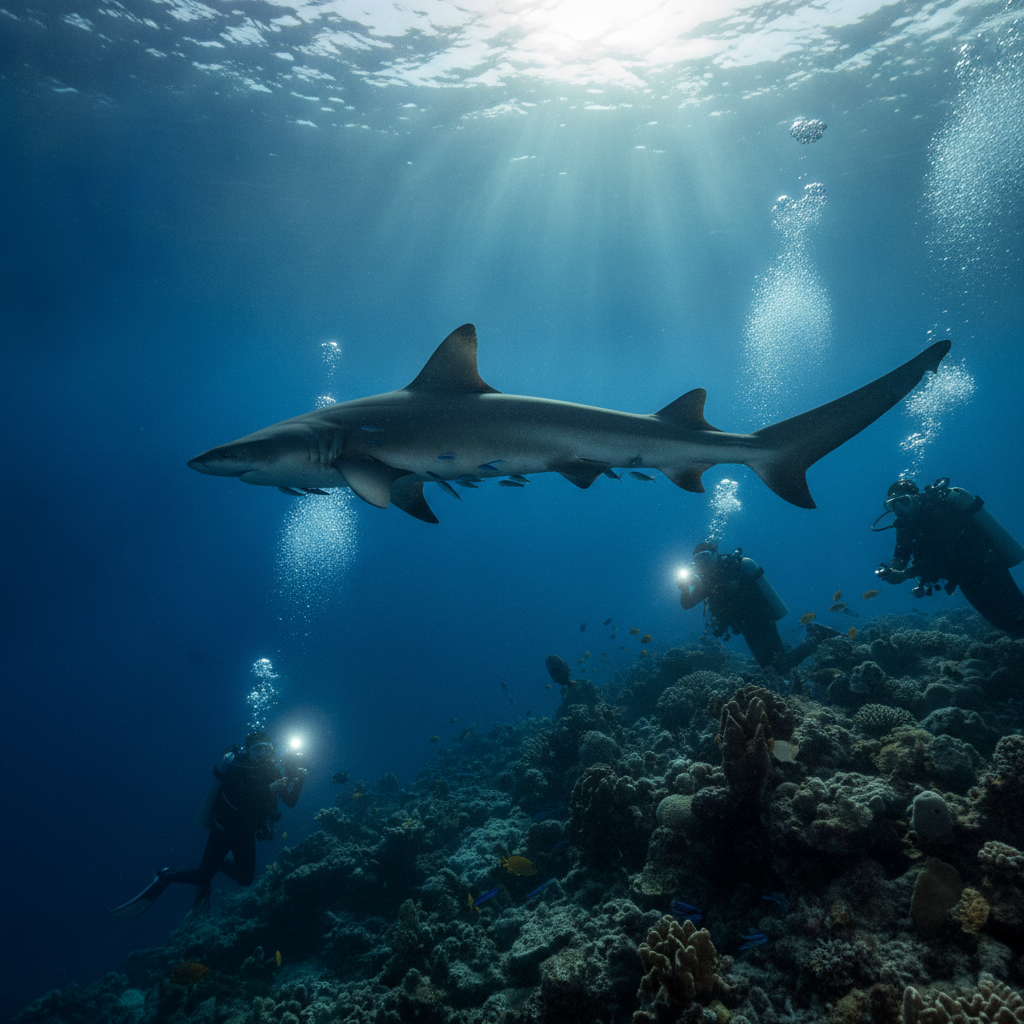
The northern portion of Cebu province—the narrow island tapering toward its northern tip, where the ferry to Malapascua departs—contains a series of destinations that form a natural 3–5 day circuit for travellers who have exhausted the immediate Cebu City vicinity. The route: Cebu City → Danao (the municipal port for ferries to Camotes islands—1 hour journey) → Bogo (a historic sugar town in north Cebu) → Hagnaya (the ferry port for Bantayan Island) → Bantayan Island (1 hour ferry) → Maya (the port for Malapascua—1-hour jeepney ride from Hagnaya, then 30-minute banca to Malapascua). Camiguin island (accessible by ferry from Balingoan port in northern Mindanao—not strictly north Cebu but part of the same travel circuit): the 'island born of fire,' a small island with 7 volcanoes, 3 hot and cold springs, the Ardent Hot Spring (a volcanic hot pool of 38°C, highly popular with Filipino weekend travellers), the Sunken Cemetery (a colonial-era cemetery submerged by the 1871 eruption of Vulcan Hibok-Hibok, marked by a large cross visible at low tide), and the White Island sandbar (a pure white sandbar that appears at low tide between Camiguin and the Mindanao mainland). The Hibok-Hibok Volcano (1,332 metres—a technically active stratovolcano, last major eruption 1948–1953; day trekking to the crater rim is possible with PHIVOLCS permit). Malapascua's above-water character: the Logon village atmosphere (the narrow lanes between the dive operators' restaurants and guesthouses) and the evening seafood catch from local fishing boats.
- 5
The Cebu-Bohol Historical Connection – One Island, Two Histories
Cebu and Bohol—the two most visited islands in the Visayas—are historically intertwined through a series of shared events that shaped the early period of Spanish colonisation. The Compact of Blood (Sandugo)—on 16 March 1565: the blood compact (a traditional Visayan ceremony of friendship and treaty, conducted by making a small cut in each party's arm and mingling the blood in a cup of wine) between Conquistador Miguel López de Legazpi and the Bohol chieftain Datu Sikatuna—is celebrated as the first treaty between a Filipino and a Western leader, and as the model for Philippine diplomatic relations; a bronze group sculpture at Tagbilaran (the Bohol capital) commemorates the event. The Dagohoy Rebellion (1744–1829—the longest indigenous revolt in Philippine colonial history, lasting 85 years): led by Francisco Dagohoy (Dagohoy—from 'dagohoy,' the Bohol word for the katipunan rebels' sword), the rebellion against Spanish colonial authority in Bohol lasted 85 years (encompassing multiple generations of Dagohoy's family) and involved approximately 20,000 people in fortified mountain communities; it was ultimately suppressed in 1829. The 1901 Balangiga Massacre: in the village of Balangiga, Samar (within the wider Visayan region, accessible from Cebu by air): the surprise attack by Filipino guerrillas on a US Army garrison that killed 48 American soldiers—the bloodiest single attack on US forces in the Philippine-American War; the resulting US reprisal killed 50,000+ Samar civilians.
- 6
Cebu Craft Beer, Specialty Coffee & the New Generation Food Scene
Cebu's contemporary food and drink scene—the most innovative in the Visayas, and producing work that is beginning to appear in Philippine national food media with increasing frequency—is concentrated in the IT Park, Banilad, and Escaño neighbourhoods, where the BPO workforce's income and international exposure create demand for quality beyond the carinderia and fast food that dominate Philippine consumer food. The craft beer movement: Cebu has produced the most active craft beer scene in the Philippines outside Manila—Sunfish Brewery (the first dedicated craft brewery in Cebu, producing pale ales and IPAs from local and imported hops), The Bottle Club (a craft beer bar with 60+ local and imported taps), and the growing home-brewing community centred on the brew club affiliated with the IT Park. The specialty coffee: Cebu's Arabica production (from the Osmeña Peak area and the highlands of Dalaguete and Badian) is being developed by a small group of local roasters (Yardstick Cebu, JKD Coffee Roasters) as a 'Cebu terroir' offering—the local Arabica has a light body and floral character attributed to the island's volcanic soil. The restaurant innovation: three Cebu restaurants have been listed in the Miele Guide (Southeast Asia's restaurant guide predecessor to Asia's 50 Best): the historical significance is that Cebu is the only city outside Manila and Metro Manila to consistently appear in Philippine national food media as a culinary destination in its own right.
Walk this route with audio
Stories play automatically as you reach each stop — no tapping needed.
More in Cebu
Cebu's Five-Century Faith: 9 Daily Basilica Masses, the Simala Miracle Shrine's Neo-Gothic Ex-Votos & Bantayan's 'How Boracay Used to Be' Beach
Cebu's Full Complexity: Philippine Eagle's 800 Mindanao Survivors, the 1906 Sakada Recruitment That Built the Hawaiian Filipino Community & Boracay's Raw Sewage Closure Warning
Cebu's Other Depths: Bohol's 1,776 Chocolate Hills, Mactan's 90% Philippine Guitar Output & the Sardine Column Swirling Off Moalboal Shore
Cebu: Magellan's 1521 Cross, the Sto. Niño Devotion That Draws 2 Million to Sinulog & Anthony Bourdain's Lechón Crackling Revelation