Cebu: Magellan's 1521 Cross, the Sto. Niño Devotion That Draws 2 Million to Sinulog & Anthony Bourdain's Lechón Crackling Revelation
Ferdinand Magellan planting his cross at the Cebuano baptism of Raja Humabon in 1521—the original cross now encased in tindalo wood inside an octagonal chapel; the Sto. Niño image Magellan gave Queen Juana at baptism now housed in the oldest church in the Philippines and venerated by millions; 2 million people dancing the sulog river-current dance at Sinulog while hotel rooms book out months ahead at 5× normal rates; Rico's and Zubuchon's competing claims to the best lechón crackle in the country Bourdain defined in 2012; Lapu-Lapu's bronze monument next to Magellan's modest marker on the Mactan beach where the battle happened and is now surrounded by Shangri-La resort; and the Oslob whale shark feeding programme's 400 families versus the marine biologists' propeller-strike data.
- 1
Magellan's Cross & the Basilica del Santo Niño – The Oldest City in the Philippines
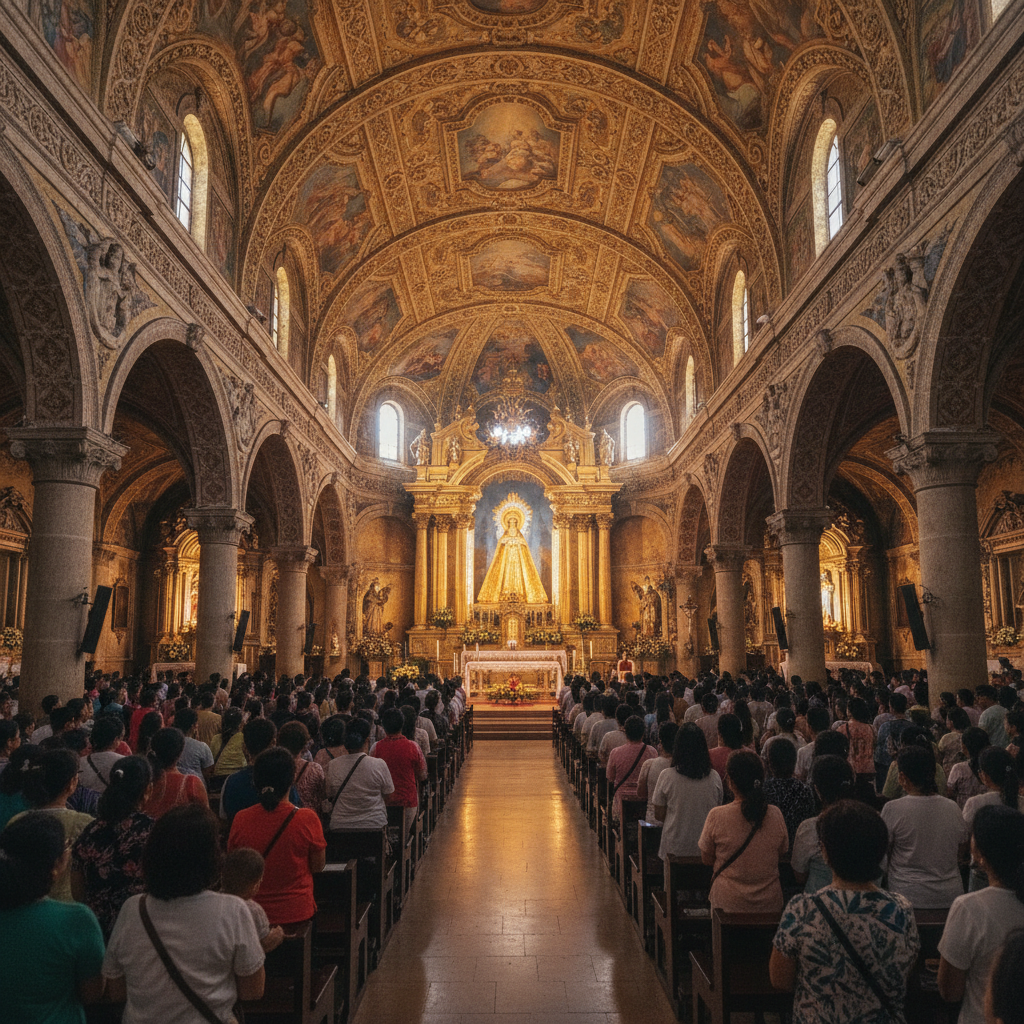
Cebu City—established in 1565 by Spanish conquistador Miguel López de Legazpi as the first Spanish settlement in the Philippines (44 years before Manila)—is the oldest city in the Philippines and the commercial and cultural capital of the Visayas, the central island group of the Philippine archipelago. The two most significant historical monuments are within 100 metres of each other in the city centre. Magellan's Cross: an octagonal chapel on Magallanes Street (next to the Basilica del Santo Niño) housing the original cross planted by Ferdinand Magellan on 14 April 1521 when he baptised Raja Humabon (the Cebuano chieftain) and his wife (Humamay—baptised as Queen Juana) and approximately 800 followers in the first mass baptism in Philippine history. The cross itself is encased in a larger cross of tindalo wood (a local hardwood) to protect it; a painting on the ceiling of the chapel depicts the baptism scene. The Basilica Minore del Santo Niño: the oldest Roman Catholic church in the Philippines (originally built in 1565, the current stone structure dating from 1739)—housing the Sto. Niño de Cebu, a polychrome image of the Child Jesus given by Magellan to Queen Juana at her baptism in 1521. The Sto. Niño is the most venerated Catholic image in the Philippines, and the Basilica is the destination of millions of pilgrims annually—particularly during the Sinulog festival (the third Sunday of January) when approximately 2 million people converge on Cebu City.
- 2
The Sinulog Festival – The Philippines' Largest Street Party
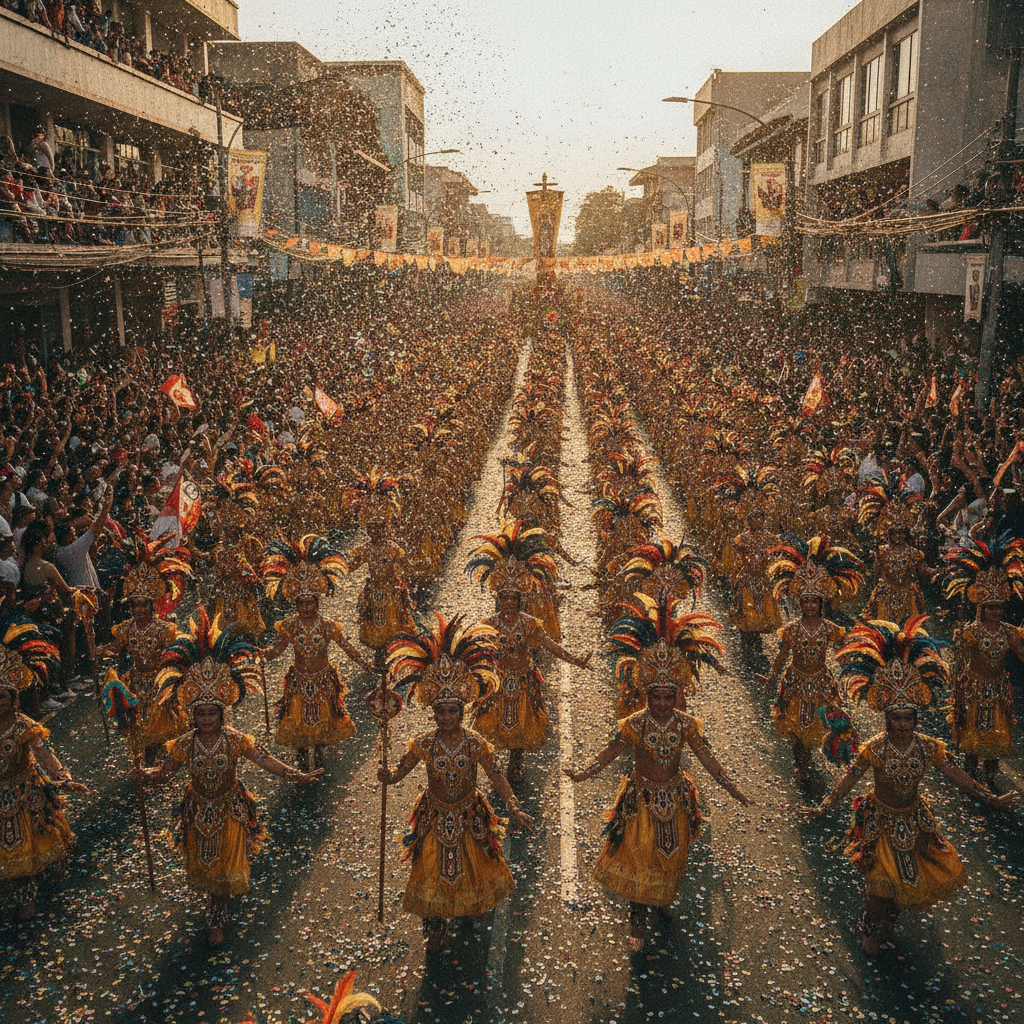
The Sinulog Grand Parade (held on the third Sunday of January in Cebu City—with associated festival events running for 9 days from the second Friday of January)—is the largest festival in the Philippines and one of the largest in Southeast Asia: approximately 2 million participants and spectators attend the Sunday Grand Parade, which processes through the streets of Cebu City over 8–10 hours. The dance: the Sinulog dance (from 'sulog'—the Cebuano word for the current of the river—because the dance mimics the water's current movement, two steps forward and one step back) is performed by contingents from across the Philippines and from the Cebuano diaspora worldwide; each contingent of 50–500 dancers performs a choreographed interpretation of the Sto. Niño devotion. The religious dimension: the Sinulog is fundamentally a religious festival—the Grand Parade is preceded by the Pontifical Mass at the Basilica del Santo Niño and is framed as a procession of thanksgiving to the Sto. Niño. The competition: the Street Dance competition (between barangay contingents and high school and university dance groups, judged on the quality of costumes, choreography, and Sinulog dance interpretation) is the most keenly contested cultural competition in the Philippines. The festival economy: Sinulog week generates approximately PHP 3–4 billion in economic activity—the hotels of Metro Cebu charge 3–5× normal rates for the festival weekend, and rooms are booked months in advance.
- 3
Cebu Lechón – The Philippines' Best Roasted Pig
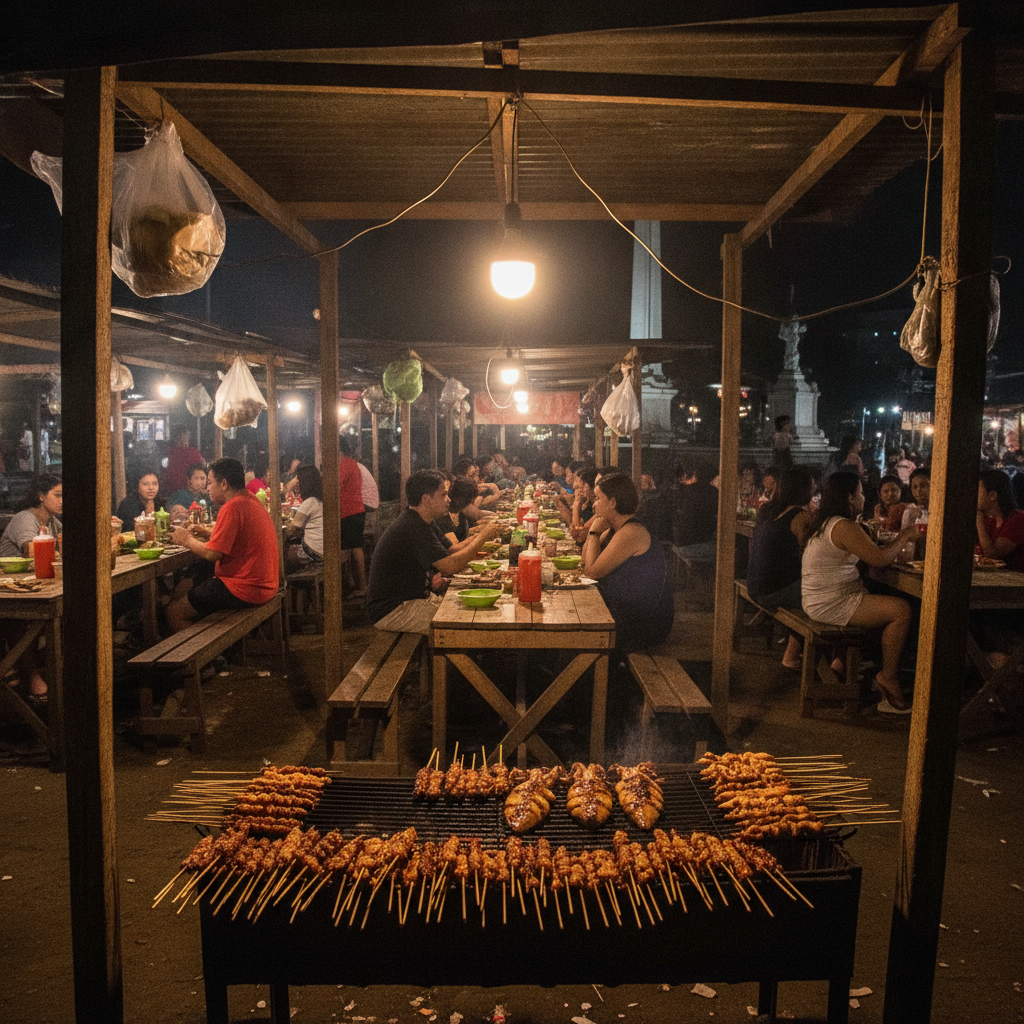
Cebu lechón (whole-roasted suckling pig)—the most acclaimed version of the Philippines' most celebrated dish—is the primary culinary reason many food travellers visit Cebu, and the most specific Filipino food pilgrimage with a clear geographic address. The Cebu lechón distinction: where Manila lechón typically requires liver sauce to compensate for relatively bland skin, the Cebu version is marinated internally (with lemongrass, salt, garlic, and other spices inserted into the body cavity before roasting) and the skin is blistered to an exceptionally thin, crackling crispness by continuous rotation over coconut charcoal. The benchmark establishments: Rico's Lechon (the most internationally publicised—Anthony Bourdain's 2012 No Reservations episode on Cebu lechón established Rico's as the international reference point; multiple locations in Metro Cebu); Zubuchon (the establishment founded by journalist-turned-restaurateur Joel Binamira—more focused on heritage breed pigs and specific preparation technique, considered by local experts the superior product); CNT Lechon (the oldest surviving Cebu lechón operation, with the most loyal local following). The lechón manok: the Cebu lechón manok (whole spit-roasted chicken—the mass-market product that brought Cebu lechón to the national level, produced by the Max's Group and Mang Inasal chains both of which originate from Cebu roasting traditions) is sold at street stalls throughout the Philippines. The lechón festival: the Lechon Festival of Talisay City (adjacent to Cebu City, every October) is the most concentrated lechón tasting event in the Philippines.
- 4
Mactan Island – Airport, Resorts & Lapu-Lapu's Legacy
Mactan Island—connected to Cebu City by two bridges (the Mactan-Cebu Bridge, 1999, and the Cebu-Cordova Link Expressway, 2022, the longest bridge in the Philippines at 8.5 km)—serves two entirely different functions for visitors: the location of Mactan-Cebu International Airport (CEB—the second-busiest airport in the Philippines after NAIA Manila), and the primary beach resort destination for Metro Cebu visitors. The Lapu-Lapu Monument: on the Mactan Island shoreline at Punta Engaño (adjacent to a luxury resort)—a bronze statue of Lapu-Lapu, the Cebuano chieftain who killed Ferdinand Magellan in the Battle of Mactan (27 April 1521), halting Magellan's expedition and preventing the immediate Spanish conquest of the Philippines. The monument has become a rallying symbol of Philippine resistance to colonialism. The irony of the site: the Magellan Monument (a much smaller and more modest marker) stands 50 metres from the Lapu-Lapu Monument—both monuments on the beach where the battle took place, now surrounded by luxury resort property. The Mactan resorts: the Mactan shore is lined with resort hotels (Shangri-La Mactan Resort, JPark Island Resort, Crimson Resort)—primarily serving the Cebuano business and upper middle class, visiting Korean and Japanese tourists, and Filipinos from Manila using Mactan as a beach holiday destination within 2 hours of Manila by air.
- 5
Oslob Whale Sharks – The Philippine Controversy
The Oslob whale shark interaction programme (in the municipality of Oslob, 120 km south of Cebu City)—where fishing families condition whale sharks (Rhincodon typus) to accept hand-fed shrimp from their boats in exchange for tourist viewing fees—is simultaneously the most attended single wildlife attraction in the Philippines (approximately 1,000 visitors per day at peak) and one of the most ethically controversial wildlife tourism operations in Asia. The programme: the Tan-awan Oslob Whale Shark Watching programme (launched 2012) allows visitors to snorkel or dive alongside whale sharks in shallow water (3–15 metres) for a 30-minute session; the sharks are fed uyap (small shrimp) by designated 'feeder' boats to hold them near the surface; the experience is almost guaranteed (the sharks arrive at the feeding site within minutes of the feeders). The scientific criticism: the programme has been extensively studied and criticised by marine biologists—the concerns include the disruption of natural feeding behaviour (whale sharks reduce their open-ocean filter-feeding and increase their reliance on the hand-fed shrimp, reducing their body condition), increased propeller strike injuries (several individual sharks in the Oslob population show boat-strike scars), altered migration patterns (sharks that should migrate are remaining near the feeding site year-round), and the congregation of many sharks in a small area increasing disease transmission risk. The economic reality: the programme employs 400 families in the Tan-awan barangay and generates approximately PHP 5 million monthly in fees—an income transformation for one of the poorest municipalities in Cebu province.
- 6
Practical Cebu – Getting There, Getting Around & When to Visit
Getting to Cebu: Mactan-Cebu International Airport (CEB)—located on Mactan Island, 12 km from Cebu City proper (20–40 minutes by taxi depending on traffic)—is the second-busiest airport in the Philippines, receiving domestic connections from Manila (1 hour—many daily flights on Cebu Pacific, Philippine Airlines, AirAsia Philippines) and direct international connections from Tokyo, Osaka, Hong Kong, Singapore, Seoul, and Guangzhou. Getting to the city from the airport: metered taxi (PHP 300–500 to IT Park or the city centre); Grab (the dominant ride-hailing app in the Philippines—cheaper than metered taxis but requires the app); no public airport bus. Getting around Metro Cebu: the Metro Cebu transport system consists of jeepneys (PHP 12–25 base fare), taxis (metered—significantly cheaper than Manila), Grab, and the MyBus modern bus service (launched 2019—modern air-conditioned buses on fixed routes, PHP 25–75). The Cebu-Bohol ferry: the SuperCat and OceanJet fast ferries run from the Pier 1 terminal in Cebu City to Tagbilaran port on Bohol (2 hours—PHP 500–700 one way); the slow ferry takes 3.5 hours (PHP 200–300). When to visit: the dry season (December–May) is the best time for beach activities and the Sinulog festival (January); the wet season (June–November) brings occasional typhoons (though Cebu is less exposed than eastern Visayas) and the summer monsoon. Climate note: Cebu City has no dry season—it rains year-round, but the December–May period has significantly less rainfall and more reliable sunshine.
Walk this route with audio
Stories play automatically as you reach each stop — no tapping needed.
More in Cebu
Cebu's Five-Century Faith: 9 Daily Basilica Masses, the Simala Miracle Shrine's Neo-Gothic Ex-Votos & Bantayan's 'How Boracay Used to Be' Beach
Cebu's Full Complexity: Philippine Eagle's 800 Mindanao Survivors, the 1906 Sakada Recruitment That Built the Hawaiian Filipino Community & Boracay's Raw Sewage Closure Warning
Cebu's Other Depths: Bohol's 1,776 Chocolate Hills, Mactan's 90% Philippine Guitar Output & the Sardine Column Swirling Off Moalboal Shore
Cebu's Wider Visayas: Malapascua's Dawn Thresher Shark Cleanings, Siquijor's Good Friday Herbalist Gathering & Bacolod Chicken Inasal's Global Fast Food Expansion