Cebu's Other Depths: Bohol's 1,776 Chocolate Hills, Mactan's 90% Philippine Guitar Output & the Sardine Column Swirling Off Moalboal Shore
Fort San Pedro's triangular 1565 walls serving as Spanish military base, Philippine Revolution prison, and Japanese internment camp in sequence; the Philippine tarsier's eyes so large they cannot move—the animal must rotate its head 180 degrees to see behind it; 300 Mactan guitar makers producing PHP 500 million in annual exports on an island better known for the airport and the Lapu-Lapu monument; the Cebu IT Park's 200,000 BPO workers running North American call centres on overnight shifts while the ground-floor restaurants serve midnight barbecue; puso hanging rice wrapped in coconut fronds as a Cebu-specific rice delivery format; and the Moalboal sardine column starting at 5 metres depth directly from shore—no boat required.
- 1
Cebu City's Heritage District – Fort San Pedro & the Heritage District
Fort San Pedro (the triangular Spanish colonial fort at the southern end of the Cebu City port area—established 1565 by Legazpi as the first Spanish military fort in the Philippines, built originally in wood and earth, reconstructed in stone and brick through the 17th century): the oldest and smallest fort in the Philippines, with 20-metre-high walls enclosing a 2-hectare compound that now houses the Fort San Pedro Heritage Park (a garden and small museum within the fort walls). The fort's history: built to defend the Spanish settlement against the Muslim raids from Mindanao (the Moro raids) and rival European powers (Portuguese and Dutch), it has served as a military barracks (Spanish and American periods), a prison (during the Philippine Revolution), and an internment camp (during the Japanese occupation—most of Cebu's Spanish-Filipino families were interned within the fort walls). The Heritage District: the area surrounding the Basilica del Santo Niño, Magellan's Cross, and Fort San Pedro—encompassing the Plaza Independencia (the public square adjacent to the fort, laid out in the late Spanish period), the Archbishop's Palace, and the cluster of colonial-era institutions—constitutes the most coherent Spanish colonial urban core in the Visayas. The Cebu Heritage Monument: an enormous bronze bas-relief installation in the Plaza Parian (the former Chinese settlement adjacent to Fort San Pedro)—depicting scenes from Cebu's history from pre-colonial to the present—the most ambitious public historical artwork in the Philippines outside Manila.
- 2
Bohol – Chocolate Hills, Tarsiers & Panglao Island Diving
Bohol (the adjacent island to the southwest of Cebu, accessible by fast ferry from Pier 1 in 2 hours or by air from Mactan in 25 minutes)—is the most visited island in the Visayas after Cebu itself, attracting approximately 1.5 million visitors annually for three distinct attractions. The Chocolate Hills: 1,776 conical limestone hills spread across 50 km² of the Bohol interior—rising to heights of 40–120 metres, uniform in shape (the result of sub-surface limestone dissolution and karst formation), and covered in grass that turns brown (chocolate-coloured) in the dry season, producing the distinctive appearance that has made the Chocolate Hills the most recognised natural landmark in the Philippines after Mount Mayon. The Philippine tarsier (Cephalopachus bancanus philippinensis—the Philippine subspecies of the tarsier, the world's smallest primate at 80–160 grams): a nocturnal insectivore with eyes so large relative to its skull that they cannot move (the tarsier compensates by rotating its head 180 degrees); found only on Bohol, Samar, Leyte, and Mindanao; the Philippine Tarsier Sanctuary at Corella (10 km from Tagbilaran, the Bohol capital) is the primary visitor site. The Panglao Island diving: the island immediately south of Tagbilaran (connected by bridge)—Alona Beach is the primary diving base; the Balicasag Island Marine Sanctuary (20 minutes by boat from Panglao) contains one of the finest reef dive sites in the Philippines—wall dives to 40 metres with schooling jack fish, sea turtles, and regular white-tip shark sightings.
- 3
Cebu's Guitar Capital – Mactan Guitar Manufacturing
Mactan Island (the airport island adjacent to Cebu City) is the centre of the Philippines' guitar manufacturing industry—producing approximately 90% of all guitars made in the Philippines, and a significant percentage of the world's entry-level and mid-range acoustic guitars. The history: the guitar-making tradition in Mactan dates from the 1960s, when a small number of craftsmen began making guitars for local musicians using native Filipino woods; the industry expanded dramatically when international music companies (including major US and European brands) discovered the quality and price competitiveness of Mactan-made instruments. The current scale: approximately 300 guitar makers operate in the Lapu-Lapu City area of Mactan, from single-craftsman operations producing 10 instruments per month to factories producing 1,000+; the industry employs approximately 10,000 people and exports PHP 500 million worth of instruments annually. The wood source: Mactan guitars are traditionally made from native Philippine woods (santol, langka—jackfruit—mahogany, kamagong—Philippine ebony); the depletion of native hardwood has shifted most production to imported tonewoods (spruce from North America for soundboards, mahogany from Indonesia, maple from Canada). The visitor experience: the Alegre Guitar Factory (the most visitor-friendly of the Mactan manufacturers) accepts walk-in visitors who can observe the complete guitar-making process, from wood selection through finishing, and purchase instruments directly at factory prices.
- 4
Metro Cebu's Urban Development & Techno Hub
Metro Cebu (the conurbation encompassing Cebu City, Mandaue, Lapu-Lapu, Talisay, Danao, Toledo, and several municipalities—total population approximately 2.9 million)—is the second-largest metropolitan area in the Philippines and the economic hub of the Visayas, with the most active business process outsourcing (BPO) industry outside Metro Manila. The IT Park: the Cebu IT Park (a 24-hectare special economic zone in the Apas district of Cebu City, previously the site of the old Lahug Airport): the primary commercial and social centre of Cebu's BPO industry—the tower blocks housing call centres, software development firms, and shared services companies are occupied 24 hours (the night shift serves North American and European time zones), and the ground-floor restaurants and bars of the IT Park serve the predominantly young BPO workforce in their overnight breaks. The BPO significance: Cebu is the second-largest BPO city in the Philippines (after Metro Manila)—approximately 200,000 people are employed in call centres, customer service operations, and IT services, primarily serving North American clients. The Ayala Center Cebu: the flagship mall of the Ayala Land development (the more upscale competitor to SM in the Philippine retail market)—the primary social hub of Metro Cebu's middle and upper middle class, comparable in function to Manila's Greenbelt. The Cebu Business Park: the master-planned commercial district surrounding Ayala Center—the most coherent business district outside Metro Manila, with the sleeker architecture and wider streets of post-1990 urban planning.
- 5
Cebuano Food Beyond Lechón – Ngohiong, Puso & the Carinderia Culture
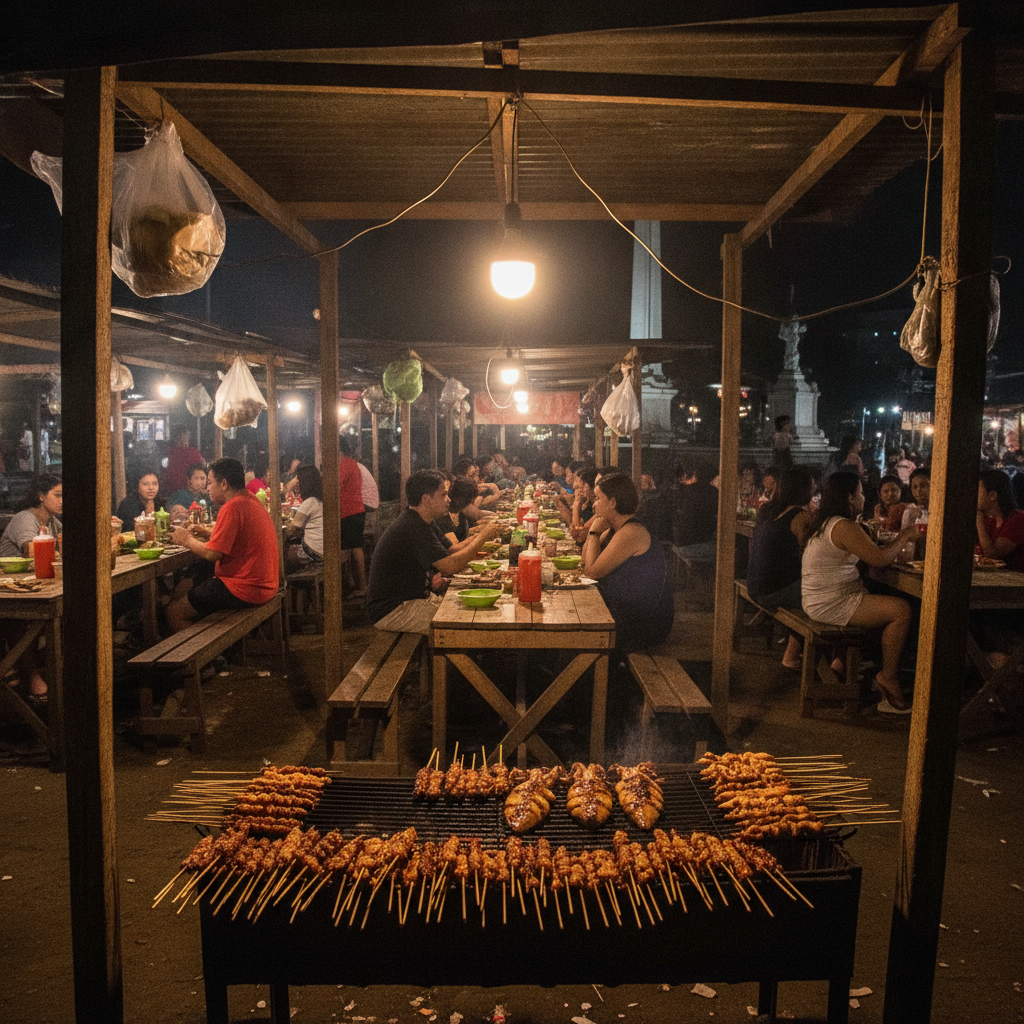
Cebu's culinary culture—beyond the internationally recognised lechón—is one of the most distinctive regional food traditions in the Philippines: shaped by the Visayan ingredient base (different from Luzon and Mindanao), the Chinese-Filipino commercial heritage, and the specific Cebuano appetite for sour and bitter flavours that distinguishes Visayan cuisine from the sweeter palates of Manila. The Cebuano staples: puso (hanging rice—a ball of rice wrapped in woven coconut fronds and boiled, a Cebu-specific format for eating rice on the go; the woven parcel is carried by a string and eaten by unwrapping the frond—the most distinctive rice format in the Philippines); ngohiong (a Cebuano adaptation of the Chinese ngoh hiang—five-spice pork roll wrapped in bean curd skin and deep fried—the most specific Chinese-Filipino street snack of Cebu); sutukil (a portmanteau of sugba—grill, tuwa—soup, and kilaw—ceviche—referring to the Cebu way of ordering fresh fish in three preparations simultaneously, the freshest fish in one's soup, grill, and ceviche at the same time). The carinderia culture: Cebu's street-level carinderia (working-class eateries serving pre-cooked dishes over rice) are the most economical and authentic food experience in Cebu—the Larsian BBQ complex (an open-air barbecue market in the Fuente Osmena area of Cebu City, where dozens of stalls sell grilled meat and vegetables until the early hours) is the most-visited carinderia cluster in Cebu.
- 6
South Cebu – Canyoneering, Kawasan Falls & Moalboal
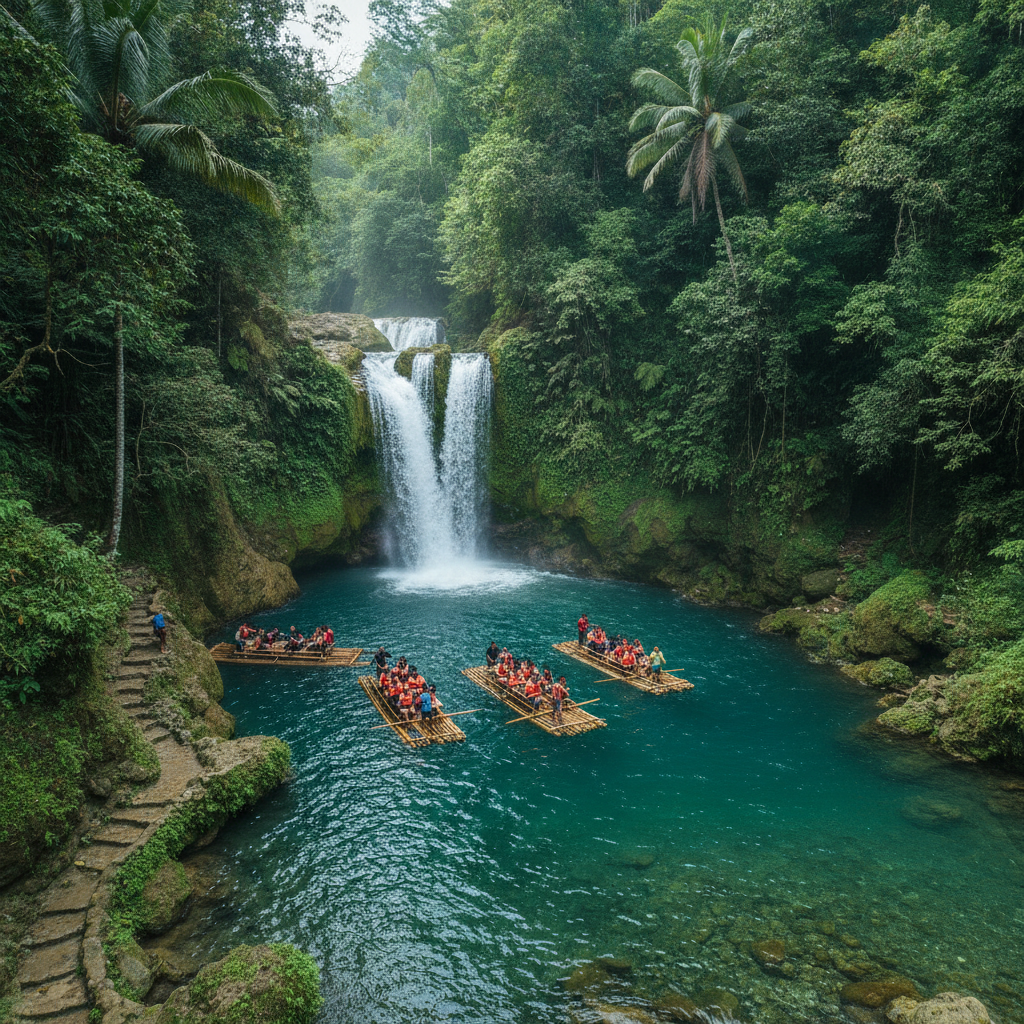
The southern Cebu coastline and highland interior (south of Cebu City, accessible by bus from the South Bus Terminal—approximately 2–3 hours to the main destinations) has developed into the primary adventure tourism area of Cebu province, with two anchor attractions of international reputation. Kawasan Falls (in Barangay Matutinao, Municipality of Badian—110 km south of Cebu City): a multi-tiered waterfall system on the Matutinao River, with the primary falls dropping approximately 20 metres into a brilliant turquoise pool; the Kawasan Canyoneering circuit (a guided adventure activity—hiking, swimming, and cliff jumping through the Matutinao River canyon for 5–6 hours, beginning at the inland village of Badian and finishing at the Kawasan Falls; typically costing PHP 1,200–2,000 per person including guide, is the most popular adventure activity in the Visayas). Moalboal (90 km south of Cebu City, on the western coast): the primary diving and freediving destination in south Cebu—the Sardine Run at Pescador Island (a column of millions of sardines swirling in the water off Moalboal, visible to snorkellers and divers, rotating and shifting as if in a single organism—the largest marine biomass spectacle in the Visayas); the Tongo Point house reef (accessible directly from shore—no boat required, the sardine shoal begins at 5 metres depth). The Oslob-Kawasan circuit: the most common 2-day itinerary from Cebu City combines the controversial Oslob whale shark interaction in the morning with the Kawasan canyoneering in the afternoon.
Walk this route with audio
Stories play automatically as you reach each stop — no tapping needed.
More in Cebu
Cebu's Five-Century Faith: 9 Daily Basilica Masses, the Simala Miracle Shrine's Neo-Gothic Ex-Votos & Bantayan's 'How Boracay Used to Be' Beach
Cebu's Full Complexity: Philippine Eagle's 800 Mindanao Survivors, the 1906 Sakada Recruitment That Built the Hawaiian Filipino Community & Boracay's Raw Sewage Closure Warning
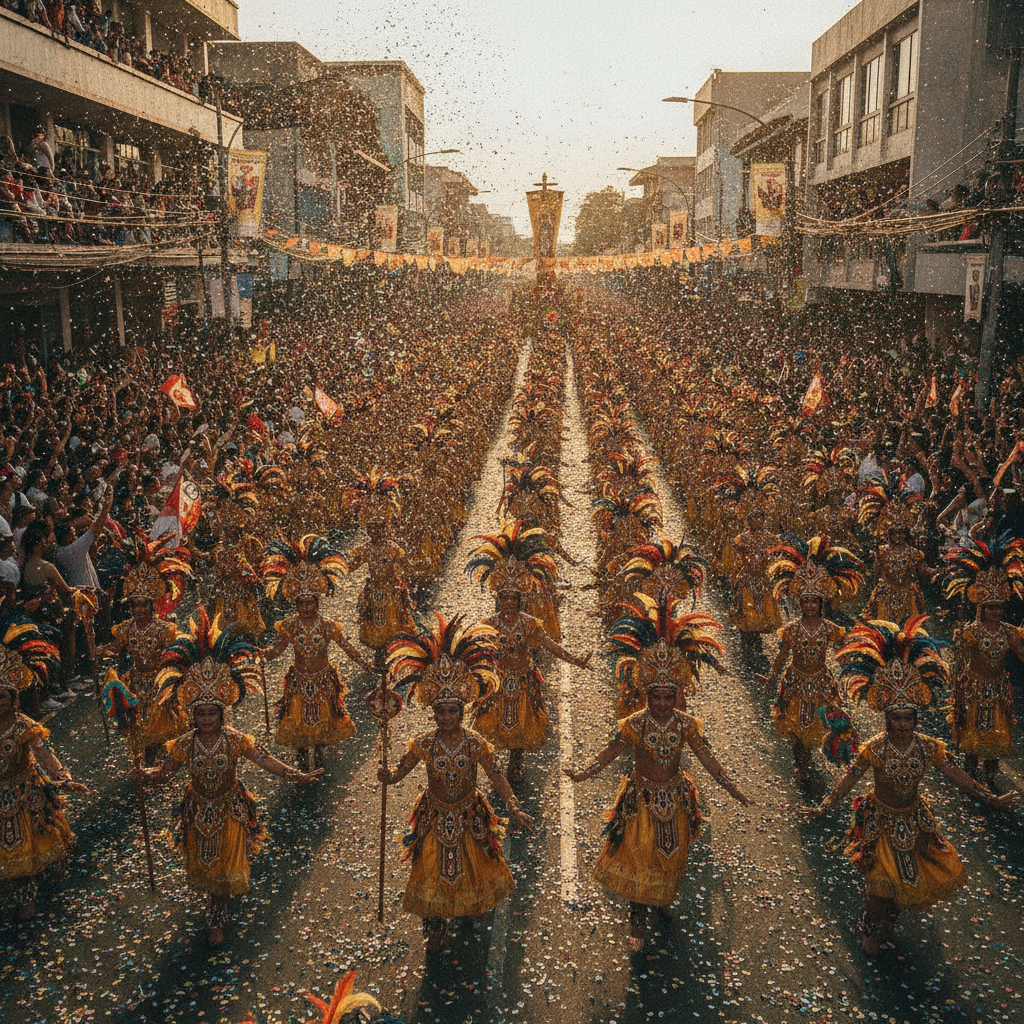
Cebu: Magellan's 1521 Cross, the Sto. Niño Devotion That Draws 2 Million to Sinulog & Anthony Bourdain's Lechón Crackling Revelation
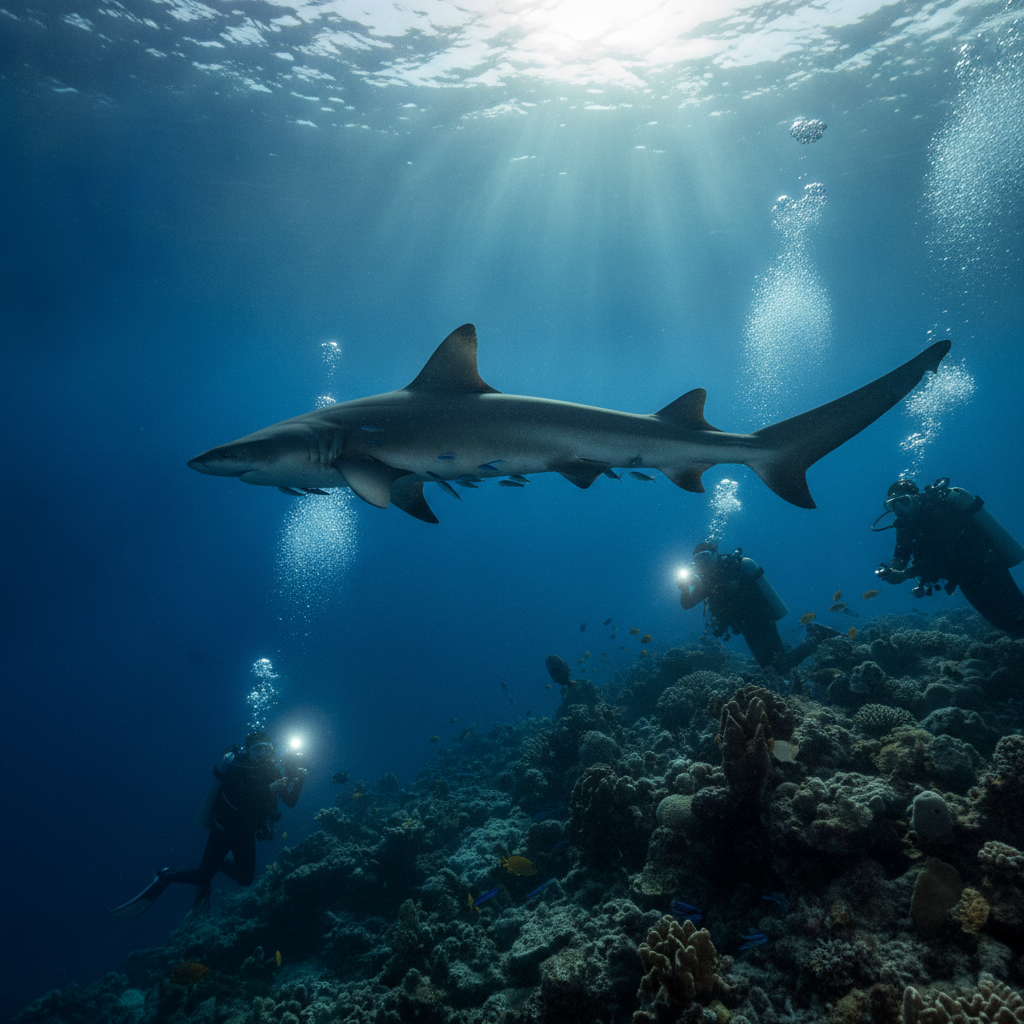
Cebu's Wider Visayas: Malapascua's Dawn Thresher Shark Cleanings, Siquijor's Good Friday Herbalist Gathering & Bacolod Chicken Inasal's Global Fast Food Expansion