The Hassan II Mosque Minaret at 210m Is the Tallest Minaret in the World With a 30km Laser Beam Pointing Toward Mecca Visible from Ships at Sea; The 1942 Casablanca Film Was Shot Entirely in Hollywood and No Exterior Scenes Were Filmed in Morocco; Morocco Has Approximately 70% of the World's Phosphate Reserves Making OCP Group the World's Largest Phosphate Exporter
The Hassan II Mosque minaret at 210m (world's tallest) with a 30km laser beam pointing toward Mecca; the 1942 Casablanca film shot entirely in Hollywood with no exterior scenes filmed in Morocco; Rick's Cafe opened in 2004 by American businesswoman Kathy Kriger recreating the fictional bar; Morocco having approximately 70% of world phosphate reserves with OCP Group as world's largest phosphate exporter; Casablanca built from a 20,000-person fishing town to a 4.7 million city by French colonial investment; and the Casablanca practical guide including the airport train (45 minutes, 45 MAD).
- 1
Hassan II Mosque – The Largest Mosque in Africa
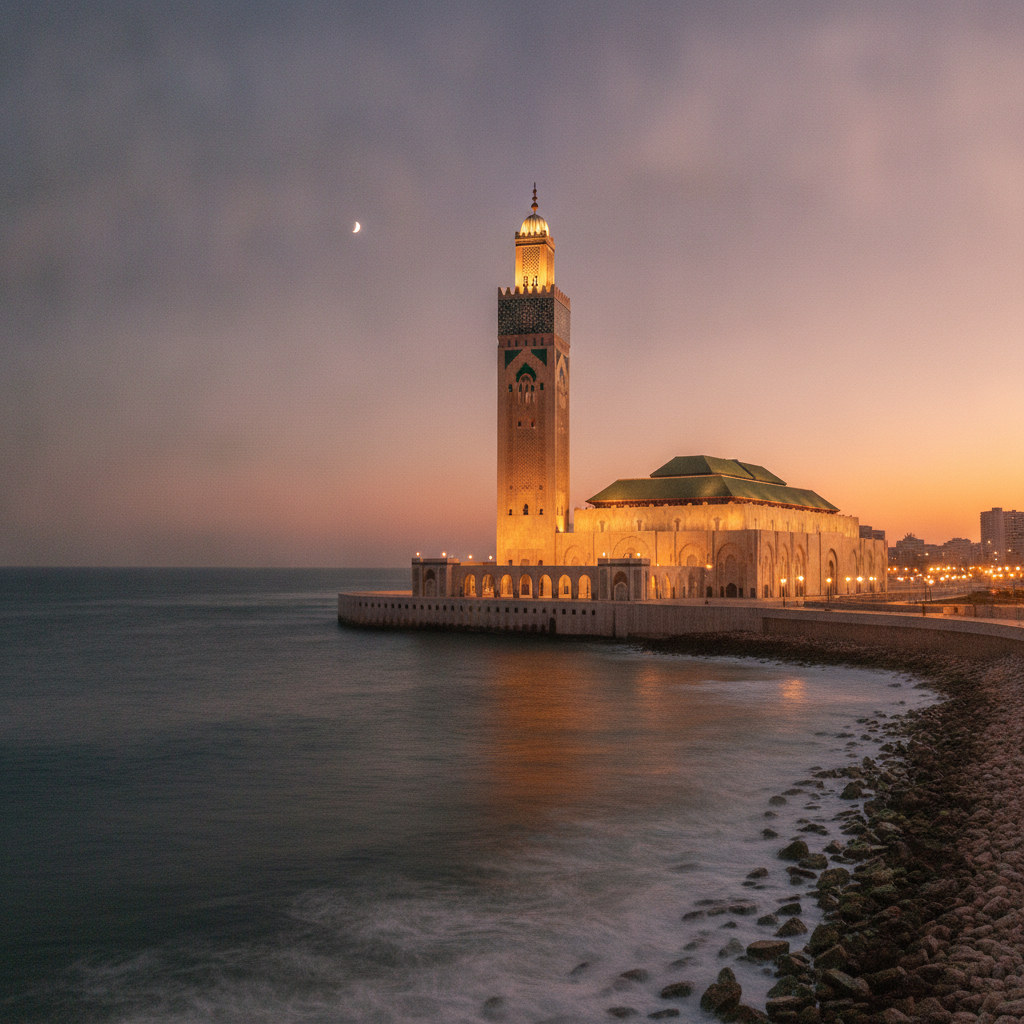
The Hassan II Mosque (Mosquee Hassan II) — the largest mosque in Africa and the third largest in the world after the Grand Mosques of Mecca and Medina: the mosque guide. The construction (the mosque was commissioned by King Hassan II in 1986 and completed on August 30, 1993 — the anniversary of the Prophet Muhammad's birth: the construction took 35,000 artisans and workers 7 years: the cost: approximately USD 585 million — funded by public subscription from Moroccan citizens: the architect: Michel Pinseau (a French architect): the dimensions (the mosque can accommodate 105,000 worshippers — 25,000 inside and 80,000 on the exterior esplanade: the minaret is 210m tall — the tallest minaret in the world: the prayer hall (the prayer hall ceiling is 60m high and opens to the sky via a retractable roof: the floor is heated underfloor with radiant heating: the ocean (the mosque is built on a promontory over the Atlantic Ocean — approximately 1/3 of the mosque's floor area is built over water: from the interior the glass floor panels reveal the ocean below: the craftsmanship (the interior craftsmanship is among the most extensive in any 20th century building: 2,500 traditional artisans created the decorative program: the zellij tilework: the carved stucco (jis): the carved cedarwood ceiling: the carved Carrara marble columns: the laser beam (a 30km laser beam projects from the top of the minaret pointing toward Mecca — visible from ships at sea: the visit (non-Muslim visitors are permitted on guided tours (approximately 6 times daily): the tour covers the prayer hall, the hammam level, the ablutions hall, and the museum level).
- 2
Rick's Cafe and the Humphrey Bogart Myth – Casablanca the City vs the Film
Casablanca — the city and the Humphrey Bogart film (the relationship between the real city of Casablanca and the 1942 Warner Bros film that made it the most famous city in the world beyond its actual significance): the cultural guide. The film (Casablanca (1942 — directed by Michael Curtiz): starring Humphrey Bogart (Rick Blaine) and Ingrid Bergman (Ilsa Lund): the film was set in Casablanca in 1941 during the period of the French Protectorate and the early years of World War II: the film was shot entirely in Hollywood — no exterior scenes were filmed in Morocco: the plot (Rick runs an upscale nightclub (Rick's Cafe Americain) in Casablanca: he encounters his former lover Ilsa who is now married to a Czech resistance leader (Victor Laszlo) who needs exit visas to escape to America: the famous lines (Play it again Sam — never actually said: the line is Play it, Sam): Here's looking at you kid: Of all the gin joints in all the towns in all the world, she walks into mine: We'll always have Paris: the Oscar (Casablanca won 3 Academy Awards including Best Picture (1944): the film is consistently ranked among the greatest films ever made: the Rick's Cafe (the Rick's Cafe in Casablanca (opened 2004 by the American businesswoman Kathy Kriger) — a recreation of the fictional bar from the film: now one of the primary tourist attractions in Casablanca: the real Casablanca (the 1942 film was shot before almost anyone in the production team had visited Morocco: the Casablanca of the film has no relationship to the actual city of Casablanca which in 1942 was a rapidly growing Moroccan port city with a large French colonial population).
- 3
The Corniche and the Atlantic – Casablanca's Seafront Identity
The Casablanca Corniche (the seafront promenade and beach district of Casablanca — the primary leisure zone of Morocco's largest city): the seafront guide. The Corniche (the Ain Diab Corniche — the 4 km seafront road along the Atlantic coast of Casablanca west of the Hassan II Mosque: the Corniche is lined with beach clubs, restaurants, cafes, and hotels: the beach clubs (the primary attraction for Casablancans: the private beach clubs (lidos) that control access to the Atlantic beaches: the largest and most famous: Miami Beach Club: Tahiti Beach Club: La Siesta: the ocean pools (the artificial ocean swimming pools (piscines marines) built into the rocky Atlantic shoreline along the Corniche: natural sea pools formed by the wave-cut platform filled and refreshed with Atlantic seawater): the lighthouse (the El Hank Lighthouse — a historic lighthouse on the headland south of the Hassan II Mosque: one of the most powerful lighthouses on the Atlantic coast of Africa: the nightlife (the Corniche and Ain Diab district is the primary nightlife zone of Casablanca: bars, clubs, and restaurants serving an upscale Moroccan and expatriate clientele: the seafront identity (Casablanca's identity as a seafront Atlantic city distinguishes it from the inland Moroccan cities of Fez and Marrakech: the Atlantic climate (Casablanca climate: maritime Mediterranean (Csb): mild year-round temperatures moderated by the Atlantic: summer maximum approximately 27-30C: winter minimum approximately 8-12C: the Atlantic fog (Casablanca frequently experiences morning fog from the cold Canary Current that flows along the Moroccan Atlantic coast).
- 4
The Medina and Habous Quarter – Old Casablanca and French Art Deco
The Casablanca Medina and the Quartier des Habous (the two distinct historical districts of Casablanca representing the traditional Moroccan medina and the unique French colonial Neo-Moorish architectural heritage): the architectural guide. The Medina (the old medina of Casablanca — the smallest and least touristically significant medina of Morocco's major cities: the Casablanca medina was a small fishing village (approximately 5,000 inhabitants) before the French established their protectorate in 1912: the French built their colonial city adjacent to the medina rather than within it (unlike their approach in Fez and Marrakech where they built outside the medieval city walls): the medina walls (the Casablanca medina has partially preserved Ottoman-era walls and gates (the Portuguese occupied the site in the 16th century and built fortifications): the Quartier des Habous (the Quartier des Habous (the New Medina) — a neighborhood built by the French Protectorate authorities in the 1930s in a deliberately traditional Moroccan architectural style: the Habous combines traditional medina spatial organization (narrow streets, covered souks, a central mosque, a public bathhouse) with modern building technology: the architectural vocabulary: Moroccan arched arcades, carved stucco, zellij tile, and cedarwood screens: the Habous was built to house the growing urban Moroccan population and to demonstrate that French colonial urbanism could respect traditional Moroccan culture: the Art Deco (the central Casablanca business district has one of the finest concentrations of 1930s-1940s Art Deco and Modernist architecture in Africa: the primary buildings: the Banque du Maroc building: the Wilaya (former Prefecture): the Central Post Office).
- 5
Casablanca – Morocco's Economic Capital and the French Colonial Legacy
Casablanca's economic identity (the primary commercial and industrial city of Morocco and the North African city most shaped by French colonial economic development): the economic history guide. The population (Casablanca: population approximately 4.7 million city proper: 6.5 million Greater Casablanca conurbation: the largest city in Morocco and the largest city on the Atlantic coast of Africa: the French Protectorate (the French Protectorate of Morocco (1912-1956) — Casablanca was the primary French colonial investment zone: the port (the Casablanca port was artificially constructed by the French from 1912 onward: before the French arrival Casablanca was a small town of approximately 20,000 people: the French constructed the artificial harbor — one of the largest on the Atlantic coast of Africa — by building two massive sea walls (jetties) extending into the Atlantic: the harbor is now the primary commercial port of Morocco and handles approximately 30 million tonnes of goods annually: the industrial zone (the Casablanca industrial zone (the Zone Industrielle de Casablanca) was established by the French in the 1920s-1940s: the zone is the largest industrial concentration in Morocco: the primary industries: phosphate processing (Morocco has the world's largest phosphate reserves — approximately 70% of world reserves: OCP Group (Office Cherifien des Phosphates) is Morocco's primary state enterprise and the world's largest phosphate exporter: the headquarters are in Casablanca: the finance (Casablanca Finance City (CFC) — established 2010: Morocco's bid to become the primary financial hub of Africa south of the Mediterranean: the Casablanca Stock Exchange (Bourse de Casablanca — established 1929): the primary North African stock exchange outside Egypt).
- 6
Casablanca Practical Guide – Transport, Food, and Day Trips
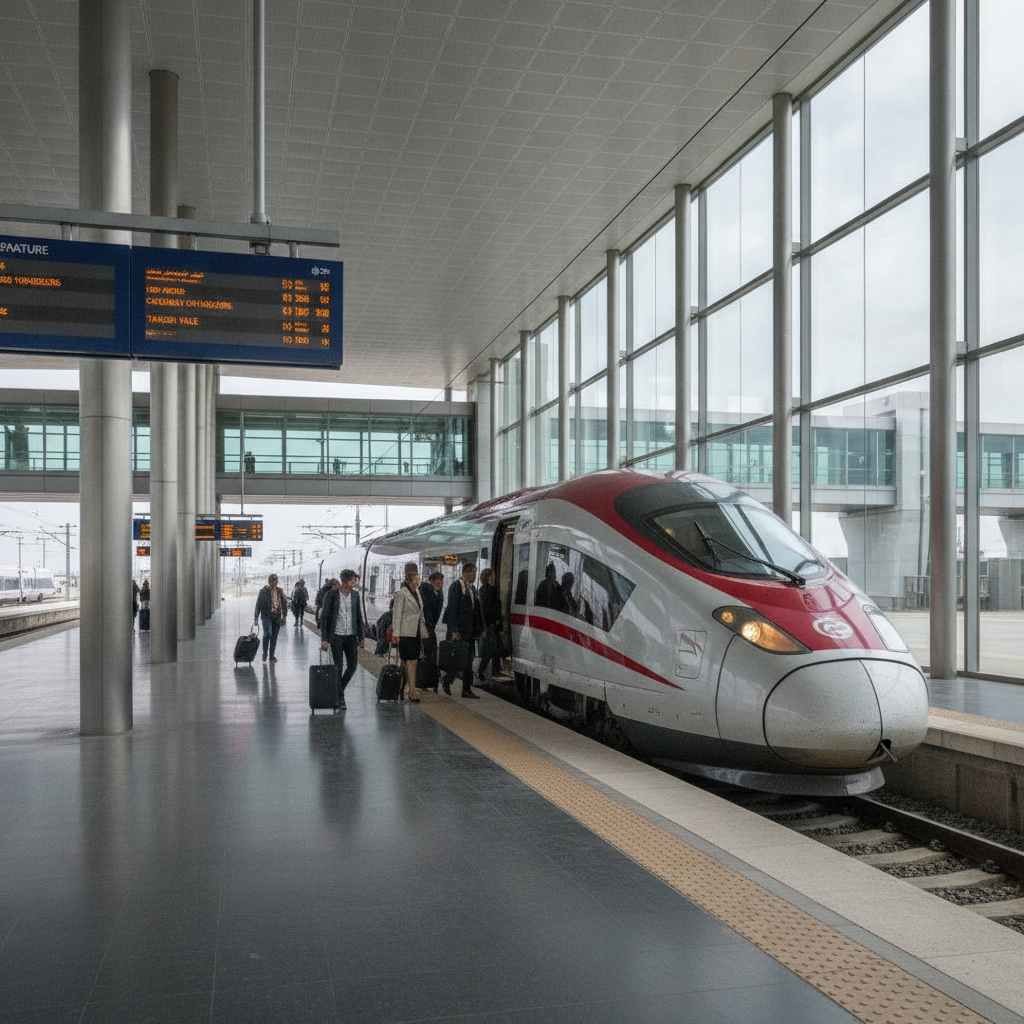
The Casablanca practical guide (essential visitor information for Casablanca — Morocco's commercial capital): the practical guide. The arrival (Mohammed V International Airport (CMN) — 30 km southeast of Casablanca city center: the airport train (ONCF Train Express aeroport) — the most convenient connection: direct train from the airport to Casablanca Voyageurs and Casa Port stations in approximately 45 minutes: trains every 30 minutes: cost approximately 45 MAD (USD 4.50): the transport (Casablanca has a tramway system (two lines opened 2012 and 2019) covering the main east-west and north-south axes of the city: the grand taxis (shared taxis) are the primary intercity transport: the train (direct trains from Casablanca to Rabat (45 minutes), Fez (4 hours), Marrakech (3 hours), Tangier (5.5 hours): the currency (Moroccan Dirham (MAD): approximately 10 MAD per USD (2025): the food (Moroccan cuisine in Casablanca: the primary Casablanca dishes: Rfissa (a Casablancan specialty — lentils, fenugreek, and chicken on a base of msemen flatbread moistened with a rich broth): the Casablanca fish: the Atlantic coast location gives Casablanca access to excellent fresh fish (sardines, sole, sea bass, shrimp): the Central Market (Marche Central) in the downtown area: the day trips (the primary day trips from Casablanca: Rabat (91 km — 45 minutes by train — the Moroccan capital with the UNESCO Medina, the Hassan Tower, and the Mohammed V Mausoleum): El Jadida (99 km south — the Portuguese-era fortified city with the Portuguese cistern (UNESCO)): Mohammedia (30 km north — a coastal resort town): the safety (Casablanca is generally safe for tourists: the medina is smaller and less labyrinthine than Fez or Marrakech medinas).
Walk this route with audio
Stories play automatically as you reach each stop — no tapping needed.
More in Casablanca
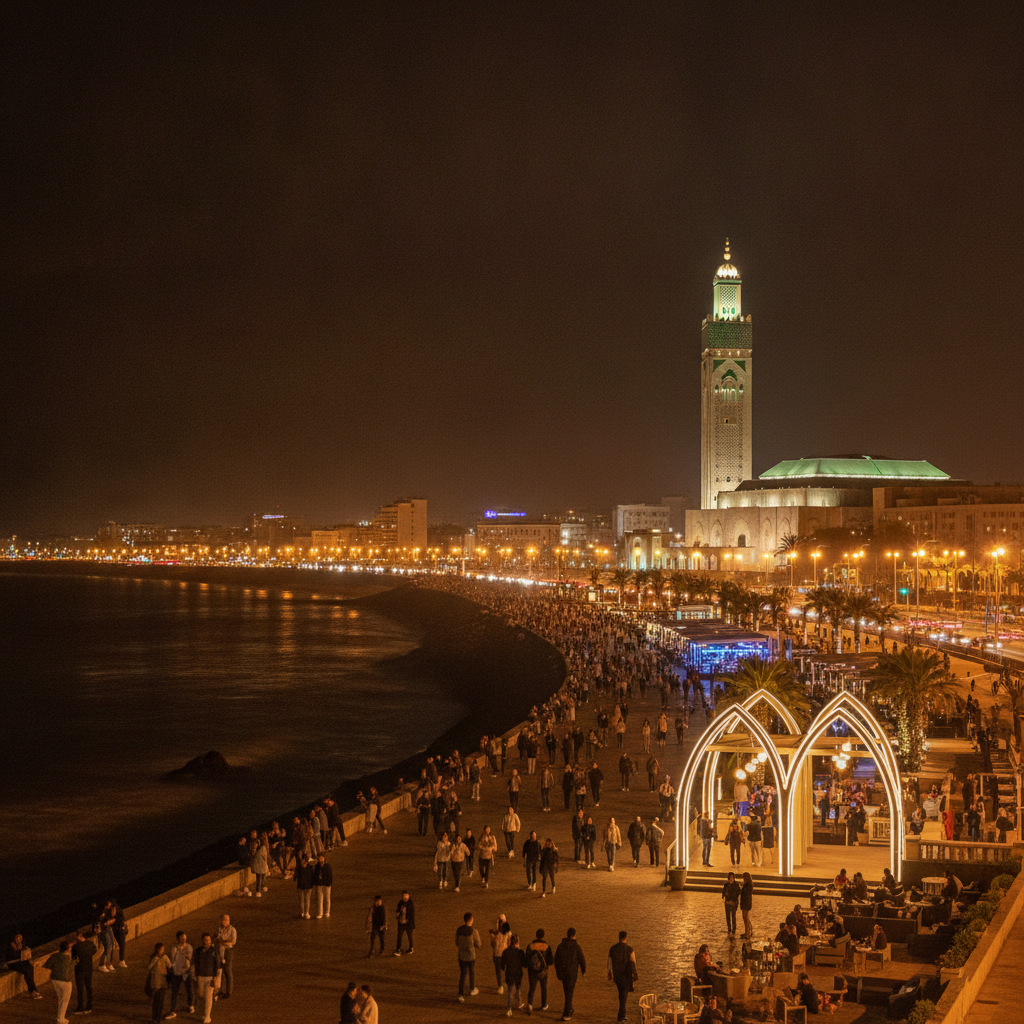
Casablanca Lifestyle: Ain Diab Beach, the Corniche Restaurant Scene, the Morocco Nightlife Capital, the Luxury Hotel Strip, and the Casablanca Urban Middle Class Culture
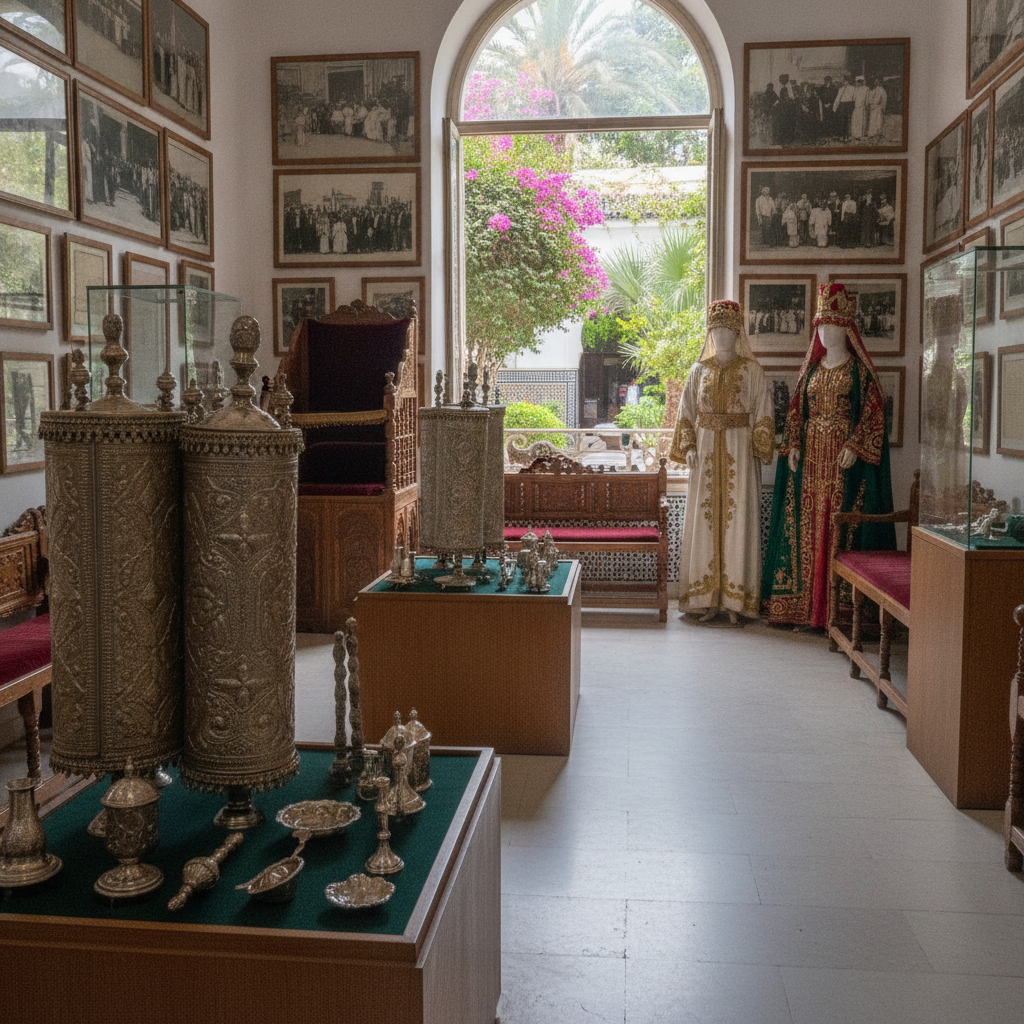
Casablanca Jewish Heritage: The Mellah District, the Miara Cemetery, the Museum of Moroccan Judaism, the Sephardic Cultural Legacy, and the Moroccan Jewish Community Today
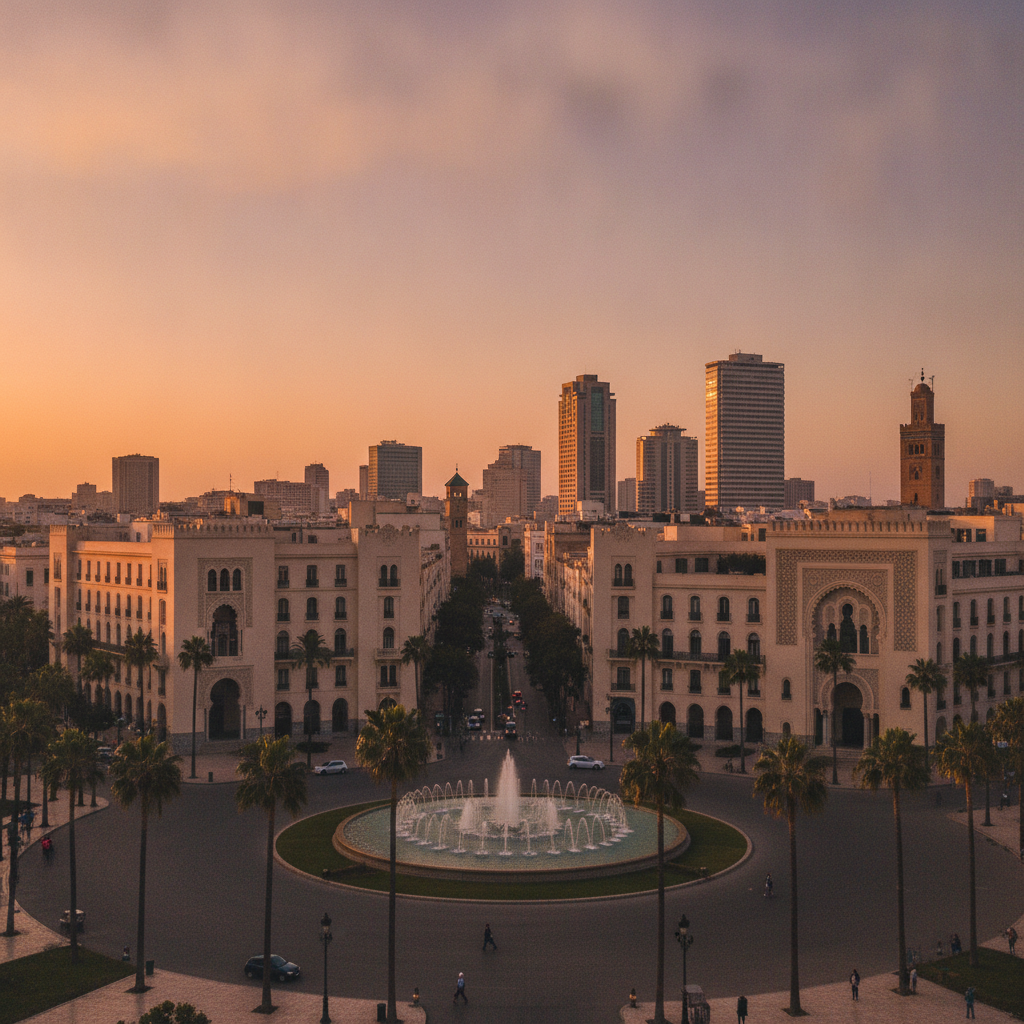
Casablanca Modern City: Mohammed V Square, the Habous New Medina, the Villa des Arts, the Casablanca Financial Centre, and the Contemporary Moroccan Art Scene
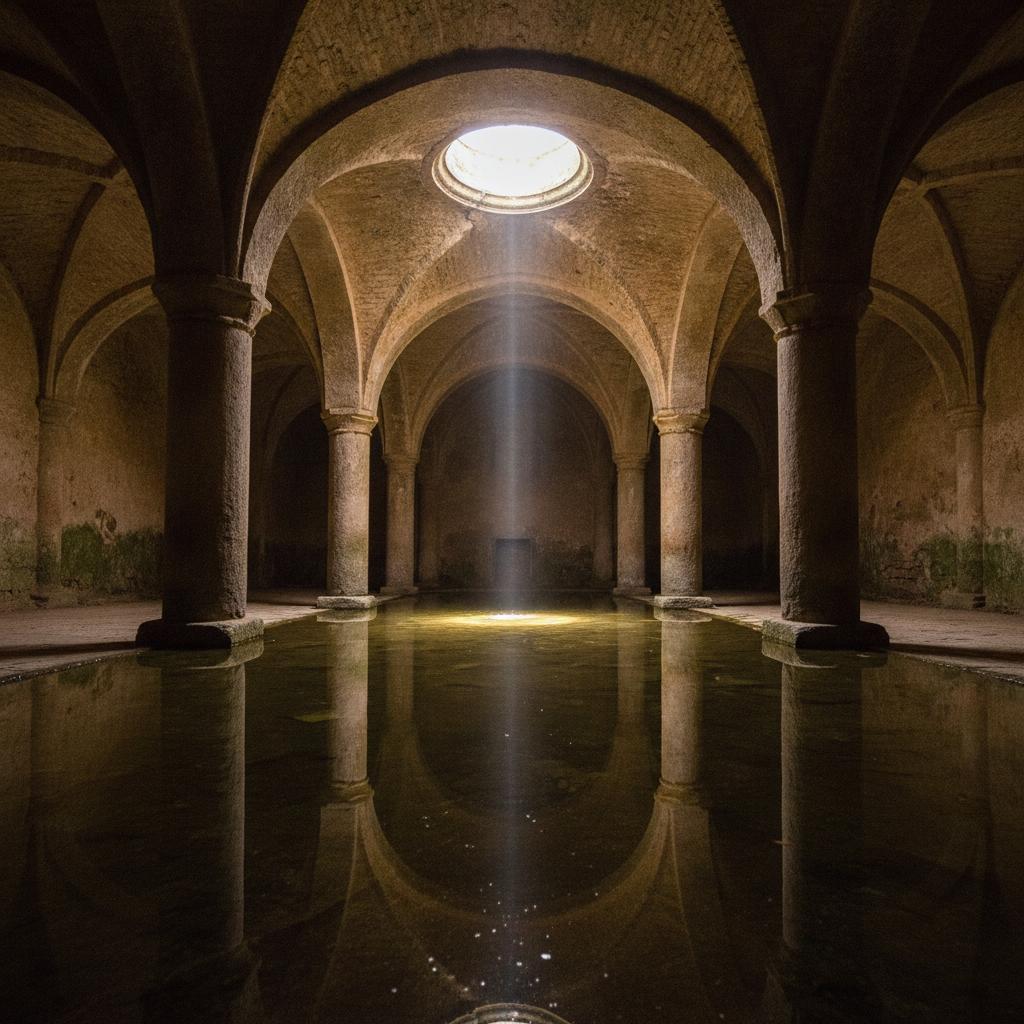
Casablanca Region: El Jadida and the Portuguese Cistern, the Mazagan Coastal Drive, the Oualidia Oyster Lagoon, and the Atlantic Coast South of Casablanca
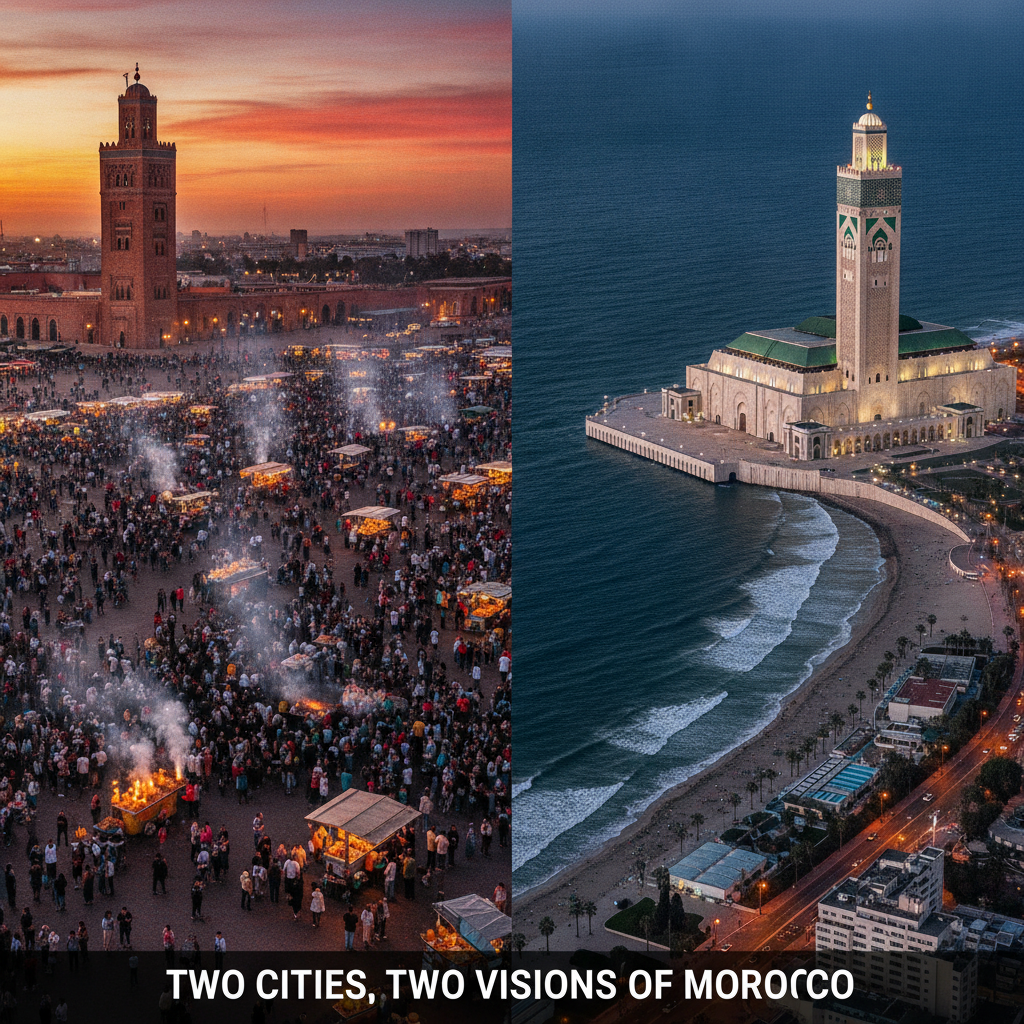
The 1942 Casablanca Film Was Shot Entirely in Hollywood by Filmmakers Who Had Never Visited Morocco Yet Accidentally Captured a Real Wartime Dynamic; The Bou Craa Phosphate Mine in Moroccan-Administered Western Sahara Is One of the World's Largest Phosphate Deposits; Moroccan Argan Oil Has Grown From a Cottage Industry to an Approximately USD 10 Billion Annual Global Market