La Ciudad Amurallada — Cartagena's UNESCO Walled Colonial City
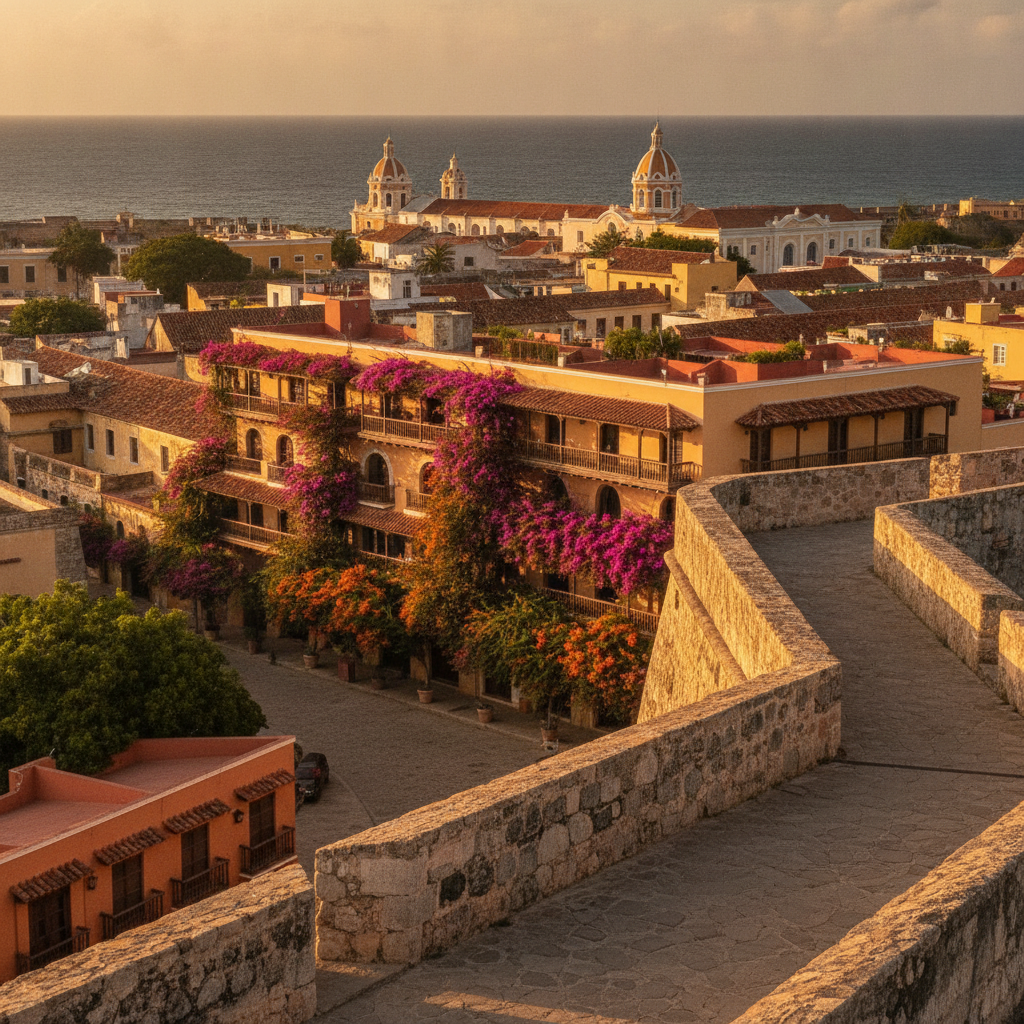
Cartagena de Indias (the port city on the Caribbean coast of Colombia — UNESCO World Heritage Site (designated 1984) and the most visited tourist destination in Colombia after Bogotá): the 'Ciudad Amurallada' (the 'Walled City' — the historic colonial core of Cartagena, enclosed within the 11-kilometre (6.8-mile) Spanish colonial fortified city wall (the 'Las Murallas') built from the 16th through 18th centuries) is the best-preserved Spanish colonial city in the Americas and the most photographed city in Colombia.
- 1
Las Murallas — The 11-Kilometre City Wall
Las Murallas (the 'Walls' — the 11-kilometre (6.8-mile) fortified city wall of Cartagena de Indias, the most complete and most well-preserved Spanish colonial fortification in the Americas): the history (the construction of Las Murallas began after the French privateer Jacques de Sores sacked Cartagena in 1544 and the English privateer Francis Drake (Sir Francis Drake — the English privateer and second person to circumnavigate the globe, 1577-1580) sacked the city in 1586 and held it for ransom for 107 days before withdrawing with 107,000 ducats): the construction (Las Murallas built in multiple phases from 1586 to 1796 — the wall reaching its final form under the direction of the military engineer Agustín Crame in the late 18th century, the wall of approximately 20 metres (66 feet) high with the 'baluartes' (the corner bastions — the protruding angular fortifications that allow the defenders to fire along the faces of the wall) at regular intervals around the perimeter): the walk (the walk along the top of Las Murallas — the 11-kilometre circuit that takes approximately 2-3 hours at a leisurely pace, the walk that offers views into the city on the interior side and over the Caribbean Sea and the Bahía de Cartagena on the exterior side): the 'sunset cocktail' tradition (the tradition of watching the sunset from the top of Las Murallas — the view of the sun setting over the Caribbean Sea behind the Bocagrande peninsula, the moment when the city wall is at its most atmospheric and when the dozens of outdoor bars on the top of the wall are busiest).
- 2
Plaza de Bolívar & the Colonial Heart
The Plaza de Bolívar (the main plaza of the Ciudad Amurallada — the rectangular plaza at the heart of the walled city, formerly known as the 'Plaza de la Inquisición' (the 'Inquisition Square') before independence): the plaza (the Plaza de Bolívar surrounded by the most important monuments of colonial Cartagena — the Palacio de la Inquisición (the 'Palace of the Inquisition' — the 1770 baroque palace that was the headquarters of the Tribunal del Santo Oficio (the Holy Office of the Inquisition) in Cartagena from 1610 to the abolition of the Inquisition in 1821, now housing the Museo Histórico de Cartagena, the museum's collection including the torture instruments used by the Inquisition), the Catedral de Cartagena (the Cathedral of Cartagena — the large 1575-1612 Spanish colonial cathedral on the north side of the plaza, the oldest cathedral in Colombia), the Palacio de la Gobernación (the Government Palace of the Department of Bolívar), and the statue of Simón Bolívar (the equestrian bronze statue of the Liberator at the centre of the plaza)): the Cartagena architecture (the colonial architecture of the buildings surrounding the Plaza de Bolívar — the baroque portal of the Palacio de la Inquisición (the most beautiful colonial facade in Cartagena, with the baroque limestone portal decorated with the coat of arms of the Spanish Crown), the cathedral towers, and the colonial commercial buildings with the arcaded ground floors).
- 3
Getsemaní — The Transformed Working-Class Neighbourhood
Getsemaní (the neighbourhood immediately outside the main city wall of Cartagena — the former working-class neighbourhood of the free Black population and the artisan community of colonial Cartagena, named after the 'Garden of Gethsemane' of the Bible, the neighbourhood that has undergone the most dramatic gentrification transformation of any neighbourhood in Colombia in the 2010s): the history (Getsemaní — the neighbourhood where the working population of colonial Cartagena lived (outside the city wall, reserved for the Spanish colonial aristocracy and the Church institutions), the neighbourhood that was at the centre of the Colombian independence movement: the 'Noche de Getsemaní' (the 'Night of Gethsemane' — the night of November 11, 1811, when the popular uprising in the streets of Getsemaní led to the proclamation of the absolute independence of Cartagena from Spain, making Cartagena the first city in South America to declare independence from Spain)): the Plaza de la Trinidad (the main square of Getsemaní — the lively plaza in front of the 17th-century Iglesia de la Santísima Trinidad, the square that serves as the social heart of the Getsemaní neighbourhood: the square that is busy with the residents of Getsemaní playing dominoes, the children playing football, and the tourists who have discovered the neighbourhood): the street art (the extraordinary concentration of large-scale street art murals in the streets of Getsemaní — the murals by local and international artists that cover entire building facades with imagery related to the Afro-Colombian cultural heritage, the history of slavery in Cartagena, and the gentrification of the neighbourhood).
- 4
San Pedro Claver — The Patron Saint of Slaves
The Iglesia de San Pedro Claver (the church and monastery of the Jesuit order, built 1603-1654 on the site of an earlier church, on the Plaza de San Pedro Claver in the walled city of Cartagena — the most important church in Cartagena and one of the most important in Colombia): San Pedro Claver (the Spanish Jesuit priest Pedro Claver (1580-1654) — the 'Apostle of the Slaves', the priest who dedicated his entire 38-year ministry in Cartagena to the service of the enslaved African people arriving in Cartagena through the slave trade): the slave trade (the Cartagena slave trade — Cartagena de Indias was the primary slave-trading port of Spanish South America, through which approximately 1 million enslaved Africans were imported to South America between 1580 and 1810, the port where the enslaved people arrived after the horrific 'middle passage' (the trans-Atlantic crossing in the slave ships) and were auctioned in the slave market of Cartagena before being transported to the mines of Peru and Bolivia or the plantations of New Granada): Pedro Claver's ministry (the ministry of Pedro Claver in Cartagena — his practice of boarding the slave ships as they arrived in port to comfort and minister to the enslaved people before they were auctioned, his baptism of an estimated 300,000 enslaved Africans during his 38 years in Cartagena, and his canonization as the first saint of the Americas to be canonized (1888)): the church today (the Iglesia de San Pedro Claver — the well-preserved baroque church with the courtyard monastery, the relics of San Pedro Claver in the high altar, and the Museo de Arte Religioso (the museum of colonial religious art in the monastery)).
- 5
Cartagena's Caribbean Cuisine & Market Food
Cartagena's cuisine (the Caribbean coast cuisine of Cartagena — the food tradition of the Colombian Caribbean coast that blends the Indigenous Colombian food traditions (the corn, the cassava, the sweet potato, and the tropical fruits), the Spanish colonial food tradition (the rice, the beans, and the pork), and the Afro-Colombian food tradition (the coconut milk, the plantain, the cassava, and the African spices that were brought by the enslaved Africans to the Colombian Caribbean coast)): the 'bandeja de mariscos' (the 'seafood platter' — the Caribbean coast version of the Colombian bandeja platter, the platter of grilled fish, fried shrimp, fried calamari, fried plantain (the 'patacón' — the flattened and twice-fried green plantain slice), and the Caribbean coleslaw ('ensalada de repollo') served with the 'hogao' (the Colombian sautéed tomato and onion sauce)): the 'buñuelos de viento' (the 'air fritters' — the deep-fried pastry balls of the Cartagena street food tradition, sold from the street carts in the old city): the 'agua de panela' (the traditional Colombian drink — the hot or cold drink made from the panela (the unrefined whole cane sugar) dissolved in water, served with lemon): the Mercado Bazurto (the Mercado Público de Bazurto — the enormous, chaotic, and exhilarating public market in the Manga district of Cartagena, the market where the local population of Cartagena shops for fish, meat, tropical fruits, and vegetables: the market that is the antithesis of the tourist experience of the walled city and that offers the most authentic and most affordable food in Cartagena).
- 6
Bocagrande & Modern Cartagena's Beach Resort
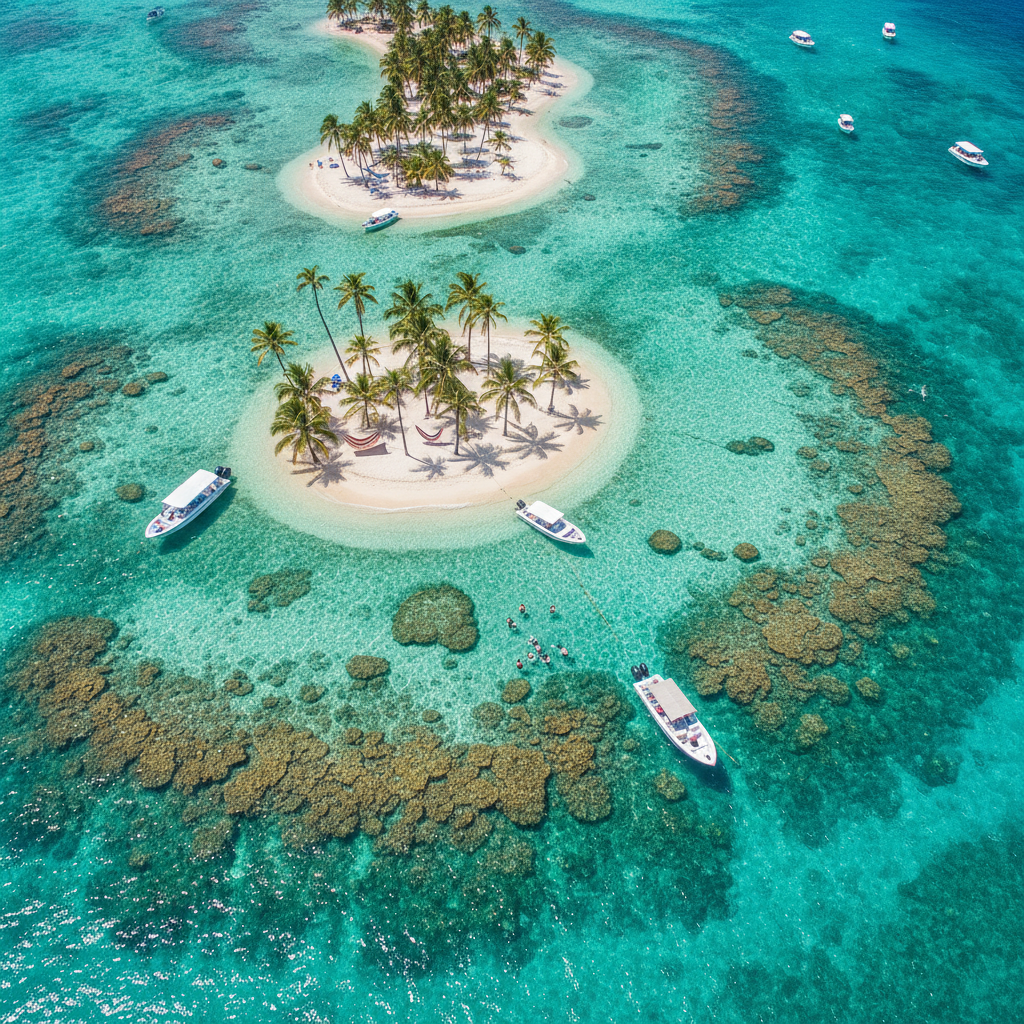
Bocagrande (the 'large mouth' — the modern beach resort peninsula of Cartagena, extending south from the walled city into the Caribbean Sea — the neighbourhood of the high-rise hotels, the beach clubs, the casino strip, and the modern urban development that contrasts sharply with the colonial walled city): the Bocagrande beach (the 'Playa de Bocagrande' — the urban beach of Cartagena, the long stretch of dark sand beach on the eastern side of the Bocagrande peninsula, facing the Bahía de Cartagena (the 'Bay of Cartagena') rather than the open Caribbean (the calmer, more sheltered water of the bay): the beach experience (the Bocagrande beach scene — the Colombian beach culture: the 'cocos' (the fresh coconut vendors who circulate along the beach with the freshly cut coconuts (the green coconuts with the straw for drinking the coconut water and the 'coco raspado' (the grated coconut flesh with the lime and chili)), the 'sancochos' (the vendors selling the Colombian sancocho soup and the 'arroz con pollo' (the rice and chicken dish) from the 'frioler-as' (the coolers) along the beach), the boat tours (the small 'lancha' boats that take tourists from the Bocagrande beach to the 'Islas del Rosario' (the Rosario Islands — the archipelago of approximately 30 small coral islands in the national marine park 45 km southwest of Cartagena, the destination for the day-trip snorkelling and beach excursions from Cartagena)).
Walk this route with audio
Stories play automatically as you reach each stop — no tapping needed.
More in cartagena
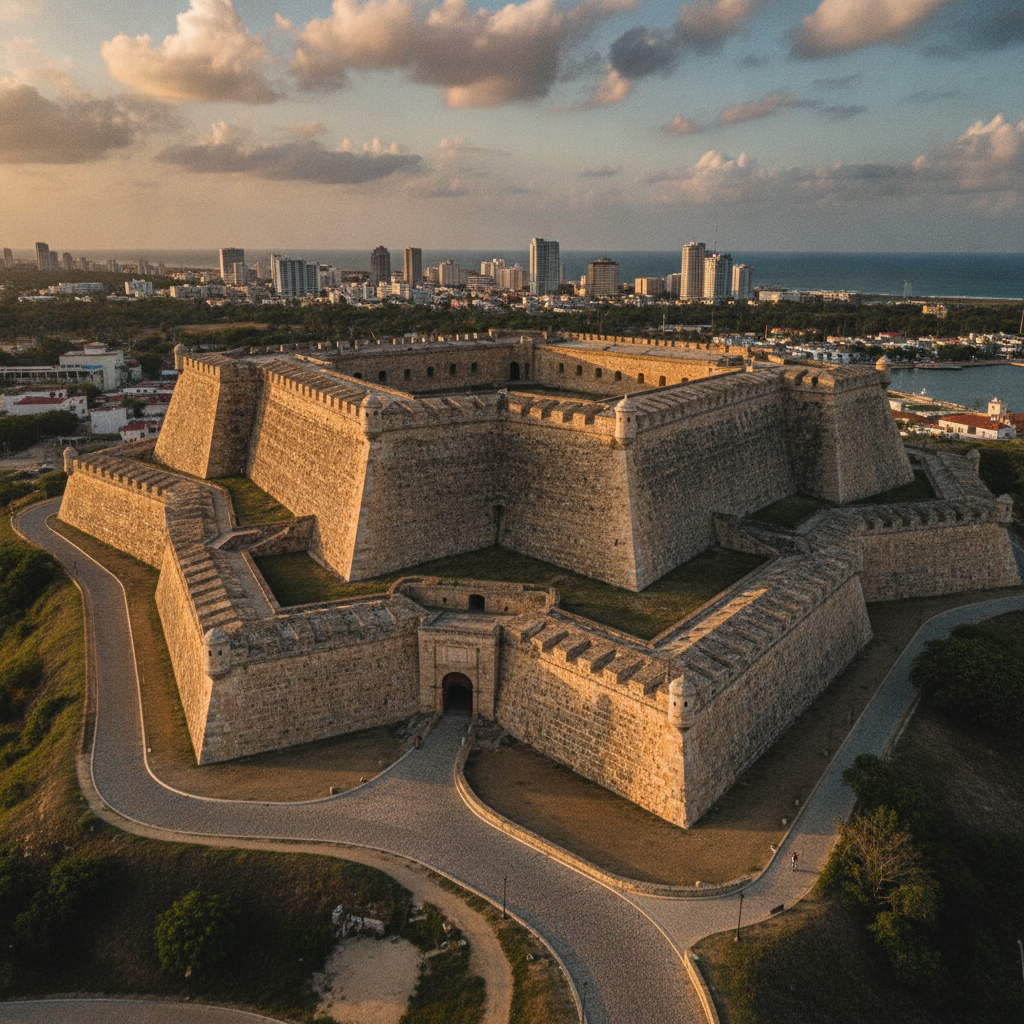
Castillo San Felipe de Barajas & Cartagena's Military Heritage
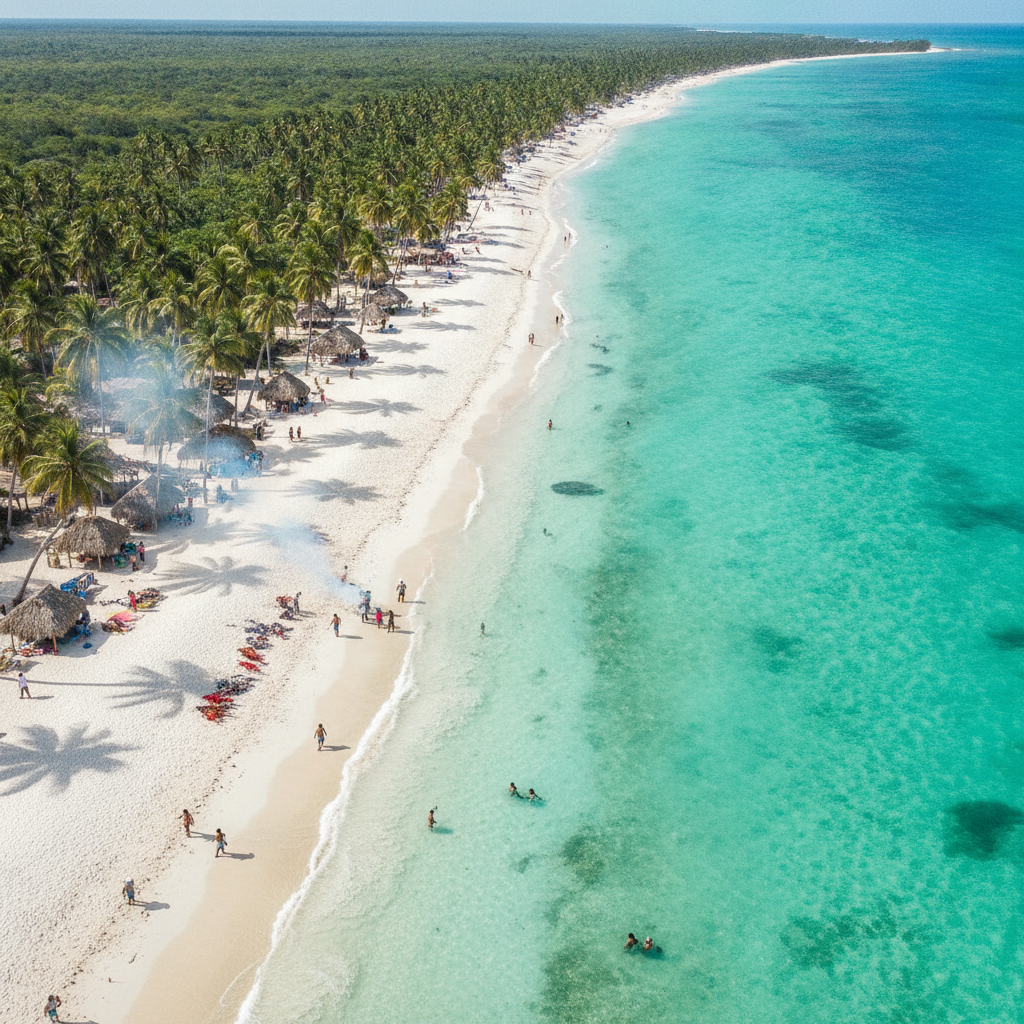
Playa Blanca, Barú & Cartagena's Caribbean Beach Experience
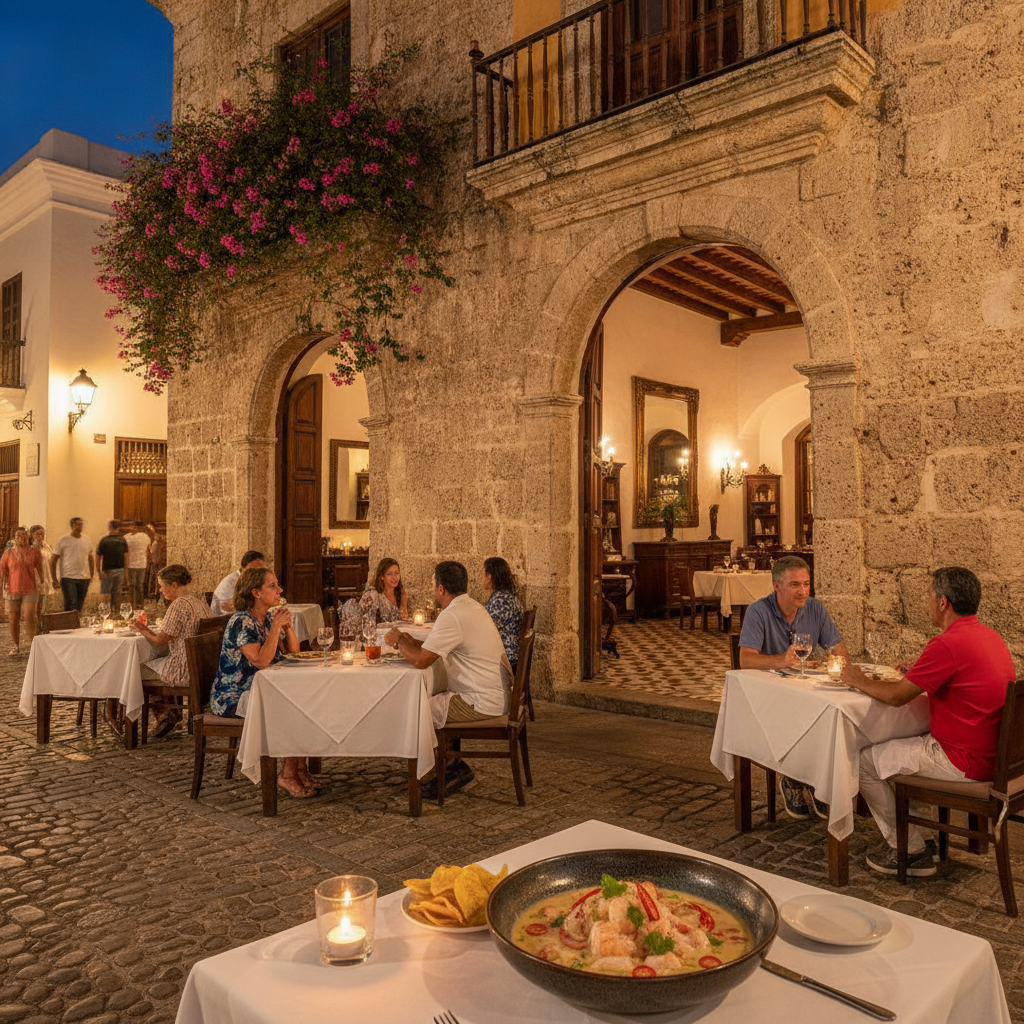
Cartagena's Modern Restaurant Scene & Creative Colombian Cuisine
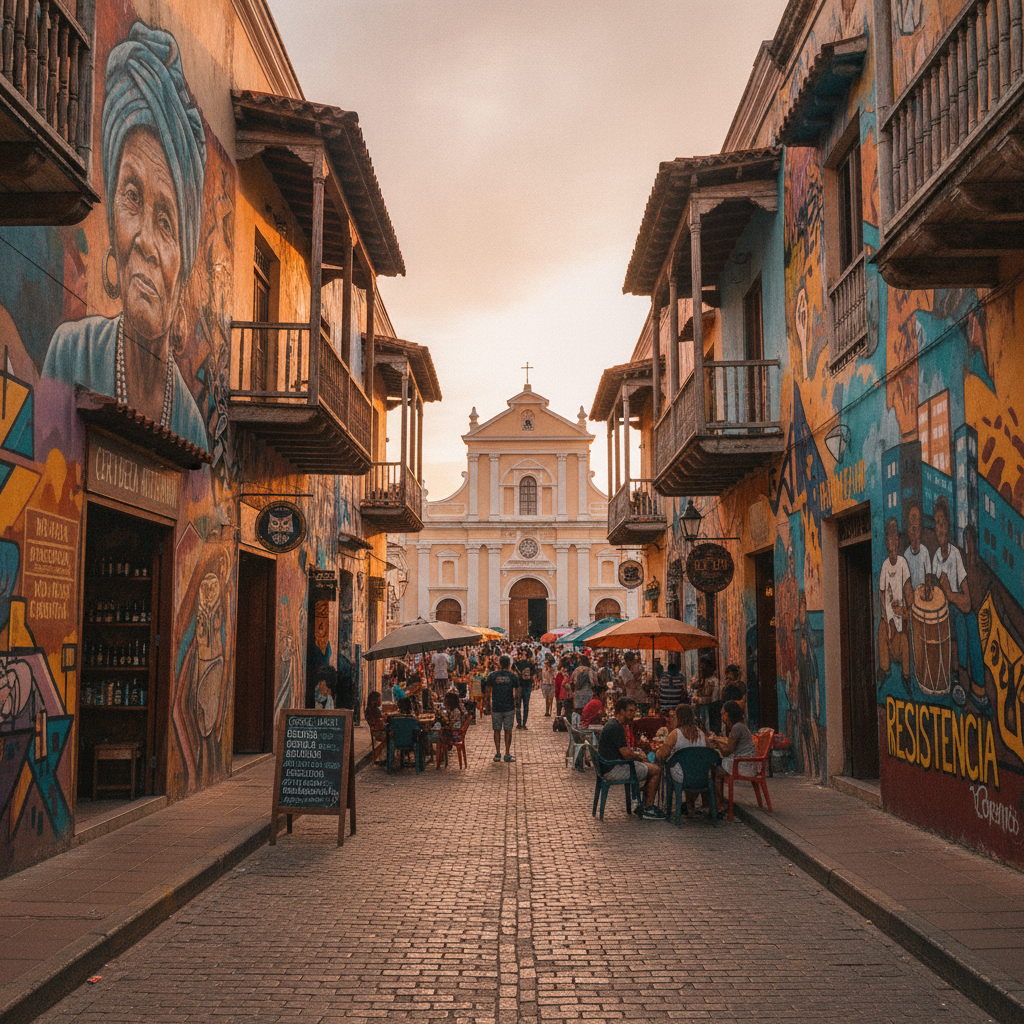
Getsemaní, Street Art & Cartagena's Creative Underground
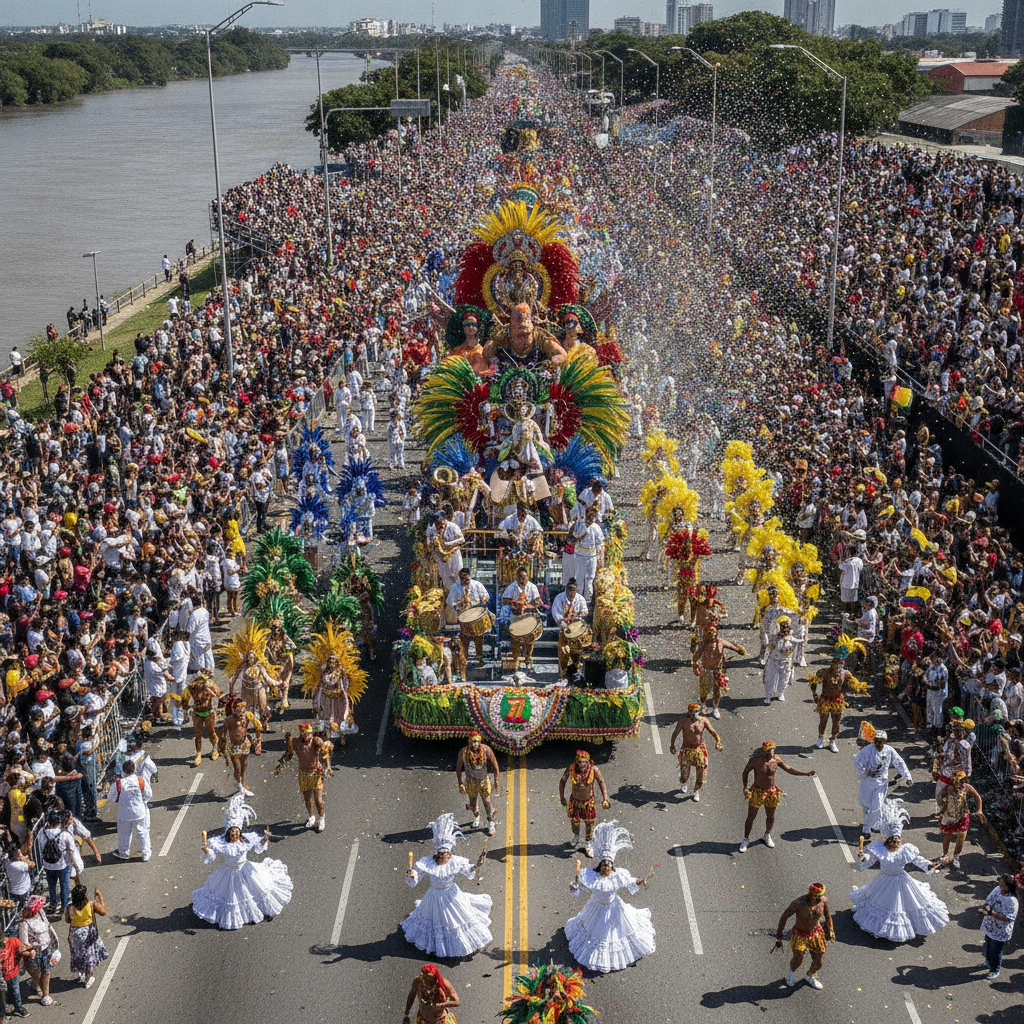
Barranquilla Carnaval & Colombia's Caribbean Coast Culture