Playa Blanca, Barú & Cartagena's Caribbean Beach Experience
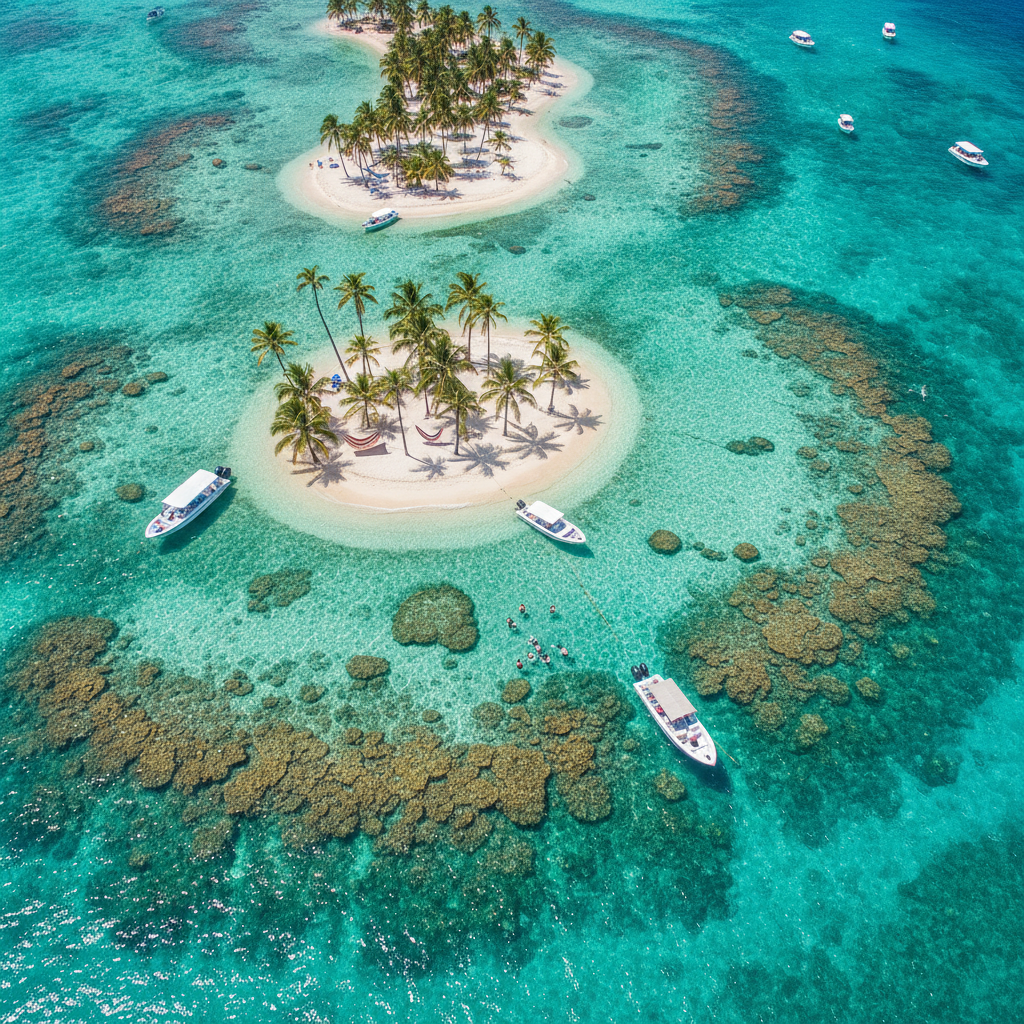
The Caribbean coast beaches accessible from Cartagena — the Playa Blanca on the Barú Peninsula (the most beautiful beach in Colombia, 45 minutes by boat), the Islas del Rosario (the coral island archipelago in the national marine park, 45-90 minutes by boat), and the beaches of Bocagrande and Marbella (the urban beaches adjacent to the walled city) — together constitute one of the finest Caribbean beach experiences available in South America.
- 1
Playa Blanca — The Most Beautiful Beach in Colombia
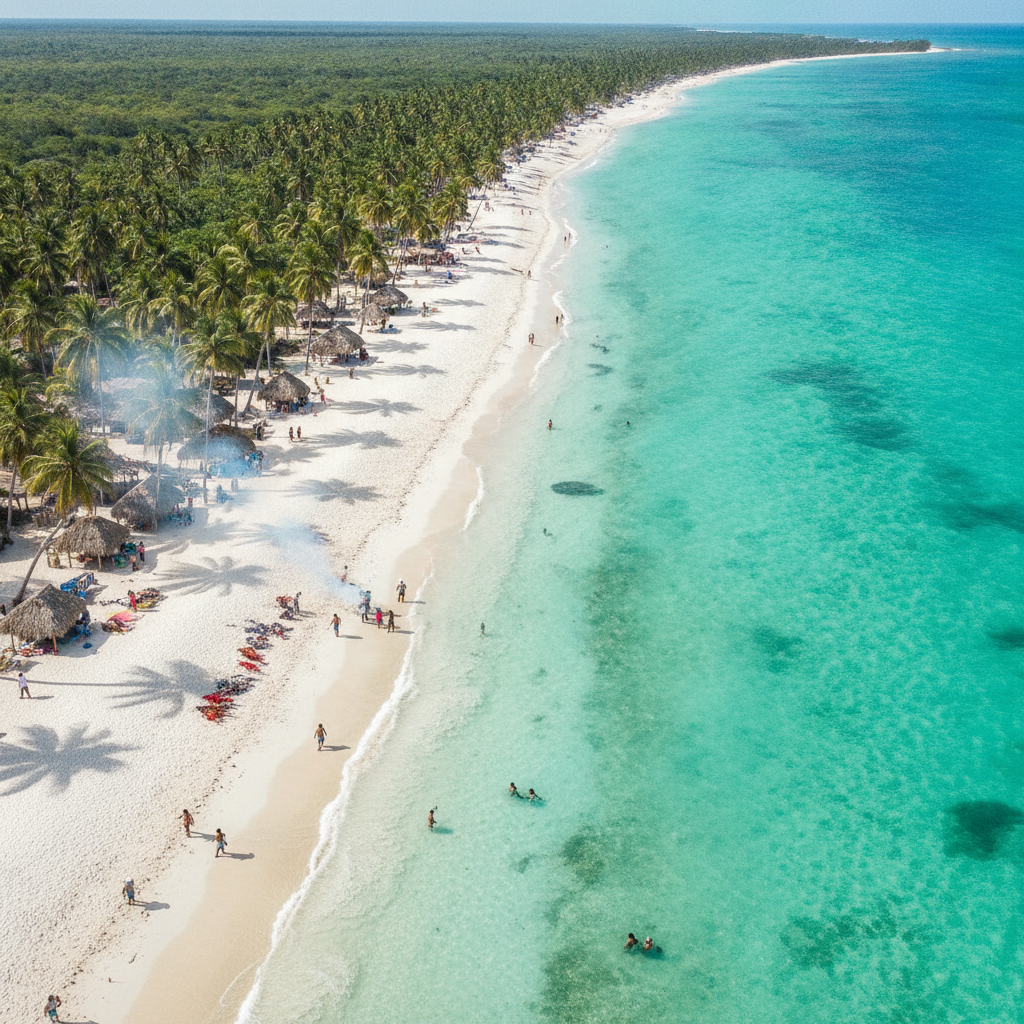
Playa Blanca (the 'White Beach' on the Barú Peninsula — the peninsula connected to the Colombian mainland by a narrow causeway (the 'Canal del Dique' industrial waterway separates Barú from the mainland), accessible by the boat from the Muelle de los Pegasos in the walled city or the Muelle de la Bodeguita in Bocagrande): the beach (the 3-kilometre (2-mile) beach of brilliant white coral sand and turquoise Caribbean water — the colour produced by the shallow, clean water over the coral sand, the clearest and most beautiful beach water in mainland Colombia): the experience (the Playa Blanca experience — the day at the beach: arriving by boat at the Playa Blanca pier at approximately 10 AM, the 'ranchos' (the simple palm-thatched shelters with the plastic chairs and the hammocks that are rented for the day by the beach vendors), the lunch of the fresh fish (the red snapper (pargo rojo) grilled whole over the open fire on the beach, served with the coconut rice and the patacones) and the lobster (the Caribbean spiny lobster (Panulirus argus) grilled and served with the lime and the garlic butter), the afternoon snorkelling on the small reef at the southern end of Playa Blanca, and the boat return to Cartagena by 4-5 PM): the overnight option (the possibility of staying overnight at Playa Blanca — the rustic 'cabañas' (the simple thatched huts with the hammocks or the basic beds) available for rent at Playa Blanca, the option that allows the visitor to experience Playa Blanca in the early morning (before the day-trippers arrive) and the late afternoon (after they leave), the times when the beach is most peaceful and most beautiful).
- 2
The Rosario Islands & Coral Reef Snorkelling
The Islas del Rosario (the 'Rosary Islands' — the 27-island archipelago in the Parque Nacional Natural Corales del Rosario y San Bernardo, 45 km (28 miles) southwest of Cartagena in the Caribbean Sea): the reef (the Rosario Reef — the section of the Mesoamerican Barrier Reef system around the Islas del Rosario, the reef that provides the exceptional water clarity and the coral diversity that make the Islas del Rosario the best snorkelling destination accessible from Cartagena): the day trip (the standard Islas del Rosario day trip from Cartagena — the boat departing from the Muelle de los Pegasos at 8-9 AM, the stop at the Oceanario Islas del Rosario (the small aquarium on the Isla San Martín de Pajarales — the aquarium tank with the sharks (the nurse shark (Ginglymostoma cirratum) and the blacktip shark (Carcharhinus limbatus)), the rays (the southern stingray (Hypanus americanus)), and the sea turtles (the green sea turtle (Chelonia mydas)) fed by the aquarium guides), then the island beach stop for the lunch and the snorkelling on the reef, and the return to Cartagena at 4-5 PM): the private island experience (the private island resorts of the Islas del Rosario — the most exclusive of the Rosario Island resorts available for the day or the overnight stay: the 'Isla del Encanto' (the 'Island of Enchantment' — the private island with the exclusive beach club), the 'Eco-hotel Arco Iris' (the sustainable eco-resort on the Isla Grande, the largest island in the archipelago, with the coral reef directly offshore from the eco-resort dock)).
- 3
Mompox — The Living Colonial Ghost Town
Mompox (Santa Cruz de Mompox — the UNESCO World Heritage Site city on the Brazo de Mompox (the eastern channel of the Magdalena River) in the Bolívar Department, 250 km (155 miles) southeast of Cartagena, accessible by a combination of bus and boat from Cartagena in approximately 8-10 hours): the history (Mompox — the Spanish colonial city founded in 1537 on the banks of the Magdalena River, the river that was the principal trade route of colonial New Granada (the territory of present-day Colombia), the city that was the most prosperous river port in colonial Colombia during the 16th-17th centuries (when the Magdalena River was the main route connecting the interior of New Granada with the Caribbean coast) and that declined with the silting of the Magdalena River channel in the 18th century, becoming a 'city frozen in time'): the colonial preservation (the extraordinary preservation of Mompox — the city that has changed so little since the colonial period that it was the most perfect example of a living colonial city in South America when it was designated a UNESCO World Heritage Site in 1995): the Gabriel García Márquez connection (the García Márquez connection to Mompox — the novelist who used Mompox as the model for 'Macondo' in 'One Hundred Years of Solitude' and who described the city as 'the place where time stopped'): the artisanal gold jewellery (the 'Filigrana Momposina' — the Mompox filigree gold jewellery, the most famous craft tradition in Colombia, the technique of weaving the finest gold wire (0.1-0.3 mm / 0.004-0.012 inch diameter) into the delicate floral and geometric patterns that have been the signature of Mompox goldsmiths since the colonial period, designated Intangible Cultural Heritage of Humanity by UNESCO (2009)).
- 4
Cartagena's Sunset & Nightlife Culture
Cartagena's evening culture (the social life of the walled city in the evening — the moment when the colonial city transforms from the hot, slightly daunting daytime heat into the romantic, atmospheric evening that has made Cartagena one of the most celebrated evening destinations in Latin America): the 'hora dorada' (the 'golden hour' in Cartagena — the 45 minutes before and after sunset (approximately 6-7 PM in Cartagena, which is at 10° north latitude and has sunsets at approximately 6:20 PM throughout the year) when the coloured facades of the walled city glow in the golden light, the bougainvillea is lit from above, and the photographers are out in force on every street corner): the cocktails on the wall (the tradition of watching the sunset from the top of Las Murallas with a cocktail in hand — the cocktail bars and kiosks on the top of the city wall that fill with the tourists at sunset, the most popular being the area near the 'Café del Mar' (on the bastion of the wall, with the view over the Caribbean and the sunset)): the 'chiva' culture (the 'chiva rumbera' — the traditional Colombian 'chiva' bus (the 'chiva' is the traditional wooden-sided open-air bus used as rural transport throughout Colombia) converted into a rolling party bus, the 'chiva rumbera' of Cartagena being the most popular evening party experience in the city: the open-air bus with the live vallenato or champeta music, the aguardiente (the Colombian anise spirit), and the tour through the streets of the city and the Bocagrande waterfront): the champeta (the 'champeta' — the African-derived urban folk music of Cartagena, the Afro-Caribbean pop music that is the most popular music among the working-class Afro-Colombian population of Cartagena, the music played in the open-air 'picó' (the improvised outdoor dance parties in the barrios of Cartagena) that is the authentic sound of Cartagena's popular culture).
- 5
Palenquera Women & Afro-Colombian Traditions
The Palenquera women (the women of the Palenque de San Basilio community who sell the traditional Colombian sweets in the streets of the Cartagena walled city — the women who have become the most recognizable and the most photographed symbol of Cartagena's Afro-Colombian cultural heritage): the image (the image of the Palenquera woman — the woman dressed in the traditional white dress with the colourful ruffled neckline (the 'traje de palenquera' — the traditional dress of the Palenquero women, combining the white cotton dress with the brightly coloured ruffles at the neckline and the colourful headwrap), carrying the large plastic bowl balanced on her head, the bowl filled with the traditional Palenquero sweets (the 'cocadas' (the coconut candy in white, brown, and pink varieties), the 'alegrías' (the sesame seed and papaya candy), and the 'bollos de maíz' (the corn tamales wrapped in plantain leaves)): the tradition (the Palenquera tradition of selling food in the streets of Cartagena — the tradition established by the women of Palenque de San Basilio in the colonial period (when the free Black community of Palenque provided the food vendors of Cartagena's streets) and that has continued without interruption to the present day, the tradition that makes the Palenquera women both the living link to the oldest free Black community in the Americas and the most visible symbol of Cartagena's Afro-Colombian identity): the UNESCO recognition (the Palenque de San Basilio cultural space designated as UNESCO Intangible Cultural Heritage of Humanity in 2008 — the recognition that includes the Palenquero language, the music, the food, and the social organization of the Palenquero community).
- 6
Cartagena Gastronomy & Seafood Culture
Cartagena's seafood culture (the Caribbean coast seafood of Cartagena — the fish and shellfish of the Colombian Caribbean, the centrepiece of the Cartagena gastronomy): the 'pargo rojo' (the red snapper — Lutjanus campechanus — the most beloved fish of the Colombian Caribbean coast, grilled whole ('a la brasa') over the open fire or deep-fried ('frito') and served with the coconut rice and the patacones (the flattened and twice-fried green plantain slices) and the 'ensalada de repollo' (the Caribbean coleslaw)): the 'langosta' (the Caribbean spiny lobster (Panulirus argus) — the most prestigious seafood of the Colombian Caribbean, available on the beaches of Playa Blanca and in the seafood restaurants of Cartagena, typically grilled and served with the garlic butter and the lime): the coconut rice (the 'arroz con coco' — the most iconic side dish of the Colombian Caribbean coast, the rice cooked in the fresh coconut milk (the milk extracted from the freshly grated coconut) with the caramelized coconut and the salt, the distinctive white-and-brown speckled rice that accompanies virtually every Caribbean coast main dish in Cartagena): La Cevichería (the most famous seafood restaurant in Cartagena — La Cevichería (Calle Stuart 7-14, in the walled city), the restaurant that has been internationally recognized (including a visit by Anthony Bourdain on 'Parts Unknown') for the finest ceviche in Colombia: the 'ceviche de camarón' (the prawn ceviche with the tiger's milk (the 'leche de tigre' — the citrus and fish marinade that cooks the raw seafood by denaturation), the cilantro, the red onion, and the aji pepper) and the 'ceviche mixto' (the mixed seafood ceviche of shrimp, fish, and octopus)).
Walk this route with audio
Stories play automatically as you reach each stop — no tapping needed.
More in cartagena
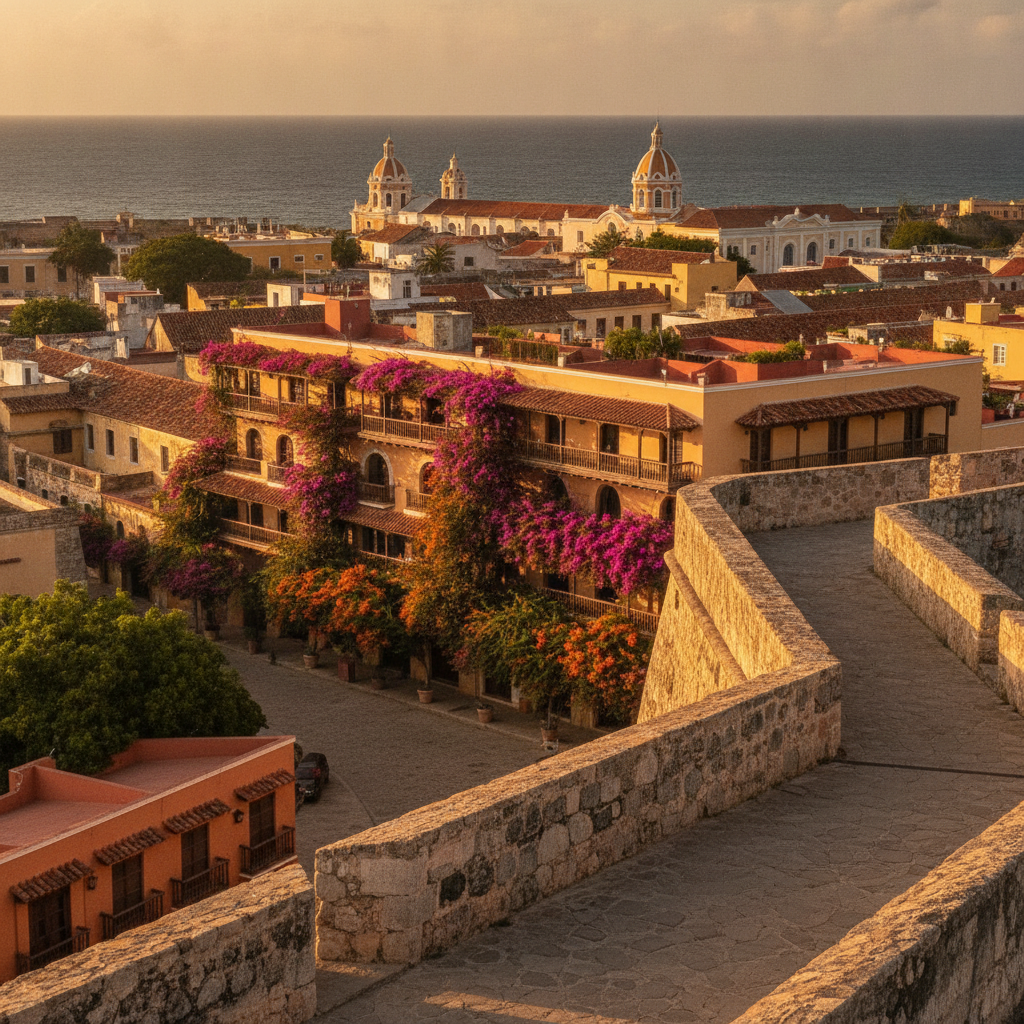
La Ciudad Amurallada — Cartagena's UNESCO Walled Colonial City
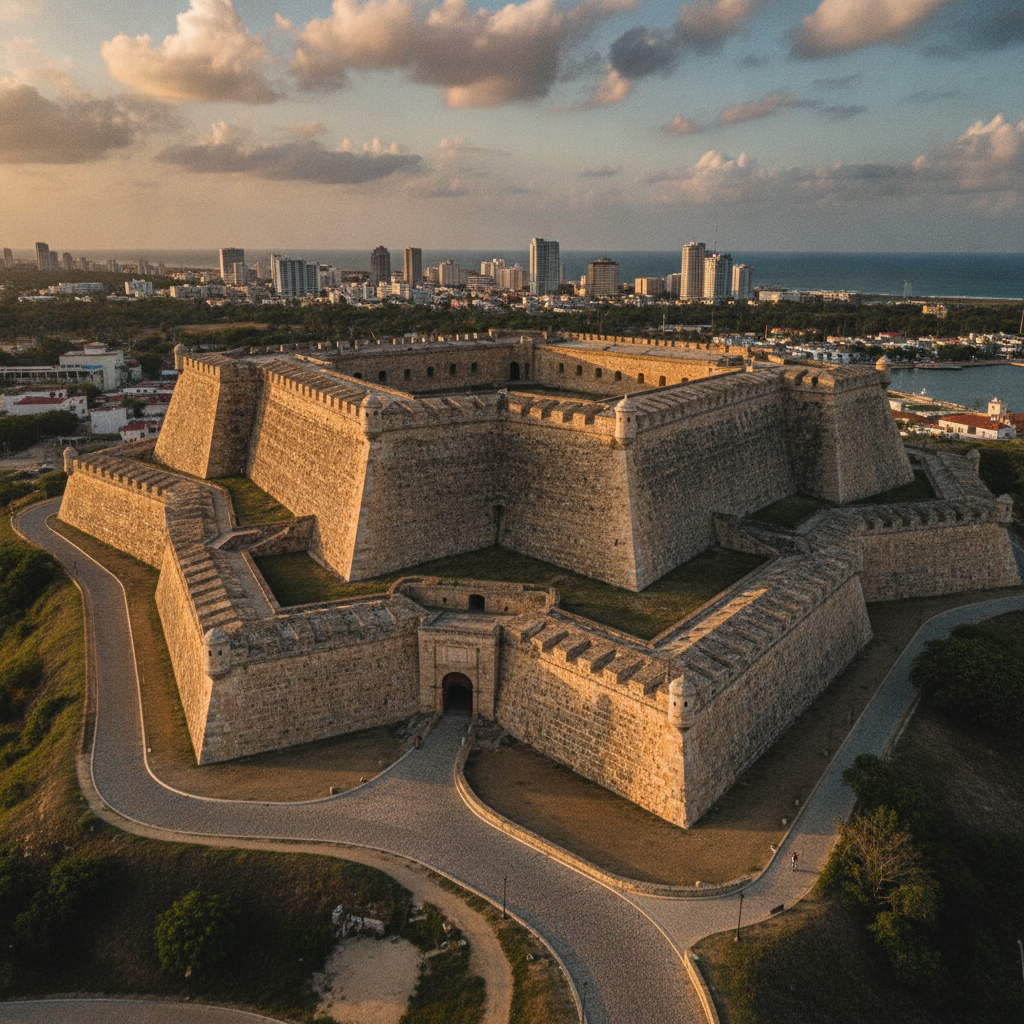
Castillo San Felipe de Barajas & Cartagena's Military Heritage
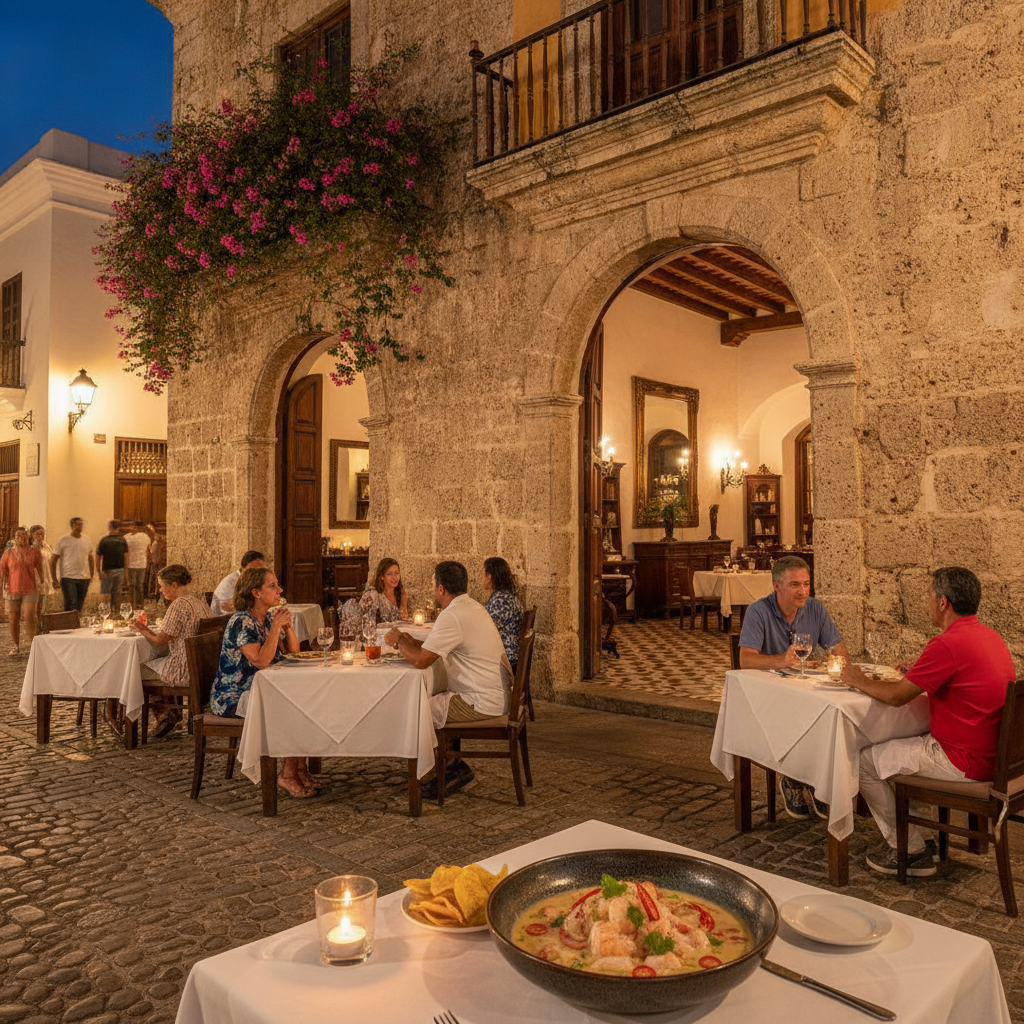
Cartagena's Modern Restaurant Scene & Creative Colombian Cuisine
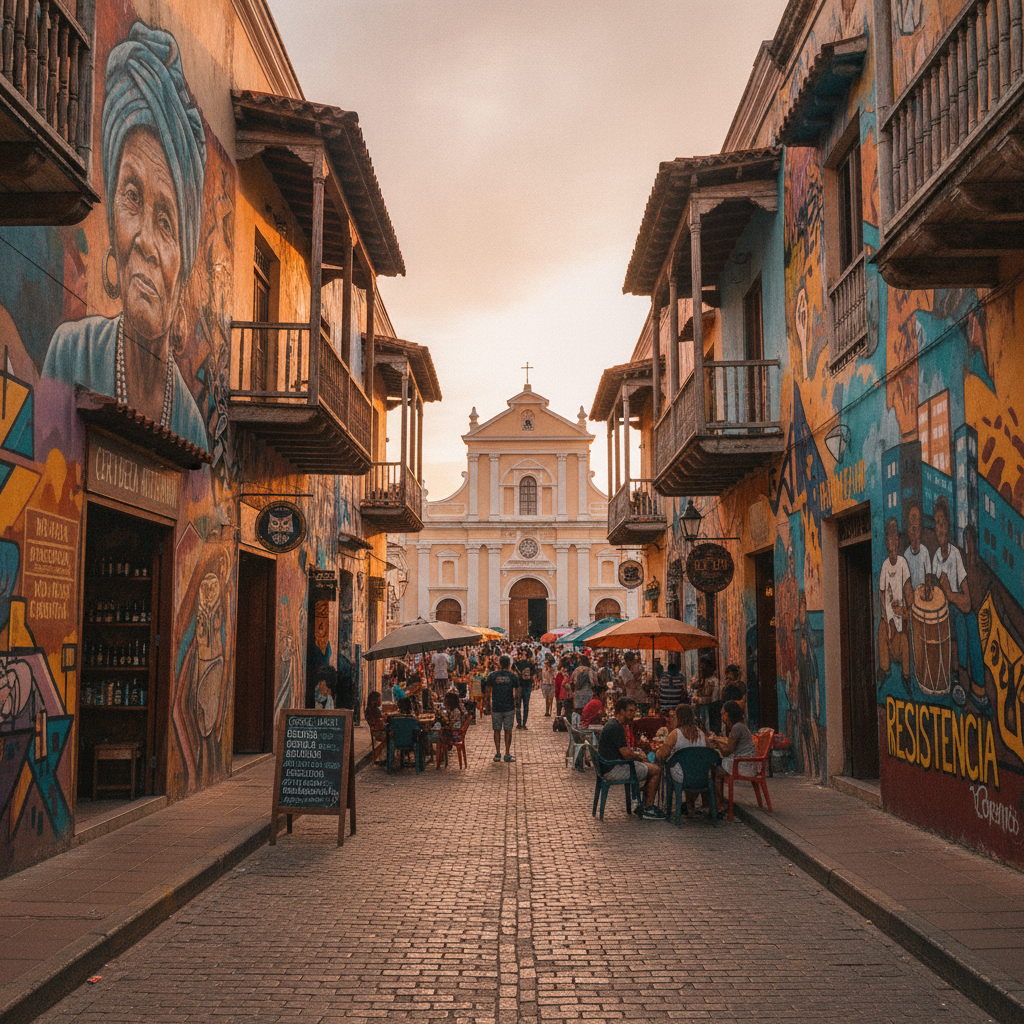
Getsemaní, Street Art & Cartagena's Creative Underground
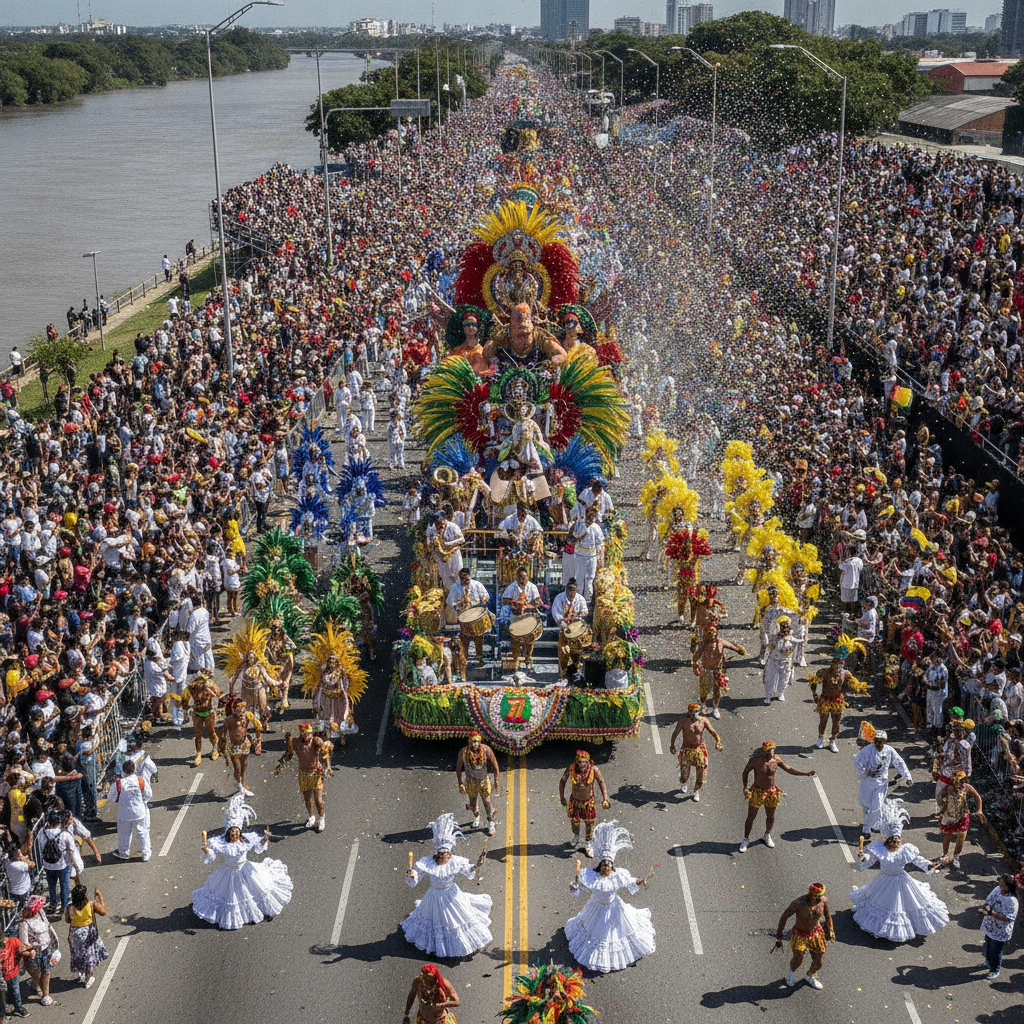
Barranquilla Carnaval & Colombia's Caribbean Coast Culture