Barranquilla Carnaval & Colombia's Caribbean Coast Culture
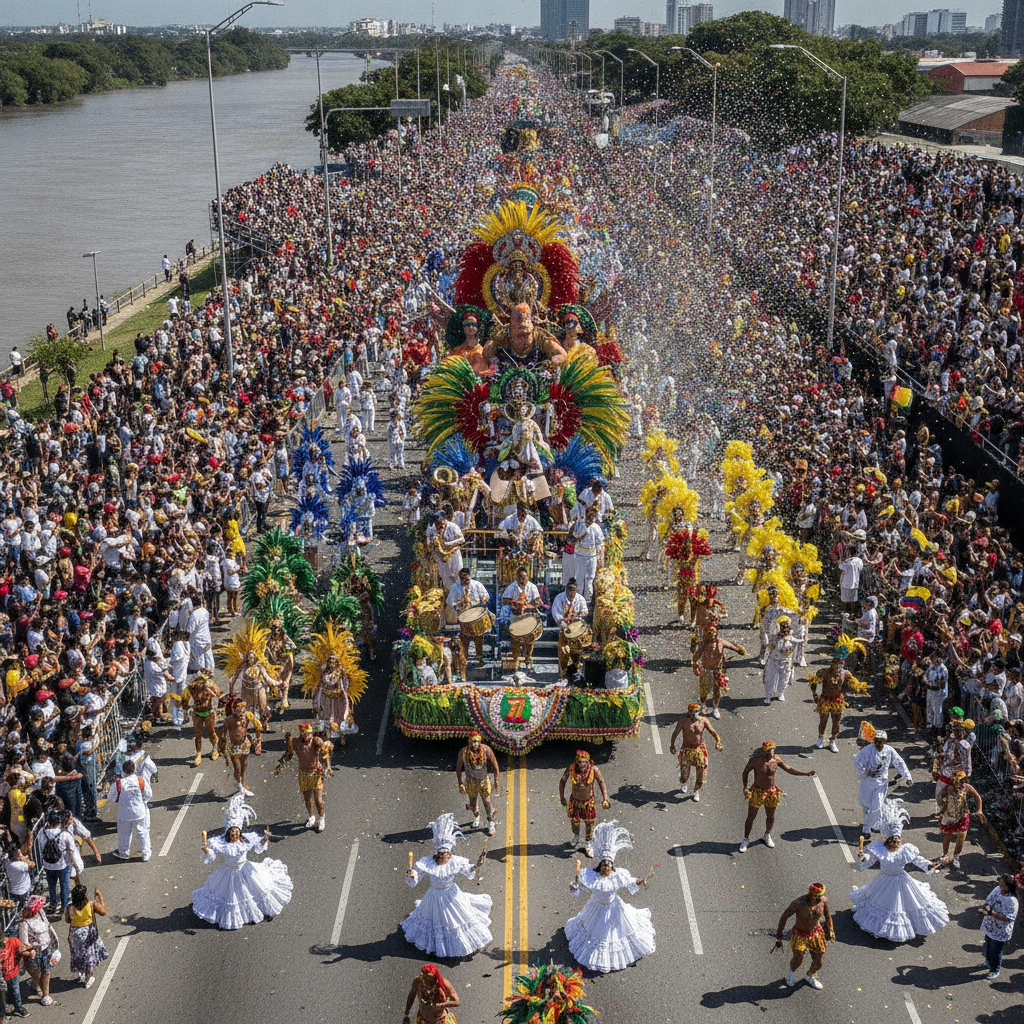
The Carnaval de Barranquilla (the UNESCO Intangible Cultural Heritage of Humanity carnival held in the port city of Barranquilla, 120 km northeast of Cartagena — the second largest carnival in the world after the Rio de Janeiro Carnaval, with approximately 1.5-2 million participants during the 4-day event held in the days before Ash Wednesday) and the broader Colombian Caribbean coast culture (the cumbia, the porro, the mapalé, the vallenato, and the Afro-Colombian cultural traditions of the Barranquilla-Cartagena region) are accessible as a day trip or short excursion from Cartagena.
- 1
Carnaval de Barranquilla — UNESCO Intangible Cultural Heritage
The Carnaval de Barranquilla (the annual carnival held in Barranquilla, 120 km northeast of Cartagena, in the 4 days before Ash Wednesday — the most important popular festival in Colombia and the second largest carnival in the world (after Rio de Janeiro)): the UNESCO recognition (the Carnaval de Barranquilla designated as UNESCO Intangible Cultural Heritage of Humanity in 2003 — one of only two carnivals to receive this recognition (the other being the Carnaval de Oruro in Bolivia)): the carnival events (the 4 main events of the Carnaval de Barranquilla — the 'Batalla de Flores' ('Battle of Flowers' — the opening parade of the carnival, held on Saturday, in which the 'reina del carnaval' (the 'queen of the carnival') parades on the float of flowers), the 'Gran Parada de Fantasía' (the 'Grand Fantasy Parade' — the Sunday parade of the most elaborate and the most spectacular carnival floats and costumes), the 'Gran Parada de Tradición' (the 'Grand Parade of Tradition' — the Monday parade of the traditional dances (the cumbia, the mapalé, the porro, and the garabato)), and the 'Entierro de Joselito Carnaval' (the 'Burial of Joselito Carnival' — the closing ceremony of the carnival on Tuesday, in which the 'death of Joselito' (the symbolic figure of the carnival) is mourned by the 'viudas de Joselito' (the 'widows of Joselito' — the men dressed as women in mourning, the most humorous and the most satirical element of the carnival)): Shakira (the most internationally famous connection between Barranquilla and global culture — the Colombian pop star Shakira (b. Shakira Isabel Mebarak Ripoll, 1977, in Barranquilla) — the musician who has sold over 100 million records worldwide and who dedicated her 2011 hit 'Waka Waka (This Time for Africa)' to the 2010 FIFA World Cup in South Africa — the most internationally recognized person from Barranquilla and one of the most internationally recognized Colombians of any era.
- 2
The Cumbia — Colombia's National Rhythm
The cumbia (the 'cumbia' — the traditional music and dance form that is the most important musical tradition in Colombian popular culture, the music that originated on the Caribbean coast of Colombia in the colonial period as a fusion of African (the rhythm and the dance), Indigenous Colombian (the gaita flute and the maracas), and Spanish (the language and the lyrical tradition) elements): the cumbia origins (the cumbia originating in the slave communities of the Colombian Caribbean coast in the colonial period (17th-18th century) — the music created by the enslaved Africans to express joy and resistance, using the instruments available to them (the hand drums, the improvised percussion) combined with the instruments of the Indigenous communities of the coast (the 'gaita' (the vertical cane flute — the most important instrument of the traditional cumbia ensemble, the instrument made from the cactus cane with the beeswax mouthpiece that produces the haunting, melancholic sound characteristic of the traditional cumbia)): the cumbia ensemble (the traditional cumbia ensemble — the 'conjunto de cumbia': the llamador (the small, hand-held drum that keeps the basic pulse), the alegre (the larger hand drum that plays the more complex rhythms), the tambora (the large bass drum played with two sticks), the gaita macho (the male gaita, the smaller of the two gaitas, playing the melodic improvisation), the gaita hembra (the female gaita, the larger of the two gaitas, playing the harmonic support), and the maracas): the cumbia expansion (the expansion of the cumbia from Colombia throughout Latin America in the 20th century — the cumbia that has become the most widely distributed popular music form in Latin America, with local variants in Mexico (the 'cumbia norteña' — the cumbia fused with the norteño accordion music), Peru (the 'chicha' — the cumbia fused with the Andean music), Argentina (the 'cumbia villera' — the cumbia of the Buenos Aires shantytown culture), and throughout Central America.
- 3
The Magdalena River & Colombian Interior
The Río Magdalena (the most important river in Colombia — the 1,528 km (950-mile) river that drains the western and central Andes of Colombia, flowing northward from its source in the Macizo Colombiano (the 'Colombian Massif' in the southern Andes) to its mouth in the Caribbean Sea at Barranquilla): the historical importance (the Magdalena River — the most important transport route in Colombia from the Spanish colonial period to the early 20th century, the river on which all the trade between the interior of Colombia (Bogotá, Medellín, the coffee regions) and the Caribbean coast was carried in the colonial period and the 19th century): the river towns (the colonial river towns along the Magdalena — Mompox (the most perfectly preserved of the colonial Magdalena River towns, designated UNESCO World Heritage Site in 1995), Honda (the colonial river port at the head of navigation on the Magdalena — the port from which the goods of the interior were transferred from the mule trains to the river boats), and Barrancabermeja (the oil town of the middle Magdalena — the city of the Ecopetrol refinery, the largest refinery in Colombia)): the ecological importance (the Magdalena River basin — the most biodiverse river basin in Colombia and one of the most biodiverse in South America: the freshwater fish (the 'bocachico' (Prochilodus magdalenae — the fish species that has been the most important source of protein for the population of the Colombian interior for centuries, the fish that is the most consumed freshwater fish in Colombia) and the 'bagre de río' (the river catfish)), the manatee (the West Indian manatee (Trichechus manatus) — the freshwater manatee found in the lower Magdalena), and the American crocodile (Crocodylus acutus — present in the Magdalena and its tributaries).
- 4
Santa Marta & the Sierra Nevada de Santa Marta
Santa Marta (the oldest surviving European settlement in South America, founded in 1525 by the Spanish conquistador Rodrigo de Bastidas — the colonial city 210 km northeast of Cartagena on the Caribbean coast, at the foot of the Sierra Nevada de Santa Marta): the Sierra Nevada de Santa Marta (the highest coastal mountain range in the world — the isolated mountain massif on the Caribbean coast of Colombia, rising from sea level to 5,775 metres (18,947 feet) at the twin peaks of Cristóbal Colón and Simón Bolívar (the highest peaks in Colombia) within a horizontal distance of 42 km (26 miles) from the Caribbean Sea — the mountain that creates extraordinary ecological diversity (from the Caribbean coral reef at sea level to the glaciers at the summit within the same mountain system)): the Ciudad Perdida (the 'Lost City' — the Teyuna, the largest known pre-Columbian city in Colombia, built by the Tairona people on the steep slopes of the Sierra Nevada at 1,300 metres (4,265 feet) above sea level, accessible only by a 4-6 day jungle trek from Santa Marta): the Parque Nacional Tayrona (the National Natural Park Tayrona — the coastal national park between the Caribbean Sea and the Sierra Nevada, 34 km east of Santa Marta, with the most beautiful natural beaches in Colombia (the Playa Cabo San Juan, the Playa Arrecifes, and the Playa Brava — the beaches set between the jungle-covered hills descending to the Caribbean): the indigenous communities (the Kogui, Arhuaco, Wiwa, and Kankuamo indigenous peoples who still inhabit the Sierra Nevada de Santa Marta and maintain their pre-Columbian spiritual traditions in relative isolation from the Colombian state).
- 5
Cartagena as Literary Setting — Magical Realism & the City
Cartagena in literature (the city that has inspired more international literary works than any other Caribbean city, most famously as the setting of Gabriel García Márquez's 'Love in the Time of Cholera' (1985) and as a recurring presence in the Colombian literary imagination): 'El amor en los tiempos del cólera' ('Love in the Time of Cholera', Gabriel García Márquez, 1985) — the novel set in an unnamed Caribbean city that is unmistakably Cartagena de Indias at the turn of the 20th century, the novel that tells the story of the love between Florentino Ariza and Fermina Daza that plays out over 51 years against the backdrop of the colonial city: the novel's Cartagena (the Cartagena of the novel — the city that was then transitioning from the colonial period to the modern era (the era of the first steamships on the Magdalena River, the first electric lights in the city, and the first cholera epidemics): the specific locations (the locations of the novel in the present city — the Calle del Arsenal (the street of the former arsenal in the walled city, now the bar and restaurant street), the Plaza de los Coches (the former slave market, now the main entrance plaza of the walled city), and the Parque de Bolívar (the main plaza of the walled city)): 'Of Love and Other Demons' (García Márquez, 1994) — the second novel set in Cartagena, the story of the 12-year-old girl Sierva María and the priest sent to exorcize her, set in the colonial Cartagena of the 18th century: the Convento de Santa Clara (the 17th-century convent in the walled city, now the Sofitel hotel, that is the setting for the novel 'Of Love and Other Demons').
- 6
Cartagena Beaches — Marbella & Urban Beach Culture
The urban beaches of Cartagena (the beaches accessible by foot or by short taxi from the walled city — the urban beach experience that complements the more remote beach excursions to Playa Blanca and the Islas del Rosario): Marbella (the beach district immediately north of the walled city — the beach that is the closest to the historic centre and that is most used by the local Cartagena population on the weekends): the La Boquilla (the fishing village and beach 8 km north of Cartagena — the village where the mangrove channels of the Ciénaga de la Virgen meet the Caribbean Sea, the village that has recently been connected to the Cartagena Hotel Zone by the development of the 'Vía Escénica' (the scenic coastal road) but that retains its character as a traditional Afro-Colombian fishing community: the La Boquilla experience (the visit to La Boquilla — the mangrove canoe tours (the paddling through the mangrove channels in the local 'cayuco' canoes), the fresh fish lunch (the La Boquilla fishermen restaurants serving the grilled pargo rojo and the fried mojarra (the freshwater tilapia) with the coconut rice and the patacones), and the observation of the traditional fishing techniques used by the La Boquilla fishermen (the 'atarraya' — the throw net cast in a circle to trap the fish in the shallow water of the lagoon)): the Hotel Zone beaches (the beaches of the Cartagena Hotel Zone — the Bocagrande and the Laguito peninsulas, the beaches adjacent to the high-rise hotels of the Cartagena tourism industry, the most developed and the most serviced beaches in Cartagena).
Walk this route with audio
Stories play automatically as you reach each stop — no tapping needed.
More in cartagena
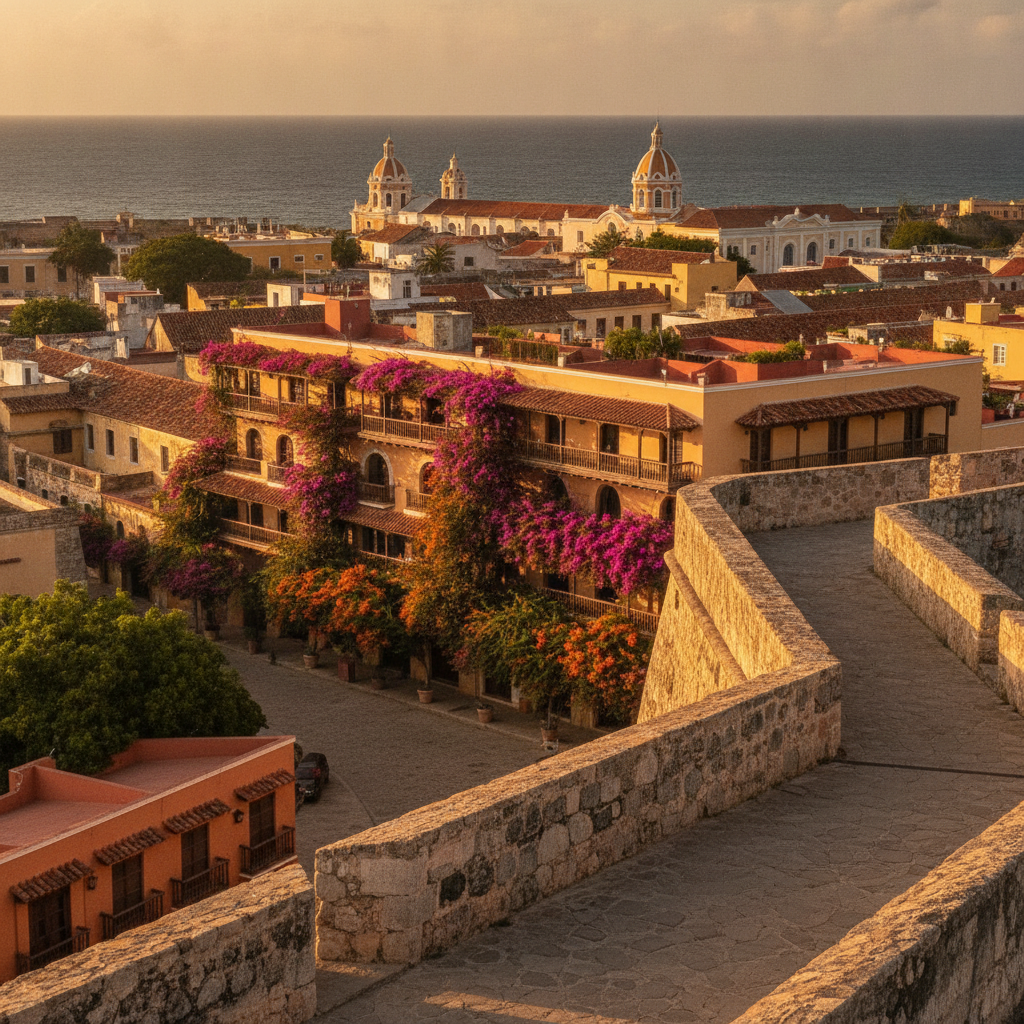
La Ciudad Amurallada — Cartagena's UNESCO Walled Colonial City
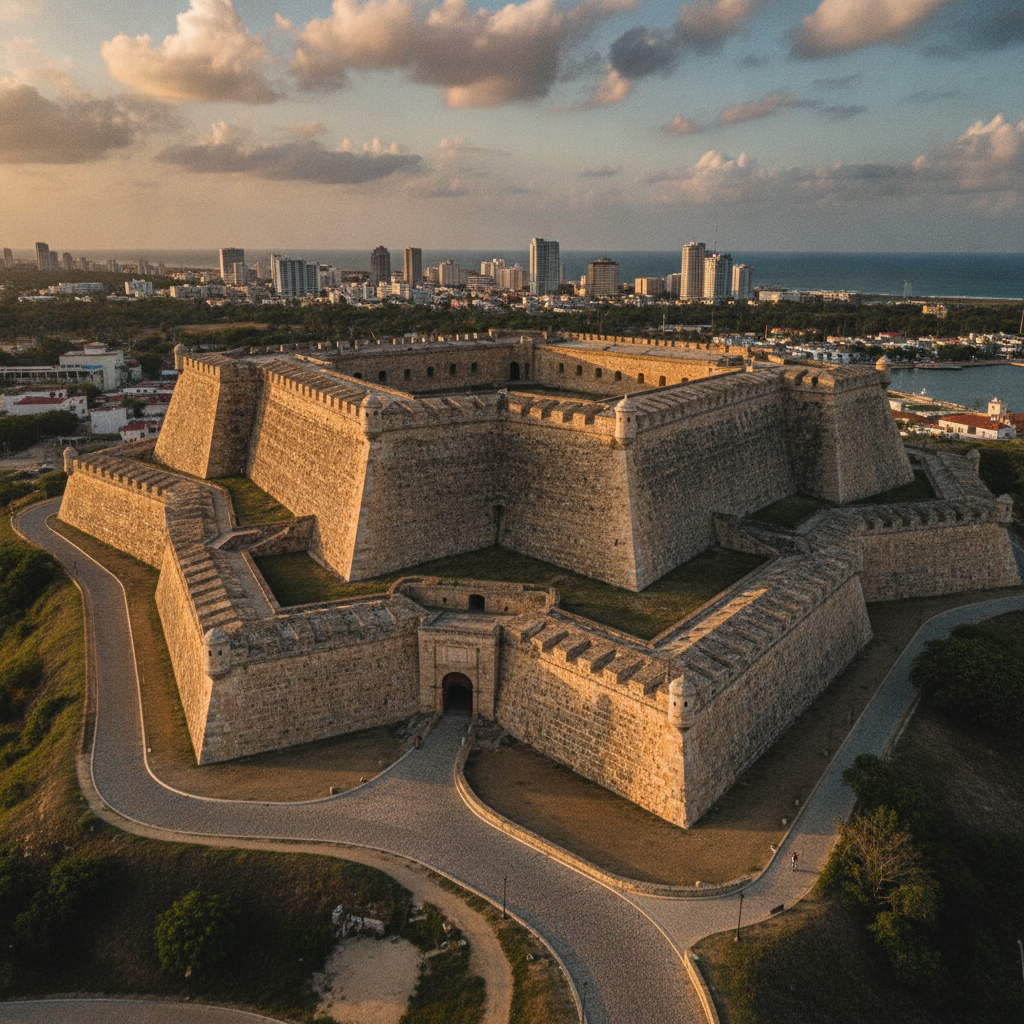
Castillo San Felipe de Barajas & Cartagena's Military Heritage
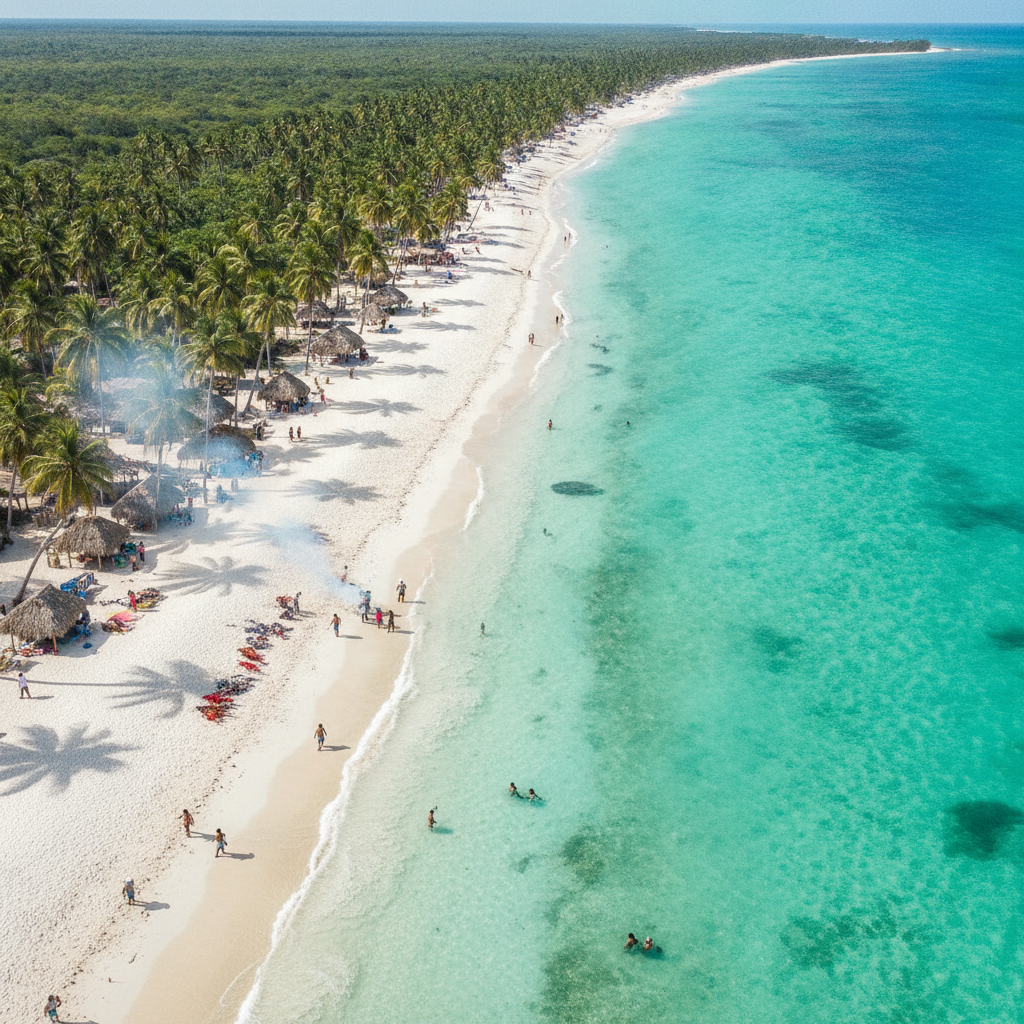
Playa Blanca, Barú & Cartagena's Caribbean Beach Experience
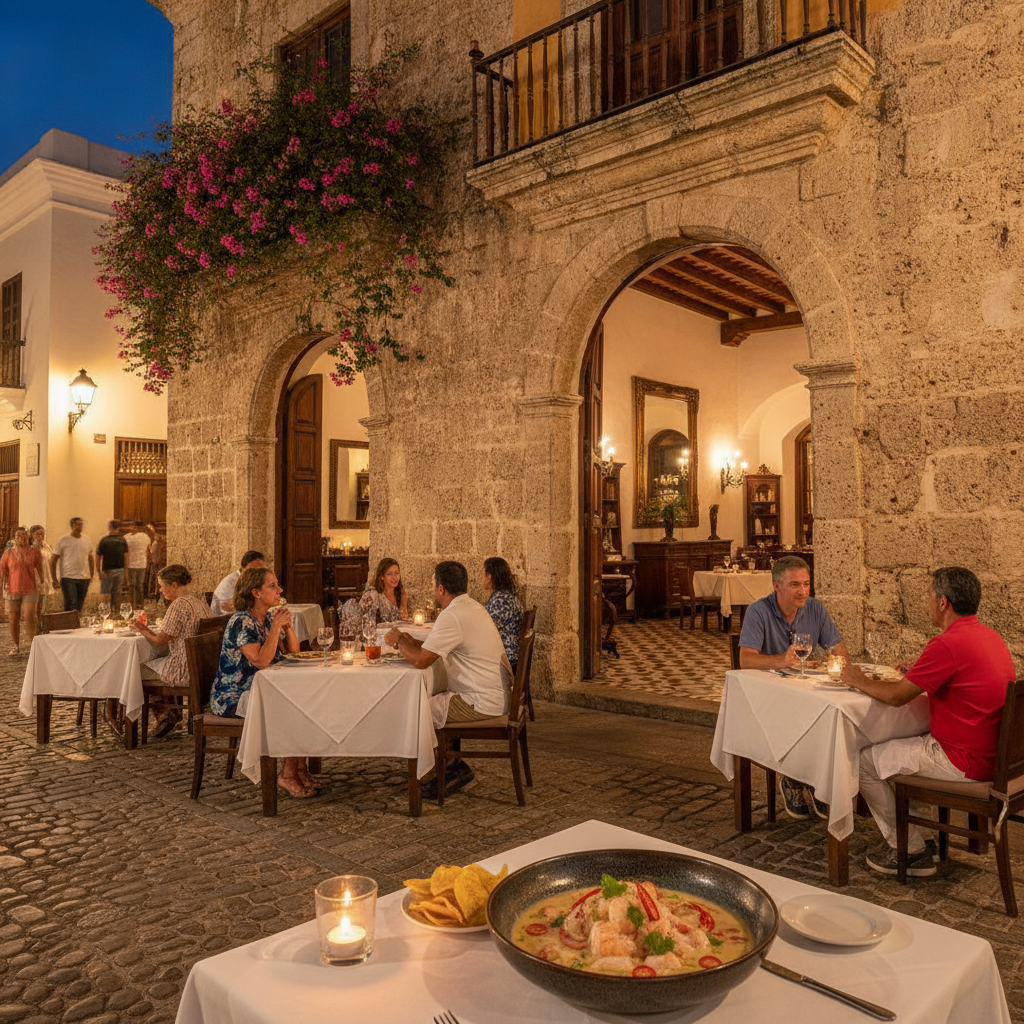
Cartagena's Modern Restaurant Scene & Creative Colombian Cuisine
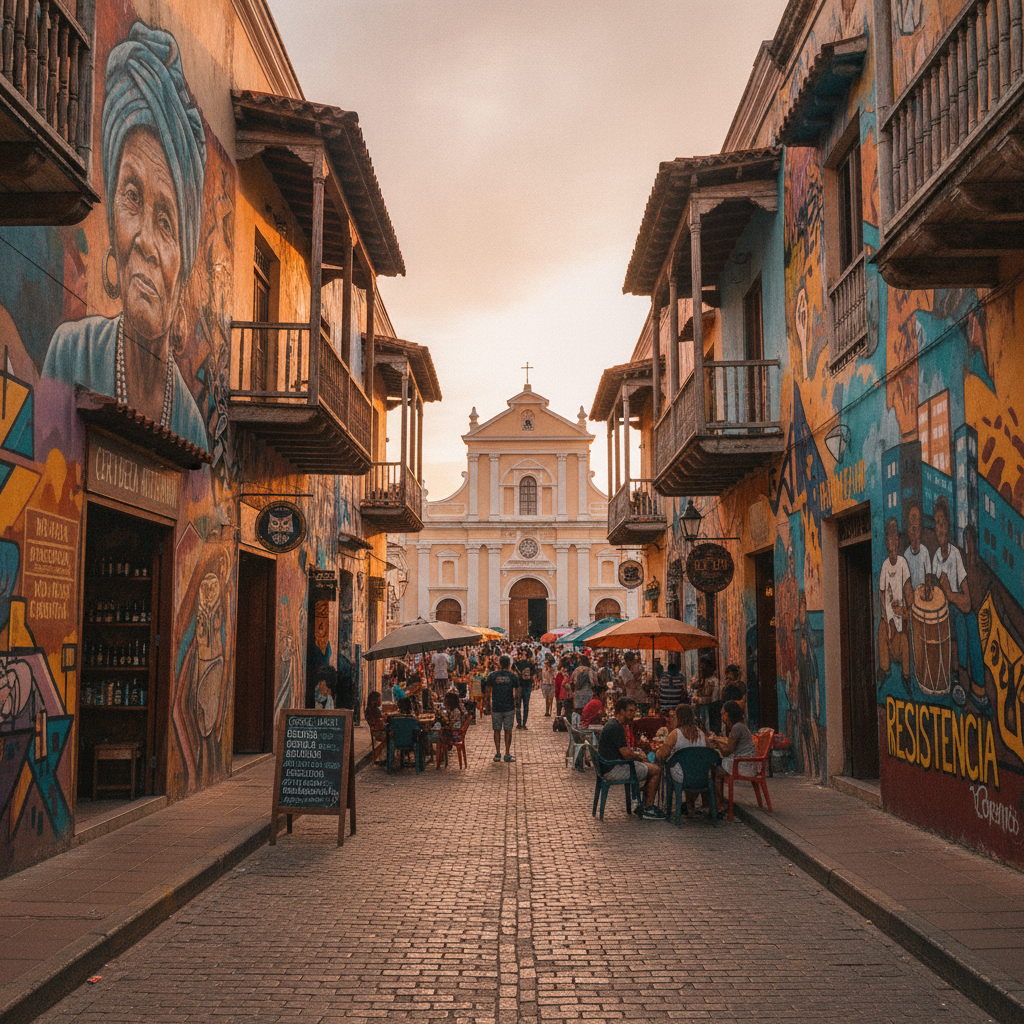
Getsemaní, Street Art & Cartagena's Creative Underground