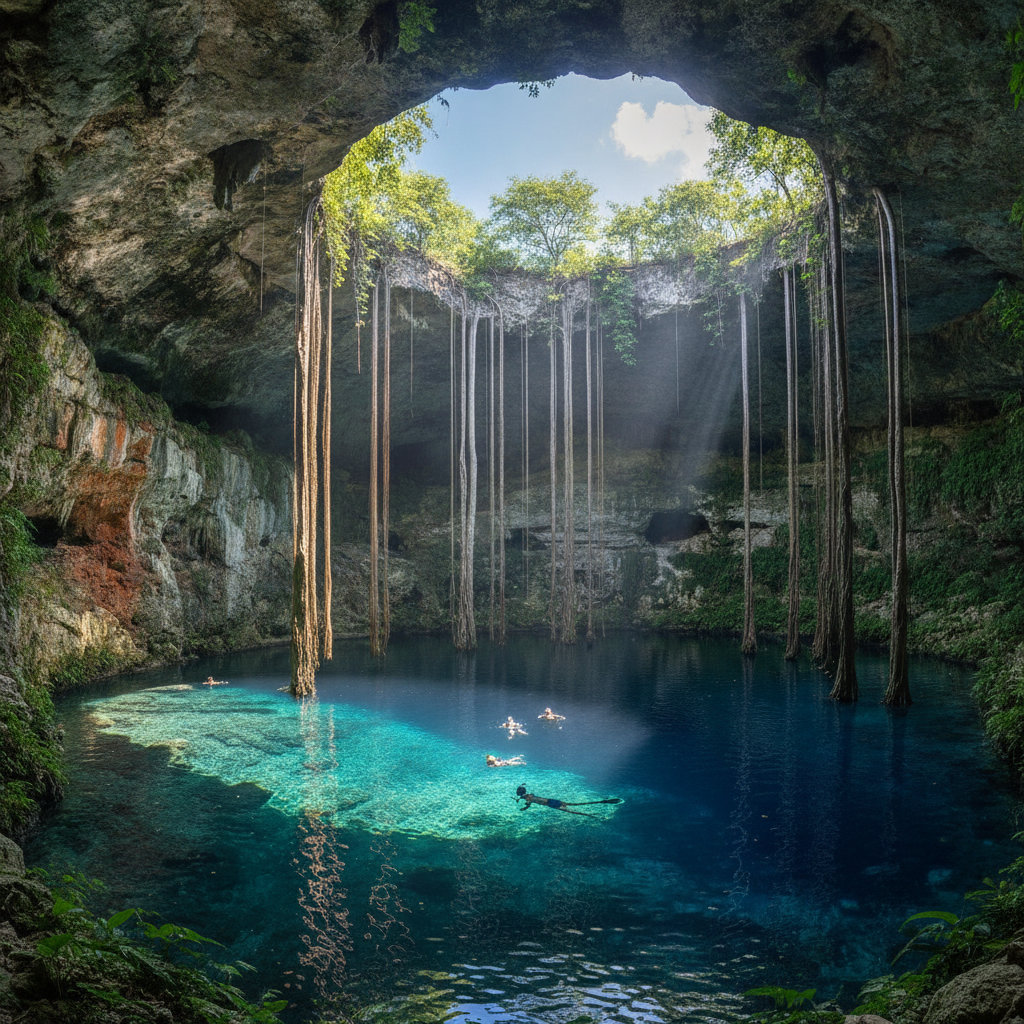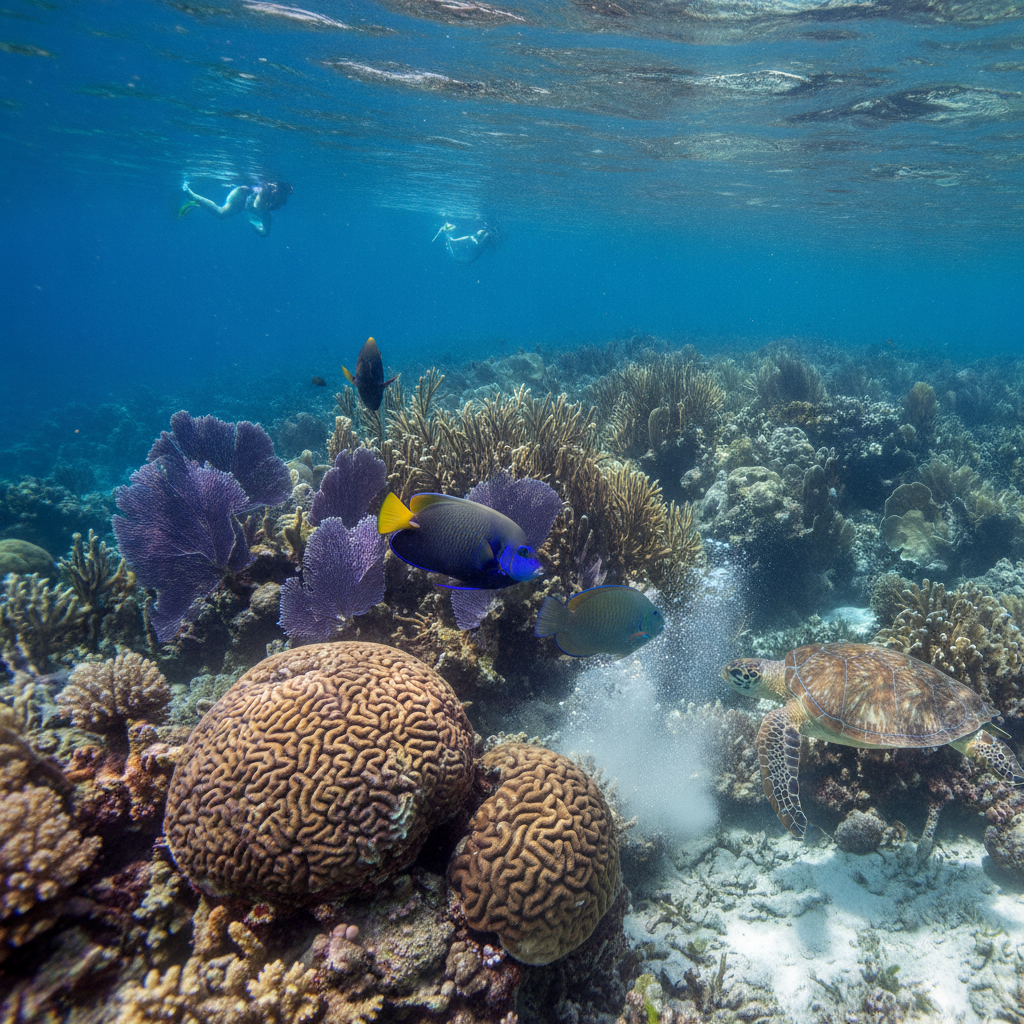
The Mesoamerican Reef, Snorkelling & Cancún's Marine World
The Mesoamerican Barrier Reef (the world's second largest barrier reef system, running 1,000 km from Mexico to Honduras — the reef that creates the conditions for the extraordinary turquoise clarity of the Caribbean Sea off Cancún) provides the world-class snorkelling, scuba diving, and marine life encounters (whale sharks, sea turtles, manta rays, dolphins) that are among the most compelling natural attractions accessible from Cancún.
- 1
Cozumel Island & World-Class Scuba Diving
Cozumel (the island 21 km (13 miles) off the Playa del Carmen coast, 90 km (56 miles) south of Cancún — accessible by ferry from Playa del Carmen (45 minutes) or by air from Cancún International Airport): the Cozumel reef (the Palancar Reef system — the section of the Mesoamerican Barrier Reef on the southwestern coast of Cozumel Island, considered by many underwater photographers and dive professionals to be the finest coral reef diving in the world, with the extraordinary water clarity (visibility routinely exceeds 30-60 metres / 98-197 feet due to the constant flushing of the Cozumel Channel current), the remarkable coral health (the Cozumel reef was only mildly affected by the coral bleaching events of 2005 and 2015 that devastated the reefs of Florida and other Caribbean islands), and the extraordinary diversity of coral species (the Santa Rosa Wall (the famous 'drift dive' wall of the Palancar Reef system, where the steep coral wall drops from 15 metres (49 feet) to over 600 metres (1,969 feet) below the surface)): Jacques Cousteau (the French oceanographer and filmmaker Jacques-Yves Cousteau (1910-1997) who first brought the Cozumel reef to international attention with the television special 'La Mer silencieuse' ('The Silent World') and with the 1971 television special that featured the Cozumel reef as one of the finest dive sites in the world, the publicity that made Cozumel the most important scuba diving destination in the Caribbean by the late 1970s).
- 2
Whale Shark Snorkelling — The World's Largest Fish
Whale shark (Rhincodon typus — the world's largest fish species, reaching up to 12-13 metres (39-43 feet) in length and weighing up to 20 tonnes (22 US tons), the gentle filter feeder (the 'whale shark' feeds exclusively on plankton, fish eggs, and small marine organisms, filtering them from the water through the 5 pairs of gill slits as the animal swims slowly with its mouth open at the surface): the Yucatán whale shark aggregation (the annual aggregation of whale sharks off the northern coast of the Yucatán Peninsula, between the islands of Holbox and Isla Mujeres — the largest known aggregation of whale sharks in the world, with 400-800 individual whale sharks observed in the 'afuera' (the shallow offshore area north of Isla Mujeres) during the peak season of June-September): the whale shark tour (the whale shark snorkelling tour from Cancún or Isla Mujeres — the boat excursion to the 'afuera' (60-90 minutes from Cancún by fast boat) where snorkellers enter the water alongside the whale sharks (the tours regulated by the Mexican government, with a maximum of 2 swimmers per guide, no SCUBA allowed, minimum distance of 2 metres from the animal, no touching): the experience (the experience of swimming alongside the world's largest fish — the whale shark at the surface (the distinctive white spots on the dark grey skin of the whale shark (Rhincodon typus), the massive head with the 1.5-metre (5-foot) wide mouth filtering the plankton, the caudal (tail) fin propelling the animal slowly forward at 2-3 km/h (1.2-1.9 mph) while the snorkeller swims alongside)).
- 3
MUSA — The Underwater Museum of Art
MUSA (the Museo Subacuático de Arte — the 'Underwater Museum of Art', the underwater contemporary art installation located in the waters of the National Marine Park of the Mexican Caribbean off Cancún and Isla Mujeres): the concept (MUSA founded in 2009 by the British underwater sculptor Jason de Caires Taylor and the Mexican marine biologist Roberto Díaz Abraham — the museum created as both an artistic intervention and a marine conservation project, designed to divert snorkellers and scuba divers from the already-stressed natural coral reef to the new artificial reef created by the sculptures): the sculptures (the approximately 500 permanent underwater sculptures in MUSA — the works created by Jason de Caires Taylor and a team of Mexican artists: the 'Silent Evolution' (the most famous piece in MUSA — the installation of 450 life-size human figures standing upright on the sandy seafloor in a grid, cast from real people of Cancún, at a depth of 8-10 metres / 26-33 feet in the Manchones Reef marine park off Isla Mujeres): the artificial reef (the MUSA sculptures made from pH-neutral concrete that has been colonized by the coral (the Diploria labyrinthiformis, the Porites astreoides, and the Siderastrea siderea corals that have grown over the sculptures since their installation) — creating a new coral reef of the equivalent area of 4-5 swimming pools that is now home to the same marine life (the parrotfish, the angelfish, the queen triggerfish (Balistes vetula), and the flamingo tongue snail (Cyphoma gibbosum)) as the natural reef).
- 4
Xcaret & Eco-Park Culture on the Riviera Maya
Xcaret (the eco-archaeological park 75 km (47 miles) south of Cancún on the Riviera Maya (at km 282 of the Cancún-Tulum highway) — the most visited eco-tourism attraction in Mexico (approximately 1.2-1.5 million visitors per year)): the Xcaret concept (the park developed by the Experiencias Xcaret company (owned by the Mexican entrepreneur Miguel Quintana Poo) beginning in 1990 — the park that combines the natural features of the coastal limestone karst landscape (the cenotes, the underground rivers, the coral reef lagoon) with cultural attractions (the Maya village, the hacienda, the Mexican folk dance shows, the bird sanctuary, and the butterfly pavilion) and with the adventure activities (the underground river float, the sea turtle conservation programme, the coral reef snorkelling)): the Xcaret cultural show (the 'Mexico Espectacular' — the 2-hour evening cultural show at the Xcaret amphitheatre that traces the history of Mexico from the pre-Columbian Mesoamerican civilizations through the Spanish Conquest and colonial period to the present day, using approximately 300 performers (the dancers, the acrobats, the musicians, and the 'prehispanic' ball game players) in elaborate costumes): the Xplor (the Experiencias Xcaret adventure park adjacent to Xcaret — the park that offers the zip-lines (the cable lines over the jungle and the cenotes), the underground river rafting, the amphibious vehicle tours, and the floating through the underground rivers).
- 5
Holbox Island — The Undeveloped Caribbean Paradise
Holbox (the Isla Holbox — the long, narrow island at the northern tip of the Yucatán Peninsula, 140 km (87 miles) north of Cancún, accessible by the ferry from the port of Chiquilá (2.5 hours from Cancún by bus to Chiquilá + 20-minute ferry): the island character (Holbox — a car-free island (only golf carts and bicycles are allowed on the sandy streets) of approximately 1,800 permanent inhabitants, the island that has become the most sought-after 'undiscovered' Caribbean destination for the discerning traveller (despite the fact that it has become very well-known since the mid-2010s)): the beach (the Holbox beach — the long, undeveloped white sand beach on the northern coast of the island, facing the Gulf of Mexico (not the Caribbean Sea — Holbox is on the Gulf coast side of the northern Yucatán, making its water calmer and sometimes slightly less clear than the Caribbean beaches of Cancún): the wildlife (the wildlife of the Yixanul Biosphere Reserve that surrounds Holbox — the flamingos (the American flamingo (Phoenicopterus ruber) — the flock of several hundred flamingos that feeds in the shallow lagoon ('Yalahau') between Holbox and the mainland, visible from the lagoon boat tours), the spotted eagle rays (Aetobatus narinari), the loggerhead sea turtles (Caretta caretta), and the whale sharks (present off Holbox from June to September — the whale shark aggregation is accessible from Holbox as well as from Isla Mujeres): the bioluminescence (the bioluminescence phenomenon in the Holbox lagoon — the blue-green glow produced by the dinoflagellates (the bioluminescent plankton Noctiluca scintillans) in the warm, sheltered waters of the Yalahau lagoon on dark moonless nights — the experience of swimming in the bioluminescent water that makes Holbox one of the most spectacular natural night experiences in Mexico)).
- 6
Downtown Cancún — El Centro & Mexican Local Life
El Centro (the 'downtown' — the original Cancún city centre on the mainland, separated from the Hotel Zone barrier island by the Nichupté Lagoon and the series of bridges and highways that connect them): the El Centro character (the downtown Cancún that is largely invisible to the visitors who stay in the Hotel Zone — the city of approximately 1 million people (the greater Cancún metropolitan area) that serves as the service city for the Hotel Zone: the Avenida Tulum (the main commercial boulevard of downtown Cancún), the Parque de las Palapas (the main public park of downtown Cancún — the park where the Cancún families gather on the weekend evenings to eat the 'antojitos' (the Mexican street food — the 'elotes' (the grilled corn on the cob with butter, mayonnaise, chili powder, and lime juice), the 'esquites' (the corn kernels with the same toppings, served in a cup), the 'tlayudas' (the large, crispy tortillas from Oaxaca with the black beans, the 'asiento' (the unrefined pork fat), the cheese, and the toppings)), the 'mercado 28' (the local market in downtown Cancún — the market where the Cancún residents shop for food and household goods, and where the visitors who venture downtown can eat the most authentic and cheapest Yucatecan food in Cancún, including the cochinita pibil (the slow-roasted pork tacos served with the habanero salsa and the pickled red onion) and the sopa de lima (the Yucatecan lime soup))).
Walk this route with audio
Stories play automatically as you reach each stop — no tapping needed.
More in cancun
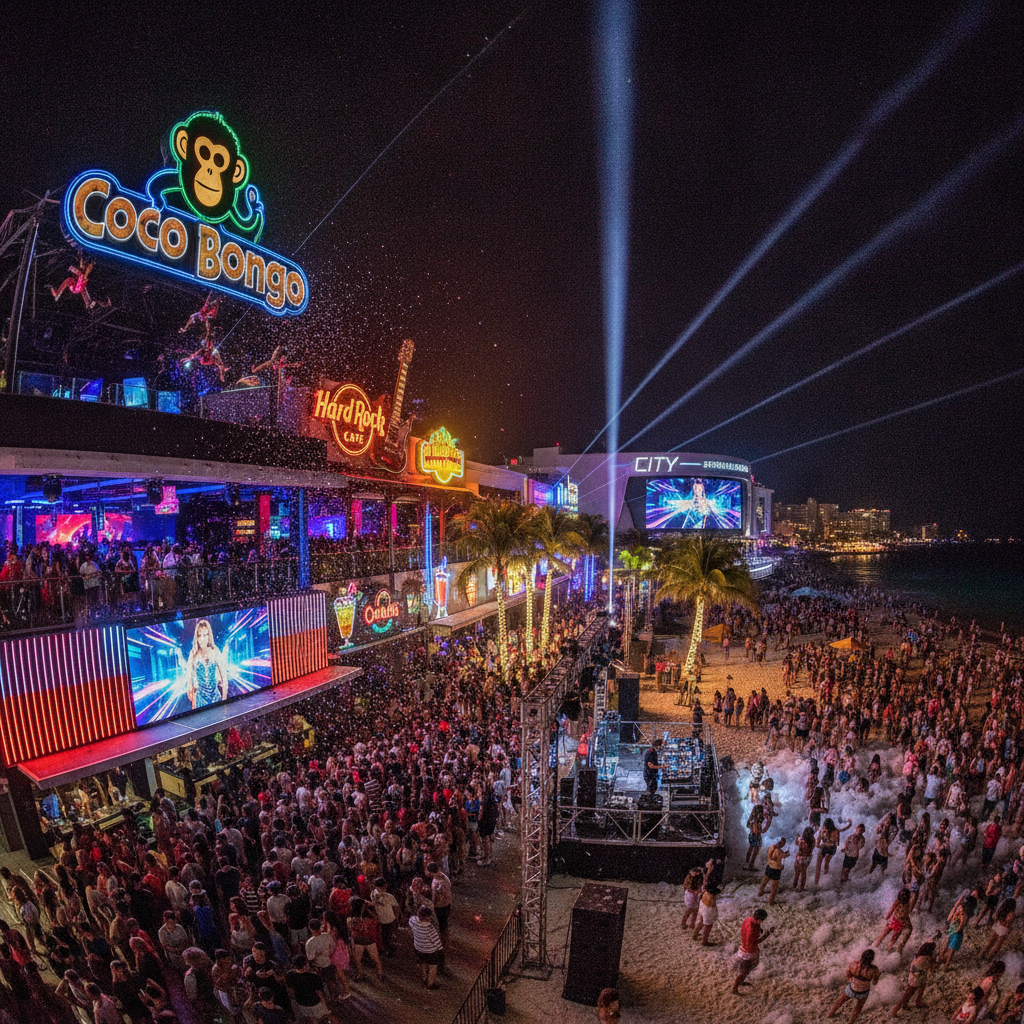
Cancún Spring Break, Music Festivals & Beach Party Culture
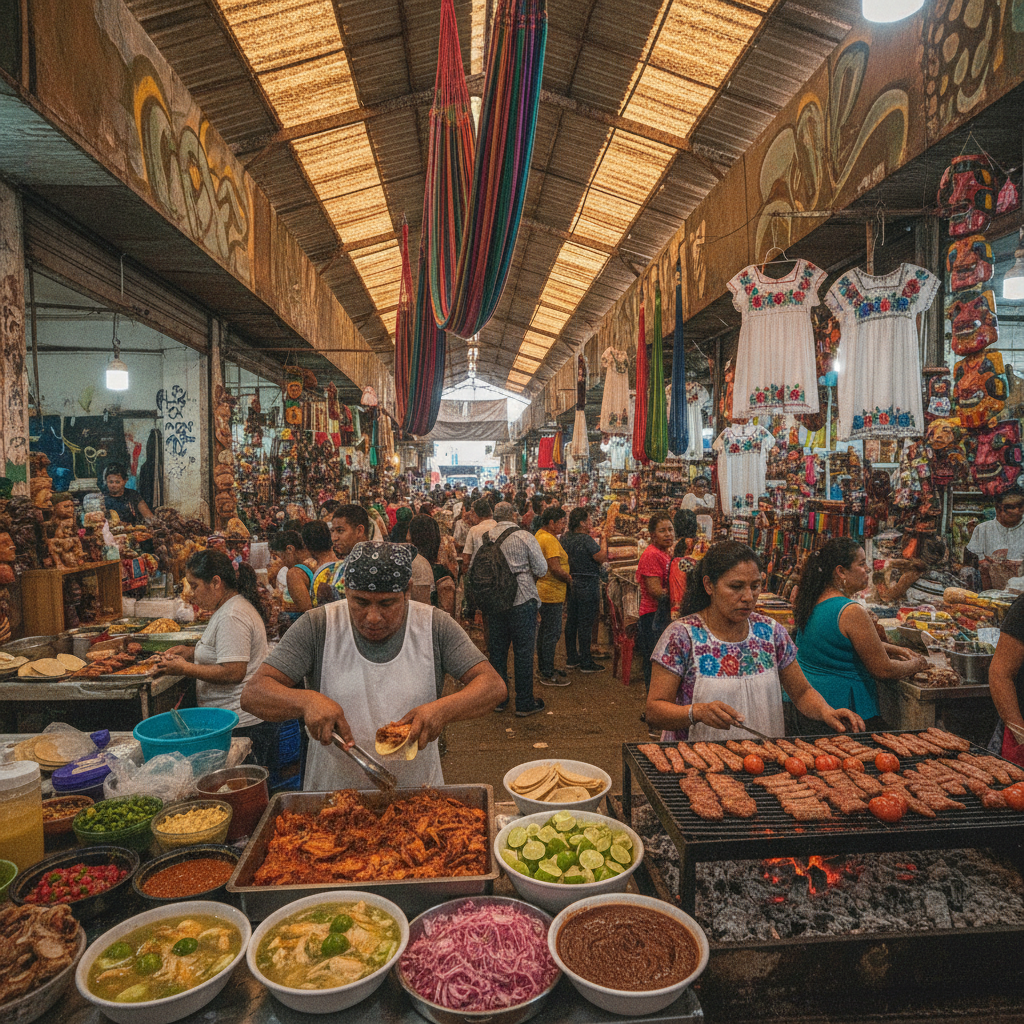
Downtown Cancún, Mexican Street Food & Local Life
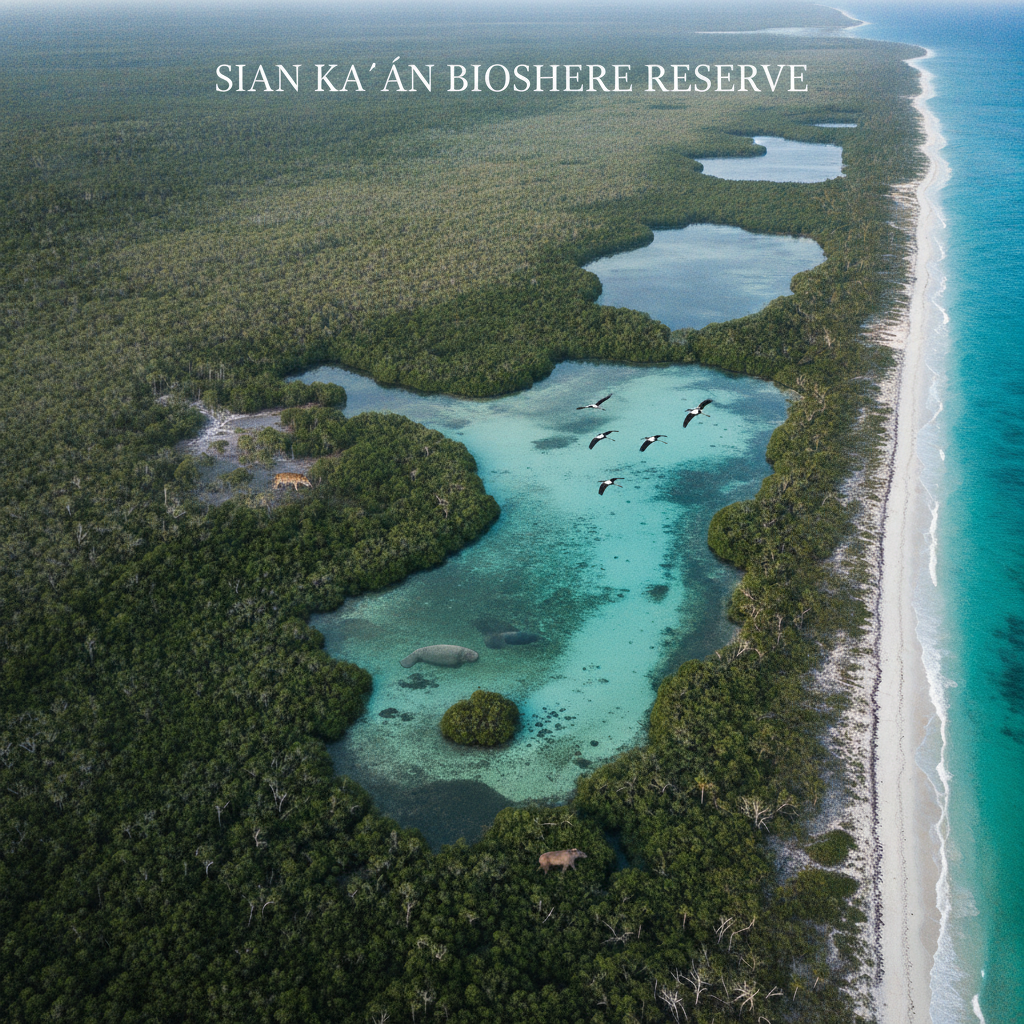
Sian Ka'an Biosphere Reserve & Mayan Jungle Wilderness
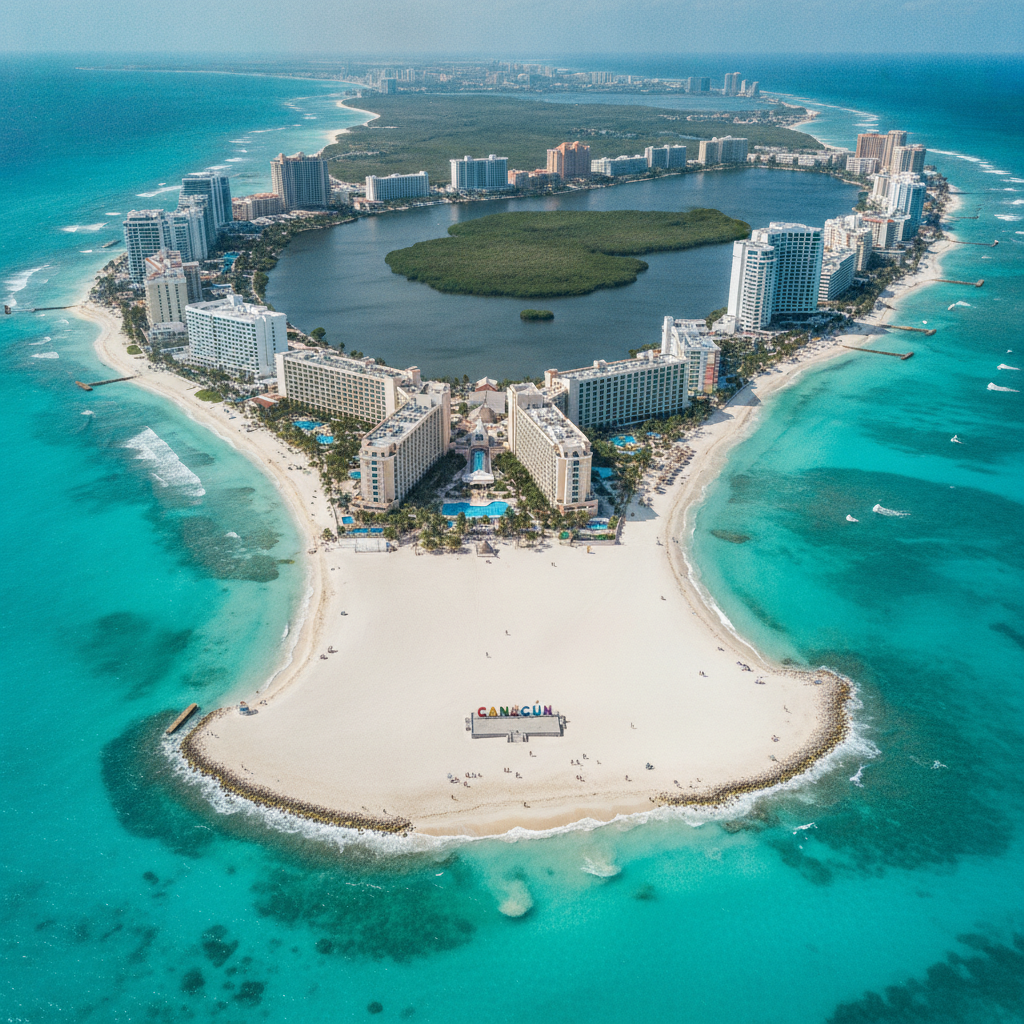
Cancún's Hotel Zone, Caribbean Beaches & Turquoise Waters
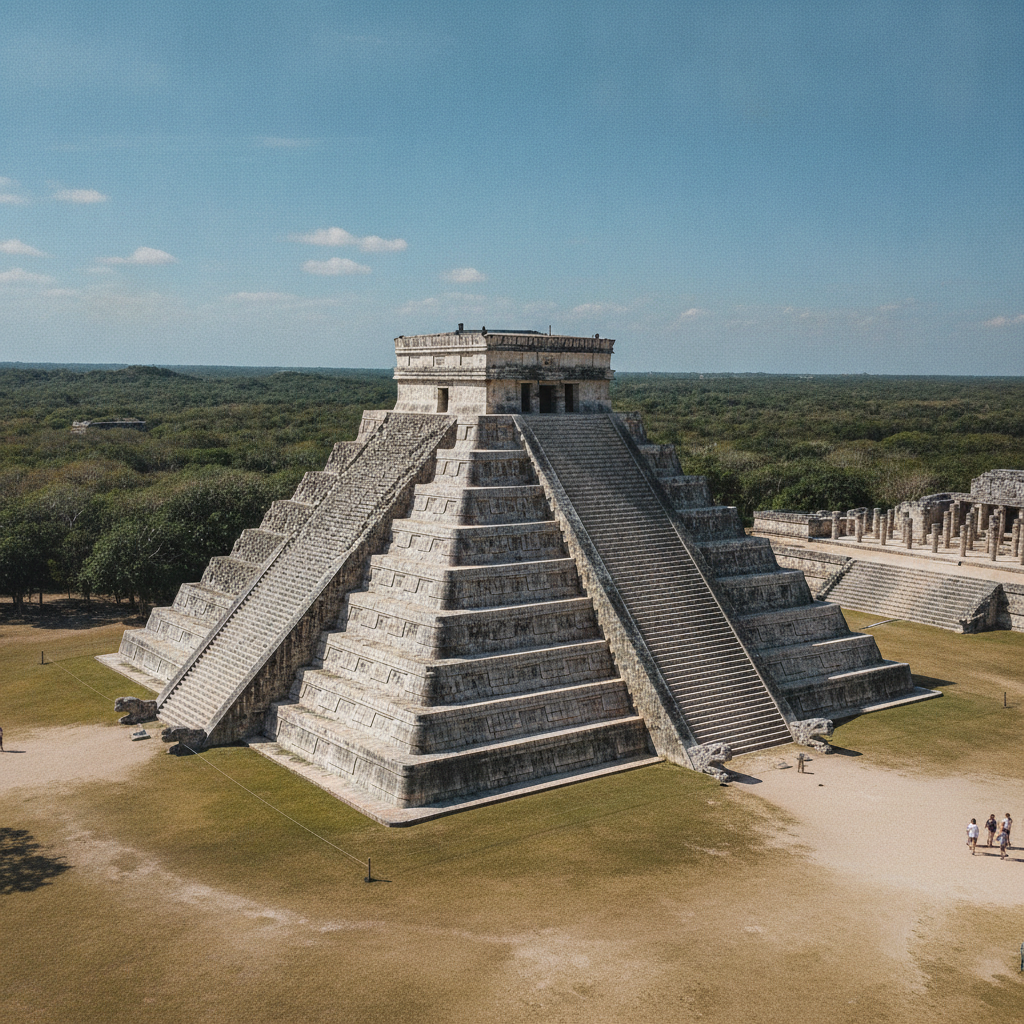
Chichén Itzá, the Maya Pyramid & the Ancient Civilization of Yucatán