Cali History: Colonial Foundation, Independence, and the Cauca Valley Economy
Cali was founded by the Spanish conquistador Sebastian de Belalcazar in 1536, making it one of the oldest European settlements in Colombia and the Americas. The colonial city grew slowly as an administrative and commercial center serving the agricultural and mining economy of the Cauca Valley, far less significant in colonial times than the silver-rich Andean cities or the Caribbean port towns. The independence period was contested in the Cauca region, with Cali changing hands multiple times between royalist and patriot forces before the final liberation at the Battle of Pichincha in 1822. The agricultural transformation of the Cauca Valley from subsistence hacienda farming to industrial sugar production in the 20th century, combined with rapid urbanization, created the modern city and its complex social geography.
- 1
Foundation and Colonial Period: Belalcazar and the Cauca Valley
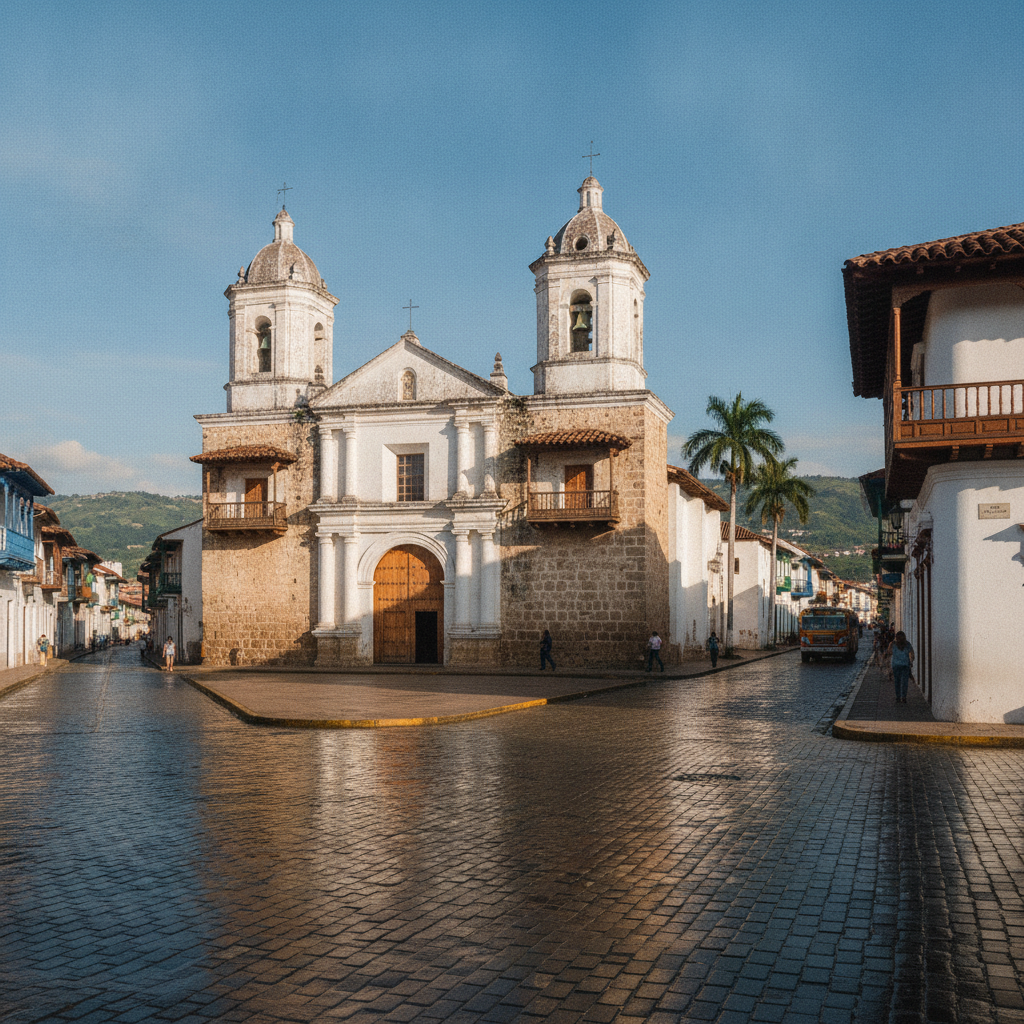
Sebastian de Belalcazar, the Spanish conquistador who had previously participated in the conquest of the Inca empire under Francisco Pizarro, founded the city of Santiago de Cali on July 25, 1536 in the Cauca Valley, having crossed the Andes from Quito in modern Ecuador during his northward expedition. The original settlement was established at the foot of the western Andes hills rather than on the flat valley floor, positioned for defensive advantage and access to fresh water from the hill streams. The indigenous Gorron and Lile peoples of the valley were displaced or incorporated into the colonial labor system, and their populations declined rapidly from disease and forced labor. The colonial Cali developed as a regional distribution center for the cattle haciendas and gold washings of the Cauca Valley, connected by mule trail to the Pacific port of Buenaventura and to the interior highland cities. The city remained modest in size through the colonial period: by 1800 Cali had a population of only approximately 6,000 people, a fraction of the contemporary populations of Bogota and Cartagena. The Catholic church established multiple missions and convents in the colonial city, and the churches of La Merced, San Francisco, and San Pedro that survive in the historic center date in their current form to the late colonial period.
- 2
Independence Wars and the Gran Colombia Period
The independence period in the Cauca region was marked by intense military conflict between patriot and royalist forces that repeatedly affected Cali. The city was captured by patriot forces in 1810 during the initial independence movement, then retaken by royalist troops in the Reconquista of 1816 under Pablo Morillo, and finally liberated as part of the Bolivarian campaign that culminated in the Battle of Boyaca in August 1819 that secured independence for most of New Granada. The Cauca Valley was the scene of repeated military campaigns because of its strategic position as the route between the Andean interior and the Pacific coast. Simon Bolivar passed through Cali several times during the independence campaigns and the subsequent consolidation of the Gran Colombia federation that he created from Venezuela, Colombia, and Ecuador. The Gran Colombia period from 1819 to 1830 was characterized by political disputes between centralists and federalists that fractured the new state; Cali and the Cauca region tended toward federalist positions that resulted in a long history of tension with the central government in Bogota. The dissolution of Gran Colombia in 1830 and the subsequent formation of separate national states established the Colombian national framework in which Cali and the Cauca region would develop.
- 3
The Cauca State and Colombian Federalism
The political history of the Cauca region from independence through the late 19th century was dominated by the federalist versus centralist conflict that ran through Colombian politics in the form of violent civil wars. The Cauca State, one of the nine sovereign states of the federalist Rionegro Constitution of 1863 that created the United States of Colombia, encompassed a vast territory from the Pacific coast to the Ecuadorian border and was a stronghold of the Liberal party that championed federalism and anticlericalism. The Conservative party's victory in the War of the Thousand Days from 1899 to 1902 and the subsequent Regeneration movement that centralized power and restored Catholic church influence in public life reshaped the Colombian political order; the Cauca region remained a Liberal stronghold. The completion of the Cali to Buenaventura railway in 1915 and the subsequent expansion of the rail network connecting Cali to the interior of Colombia transformed the economic position of the city, making it a viable industrial center for the first time and beginning the demographic growth that would accelerate through the 20th century.
- 4
The Violence and La Violencia: Cali in Colombian Civil Conflict
La Violencia, the period of partisan civil conflict between Colombian Liberal and Conservative parties that devastated rural Colombia from 1948 to approximately 1958, was triggered by the assassination of Liberal leader Jorge Eliecer Gaitan in Bogota on April 9, 1948. The Bogotazo riots that followed the assassination spread to Cali, where urban violence destroyed significant sections of the city center. In the rural Cauca Valley and the surrounding mountains, La Violencia produced massive displacement as armed bands of both parties attacked civilian communities of the opposing affiliation; rural migrants fleeing the conflict in the countryside began arriving in Cali in large numbers, accelerating the urban growth that created the informal settlements of the city periphery. The National Front agreement of 1958, in which Liberal and Conservative parties agreed to alternate the presidency for sixteen years, formally ended La Violencia but excluded third parties from power and is credited by analysts with contributing to the conditions that produced the guerrilla movements that emerged in the 1960s. The FARC and ELN guerrilla organizations operated in the rural areas surrounding the Cauca Valley from the 1960s onward, with the conflict producing additional waves of rural-to-urban displacement that swelled Cali's population.
- 5
Industrial Cali: Sugar, Textiles, and the 20th Century Economy
The economic transformation of Cali from a regional agricultural market town to a major industrial city occurred primarily between 1920 and 1970, driven by the expansion of the sugar industry in the Cauca Valley, the development of textile and paper manufacturing within the city, and the intensification of commercial activities following improved transport connections to the interior. The Ingenio Manuelita, founded in 1864 and modernized in the early 20th century, was the pioneer of industrial sugar production in the Cauca Valley and the model for the expansion that followed; by the 1970s the valley contained over a dozen major sugar mills producing for both domestic consumption and export. The Cartón de Colombia paper mill and several textile companies established in Cali in the mid-20th century made the city the third industrial center of Colombia after Medellin and Bogota. The Zona Industrial south of central Cali, developed from the 1940s onward, concentrated manufacturing facilities alongside the Cauca River and the rail lines. The industrial growth drove massive population expansion from approximately 100,000 people in 1938 to over one million by 1970 and over two million by 2000, transforming the formerly compact colonial city into a sprawling metropolitan area extending across the flat valley floor and up the surrounding hillsides.
- 6
Modern Cali: Pan American Games, Violence, and Urban Development
Cali hosted the Pan American Games in 1971, an event that produced significant urban infrastructure investment including the Pascual Guerrero stadium, the velodrome, and other sports facilities that established the city as a regional athletics center. The subsequent decades saw Cali become deeply entangled in the drug trade alongside Medellin, with the Cali Cartel, led by the Rodriguez Orejuela brothers and Helmer Herrera, operating as a sophisticated criminal organization from the 1980s until the arrests of its leadership in 1995. The Cali Cartel is distinguished from the Medellin Cartel in historical analysis by its lower-profile approach, relying on corruption and selective violence rather than the spectacular terrorism of Escobar's organization; nonetheless its violence affected Cali substantially during the cartel period. The 1990s and 2000s saw ongoing urban development including the construction of major shopping centers, the expansion of the Univalle and Javeriana university campuses, and the development of the entertainment infrastructure of Granada and Juanchito. Cali hosted the 2021 Junior Pan American Games and the 2022 World Athletics Championships, reaffirming its role as a Colombian sports capital. Contemporary Cali works to balance the salsa and Pacific culture tourism appeal with addressing persistent inequality between the formal city and the informal communities of the eastern periphery.
Walk this route with audio
Stories play automatically as you reach each stop — no tapping needed.
More in Cali
Cali Afro-Colombian Culture: Music, Identity, and the Pacific Heritage
Cali: The Salsa Capital of the World and the Cauca Valley City
Cali Nightlife and the Salsoteca Culture: Dancing Until Dawn
Cali Practical Guide: Getting There, Neighborhoods, Safety, and the Colombia Southwest
Cali Day Trips: Buenaventura, San Cipriano, Farallones, and the Coffee Towns