Cali Athletics and Sports: World Track Capital and the Colombian Sporting Tradition
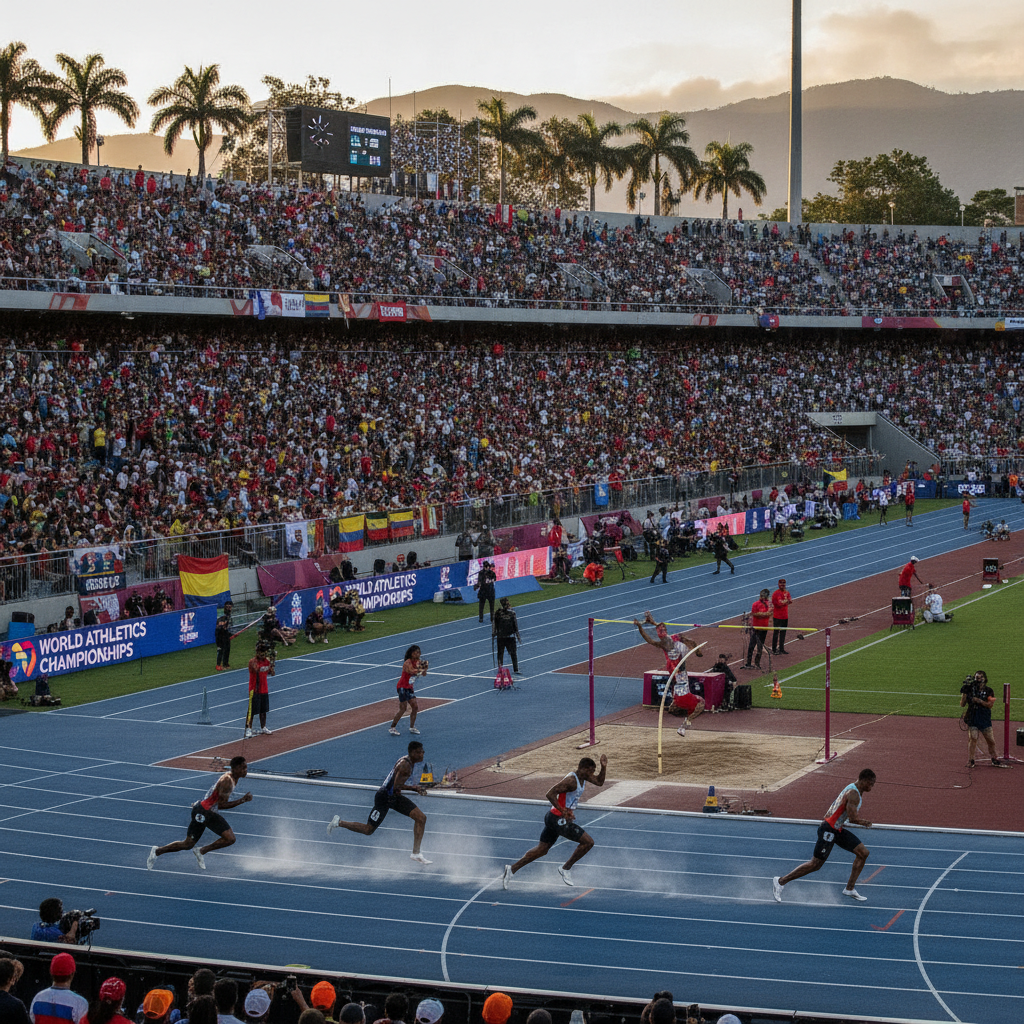
Cali has an outsized reputation in Colombian and South American athletics relative to its size, having produced a disproportionate number of elite track and field athletes particularly in sprint and middle-distance events. The city hosted the 1971 Pan American Games, the 1992 Ibero-American Games, the 2021 Junior Pan American Games, and the 2022 World Athletics Championships, building an athletics infrastructure and culture across multiple generations that has made the Pascual Guerrero stadium one of the most important track venues in Latin America. The concentration of elite athletic talent in the city is widely attributed to the large Afro-Colombian population and the role that athletics has played as a pathway to economic mobility for young people from the comunas and the Cauca Valley communities.
- 1
World Athletics Championships 2022: Cali on the Global Stage
The World Athletics Under-20 Championships held in Cali in August 2022, the world championship for junior athletes under 20 years of age, brought the highest level of international athletics competition to the city and provided a showcase for the Colombian athletic infrastructure. The event was held at the Estadio Pascual Guerrero, the historic main stadium of Cali, following renovation work to upgrade the track and facilities to World Athletics standards. Colombia performed well in the competition, with several Colombian athletes medaling in their events and the home crowd providing an atmosphere unusual for a track and field championship. The 2022 championship followed the 2021 Junior Pan American Games also hosted in Cali, giving the city two consecutive years of major international youth sports events. The legacy of the championships is debated in Cali in the way that major sporting event legacies typically are: the infrastructure improvements are real and lasting, while the claims of broader economic development from the events require more time to assess. The event reinforced Cali's position as Colombia's athletics capital in international sporting organization circles and increased the likelihood of future major events being allocated to the city.
- 2
The Pascual Guerrero Stadium and Cali Football Culture
The Estadio Pascual Guerrero, named after a prominent Colombian political figure and constructed for the 1971 Pan American Games, is the home stadium of the Deportivo Cali and America de Cali football clubs, the two rival teams whose derby is the most passionate sporting event in the Colombian south. The stadium holds approximately 45,000 spectators and has been the scene of multiple national championship events across multiple sports; its track surface has hosted generations of Colombian and South American athletes. America de Cali, founded in 1927, and Deportivo Cali, founded in 1912, are two of the most historic clubs in Colombian football, each with championship titles and Copa Libertadores runner-up finishes, and their rivalry defines the sporting culture of the city in the way that Atletico Nacional versus Independiente Medellin defines the north. Attending a local derby in Cali is a similarly intense spectator experience to the Medellin derby, with organized supporter groups generating constant noise and visual displays. The Colombian football league season runs from February to June and July to December, providing multiple opportunities to attend a match during any visit of reasonable length. Tickets are available through the club websites and at the stadium.
- 3
Luz Mery Tristán and the Colombian Women's Football Revolution
Luz Mery Tristán, born in Cali in 1969, was the first great star of Colombian women's football and a pioneering figure in the development of the sport across Latin America. Tristán played for Colombia from 1988 to 2005, becoming the record scorer for the Colombian women's national team and winning multiple South American championship titles; her career bridged the amateur era of women's football in Colombia and the beginning of professional structures. The Pastrana Borrero stadium in the nearby city of Jamundí, now renamed in her honor, and her continued work as a coach and football official in the Cauca Valley region keep her legacy alive in the Colombian women's football community. Colombian women's football has grown dramatically since Tristán's era, with Colombia qualifying for the 2015 and 2023 FIFA Women's World Cups and the national team developing players who compete in professional leagues in the United States, Spain, and Brazil. Cali and the Cauca Valley have continued to produce women's football talent alongside the male players who dominate the media narrative.
- 4
Cali Cycling: Road Racing in the Andean Mountains
The cycling culture of the Colombian Andes, which has produced some of the most significant professional road cyclists in the world from the late 20th century onward, extends through the mountain roads around Cali that climb from the flat Cauca Valley into the western and central Cordilleras. The Vuelta a Colombia, the national professional cycling stage race, passes through the Cauca Valley and the mountains above Cali in most editions, bringing professional cycling to the valley roads and inspiring the amateur racing culture that produces the next generation of Colombian professionals. Colombian climbing specialists including Nairo Quintana, Egan Bernal, and Rigoberto Uran, while not from Cali specifically, represent the broader Colombian Andean cycling tradition that the mountain roads around the Cauca Valley contribute to developing. Amateur cyclists from Cali use the roads climbing to Pance, to the Farallones park entrance, and to the western Andean passes for training and recreation; weekend cycling up these roads is a routine activity for the Cali cycling community. Several cycling tour operations offer guided rides on the mountain roads above the valley for visiting cyclists wanting to experience the Andean climbing terrain that has made Colombia a cycling superpower.
- 5
Lucha Libre and Combat Sports in Cali
The combat sports culture of Cali, which includes wrestling, boxing, and more recently mixed martial arts, reflects the broader Colombian tradition of producing elite athletes in individual competition sports where hard work and natural talent can overcome limited infrastructure. Boxing has a long tradition in Cali and the Cauca Valley, with the amateur boxing programs of the comunas and smaller Cauca Valley towns producing Colombian national champions and occasional international medalists. The club boxing gyms of the lower-income neighborhoods function as combination sports programs and social intervention projects for young men, in the tradition of boxing clubs worldwide. Wrestling, while less culturally visible, has produced Colombian competitors at the South American and Pan American Games level through the programs at the Universidad del Valle sports institute. The rise of MMA in Colombia from the 2010s onward has found an audience in Cali, with several local gyms producing fighters who compete in regional promotions. The relationship between combat sports participation and the street violence culture of the poorer neighborhoods is a recurring subject in Colombian social commentary, with proponents arguing that structured sports provide alternatives to gang involvement and critics arguing that the machismo culture of combat sports reinforces problematic masculinity norms.
- 6
Swimming, Cycling Infrastructure, and the Ciclovía Culture
The Ciclovía program in Cali, operating on Sunday mornings when major avenues are closed to motor vehicles and opened to cyclists, pedestrians, and skaters, is one of the most successful examples of the Ciclovía model that Bogota pioneered and that has spread across Colombian and Latin American cities. The Cali Ciclovía covers approximately 30 kilometers of routes through the main neighborhoods and along the Cali River banks, attracting hundreds of thousands of participants on a typical Sunday and providing one of the most pleasant experiences of the city's geography for visitors who time their visit to include a Sunday morning. The flat topography of central Cali makes the Ciclovía routes more accessible than the hillier alternatives in other Colombian cities; families with young children and elderly participants join serious cyclists on the closed roads without the challenges that steeper terrain would create. The Unidad Deportiva Panamericana, built for the 1971 Pan American Games, contains an Olympic swimming pool, velodrome, and multiple sports courts used by Cali athletes across disciplines; the facility is open to the public for recreational use during non-competition periods. The Pance River corridor south of the city has developed as a recreational cycling and walking route that connects the city to the cool mountain stream environment at the foot of the Farallones.
Walk this route with audio
Stories play automatically as you reach each stop — no tapping needed.
More in Cali
Cali History: Colonial Foundation, Independence, and the Cauca Valley Economy
Cali Afro-Colombian Culture: Music, Identity, and the Pacific Heritage
Cali: The Salsa Capital of the World and the Cauca Valley City
Cali Nightlife and the Salsoteca Culture: Dancing Until Dawn
Cali Practical Guide: Getting There, Neighborhoods, Safety, and the Colombia Southwest