Calgary: The 110-Year-Old Indigenous Village at the Stampede That Is Simultaneously Cultural Celebration and Contested Display, the Wind-Powered Light Rail and the City Trying to Figure Out What Comes After Oil
Visit the Elbow River Camp at the Stampede that has operated continuously for 110 years as the five Treaty 7 Nations simultaneously assert cultural pride and navigate the contested question of whether presenting traditions for tourist audiences serves Indigenous interests, walk Inglewood where the oldest commercial buildings in Calgary contain craft breweries and vinyl record shops and one street over Ramsay still has the original working-class bungalows built for CPR workers in 1910, understand that the same Elbow River that provides drinking water and the Heritage Park reservoir setting was the river that flooded 75,000 homes in 2013 and whose upstream dam project is still disputed by the Tsuu Tina Nation, ride the CTrain that is 100 percent wind-powered through a free downtown zone while the surrounding city is built for cars in ways that make transit barely functional beyond the two LRT lines, stand before the Central Library that the city was criticized for spending money on and then immediately celebrated when people understood what had been built, and look west at the mountain skyline from a city that has free pancake breakfasts on the street and is also trying to transition an entire economy away from the resource that made it.
- 1
Calgary Stampede Indigenous Participation
The Indian Village at the Calgary Stampede, renamed the Elbow River Camp in 2021 after consultation with participating First Nations, has been a component of the Stampede since 1912, when Guy Weadick specifically invited representatives of the Siksika, Kainai, Piikani, Stoney Nakoda, and Tsuu Tina Nations to participate in traditional tipis, ceremonial dress, and cultural demonstrations as part of the founding event. The five Treaty 7 Nations have maintained continuous participation in the Stampede for over 110 years, making the Indian Village one of the oldest annual First Nations public cultural presentations in North America. The arrangement has been simultaneously criticized as a staged performance of Indigenous culture for tourist consumption and defended as an opportunity for Indigenous nations to present their own culture on their own terms with full participation control. The Siksika Nation, Kainai Nation, and other Treaty 7 Nations negotiate their participation terms with the Stampede organization each year. The Nakoda Lodge at Morley on the Stoney Nakoda reserve west of Calgary, and the Blackfoot Crossing Historical Park on the Siksika reserve east of Calgary, present First Nations culture in Indigenous-controlled settings that visitors can reach as day trips from the city. The Head-Smashed-In Buffalo Jump interpretive center, operated with significant First Nations staff and advisory input, is considered a model of collaborative heritage interpretation.
- 2
Calgary Inglewood and Ramsay Neighborhoods
Inglewood, the neighborhood east of Fort Calgary along 9th Avenue SE, is the oldest residential and commercial district in Calgary, incorporated into the city from the original Langevin settlement that preceded the CPR arrival, with commercial buildings from the 1890s through the 1920s housing contemporary independent restaurants, vintage clothing shops, record stores, craft breweries, and galleries in a streetscape that has not been demolished and rebuilt as repeatedly as other Calgary districts. The Inglewood Bird Sanctuary on the Bow River provides a small wildlife area and interpretive center adjacent to the commercial strip. The Ramsay neighborhood immediately south of Inglewood, on the hillside above the Elbow River valley, contains one of the most intact collections of working-class residential architecture in Calgary, with small Craftsman bungalows and modest two-storey houses from the 1910s and 1920s on grid streets that reflect the original demographic of CPR workers and small tradespeople who built the neighborhood. The Crossroads Market in Inglewood is a year-round indoor market with antique dealers, produce vendors, and small food businesses that predates the farmers market movement by decades. The Inglewood Sunridge district has evolved independently of the arts gentrification of the commercial core, retaining the Vietnamese restaurants and small ethnic grocery stores of its 1980s character alongside newer arrivals.
- 3
Calgary Flood Plains and Environmental Planning
The Calgary flood plains of the Bow and Elbow rivers have been a continuous source of conflict between the desire for developable urban land and the recurring reality of river flooding in a city built at the confluence of two mountain-fed rivers that carry dramatically variable flows depending on Rocky Mountain snowpack and summer rainfall. The Elbow River in particular, draining a smaller watershed that responds rapidly to rainfall events, has flooded the low-lying communities of Mission, Erlton, and Roxboro periodically since the earliest settlement. The 2013 flood demonstrated conclusively that the flood risk of the Bow and Elbow river corridors within Calgary was severely underestimated in development approval processes. The proposed Springbank Dry Dam, an off-stream reservoir upstream on the Elbow River designed to hold back floodwater before it reaches the city during high water events, was approved after years of environmental assessment and Indigenous consultation but faces ongoing criticism from Tsuu Tina Nation members whose lands adjoin the proposed reservoir site. The Glenmore Dam and reservoir, the primary flood control structure on the Elbow River since 1933, was overwhelmed in 2013. Water management in the Bow River basin involves multiple provinces, municipalities, irrigation districts, and First Nations with conflicting interests in the same river.
- 4
Calgary Transit and Urban Planning
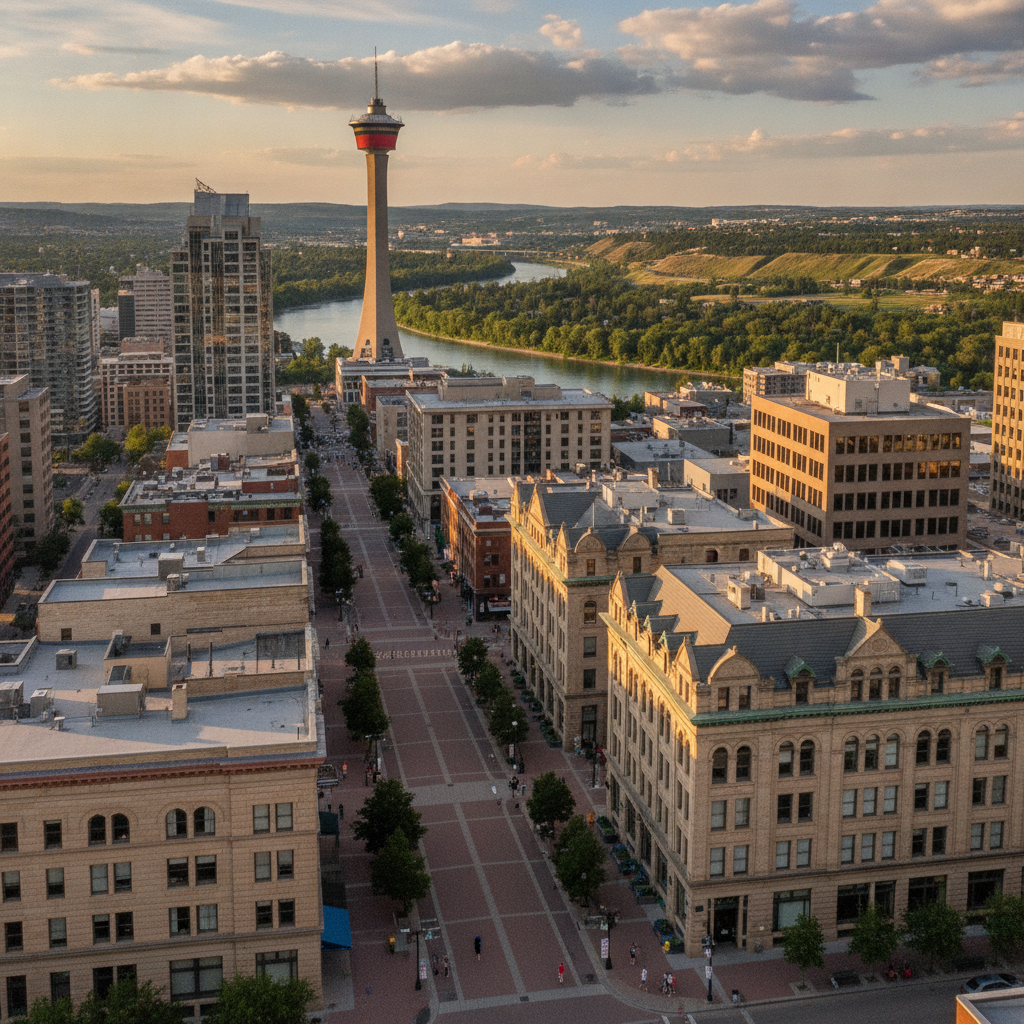
The CTrain, Calgary light rail transit system consisting of two lines crossing at downtown stations, is one of the most heavily used light rail systems in North America with over 300,000 daily boardings before the COVID pandemic, operating in a free fare zone through the downtown core on 7th Avenue and charging fares in the suburban and university portions of the system. The CTrain is notable for being 100 percent powered by wind energy through a renewable energy purchase agreement, making it the only fully wind-powered urban transit system in North America. The CTrain free zone on 7th Avenue downtown is the primary public transit spine of the downtown core and creates significant pedestrian activity along the street. The BRT Bus Rapid Transit system being developed on major corridors complements the LRT. The suburban development pattern of Calgary, with vast single-family residential areas served primarily by car, creates significant pressure for transit investment that the city has found difficult to fund against the competing demands of road infrastructure. The Stoney Trail ring road, completed around the southern and western edges of the city in 2021, reduced through-city traffic significantly and was the largest transportation investment in Calgary history. The expansion of the CTrain southeast and northwest is planned but faces funding constraints from the provincial government.
- 5
Calgary Modern Architecture and Design
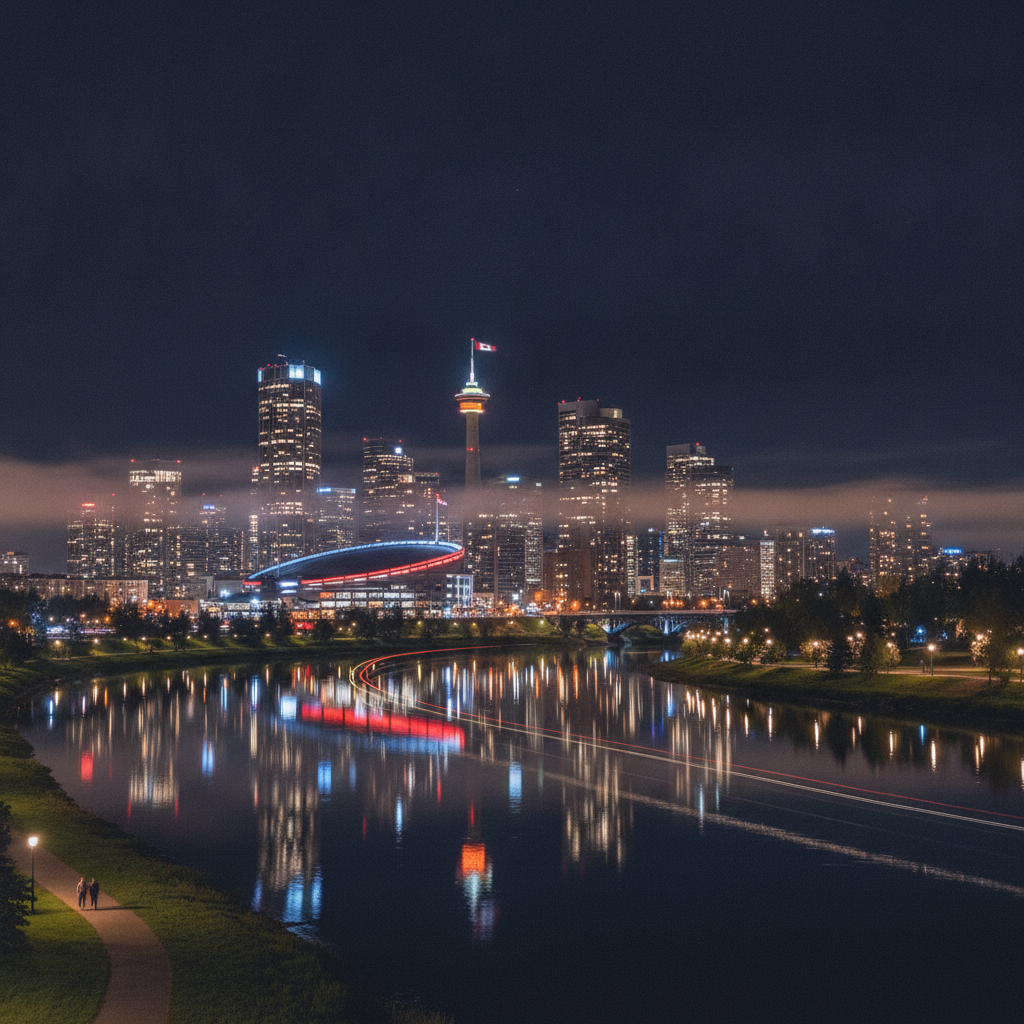
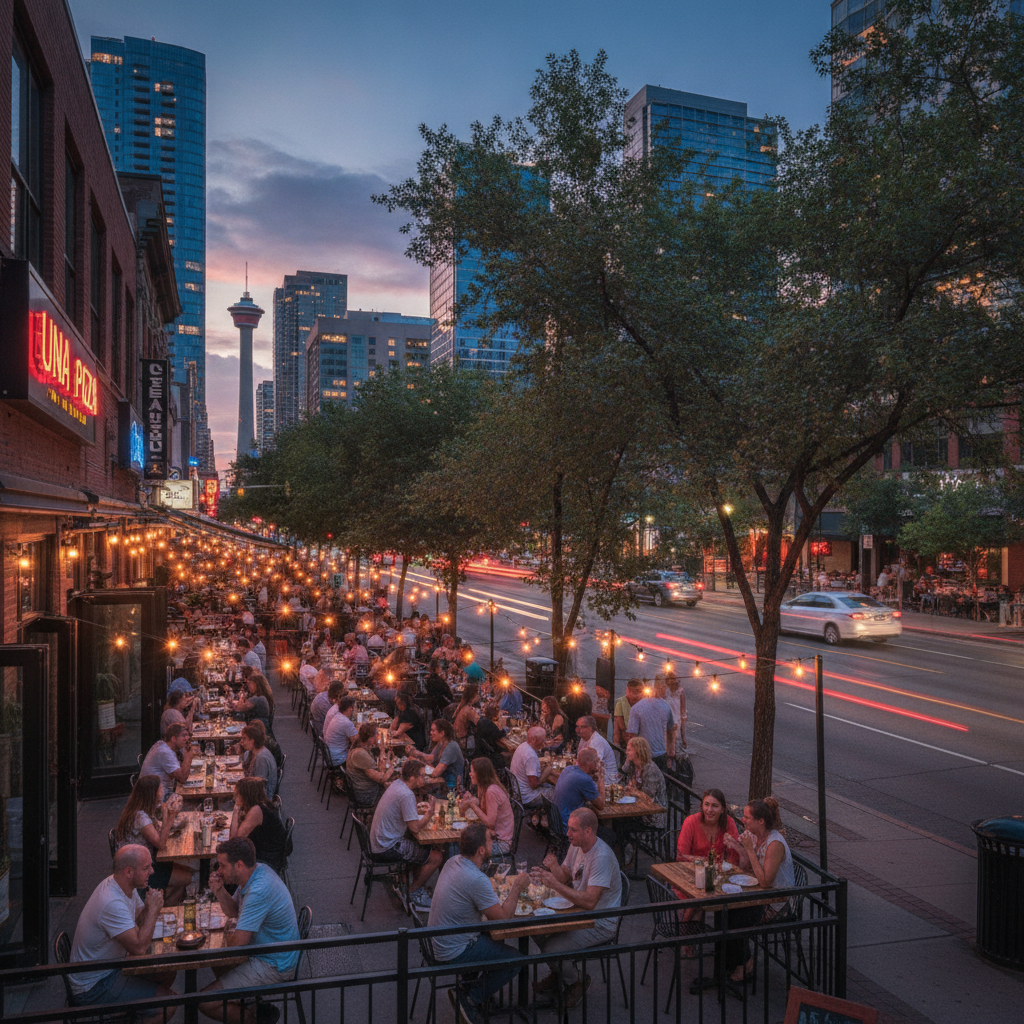
Calgary has developed a significant collection of contemporary architecture since 2010, driven by cultural investment in the East Village, residential tower development in the Beltline and Eau Claire, and corporate headquarters investment by energy companies seeking to project modern images. The Central Library by Snohetta, with its curving glass exterior shell over a drum floating above the CTrain tracks, is the finest single building in Calgary and one of the most discussed library buildings in North America since its 2018 opening. The National Music Centre Studio Bell building by Allied Works Architecture, with its stacked stone pods in warm orange Kasota limestone, creates a distinctive presence on 4th Street SE. The BMO Centre expansion at Stampede Park, a convention centre doubling the footprint of the existing facility, is the largest convention centre in western Canada when complete. The New Central Library design created a controversy about public spending on an expensive architectural statement in a city with infrastructure pressures, followed by near-universal acclaim when the building opened and its qualities as a public gathering space became apparent. The Calgary skyline viewed from the south side of the Bow River at night reflects both the glass towers of the oil economy and the newer civic buildings that represent the city ambition to be more than a resource extraction center.
- 6
Calgary Looking Outward and Future Identity
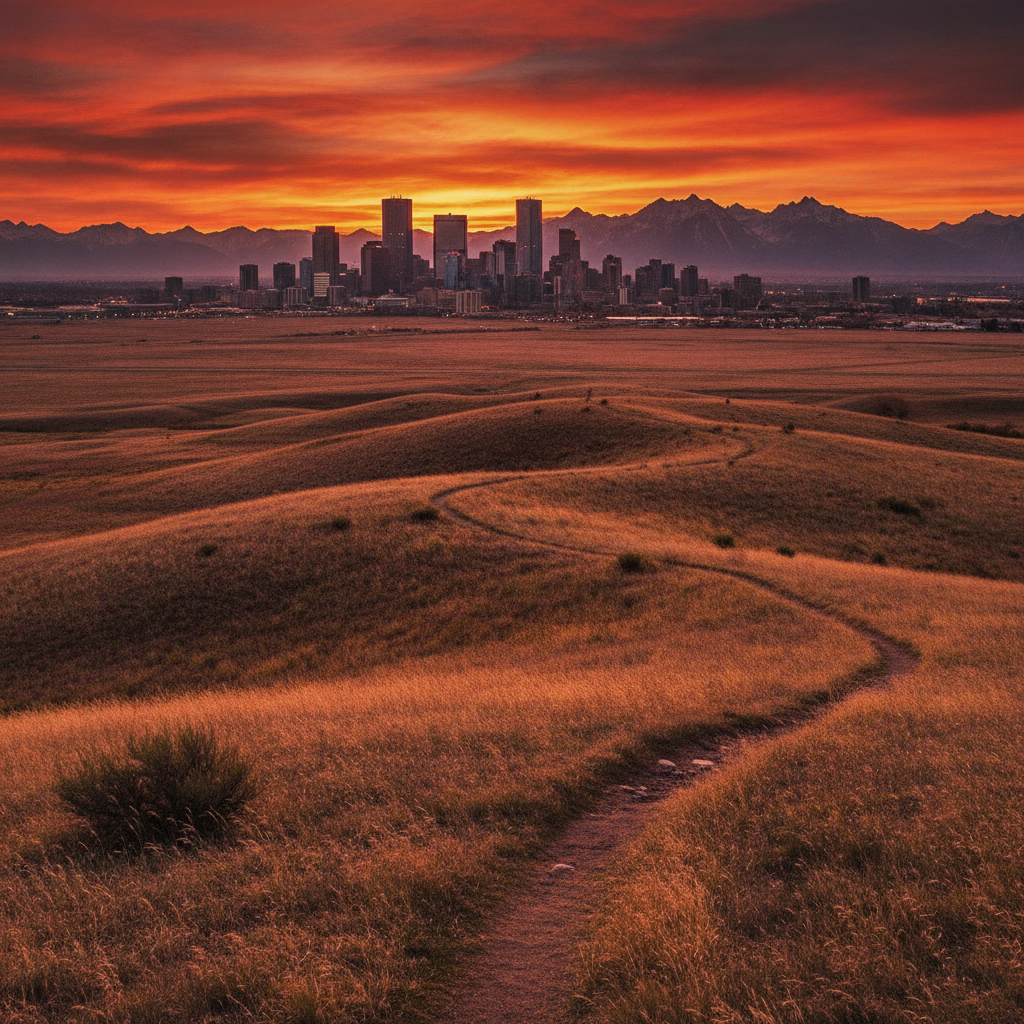
Calgary in the mid-2020s is a city in identity transition, grappling simultaneously with the energy transition away from fossil fuels that threatens its economic foundation, the demographic transformation through immigration that is changing its cultural character, the unresolved reconciliation obligations to the Treaty 7 Nations on whose land the city was built, and the urban planning challenges of a sprawling automobile-dependent metropolitan area trying to become denser and more transit-oriented. The combination of strong civic pride expressed through the Stampede, the hockey team, and the mountain proximity, with genuine anxiety about economic diversification and political relevance in a federation that the province has periodically threatened to leave, creates a city with unusual psychological complexity for what is often dismissed as simply an oil town. The vision for a post-petroleum Calgary includes technology, life sciences, finance, creative industries, and agri-food sectors, none of which yet match the employment scale of the oil industry at its peak. The mountain landscape visible on the western horizon from downtown Calgary, the elk in Banff townsite, the dinosaur fossils in Drumheller, the chinook arch that warms a cold morning in February, and the genuine western hospitality of the free pancake breakfast are all real, and they coexist with the harder questions about what Calgary becomes as the fossil fuel era ends.
Walk this route with audio
Stories play automatically as you reach each stop — no tapping needed.
More in Calgary
Calgary: The Wind That Raises Temperature 25 Degrees in One Hour, the Buffalo Jump Used for 5700 Years and the No-Tax Province That Explains Everything About Alberta Politics

Calgary: The Stampede That Calls Itself the Greatest Outdoor Show on Earth, the Boom-Bust City Built on Beef and Oil and the Rockies 90 Minutes Away
Calgary: The Museum With the Most Dinosaur Skeletons on Earth 130 Kilometres Away, the National Energy Program That Alberta Still Calls Theft and the Elk You Meet Inside the Town of Banff

Calgary: The Saddle-Shaped Arena That Is a Structural Engineering Record, the Glacier Marked With Its Own Retreat in Decade Intervals and the Most Successful Franchise in Canadian Football History
Calgary: The 2013 Flood That Filled the Hockey Arena to Row 4 and Was Followed by the Stampede Two Weeks Later, the Fastest Growing City in Canada and the Office Capital With More Space Per Person Than Anyone Else