Cairns: Kakadu National Park and Yellow Water Billabong, Litchfield Swimming Holes, Darwin Tropical City, Coral Sea Liveaboard Diving and Osprey Reef, Great Barrier Reef Marine Conservation, Cairns Arts Scene, and Four-Route Complete Verdict
Cairns final routes: Kakadu National Park UNESCO (5,000+ rock art sites, 280 bird species, saltwater crocodiles, Jim Jim Falls), Litchfield National Park swimming holes and magnetic termite mounds, Darwin (Mindil Beach Sunset Market, crocodile farm), Coral Sea liveaboard diving (Osprey Reef hammerhead sharks), reef conservation and bleaching science, Cairns Night Markets and Indigenous Art Fair, and the complete four-route tropical north Queensland visitor verdict.
- 1
Kakadu National Park from Darwin - the Northern Territory UNESCO Giant
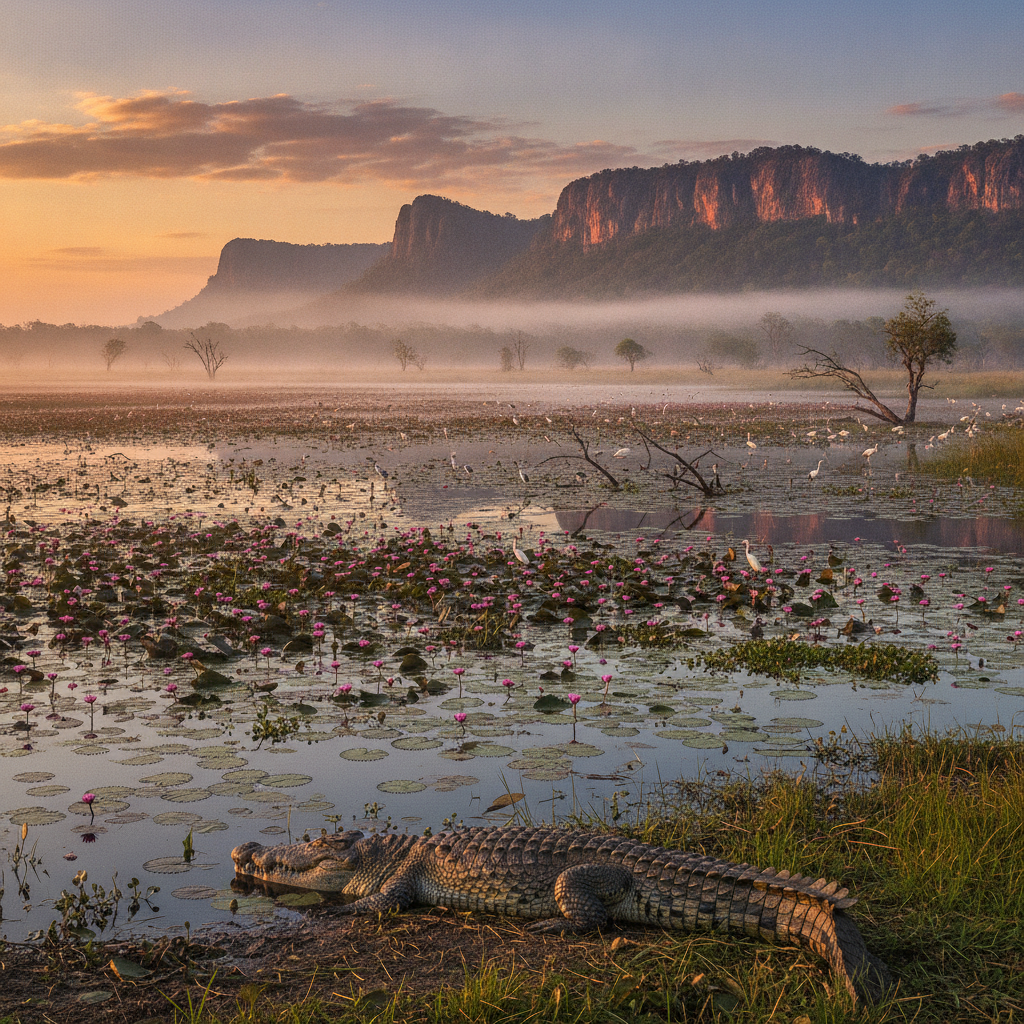
Kakadu National Park (UNESCO World Heritage Site 1981-87, 252 km east of Darwin, approximately 3 hours by road; Darwin is 3 hours by air from Cairns): the largest national park in Australia (19,804 sq km, larger than Switzerland) and one of the most significant national parks on earth. Kakadu is listed for both its natural values (the wetlands, the escarpment, and the biodiversity) and its cultural values (the world largest collection of Aboriginal rock art, with over 5,000 individual sites). The Kakadu wetlands (the floodplains of the South Alligator River): the primary bird watching destination in Australia, with over 280 species of bird recorded, including the magnificent frigate bird, the jabiru (brolga), the magpie goose, and the royal spoonbill. The Kakadu rock art: the oldest rock art in Kakadu is estimated to be 28,000 years old (the animal and hand stencil paintings of the Ubirr and Nourlangie Rock galleries). The Yellow Water Billabong (Ngurrungurrudjba): the wetland cruise on the South Alligator River floodplain, the primary wildlife viewing experience in Kakadu, with crocodile sightings, bird colonies, and the lotus lilies. The Arnhem Land escarpment: the dramatic 500 km sandstone escarpment marking the boundary of Kakadu, with waterfalls (Jim Jim Falls and Twin Falls, accessible by 4WD in the dry season) cascading from the plateau.
- 2
Litchfield National Park and the Darwin Day Trip
Litchfield National Park (approximately 130 km south of Darwin, 1.5 hours by road): the most accessible national park from Darwin, with natural swimming holes, waterfalls, and magnetic termite mounds. The Litchfield swimming holes: Wangi Falls (the primary swimming hole in Litchfield, with twin falls and a large plunge pool suitable for swimming year-round in the dry season), Florence Falls (the twin waterfall with the emerald plunge pool), Buley Rockhole (the cascading series of natural rock pools), and the Tolmer Falls (viewable only, as swimming is not permitted). The magnetic termite mounds (at the Florence Falls turnoff in Litchfield): the flat, blade-shaped termite mounds that are orientated precisely north-south (the mounds minimize the surface area exposed to the midday sun, keeping the internal temperature stable). The Darwin city: Darwin (population approximately 150,000, the capital of the Northern Territory): the most tropical and multicultural capital city in Australia. The Darwin waterfront, the Darwin Museum and Art Gallery (the maritime museum and the 1942 Japanese bombing exhibition), the Mindil Beach Sunset Market (Thursday and Sunday evenings, May to October), and the Crocodylus Park (the largest crocodile farm in Australia). The Darwin Cullen Bay and the Darwin Harbour: the primary dining and sailing precinct of Darwin.
- 3
Cairns Underwater World - Coral Sea Marine Park and Dive Sites
The Coral Sea Marine Park (the vast protected marine area east of the Great Barrier Reef, from the outer reef to 200 nautical miles offshore): the liveaboard diving destination of tropical north Queensland, with reefs that receive very little visitor pressure and some of the most dramatic underwater landscapes in the world. Osprey Reef (approximately 350 km northeast of Cairns, 2 nights by liveaboard): the oceanic atoll rising from 2,000 m depth, with the North Horn dive site (the largest and most regular hammerhead shark aggregation in the Coral Sea), the Wall (a 200 m vertical coral wall) and the Cod Hole (the potato cod congregation). Holmes Reef and Flora Reef (200-250 km from Cairns): the pristine outer Coral Sea reefs with the best hard coral coverage remaining in the tropical north Queensland region, relatively unaffected by the bleaching events that have impacted the main reef. Ribbon Reef No. 10 and Cod Hole (140 km north of Cairns): the most accessible outer ribbon reef site from a Port Douglas day trip, with the famous Cod Hole dive site (the potato cod weighing up to 120 kg approach divers for hand-feeding). The coral bleaching explanation: when sea surface temperatures exceed the thermal tolerance of the coral (approximately 1 degree C above the normal summer maximum for 4-6 weeks), the coral expels its symbiotic algae (zooxanthellae) and turns white; if temperatures do not return to normal within 4-6 weeks, the coral dies.
- 4
Great Barrier Reef Marine Park Authority and Reef Conservation
The Great Barrier Reef Marine Park Authority (GBRMPA): the Australian Government agency responsible for the management and protection of the Great Barrier Reef Marine Park. The Marine Park zoning: the reef is divided into zones from General Use (lowest protection, fishing permitted) to Marine National Park (Green Zone, no fishing) to Preservation (no entry). Approximately 33% of the Marine Park is in the highest protection zones. The crown-of-thorns starfish (Acanthaster planci): the coral-eating starfish that has caused significant damage to the Great Barrier Reef; the GBRMPA conducts ongoing removal programs on the most important reef sections. The Queensland Tourism and reef revenue: the Great Barrier Reef generates approximately AUD 6.4 billion per year in tourism revenue and supports approximately 64,000 jobs; the economic value of a healthy reef is estimated at AUD 56 billion. Citizen science on the reef: the Eye on the Reef program (operated by GBRMPA) trains reef tour operators and visitors to report coral bleaching, crown-of-thorns starfish outbreaks, and unusual wildlife sightings. The Reef 2050 Long-Term Sustainability Plan (the Australian Government strategy for reef management): the plan includes water quality improvements, crown-of-thorns control, adaptation to climate change, and the ongoing monitoring program. Climate change remains the primary threat.
- 5
Cairns Nightlife, Food Markets, and Cultural Scene
Cairns food and nightlife: the city has a lively traveler and backpacker scene centered on the Esplanade and the Cairns Night Markets. The Cairns Night Markets (43-49 Esplanade): the primary evening shopping and food destination of Cairns, open every evening from 5 pm to 11 pm, with Southeast Asian street food, souvenirs, and the Conservatory bar. The Grafton Street pub strip: the main backpacker nightlife strip, with the Woolshed (the primary backpacker bar), the Pier Bar, and the clubs. The Cairns food scene beyond tourist: the Rusty Market (the local Cairns fruit and vegetable and food market, open Friday, Saturday, and Sunday): the primary local food market where Cairns residents shop for fresh tropical produce (the pawpaw, mango, banana, and tropical fruit of north Queensland). The Cairns Indigenous Art Fair (annual in July): the primary platform for Aboriginal and Torres Strait Islander art from north Queensland and the Torres Strait, with works by artists from remote communities. The Tanks Arts Centre (the three circular WWII fuel tanks at Edge Hill): the primary contemporary arts venue of Cairns, with the gallery exhibitions, the Rainforest Festival (June), and the Tanks Foundation arts education programs. The Jute Theatre (the primary professional theatre company in Cairns): producing new Australian works with a focus on north Queensland stories and themes.
- 6
Cairns Four Routes: Complete Tropical North Queensland Assessment
Cairns four-route complete assessment. Route 1: Great Barrier Reef diving (bleaching context), Daintree and Cape Tribulation UNESCO, Kuranda Scenic Railway and Skyrail, Atherton Tablelands waterfalls, practical guide. Route 2: Mission Beach cassowaries, Tully River rafting, Port Douglas, Cape York Peninsula, Torres Strait Islands (Mabo), Savannah Way. Route 3: Kakadu National Park UNESCO, Litchfield swimming holes, Darwin tropical city, Coral Sea liveaboard diving and Osprey Reef. Route 4 (this route): Coral Sea marine conservation, reef ecology, Cairns nightlife and Night Markets, Indigenous Art Fair, Tanks Arts Centre. Cairns four-route final: the essential point is that Cairns is where the reef and the rainforest converge. Two of the world great ecological systems meet at this latitude: the world largest coral reef and the world oldest surviving tropical rainforest. This convergence is unique on earth and is the singular reason to visit Cairns. Spend at least one day on the reef (dive if you can; the reef viewed only through snorkel is still one of the great experiences of Australian travel). Walk in the Daintree. Take the Kuranda Railway. These three experiences define Cairns. Do them in the dry season. Budget at least AUD 500-600 per day for the reef and rainforest activities; Cairns is not cheap.
Walk this route with audio
Stories play automatically as you reach each stop — no tapping needed.
More in cairns
Cairns: Gateway to the Great Barrier Reef, Daintree Rainforest and Cape Tribulation, Kuranda Scenic Railway and Skyrail, Atherton Tablelands Waterfalls and Crater Lakes, Complete Practical Guide for the Tropical North
Cairns: Cooktown Captain Cook History and Guugu Yimithirr Kangaroo Word, Gimuy Walubara Yidinji Country, Cairns as World Learn-to-Dive Capital, Wet Season Wildlife, North Queensland Tropical Produce, and Four-Route Final Complete Summary