The Only UN Cemetery in the World, the 1,348-Year-Old Monastery Where Morning Prayer Starts at 04:00 & the Film Festival That Introduced Korean Cinema to the World
The Busan Perimeter as the moment when South Korea's existence depended on a 230 km defensive line; the UN Cemetery as the world's only UN cemetery; Beomeosa's 678 CE founding by the two monks who created Korean Buddhism as distinct from Chinese Buddhism; BIFF 1996 as the festival that introduced Korean cinema internationally before Hallyu; Korea's largest mountain fortress at 16 km of walls built after the Japanese invasion; and the Fukuoka hydrofoil as the most active civilian cross-border ferry commute in Northeast Asia at 3h05m.
- 1
Busan's Korean War History – The Wartime Capital
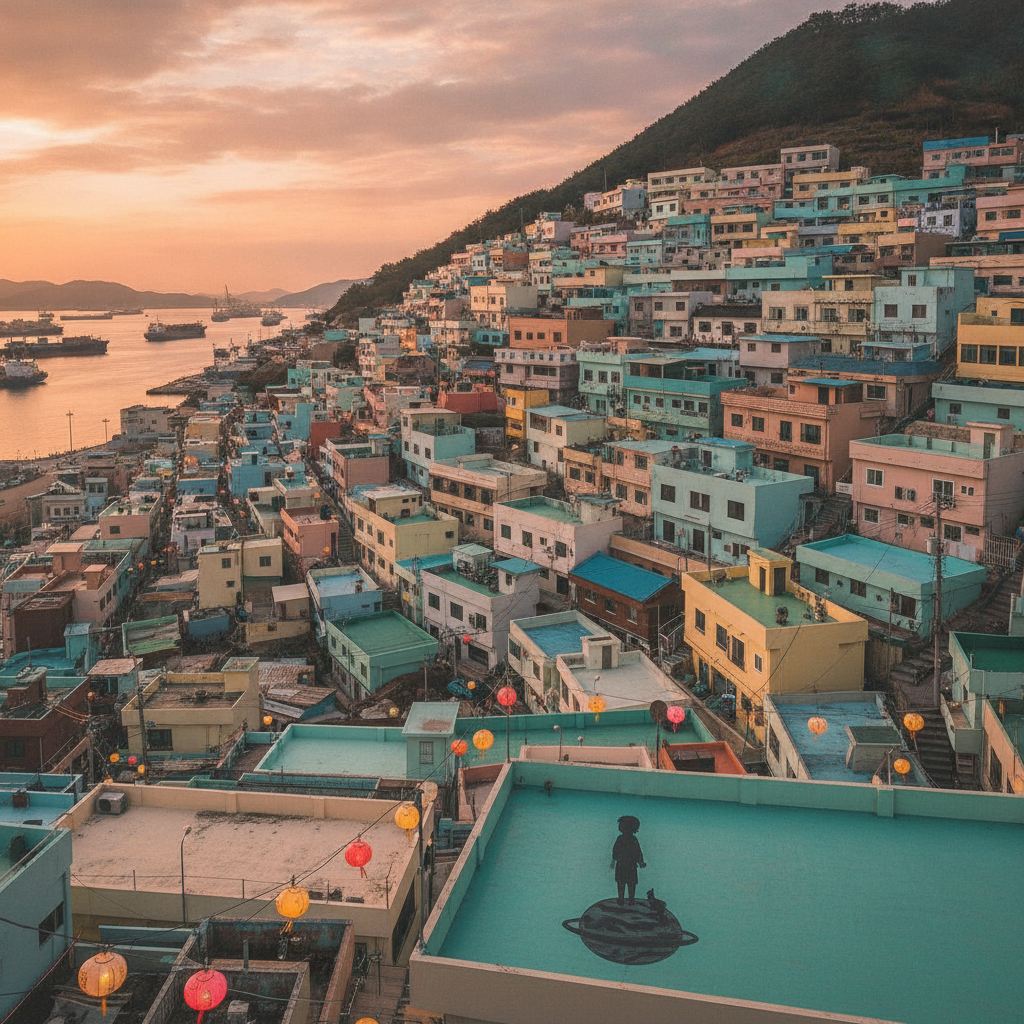
Busan's Korean War role (the city that served as the wartime capital of South Korea from August 1950 to October 1951—the period when the North Korean People's Army had overrun nearly the entire Korean Peninsula and the surviving South Korean government, military, and civilian population was compressed into the southeastern corner of the country in what became known as the Busan Perimeter): the most consequential period in Busan's modern history and the event that permanently shaped the city's character. The Busan Perimeter (the August–September 1950 defensive line running 230 km in a rough rectangle around Busan, held by UN forces (primarily US and South Korean troops) against the North Korean advance—the most critical moment of the Korean War when the existence of South Korea as a political entity hung on the defense of the perimeter): the Nakdong River (the river that formed the western boundary of the perimeter—where the most intense fighting of the perimeter defense occurred in August–September 1950). The UN Memorial Cemetery (the United Nations Memorial Cemetery in Busan (UNMCK)—the only UN cemetery in the world, containing the graves of 2,300 soldiers from 11 nations who died in the Korean War): the cemetery in the Daeyeon-dong district of Busan is the most solemn site in the city and the most internationally significant war cemetery in Asia. The refugee culture legacy (the population displacement that brought approximately 1 million refugees from North Korea and the rest of the peninsula to Busan during the war—the permanent population expansion that transformed Busan from a port city of 400,000 in 1945 to a city of 1.2 million by 1955): the demographic legacy that produced Gamcheon Village, the Jagalchi ajumma market culture, and the Busan dwaeji gukbap food culture.
- 2
Beomeosa Temple – The Forest Monastery
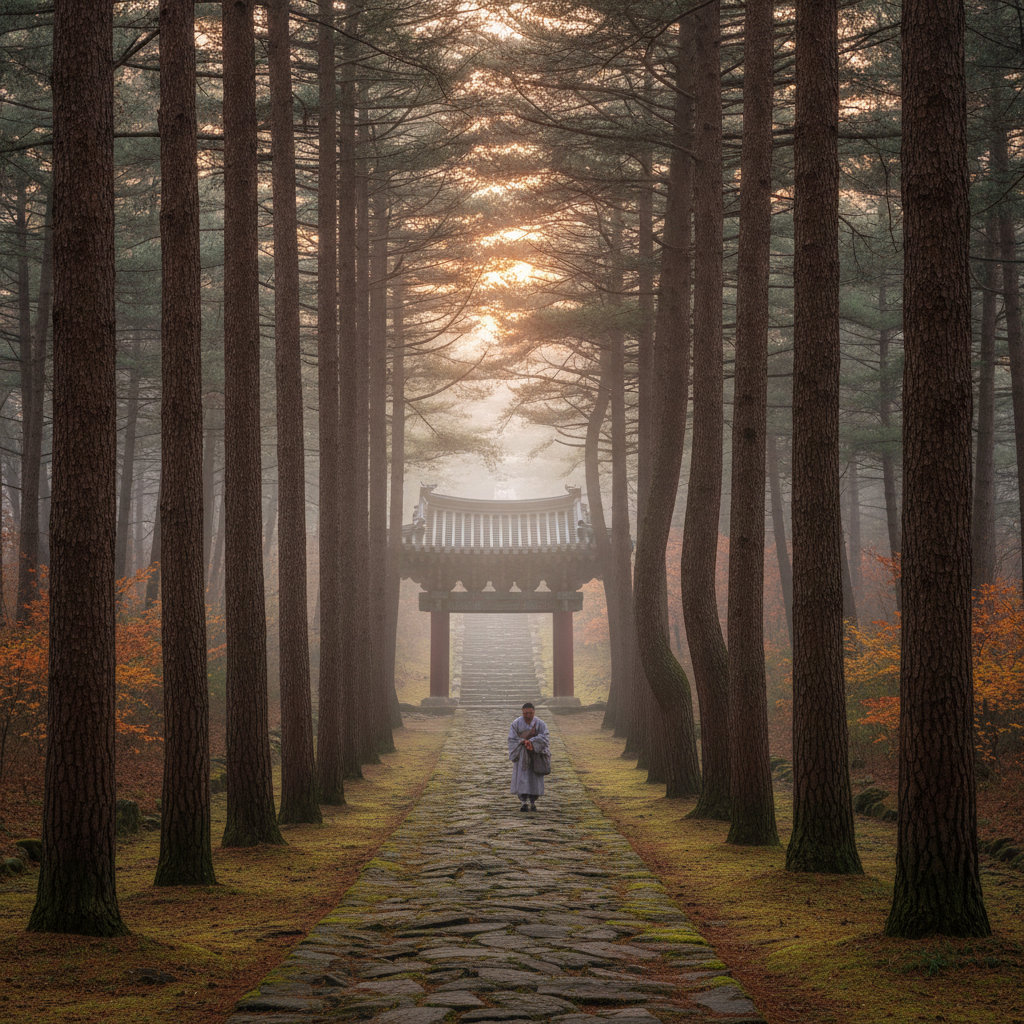
Beomeosa Temple (범어사—the head temple of the 14th district of the Jogye Order of Korean Buddhism, located on the eastern slope of Geumjeong Mountain at 800 metres elevation above the Geumjeong-gu district of northern Busan): the most historically significant Buddhist temple in the Busan region and the most rewarding temple visit for a visitor who wants to experience a functioning monastery rather than a tourist site. The Beomeosa history (the temple was founded in 678 CE during the reign of King Munmu of the Silla Dynasty by the monk Uisang on the instruction of the monk Wonhyo—the two monks most responsible for establishing Korean Buddhism as a distinct school from Chinese Buddhism): the 1,348-year history of continuous monastic practice on the same site. The Beomeosa architecture (the main hall (the Daeungjeon—the Hall of Great Enlightenment) and the One Pillar Gate (Iljumun): the three approach gates of Beomeosa (Iljumun, Cheonwangmun, and Burimun) follow the traditional Korean Buddhist monastery approach sequence—each gate marks the transition from the secular world (outside) to the monastic world (inside)): the forest setting (the 400-year-old pine trees lining the stone path from the bus stop to the temple gate are the most important aesthetic element of the Beomeosa approach—older than most of the temple buildings themselves). The templestay programme (the Beomeosa Templestay—the overnight programme for international visitors that includes meditation, morning prayer (at 04:00), the 108 prostrations exercise, tea ceremony, and temple food preparation): the most accessible Korean Buddhist monasticism experience available to foreign visitors without prior Buddhist background.
- 3
Busan's Contemporary Art & Film Culture
Busan's position in Korean cultural life (the city that has positioned itself as the alternative creative capital of South Korea—the counterweight to Seoul's cultural dominance): the contemporary arts scene that has developed around the Busan International Film Festival and the Busan Museum of Art. The Busan International Film Festival (BIFF—부산국제영화제): the largest and most prestigious film festival in Asia (founded 1996; held annually in October at the Busan Cinema Center in the Centum City district of Haeundae): BIFF's significance (the festival that introduced Korean cinema to international audiences in the 1990s before the Korean Wave (Hallyu) became a global phenomenon; the festival where Bong Joon-ho's early films were screened before his international breakthrough; the festival that receives approximately 200,000 visitors over its 10 days and screens 300+ films from 70+ countries per year). The BIFF Square (the outdoor screening plaza on Nampo-dong's main street—the original BIFF outdoor screening location from 1996–2011 before the Busan Cinema Center was built; the plaza is now a permanent movie culture district with handprints of Korean film stars embedded in the pavement (the Korean version of the Hollywood Walk of Fame)): the most accessible film culture site in Busan for casual visitors. The Busan Museum of Art (in Centum City, Haeundae—the primary contemporary art museum in Busan, with a strong collection of Korean contemporary art and regular international exhibitions): the museum is architecturally notable for its external art installation facades. The Trick Eye Museum (the illusion art museum in the Marine City district of Haeundae—the interactive optical illusion photography venue that is consistently the highest-rated tourist attraction in Busan by visitor volume on Tripadvisor).
- 4
The Geumjeong Mountain Fortress – Korea's Largest Mountain Fort
Geumjeongsan Fortress (금정산성—the stone wall mountain fortress encircling the ridge of Geumjeong Mountain in northern Busan): the largest mountain fortress in Korea (16 km of stone walls, 4 gates, and 5 platforms): the fortress was built in 1703 during the reign of King Sukjong of the Joseon Dynasty as a defensive response to the Japanese invasions of the 1590s (the Imjin War)—the fortress was intended to protect the Busan region from future invasion from Japan by creating a fortified mountain refuge above the city. The Geumjeongsan hike (the mountain ridge trail from the Beomeosa Temple (the traditional approach from the north) to the North Gate (Bukmuun—the best-preserved of the fortress gates) and along the ridge to the summit (the 801-metre Gowibong peak): the complete ridge traverse from North Gate to South Gate is a 10 km hike taking approximately 4 hours through the mixed oak and pine forest of the Geumjeong ridge). The North Gate (the most photographed feature of the fortress—the stone gate arch reconstructed to its Joseon-era appearance with a wooden guardhouse above the arch): the view from the North Gate (the panoramic view west toward Gimhae City and the Nakdong River delta, north toward the Gyeongnam mountains, and east toward the sea beyond Busan Port). The Makgeolli at the mountain village (the traditional unfiltered rice wine served at the informal food stalls at the Dong-mun (East Gate) area of the fortress—the most refreshing post-hike tradition at Geumjeong Mountain, where hikers drink makgeolli with pajeon (green onion pancake) at the outdoor stalls below the East Gate).
- 5
Busan Port & The Ferry to Japan
Busan Port (the largest port in South Korea and the 6th largest container port in the world by container volume): the port that has defined Busan's character as a city since the late 19th century when Japan's Meiji government opened the first modern commercial port on the Korean Peninsula here in 1876. The Busan Port (North Port—the original port area in the Jung-gu district adjacent to Jagalchi Market and Nampo-dong): the working commercial port now being converted to a mixed-use waterfront development (the Busan North Port Redevelopment Project—the plan to transform the former cargo handling area into a marina, cultural facility, and residential zone by 2030, following the model of the Hamburg HafenCity development). The Fukuoka Ferry (the Beetle hydrofoil and Camellia Line ferry services from Busan International Ferry Terminal to Fukuoka (Hakata Port) in Japan—the most used international sea crossing in Northeast Asia: the Beetle hydrofoil (JR Kyushu Beetle Ferry): 3h05m from Busan to Fukuoka; fare from KRW 90,000 one way; 3–4 sailings daily; the Camellia Line ferry: 6 hours overnight with cabins available). The Japan cultural connection (Busan's geographic proximity to Japan (the straight-line distance from Busan to Fukuoka is 210 km—less than the distance from Seoul to Busan) means that Busan has the most direct and historically continuous relationship with Japan of any Korean city): the Busan-Fukuoka cross-border commuter culture (the Korean workers, students, and shoppers who commute between the two cities by ferry on a regular basis—the most active civilian ferry cross-border commute in Northeast Asia).
- 6
Busan's Neighborhoods & Night Life
The Busan neighbourhood guide (the districts beyond the tourist sites that reveal the city's character): the three neighbourhoods that most reward a visitor who wants to experience Busan as a living city rather than as a collection of attractions. The Seomyeon district (서면—the commercial and nightlife center of central Busan—the 'downtown' that most Busan residents would identify as the city's actual hub): the underground shopping malls (the Seomyeon Underground Shopping Center—the labyrinthine underground mall beneath the Seomyeon intersection, the largest underground mall in Busan (approximately 700 shops in 1.5 km of underground corridors)): the most disorienting shopping experience in Busan and the best place to observe unmediated Busan commercial life. The Kyungsung University area (the university district in the Daeyeon-dong area south of Seomyeon—the most concentrated nightlife and bar district in Busan, built around the student populations of Kyungsung University and Busan University of Foreign Studies): the bar and cafe street around Kyungsung University station (Line 2) is the best Busan equivalent of the Seoul Hongdae experience. The Haeundae Blueline Park (the coastal walking trail converted from the old Donghae Nambu Railway line that ran along the Haeundae coast from Mipo to Cheongsa stations—the 4.8 km rail-trail with ocean views and the Skycapsule (the enclosed glass pod rail car that runs at 3.5 km/h along the coastal track with glass floors)—the most photogenic leisure infrastructure in Busan).
Walk this route with audio
Stories play automatically as you reach each stop — no tapping needed.
More in Busan
The Largest Urban Hiking Trail Network in South Korea, the World's Largest Department Store by Floor Area & the Ssiat Hotteok Queue That Defines Busan Street Food