The Refugee Village That Became Korea's Most Photographed Neighbourhood, the Wish-Granting Temple Built in a Dream & the Pork Bone Soup Invented to Feed a War
The Gamcheon ajumma-vendor tradition traceable to women taking over market trade during the Korean War; the 2009 Little Prince art project that gentrified a 1950s refugee settlement; the Haedong Yonggungsa sea-cliff location as the deliberate exception to Korean Buddhist mountain-temple convention; the 108-step descent to the wave platform; the dwaeji gukbap refugee origin from using cheap pork cuts in wartime broth; the milmyeon wheat noodle invented by a North Korean refugee using US military flour in 1952; and the KTX's 2h15m Seoul–Busan connection departing every 20–30 minutes.
- 1
Haeundae Beach – Korea's Most Famous Shoreline
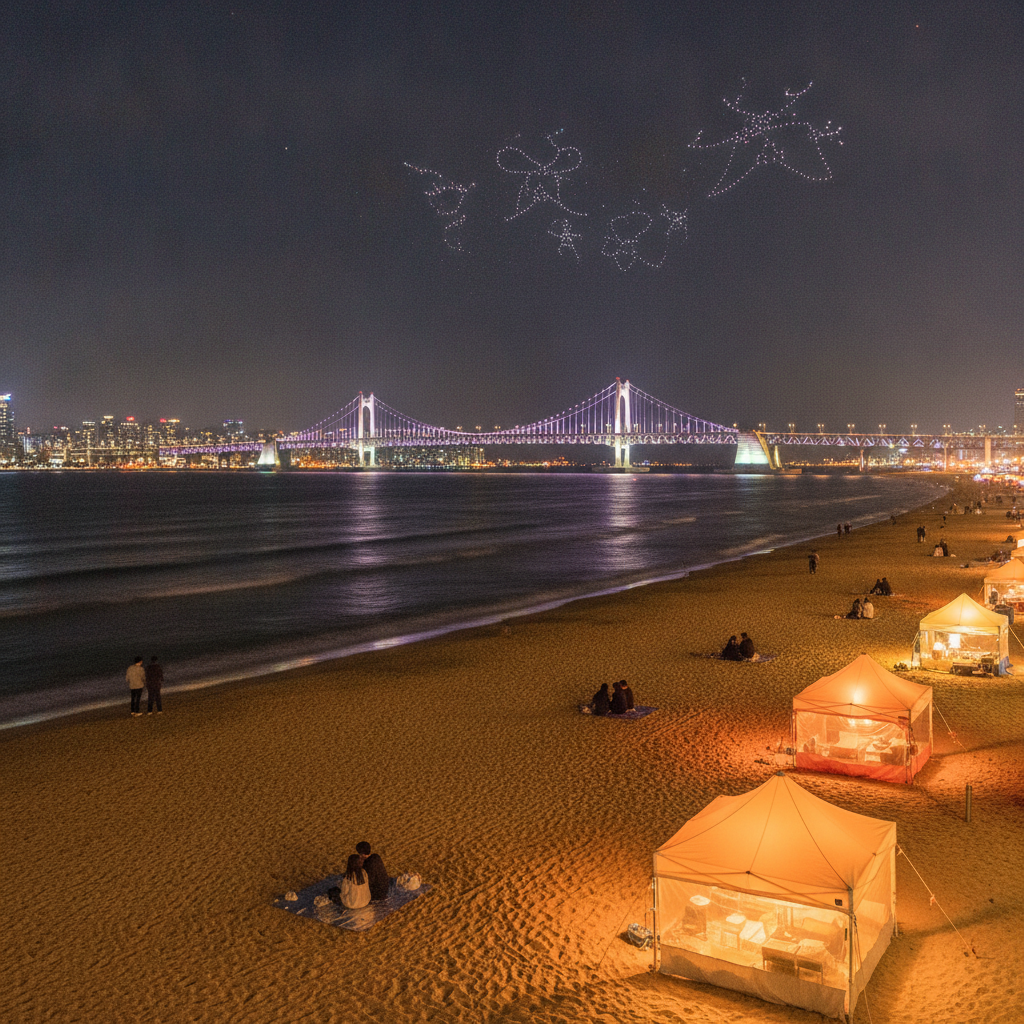
Haeundae Beach (해운대 해수욕장—the 1.8 km beach in the Haeundae district of eastern Busan): the most visited beach in South Korea and one of the most visited beaches in Asia, receiving approximately 10–15 million visitors per year during the peak summer season (July–August). The Haeundae geography (the beach sits between the Woo-dong residential district and the Dalmaji Hill headland, backed by the dense high-rise skyline of the Haeundae beach resort area—the most dramatic urban beach skyline in Korea, with 50-storey apartment towers rising directly behind the sand): the visual contrast of the wide white-sand beach against the high-rise city backdrop is the defining Haeundae image. The Haeundae summer crowds (the peak weekend density of Haeundae in August reaches approximately 100,000 visitors per day on the 1.8 km beach—one of the highest beach crowd densities in the world): the beach monitoring system (the automated swimmer count and rip-current warning system operated by Busan Metropolitan City—the loudspeaker network along the beach that broadcasts swimmer counts and current conditions every 30 minutes during the bathing season (June 1–August 31)). The Haeundae Marine City (the reclaimed land development on the western end of Haeundae beach—the luxury high-rise apartment and hotel district with the 411-metre LCT (Lotte Castle Tower—the tallest building in Busan and the fifth tallest in South Korea as of 2026)): the Haeundae night skyline from the eastern end of the beach, looking west toward the Marine City towers reflected in the sea, is the most photographed Busan night scene.
- 2
Gamcheon Culture Village – The Machu Picchu of Busan
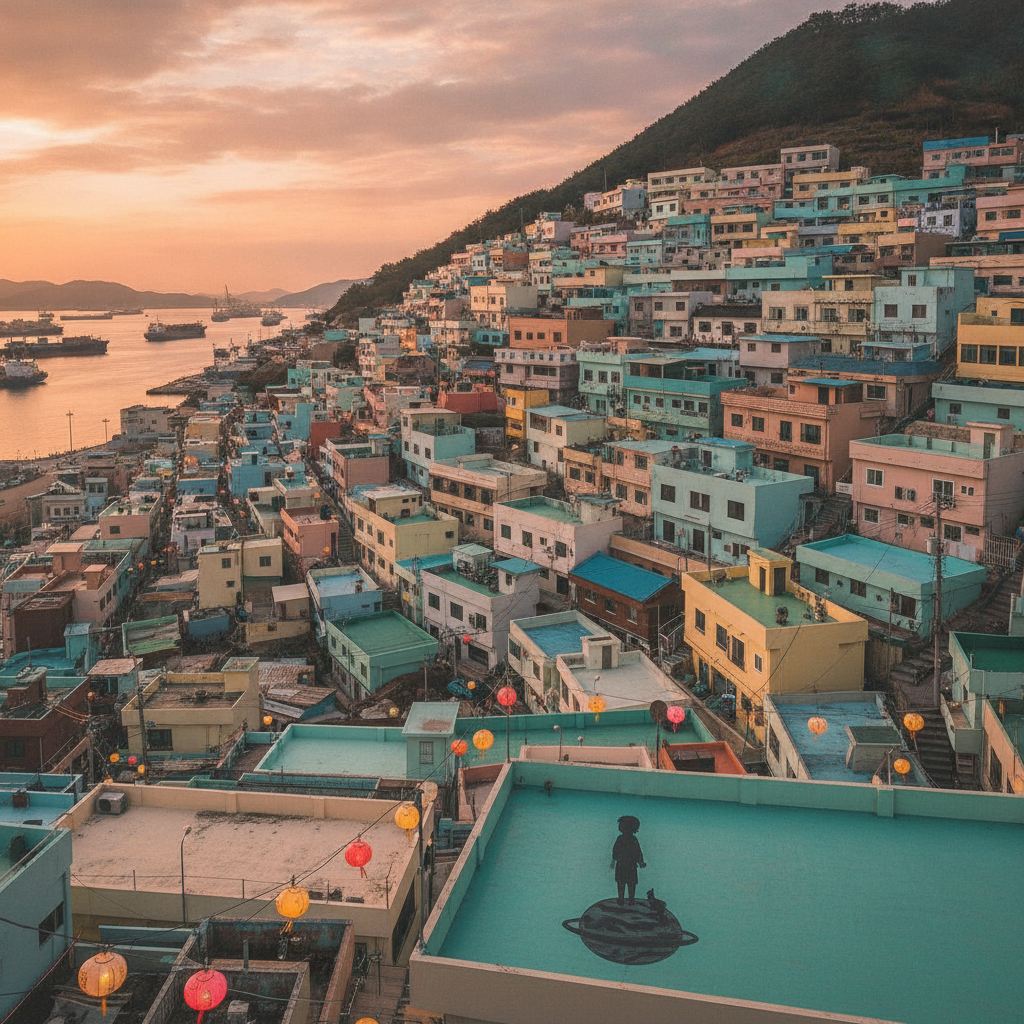
Gamcheon Culture Village (감천문화마을—the hillside neighbourhood of densely packed pastel-coloured houses climbing the steep slope of Mount Gamsil in the Saha district of western Busan): the most internationally recognized visual symbol of Busan and the most photographed single location in the city. The Gamcheon history (the village was established in the early 1950s during the Korean War (1950–1953) when Busan served as the wartime capital of South Korea and refugees from the north poured into the city, building informal housing on the steep hillsides surrounding Busan's original port): the refugee settlement origin of the stepped, colourful village gives the location its historical weight beneath the aesthetic appeal. The art revitalization project (the 2009 'Dreaming of Mach and the Little Prince' project—the first public art project that transformed Gamcheon from a declining residential area into a cultural attraction, by commissioning murals, sculptures, and art installations throughout the winding alleyways): the art project's key artworks (the Little Prince mural on the rooftop wall that became the primary photo spot; the House of Haneul installation; the Fish Stairway mural). The resident displacement concern (the gentrification pressure on the actual residents of Gamcheon—the elderly and low-income residents who have lived in the village since the 1950s have increasingly faced pressure to relocate as property values rose following the 2009 art project; the ongoing tension between cultural tourism development and the welfare of the 6,000 remaining residents). The stamp rally (the Gamcheon map and stamp rally—the self-guided trail through the village's 14 art installations, each with a rubber stamp collectible).
- 3
Jagalchi Fish Market – Korea's Largest Seafood Market
Jagalchi Market (자갈치 시장—the fish and seafood market on the Nampo-dong waterfront of downtown Busan, operating since 1945): the largest seafood market in South Korea and the most important single market in Busan's food culture. The Jagalchi layout (the market occupies a large market building (the 7-storey Jagalchi Market Building, reconstructed in 2006 after the original 1950s building was demolished) and an extensive outdoor market area along the adjacent waterfront): the indoor market (live seafood tanks covering the entire ground floor of the market building—the most varied live seafood display in Korea, with approximately 180 species of fish, shellfish, cephalopods, and crustaceans in tanks): the most visually dramatic food market in South Korea. The Jagalchi 'ajumma' (아줌마—the middle-aged women vendors who have operated the outdoor market stalls at Jagalchi for generations; the Jagalchi ajumma are the most recognized symbol of the market and the human face of Busan's merchant culture): the ajumma tradition (the female-dominated seafood vending culture at Jagalchi is a specifically Busan phenomenon traceable to the post-Korean War period when women took over the market trade while men rebuilt the fishing industry). The live seafood eating (the custom of buying live seafood from the market and taking it to the 2nd floor restaurants of the market building to be prepared—the 'hoe' (회, raw sliced fish) eating): the most direct market-to-table eating experience in Korea. The Jagalchi Festival (the annual October festival celebrating the market's culture with cooking demonstrations, fish-auction performances, and the Jagalchi ajumma parade).
- 4
Haedong Yonggungsa Temple – The Cliff-Edge Sea Temple
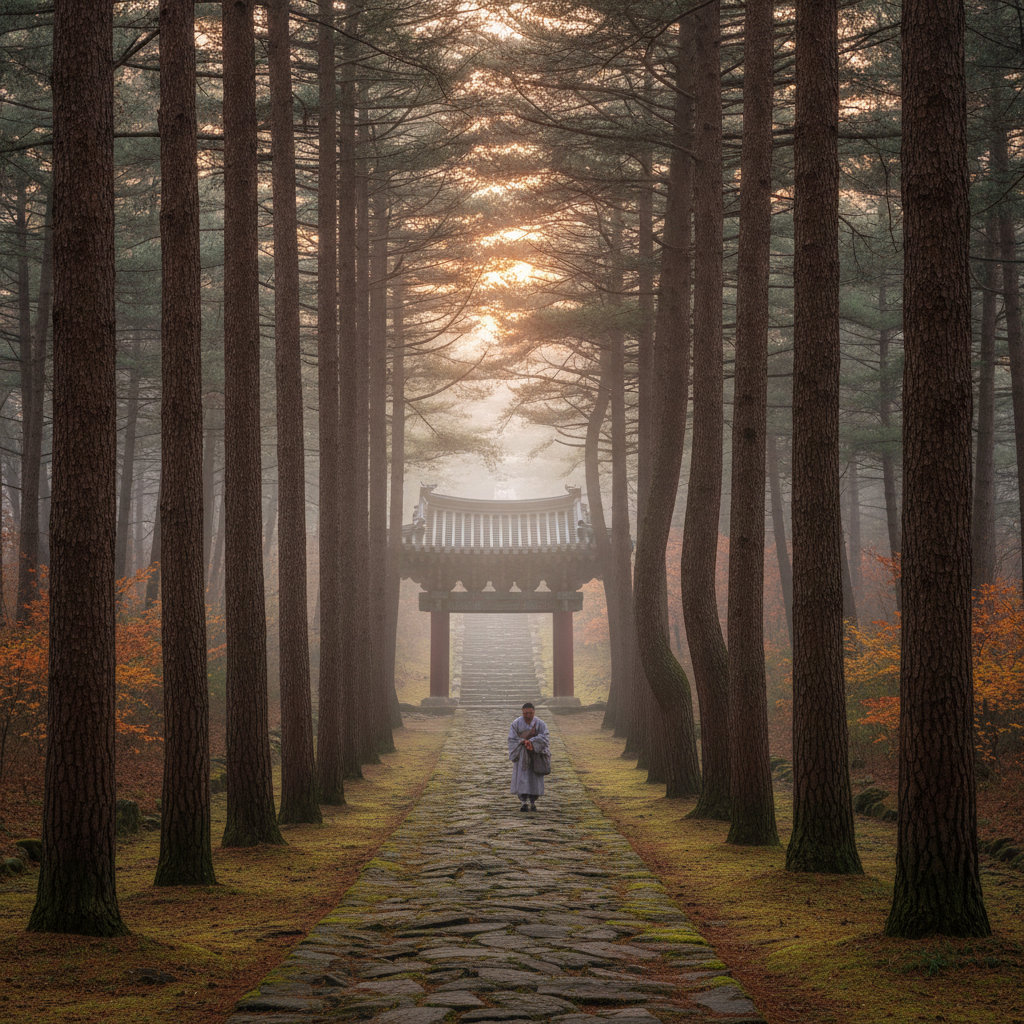
Haedong Yonggungsa (해동 용궁사—the Buddhist temple built on the rocky coastal cliff at the northeast end of Haeundae district, 10 km north of Haeundae Beach): the most dramatically sited temple in Korea and one of the most photographed Buddhist sites in the country. The Yonggungsa history (the temple was originally constructed in 1376 during the Goryeo Dynasty by the Buddhist monk Naong, who was instructed in a dream to build a temple by the sea (the traditional Korean Buddhist temple location is always inland on a mountain, making the Yonggungsa sea-cliff location a deliberate and significant exception)): the legend (the monk Naong was told that building a temple at the sea would bring protection from the three disasters (war, plague, and famine) to the Korean people). The approach (the 108-step stone stairway descending from the car park to the temple level—the 108 steps representing the 108 worldly desires in Buddhist philosophy): the descent frames the sea progressively until the full panoramic view of the temple complex (the main hall built directly over the sea on a coastal platform, surrounded by the yellow stone of the cliff face and the dark blue of the East Sea) appears at the bottom. The prayer rocks (the large smooth sea-eroded boulders on the platform below the main hall where worshippers kneel and pray facing the sea): Haedong Yonggungsa is one of the three Korean Buddhist temples where wishes are guaranteed to come true according to Korean folk belief (alongside Naksan Temple in Gangwon Province and Boriam Temple in Gyeongnam), making it the most visited wish-granting temple in Busan.
- 5
Busan's Dwaeji Gukbap & Street Food Culture
The Busan food culture (the culinary traditions of Korea's second city—a port city whose food scene is shaped by its fishing heritage, its status as the Korean War refugee capital, and its fierce regional identity distinct from Seoul): the food dimension that most directly rewards a visitor who moves beyond the standard Korean BBQ. The dwaeji gukbap (돼지국밥—pork bone broth soup with rice, the definitive Busan dish): the most important food in Busan's culinary identity—a thick, milky-white pork bone broth (the long-simmered femur and rib broth that becomes opaque from the dissolved collagen) served with thinly sliced pork, rice, kimchi, and fermented shrimp paste (saewujeot) on the side: the soup's richness is adjusted by adding the shrimp paste tableside. The dwaeji gukbap origin: the soup's Korean War refugee origin (the soup was developed in Busan's refugee settlement areas in the early 1950s using the less-desired cuts of pork that were affordable in wartime; the thick collagen-rich bone broth was the most calorie-efficient format for feeding large numbers of people quickly). The milmyeon (밀면—wheat noodle cold soup): Busan's cold noodle answer to Pyongyang naengmyeon—the wheat noodle in an icy beef broth with sliced boiled egg, cucumber, and pickled radish, invented in Busan by the North Korean refugee Choi Cheong-guk in 1952 using US military flour (wheat flour—'mil' (밀)—was donated by the US military and made the recipe possible). The Gukje Market street food (the street food alley in the Gukje Market area—the highest density of street food vendors in Busan with the most concentrated representation of Busan-specific snacks).
- 6
Getting to & Around Busan – Practical Guide
Busan's transport connections make it the most accessible major city in South Korea for international and domestic visitors after Seoul. The KTX (Korea Train Express—the high-speed rail from Seoul Station to Busan Station): the most important transport link in South Korea—2h15m from Seoul to Busan, departing every 20–30 minutes from 05:15 to 22:00; fare ₩59,800 KRW for a standard seat (approximately USD 45); the KTX serves Busan Station in the Jung-gu district (downtown Busan, 15 minutes from Jagalchi Market and 30 minutes from Haeundae by metro). The direct international flights (Gimhae International Airport—Busan's airport, 15 km west of downtown): direct flights to Tokyo Haneda (1h, 6 daily), Osaka Kansai (1h05m, 4 daily), Fukuoka (45 min, 5 daily—the shortest international flight route in South Korea), and Shanghai (1h45m); no direct flight from Busan to Beijing or Hong Kong. The Busan Metro (the subway system—4 lines and 131 stations covering the entire city from Gimhae Airport to Haeundae Beach): the single most important navigation tool in Busan (Line 2 connects Haeundae with the city center; Line 1 connects the city center with Nampo-dong and Jagalchi). The T-money card (the universal Korean transit card—purchased at any convenience store for KRW 4,000; works on metro, bus, and taxi across South Korea): the most practical payment method for urban transport. The Busan City Tour Bus (the double-decker tourist bus connecting the 12 major Busan tourist sites on a loop): the most efficient single-day overview option for a visitor with only 1 day in Busan.
Walk this route with audio
Stories play automatically as you reach each stop — no tapping needed.
More in Busan
The Largest Urban Hiking Trail Network in South Korea, the World's Largest Department Store by Floor Area & the Ssiat Hotteok Queue That Defines Busan Street Food