The Hujum Anti-Veil Campaign That Killed Over 2,000 Uzbek Women Who Unveiled in 1928-1929, the Chapan Quilted Silk Robe at USD 40-120 & the Bukharan Mud-Brick Walls Maintaining 22°C Indoors When It Is 40°C Outside
The Soviet Hujum campaign of 1927-1929 closing 300 madrasas and resulting in 2,000+ murders of unveiled women; the mud-brick mahalla walls 0.5-1.0m thick maintaining 22°C interior temperatures in 40°C summer heat; the chapan quilted ikat-silk robe at USD 40-120 as the most distinctively Uzbek garment; the Khiva Ichan-Kala population relocated to the outer city making it a heritage museum rather than a living community; the silk cocoon's single continuous thread of 1,000-1,500 meters unwound by immersion in 70-80°C water; and the Lyabi-Hauz reflection window closing by 08:30 as morning thermal breeze disrupts the water surface.
- 1
The Architecture of Mud Brick – Bukhara's Building Tradition
The mud-brick (pakhsa and guvalak) building tradition of Bukhara (the construction technique that has defined the urban landscape of the Bukharan oasis for 3,000 years): the architecture of earth. The materials (the Bukharan construction tradition uses two forms of earthen construction: pakhsa (rammed earth—compacted in formwork layers to form solid walls) and guvalak (sun-dried mud brick—the standard wall material for all vernacular construction): the baked brick (the monumental construction of Bukhara—the Kalyan Minaret, the Ismoil Samoniy Mausoleum, the trading domes—uses baked (kiln-fired) brick: the Bukharan baked brick is characterized by its small size (approximately 23cm × 11cm × 3cm), its high clay content, and its relatively low firing temperature (900–1,000°C), which produces a soft orange-buff color and adequate structural strength for monumental construction but less durability than the higher-fired Roman or Chinese brick): the earthen heritage (Bukhara's vernacular architecture—the residential mahalla neighborhoods—is built entirely in sun-dried mud brick: the walls (0.5–1.0m thick) provide excellent thermal insulation in the continental climate (summer 42°C / winter -10°C)—the thick earthen walls maintain interior temperatures of 22–25°C even when exterior temperatures reach 40°C): the restoration challenge (mud-brick heritage requires continuous maintenance—the earthen walls of Bukhara's residential monuments require re-plastering every 5–10 years to prevent moisture penetration and erosion—the UNESCO technical programs in Bukhara focus primarily on earthen heritage conservation methods).
- 2
Bukharan Textiles – From Raw Silk to the Bazaar
The textile production chain of Bukhara (the complete journey from silkworm to finished fabric in the Bukharan textile economy—the craft sequence that has defined the city's economic life for 2,000 years): the textile heritage guide. The silk production (the Bukharan silk economy: the mulberry groves in the Zerafshan oasis provide leaf for the silkworm (Bombyx mori) rearing (barama—the Uzbek silk-farming season, April–June); the cocoon collection (the silkworm spins its cocoon in 3 days using a single continuous silk thread approximately 1,000–1,500m long); the cocoon reeling (the cocoons are immersed in hot water (70–80°C) to dissolve the sericin binder that holds the filament—the reeling machine unwinds the filament from 6–8 cocoons simultaneously to produce a single reeled silk thread)): the Bukharan silk bazaar (the Tim-i Sarrafon trading dome is the historic center of the Bukharan silk trade—the current silk fabric market operates in and around the trading dome with 30–40 stalls selling ikat silk (adras—the mixed silk-cotton ikat), pure silk atlas (the shiny pure-silk variant without the ikat pattern), and chapan (the quilted silk robe that is the most distinctively Uzbek garment—the man's chapan is lined with cotton batting and covered in ikat silk, worn as both formal dress and daily wear in winter)): the price guide (the hand-woven ikat silk adras: USD 15–25/meter; the machine-woven reproduction: USD 5–8/meter; the finished chapan robe: USD 40–120 depending on quality of ikat and craftsmanship).
- 3
Families in Bukhara – The Children's Silk Road Experience
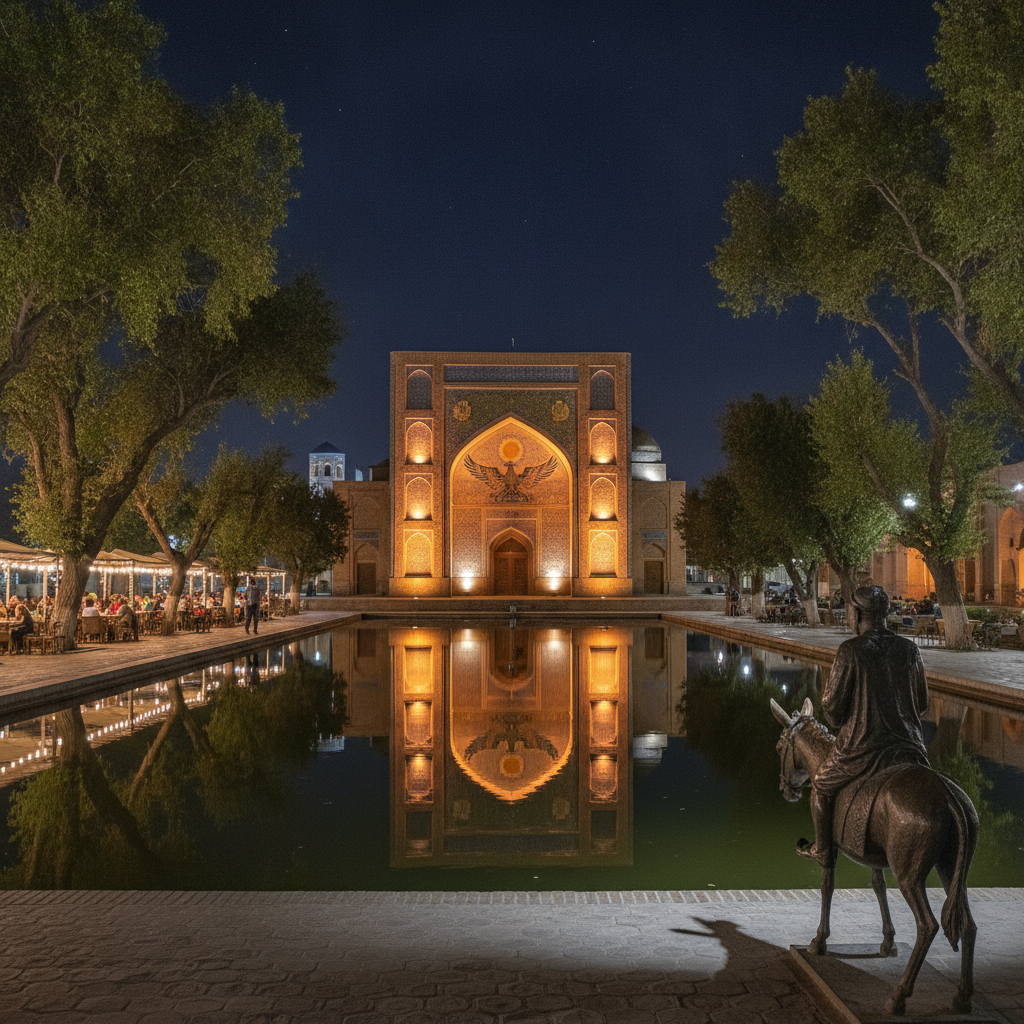
The Bukhara families guide (the practical guide for visiting Bukhara with children—the activities, monument access, and child-appropriate experiences): the families travel guide. The best monument for children (the Ark Fortress history museum—the best single indoor attraction for children with historical curiosity: the museum in the Ark covers the full 2,500-year history of Bukhara with excavated artifacts, period costumes, and the Prokudin-Gorsky photograph collection of early 20th-century Bukhara): the children's craft experiences (the pottery workshop on Kuychi Street: the Bukharan potters offer a 30-minute throw-your-own-bowl experience for children (USD 5) using the foot-kicked pottery wheel—the technique unchanged from the 12th century): the silk farming visit (the Khoja Gaukushan cooperative silk farm 6 km east of Bukhara (operational April–June and August–September): the complete silk farming demonstration—mulberry tree, living silkworms on leaves, completed cocoons, cocoon reeling—is the most sensory heritage experience available in the Bukhara region for children): the Lyabi-Hauz for families (the pool is safe and surrounded by flat paving—the Nasreddin Hodja donkey statue is at child height and generates universal enthusiasm for photographs; the outdoor restaurants welcome families until 22:00): the accommodation (the Minzifa Hotel—the best family hotel in Bukhara, converted caravanserai, 500m from the Lyabi-Hauz, children under 6 free, shared courtyard with mulberry tree shade, USD 50–70/night for a family room).
- 4
Bukhara vs Khiva – The Desert City Comparison
The Bukhara vs Khiva comparison (the two most remote Silk Road cities of Uzbekistan—the practical and cultural guide for choosing between them or combining both): the comparison handbook. The architecture comparison (Bukhara: 300+ surviving monuments spanning 9th–19th century; the monuments are dispersed across a living city with residential and commercial life between them—the most historically layered experience in Uzbekistan; Khiva: 50 monuments concentrated within the 650 × 400m Ichan-Kala walled city—the most visually coherent single heritage site in Uzbekistan, where every building visible within the walls is historic): the authenticity vs coherence trade-off (Bukhara has more authentic vernacular urban life integrated with heritage—the mahalla neighborhoods adjacent to the trading domes are genuinely inhabited by Bukharan families; Khiva's Ichan-Kala is 70% tourist infrastructure inside the walls—the population was largely relocated to the outer city (Dichan-Kala) during Soviet-era preservation, leaving the walled city as a heritage museum rather than a living community): the tourism density (Bukhara receives approximately 800,000 tourists annually (2023); Khiva approximately 400,000—both substantially fewer tourists than Samarkand (2.3 million)—both cities feel uncrowded by global heritage tourism standards): the practical comparison (Bukhara: 5h30m from Tashkent by train—remote but accessible; Khiva: requires additional 5h from Bukhara by shared taxi or flight from Urgench—the most difficult destination in the main Uzbek circuit): the verdict (the ideal sequence: 2 nights Bukhara + 1 night Khiva with the overnight bus (the night taxi from Bukhara arrives in Urgench at dawn, allowing a full day in Khiva).
- 5
Soviet Bukhara – The Transformation of the Holy City
The Soviet transformation of Bukhara (the radical political and urban change that followed the Red Army conquest of September 1920—the conversion of the medieval Islamic holy city into a Soviet industrial city): the Soviet history guide. The Bukharan People's Soviet Republic (established September 8, 1920 after the Red Army bombardment of the Ark—the BPSR was a nominally independent Soviet client state that lasted until 1924 when it was absorbed into the Uzbek SSR during the Soviet nationality delimitation): the anti-religious campaign (the Soviet anti-religious campaign (Hujum—the Uzbek word for 'attack'—launched 1927) targeted: the madrasas (closed in 1928–1929—Bukhara's 300 madrasas were converted to warehouses, textile factories, and housing); the mosques (360 mosques reduced to 5 functioning mosques by 1935); the Islamic courts (qazi courts abolished 1927—the waqf (Islamic endowment) system that funded the madrasas and mosques was confiscated by the state)): the women's liberation campaign (the Hujum specifically targeted the practice of veiling (the paranja—the Bukharan full-body veil covering even the face with a horsehair mesh screen): women were publicly encouraged to remove the paranja at mass meetings—the women who unveiled early faced violent retaliation from traditionalist families (over 2,000 unveiled women were murdered in the Uzbek SSR in 1928–1929)): the Soviet urban development (the Soviet period added the New City (Yangi Shahar) to the west of the old city—a planned grid of wide streets, a park, and Soviet residential blocks that contrast sharply with the organic medieval street plan of the historic center).
- 6
Photography in Bukhara – The Golden Hour Guide
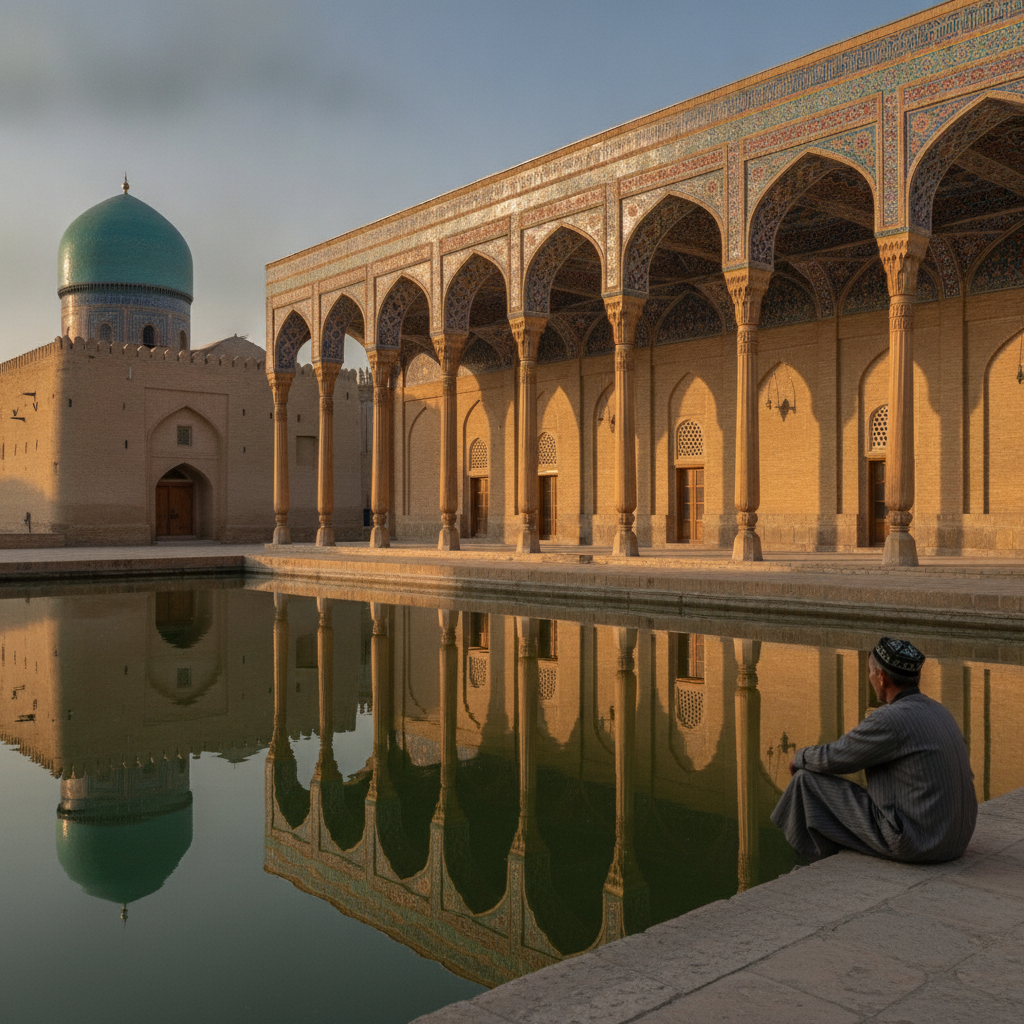
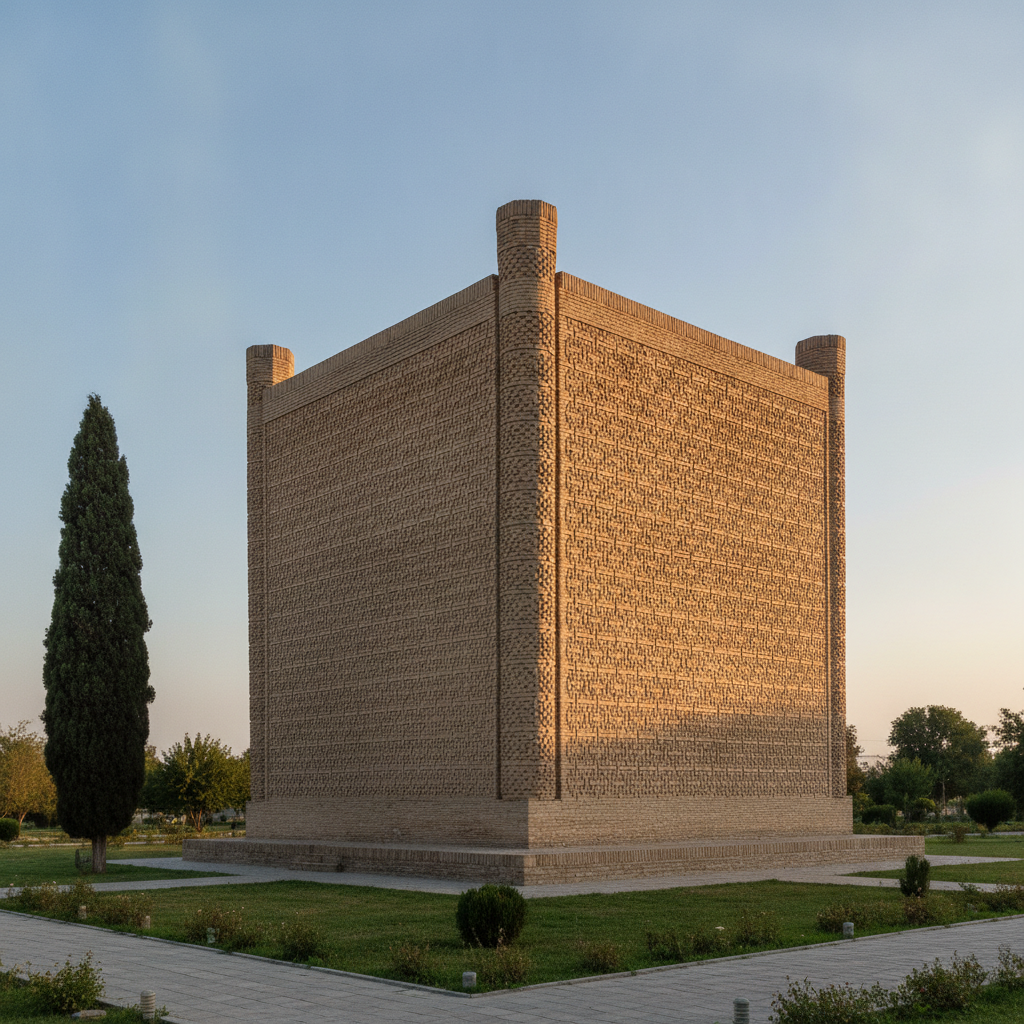
The Bukhara photography guide (the practical guide to photographing the most photogenic heritage city in Central Asia): the photographer's handbook. The dawn at the Poi-Kalyan (the Poi-Kalyan ensemble at dawn (05:30–07:00 in summer)—the Kalyan Minaret catches the first horizontal light while the surrounding city is still in shadow, creating a pure graphic of the tower against the pale sky: the Mir-i-Arab Madrasa twin domes turn gold in the first direct light at approximately 06:00 in June—photograph from the Kalyan Mosque roof (access via the mosque caretaker, USD 5) for the elevated view): the Lyabi-Hauz reflection (the Lyabi-Hauz pool reflection of the Nadir Divan-Beghi Madrasa: the wind disrupts the reflection from approximately 09:00 as the morning thermal breeze develops—the calm reflection window is 06:00–08:30, when the water is perfectly still and the low-angle morning light illuminates the madrasa facade): the Ismoil Samoniy brickwork (the 9th-century mausoleum—the brickwork's shadow patterns change dramatically with sun angle: the most revealing light is the 45-degree angle of the morning (09:00–10:00) when the complex basketweave pattern creates maximum contrast): the Chor Minor towers (the Chor Minor four-tower gatehouse—photograph from the east: the morning light illuminates the turquoise dome caps of all four towers simultaneously from 08:00–10:00; the narrow street in front requires a 35mm or wider lens): the human element (Bukhara's authentic street life is found in the lanes between the Lyabi-Hauz and the Toki Zargaron dome early morning (07:00–09:00) when residents shop at the local bread stalls before tourist activity begins).
Walk this route with audio
Stories play automatically as you reach each stop — no tapping needed.
More in Bukhara
The Bug Pit Beneath the Ark Where Scorpions and Ticks Were Bred on Human Corpses, Omar Khayyam's Solar Year Calculation More Accurate Than the Gregorian Calendar & the Bukharan Merchant Quarter Built in Jerusalem in 1891
The Zoroastrian Magi From Bukhara as the Most Likely Origin of the Biblical Three Wise Men, the Guinea Worm That Grew 1 Meter Inside Bukharans Who Drank From the Hauz Pools & the Chapan Robe Gift That Encodes Uzbek Social Hierarchy
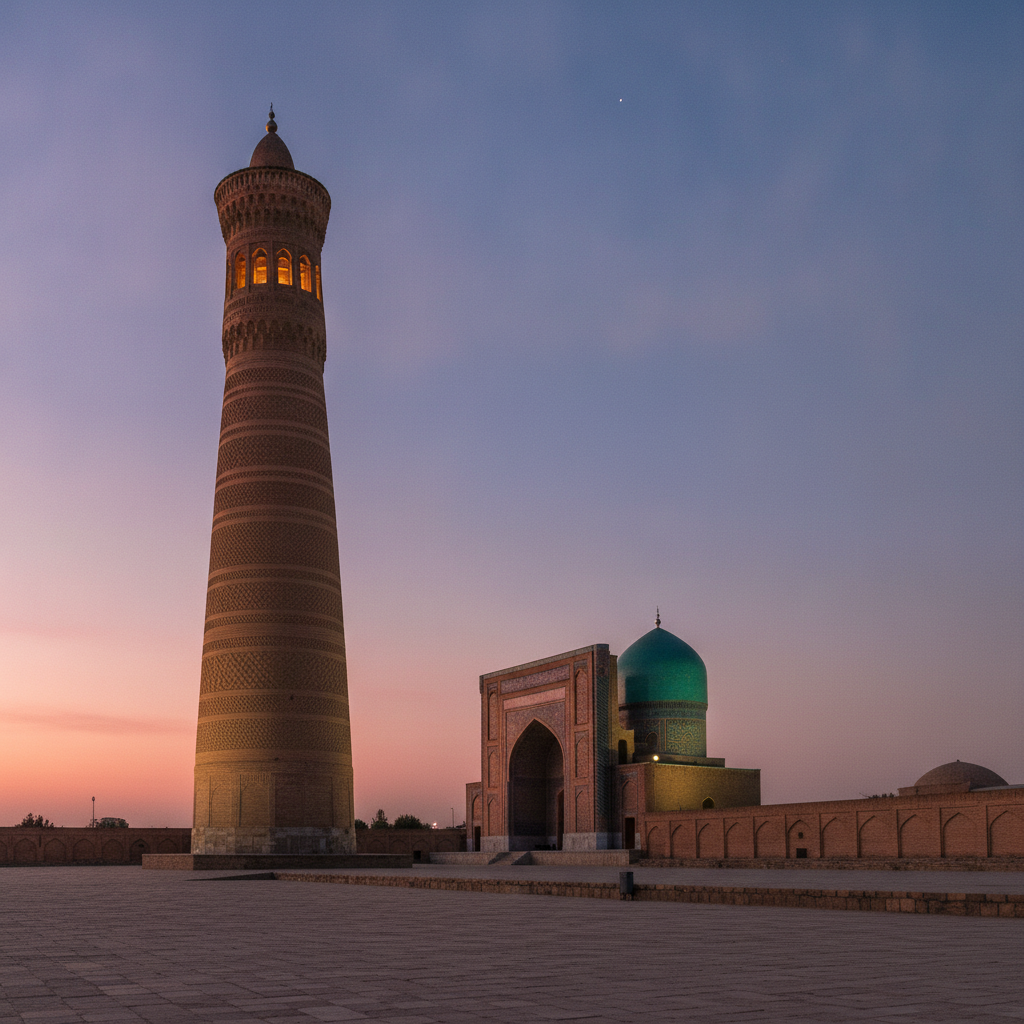
The 1127 Minaret Chinggis Khan Supposedly Spared Out of Admiration While Razing the Rest of Bukhara, the Ismoil Samoniy Mausoleum That Survived the Mongol Sack Because It Was Buried Under 300 Years of Street Sediment & the British Officers Executed in the Ark Fortress Square in 1842
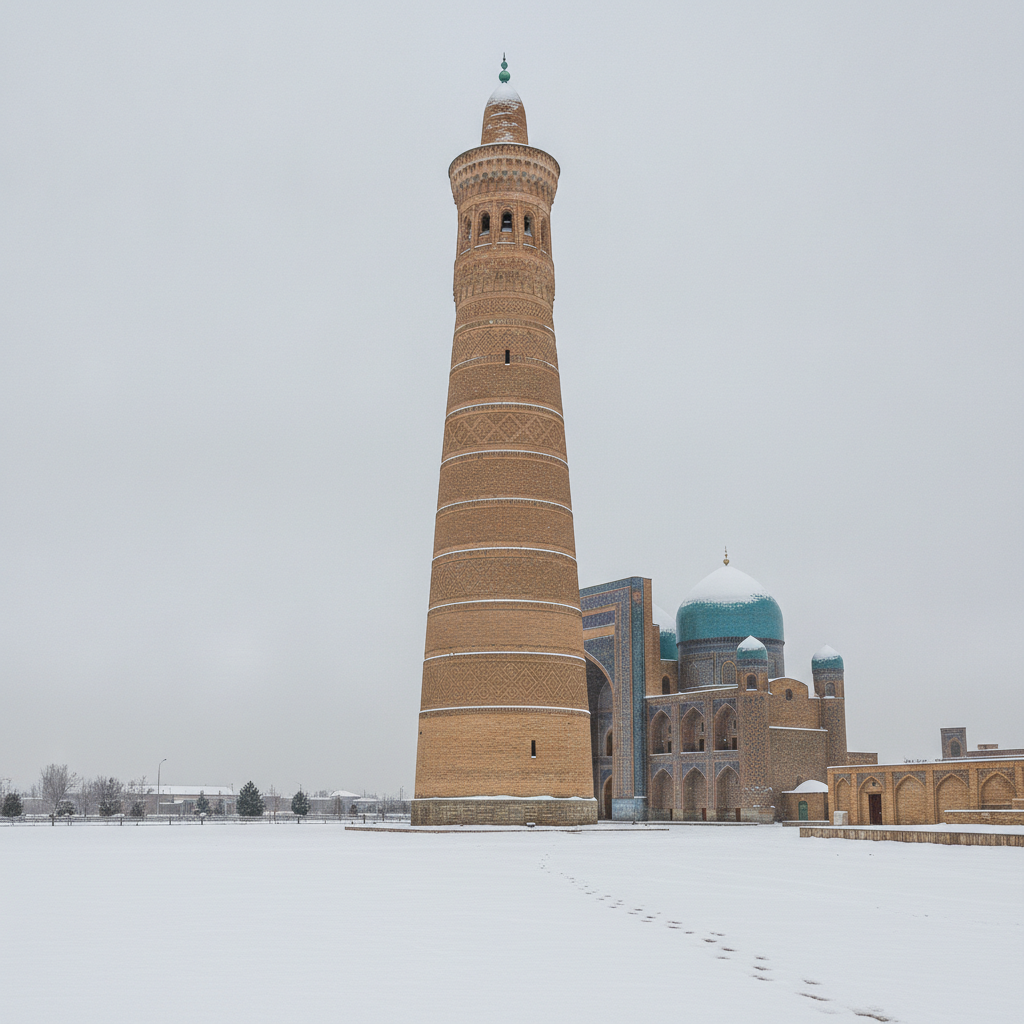
Al-Bukhari Born in Bukhara Compiled the Second Most Authoritative Text in Sunni Islam After the Quran, the Kalyan Minaret Voice Carrying 1.2km at 47m Height to Reach Every Corner of Medieval Bukhara & the Bukharan Suzani Mirror-Image Reverse Test