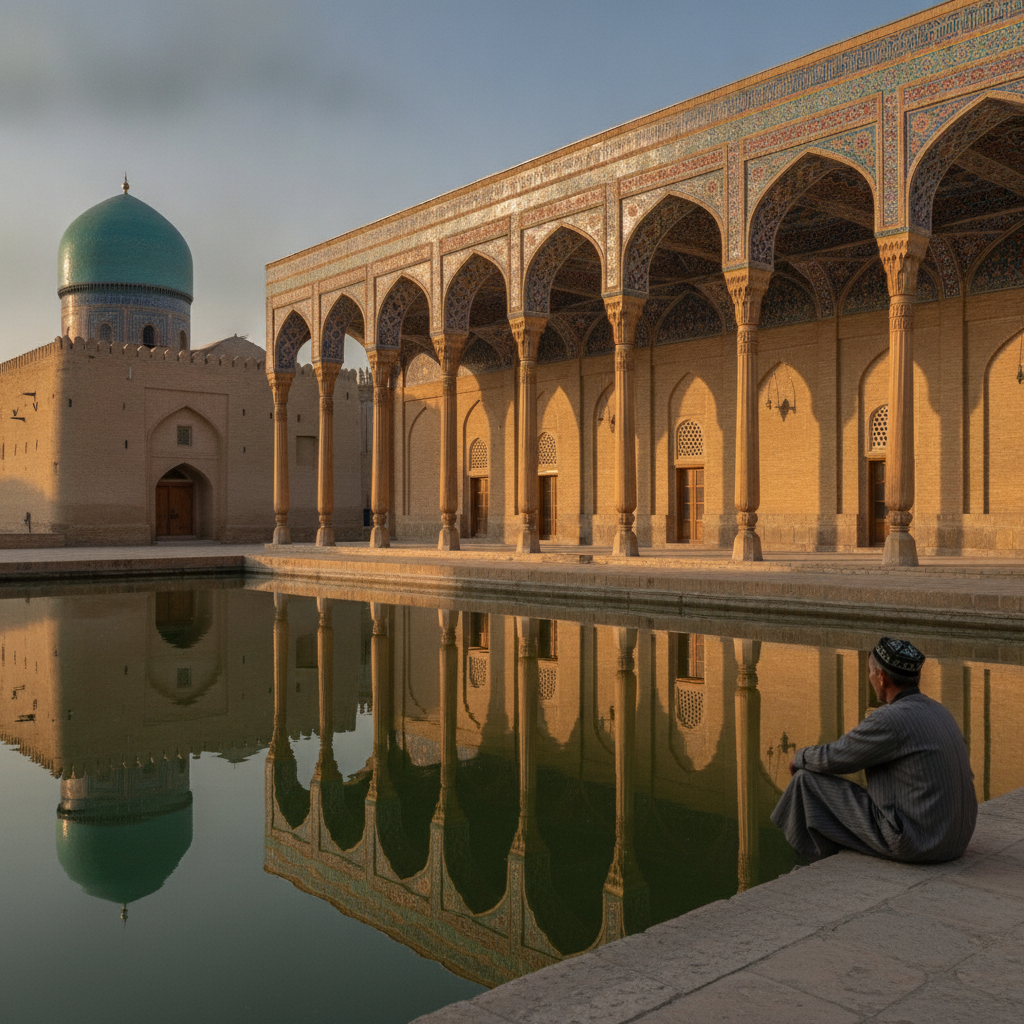
Al-Bukhari Born in Bukhara Compiled the Second Most Authoritative Text in Sunni Islam After the Quran, the Kalyan Minaret Voice Carrying 1.2km at 47m Height to Reach Every Corner of Medieval Bukhara & the Bukharan Suzani Mirror-Image Reverse Test
Al-Bukhari (810-870 CE) from Bukhara compiling the Sahih al-Bukhari, the second most authoritative text in Sunni Islam after the Quran; the Kalyan Minaret muezzin's unamplified voice carrying 1.2km from 47m height to cover the entire medieval city; the Bukharan suzani authentication by mirror-image reverse (chain-stitch shows exact mirror; machine shows messy trailing threads); winter Bukhara at 10% of summer tourist density with 30-50% lower prices and possible snow photography; the Samanid poet Rudaki's 100,000-verse divan surviving only in fragments; and the Bukhara Design Center bridging ikat silk into contemporary fashion since 2018.
- 1
The Silk Road Oasis – What Bukhara Looked Like in 1000 CE
The historical reconstruction of medieval Bukhara at its peak (the physical appearance and daily life of the Samanid capital at the height of its power in the 10th century CE): the historical imagination guide. The city extent (Bukhara at its 10th-century Samanid peak occupied approximately 35 km² within its outer defensive walls—a city of approximately 400,000 inhabitants (one of the 5 largest cities in the Islamic world): the city structure (the medieval Bukharan city was organized as three concentric zones: the Ark (the royal citadel); the Shahristan (the inner city within the primary wall—containing the palace district, the cathedral mosque, the central bazaar, and the residential mahallas of the elite); and the Rabad (the outer suburb between the inner wall and the outer defensive wall—containing the commercial caravanserais, the crafts workshops, and the gardens)): the bazaar system (the medieval Bukharan bazaar was organized by craft guild (the karshis)—each craft had its own dedicated bazaar street: the blacksmiths (temirchilar), the saddlers (egar-tuzilar), the dyers (rangrezlar), the booksellers (kitobfurushlar)—the book market of Samanid Bukhara was one of the largest in the Islamic world, with Ibn Sina reporting finding books in the royal library that he had never encountered elsewhere): the water supply (the hauz cistern system, the ariq canal network from the Zarafshan, and the underground karez (qanat) system provided water to every neighborhood: the city consumed approximately 2 million liters of water daily): the night (the medieval Bukhara nightwatch (shab-khun-chi) patrol enforced a curfew after the third prayer call (isha)—the city was entirely dark after curfew except for the moon and the fire temples).
- 2
The Minaret as Landmark – Islamic Verticality in Architecture
The minaret tradition of Bukhara and Central Asia (the architectural history of the tower—the most distinctive vertical element in the Islamic urban skyline—and its specific development in the Uzbek tradition): the architecture guide. The function (the minaret (Arabic: manara—'lighthouse' or 'place of fire'—from nar, 'fire')—the tower from which the muezzin (the prayer caller) delivers the adhan (the Islamic call to prayer) five times daily: the 47m height of the Kalyan Minaret was functional as well as symbolic—the muezzin's voice needed to carry across the medieval city of Bukhara (approximately 35 km²)—the elevated position multiplied the carrying distance of the unamplified human voice): the architectural evolution (the earliest minarets were square-plan towers derived from the Syrian Christian bell tower tradition; the cylindrical minaret form was developed in the 9th–10th century in the Abbasid caliphate and reached its highest refinement in the Qarakhanid Kalyan Minaret (1127 CE)—the 14 ornamental brickwork registers and the muqarnas gallery bracket at the summit represent the apex of the Central Asian cylindrical minaret tradition): the other Bukharan minarets (the Vabkent Minaret (1196 CE—11 km north of Bukhara, the second-tallest pre-Mongol minaret in Uzbekistan at 39m, built by the same Qarakhanid dynasty); the Islam Khodja Minaret in Khiva (57m—the tallest minaret in Uzbekistan, 1910 CE)): the sound physics (the human voice carries approximately 1.2 km at the 47m elevation of the Kalyan Minaret in still conditions—sufficient to reach the furthest neighborhood of medieval Bukhara).
- 3
The Great Bukharan Scholars – A City of Intellectual Giants
The intellectual history of Bukhara (the city that produced the highest concentration of major Islamic scholars of any city in Central Asian history): the scholars guide. The Samanid intellectual golden age (the 9th–10th century Samanid court of Bukhara supported the most active intellectual community in the Islamic world outside Baghdad—the Persian literary renaissance (the Samanid poets Rudaki (858–941 CE—the first major Persian-language poet, born in Panjikent near Samarkand; his divan of 100,000 verses survives only in fragments) and Daqiqi (died 976 CE—the first poet to begin the Shahnameh)): the scholars (al-Bukhari (810–870 CE)—born in Bukhara (hence the name)—the compiler of the Sahih al-Bukhari, the most authoritative collection of Hadith (the Prophet Muhammad's sayings and actions) in Sunni Islam—the Sahih al-Bukhari is the second most authoritative text in Sunni Islam after the Quran; Ibn Sina (980–1037 CE)—born near Bukhara, educated in Bukhara—the most influential physician in world history (see Route 2); Omar Khayyam (1048–1131 CE)—visited Bukhara during his education—the mathematician who calculated the most accurate pre-modern solar year): the al-Bukhari Shrine (the mausoleum of Muhammad al-Bukhari in the village of Hartang 25 km north of Samarkand (not in Bukhara itself)—one of the most important pilgrimage sites in the Sunni Islamic world, receiving approximately 1 million visitors annually).
- 4
The Suzani Trail – Collecting in Bukhara
The Bukharan suzani collecting guide (the practical handbook for finding genuine antique and quality contemporary suzani embroidery in Bukhara—the city with the most accessible suzani market in Uzbekistan): the collector's guide. The Bukharan suzani distinctive features (the Bukharan suzani: smaller than the Samarkand variety (150cm × 200cm vs Samarkand's 180cm × 240cm); denser embroidery coverage (the Bukharan style aims for approximately 80% ground coverage with embroidery, leaving less of the base fabric visible); primary motifs: the rosette-and-vine composition (pechak islimi—the 'vine and creeper' pattern) and the carnation (karanfil) motif; primary palette: the red-and-gold combination on cream ground for festive pieces, the blue-and-white on cream for daily use): the market locations (the best suzani shopping in Bukhara: the Toki Telpak Furushon trading dome (the cap-sellers dome—now a craft and suzani market); the Lyabi-Hauz antique shops (the three antique dealers adjacent to the pool—the most concentrated antique suzani selection in Bukhara); the Sunday antique market on Navbahor Street (07:00–10:00—the local antique market where Bukharan families sell inherited household goods, including occasional genuine antique suzani at below-market prices)): the authentication (the Bukharan additional test: the reverse side of an authentic hand-embroidered Bukharan suzani shows the exact mirror image of the front side (because the chain-stitch goes through the fabric)—a machine-embroidered reproduction shows a messy reverse with trailing threads).
- 5
Bukhara in Winter – The Offseason Advantage
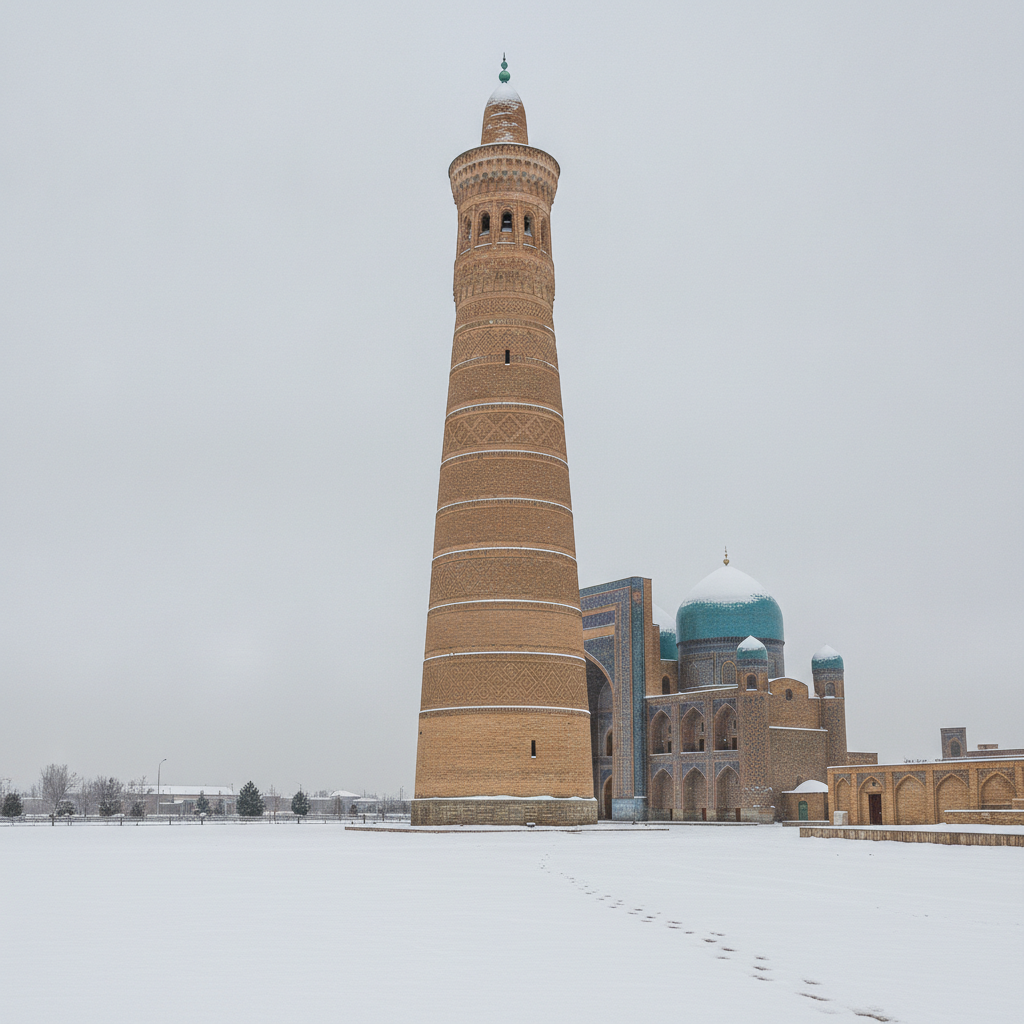
The Bukhara winter travel guide (the case for visiting the most overlooked seasonal window—December through February—when Bukhara is crowd-free, temperatures are cold but manageable, and the monuments are at their most atmospheric): the winter guide. The winter conditions (the Bukharan winter: December–February temperatures average -2°C to +8°C (daily range), with occasional light snowfall (5–10 cm) that covers the mud-brick walls and the earthen streets with a white layer that transforms the city into a scene from medieval Persian miniature painting—the snow typically lasts 1–3 days before melting; January is the coldest month (overnight lows -10°C) but the average daytime is +3–5°C—entirely manageable with a warm coat): the crowd advantage (Bukhara winter tourist numbers are approximately 10% of the summer peak—the Lyabi-Hauz restaurants may be closed (November–March) and some guesthouses close for the season, but the core hotels remain open and prices drop 30–50%): the snow photography (the Kalyan Minaret with a light dusting of snow on the 14 ornamental brick bands is one of the most photographically distinctive views in Central Asia—the contrast between the warm orange-buff brick and the white snow is particularly strong): the winter food (Bukharan winter food: the shurpa (the hearty lamb-and-root-vegetable soup sold at the bazaar chaikhanas from October to March); the naryn (the cold noodle dish made from horse meat and homemade noodles—served cold despite the winter temperature, following the nomadic tradition): the Navruz arrival (the winter visitor in Bukhara can observe the pre-Navruz preparations from mid-February—the sumalak wheat sprouting (the wheat for the Navruz sumalak paste is sprouted 40 days before the March 21 festival).
- 6
Bukhara's Contemporary Art Scene – Old City New Voices
The contemporary art and creative scene in Bukhara (the emerging contemporary culture operating within and alongside the heritage tourism economy): the contemporary culture guide. The Bukharan Ark Arts Festival (the annual contemporary arts festival held within the Ark Fortress complex (September)—the most significant contemporary arts event in Uzbekistan outside Tashkent: the festival features Central Asian and international contemporary artists producing site-specific installations within the historic fortress walls—the contrast between the 1,500-year-old mud-brick walls and contemporary video and installation art is the curatorial premise): the artisan-designer collaboration (the emerging generation of Uzbek fashion designers working with Bukharan textile traditions: the Bukhara Design Center (BDC)—established 2018 with European Union creative economy funding—supports Uzbek designers who incorporate ikat silk, suzani embroidery, and Bukharan woodcarving motifs into contemporary fashion, product design, and interior design—the BDC showroom on Navbahor Street exhibits and sells designer pieces that bridge the traditional and contemporary): the photography gallery (the Bukhara Photography Gallery on Istiklol Street (opened 2021)—the permanent collection includes Prokudin-Gorsky's color photographs of the Bukharan Emirate (1911) alongside contemporary Uzbek documentary photography): the music scene (the Lyabi-Hauz summer concert series (May–September)—Shashmaqam performances, dutar recitals, and occasional jazz fusion events incorporating Uzbek traditional instruments): the guesthouse art (many of Bukhara's boutique guesthouses display rotating exhibitions by local painters—the Rumi Hotel art collection is the largest and most consistently curated).
Walk this route with audio
Stories play automatically as you reach each stop — no tapping needed.
More in Bukhara
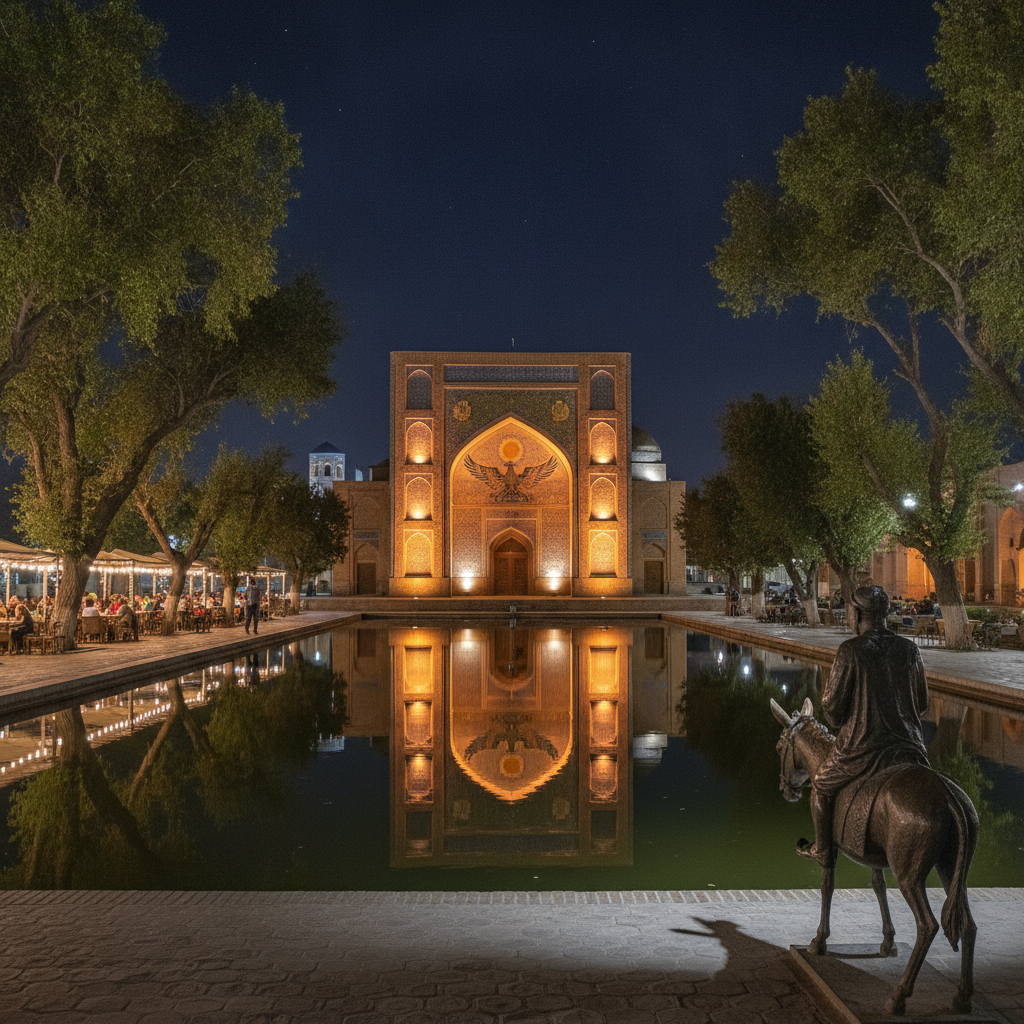
The Bug Pit Beneath the Ark Where Scorpions and Ticks Were Bred on Human Corpses, Omar Khayyam's Solar Year Calculation More Accurate Than the Gregorian Calendar & the Bukharan Merchant Quarter Built in Jerusalem in 1891
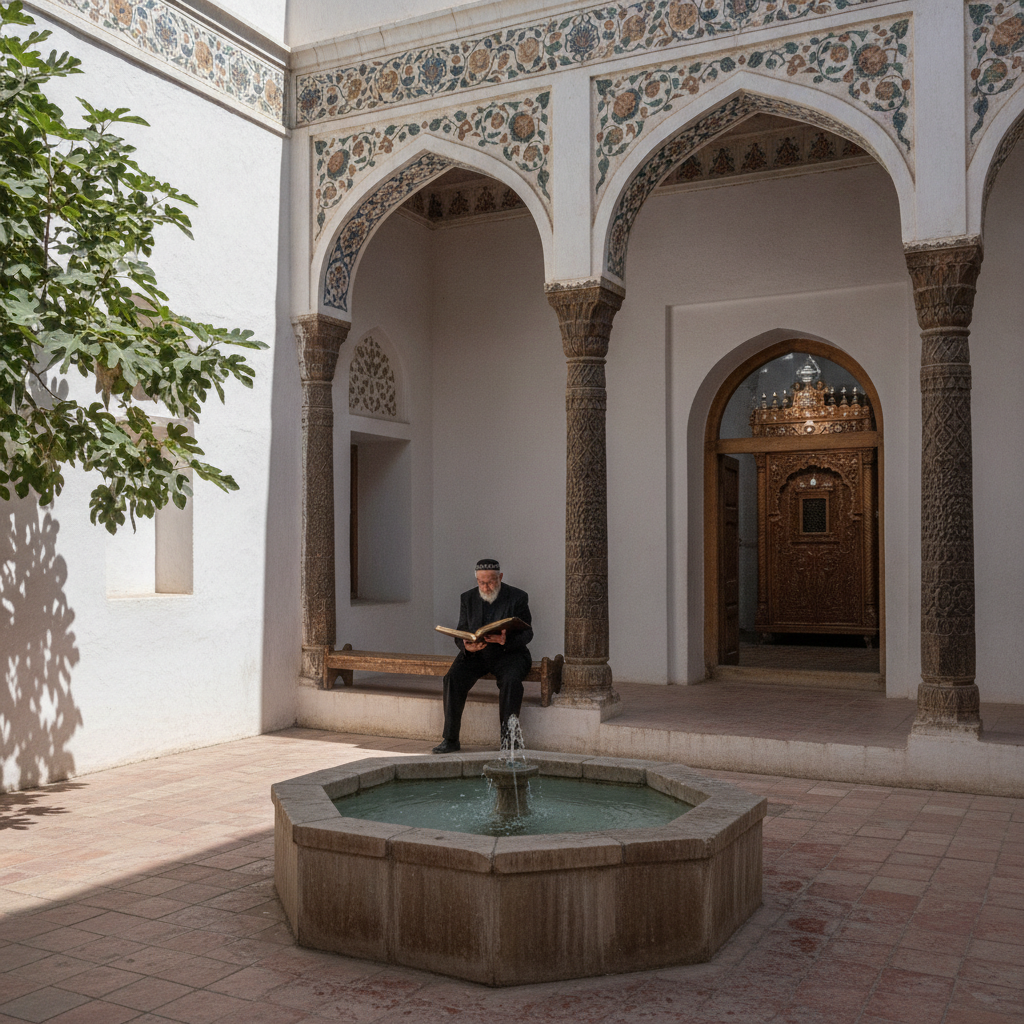
The Zoroastrian Magi From Bukhara as the Most Likely Origin of the Biblical Three Wise Men, the Guinea Worm That Grew 1 Meter Inside Bukharans Who Drank From the Hauz Pools & the Chapan Robe Gift That Encodes Uzbek Social Hierarchy
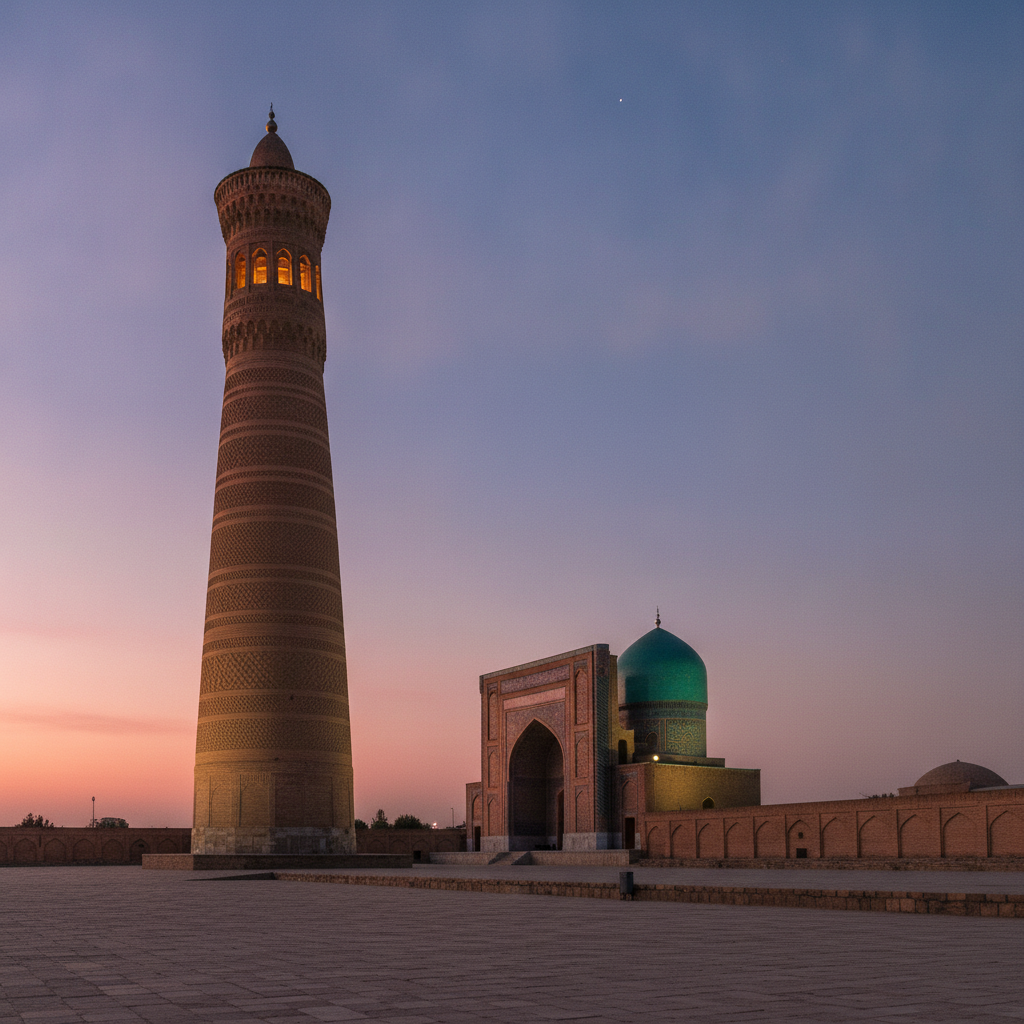
The 1127 Minaret Chinggis Khan Supposedly Spared Out of Admiration While Razing the Rest of Bukhara, the Ismoil Samoniy Mausoleum That Survived the Mongol Sack Because It Was Buried Under 300 Years of Street Sediment & the British Officers Executed in the Ark Fortress Square in 1842
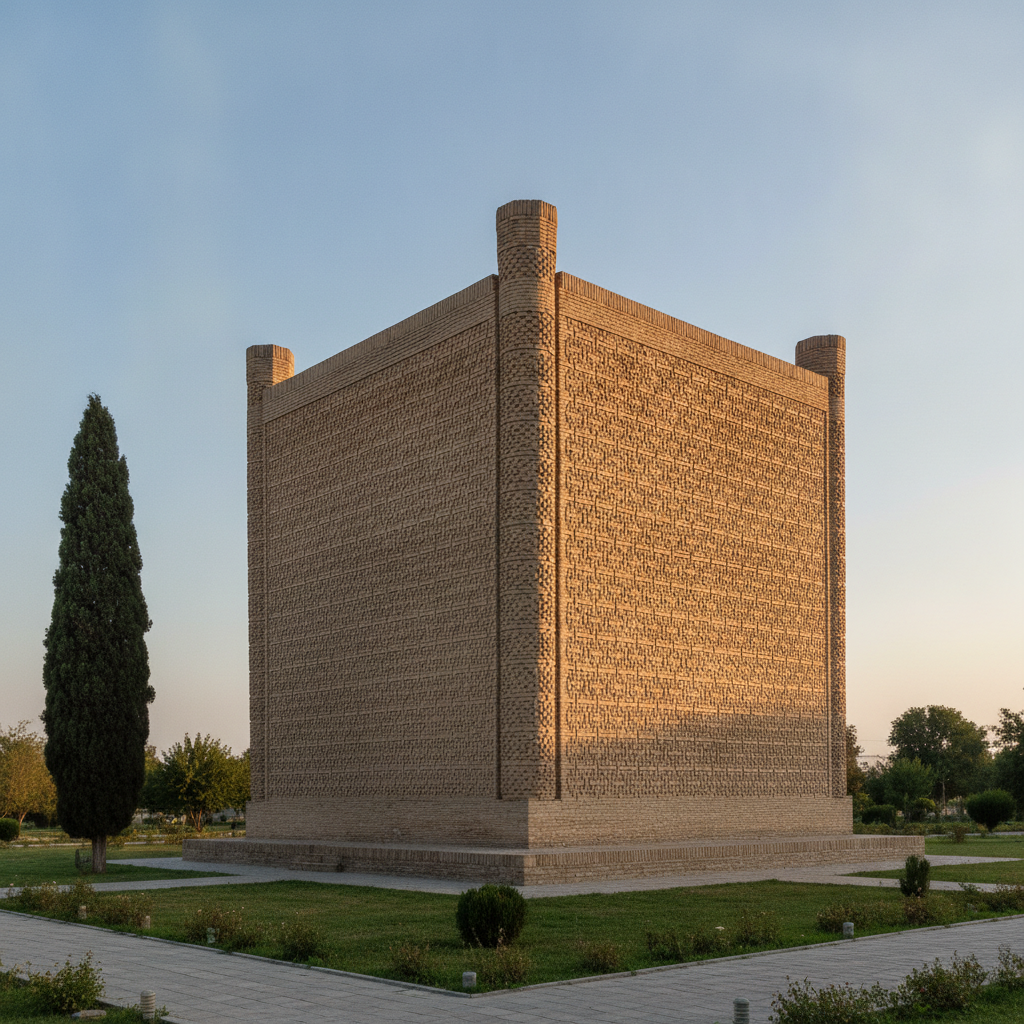
The Hujum Anti-Veil Campaign That Killed Over 2,000 Uzbek Women Who Unveiled in 1928-1929, the Chapan Quilted Silk Robe at USD 40-120 & the Bukharan Mud-Brick Walls Maintaining 22°C Indoors When It Is 40°C Outside