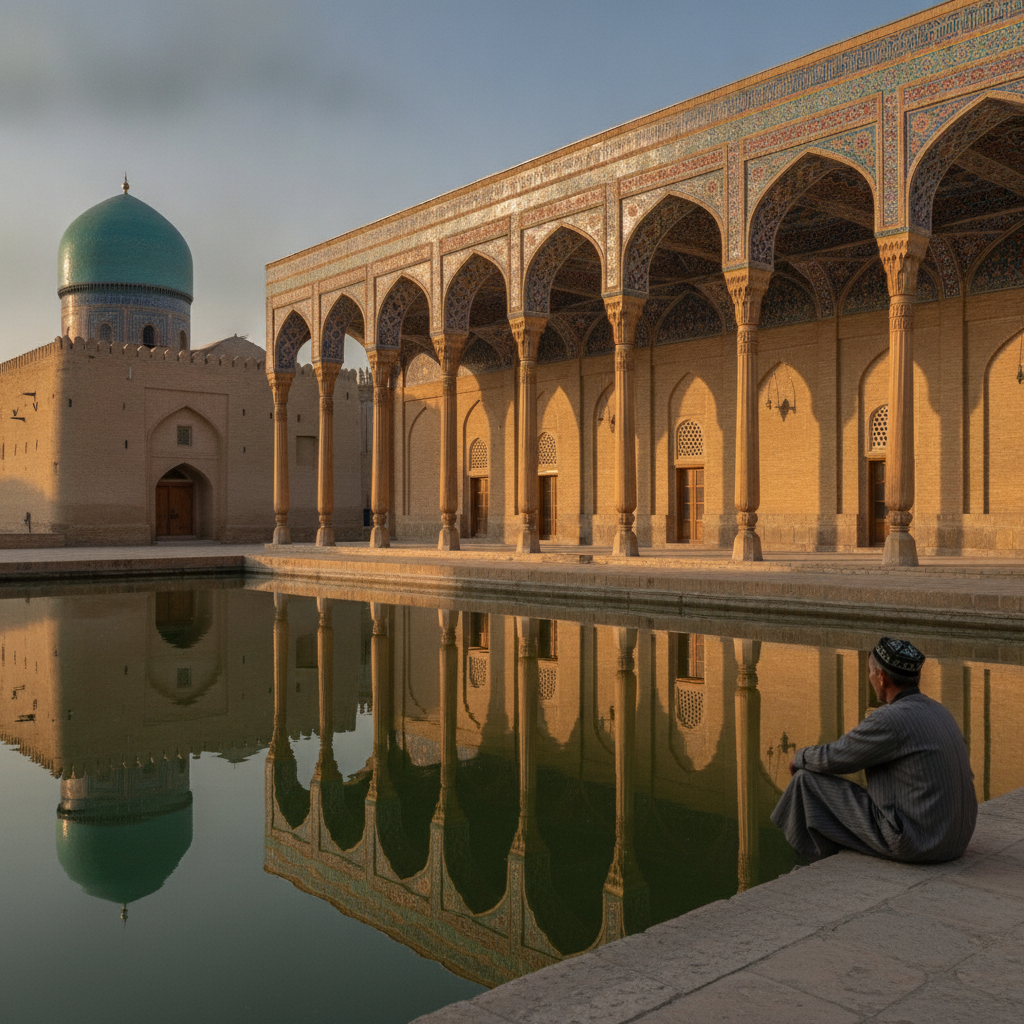
The Zoroastrian Magi From Bukhara as the Most Likely Origin of the Biblical Three Wise Men, the Guinea Worm That Grew 1 Meter Inside Bukharans Who Drank From the Hauz Pools & the Chapan Robe Gift That Encodes Uzbek Social Hierarchy
The Sogdian Zoroastrian Magi from near Bukhara as the most accepted origin of the Biblical Magi who followed the star; guinea worms growing to 1m inside Bukharans who drank from the stagnant hauz cisterns until Soviet piped water in the 1920s; the chapan quality encoding the social status of the recipient in Uzbek gift culture; the 200 Bukharan hauz pools reduced to 1 surviving (Lyabi-Hauz) by Soviet urban redevelopment; the Jewish silk dyers guild being historically almost entirely Jewish in Bukhara; and the complete 7-8 day Uzbekistan Silk Road circuit achievable for USD 190-360 total transport and accommodation.
- 1
Bukharan Jewish Heritage – The Oldest Community
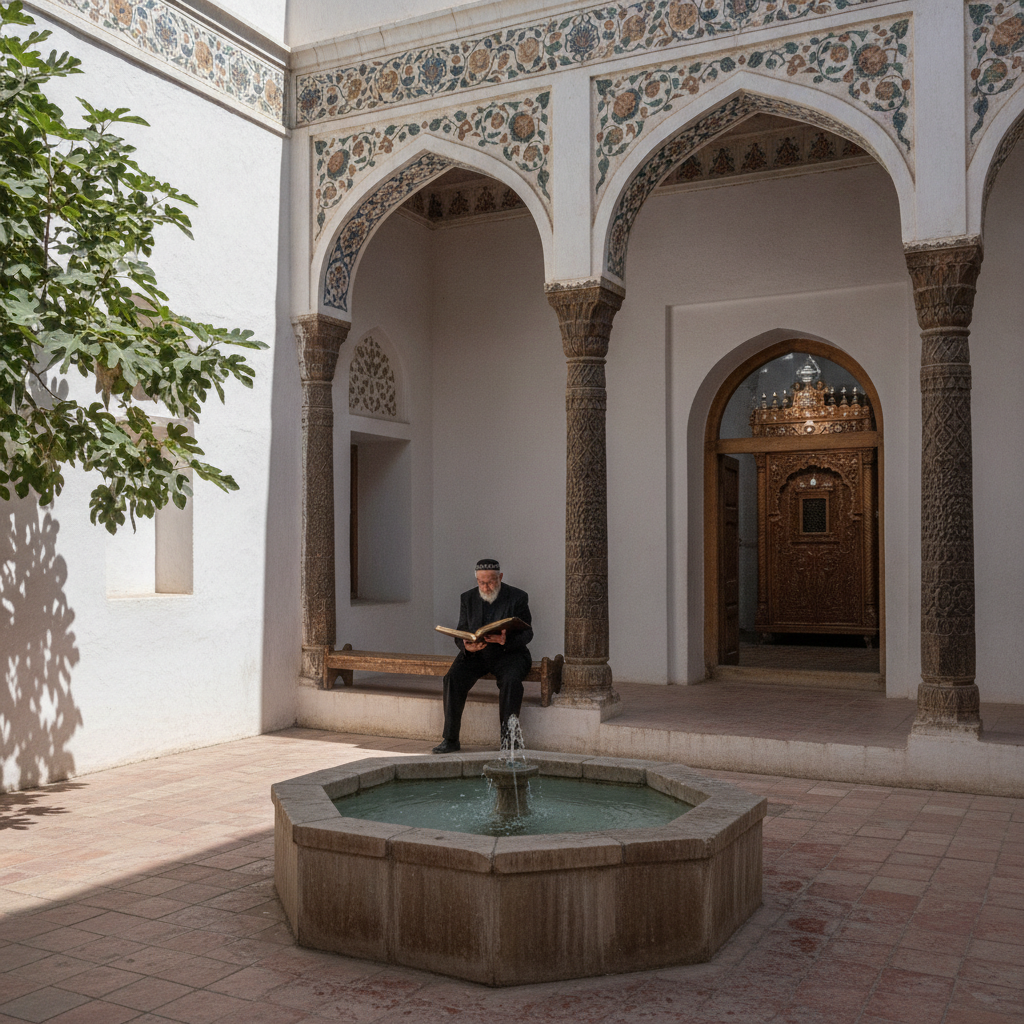
The Bukharan Jewish community of Bukhara (the ancient community that maintained a continuous Jewish presence in the city from at least the 5th century CE until the post-Soviet emigration): the heritage guide. The origin (the Bukharan Jews are believed to be descended from Persian Jewish communities that followed the Achaemenid trade routes into Sogdia—the earliest documentary evidence of Jewish presence in Bukhara is a Jewish cemetery inscription dated 5th century CE; the community may be significantly older): the medieval community (the Bukharan Jewish community maintained a separate mahalla (the Mahalla-i Yahudiyyon—the Jewish Quarter, in the northwestern district of the old city) with its own synagogues, schools, and communal life: the Bukharan Jews were the primary dyers and silk textile traders in the Bukharan economy—the guild of silk dyers (the rangrez craft guild) was historically almost entirely Jewish in Bukhara): the peak and emigration (the Bukharan Jewish community of Bukhara city reached approximately 15,000 members at its Soviet-period peak (1960s)—emigration to Israel and the United States accelerated after 1991; the current Bukharan Jewish population in Bukhara is approximately 150–200 individuals (2024)): the surviving heritage (the Bukharan synagogue complex in the Jewish Quarter (2 surviving synagogues in adjacent courtyard buildings): the Mullah Khuja Synagogue (the older of the two, 18th century, with a carved wooden Torah ark) and the Gumbaz Synagogue (rebuilt 19th century): both are still operational for the small remaining community).
- 2
The Zoroastrian Legacy of Bukhara – Fire Temples to Islam
The pre-Islamic Zoroastrian heritage of Bukhara (the religious culture that preceded Islam and whose traces remain embedded in the Uzbek cultural calendar): the heritage guide. The Zoroastrian period (Bukhara (Bumijkath/Nuparkath) was a Zoroastrian Sogdian city from at least the 4th century BCE until the Arab conquest of 709 CE: the primary sacred site was the fire temple on the Ark mound—the Sogdian fire temple (atashkadeh) where the sacred fire (the Zoroastrian principle of the divine fire, Atar) was maintained by the priestly class (the magi—from whose title the English word magic derives)): the magi and the Christmas story (the Biblical Magi—the three wise men who followed the star to Bethlehem—are explicitly identified in Matthew 2:1 as Magi (Greek: μάγοι) from the East: the Sogdian/Parthian Zoroastrian priestly tradition is the most widely accepted origin for the Biblical Magi figure—the Magi from Bukhara and Samarkand had trading connections with Judea and knowledge of Near Eastern astronomical traditions): the Navruz survival (the most significant example of Zoroastrian cultural continuity in Bukhara: the Navruz spring festival (the Zoroastrian New Year) has been celebrated in Bukhara continuously for 3,000 years despite 1,300 years of Islamic rule and 70 years of Soviet anti-religious policy—the sumalak preparation, the spring cleaning (khona tozalash), and the New Year table (dastarkhan) with its seven symbolic items are all Zoroastrian ritual survivals): the current Zoroastrian community (the Zoroastrian community of Bukhara is now virtually extinct—approximately 5–10 practicing Zoroastrians remain in Uzbekistan).
- 3
The Bukharan Itinerary – Two Perfect Days
The Bukhara 2-day itinerary (the optimal plan for first-time visitors covering all essential monuments and experiences): the itinerary guide. Day 1 (the monuments circuit): 06:00 — the Lyabi-Hauz at dawn (the pool reflection of the Nadir Divan-Beghi Madrasa before wind disrupts the water); 07:00 — breakfast at the guesthouse courtyard; 08:30 — Ismoil Samoniy Mausoleum (the morning light on the basketweave brickwork; least crowded window); 10:00 — Ark Fortress and museum (2 hours); 12:00 — Bolo-Hauz Mosque (the wooden-column iwan opposite the Ark); 12:30 — plov lunch at the Bukhara Plov Center (Rumi Street, open until 14:00 or until sold out); 14:00 — the Kalyan Minaret and Poi-Kalyan ensemble; 15:30 — trading domes circuit (Toki Zargaron, Tim-i Sarrafon, Tim-i Abdullah Khan); 16:30 — the Abdul-Aziz Khan Madrasa (the dragon-and-phoenix spandrels, 1652); 17:30 — Lyabi-Hauz return for the afternoon light; 21:00 — dinner at the Lyabi-Hauz Restaurant with pool view. Day 2 (crafts and surroundings): 08:00 — the Jewish Quarter and synagogues (with guide, arranged via hotel); 10:00 — pottery workshop on Kuychi Street (hands-on); 12:00 — Chor Minor (the four-tower gatehouse, 15 minutes walk from Lyabi-Hauz); 13:00 — lunch at Silk Road Spices restaurant (best Bukharan food in the tourist circuit); 15:00 — Sitorai Mokhi-Khosa Summer Palace (the emir's Art Nouveau hybrid, 4 km by taxi); 17:00 — Baha-ud-Din Naqshband Shrine (12 km by taxi, the primary pilgrimage site in Central Asia); 19:30 — return and last sunset at the Kalyan Minaret.
- 4
Bukhara's Water System – From Hauz to Desert
The water heritage of Bukhara (the artificial water management system that sustained the oasis city in the semi-arid Kyzylkum Desert environment for 2,500 years): the water heritage guide. The hauz system (the hauz (pool/cistern)—the defining water infrastructure of the pre-modern Bukharan city: Bukhara had approximately 200 hauz (municipal cisterns) within the old city in the 16th–17th century—each hauz was a rectangular earthen-walled cistern of 30m × 50m × 3m depth, refilled seasonally by gravity-flow irrigation canals (ariq) from the Zarafshan River: the hauz served as the primary water source for washing, cooking, and drinking for the surrounding mahalla): the disease problem (the hauz were also the primary source of epidemic disease in medieval Bukhara: the guinea worm (Dracunculus medinensis) and typhoid bacteria thrived in the stagnant hauz water—the guinea worm, which was endemic in Bukhara until the early Soviet period, is a parasitic worm that grows to 1m inside the human body and exits through the skin over 6 weeks): the Soviet water system (the Soviet government constructed a municipal piped water supply for Bukhara in the 1920s–1930s, eliminating the hauz system as a water source—approximately 180 of Bukhara's 200 hauz were drained and filled in during Soviet urban redevelopment (1920–1960)—the Lyabi-Hauz pool (the last remaining major hauz in Bukhara) was preserved because of its architectural ensemble): the current water supply (Bukhara's municipal water comes via the Amu-Bukhara Canal, completed 1965—an 182km canal from the Amu Darya River, pumped uphill against gravity using a 6-stage pump system).
- 5
The Chapan & Uzbek Dress – A Textile Culture Guide
The Uzbek dress tradition and chapan culture (the textile-based identity system of Uzbek society—the clothing traditions that encode social status, regional origin, and occasion): the textile culture guide. The chapan (the chapan—the quilted open robe that is the most visible item of traditional Uzbek male dress: the structure (an open-fronted robe reaching to the knee or calf, lined with cotton batting (paxta—raw cotton), covered on the exterior with ikat silk or striped silk, with wide sleeves and no buttons—fastened with a sash (belbog) at the waist): the social code (the chapan is given as a ceremonial gift at weddings, funerals, and official ceremonies—the gift of a chapan to a respected elder or honored guest is the primary expression of hospitality in Uzbek culture: the quality of the chapan given reflects the social status of the recipient—the finest chapan (pure silk ikat exterior, hand-quilted) is reserved for the highest honor): the regional variation (the Bukharan chapan uses the dark-ground ikat with large medallion patterns; the Fergana chapan uses the lighter-ground ikat with smaller geometric patterns; the Samarkand chapan is intermediate): the doppi (the Uzbek skullcap (doppi)—the embroidered cap worn by men of all ages in Uzbekistan—is the second most significant traditional garment: the Fergana doppi (white embroidery on black velvet, with the characteristic pointed-arch motif) is the most widely recognized regional variant): the purchase guide (the Bukhara chapan market: the Tim-i Sarrafon trading dome and the adjacent street stalls—the hand-woven ikat chapan: USD 40–120; the machine-woven imitation: USD 15–30).
- 6
Bukhara to Almaty – The Silk Road Continues East
The onward journey from Bukhara (the connections from Bukhara to the next Silk Road destinations—Khiva west and Almaty east): the onward journey planning guide. The Tashkent return (Bukhara to Tashkent: the Afrosiyob train (5h30m, USD 12–18 economy, 2× daily departures 09:00 and 15:00)—or overnight bus (9h, USD 8—the most economical option): from Tashkent, onward international connections are the best in Central Asia: direct flights to Istanbul, Frankfurt, Dubai, Moscow, Seoul, Beijing, and New York): the Tajikistan option (Bukhara to Dushanbe (Tajikistan): no direct transport—the routing is Bukhara → Samarkand (2h by train) → Dushanbe via Jartepa border crossing (shared taxi 4h from Samarkand): Dushanbe is a minor Central Asian capital but the Wakhan Corridor road from Dushanbe to the Afghan and Chinese borders is one of the most spectacular mountain road journeys in the world): the Almaty connection (Bukhara to Almaty (Kazakhstan): the routing is Bukhara → Tashkent (5h30m train) → Almaty by air (1h45m, multiple daily flights on Air Astana and Uzbekistan Airways, USD 80–150) or by the overnight train from Tashkent to Almaty (12h, the Trans-Aral Railway)): the circuit summary (the complete Uzbekistan Silk Road circuit from Tashkent: Samarkand (2 nights) + Bukhara (2 nights) + Khiva (1 night) + return to Tashkent: total 7–8 days, total transport cost USD 40–60, total accommodation USD 150–300 depending on standard—the most cost-effective UNESCO World Heritage circuit in the world per monument-per-dollar).
Walk this route with audio
Stories play automatically as you reach each stop — no tapping needed.
More in Bukhara
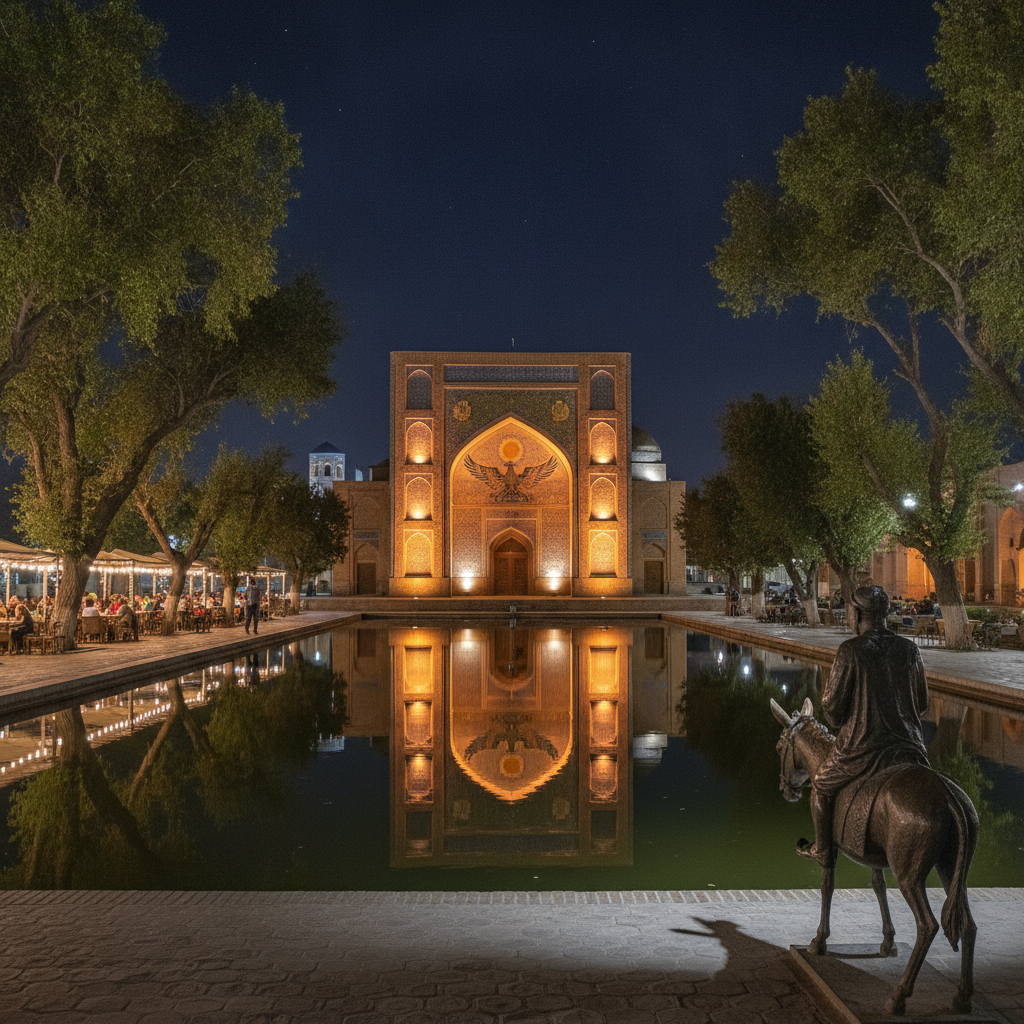
The Bug Pit Beneath the Ark Where Scorpions and Ticks Were Bred on Human Corpses, Omar Khayyam's Solar Year Calculation More Accurate Than the Gregorian Calendar & the Bukharan Merchant Quarter Built in Jerusalem in 1891
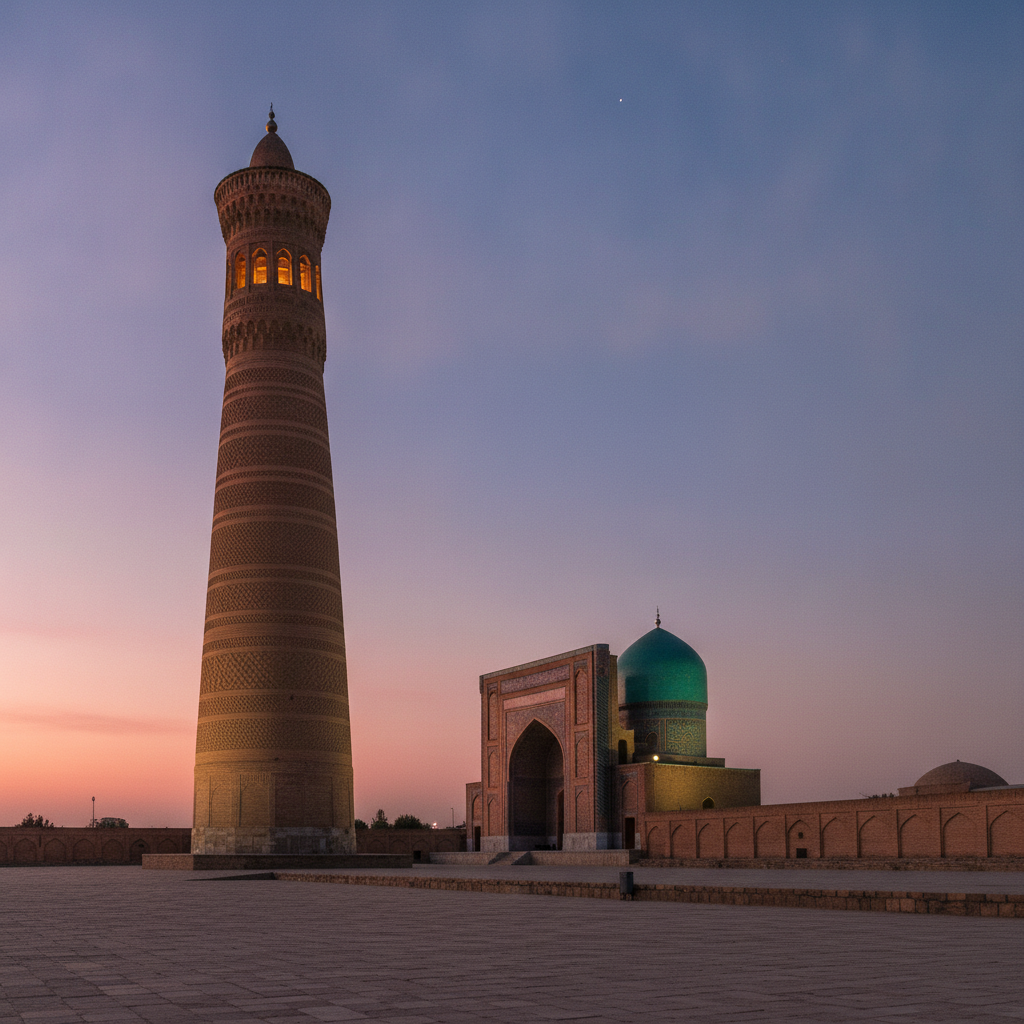
The 1127 Minaret Chinggis Khan Supposedly Spared Out of Admiration While Razing the Rest of Bukhara, the Ismoil Samoniy Mausoleum That Survived the Mongol Sack Because It Was Buried Under 300 Years of Street Sediment & the British Officers Executed in the Ark Fortress Square in 1842
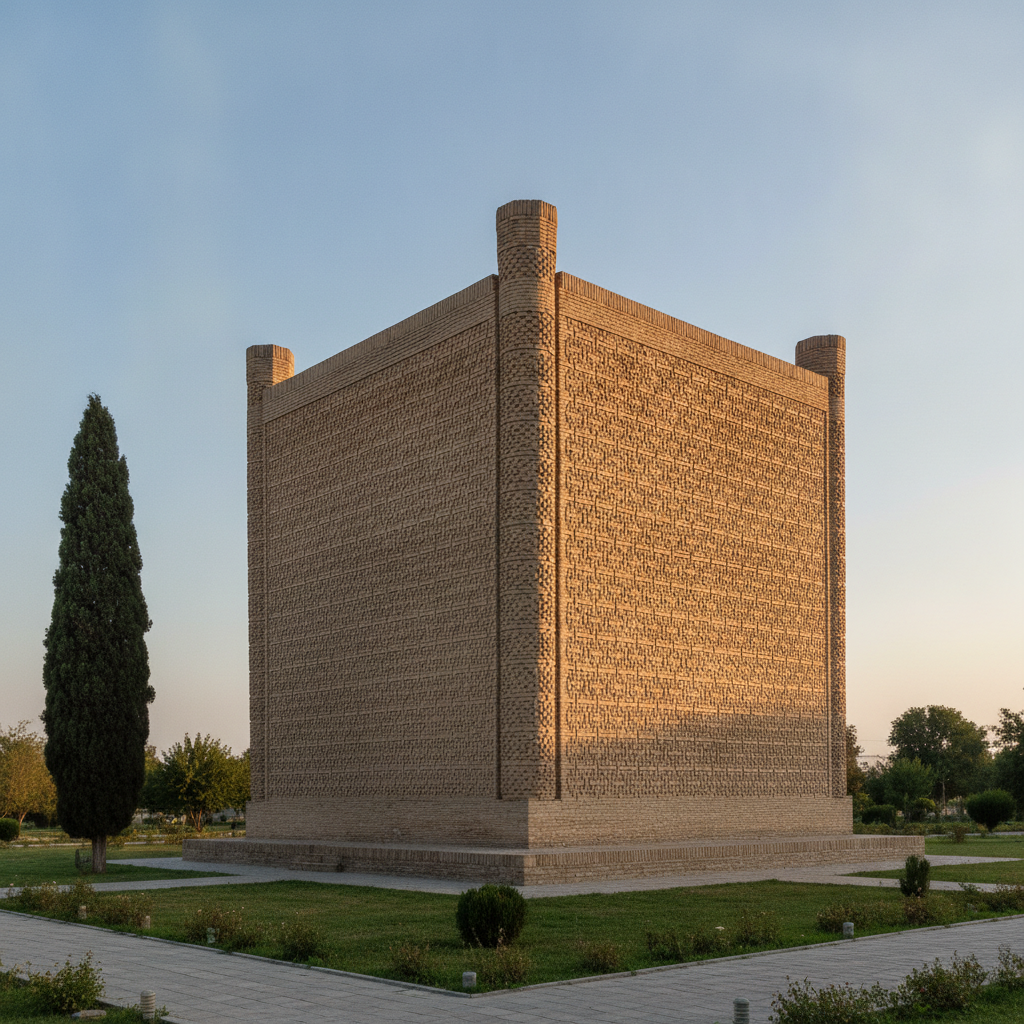
The Hujum Anti-Veil Campaign That Killed Over 2,000 Uzbek Women Who Unveiled in 1928-1929, the Chapan Quilted Silk Robe at USD 40-120 & the Bukharan Mud-Brick Walls Maintaining 22°C Indoors When It Is 40°C Outside
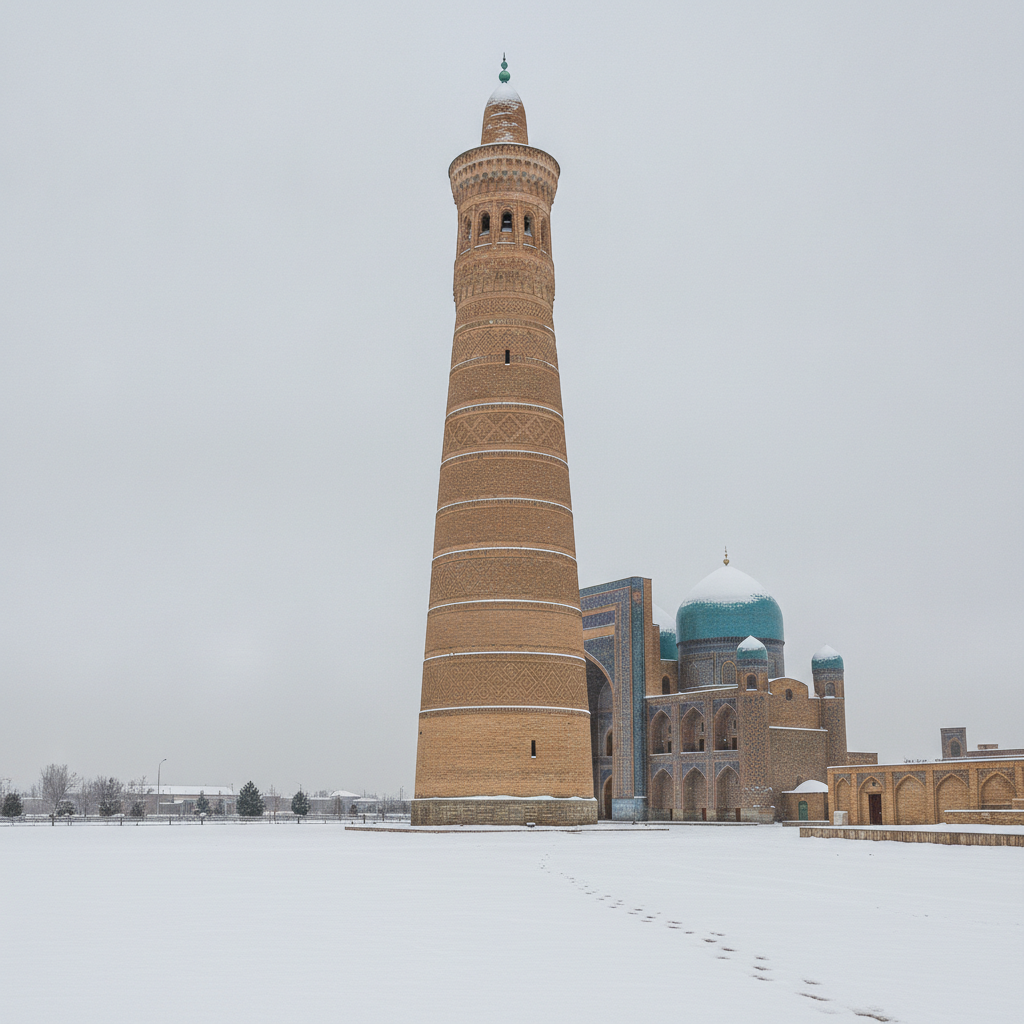
Al-Bukhari Born in Bukhara Compiled the Second Most Authoritative Text in Sunni Islam After the Quran, the Kalyan Minaret Voice Carrying 1.2km at 47m Height to Reach Every Corner of Medieval Bukhara & the Bukharan Suzani Mirror-Image Reverse Test