The Naqshbandi Silent Dhikr Order Founded 12km from Bukhara Now the Dominant Sufi Brotherhood from Turkey to China, the Prokudin-Gorsky 1911 Color Photograph of the Last Emir on the Ark Steps & the Bukharan Plov Center That Cooks Once Daily and Sells Out by Noon
The Naqshbandi order's silent dhikr founded by Baha-ud-Din Naqshband 12km from Bukhara, now spanning Turkey through South Asia to Chinese Donggan Muslim communities; the 1911 Prokudin-Gorsky color photograph of Emir Mohammed Alim Khan as the most reproduced photograph of a Central Asian ruler; the Bukhara Plov Center cooking one daily pot from 05:00 that sells out by noon; the Samanid library with rooms devoted to individual disciplines where Ibn Sina read for 2 years before it burned; the Chor Minor four-tower gatehouse as the only building of its architectural form in Central Asia; and the Bukharan ustoz-shogird 5-7 year apprenticeship for woodcarving transmission.
- 1
Ibn Sina's Bukhara – The Making of Avicenna
Ibn Sina (Abu Ali al-Husayn ibn Abd Allah ibn Sina (980–1037 CE)—the philosopher-physician born near Bukhara who became the most influential medical authority in the history of the world): the Bukhara intellectual heritage. The early life (Ibn Sina was born in the village of Afshona, 25 km northeast of Bukhara, in 980 CE—he grew up in Bukhara, the capital of the Samanid dynasty, and received his education in the city's mosques and libraries: he had memorized the Quran by age 10 and had mastered the philosophy of the Neoplatonists by age 16—his autobiography describes Bukhara as an intellectual capital where 'one could find any book one wished'): the Samanid library (Ibn Sina gained access to the Samanid royal library (Khizana al-Kutub) in Bukhara after successfully treating the Samanid ruler Nuh II ibn Mansur—he describes the library as containing many rooms, each room devoted to a different discipline, with books stacked floor to ceiling—Ibn Sina spent two years reading the library before its destruction in a fire (circa 1002 CE)): the Canon of Medicine (the Kitab al-Qanun fi al-Tibb—composed 1012–1025 CE in Hamadan, building on Ibn Sina's Bukharan medical education—was organized into 5 books: general principles of medicine; simple drugs; organ-specific diseases; systemic diseases; compound drugs—the organizational system dominated medical education for 600 years): the Ibn Sina Museum in Bukhara (the small museum in the Ark district dedicated to Ibn Sina's Bukharan years—the medical instruments and manuscript pages on display are reproductions of Samanid-era medical texts).
- 2
Bukhara's Sufi Heritage – Naqshbandi Order
The Naqshbandi Sufi order and Bukhara (the most influential Sufi brotherhood in the Islamic world, founded near Bukhara in the 14th century): the Sufi heritage guide. The Naqshbandi order (the Naqshbandiyya—named for Baha-ud-Din Naqshband Bukhari (1318–1389 CE), the Sufi master born in the village of Qasr-i Arifan 12 km northeast of Bukhara—the order he founded became the dominant Sufi order in Central Asia, the Caucasus, Turkey, South Asia, and the Chinese Muslim communities (the Donggan), making it one of the two or three most geographically extensive Sufi orders in the Islamic world): the Naqshbandi doctrine (the distinctive Naqshbandi practice: the dhikr khafi (silent remembrance)—the remembrance of God performed internally and silently (rather than the loud vocal dhikr of other orders); the rabita (the spiritual connection between disciple and master maintained even in physical absence); the connection to the mainstream Sunni tradition (the Naqshbandis were notable for their closeness to the Sunni establishment and their role as advisors to rulers)): the Baha-ud-Din Naqshband Shrine (the primary pilgrimage site 12 km northeast of Bukhara: the 16th-century mausoleum complex with its arched veranda, mulberry trees, and the grave of Baha-ud-Din beneath the low central dome—the complex receives 300,000–500,000 pilgrims annually from across the Muslim world, making it the most important pilgrimage site in Central Asia for Sunni Muslims).
- 3
Bukharan Cuisine – Osh, Samsa & the Jewish Influence
The Bukharan food guide (the cuisine of the oldest continuously inhabited city in Uzbekistan, and the city with the most complex food heritage due to the intersection of Tajik, Uzbek, Bukharan Jewish, and Silk Road culinary influences): the food guide. The Bukharan plov (the Bukharan osh (plov) is prepared differently from both the Samarkand and Tashkent versions: the Bukharan style (the Bukhara plov center style—cooks the yellow carrot (zardak) and the red carrot (surkh sabzi) together in equal proportions, giving the rice a more complex sweet-savory flavor profile than the single-carrot Tashkent plov): the plov center (the Bukhara Plov Center (Центр плова) on Rumi Street: open 07:00–14:00, the single daily pot of plov cooked from 05:00 and sold until it runs out (usually by 12:00)—the queue forms by 08:00; the price USD 2.50 per portion with tea)): the Bukharan Jewish food (the Bukharan Jewish culinary contribution to mainstream Bukharan cuisine: the Bakhsh plov (plov with green herbs—cilantro, dill, and parsley—and hard-boiled eggs, the traditional Friday night plov); the Oshi Tuk (a Bukharan Jewish noodle and legume soup, similar to the Persian Ash-e Reshteh)): the samsa (the Bukharan samsa—triangular or round pastry filled with minced lamb or pumpkin and baked in a tandoor—the most popular street food in Bukhara; the best samsa: the bakeries adjacent to the Ark Fortress and in the Tok-i Telpak Furushon bazaar): the non (the Bukharan bread—smaller and denser than the Samarkand variety, with more poppy seeds).
- 4
The Bukharan Emirate – The Last Central Asian Khanate
The Bukharan Emirate (the Manghit dynasty emirate that ruled Bukhara as a vassal state of the Russian Empire from 1785 to 1920—the last independent Islamic state in Central Asia): the history guide. The emirate structure (the Bukharan Emirate was a hereditary Muslim theocracy with the emir serving as both temporal ruler (khan) and religious authority—the emir's power was legitimized by the Islamic scholars (ulama) of Bukhara, who were the most numerous and influential religious establishment in Central Asia: Bukhara had approximately 300 madrasas and 360 mosques at the peak of the Bukharan Emirate (18th–19th century)): the Russian protectorate (the Russian conquest of 1868 (General Kaufman's capture of Samarkand) was followed by a treaty that preserved the Bukharan Emirate as a Russian protectorate—the emir retained internal authority while Russia controlled foreign affairs and garrisoned troops in Samarkand and Kattakurgan—the arrangement was modeled on British protectorate treaties in India): the final emir (Emir Mohammed Alim Khan (r. 1910–1920)—the last ruler of the Bukharan Emirate—is most famous from a 1911 photograph by Sergei Prokudin-Gorsky (the pioneering color photographer who documented the Russian Empire for Tsar Nicholas II) which shows the emir in full regalia on the steps of the Ark Fortress: the image is the most reproduced photograph of a Central Asian ruler): the Red Army overthrow (the Red Army of the Bukharan People's Soviet Republic, commanded by Mikhail Frunze, besieged the Ark Fortress on September 2, 1920, fired artillery at the walls, and established the Bukharan People's Soviet Republic within hours).
- 5
Outside the Old City – Bukhara's Hidden Monuments
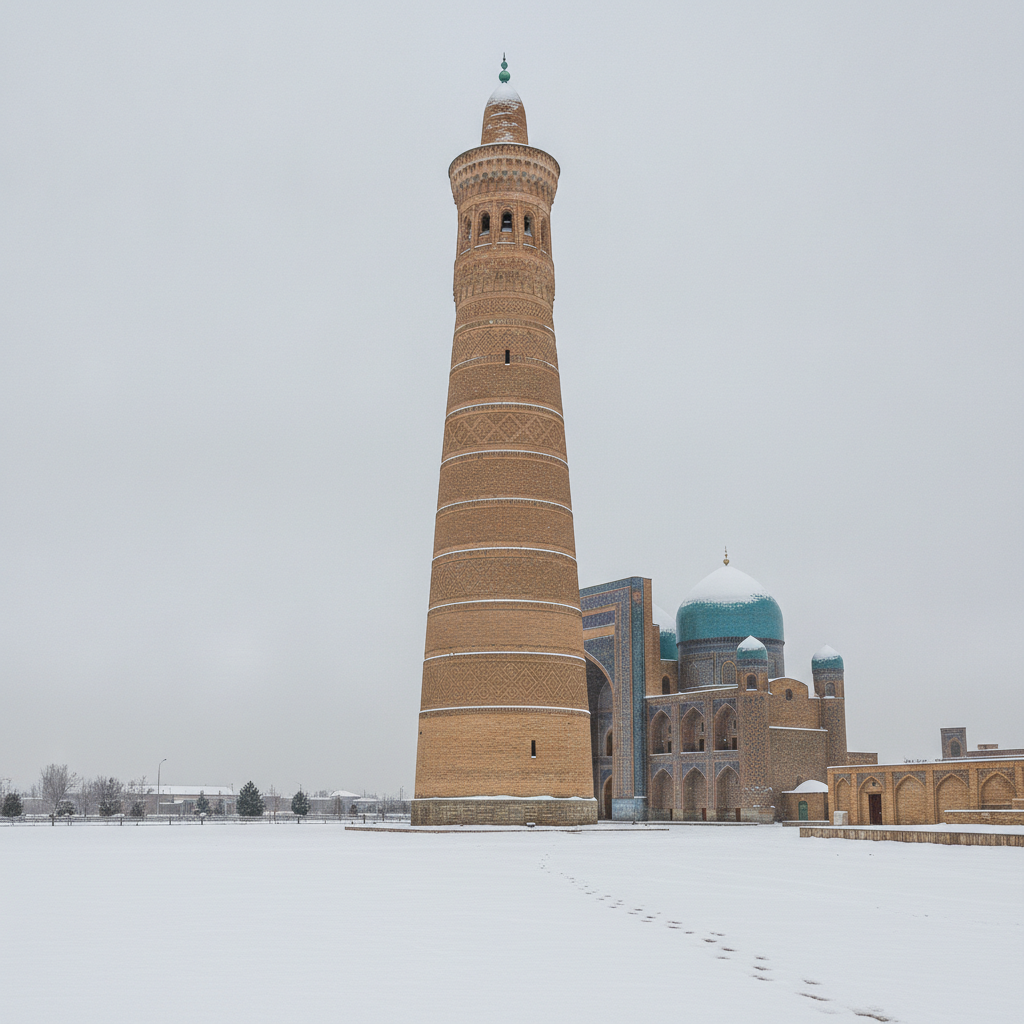
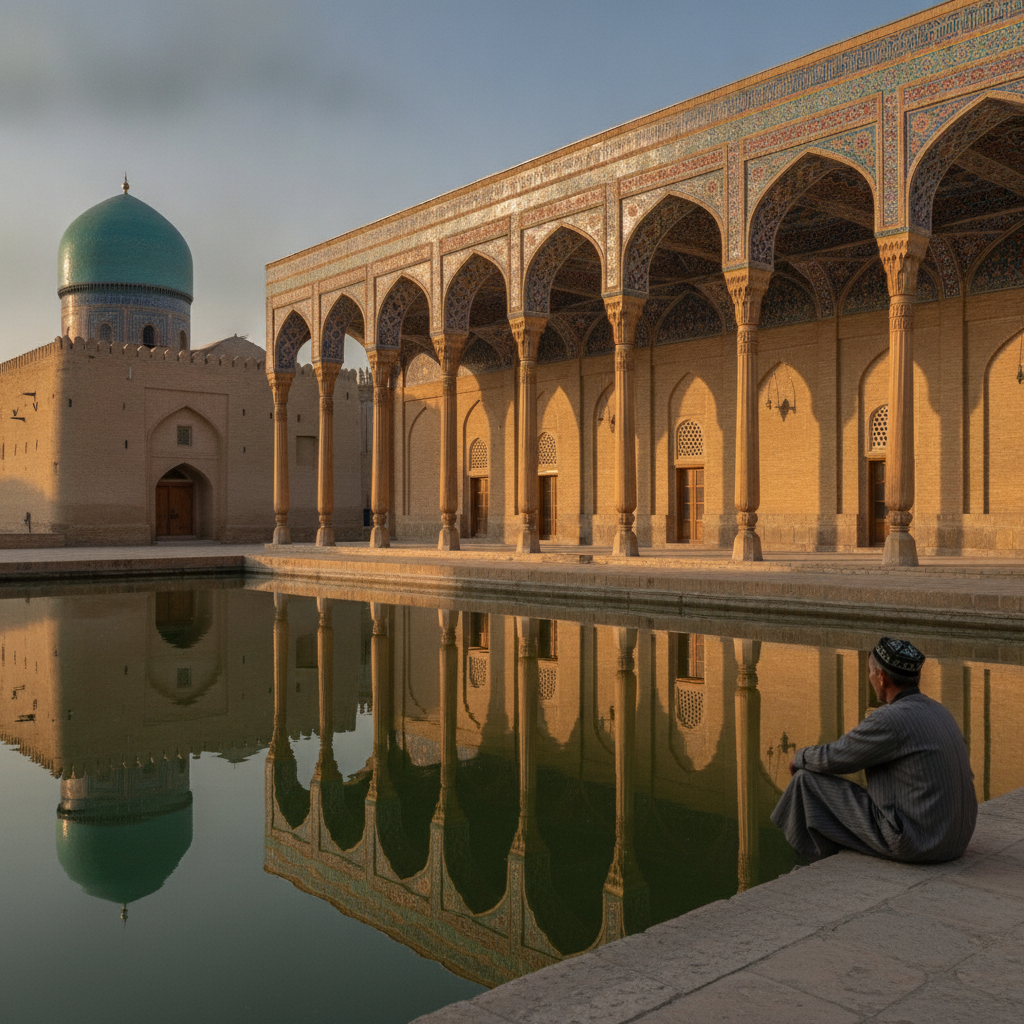
The outer Bukhara monuments guide (the significant heritage sites outside the tourist circuit of the old city): the off-circuit guide. The Bolo-Hauz Mosque (the Friday mosque of the Bukharan emirs, built 1712, located immediately opposite the western gate of the Ark Fortress—the most elegant wooden-columned iwan (veranda) in Uzbekistan: 20 carved and painted wooden columns, 15m high, supporting a flat carved wooden ceiling painted with intricate polychrome floral patterns in the 18th-century Bukharan court style—the columns are the primary example of Bukharan high-period woodcarving): the Chor Minor (the Four Minarets—the gatehouse of a now-destroyed madrasa built 1807, with four corner towers capped by individual small turquoise domes—a unique architectural form in Central Asia with no direct stylistic precedent; the four towers are each approximately 17m high and capped with distinctive individual decorative elements): the Sitorai Mokhi-Khosa (the Summer Palace of the Bukharan Emirs—built 1911 in an incongruous mixture of Russian Art Nouveau and traditional Uzbek decorative styles 4 km north of the old city—the most revealing monument to the character of the Bukharan Emirate's final decades: the emir's reception hall with its European crystal chandeliers and Uzbek tile wainscoting is the most direct evidence of the cultural hybrid produced by the Russian protectorate): the Chashma-Ayub Mausoleum (the mausoleum built over a spring (chashma) associated with the prophet Job (Ayub)—a pilgrimage site and the location of Bukhara's Water Museum).
- 6
Bukhara's Living Craft Workshops – Woodcarving, Ceramics & Suzani
The Bukharan craft workshop guide (the living artisan traditions operating in the old city workshops of Bukhara—the best place in Uzbekistan to observe and purchase traditional crafts produced in-context): the workshop guide. The woodcarving workshops (the Bukharan woodcarving tradition—the highest refinement of Islamic geometric woodcarving in Central Asia: the primary motifs are the 8-pointed star (the khatam—the geometric pattern composed of overlapping 8-pointed stars that tiles the plane without gaps), the palmette (islimi—the split-leaf scroll), and the calligraphic frieze—the primary workshop is the Abdullajanov Ustoz workshop on Navbahor Street where 4 master carvers (ustoz) and their apprentices (shogird) work in an open workshop that visitors can enter): the ceramic tradition (the Bukharan ceramics (gulsuvori—the 'flower water' style)—distinguished by the use of a cream-white base glaze (from tin oxide) with underglaze cobalt blue geometric and floral motifs—the primary Bukharan ceramic workshop is on Kuychi Street adjacent to the Lyabi-Hauz): the suzani workshops (the Bukharan suzani is distinguished from the Samarkand variety by its smaller size and denser embroidery coverage—the Bukharan suzani uses the rosette-and-vine (pechak islimi) composition rather than the solar medallion of Samarkand): the apprenticeship system (the traditional Uzbek ustoz-shogird apprenticeship system—a master craftsman takes apprentices for 5–7 years, teaching by demonstration rather than instruction—is still operational in the Bukharan workshops and is the primary mechanism of craft knowledge transmission).
Walk this route with audio
Stories play automatically as you reach each stop — no tapping needed.
More in Bukhara
The Bug Pit Beneath the Ark Where Scorpions and Ticks Were Bred on Human Corpses, Omar Khayyam's Solar Year Calculation More Accurate Than the Gregorian Calendar & the Bukharan Merchant Quarter Built in Jerusalem in 1891
The Zoroastrian Magi From Bukhara as the Most Likely Origin of the Biblical Three Wise Men, the Guinea Worm That Grew 1 Meter Inside Bukharans Who Drank From the Hauz Pools & the Chapan Robe Gift That Encodes Uzbek Social Hierarchy
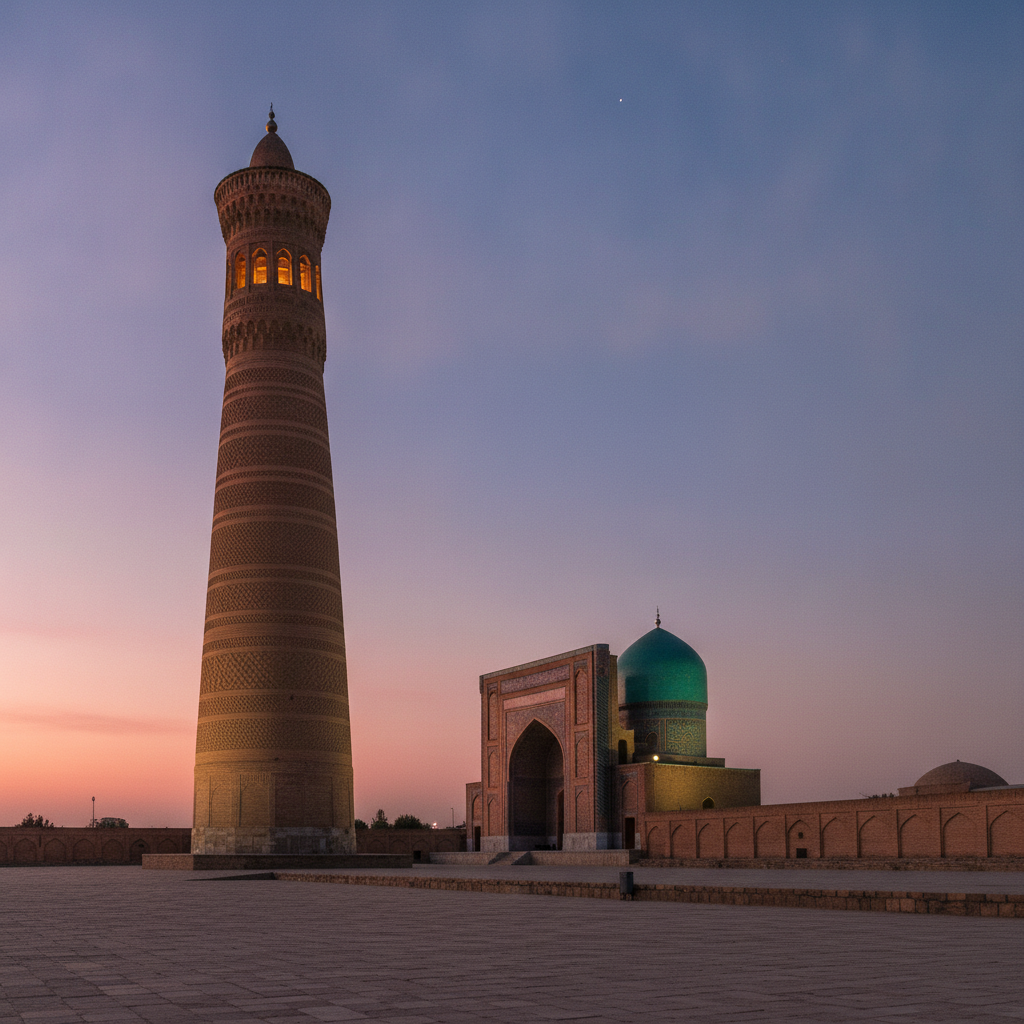
The 1127 Minaret Chinggis Khan Supposedly Spared Out of Admiration While Razing the Rest of Bukhara, the Ismoil Samoniy Mausoleum That Survived the Mongol Sack Because It Was Buried Under 300 Years of Street Sediment & the British Officers Executed in the Ark Fortress Square in 1842
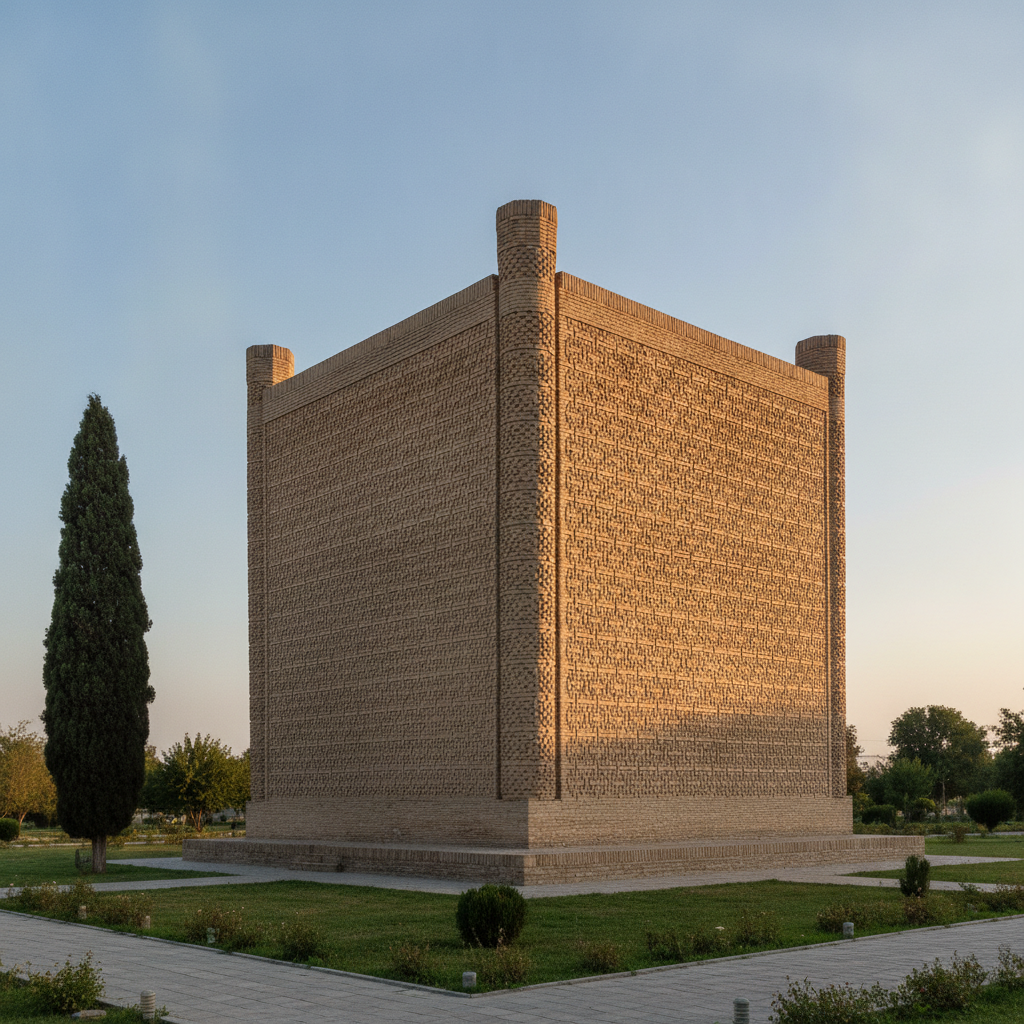
The Hujum Anti-Veil Campaign That Killed Over 2,000 Uzbek Women Who Unveiled in 1928-1929, the Chapan Quilted Silk Robe at USD 40-120 & the Bukharan Mud-Brick Walls Maintaining 22°C Indoors When It Is 40°C Outside