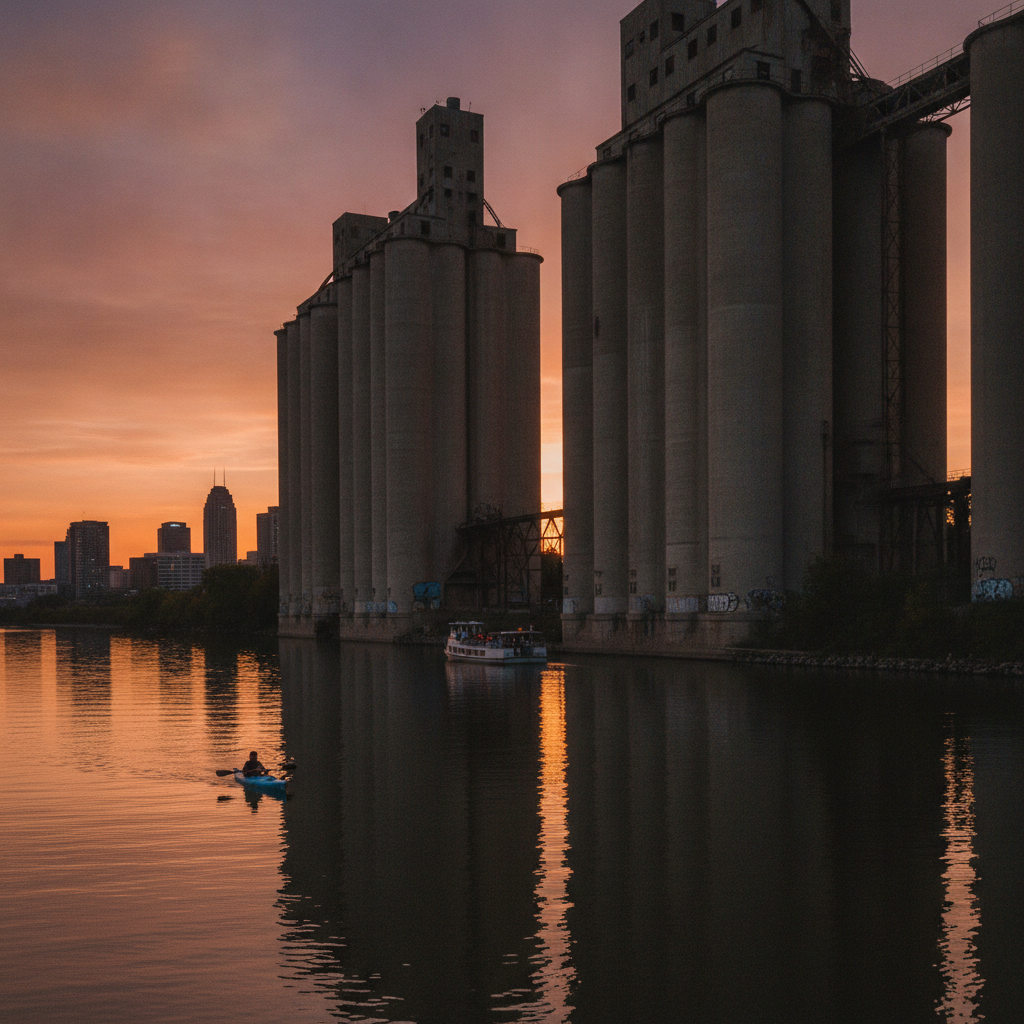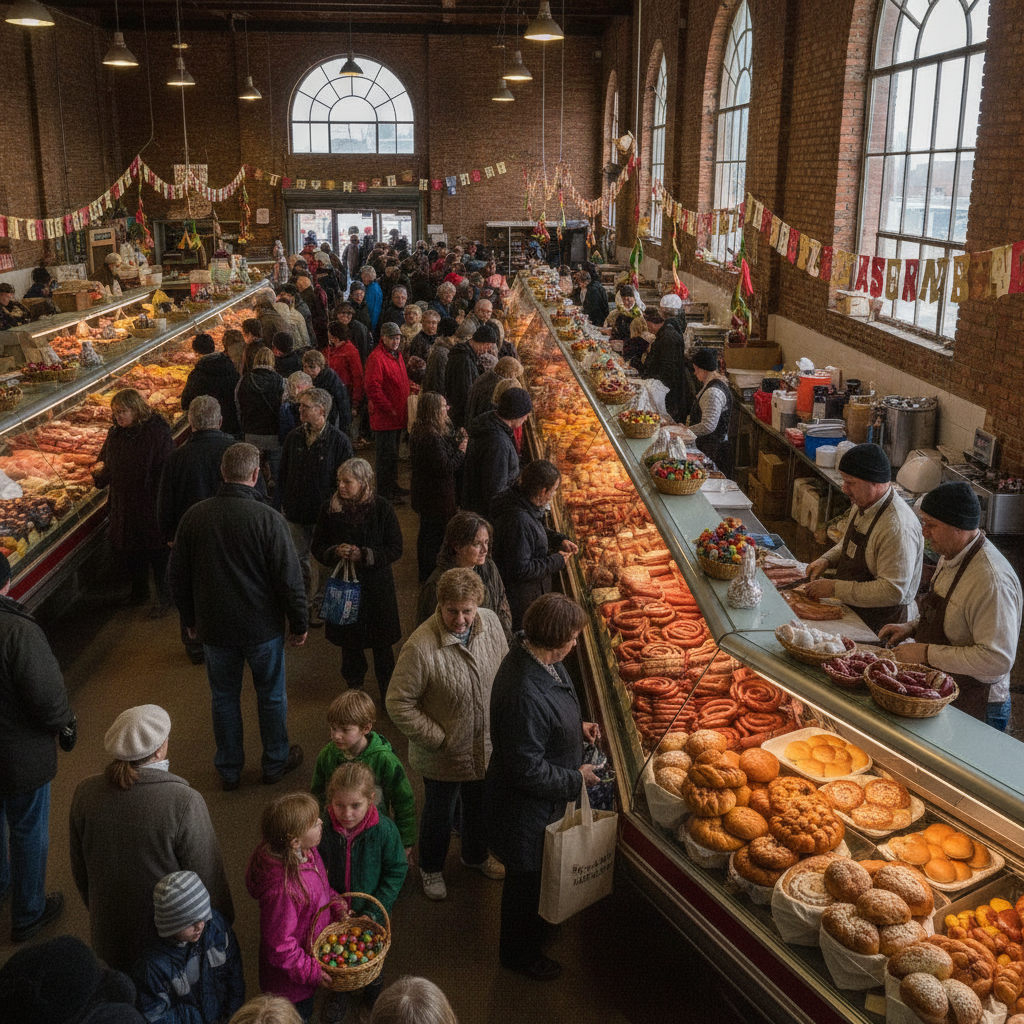
Buffalo R4: Polish community (400,000 Polish-American largest US after Chicago, Broadway Market 1888 52 vendors kielbasa pierogi czarnina babka, Easter season lines around block 3-4 generation vendors, Dyngus Day Monday after Easter water-sprinkling 50,000 participants most unique local US celebration); Roosevelt Inaugural (641 Delaware Ave Ansley Wilcox House September 14 1901 50 witnesses most informal inauguration, Roosevelt 1901-1909 Standard Oil Sherman Antitrust 150 national forests FDA Progressive Era, BEC Historical Society only surviving Pan-Am 1901 building, Forest Lawn Cemetery Fillmore Red Jacket Rick James); Food revival (Taste of Buffalo first weekend July 400,000 largest 2-day US food festival 60 restaurants 1.6km, Hertel Avenue diverse Italian Polish Jamaican Thai Indian, Swannie House 1880 oldest continuously operating western NY, Ted's Hot Dogs 1927 charcoal Sahlen's franks 1869, food trucks BNMC Canalside); Green spaces (Elmwood-Bidwell Farmers Market open year-round Saturday 80 vendors 100-mile radius, Bidwell Parkway Olmsted grass median Victorian Arts-Crafts, Botanical Gardens 1898 12m dome tropical, Tifft Nature Preserve 264 acres 230 bird species former landfill reclaimed, Reinstein Woods old-growth last pre-settlement forest Erie County); Fillmore (13th President 1800-1874 UB founding donor, Compromise 1850 California free Fugitive Slave Law enforced worst president rankings, Millard Fillmore House East Aurora, Grover Cleveland Mayor Buffalo 1882 Veto Mayor 22nd and 24th President non-consecutive unique); Practical (summer Taste Buffalo Allentown Art Festival Bills training camp, fall Highmark Stadium Letchworth Grand Canyon East 90km 60m gorge 3 waterfalls October foliage, winter Holiday Valley skiing Kissing Bridge, Hotel Henry Curtiss Hotel Statler City).
Buffalo R4: Polish (400,000 largest US after Chicago, Broadway Market 1888 52 vendors Easter lines 3-4 generations, Dyngus Day 50,000 most unique US local celebration), Roosevelt Inaugural (641 Delaware September 14 1901 50 witnesses most informal, Progressive Era Standard Oil forests FDA, Forest Lawn Fillmore Red Jacket Rick James), food revival (Taste Buffalo July 400,000 largest 2-day US 60 restaurants, Hertel diverse, Swannie House 1880 oldest bar WNY, Ted's 1927 charcoal Sahlen's 1869), green spaces (Bidwell Market year-round 80 vendors, Bidwell Parkway Olmsted, Botanical Gardens 1898 12m dome, Tifft 264 acres 230 birds former landfill, Reinstein old-growth last Erie County), Fillmore (13th President UB founder, Compromise 1850 worst president, East Aurora house, Cleveland Mayor 1882 Veto Mayor 22nd 24th non-consecutive), practical (summer festivals Bills camp, Letchworth 90km Grand Canyon East October foliage, Holiday Valley skiing, Hotel Henry Curtiss).
- 1
Buffalo Polish Community - Dyngus Day and Broadway Market
Buffalo's Polish heritage: Buffalo has the second-largest Polish-American community in the United States (after Chicago), with approximately 400,000 residents of Polish descent in the greater Buffalo-Niagara metropolitan area — a legacy of the massive Polish immigration to the steel mills, railroads, and grain elevator industries of the late 19th and early 20th centuries. The Broadway Market (at 999 Broadway, Buffalo, in the Broadway-Fillmore neighborhood): the indoor public market that has served as the commercial and cultural heart of the Polish community since 1888, with 52 vendors selling kielbasa, pierogi, czarnina (duck blood soup), golabki (stuffed cabbage), babka (Polish Easter bread), and other traditional Polish foods. The Easter season at the Broadway Market (Holy Thursday through Easter Monday): the most extraordinary cultural event in Buffalo, when the market becomes the gathering place for the entire Polish-American community and lines extend around the block for authentic kielbasa and smoked meats prepared by vendors whose families have sold at the market for 3-4 generations. Dyngus Day (the Polish holiday celebrated the Monday after Easter): Buffalo is the only major American city with a significant public celebration of Dyngus Day, the Polish tradition of boys sprinkling girls with water (and girls throwing pussy willows at boys) on Easter Monday. The Buffalo Dyngus Day celebration (centered on the Broadway market and the Polish clubs of the Broadway-Fillmore neighborhood) draws approximately 50,000 participants and has been called the most unique local cultural celebration in American municipal culture. The Polish Falcons (the fraternal organization founded by Polish immigrants in Pittsburgh in 1887 and with a major presence in Buffalo): the organization that maintained Polish language, culture, and identity through the 20th century.
- 2
The Theodore Roosevelt Inaugural Site and Presidential History
The Theodore Roosevelt Inaugural National Historic Site (at 641 Delaware Avenue, Buffalo, the former Ansley Wilcox House, now operated as a museum by the National Park Service): the most important presidential historic site in western New York, where Theodore Roosevelt (born October 27, 1858, New York City; died January 6, 1919, Oyster Bay, New York) took the oath of office as the 26th President of the United States on September 14, 1901, following the death of President William McKinley from the gunshot wound inflicted by Leon Czolgosz at the Pan-American Exposition. Roosevelt took the oath in the library of the Ansley Wilcox House (the home of his friend, attorney Ansley Wilcox) in front of approximately 50 witnesses — the most informal presidential inauguration in American history. Roosevelt's presidential legacy: Roosevelt served as president from 1901 to 1909, instituting the most dramatic expansion of federal regulatory power in American history before FDR — breaking up Standard Oil and the railroad trust under the Sherman Antitrust Act, creating 150 national forests and 51 federal bird reserves, establishing the FDA, and defining the Progressive Era. The Buffalo and Erie County Historical Society (at 25 Nottingham Court, in the building designed by Edward Green for the Pan-American Exposition, now the only surviving building from the 1901 fair): the museum covering the history of western New York from prehistoric times to the present. The Forest Lawn Cemetery (at 1411 Delaware Avenue, Buffalo, the garden cemetery founded in 1849): the most beautiful cemetery in western New York, with the graves of President Millard Fillmore (born January 7, 1800, Summerfield, New York; died March 8, 1874, Buffalo — the 13th President and the last Whig president), Red Jacket (the Seneca chief, born approximately 1750; died January 20, 1830), and Rick James.
- 3
The Buffalo food revival - Taste of Buffalo and Beyond
The Buffalo food revival: beyond the wings and beef on weck, Buffalo has developed a sophisticated dining scene that reflects both the city's ethnic heritage and the national farm-to-table movement. The Taste of Buffalo (the annual food festival held the first weekend of July on Main Street downtown, drawing approximately 400,000 visitors over two days): the largest two-day food festival in the United States, with approximately 60 restaurants presenting signature dishes at outdoor booths along a 1.6-km stretch of Main Street — the most concentrated sampling of Buffalo's restaurant diversity available at any single event. The North Buffalo food scene (the restaurants of Hertel Avenue, the commercial strip of the North Buffalo neighborhood): the most diverse neighborhood restaurant district in Buffalo, with restaurants representing Italian, Polish, Jamaican, Thai, Indian, and American dining traditions. Swannie House (at 170 Ohio Street, Old First Ward, founded 1880): the oldest continuously operating bar in western New York, with a waterfront location in the Irish dockworker neighborhood of the First Ward. Jim's Steakout (the late-night beef-on-steak sandwich institution operating since 1980 at multiple Buffalo locations): the Buffalo institution that has fed generations of late-night revelers with the chicken finger sub and the steak-n-egg sub. Ted's Hot Dogs (at multiple locations, founded 1927 in Tonawanda, New York): the charcoal-broiled hot dog chain that has been a western New York institution for nearly a century, with the distinctive charcoal taste and the choice of Sahlen's franks (the Buffalo hot dog brand founded 1869) the most authentically Buffalo hot dog experience. The Buffalo food truck scene (the concentration of food trucks in the BNMC medical campus and Canalside area): one of the most active food truck scenes in any mid-sized American city.
- 4
The Elmwood-Bidwell Farmers Market and Buffalo's Green Spaces
The Elmwood-Bidwell Farmers Market (at 492 Elmwood Avenue, at Bidwell Parkway, open year-round, one of the oldest continuously operating farmers markets in the northeastern United States): the Saturday farmers market that has been a fixture of the Elmwood Village neighborhood since the 1970s, with approximately 80 vendors offering produce, baked goods, cheese, honey, meat, and prepared foods from farmers within a 100-mile radius of Buffalo. Bidwell Parkway (the Olmsted-designed parkway connecting the Elmwood Village to Delaware Park): one of the most beautiful residential streets in Buffalo, with a grass median planted with mature trees and lined by Victorian and Arts-and-Crafts houses. Delaware Park (the 350-acre centerpiece of the Olmsted park system, with the Buffalo and Erie County Botanical Gardens and the Buffalo Zoo): the park modeled on Olmsted's English landscape tradition, with Hoyt Lake at the center and the Marcy Casino (a 1931 WPA building) at the lake's edge. The Buffalo and Erie County Botanical Gardens (at 2655 South Park Avenue, in the South Park district of the Olmsted park system, designed by Lord and Burnham in 1898-1899): the Victorian greenhouse complex with a 12-meter central dome, housing tropical and Mediterranean plant collections. The Tifft Nature Preserve (at 1200 Fuhrmann Boulevard, South Buffalo): the 264-acre urban nature preserve on a former solid waste disposal site and industrial shoreline, which has been reclaimed as a wildlife habitat with over 230 bird species documented and migrating raptors visible in spring and fall. The Reinstein Woods Nature Preserve (at 93 Honorine Drive, Depew, New York, 15 km east of Buffalo): the old-growth forest preserve with the last stands of pre-settlement old-growth forest in Erie County, protected by the state since 1985.
- 5
Millard Fillmore and Buffalo's Presidential Connection
Millard Fillmore (born January 7, 1800, Summerfield, New York; died March 8, 1874, Buffalo): the 13th President of the United States (serving 1850-1853, succeeding Zachary Taylor who died of gastroenteritis on July 9, 1850 — one of only four presidents to die in office before the establishment of the 25th Amendment in 1967) and the most prominent figure in Buffalo's political history. Fillmore's Buffalo career: Fillmore was a lawyer, a Whig politician, and a founding donor of the University at Buffalo (1846) before becoming Vice President under Taylor in 1849. As President, Fillmore signed the Compromise of 1850 (which admitted California as a free state while strengthening the Fugitive Slave Law — a compromise that temporarily delayed the Civil War at the cost of requiring Northern citizens to assist in the capture and return of escaped enslaved people). Fillmore is consistently ranked among the worst presidents in American history because his enforcement of the Fugitive Slave Law and his failure to take a stronger antislavery stance deepened the sectional crisis. The Millard Fillmore House (at 24 Shearer Avenue, East Aurora, New York, 30 km southeast of Buffalo): the home Fillmore shared with his wife Abigail Powers (the first First Lady to work outside the home before marriage, who established the first White House library). The Grover Cleveland connection: Grover Cleveland (born March 18, 1837, Caldwell, New Jersey; died June 24, 1908, Princeton, New Jersey), the 22nd and 24th President of the United States (the only president to serve two non-consecutive terms), served as Mayor of Buffalo (1882) and Governor of New York (1883) before his presidential career — making Buffalo the incubator for one of the most unusual presidential careers in American history. Cleveland's reputation for honesty in Buffalo politics (he personally vetoed fraudulent city contracts and was known as the Veto Mayor) propelled him to the presidency.
- 6
Buffalo Seasonal Events and Practical Tips
Buffalo seasonal visitor guide. Summer (June through September, average highs 25-28 degrees Celsius): the most comfortable and most active season, with the Taste of Buffalo (first weekend July, 400,000 visitors, largest 2-day US food festival), the Allentown Art Festival (Father's Day weekend, 70,000 visitors), the Erie Canal Harbor waterfront events, the Elmwood Arts Festival (August), and Bills training camp at St. John Fisher University (Pittsford, New York, 130 km east of Buffalo, open to the public, free). The Pride parade and festival (the Buffalo Pride Parade in June): the largest LGBTQ+ event in western New York, centered in the Allentown neighborhood. Fall (September through November): the Bills home games at Highmark Stadium (Orchard Park, 18 km south of downtown — tickets are among the most sought-after in the NFL), the Chautauqua Institution fall season (September), and foliage at Letchworth State Park (90 km southeast of Buffalo — the Grand Canyon of the East, a gorge 60 m deep and 25 km long carved by the Genesee River, with three major waterfalls and foliage that peaks in mid-October). Winter (December through March): the Bills Mafia outdoor tailgates in subzero temperatures, skiing at Holiday Valley (at 6557 Holiday Valley Road, Ellicottville, New York, 80 km south of Buffalo) and Kissing Bridge (at 10293 State Route 240, Glenwood, New York, 45 km south of Buffalo), and the Buffalo Niagara International Ice Fest. Accommodation: Hotel Henry (USD 200-350/night, the most historically significant), Curtiss Hotel (at 210 Franklin Street, downtown, a boutique hotel in a former 1920s automobile showroom), and the Statler City (at 107 Delaware Avenue, the massive 1923 hotel that operated as a historic building and event venue).
Walk this route with audio
Stories play automatically as you reach each stop — no tapping needed.
More in buffalo
Buffalo: Olmsted Parks, Industrial Giants and a City Rebuilt
Buffalo R2-R6: AKG Museum (8500 works finest modern art NY to Chicago, Abstract Expressionism Pollock Rothko Kline Still de Kooning, OMA Shigematsu Gundlach Building 2023 USD 230M 21,000 sqm, Kleinhans Music Hall Saarinen father-son 1940 best acoustics NY after Carnegie Hall, Burchfield Penney Charles Burchfield 1893-1967 visionary watercolorist); Architecture (Darwin Martin House FLW 1904-1905 Prairie Style 6 structures USD 50M restoration 2007, Guaranty Building Sullivan Adler 1896 finest US office building terra-cotta vegetative, City Hall 1931 Art Deco tallest NY municipal 120m 28th floor free 360 views, Richardson Olmsted Campus HH Richardson 1870-1880 greatest 19th century collaboration Hotel Henry), Neighborhoods (Elmwood Village most desirable, Allentown Art Festival oldest outdoor juried eastern US 70,000 Father's Day weekend, Polish Broadway East Side Tops massacre May 14 2022 10 killed white supremacist NY worst, First Ward Irish dockworkers); Lake Effect (230cm average 500cm suburbs belt, cold Arctic -20/-30C over warm Erie lake moisture dump, November 2014 177cm 24hrs 14 dead, Bills Mafia table-jumping tailgate Highmark Stadium Orchard Park culture); Seneca Nation (Haudenosaunee Confederacy Six Nations Guardians Western Door, US Constitution influence Grinde Johansen Exemplar Liberty 1991 disputed, Laura Secord 30km walk June 24 1813 Canadian hero, Seneca Nation Salamanca casinos, Sullivan-Clinton 1779 40 villages scorched earth); Practical (BUF 5.5M passengers 40 destinations, Niagara Falls State Park 1885 oldest US state park, Toronto 150km 90min Peace Bridge, Niagara icewine, Hotel Henry HH Richardson).
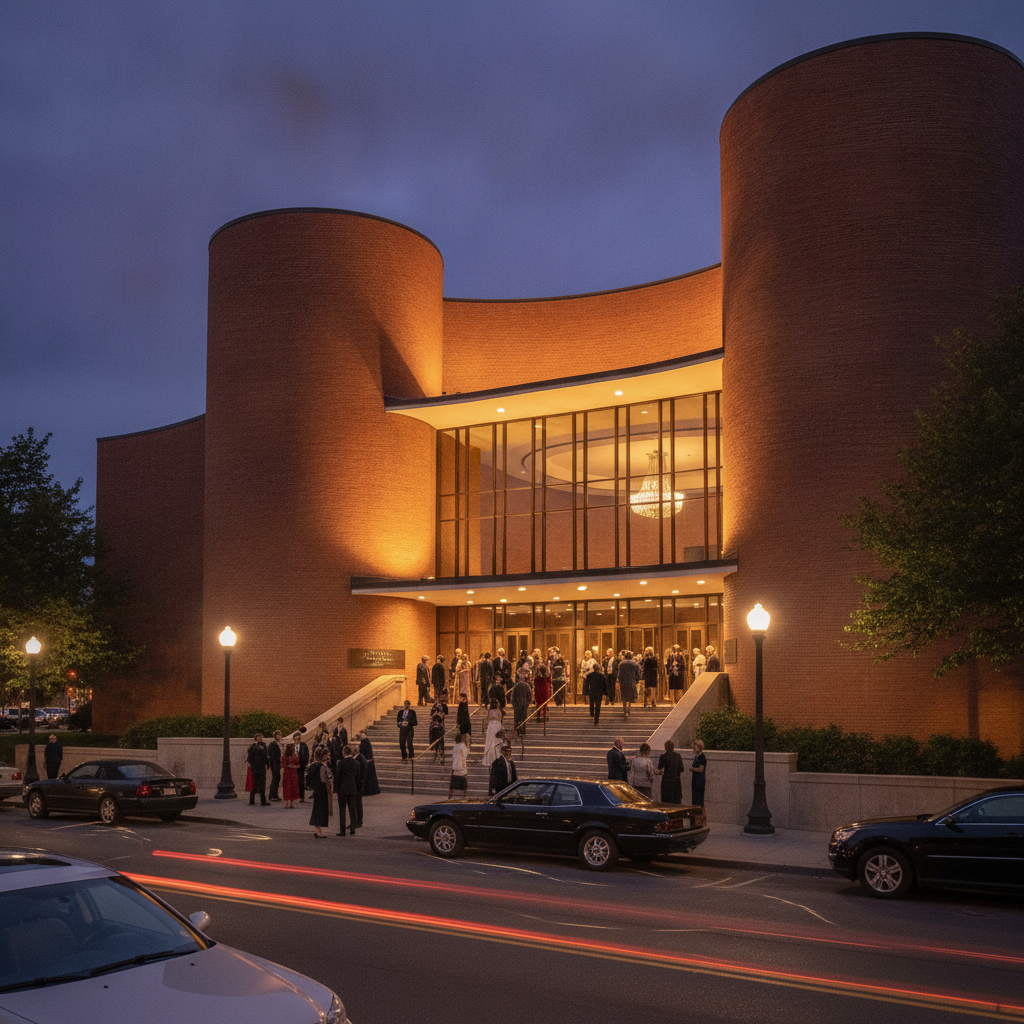
Buffalo: Haudenosaunee Roots, Snow Records and a Symphony in a Landmark Hall
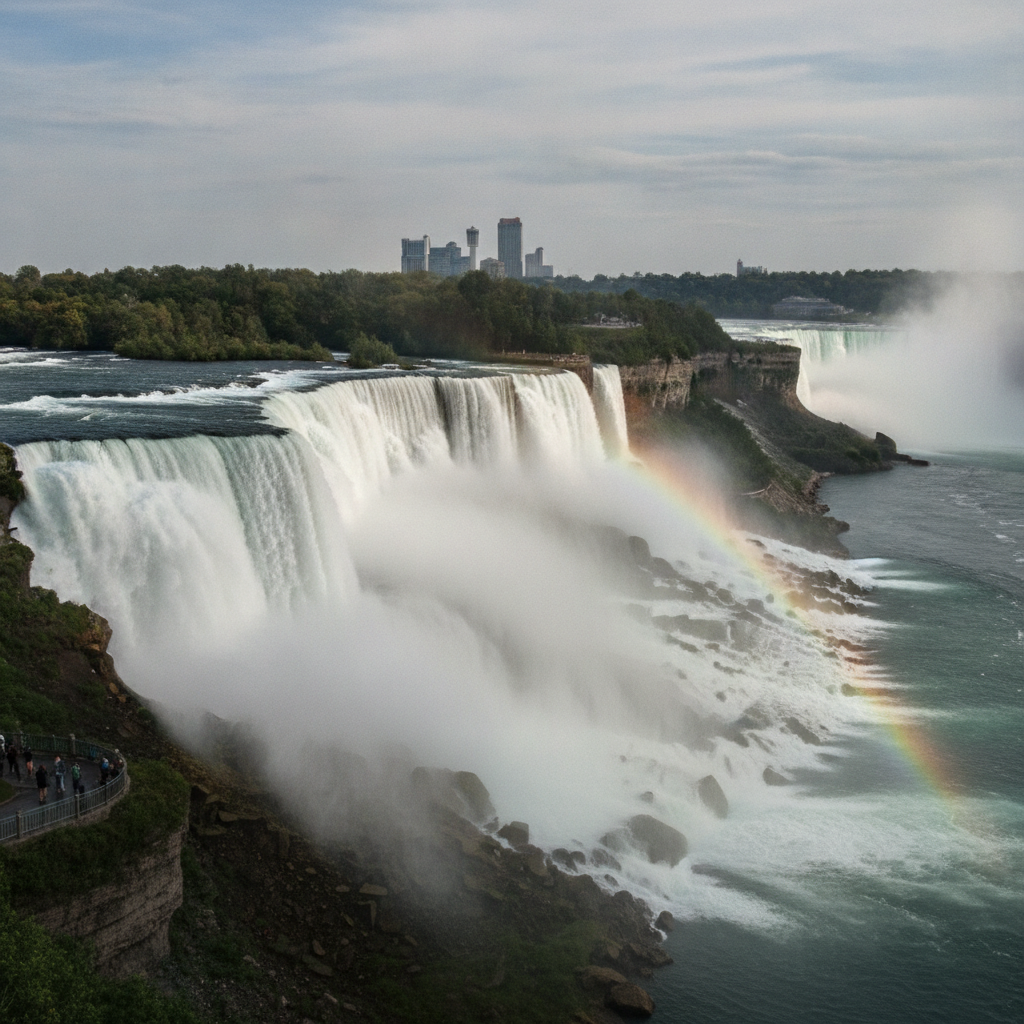
Buffalo: Niagara Falls, grain elevators, Buffalo wings, architecture, Erie Canal, and sports heartbreak
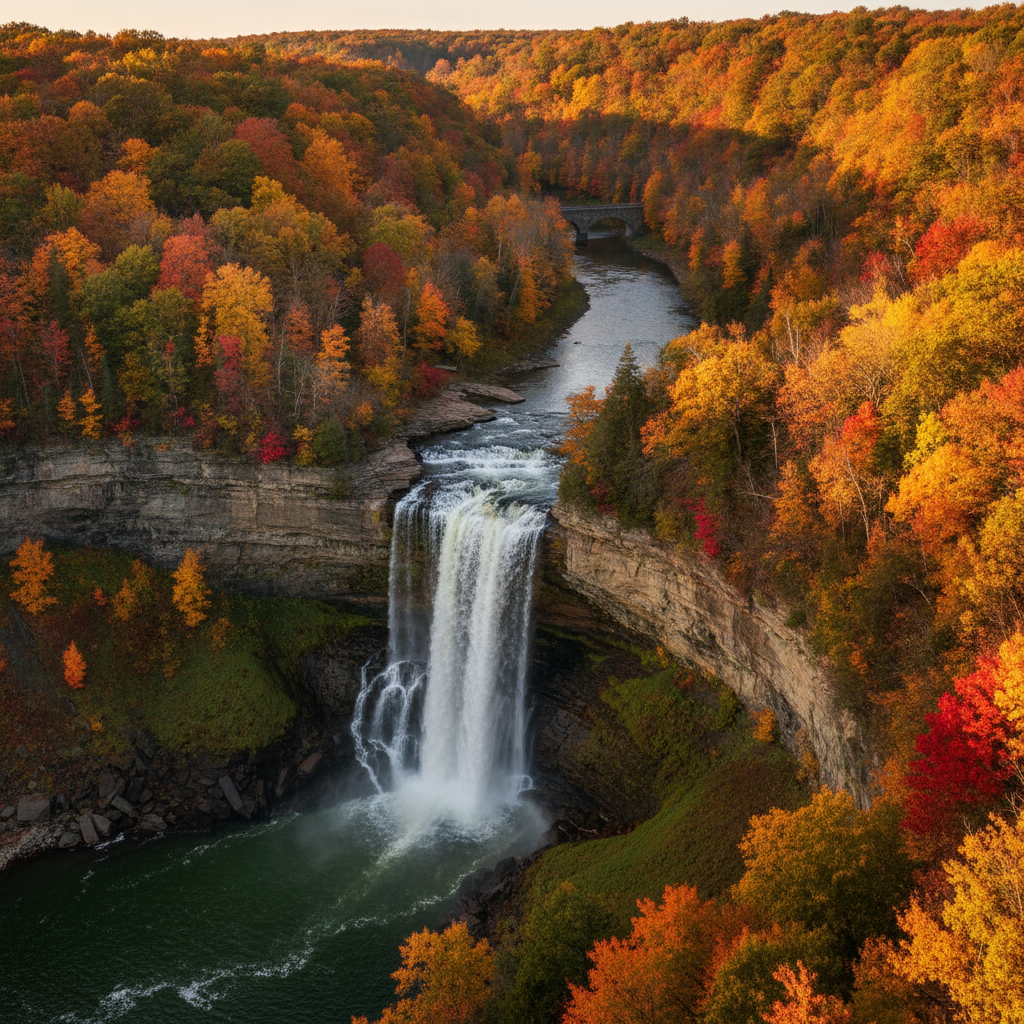
Buffalo R5: Letchworth (90km southeast, 25km gorge 180m deep, three waterfalls Upper 26m Middle 30m Lower 23m, Portage Viaduct 1903 72m above river, October foliage most beautiful inland eastern US, Mary Jemison captured 1755 age 12 lived as Seneca died 1833 age 90 buried in park, Senator Letchworth donated 1906); First Ward (Irish Famine 1840s dockworkers canal laborers, Swannie House 1880 oldest bar, grain elevator kayak tours Riverline, Seneca One Tower 38 stories USD 500M conversion, Statler Hilton 1923 Ellsworth Statler 1863-1928 invented in-room bath 1908 in-room phone 1911 doorknob menu Father Modern Hotel); Erie Canal (584km Albany to Buffalo, 57 locks 524km navigable, Lockport 40km engineers overcame Niagara Escarpment 5 pairs locks most remarkable feat, Annie Taylor born Lockport 1838, Rochester 150km Eastman Kodak 1892 George Eastman suicide note My work is done, Strong Museum of Play worlds only); Theater (Shea's 1926 C.W. Rapp 3083 seats Broadway Series, Irish Classical Theatre, Kleinhans 1940 Saarinen father-son one of finest concert hall acoustics US, Buffalo bar culture Ulrichs 1868 Pan American Toutant Southern); Canadian connections (Peace Bridge 1927 8M vehicles/year 4th busiest land crossing, Canadian side superior face-on Horseshoe view, Fallsview Casino most visited Canada, Niagara-on-the-Lake Shaw Festival 10 plays 4 theaters, Inniskillin icewine 1989 Grand Prix Bordeaux 1991, Fort George War 1812); Revival (population 258,000 to 279,000 2010-2020 first growth since 1950, USD 175-200K median home most affordable NE, Tesla Gigafactory USD 750M Solar Roof, Josh Allen 5 Pro Bowls Sean McDermott, Green Code 2016 first zoning update since 1953).